It is possible to forget entirely why you started to do something, or why you have stopped doing something that you used to enjoy. There was a mission statement for this project: “Backwoodsman exists to share images of and some thoughts about birds encountered in Glasgow city and the Central Belt of Scotland.” A short episode this morning reminded Backwoodsman of his original purpose. Backwoodsman had been on some errands down the Dumbarton Road into Partick in the rain. The return trip took Backwoodsman along the Kelvin below the University. The river passes over a weir there and Backwoodsman paused to cast his gaze above the weir and speculate on the likely presence, or otherwise, of fish. Familiar calls were heard and then one of those mixed flocks formed by small birds in the winter, started to move down the slope from the campus and across the river. The Long-tailed Tits came first, then the Blue Tits. A Treecreeper alighted on the base of a nearby sycamore, its white chest shining through the gloom, and began its spiralling climb up the trunk. A pair of Great Tits next: one lingered close to Backwoodsman’s nose. Let’s say it was “him” – the chest stripe was very strong, though the rest of his plumage was soaked and dull looking. He regarded Backwoodsman for some time and called repeatedly and very quietly, not the usual slightly raucous “teacher, teacher, teacher” call, but something much more confiding. Then he was gone. A Robin closed the show. The whole episode lasted a few minutes only but what a pleasure on such a dark day.
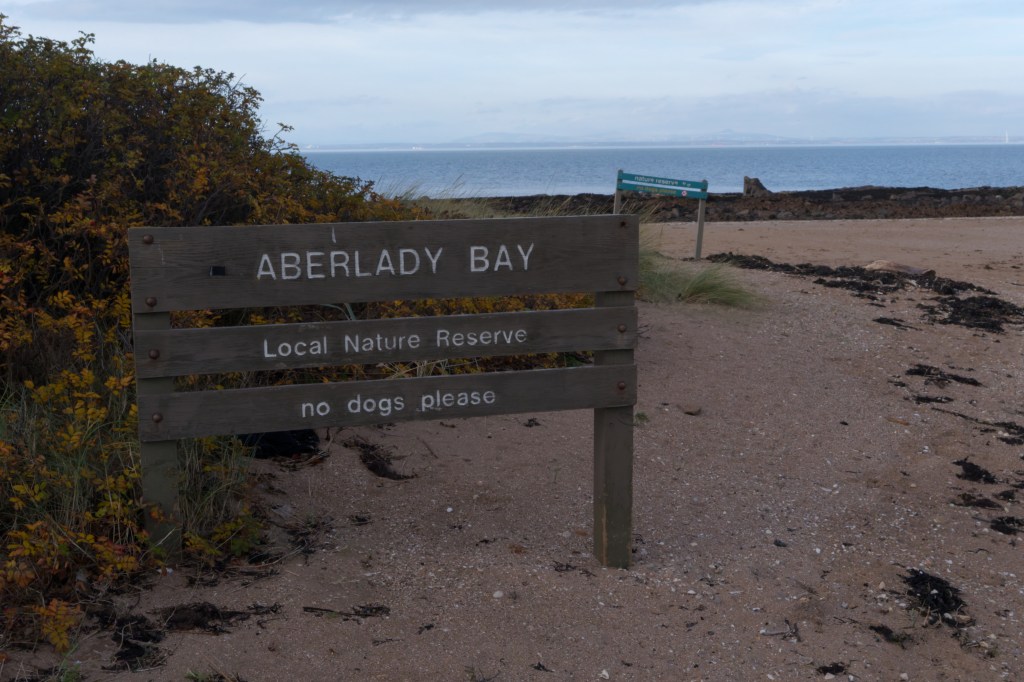
Backwoodsman will now try to share, in diary form, the pleasures of several days by the sea on the Aberlady Bay LNR, Britain’s first local nature reserve, established in 1952. A previous visit to the reserve was mentioned in the Golden Plovers post – we had seen hundreds of the birds there on a visit some years ago.
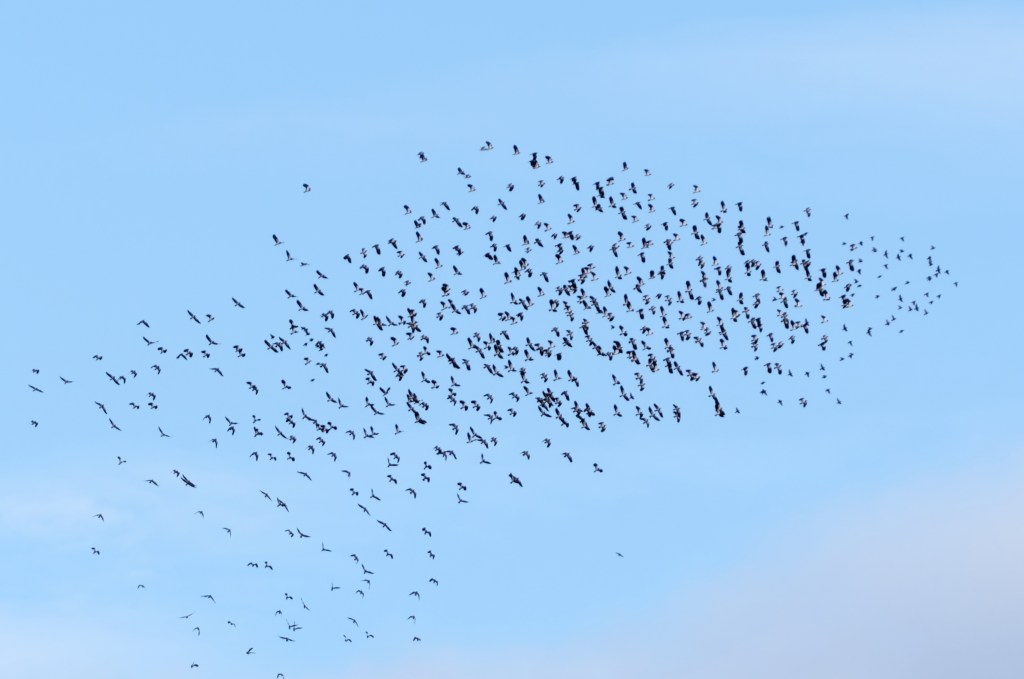
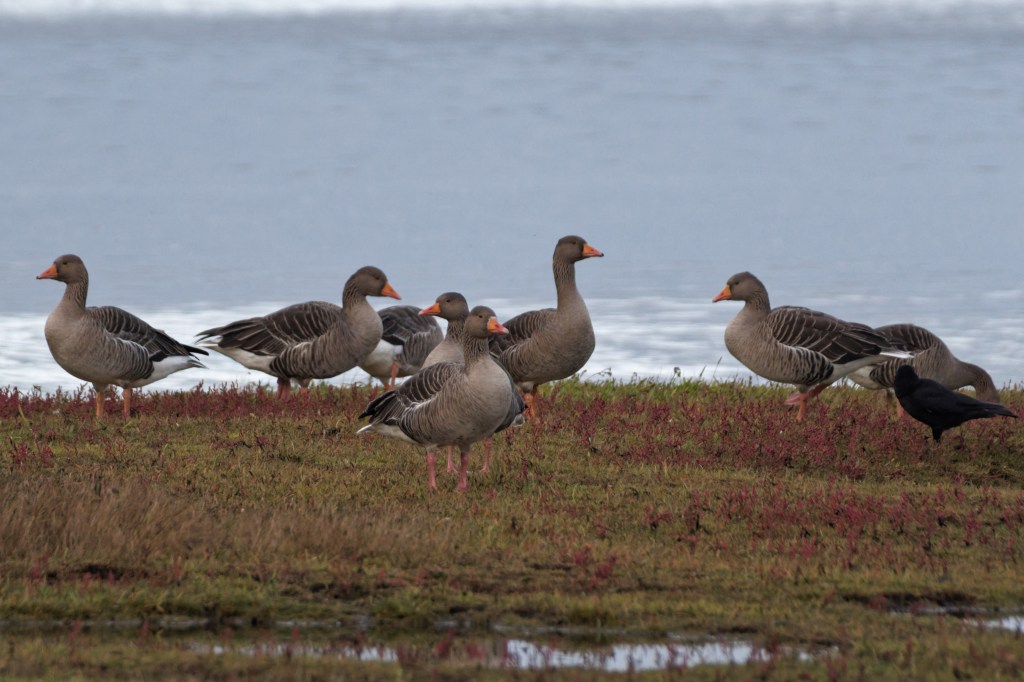
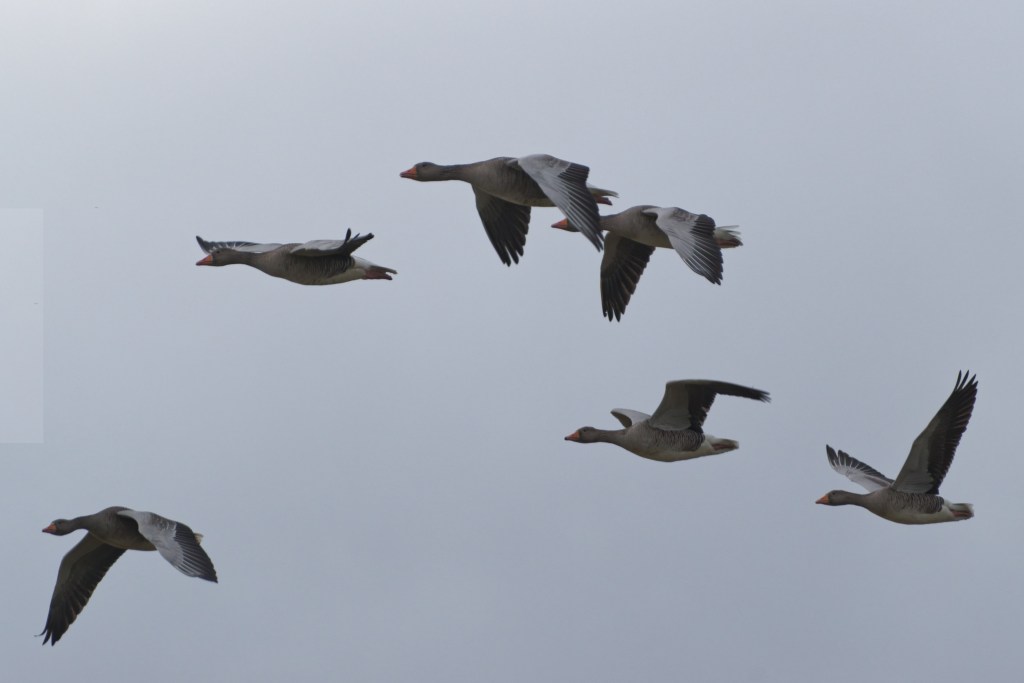
We arrived in Aberlady on the afternoon of Thursday October 29th and headed for the reserve. Lapwings filled the sky and Greylags stood on the saltmarsh. Later, they took to the wing and swept over our heads.
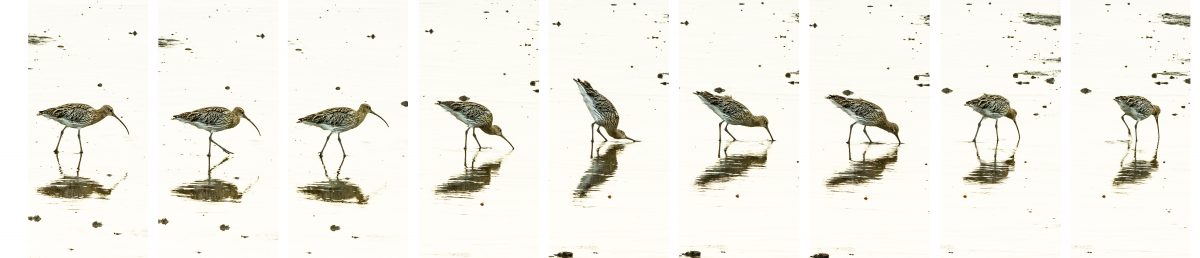
The light began to fade and after walking a little way onto the reserve, we retraced our steps with the intention of heading West towards Kilspindie Point. There were Curlew on the way, always a pleasure to see but really quite animated and combative on this afternoon.
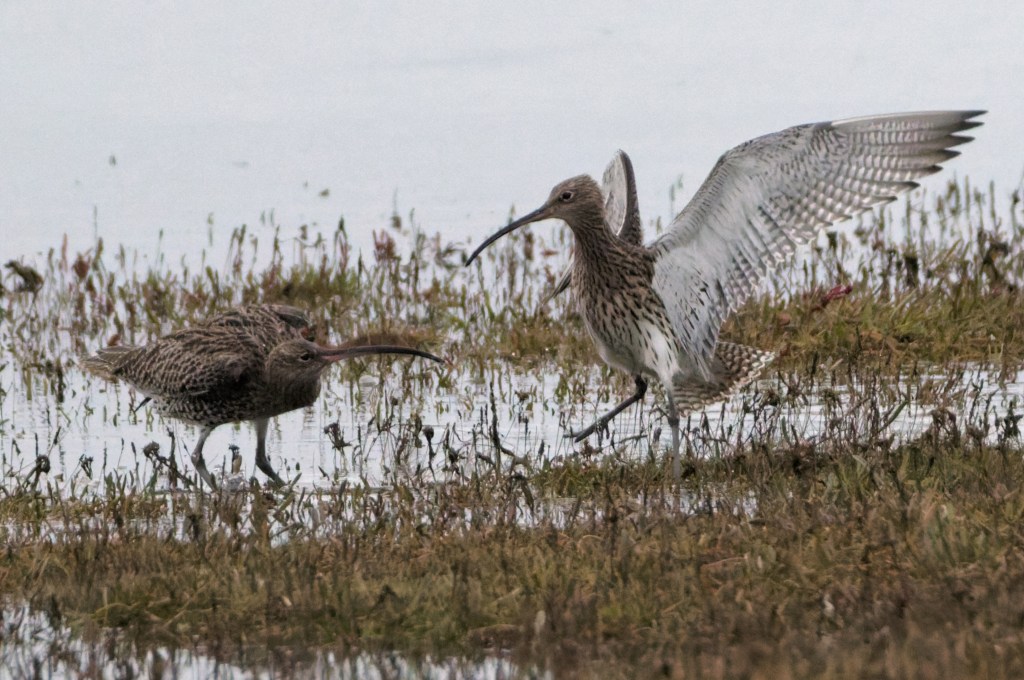
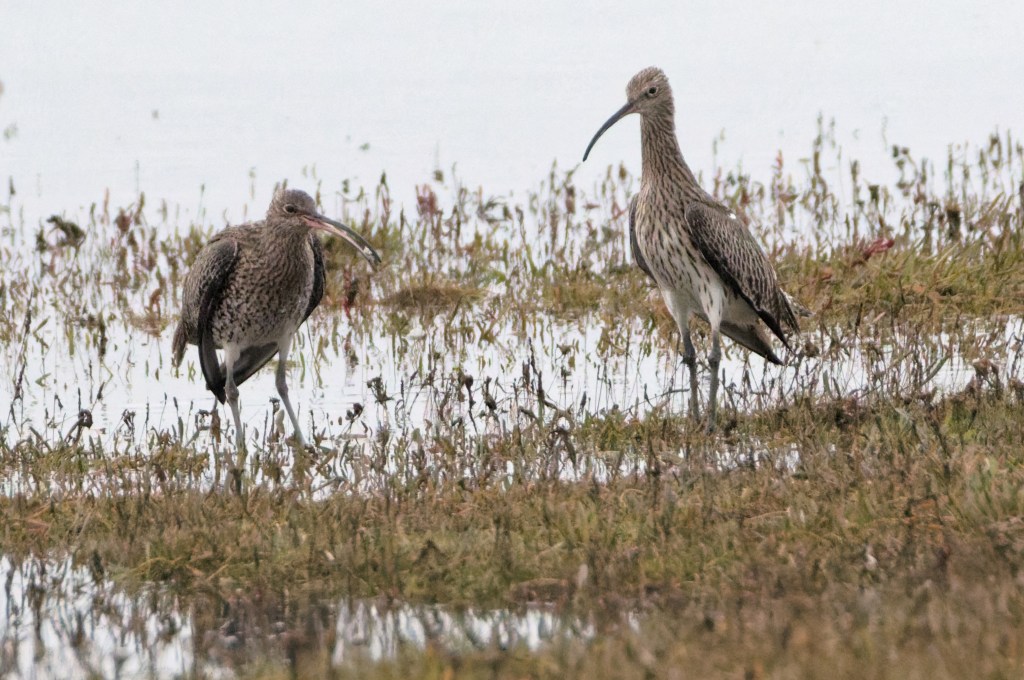
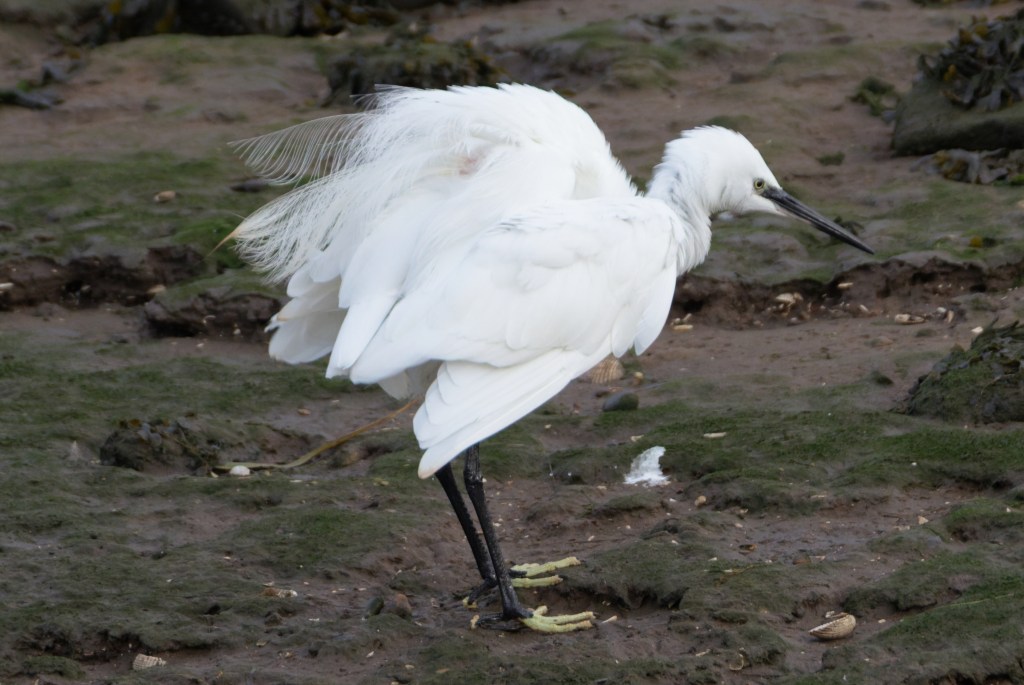
In the calmer image, one bird has tweezered a small mollusc from the marsh. A Little Egret swept regally by and paused to dry off. Soon after, we lost the light.
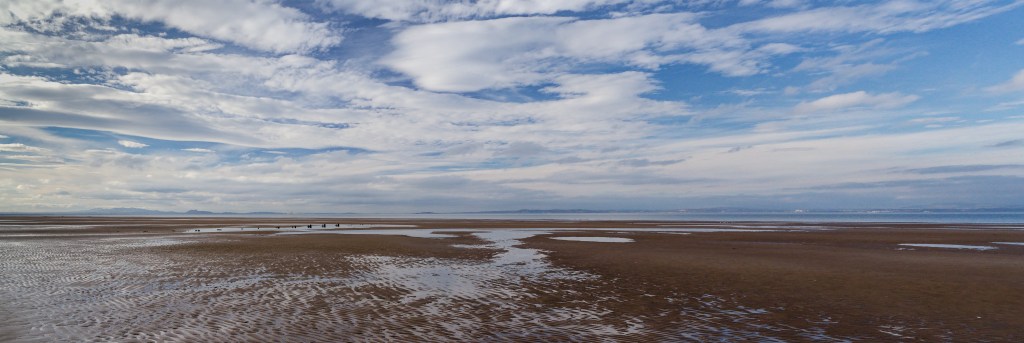
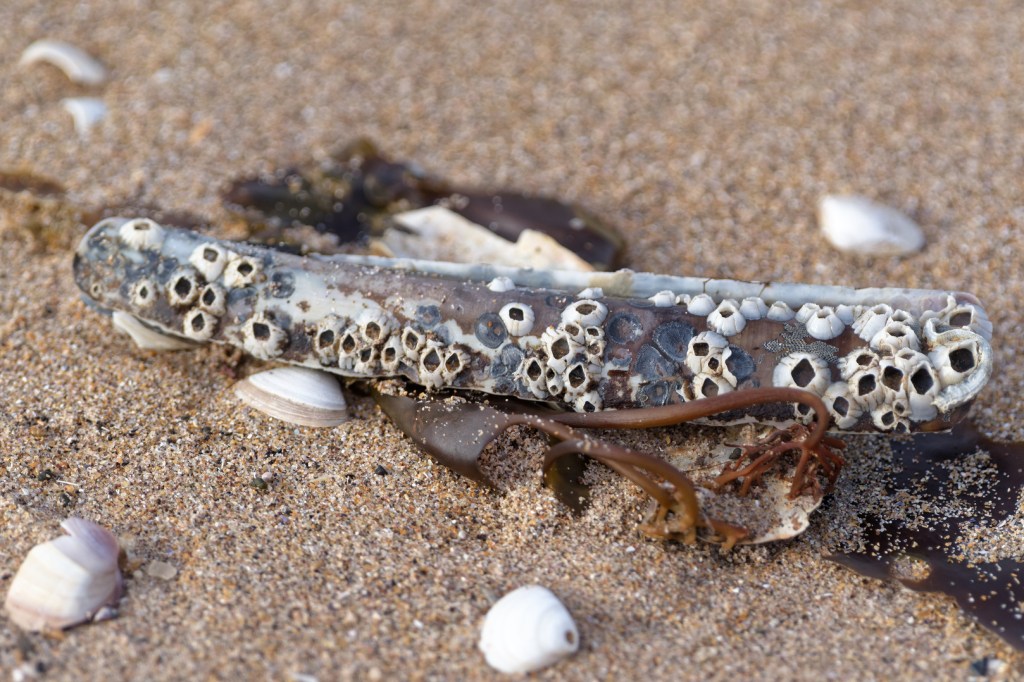
Friday morning was brilliantly sunny and we headed onto the reserve. Skylarks swept up from the grass and rose singing, most unexpectedly. We made our way to the sand and skirted the dunes. The tide was out but there are always shells to admire on these beaches. This Razor Clam seemed like an outstanding example.
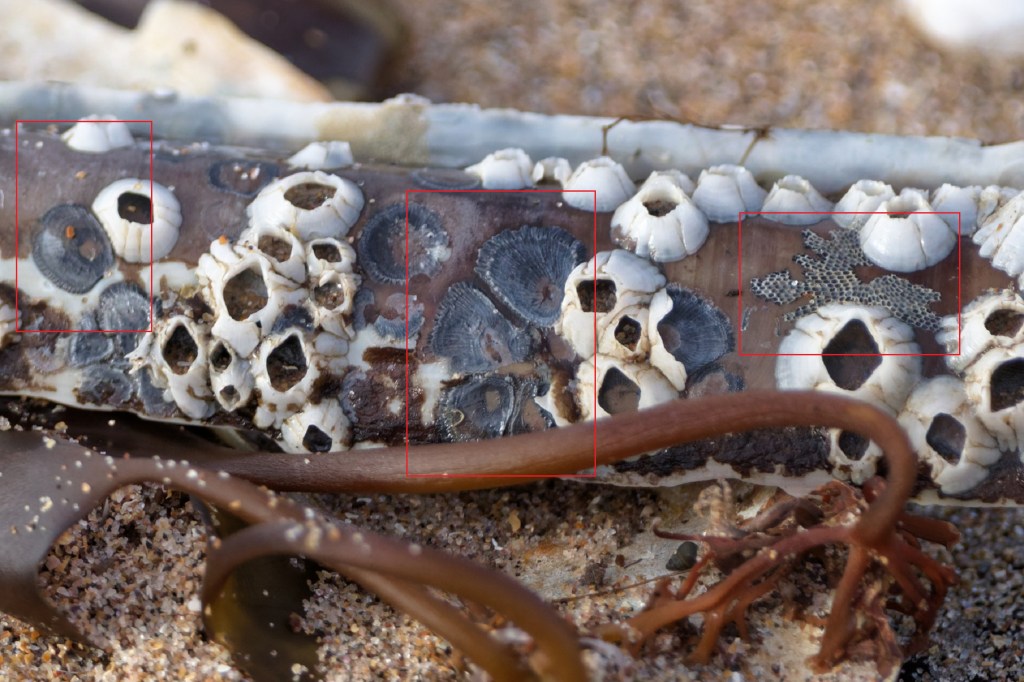
The Wildlife Trust web page tells us that Razor Clams or Spoots can live for ten years, long enough to accumulate some fellow travellers, perhaps? Backwoodsman has picked out (in red) three areas of distinct morphology on the shell apart from the more obvious barnacles. Does anyone know what they are?
The reserve ends around Gullane Point; looking out from the rocks, Faye spotted something in the water. “Dolphins!!” we shouted. There were two or more. Backwoodsman struggled to get onto them. Using spot autofocus and metering successfully requires getting the object right into the centre of the field. This is quite tricky with highly mobile creatures which disappear from view and pop up in a new place entirely. The Dolphins (Bottlenose presumably) stuck around for long enough for some images to be had.
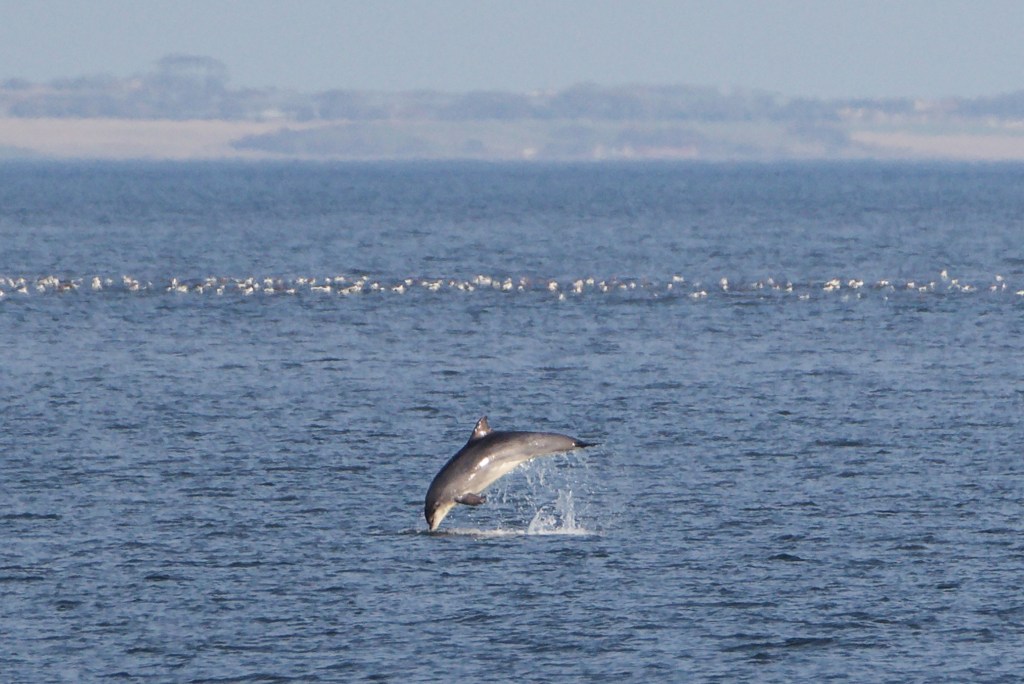
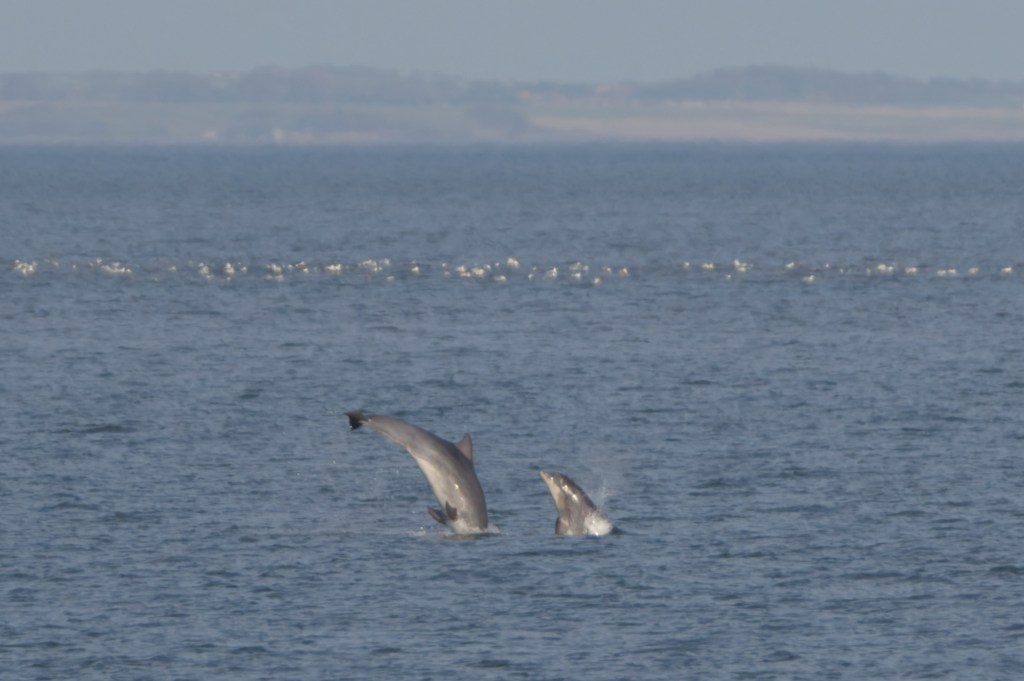
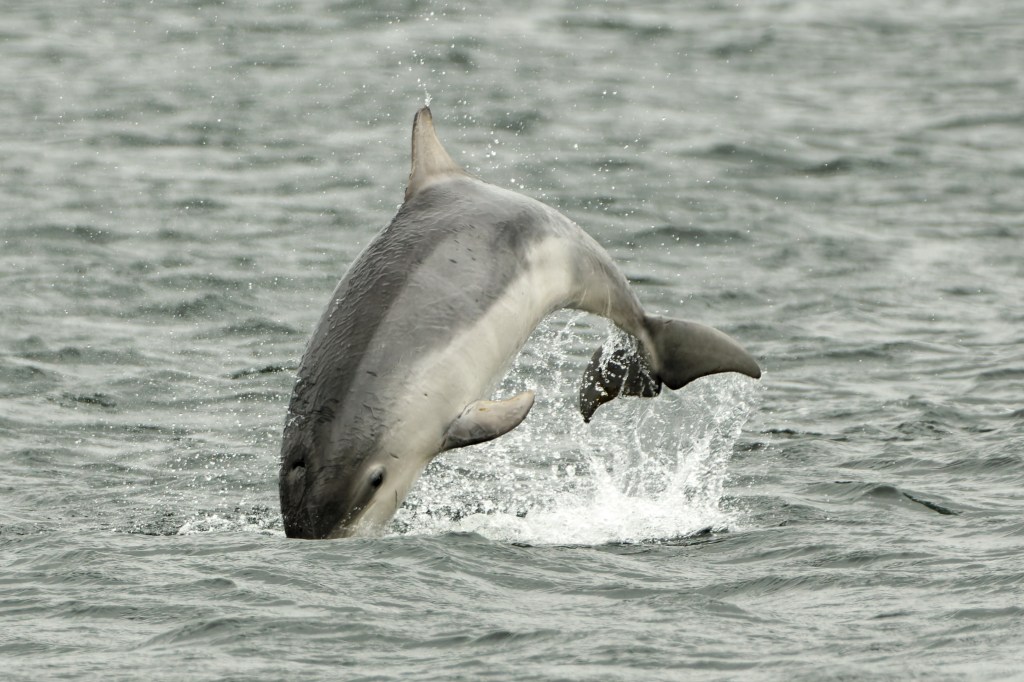
The two animals seem to be differently sized. Perhaps we were looking at a mother and calf? We’ve never seen Dolphins of any kind on this stretch of coastline before, though some of you may remember reading about our trip to Aigas. On that trip, we were taken to Chanonry Point on the Moray Firth, home to a large pod of Bottlenose dolphins, where this image was captured.
A feature of this Aberlady trip and the view out to sea was the presence of very large rafts of birds, often very vocal but just out of range for a good image or any audio to be captured. One of these rafts was present behind the Dolphins and Backwoodsman tried and failed to get a useful image. Cranking up the magnification on the first Dolphin image suggests small birds low to the water with white fronts and dark upper surfaces. Backwoodsman’s suspicion rests on the presence of Little Auks, but some good data would be nice.
Other large groups of birds had formed just out of photographic reach. This image of a sub-group is inconclusive but the birds are about the right shape and size, and the right colour for Scoters.
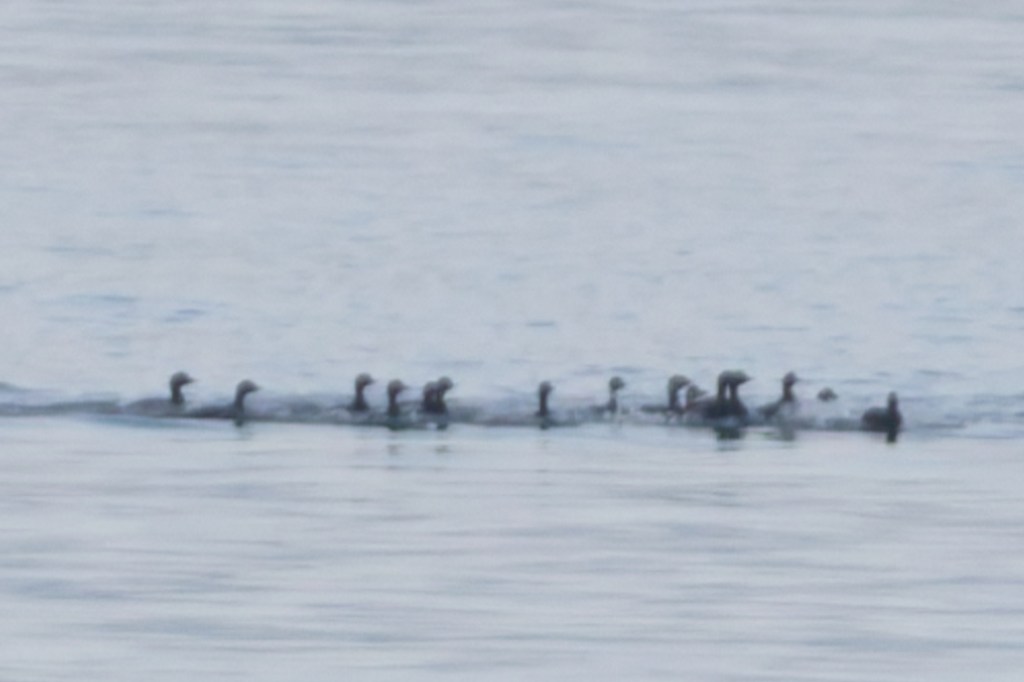
The RSPB page features a recording of an individual bird – imagine the tumult created by many calling birds.
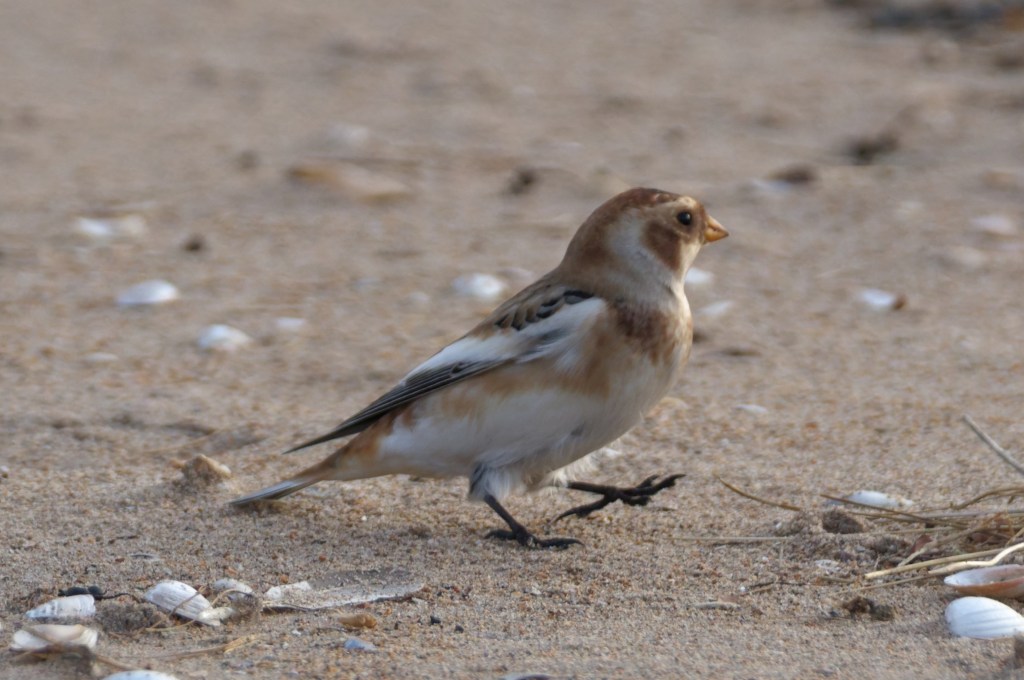
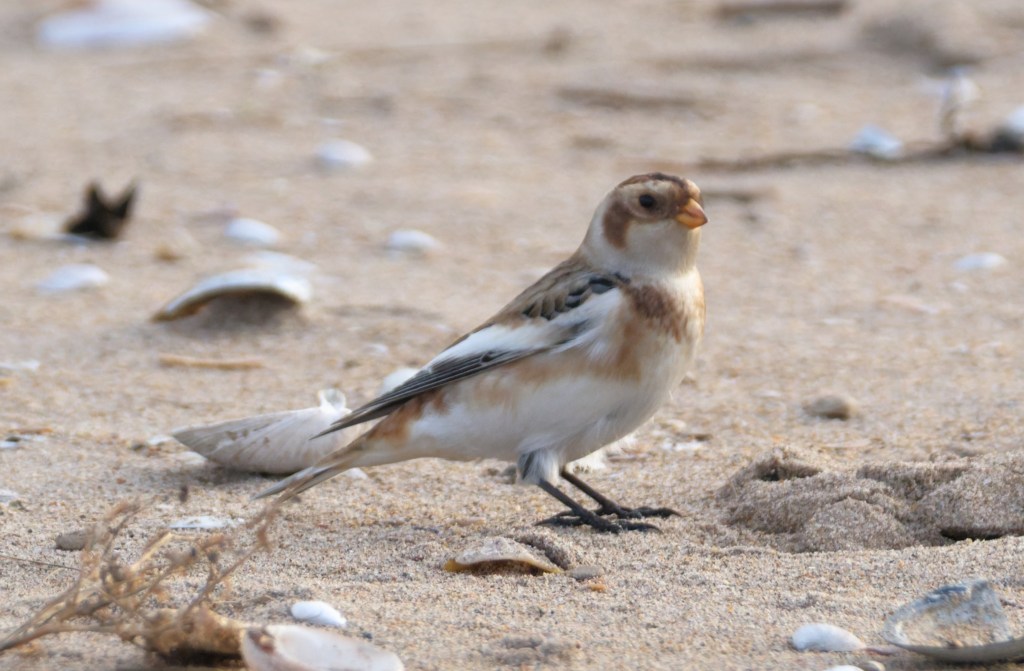
We retraced out steps along the sand towards Aberlady. The dunes stop close to an area called Yellow Mires. On a visit many years ago, we found Snow Buntings in the saltmarsh. So here we are in beautiful light, all tooled up, and onto the sand flies a small bird wearing a good deal of white. Not much doubt about the identity of this one!
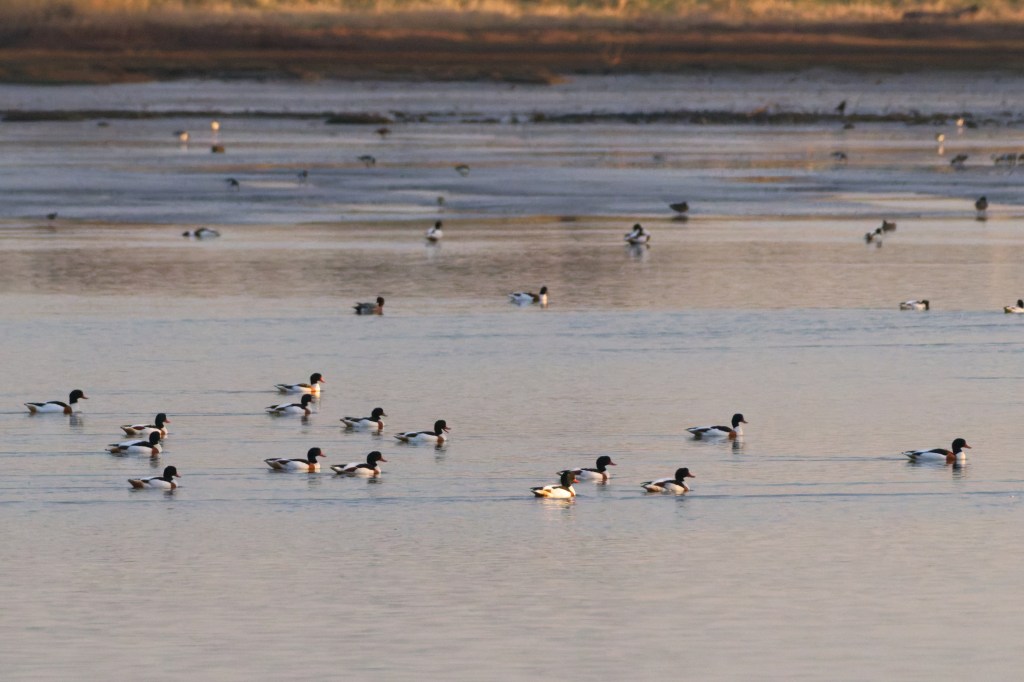
After all this, what could Saturday offer? We had read a poster on the reserve offering a goose walk and reporting the presence of thousands of wintering Pink-footed Geese so we headed for the saltmarsh before breakfast, hoping to catch sight of some roosting geese. We found Shelduck and Greylags picked out beautifully by the morning light.
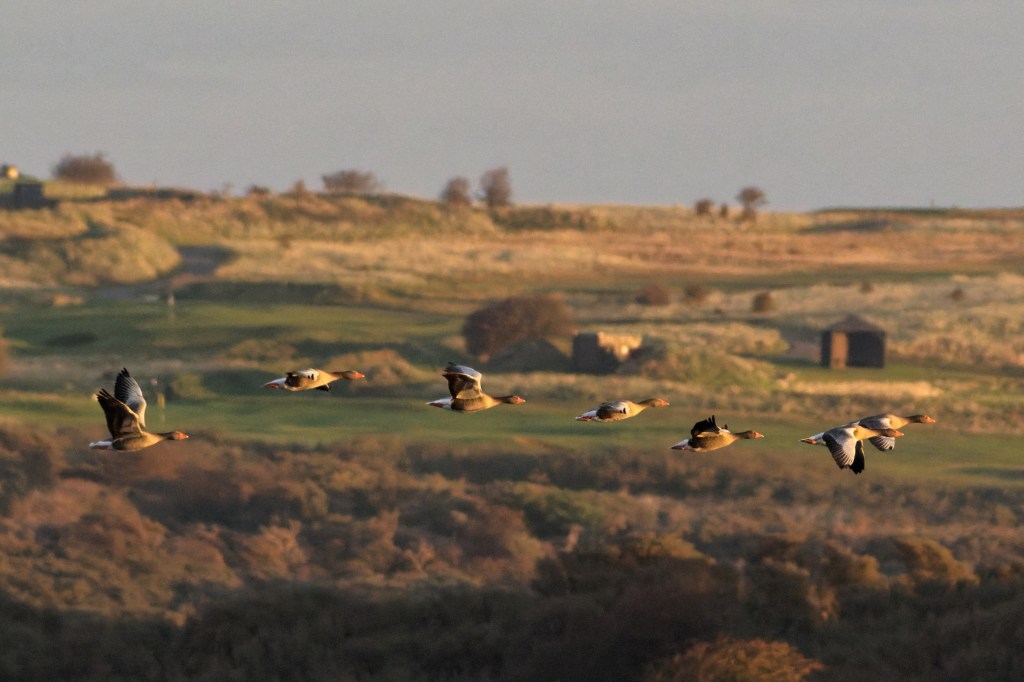
The geese were up and flying away to find grazing for the day so we headed back to our breakfast.
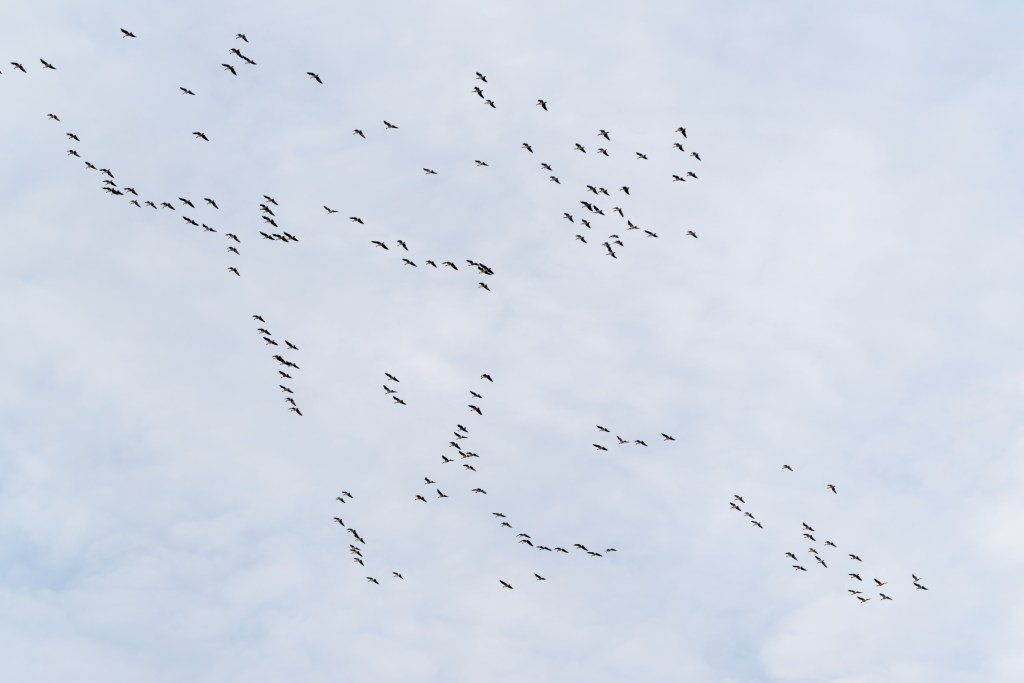
We took the bus to North Berwick and walked along the shore back as far as Gullane where we climbed up to the village, taking in a huge raft of Eiders on the way.
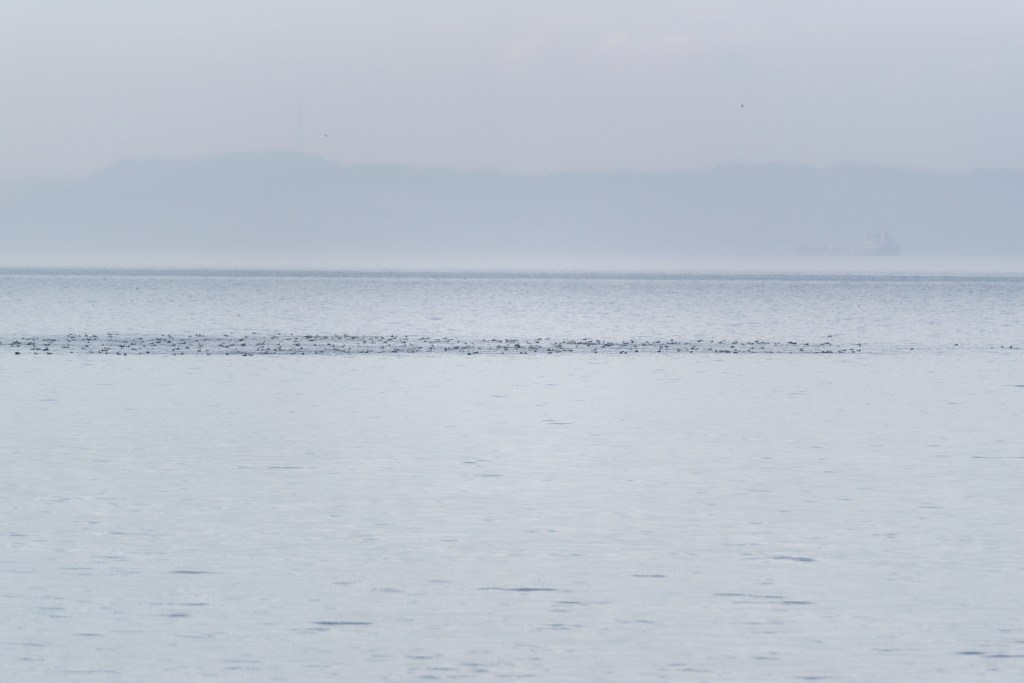
Another bus dropped us back at Aberlady in time for golden hour. There were Lapwings to be admired, with individuals standing by the saltmarsh and huge groups further out on the mud.
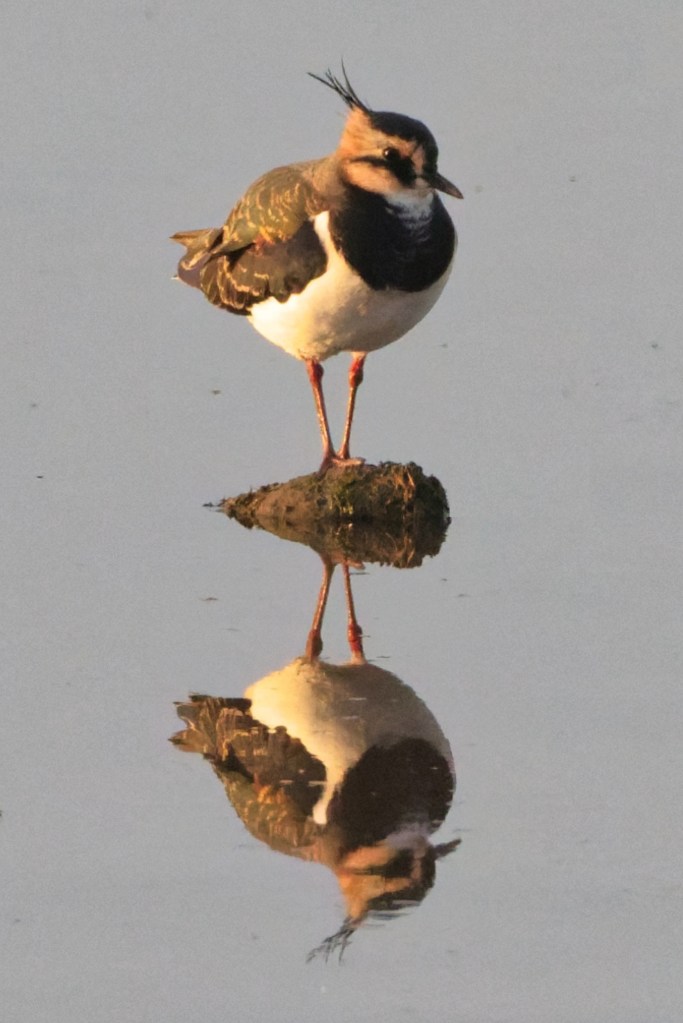
The Lapwings spooked and we searched the sky for a raptor, fruitlessly. A later search of the images revealed a pair of peregrines in this frame.
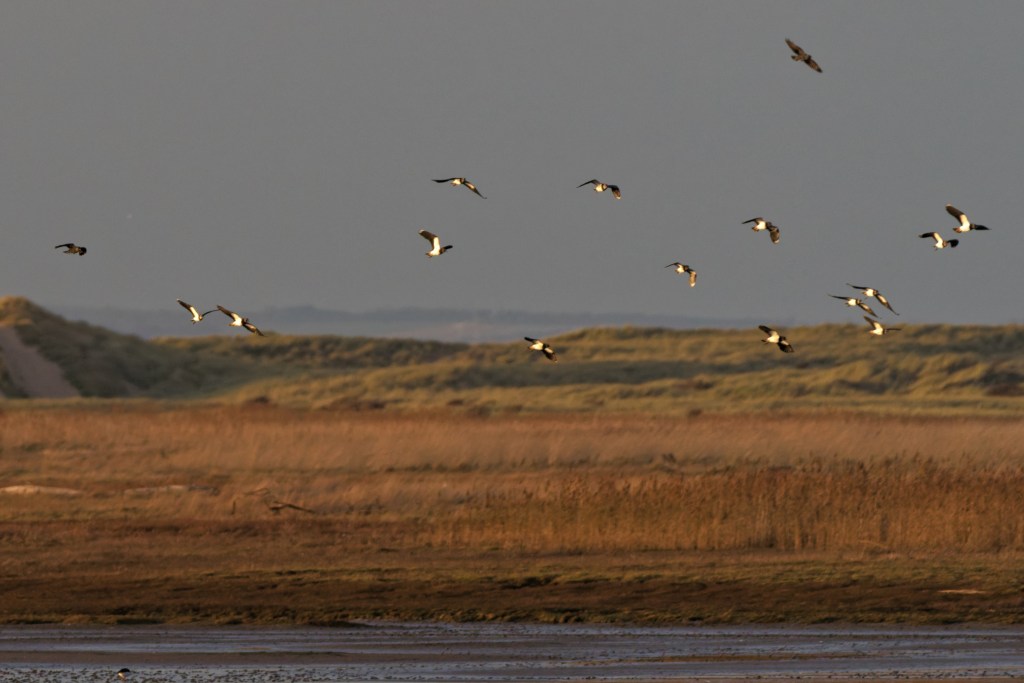
As the end of the day approached, we saw geese and Golden Plovers in the sky in a neat symmetry with our earlier visit.
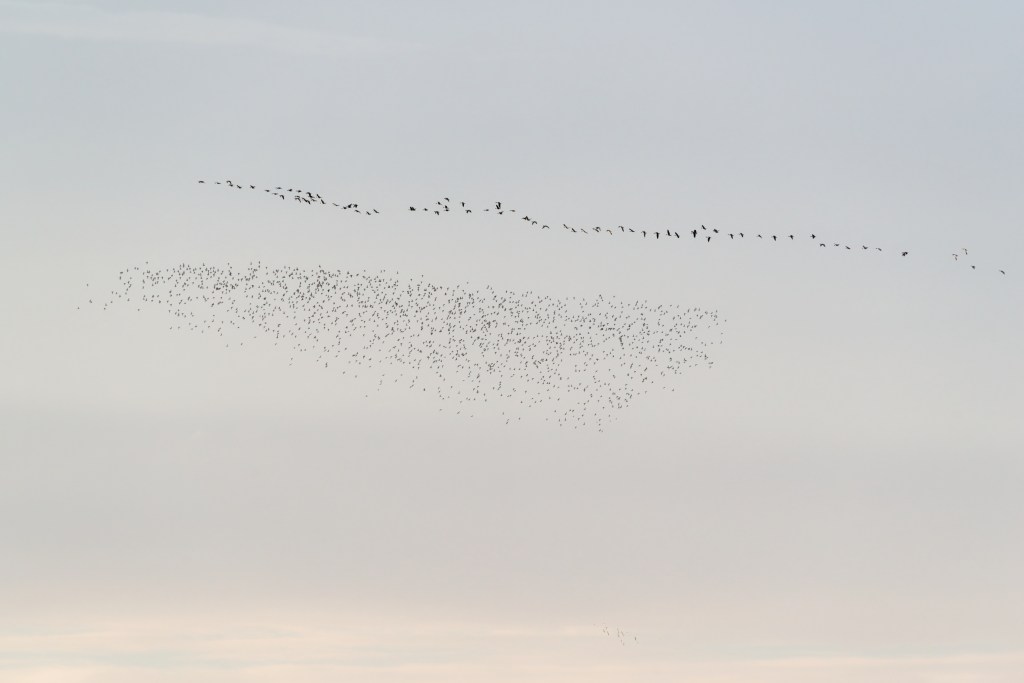
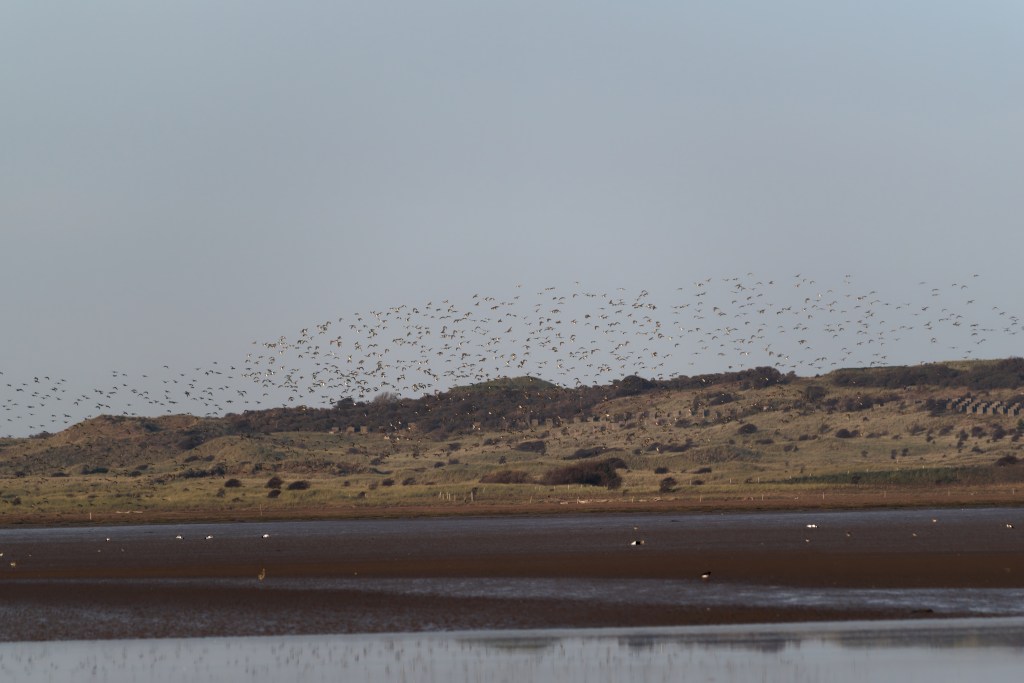
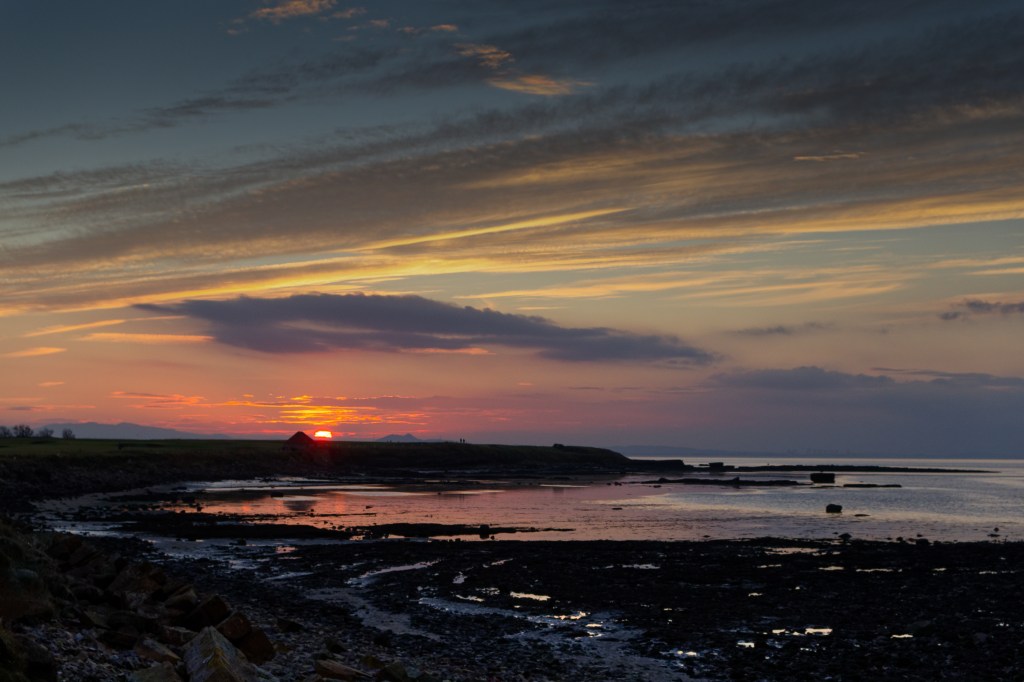
The Goldens settled down for the night and we headed towards Kilspindie Point to watch the sun set over Edinburgh, ending a memorable visit to Aberlady. It is such a pleasure to see large numbers of birds, even familiar species and remotely. It’s just good to know that they are out there.