Ayrshire Birding in Autumn

Backwoodsman has ventured out to the coast several times in recent weeks, hoping to catch sight of recently-arrived Knot but it has been a massive Knot fail, alas. It was hoped that a Knot post could have been finished off by now but it will have to wait for some more images. Other subjects have been available, some familiar but set off by very good light, and others unexpected in their locations. All have formed the subjects of their own posts but it is hoped that you will not mind the repetition.

The images were captured over trips to Barassie, Troon and Stevenston between the beginning of October and mid-November. You can take the train to Barassie and walk to Troon, or vice versa; it depends on the timing of the high tide and what you hope to see. The Stinking Rocks at Barassie are a good high tide roost for shore birds; the Ballast Bank at Troon used to be. South Beach at Troon has really good foraging for the smaller waders so the order of business can be planned to take in good sites just around and at high tide. Stevenston has similar foraging and roosting sites but it is on another train line so tends to be a separate trip.
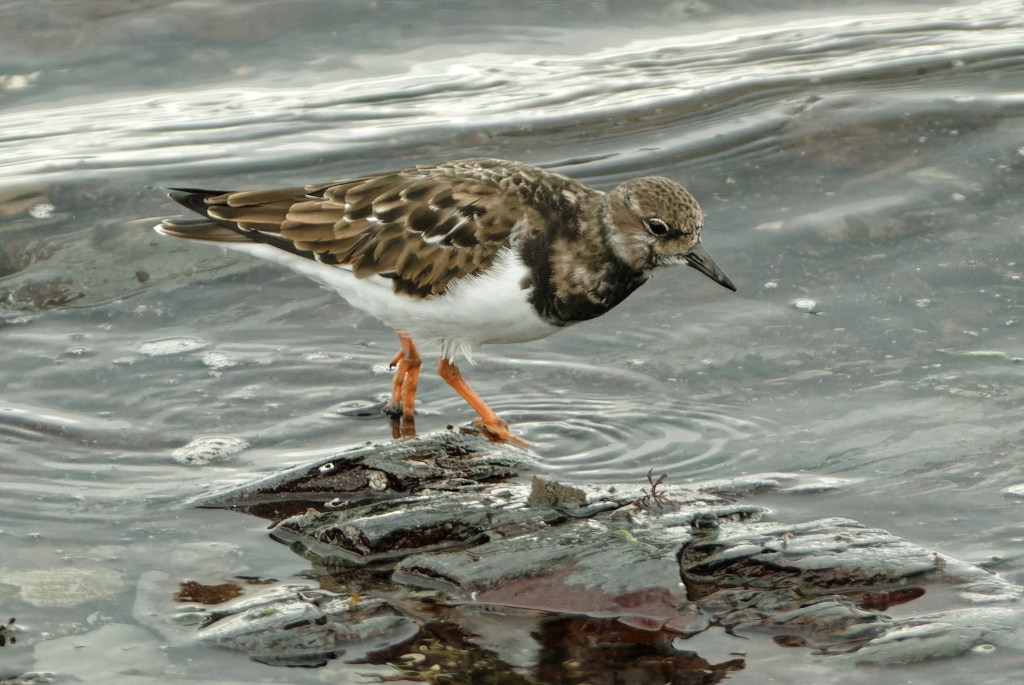
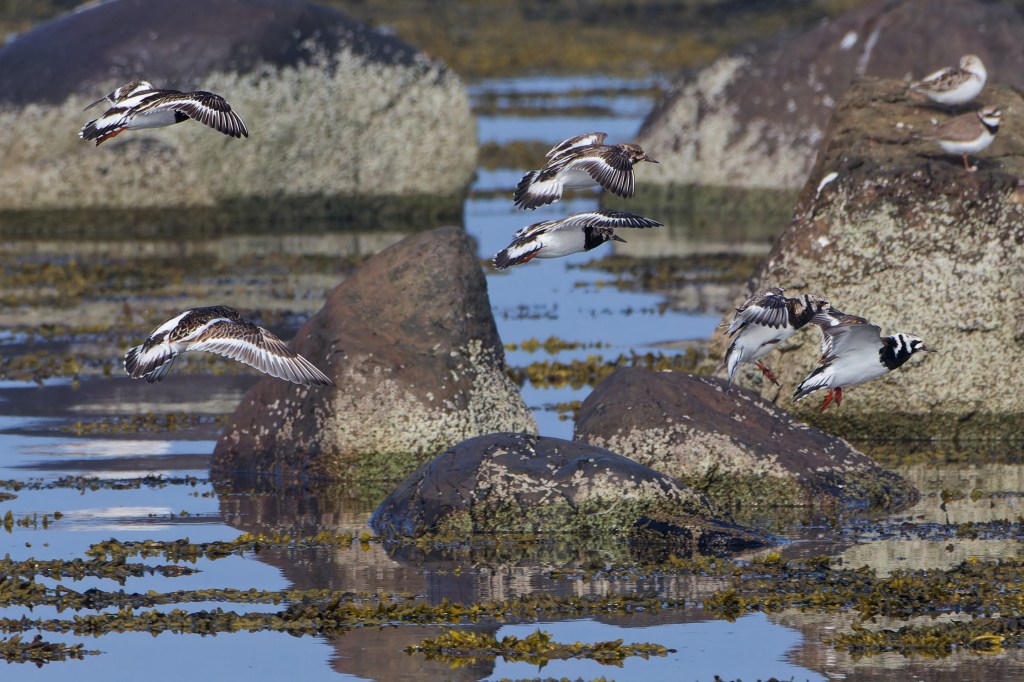
Turnstones have been reliable sightings at Barassie; Backwoodsman was fortunate to find them foraging and then gliding* to a roosting site as the tide rose.

The foraging birds prompted a curious conversation with a lady walking a dog. “Was I getting some good photographs?”, she asked on approach. I indicated that I was hopeful because of the quality of the light.

Her dog was chasing the Turnstones which were probing for the small creatures in the benthic zone where the rising tide lapped the sand. Unfortunately, Backwoodsman’s face is known to give an all-too-accurate account of what he is feeling. “Oh”, she said, “these birds enjoy teasing my dog.” This was an odd remark because she seemed interested to know which birds Backwoodsman was looking at, implying some kind of interest in species other than canine.
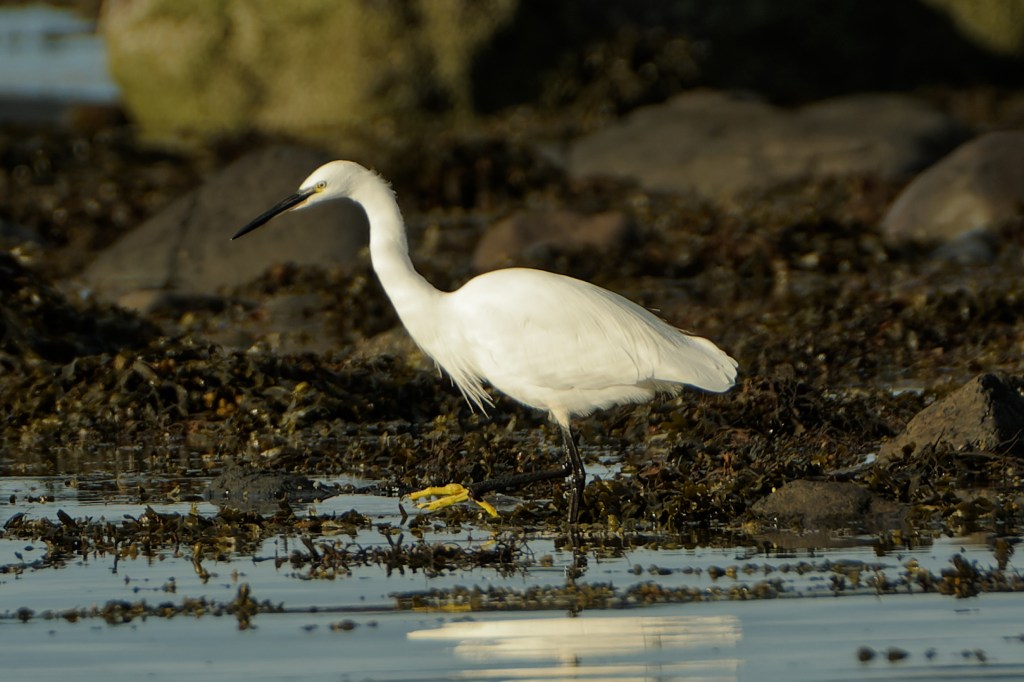
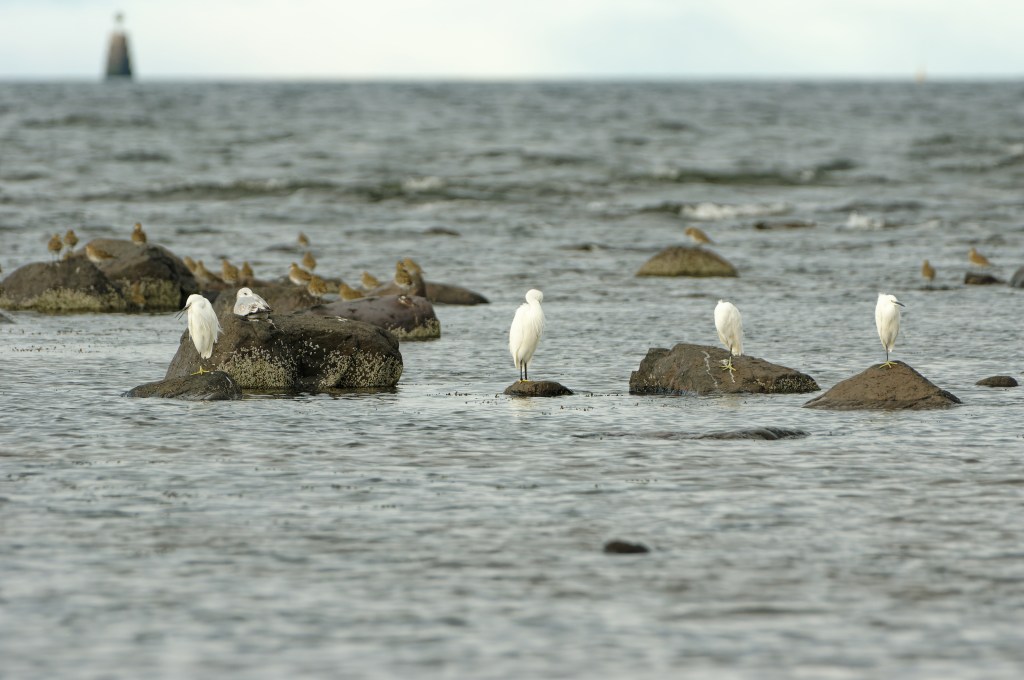
Many people engaged Backwoodsman in conversation that morning. All of them had a dog or three and all the animals were running wild. The humans were all excited because there were five Little Egrets on the Stinking Rocks. Backwoodsman had been watching the Egrets foraging as the tide rose but could only get a decent image of four of the five on the rocks.

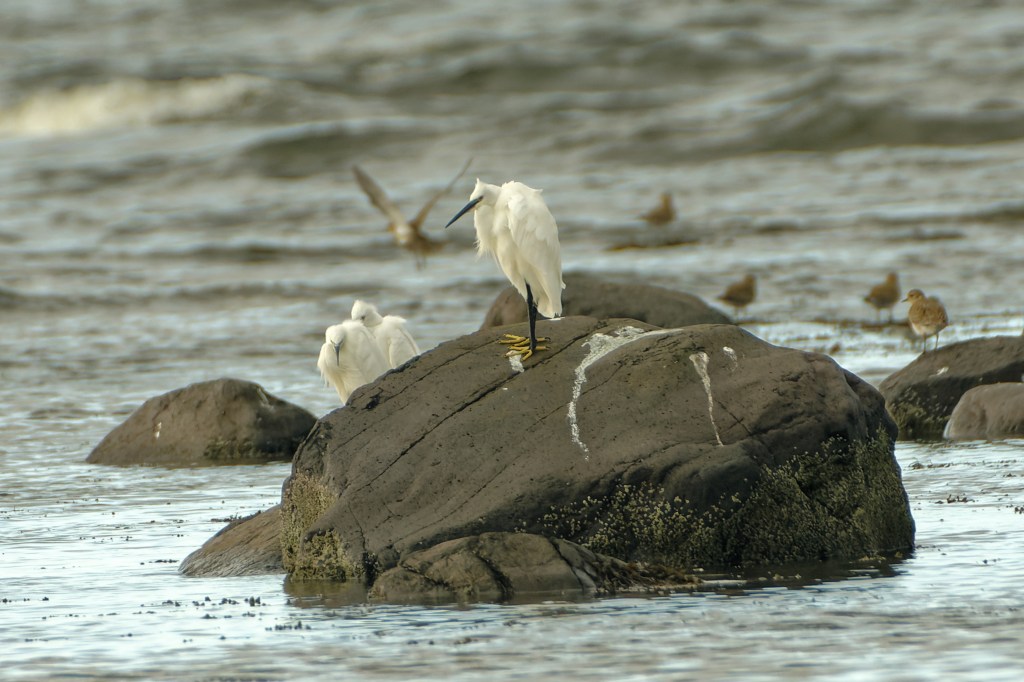
Could this be a family group, still together following a successful breeding season? These birds absolutely shone in the morning light so it is unsurprising that they attracted attention. Fortunately, the photographic software has a tool (the Highlights slider) to control very bright areas so some texture can be revealed on the flank of the Egret.
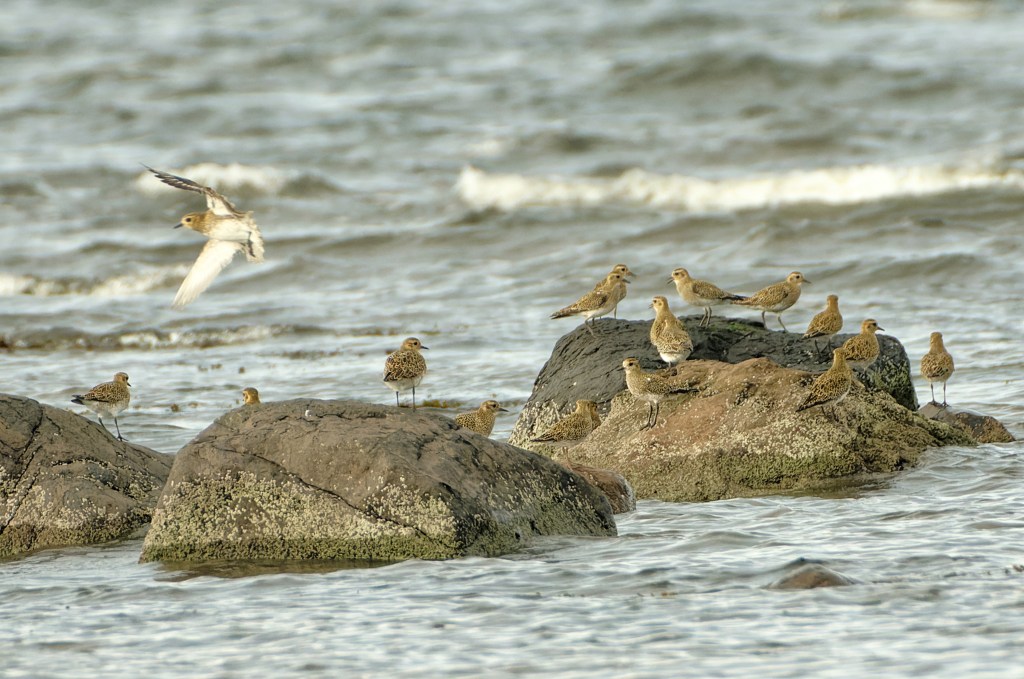
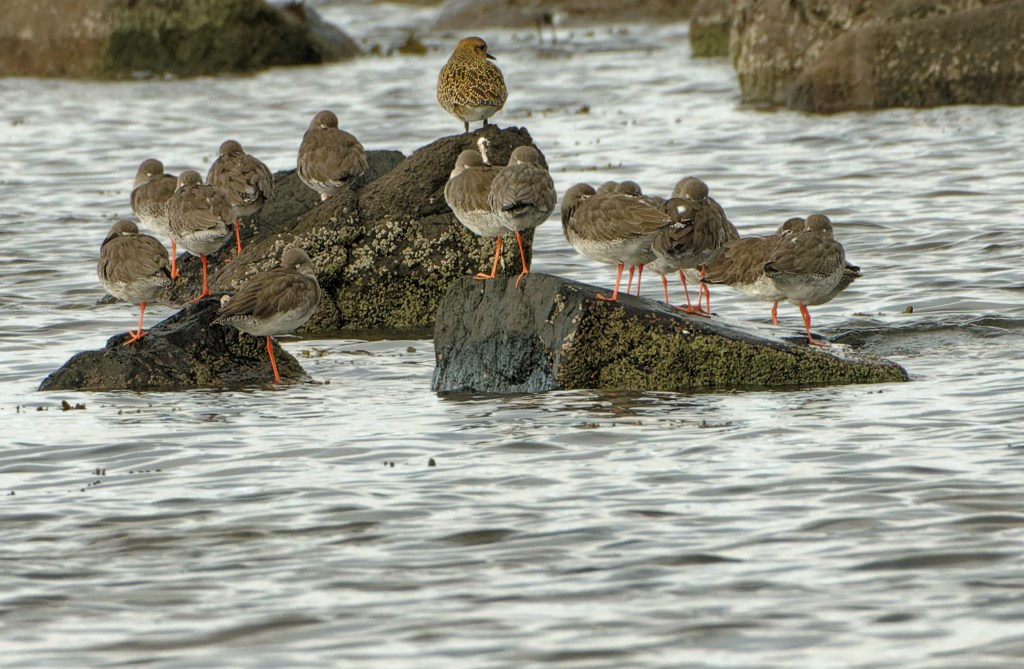
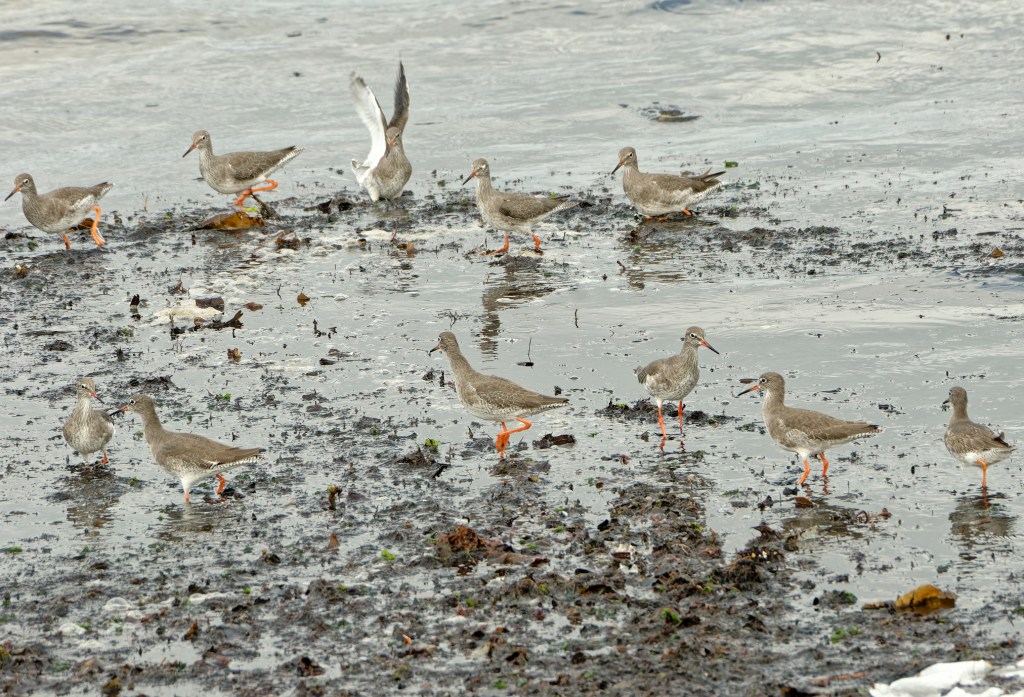
No-one seemed to have noticed the Golden Plovers sitting behind the Egrets, Backwoodsman’s first sighting of these glorious birds this season. The same could be said for the Redshanks (them being unnoticed); later, on Troon North Beach, Backwoodsman caught up with some feeding birds and enjoyed their bustle and all their different postures.
The Ballast Bank used to be a good place to find Golden Plovers, Dunlin, Knot and Purple Sandpipers, but things seem to have changed. Backwoodsman has failed to see a single shorebird on the Ballast Bank rocks on any of his previous six or seven visits; this seems very odd, because it really does look like a good place to sit out the high tide. Unfortunately, the rising tide attracts potential disturbance in the form of a wild swimming group (Backwoodsman has named them the Troon Tadpoles). The rocks favoured by the shorebirds are adjacent to an area of shingle used to enter and leave the water. So, wild swimmers waddling about and eating cake in Dryrobes every day, yes! Shorebirds, no more. This is not a reliable line of causation but it is interesting that the timelines match – that is, pre-pandemic, lots of birds, post-pandemic and everybody getting mennl-elf and wanting to freeze their bits off in public, no birds. Backwoodsman will probably now excise the Ballast Bank from his route and go straight from North Beach to South Beach by the shorter road route.
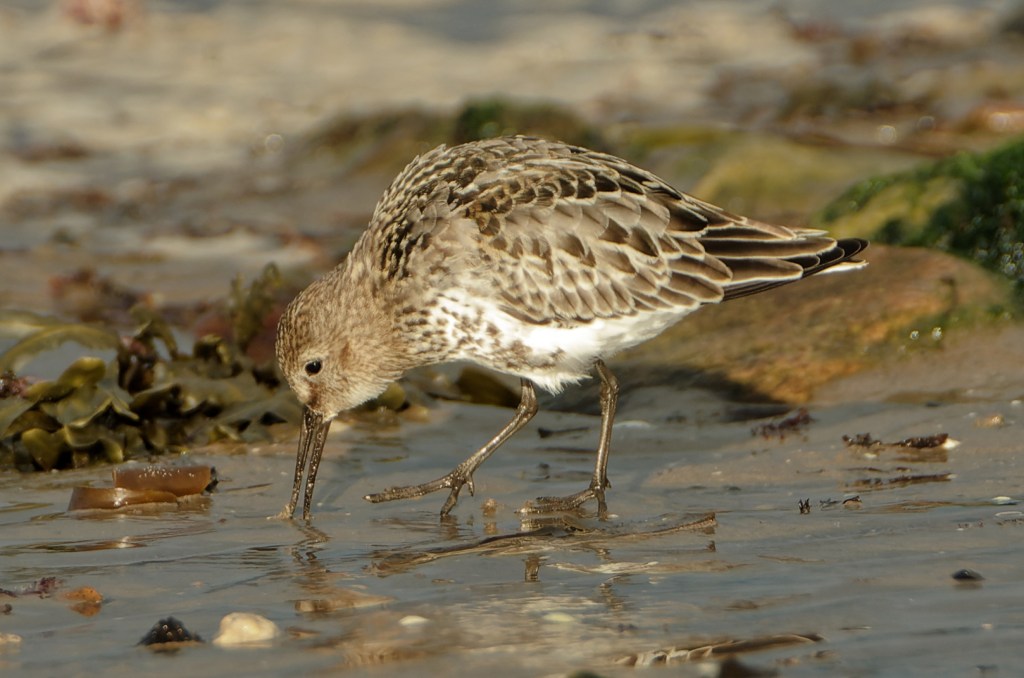
On the last visit to Troon, Backwoodsman failed to find any Dunlin on South Beach. The foreshore had been remodelled by a storm and the kelp was piled wide and deep over the places where Dunlin usually forage. Backwoodsman will have to wait to find numbers of these exquisite birds elsewhere, or perhaps just later in the winter. It has been possible to find the odd one or two; again, Barassie came up with the goods. Such light!
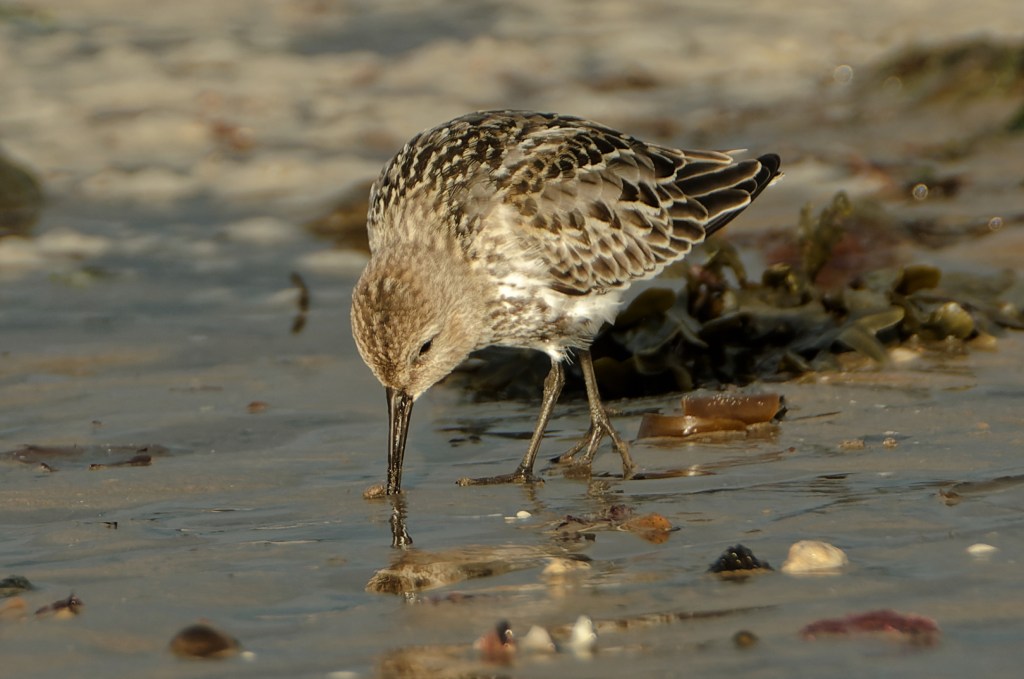
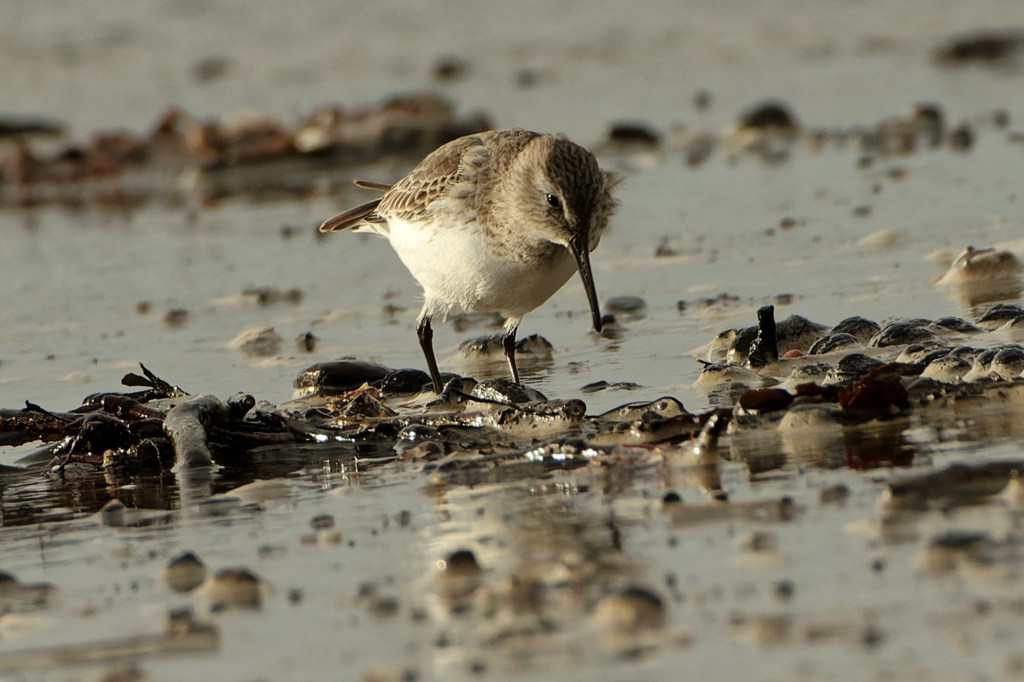
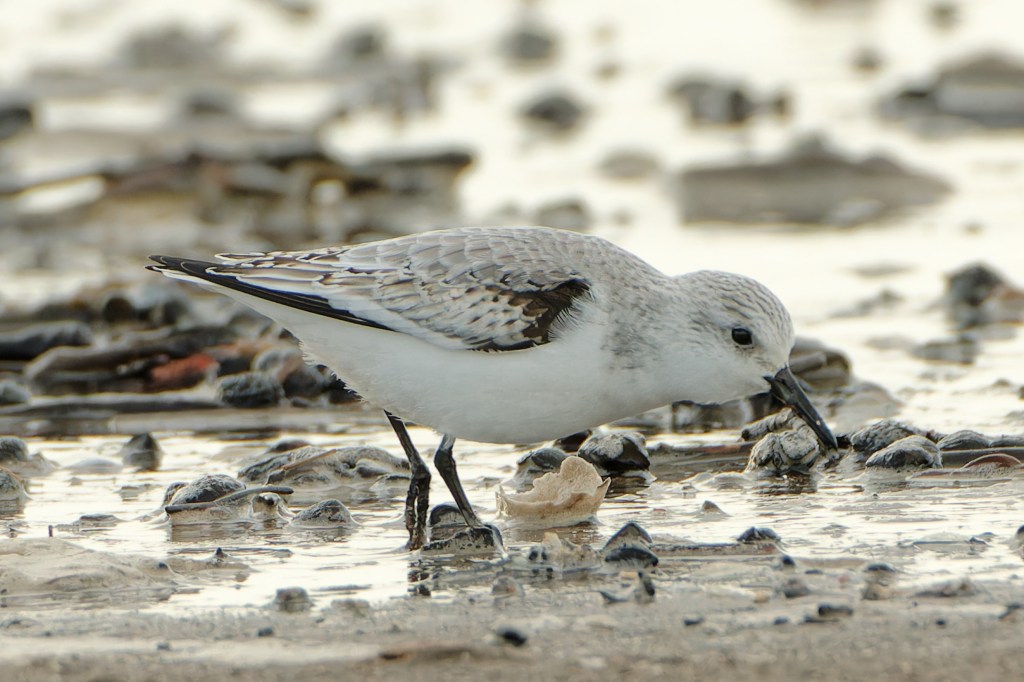
There were also one or two at Stevenston when we visited at the weekend (16th November 2024) but the main species present were Ringed Plovers and Sanderlings.
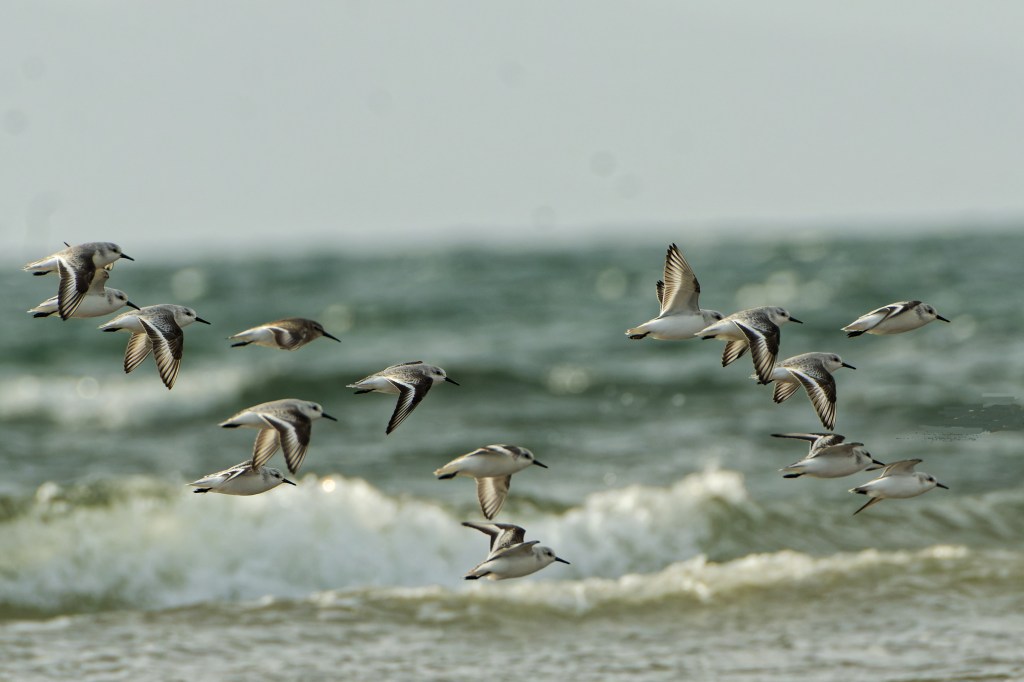
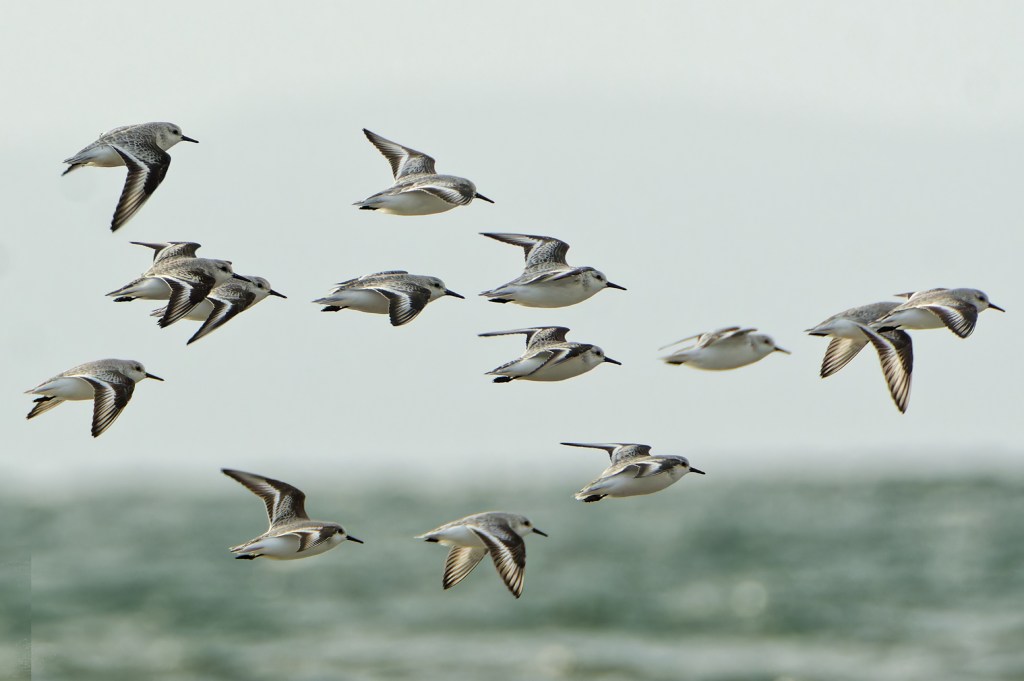
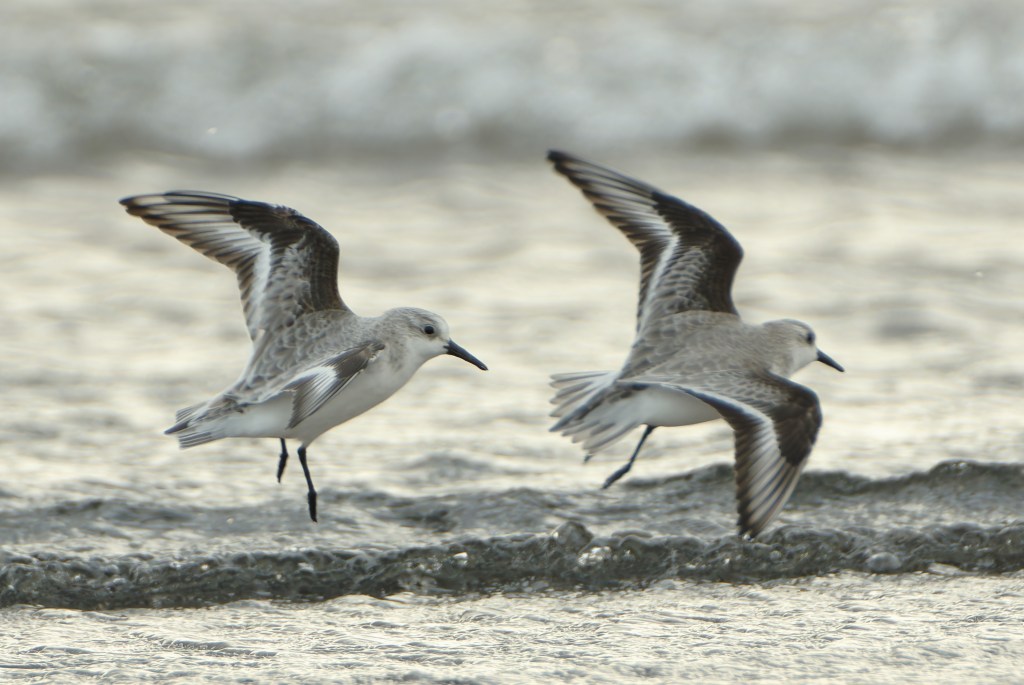
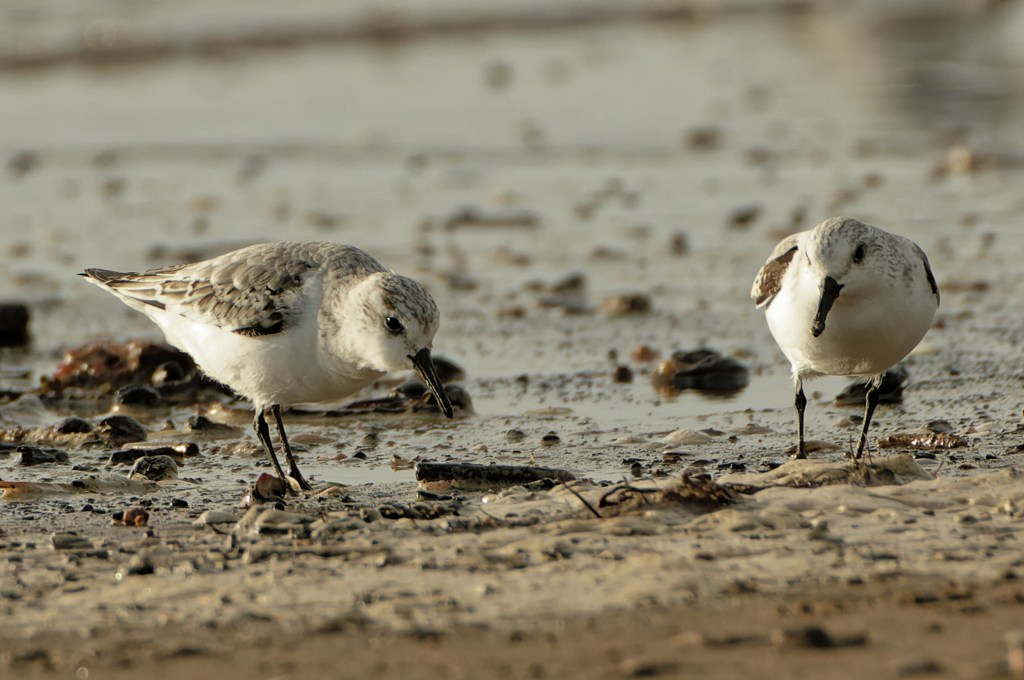
It was a big high tide and there was a small promontory of sand left exposed; all the small waders were at its edge with the Sanderlings being driven from left to right, and back again, by a man kicking a tennis ball for his dog. Backwoodsman took advantage of this disturbance by dropping to the sand and keeping very still. The Sanderlings came by, sometimes running, sometimes on the wing.
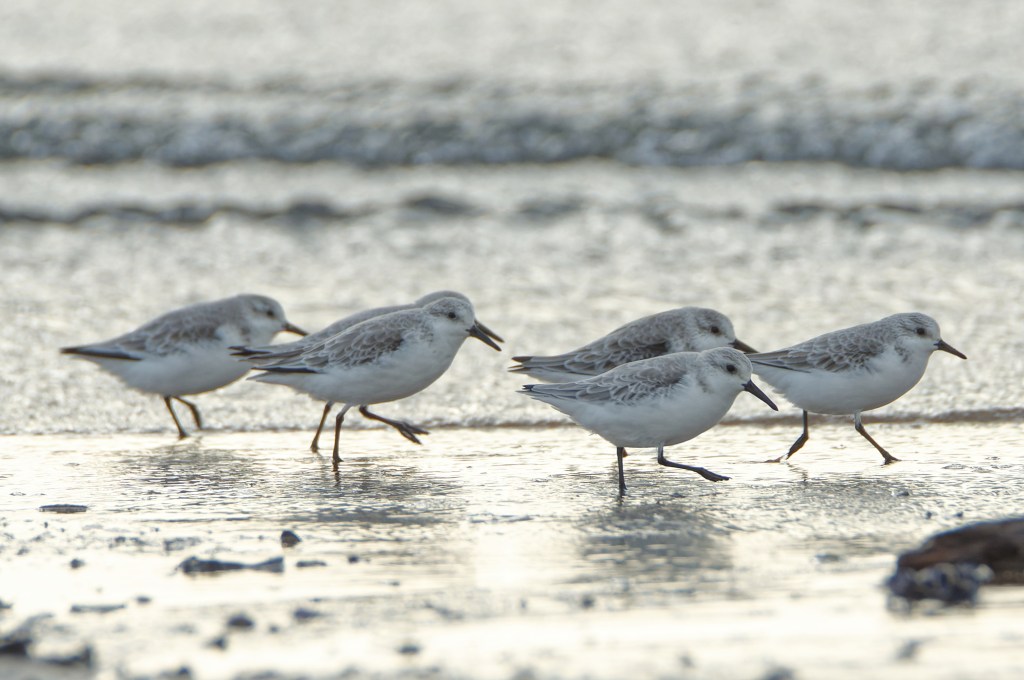
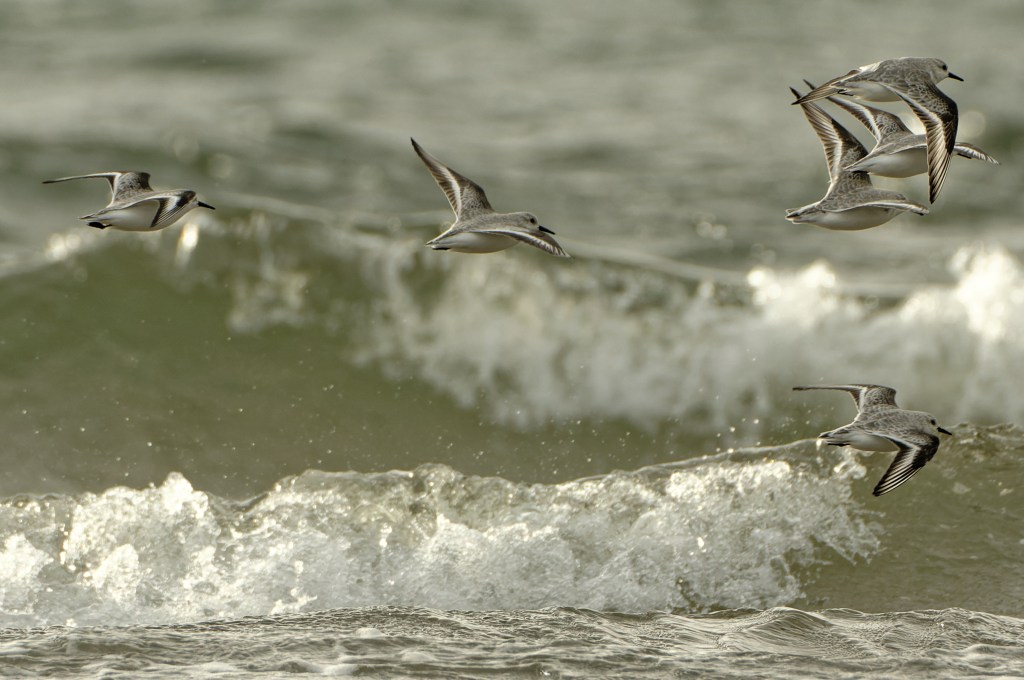
The light rose and fell as a squall blew in from over Arran and some pleasing images were had before the horizontal rain forced an end to the business. A stealthy exit saw to it that the birds were not disturbed further.
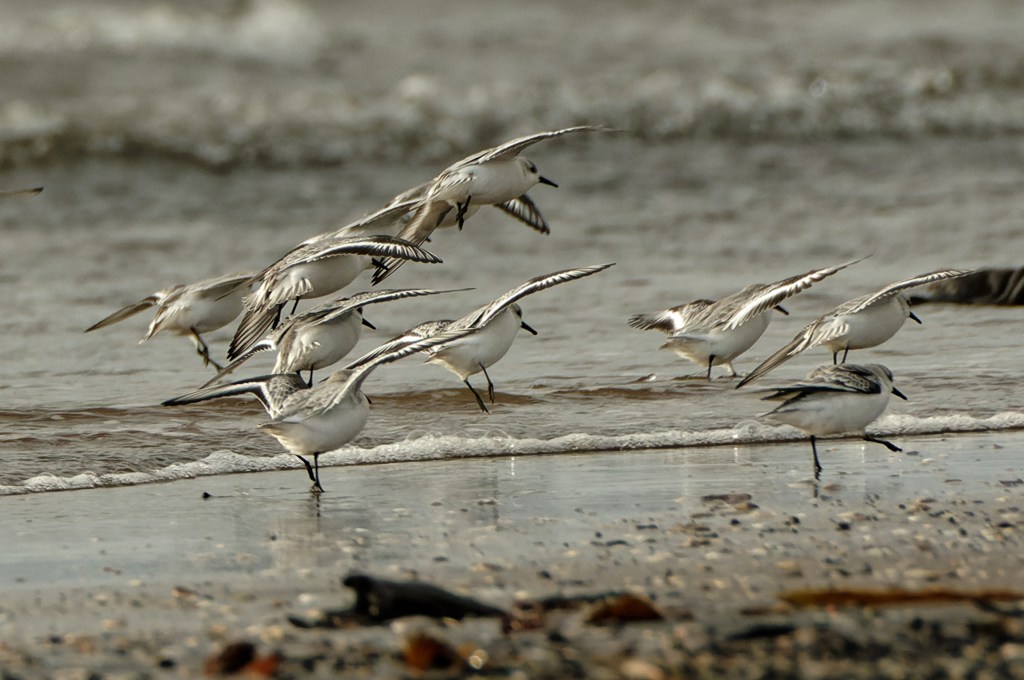
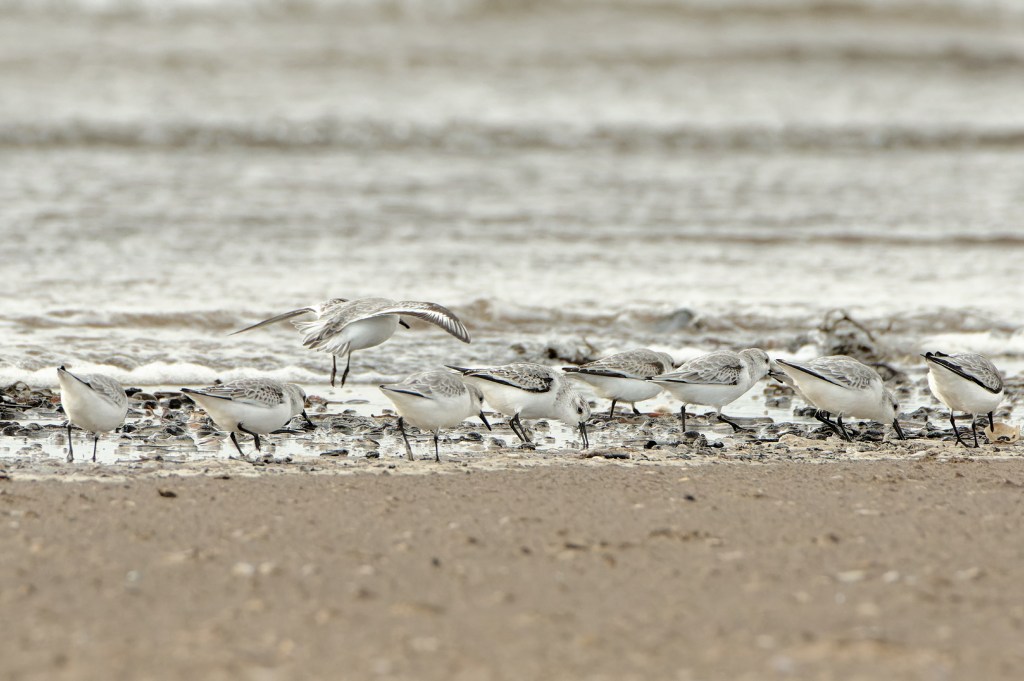
Backwoodsman feels that these images are better than what was available when the Sanderlings post was compiled; he hopes that you find them pleasing. He doesn’t know where he is going to find any Knot though!
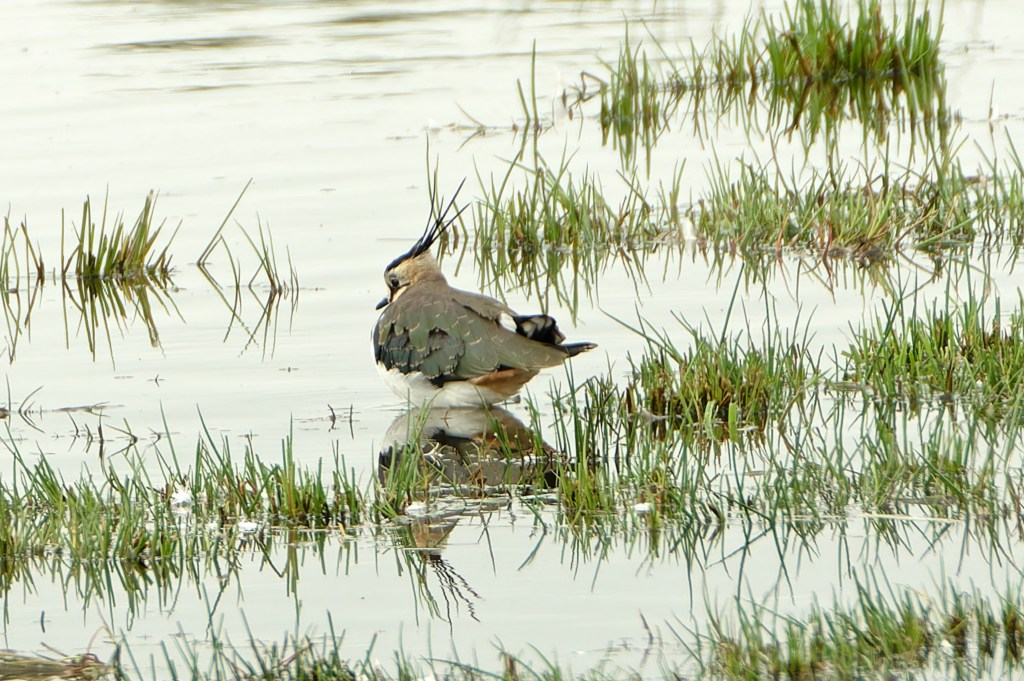
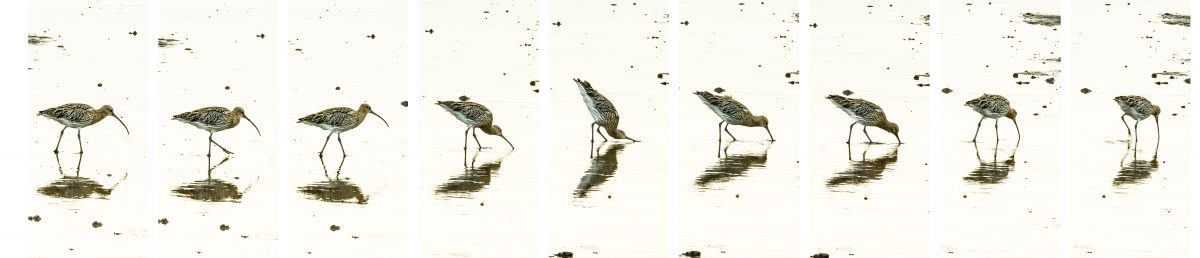
Finally, the Curlew of the Stinking Rocks – there always seems to be one there and Backwoodsman is always very pleased to see it. Unlike the hundreds at roost at Cardross, this one seems relatively relaxed about walkers on the shore so long as they keep their distance.
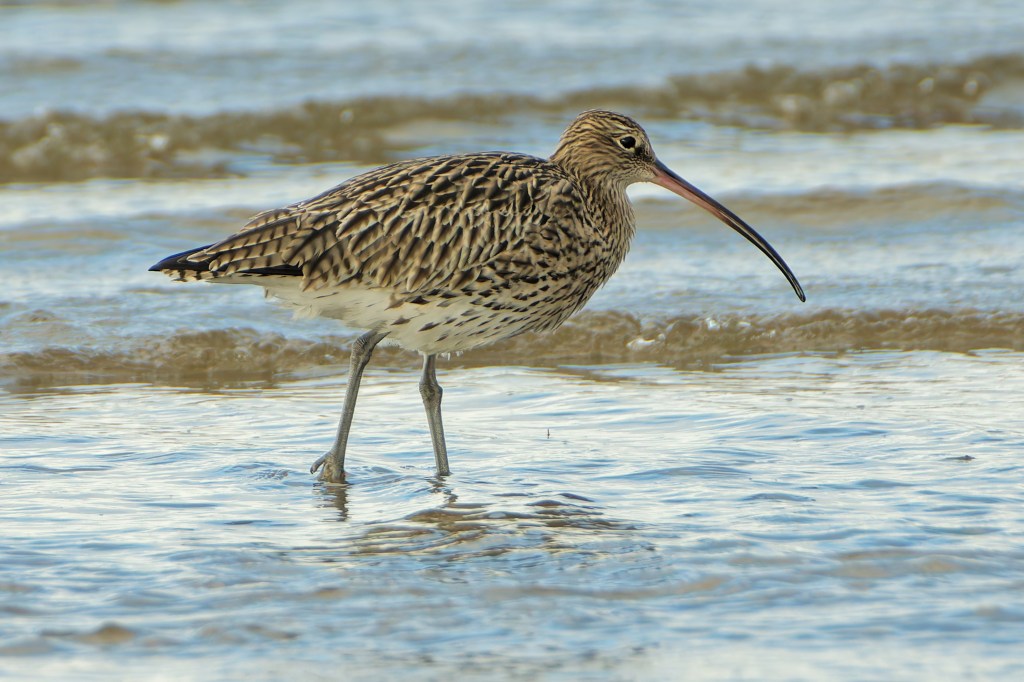
Curlew are under pressure from habitat destruction and disturbance and one member of the group of thirteen Numenii species (Curlew, Whimbrel and Godwits) is no more. This morning (18th November 2024) at 0600 hours, the Radio Four Today Programme  carried the news that the Slender-billed Curlew, a species of bird that historically was a regular visitor to the Mediterranean, is very likely to be extinct.

This follows the news (28th October 2024) that four other species of shorebird that regularly visit the UK have just been uplisted on the IUCN Red List: Grey Plover and Curlew Sandpiper as Vulnerable to global extinction, and Dunlin and Turnstone as Near Threatened. Much cause for concern then. Perhaps these birds would all do better if they didn’t waste their energy teasing dogs?

*Re the gliding photograph: some of you may spot that one of the birds is very much in summer kit. Indeed it is; Backwoodsman is cheating, having taken this photograph in May! It would be a shame not to post it though.
Snipe

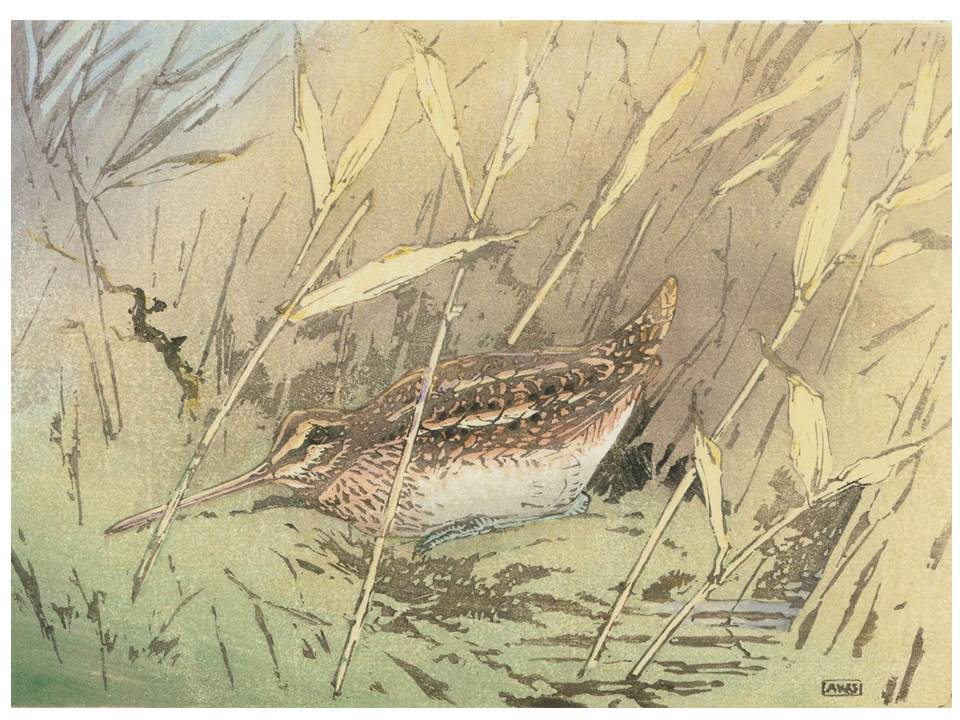
To introduce this species, Backwoodsman offers a fine colour woodcut by Allen William Seaby (please see this one too). The bird and its habitat are drawn and coloured beautifully. Backwoodsman hopes you are getting the impression that this creature may be well camouflaged and therefore quite difficult to see?

Snipe have been on Backwoodsman’s wishlist for a long time but it has just never been the right time to get them in the camera. On a winter day several years ago, Backwoodsman went to RSPB Lochwinnoch with the birdscope but without the camera – together with the necessary tripod, birdscope and camera make for a most uncomfortable pack. Just outside the Visitors Centre window, a scrummage of small waders was underway. A helpful volunteer identified the participants as Snipe. Backwoodsman was transfixed; not only were they a completely mad shape with their long, straight bills but they seemed to be jumping on and over each other in a scene of chaos and frenzy. Fast forward to the Old Racecourse at Irvine; we heard unearthly sounds all around us but could not see any birds; Snipe, said the Merlin App. We were hearing the famous drumming (vide infra). The Stevenston Ponds are reedy and shallow; on a winter visit, a small group of birds exploded from the margin before us and sped away on sharp wings. Our eyes are in by now – the birds are Snipe – but they’ve gone.

How to get onto them with the camera? There is a problem with Snipe; their habit is to conceal themselves while foraging or resting. Baclwoodsman’s RSPB bird book describes them as secretive and the RSPB website has them skulking.

John Clare’s poem to the species (“To the Snipe”) resents the extent to which boys and men with dogs and guns clatter through the natural world disturbing everything and shooting anything slow enough. Of Snipe, he says they are:

“Hiding in spots that never knew his tread
A wild and timid clan
…That from man’s dreaded sight will ever steal
To the most dreary spot”

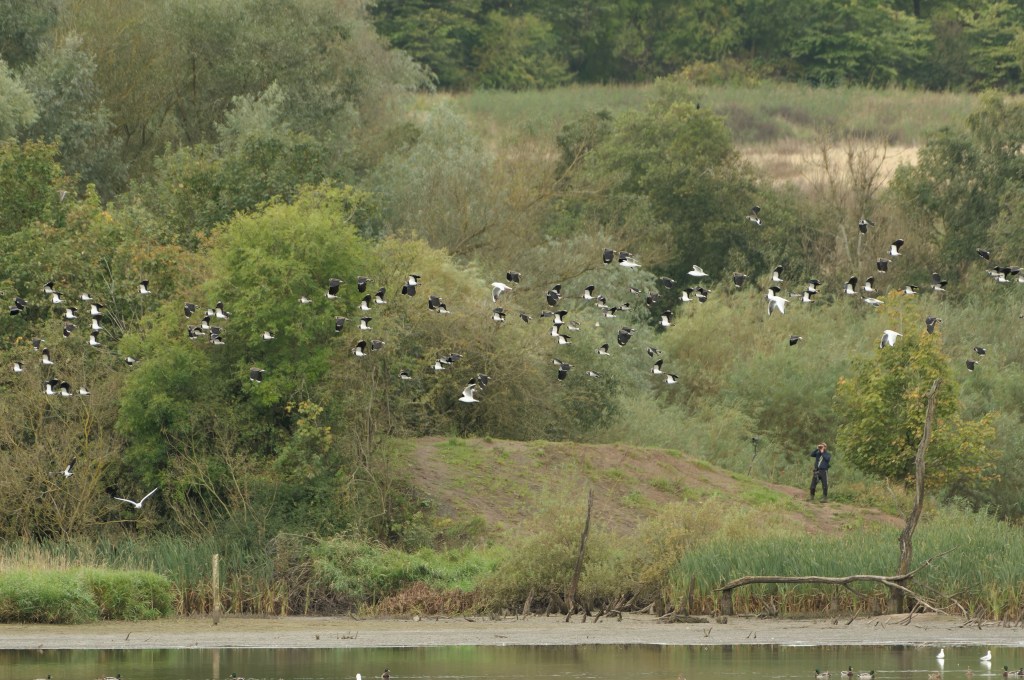
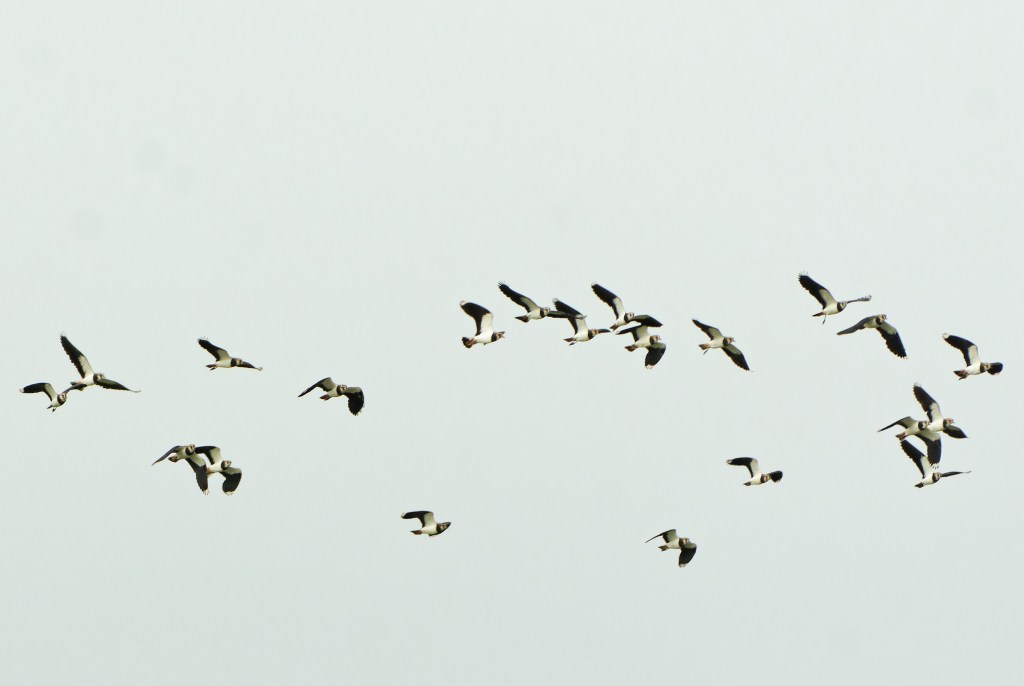
Backwoodsman behaves a bit like this on Avanti trains so it’s going to be a tough gig to get the images he seeks. Fast forward again to the very end of September 2024 when we visited RSPB Baron’s Haugh. We haven’t usually done very well there – regular readers may remember a slightly disgruntled post from the very beginning of the year (Kingfishers, January 27th) but we decided to give it a punt on a rather grey Saturday. We arrived and from the Causeway Hide, we could see a lot of Lapwings; the autumn season sees a gathering of these beautiful birds at the Haugh.
The hide was busy, and suddenly, so was the sky, as it filled with birds. We looked up and around for raptors but the reason was rather less ethereal. A large atgani chap broke cover on the far side of the Haugh – wearing your camo undies would seem like nugatory effort if you’re going to stand on the birds’ heads.

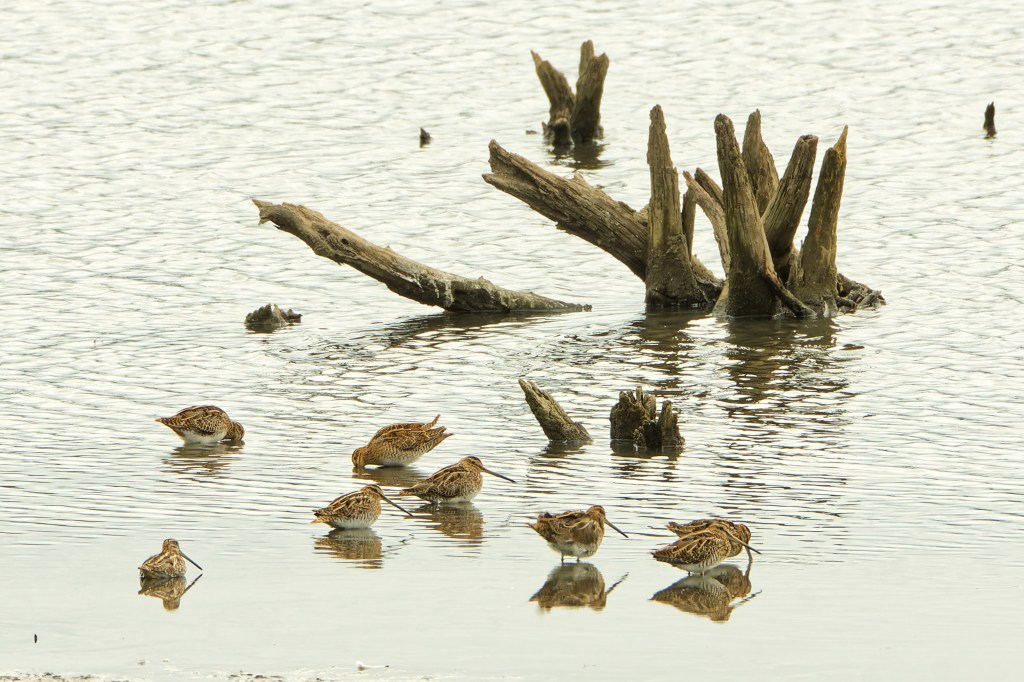
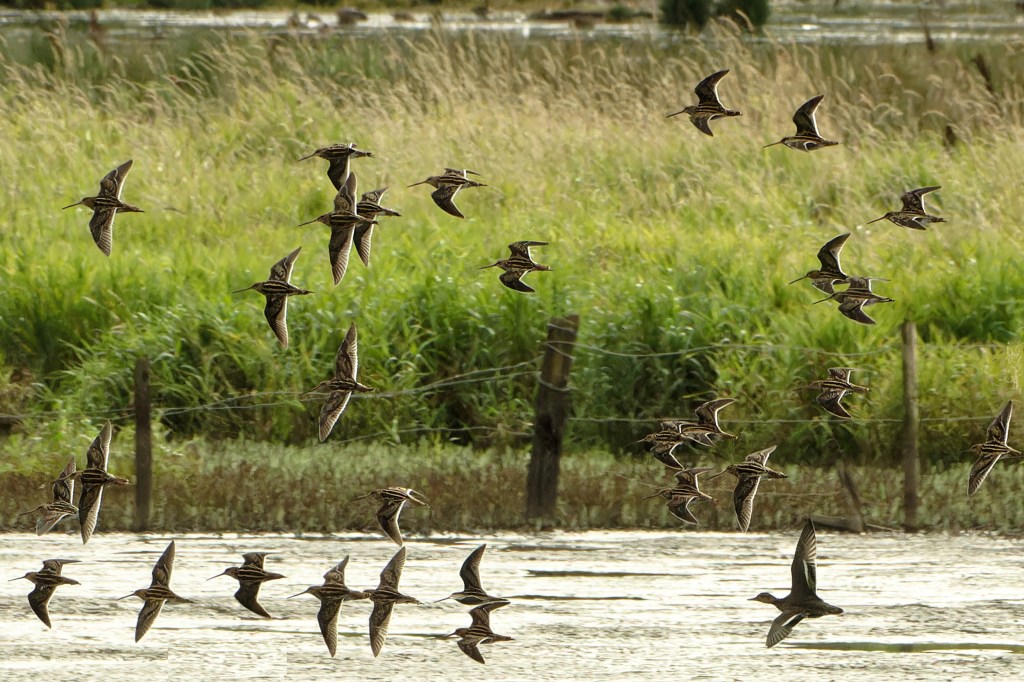
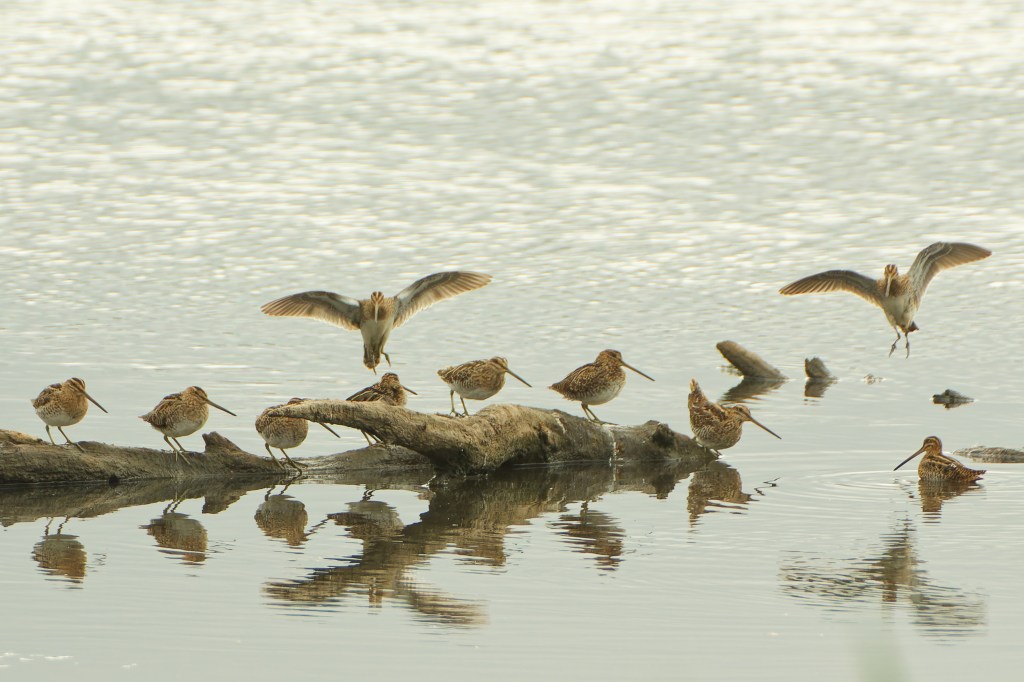
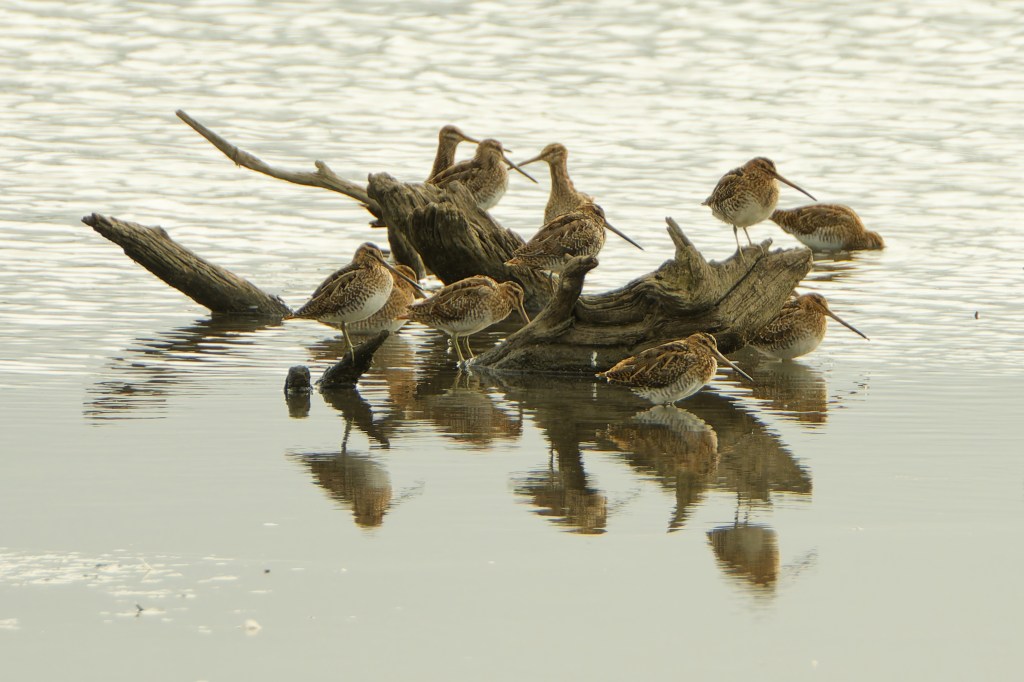
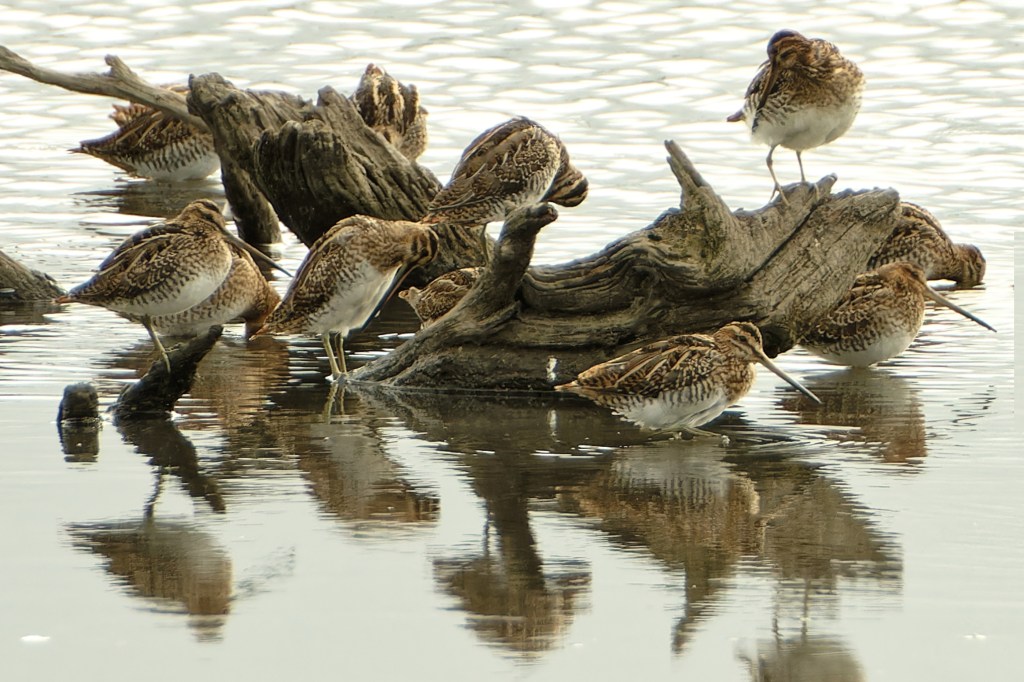
But there were many Snipe too. At the river, Backwoodsman was able to find the vantage point where the atgani had showed up, and take up a similar forward position, but was able to use the cover much more effectively. There were Snipe right in the foreground, with some attractive dead wood to set them off. There were also Snipe on the wing; the overall impression was that hundreds of birds were present, which was very surprising to Backwoodsman. The book says that Snipe will “gather together in groups and fly in loose flocks called ‘wisps'”.

We get wintering birds in the UK – is it possible that we saw a large group of winter migrants (it was definitely a bit more than a wisp!) just arrived and yet to disperse? The EuroBird Portal does appear to show a lot of movement activity around the end of September.

Baron’s Haugh has undergone a certain amount of remodelling recently, seeking to re-establish a connection between the River Clyde and its natural floodplain. There seemed to be a fair bit of water on the Haugh and it may be that there are more stances for Snipe away from potential predators. The view of the warden (via email) was that, firstly, there were always a lot of birds on the reserve in the winter, and that secondly, they had created quite a few new places where the birds could feel safe from predators (if not entirely from atganis) and stand about in plain sight, rather than skulk.

Backwoodsman found several examples of actions (three links here, one per word) designed to support these and related birds through focused conservation work in the UK.

The Snipe could be confused for a Godwit at extreme range because of the very straight bill, but there can be no mistake once the proportions and plumage can be taken in.

In “To the Snipe”, John Clare wrote:

For here thy bill
Suited by wisdom good
Of rude unseemly length doth delve and drill
The gelid mass for food

The bill – “…of rude unseemly length”; guess he means it strikes him as unusual. Dominic Couzens writes:

“The Snipe’s long, straight bill is the perfect tool for probing deeply into the soft mud, and as a result the Snipe is indeed the champion probe-feeder among waders. It will feed whenever the substrate is not too hard, and it especially favours the edges of pools and puddles. Where the earth or mud is rich it will stand still in one place for some time, making a series of insertions on the spot, leaving behind a semicircle of small holes. And once the bill is in place, the Snipe will often vibrate it a little, and pull it up and down, feeling around in the mud for movement a few centimetres below its feet. The bill is a feat of biological engineering. At the tip it is fitted (as are the bills of most species in this family) with millions of tiny touch-receptors that are wired to a special part of the brain. The receptor organs come in two kinds, one detecting pressure and the other detecting shearing movement. Together they provide the Snipe with an exceptionally fine sense of touch at the bill tip, easily enough to pick up the presence or movement of particles nearby in the mud. The Snipe’s bill also demonstrates another, more unusual trick: it can be opened only at the tip, so that food can be picked up and swallowed without the bird having to remove its bill from the mud. The bill structure is not especially rigid; the component bones and connectors can move relative to one another, an arrangement known as rhynchokinesis. The trick then is mechanical: if the bill is bent slightly at its near end, the bend can be transmitted to the tip such that the rest of the bill remains closed. In this way the Snipe’s bill tip can pinch a worm or insect larva in situ, and the long tongue can then transport the food item up towards the mouth.”

“…the Snipe is indeed the champion probe-feeder among waders.”  Just imagine the machinery of evolution slowly but inexorably clicking into place to deliver such exquisite adaptation and performance. Backwoodsman would love to find the primary literature which sets out the taxonomy of the Snipe bill in detail; it must be the stuff of true wonder.

And there is more, again from Couzens: “The bill is not the only unusual anatomical feature of the Snipe; it also has a modified tail. Most waders have 12 tail feathers, but the Snipe has 14 or sometimes more. The very outermost of these are specially stiffened and attached to the body by independent muscles, such that they can be splayed out from the rest of the tail. When a Snipe indulges in one of its rising and plummeting display-flights high in the air, the wind passing by these outermost feathers causes them to vibrate and to make a distinctive buzzing sound (“drumming”), a little like the bleating of a sheep. The sound adds an instrumental dimension to the display, without the bird having to go to the trouble of singing. The sound made by the feathers varies according how susceptible to wear they are; worn-out feathers presumably make a less attractive sound than intact ones.” Here is a a good recording of this remarkable sound. As usual, the Featherbase site allows us to see all the feathers; on the left of the left hand image (IMG241) is a group of 14 feathers which may be the tail array.

John Clare regretted that men found themselves compelled to go boldly and unwelcome into the realm of the Snipe and disturb these beautiful birds (like our atgani). Or possibly, boldly go. Intrusions seem to be much in the news just now with the mounting tide of inane froth about space travel. And now we have Prof Brian Cox at it, being anointed cultural heir to David Attenborough and getting a new series on the BBC. “‘Human race needs to expand beyond Earth,’ says Prof Brian Cox.” Basically, we’ve screwed everything we can out of this planet, so we need to go pillage another one to maintain our ridiculous modes of consumption and waste. Anyone familiar with Attenborough’s elegiac coverage of our fading natural world will find Cox’s brassy rapacity an abrupt and unwelcome change of tone.

Though there could be some potential positives – our finest billionaires heading for the stars in spaceships which then go ‘pop’ (like those rich chumps diving to the Titanic wreck in a submarine which went ‘pop’ implosively), would probably improve the prospects of the species.      

It was so pleasing to get anywhere near some Snipe; it would seem unlikely that Backwoodsman will ever get any nearer to one unless some birds show up right outside a quiet hide somewhere. It is tempting to crop tighter and make the images bigger but the quality deteriorates. Perhaps this one is worthwhile; even though there is grain, some of the markings come out nicely and the postures are pleasing. Soon, it will be time for wintering waders at the coast and waterfowl on the lakes, and Backwoodsman hopes, lots of new material.

PS. Some of you may be interested in this petition at Change.org. UK government (DEFRA) is considering permitting the sale of millions of elvers (baby eels) from Gloucester to Russia next spring.  Already last year they allowed the export of 1 tonne (3 million individuals) of this critically endangered species. These elvers will be sold to Kaliningrad, a known transit point for the vast smuggling trade in elvers, the most smuggled wildlife in the world by numbers and by value. This all sounds most regrettable.

Swallows

In her first novel Oranges are not the only Fruit published in 1985, Jeanette Winterson described the strange upbringing of a young girl beset by an oddly religious parent. As if this were not challenge enough, she is forced to learn cross stitch at school. She produces a sampler bearing the following legend, from Jeremiah (8:20):

THE SUMMER IS ENDED AND WE ARE NOT YET SAVED

Academics huddled in the trenches and waiting for the whistles to blow and send them over the top to face the machine-gunned demands of wonks, and all those students with mennl-elf, will recognise the peculiar melancholy brought on by the second half of September. June came and you were confident of getting those calculations run, making some starting materials for some project students to do wonderful things with in the autumn, writing and submitting that grant, preparing all your classes and supporting materials in good time and order, and finishing those four star papers. But no-one would ever leave you alone for more than half–a-day at a time…and now ” The summer is ended etc.” And to make matters worse, many of the birds of summer are heading south, and it will be a while before wintering birds reach us.

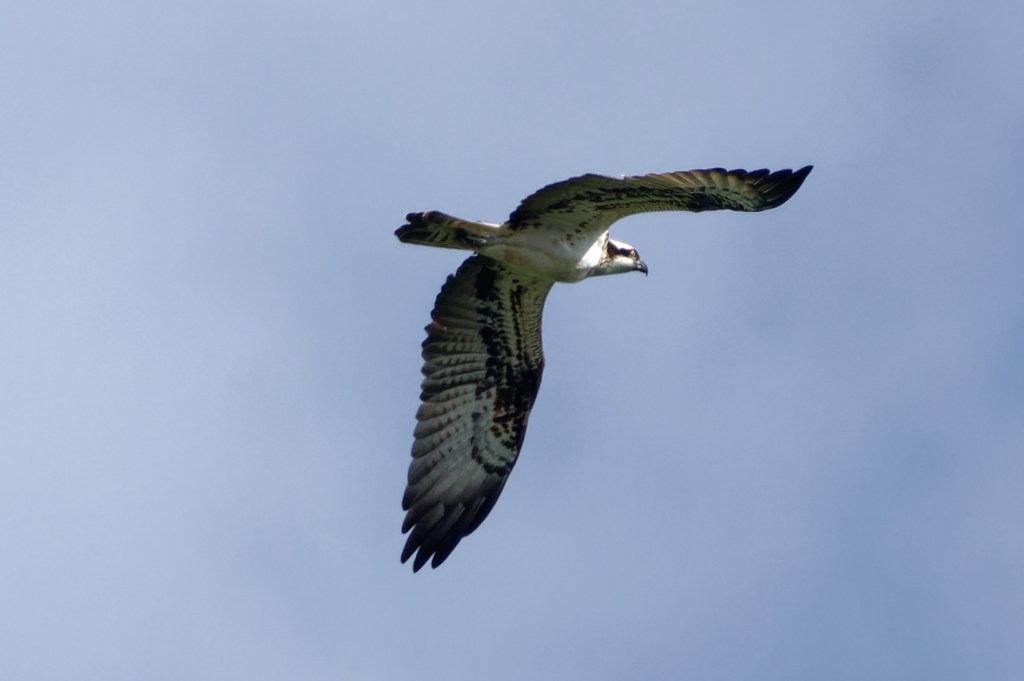
Backwoodsman has probably had his last sight of an Osprey over the Clyde estuary for this season (end of July in this case), and it seems most likely that the Hirundines will have left us too by the time this post is made.

Very unusually, Backwoodsman cannot remember his first sight of a European Barn Swallow with any confidence, which is a little disturbing. There are half memories of birds passing across the surfaces of school cricket fields, fast enough to set the dry grass of the outfield aflame, but the details which usually anchor these memories cannot be found. Instead, it was an enamel badge which provided Backwoodsman’s first recoverable memories of the Swallow.

A very small Backwoodsman wore a dark green anorak which was covered in enamel badges; he didn’t really care what they were and he lacked affiliation with any of the organisations represented upon them, but if he liked the badge, that was it. They could have been anything; a nice bit of enamel and it’s on there and worry about it later when you get quizzed by grown-ups. But this one is not to be forgotten; what a piece of design! The bird is styled superbly and the sunburst echoes the Kyokujitsu-ki  or Rising Sun Flag of Japan (another great bit of graphic design) persuasively. Details of the travel organisation which had these badges made are not to be found by Backwoodsman, alas.

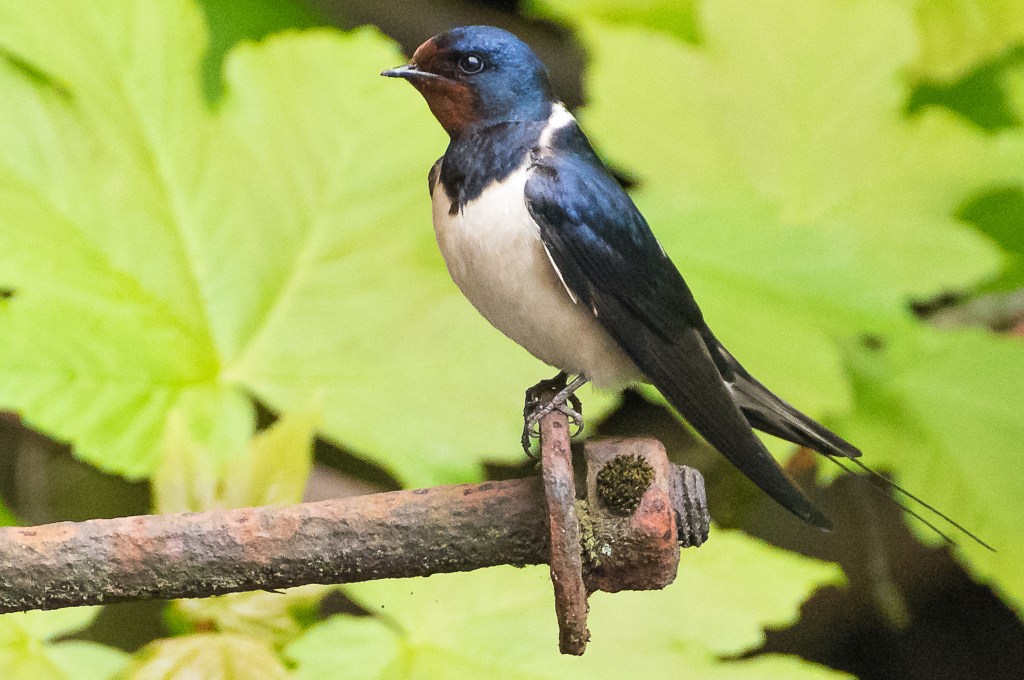
The BTO tells us that “Swallows must be amongst the most popular birds – their arrival each spring in the northern hemisphere presages the onset of summer. Swallows are easily recognised with their slender bodies, long pointed wings and forked tails; martins tend to have much less deeply forked tails. While the deeply forked tails may help their manoeuverability in pursuing aerial insects, in many species they are also used as a signal of male quality, those who can grow longer, and importantly symmetrical, streamers being the most favoured by the females.”

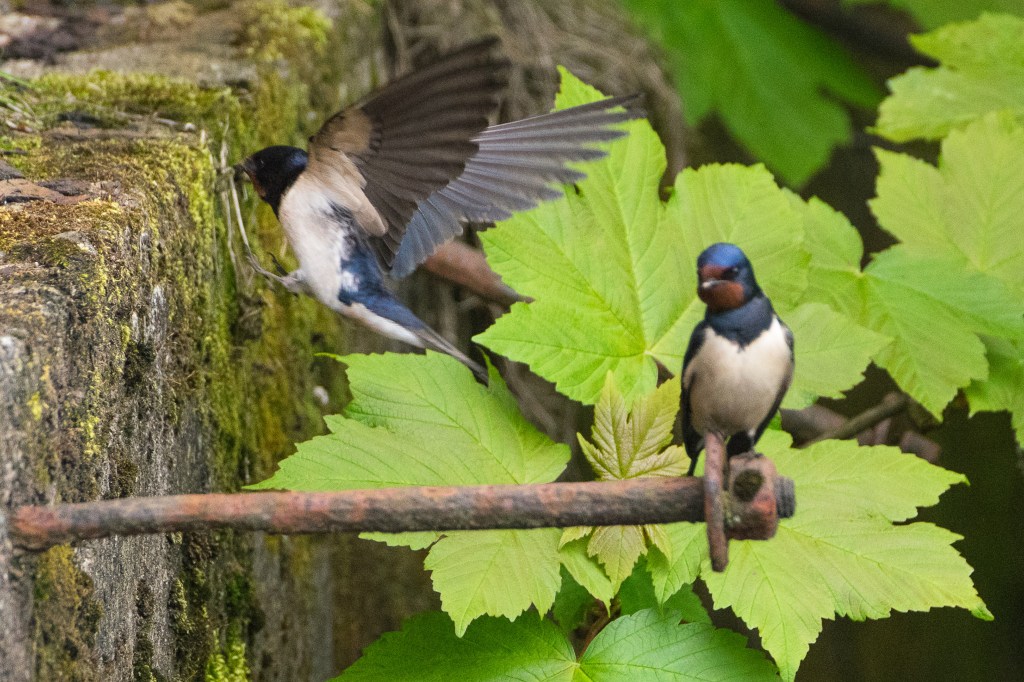
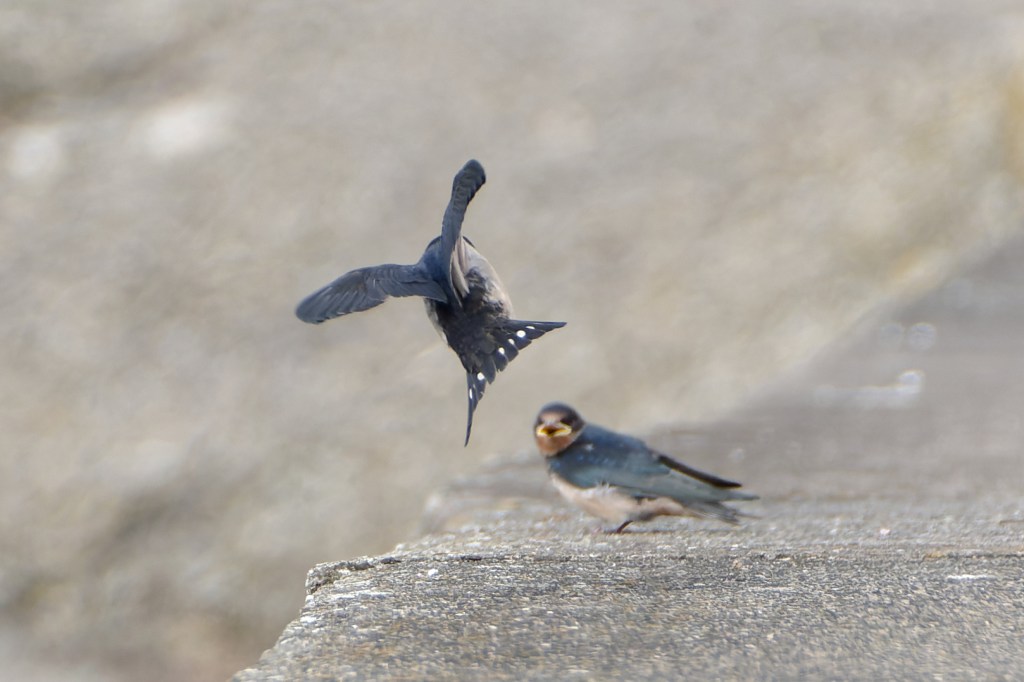
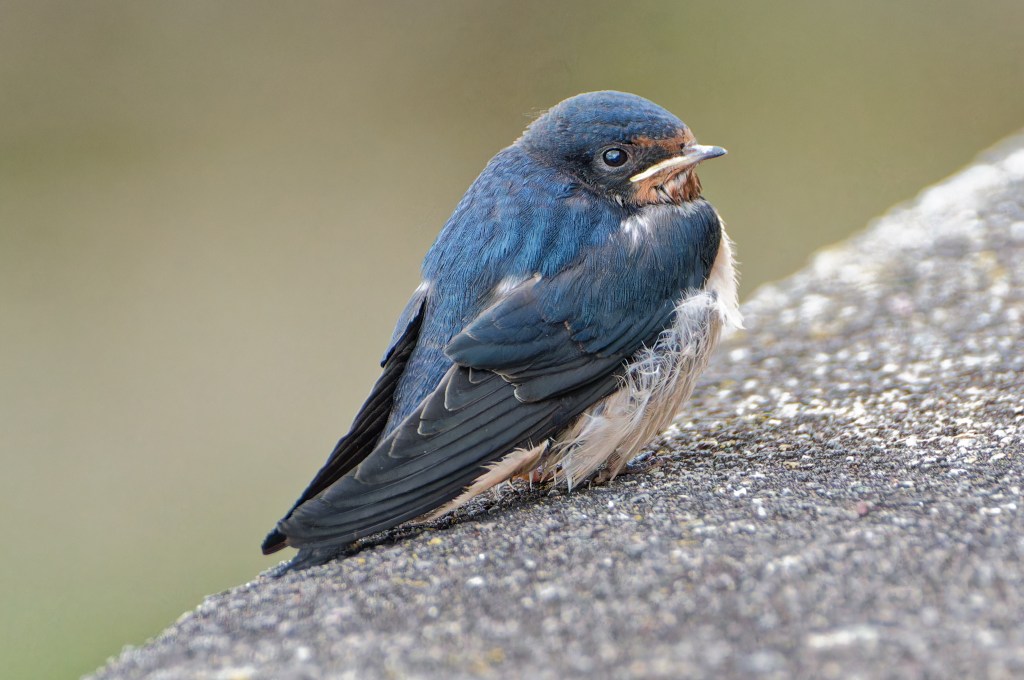
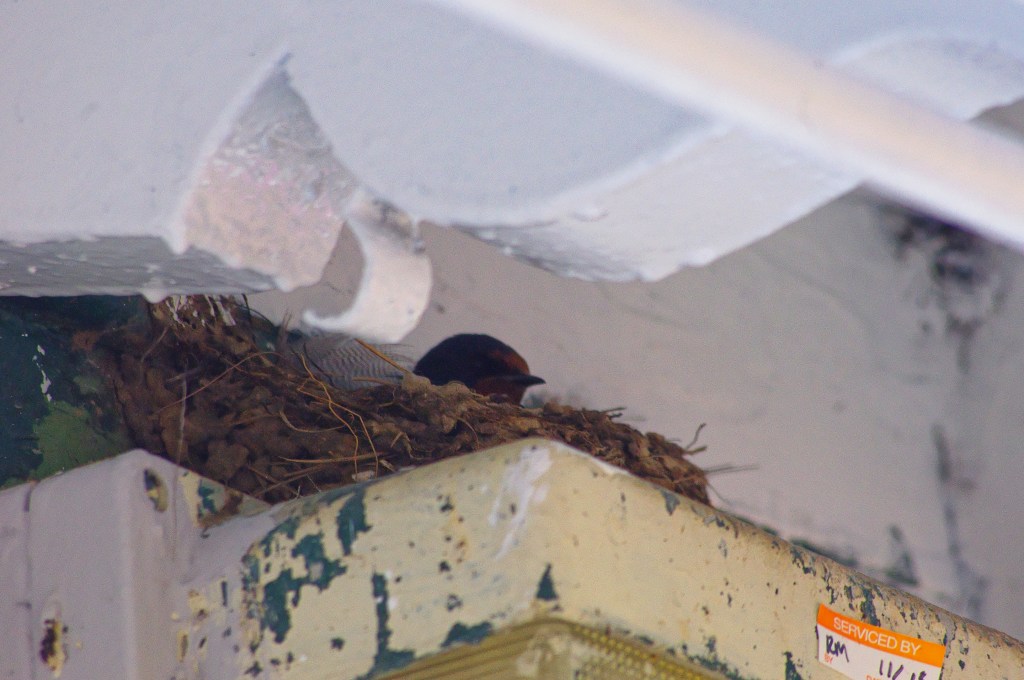
Swallows like the sawmill at Cardross and the place where the Geilston Burn spills out over the mud. Backwoodsman suspects that they make nests in the big (barn-like) shed at the western end of the sawmill yard. On a recent visit, Backwoodsman found a group of Swallows of various vintages. The young ones still have the yellow “feed me” mask.

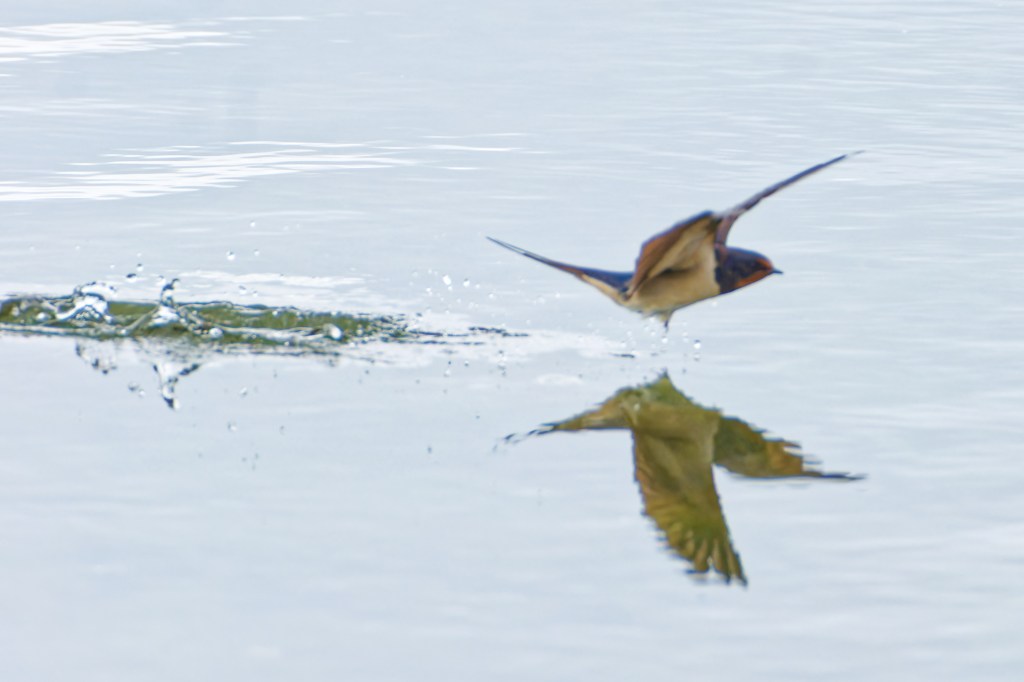
Backwoodsman attempted to track birds either taking insects from the surface of the burn, or drinking from the fresh water as it ran out into the estuary; it is hard to tell which. Better executions of these images would win competitions –  these would not.
We are told that the way to get good shots of fast-moving birds on the wing is to anticipate where they will be, pull a focus on that space, wait for the bird to enter and then fire. Of course, focussing on thin air is a challenge, so you have to find something solid at about about the right focal range (some ripples on the water in these cases) and hope for the best. As you need a fast shutter and therefore probably a wide aperture to keep the ISO down, your depth of field will be shallow and the scope for error almost unlimited. This is what you get, v1.0. Backwoodsman is a mere novice when it comes to birds on the wing.

Sometimes, the Swallows are still – they must get quite tired from all their “hawking“. Backwoodsman has failed to find a satisfactory definition of this term, though it is very widely used. Presumably it means to fly rapidly after prey and catch it on the wing? Swallow flight has been studied quantitatively using fast cameras and wind tunnels (and written up in an open access paper): there is something called the Strouhal number which relates wing beats and speed. The quantitative work has wingbeats around 7-8.5 Hz and speeds across the ground of up to 14 m s-1, or of the order of 30 mph in Rees-Mogg units. There is, of course, some infamous discussion about Swallow flight dynamics in Monty Python and the Holy Grail, which you will find here, and here.

Somewhat aspirationally perhaps, InterCity trains used to sport a swallow livery. This recollection got Backwoodsman thinking about the national rail system we used to have, and the fragmented thing we have now, and how the future of rail transport is being ransomed by HS2; the thoughts follow a depressing trajectory. No-one can revel in the national pickle that is HS2 but there is some amusement to be had from the situation. In the recent Panorama programme  HS2: The Railway that Blew Billions, Andrew Gilligan says (see 38:30-39:50) of Johnson, grand emperor of “levelling up”, “he quite liked big, stupid projects…of course, this was big and stupid to an extraordinary degree…”.

When Swallows do sit still in good light, their semi-iridescence can be enjoyed fully. There is a nice walk from Bishopbriggs towards Kirkintilloch along the Forth and Clyde Canal and it passes through an awkward space beneath the Hungryside Bridge, where your life may be taken by a weekend warrior on a bicycle. The bridge seems to be a Swallow nesting site and we were fortunate to find some birds resting. It was early May; presumably, they were busy building nests, or possibly looking after eggs. They look in really good condition.

Swallows are said to return to the places where they hatched and fledged; Crianlarich station has hosted nesting Swallows for as long as we have been visiting. They make nests on the tops of small pillars which are up close to the roof. Crianlarich station really isn’t busy and the Swallows will have hours without disturbance while they gorge themselves; there are always plenty of insects in the Highlands when the sun comes out. This image was taken in mid-June and the birds were definitely on eggs by then.

If Backwoodsman was a Swallow, he would head south through the UK while the weather was good, feeding up along the way, before starting on the long flight to South Africa. The EuroBirdPortal shows the Swallows clearing out of Europe almost completely around mid-November in 2023. The data for the UK is a bit confusing, but it is interesting to follow the timeline from the end of January, as the birds begin to show up on the Iberian peninsula, and then flood north and east through the rest of the landmass. Backwoodsman will be waiting.

Vigiljoch 1: through the air

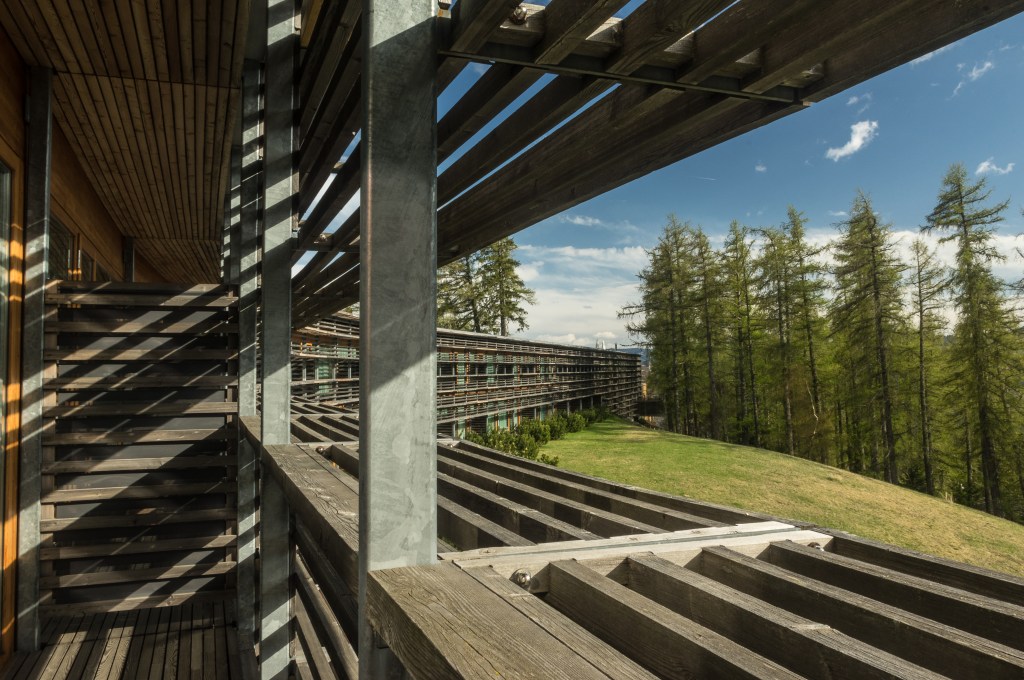
Backwoodsman had the good fortune to return to the Vigiljoch which stands above Lana in the Sud Tirol.  The mountain is really the first high point on a long ridge which extends many kilometers to the south-west. We stayed in a beautiful hotel (Vigilius Mountain Resort) which is reached fron the valley by cable car (Seilbahn); a chairlift (Sessellift) climbs from the hotel at 1486m to a spot height of 1814m.

The ridge is broad and undulating at that point with many well-marked tracks; those which head south-west climb steadily, reaching a spot height of 2608m at Naturnser Hochwart. We’ll return to this topic in a subsequent post.

Our first visit took place early in May in 2019 when much of the land was trying to cast off winter: it was dry and tawny in colour. By mid-June, the timing of the 2024 visit, a transformation had taken place; there were flower-strewn meadows, much noise from crickets and grasshoppers, and butterflies on the wing. Backwoodsman is always pleased to be able to capture images of butterflies; looming is prevented by the use of the long zoom (though depth-of-field suffers). If you don’t loom, the butterfly may sit for you and show you both upper and lower wing surfaces. Patrick Barkham describes this approach of remote viewing in The Butterfly Isles.

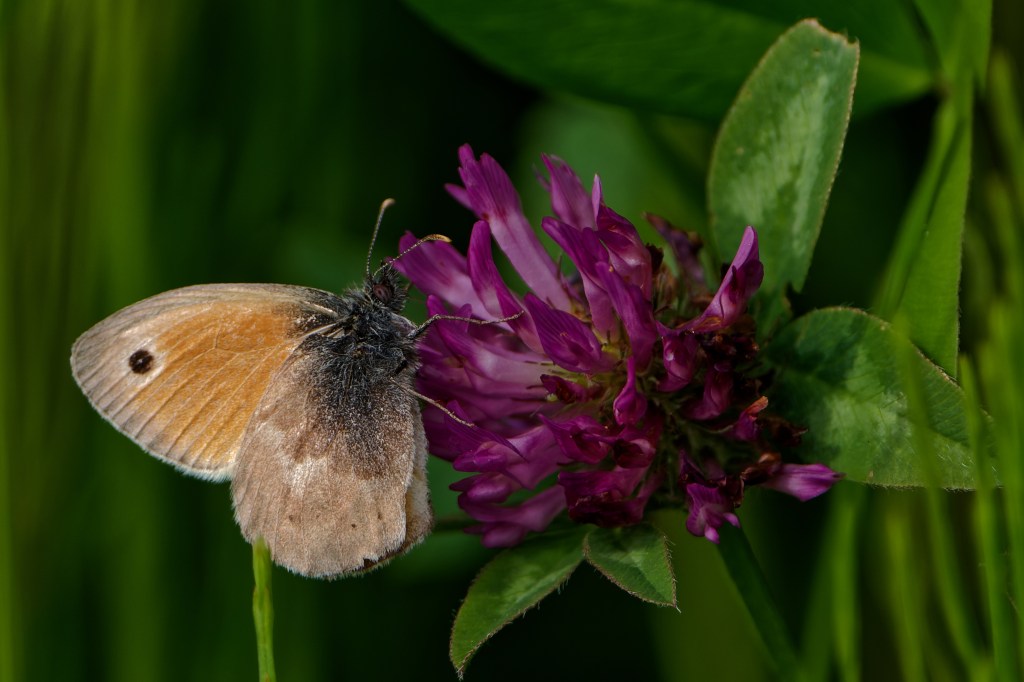
The Small Heath is not rare or unusual but it has settled on a Clover which makes for an attractive range of shades and tones in the image. Typically for this species, its wings are folded when feeding or at rest.

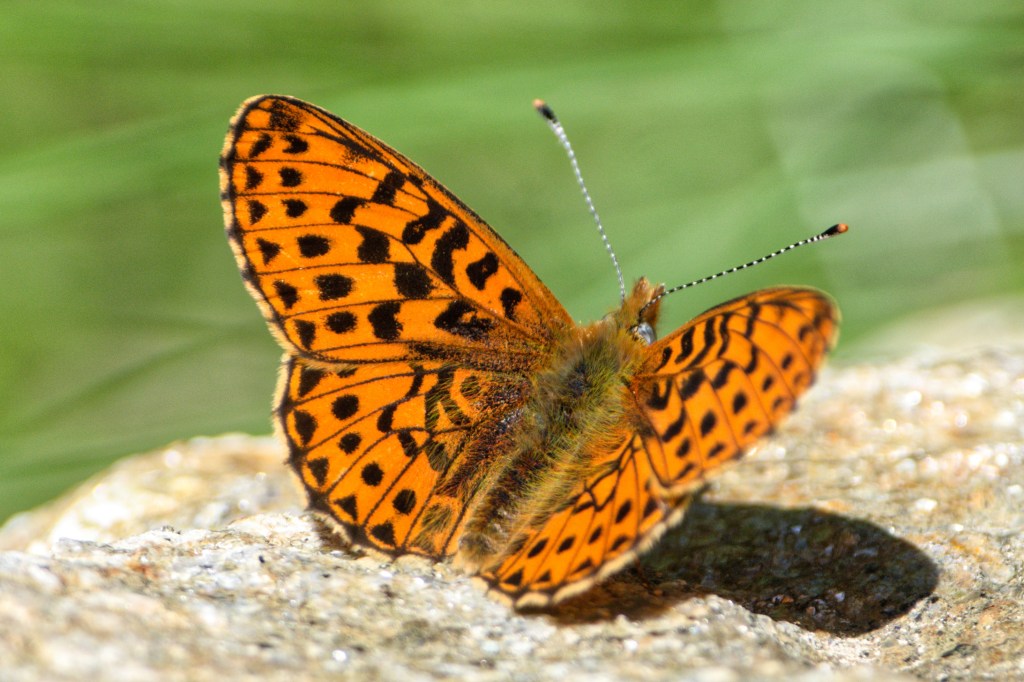
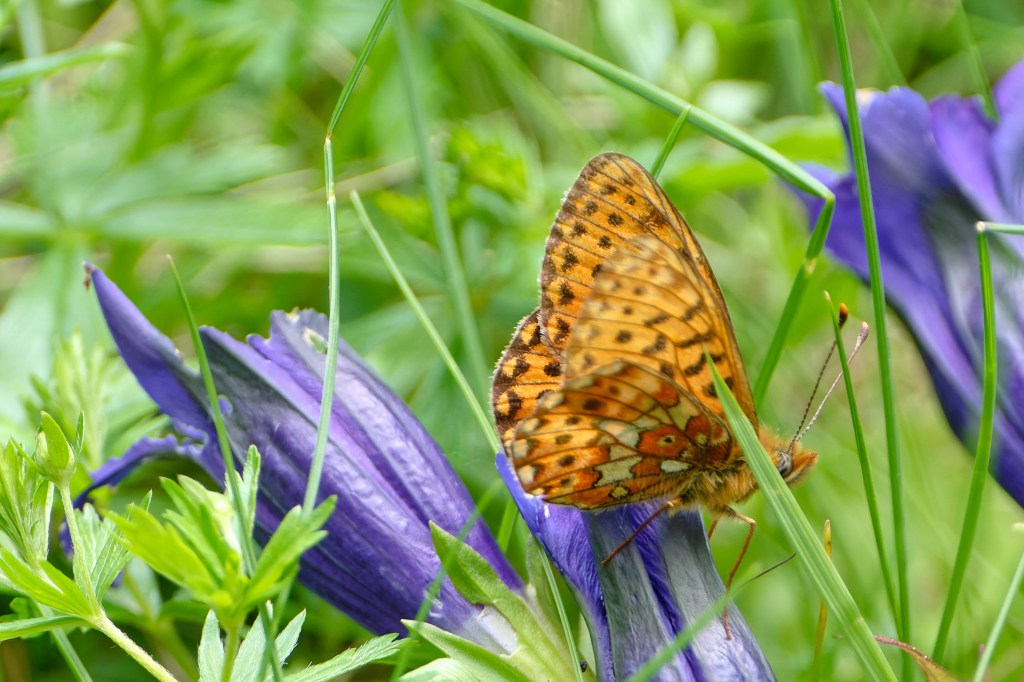
Strong light brought out the opulent colour of this Pearl-bordered Fritillary; the left hand wing and the body are in the same focal plane so the image is sharp, but the right hand wing is orthogonal to that plane. Backwoodsman is far from being a butterfly expert but believes the identification is correct; it is based on the pattern of black markings on the upper surface, and of white and yellow on the lower.

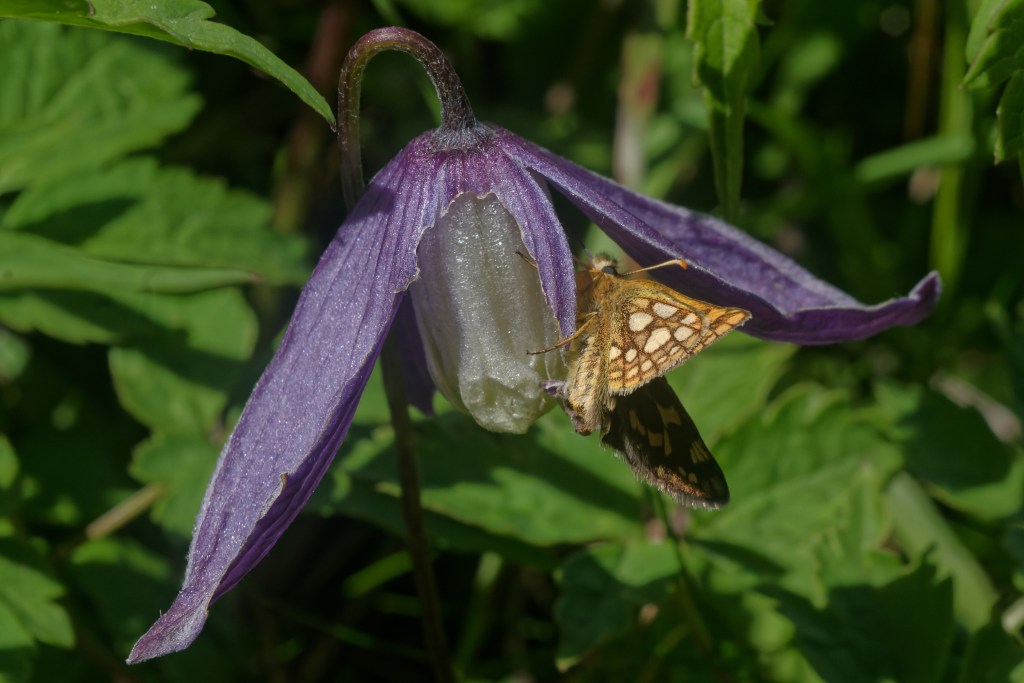
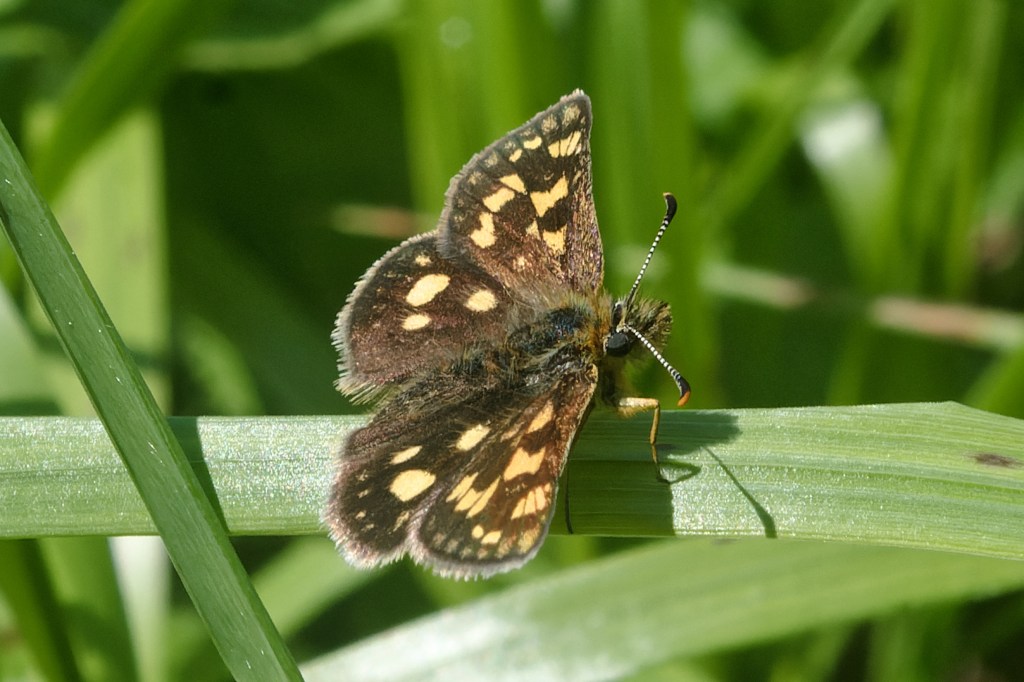
Backwoodsman has never set eyes on a Chequered Skipper before; this one posed very nicely, using a wild Clematis as a prop to show off the underwing. The depth-of-field in this image of the upper surface is quite good.

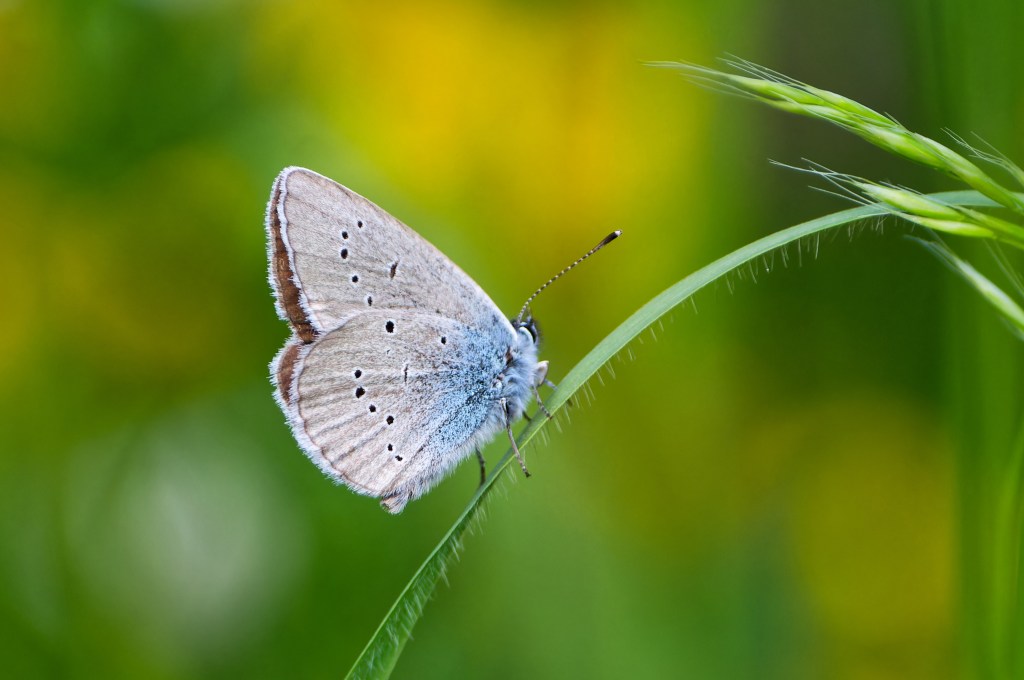
The meadow in front of the hotel yielded a couple of Blues, but Backwoodsman had to be very careful while prowling about here because of proximity to the buildings. The prospect of being mistaken for a papparazo was not pleasing, and might have led to a scene. Head down and be careful where you point that thing! This Small Blue is just showing the brown upper wing surface allowing the identification, but what is this second chap?

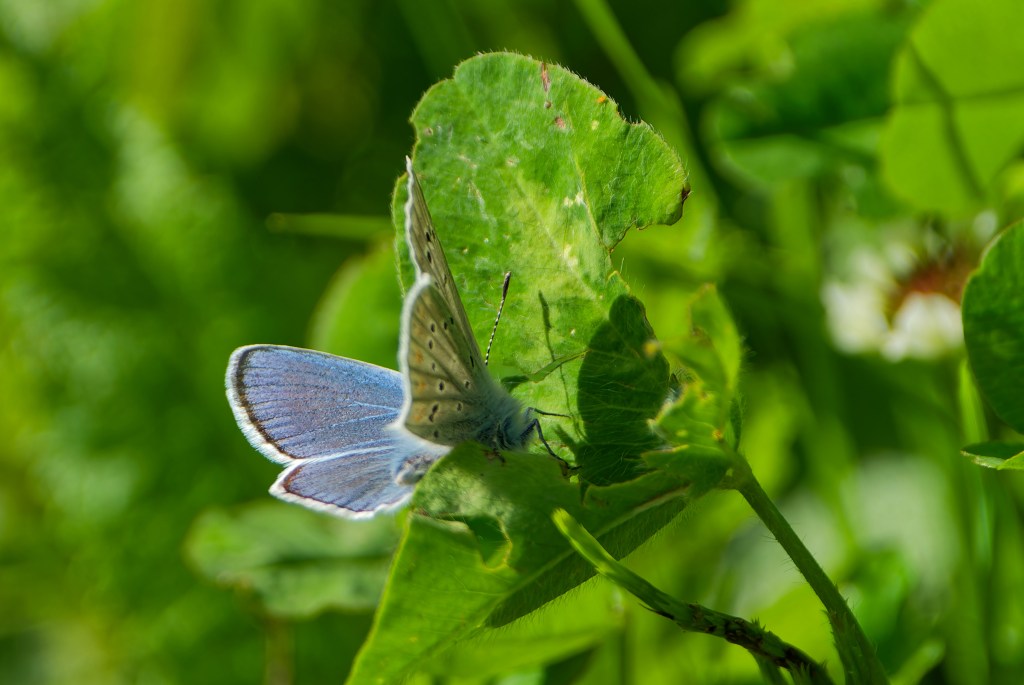
Backwoodsman’s money is on a Common Blue – this next one is definitely a Common Blue but please note the very strong pattern of spots on the lower wing surface. Could the strong light through the wing fade out that strong pattern of spots in the mystery species?

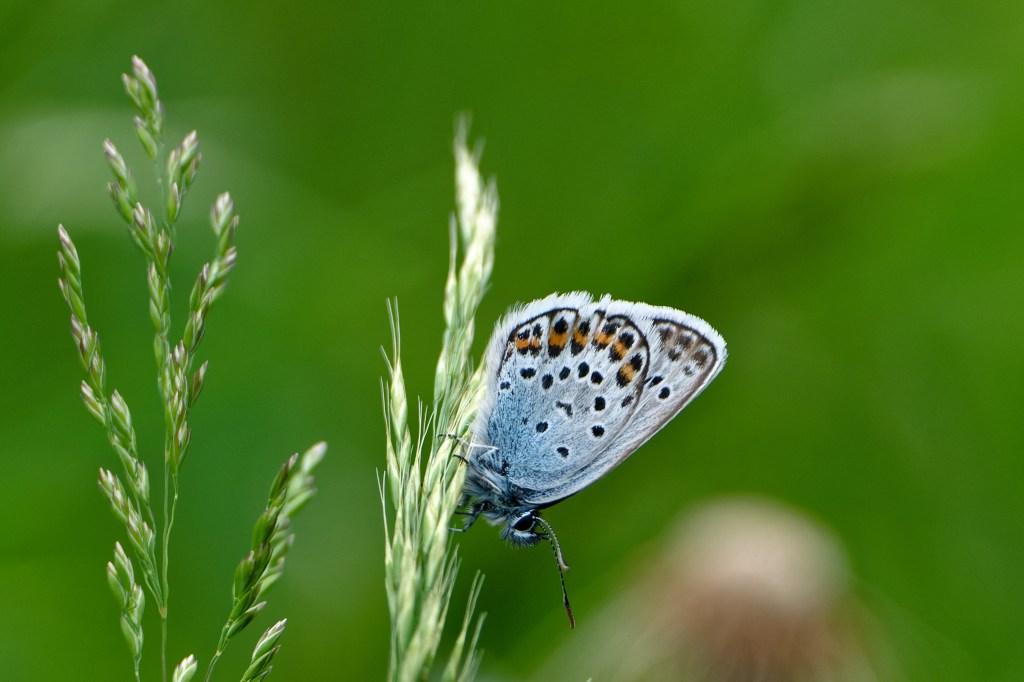
Finally, a female Silver-Studded Blue – little doubt about this one. The dusting of the body and wing bases is really quite something.

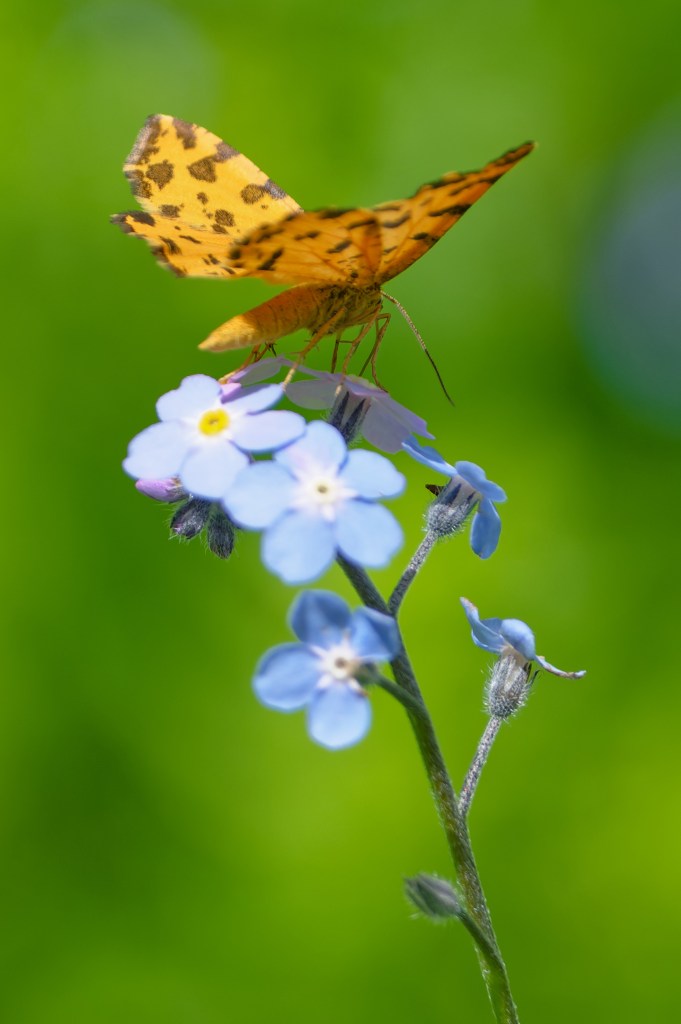
Backwoodsman was taunted by Clouded Yellows (shades of Omis again) – they would not settle. There were a few moments of exhilaration when an ochre creature flitted into view and settled but they were Speckled Yellow moths each time. One day, we’ll get a Clouded Yellow in the lens and focused.

Backwoodsman thought he had done quite well with this range of species but then, alas, he read a Naturetrek Tour Report from July 2018 and was well and truly put in his place. So many species! However, it is the case that groups of naturalists banged up together for a few days can get quite competitive, possibly imaginative even. On a visit to Shetland, we encountered a wildlife tour party lead by Iolo Williams from the BBC’s Seasonwatch operation, dining at the Sumburgh Hotel. “So, how many species have we seen today, then, look you, a hundred and seventeen wasn’t it?” intoned Iolo in ultra- lugubrious mode. “Don’t forget the Hobby”, said one of his clients. “Oh yes” he said “a hundred and eighteen then.” We were surprised, thinking a Merlin more likely given the northerly extremity. Anyway, everyone was definitely up for one more tick on the list, no matter how improbable.

So “where are the birds?” you bellow, “get to it you busker!”

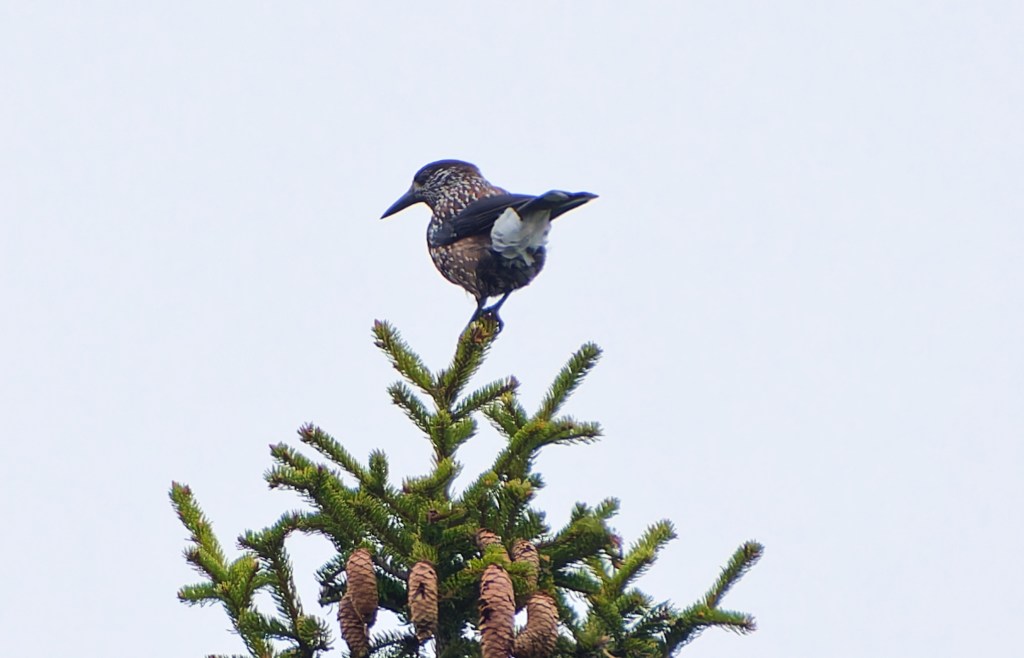
A hit list travelled to the Sud Tirol with Backwoodsman, because we had done astonishingly well last time. We had a one-off sighting of Spotted Nutcrackers in 2019. Snow came during our vist and there was some poor light; through the gloom, we saw a group of corvid-sized birds feeding on the ground in a woodland clearing. Perhaps the snow had brought some cones to the ground for them.

They were much in evidence this time, always right at the tops of trees, and noisy with it, but quite camera-shy. This one was photographed from the Sessellift in excellent light. The Wikipedia entry refers to their cacheing of pine nuts and their excellent memories of cache locations.

Various Woodpeckers flitted about; we caught a glimpse of the Black Woodpecker, an unmistakeable bird. Just a glimpse though, no time to photograph them. Great-spotted woodpeckers were about too, but not to be photographed. Backwoodsman made a recording of the Great-spotted which will turn up elsewhere; he also made this recording.

There is an interesting comparison of the two species drumming on the same tree on YouTube, along with separate recordings of the Black and Great-spotted on the excellent xeno-canto site. So what do you think? Backwoodsman thinks that the drumming in the recording seems more like that of the Black Woodpecker. I fear we’ll never know for sure.

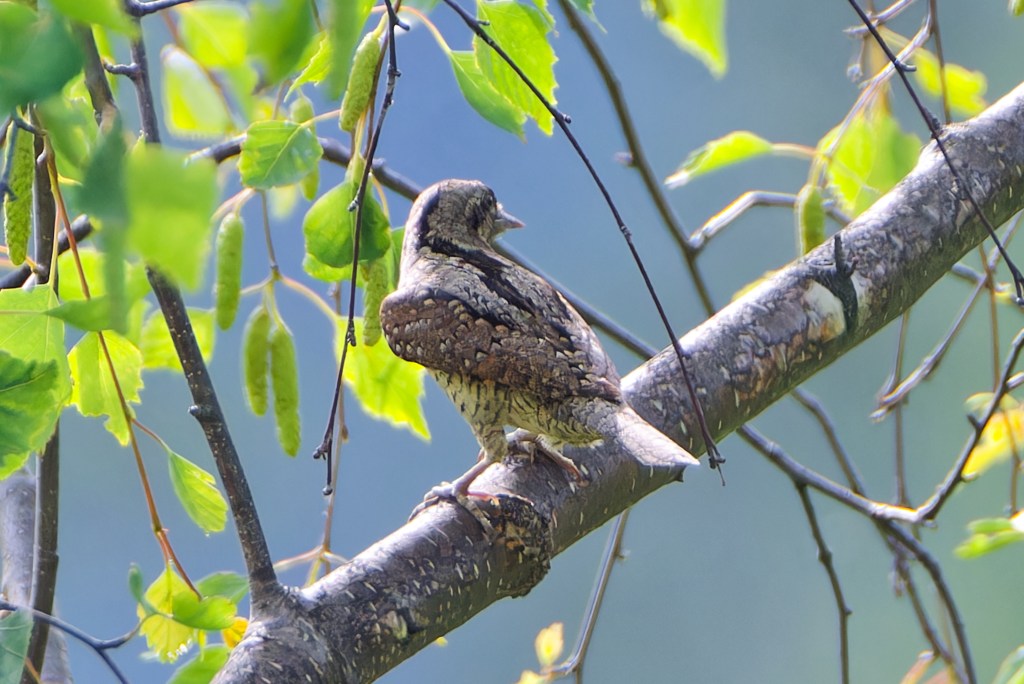
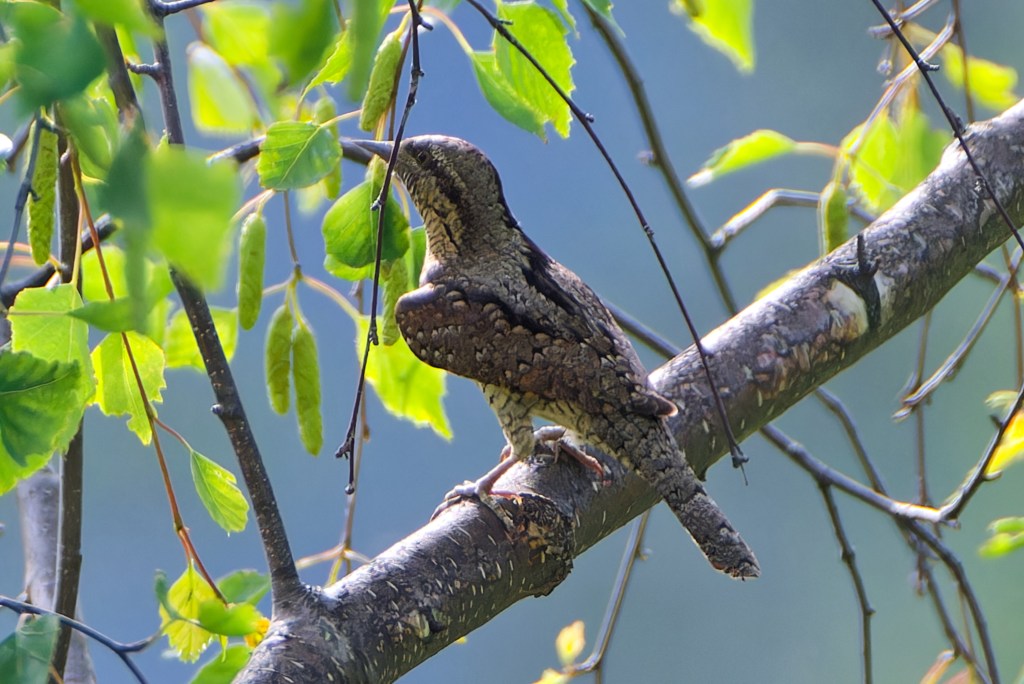
There is less ambiguity about the next Woodpecker species. On the way to the hotel meadow, Backwoodsman saw what he took for a distant Thrush lift off from the track and land on a branch in full sun, briefly. As usual, he shot first and worried about it later. He was quite surprised by what he saw in the back of the camera later on – a Wryneck, and what a lovely thing.

The similarity between markings on the bird’s back and those on the branch is really surprising; Backwoodsman has often wondered how birds seem to know where to stand, the case of Golden Plovers providing one of the most remarkable examples. The Wryneck is sitting in a Silver Birch; no shortage of those in this mountain environment but what an amazing complementarity. The feet are impressive and Backwoodsman is very taken with the boots.

Another list bird was the Ring Ouzel; we were beating them off with sticks in 2019, but they were more elusive this time, failing to show up when the camera was around. Perhaps Backwoodsman will catch up with them again in Scotland.

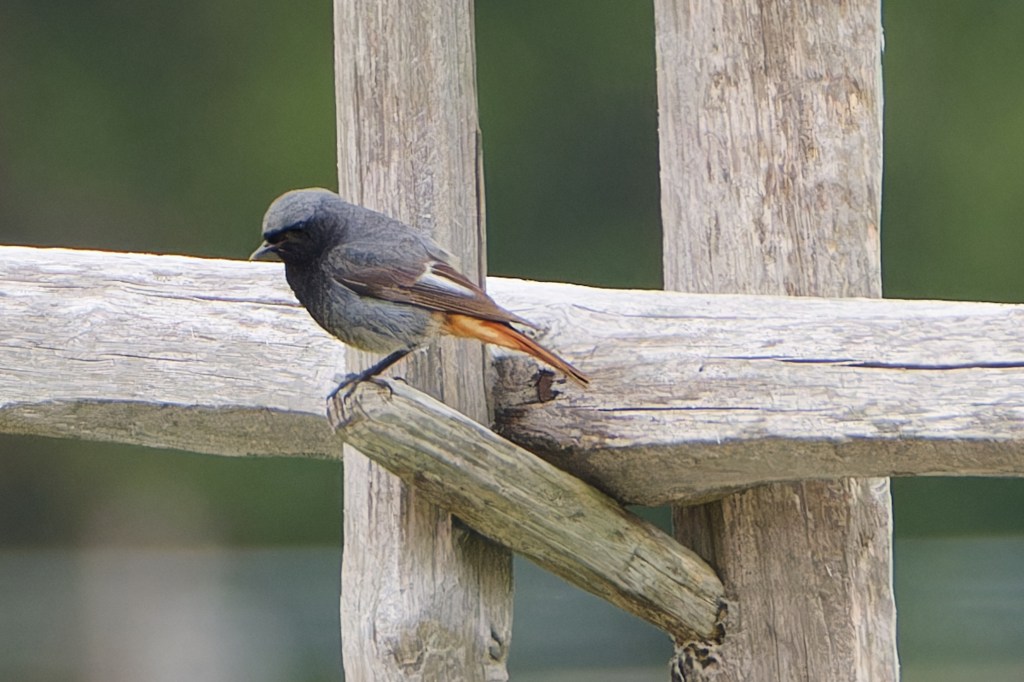
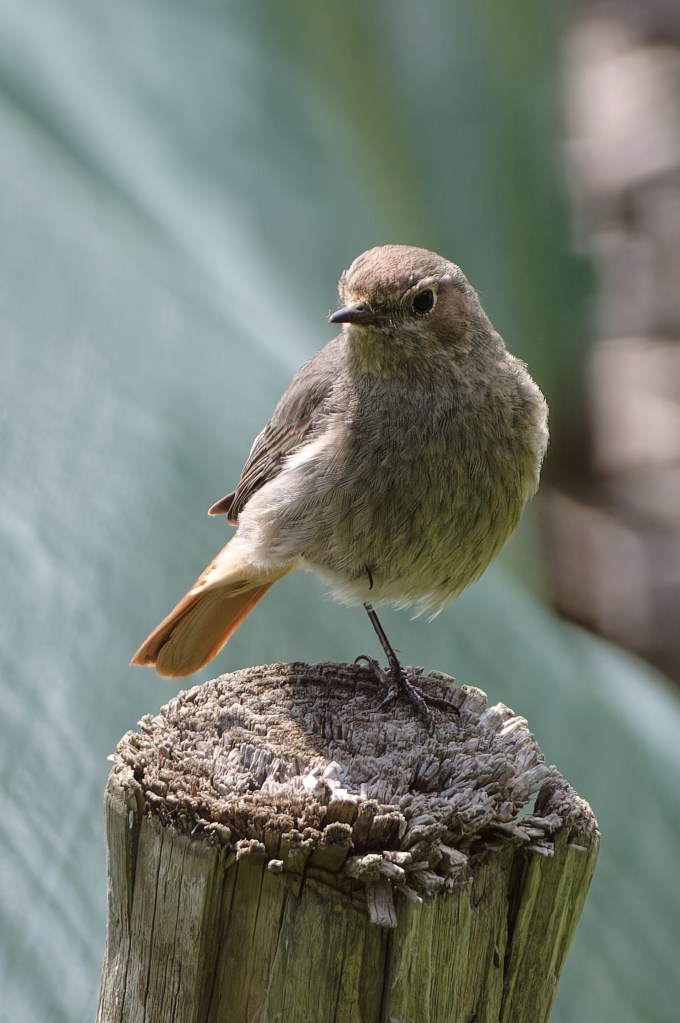
The Black Redstarts were more biddable but kept their distance. We spotted an adult male in the distance up on the top of the hill and photographed him.  

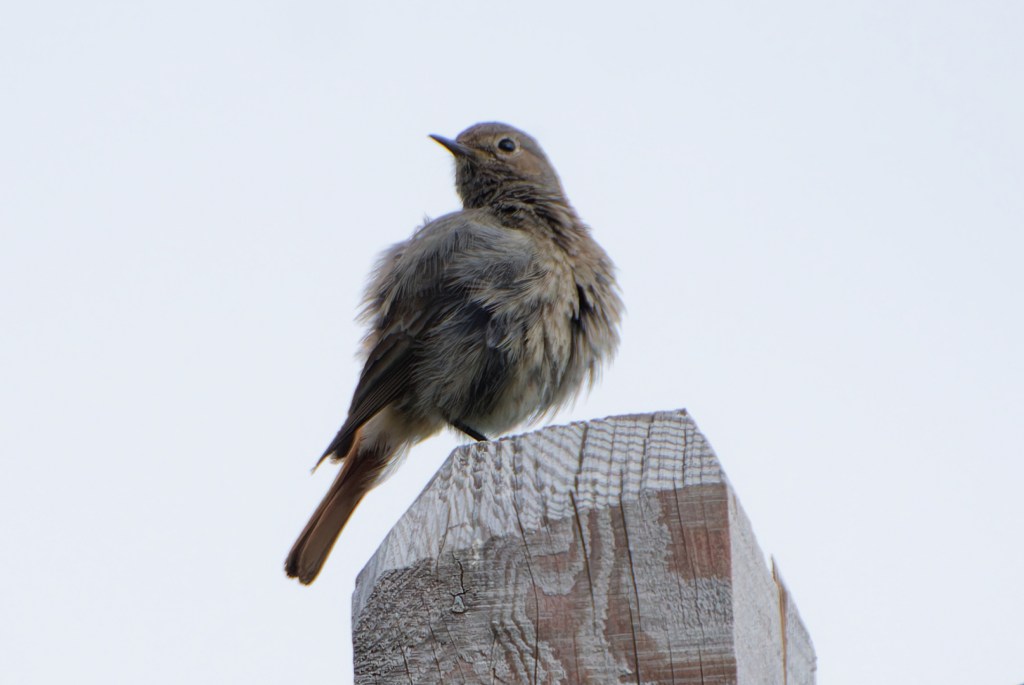
Then we returned from a trip to Merano to find an adult feeding a chick just outside the fire escape by our room. They were not to be photographed and Backwoodsman became pessimistic. He went outside to prowl and found a chick and an adult male; they liked a line of fence posts which descended a slope behind the hotel.

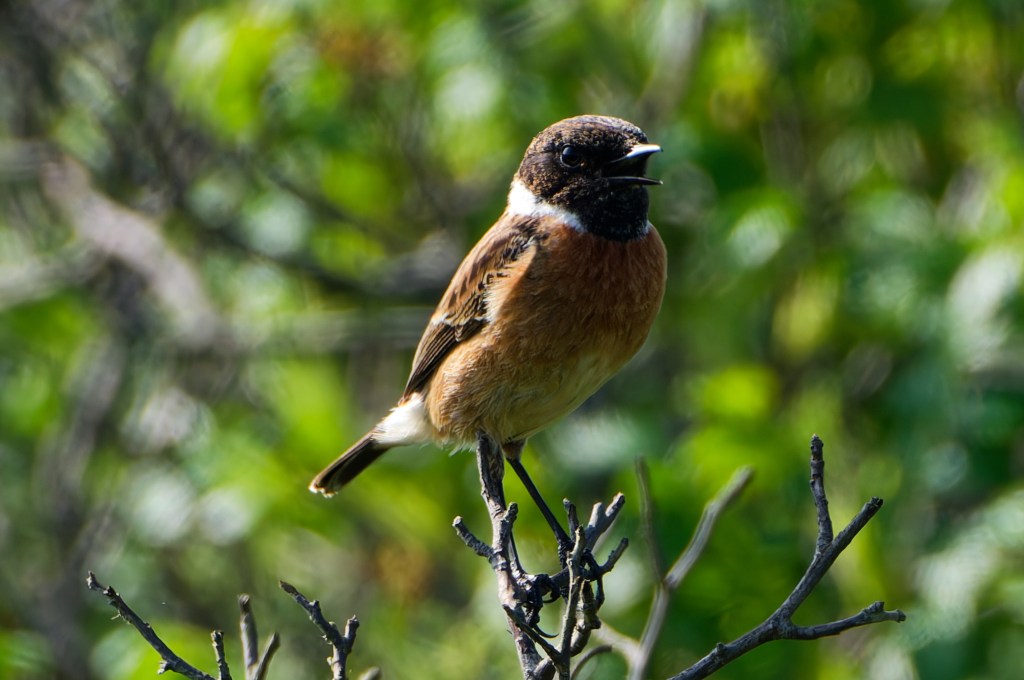
Things looked up on a subsequent walk in full sun. Redstarts are Chats, and like Robins, they do well around human habitation, and like Stonechats, they perch nicely. Here (second image) is a Stonechat from Barassie for postural comparison.

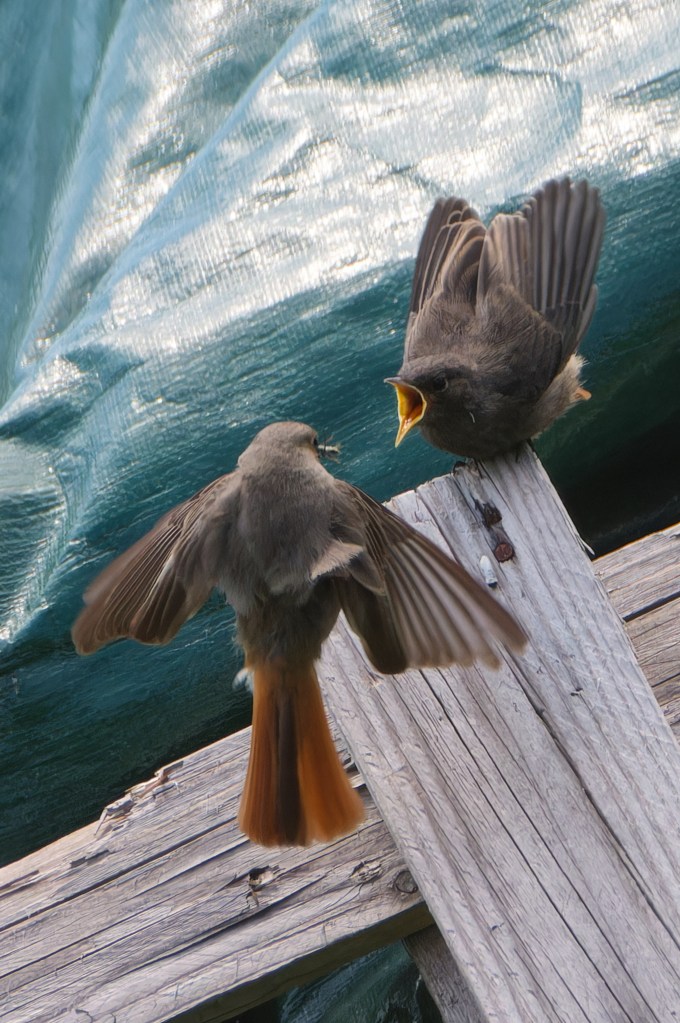
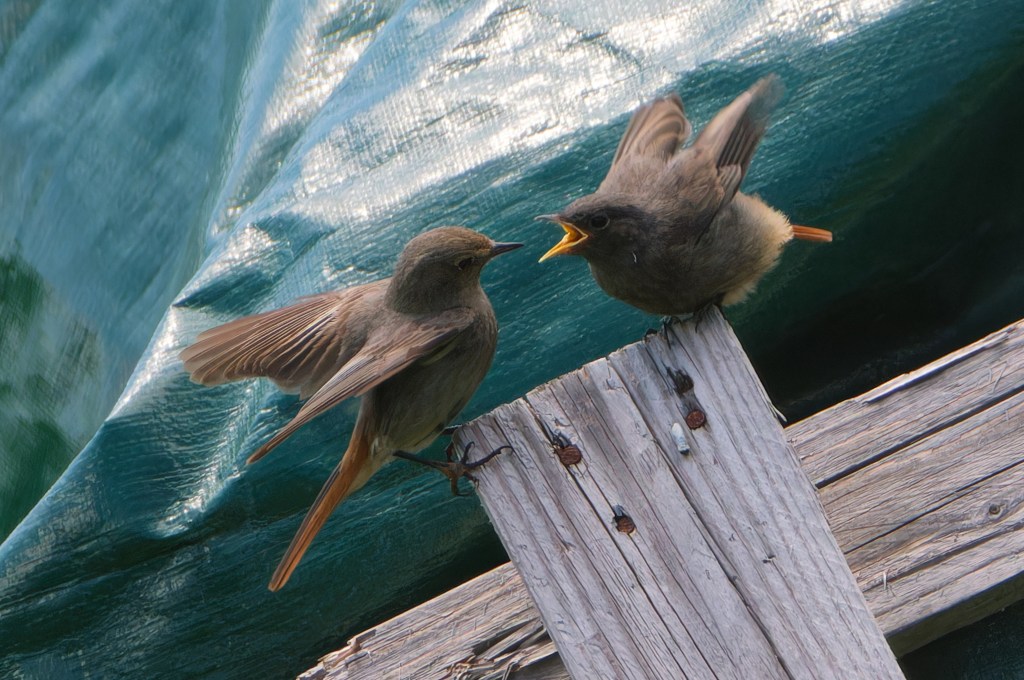
We detected some Redstart activity around a tarpaulin-covered woodpile near the fence of a house. The bars of the fence were sufficiently well-spaced for the camera to work at full zoom; things developed nicely on the other side of the fence as a chick appeared and was fed with morsels from the woodpile.

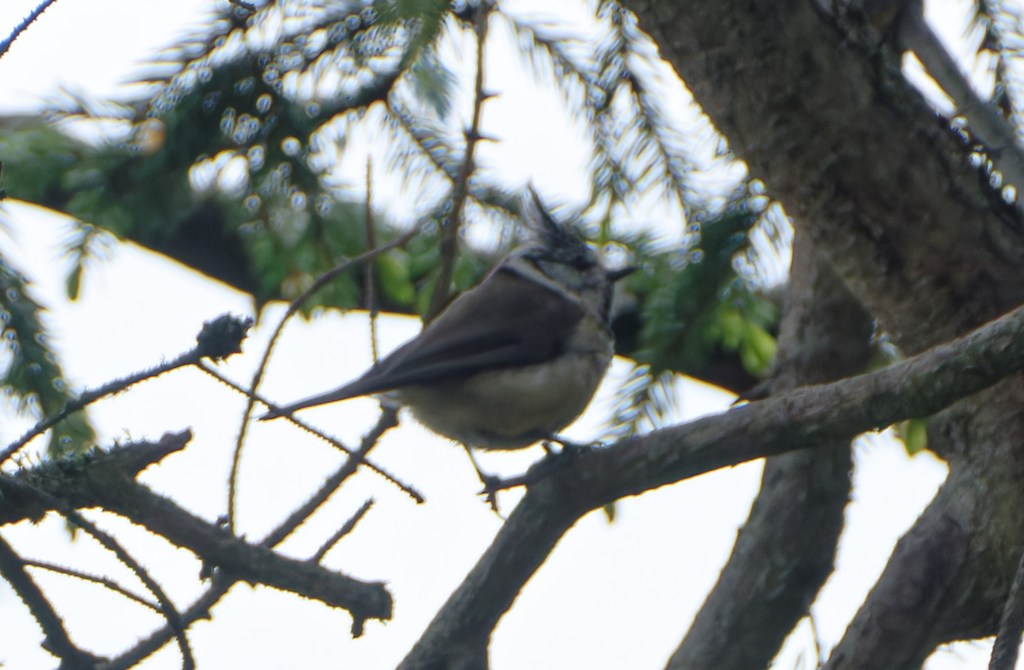
Crested tits were about and they were a tease. Backwoodsman managed a solitary image in poor light. There is a chance of catching up with these in Scotland, but it will take some work.

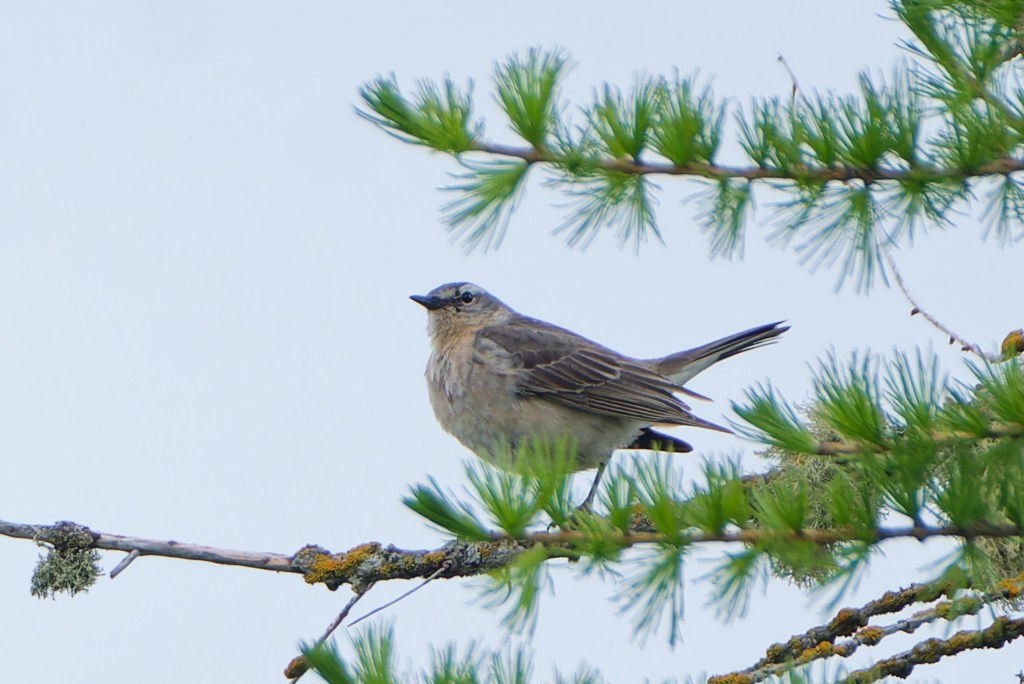
Finally, we spotted some parachute flight and very monotonous song, managing to trace it to this Water Pipit with the help of the Merlin App.

It was our first time to see this species; Rock and Meadow Pipits are more familiar from our Ayrshire and upland walks.

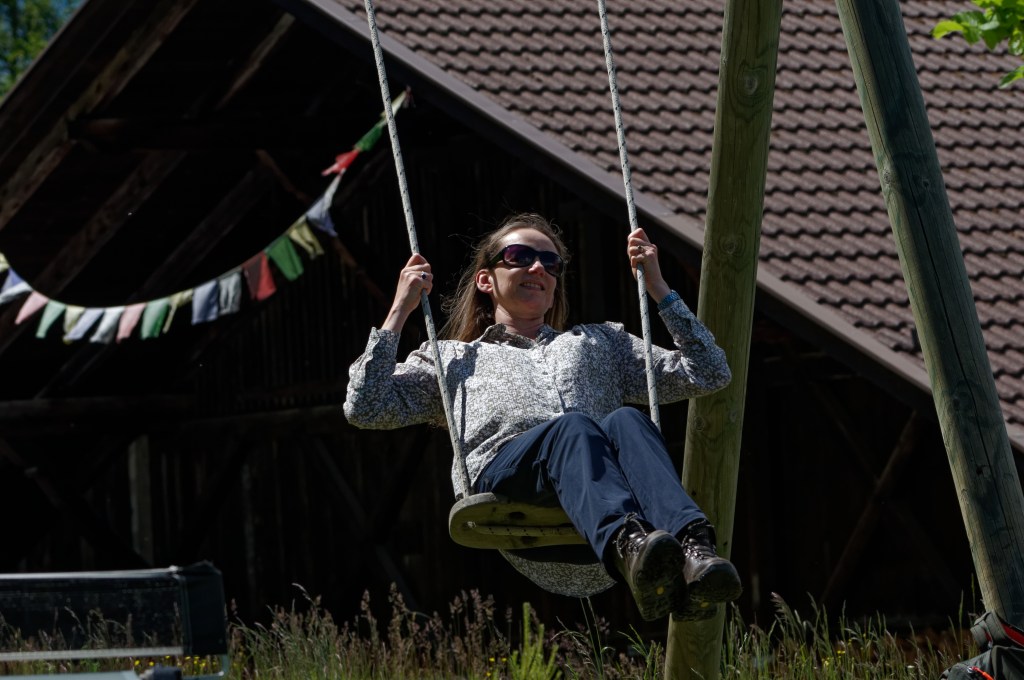
So that’s a short list but Backwoodsman hopes you find the images pleasing. There will be another post of flowers and landscapes once the processing is complete, probably in a couple of weeks. Until then, here’s Faye doing a bit of swinging (!) through the air at Eggerhof (we’ll be back there next time).

Ospreys

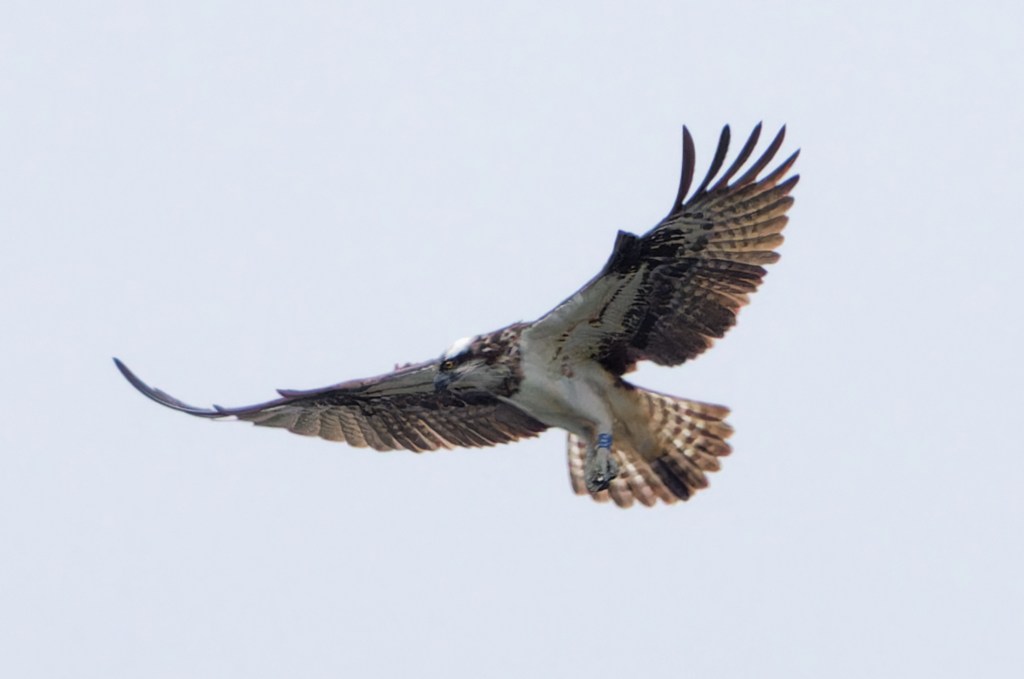
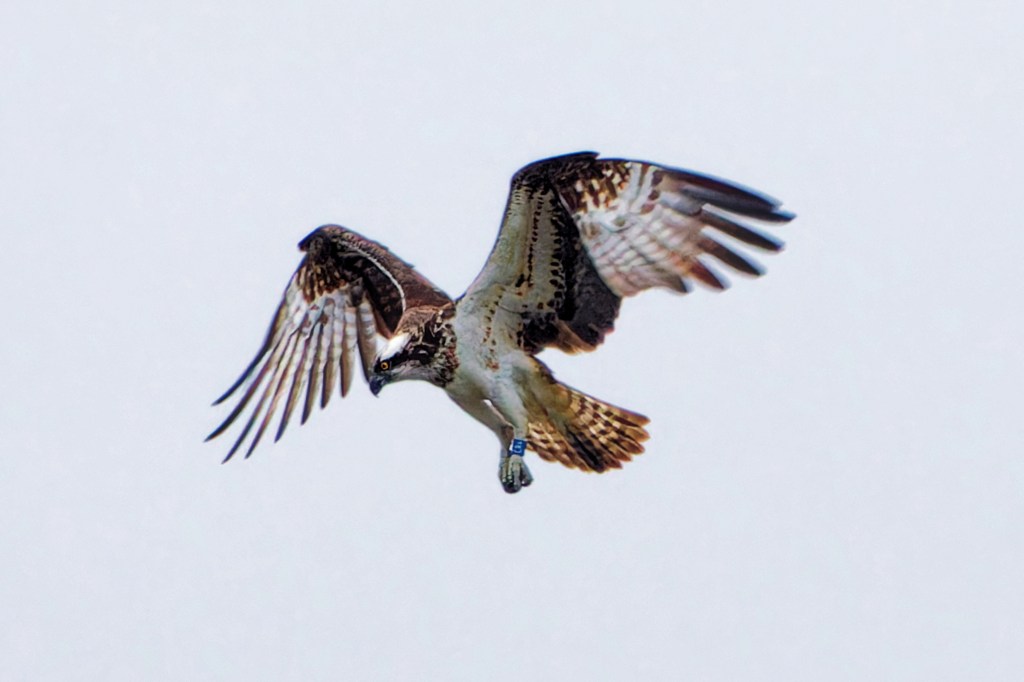
On our way to make a visit to Geilston Garden recently, we came across a chap looking out across a field in the direction of Murray’s. Spotting the binoculars Faye was wearing, he engaged us in conversation. He was keen to tell us about an Osprey nest on farmland not too far away. To be honest, Backwoodsman was quietly sceptical, though he had seen an Osprey over the Clyde at Cardross before (August 2020), and photographed it. Alas, Backwoodsman cannot read the markings on the ring. UK Osprey Information tells of the return of ringed individuals, with the colours and markings of the rings. Most of the action is around Loch Garten and the Tweed Valley, as expected.

There are always good tales to be heard at Cardross; some years ago, one chap was keen to tell of a White-tailed Sea Eagle which flew in regularly from Mull (had he followed it, perhaps?). This sounded like madness and Backwoodsman put his head down, got back onto the Redshanks he was watching and hoped his interlocutor would go quietly and soon. In contrast, Osprey man had detail, which was interesting, and we decided that we would allow a decent interval to pass and then return to Cardross and try to find this farm and the Ospreys.

On alighting from the train, we saw an Osprey overhead, which seemed very promising and we set off towards the farm. Backwoodsman is not disclosing the location in this post in case the twitcher social media has found a way of trawling the internet and harvesting bird sighting data (but if anyone wants it, and promises not to post it, it can be supplied privately). Backwoodsman has gone right off this business since the Waxwings episode, and would not want the farm lane clogged up with serried ranks of grumpy camo-clad pensioners with birdscopes, and their vehicles.

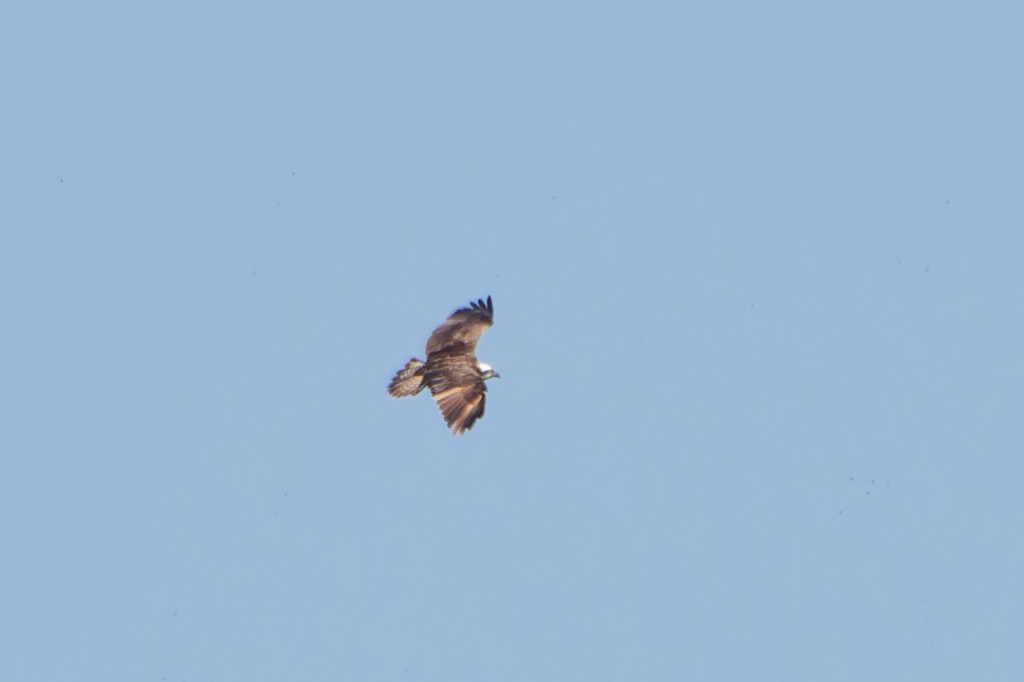
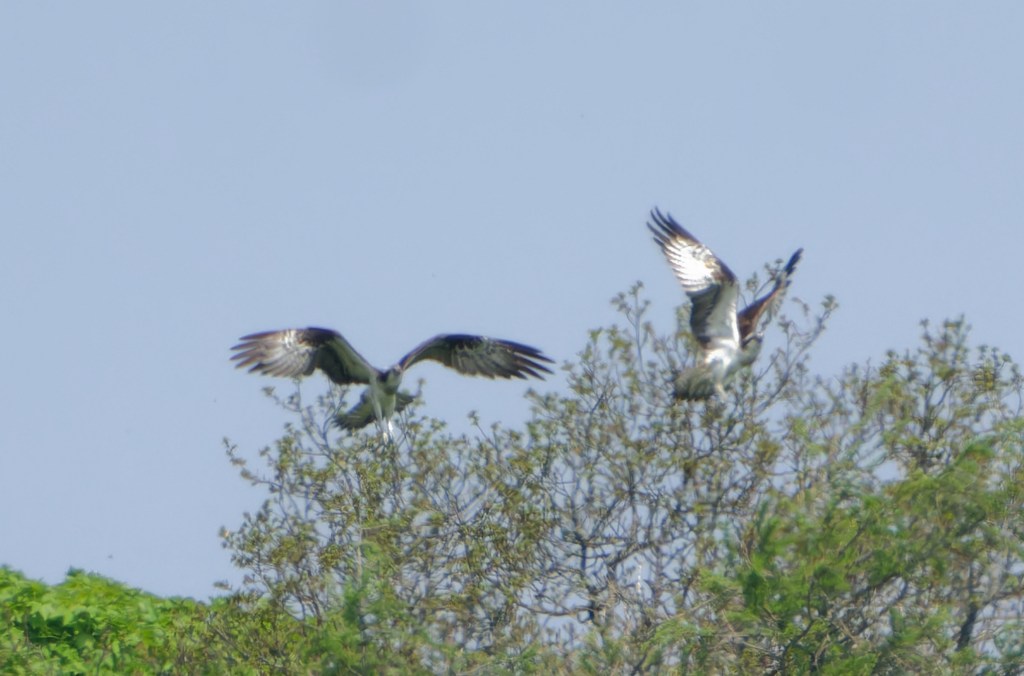
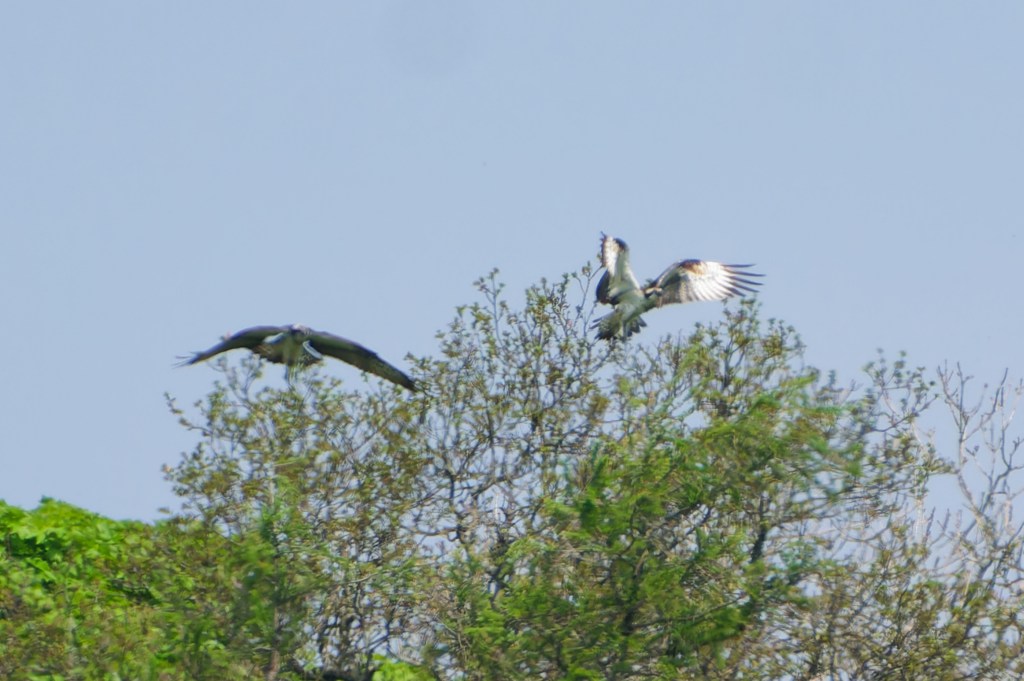
On arriving at the farm, we saw a chap dismounting a tractor and Backwoodsman approached. Far from the expected “ged orf my larnd!”, he told us that he thought there were Ospreys about, but no, we couldn’t go on the field because the cows were about to, which seemed fair enough. We took a punt on some trees which looked sufficiently knocked about to offer a nesting site to a pair of Ospreys and settled down to wait. Before too long, out came the Ospreys.

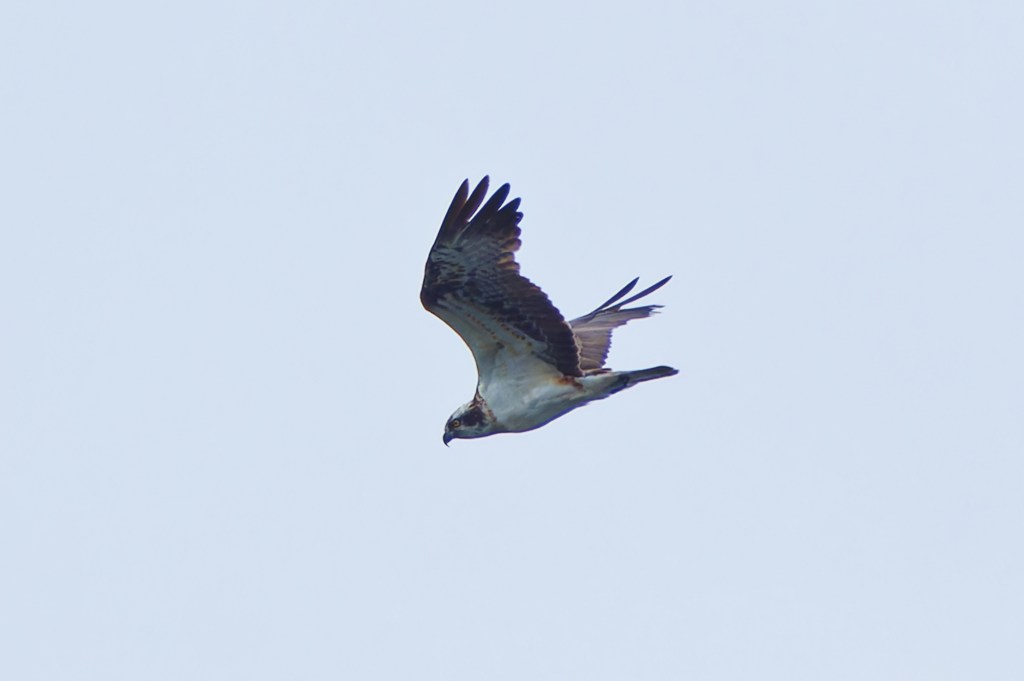
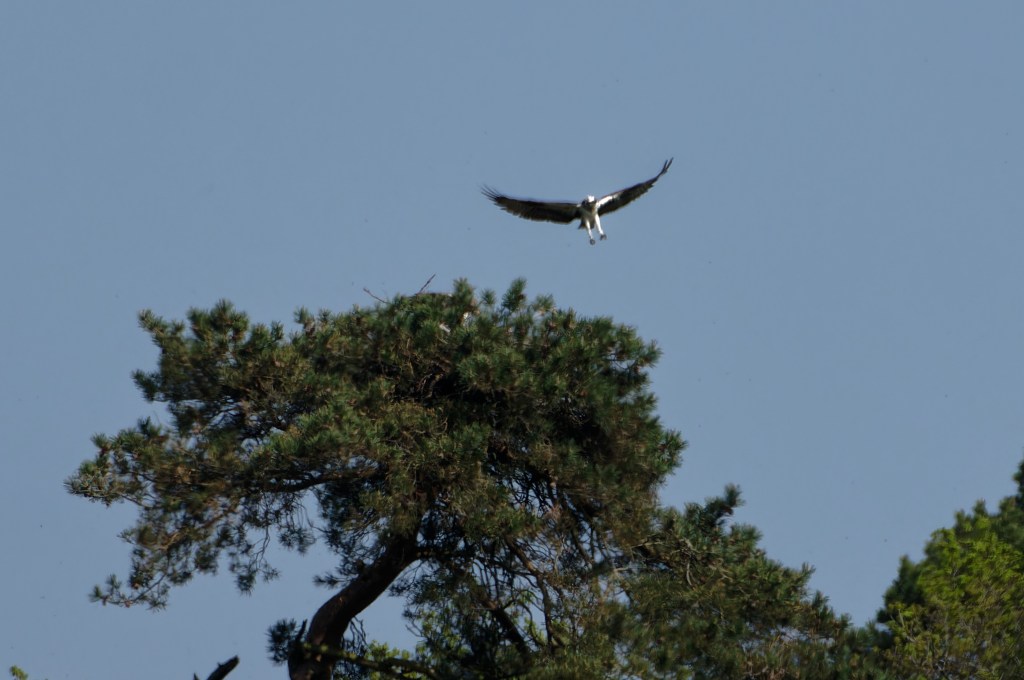
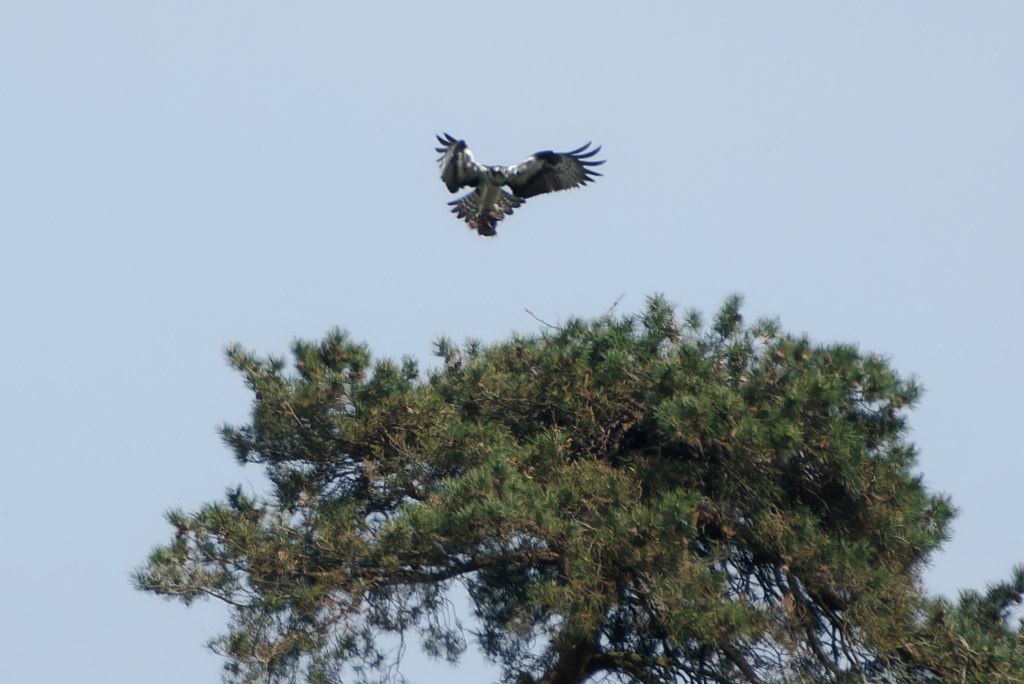
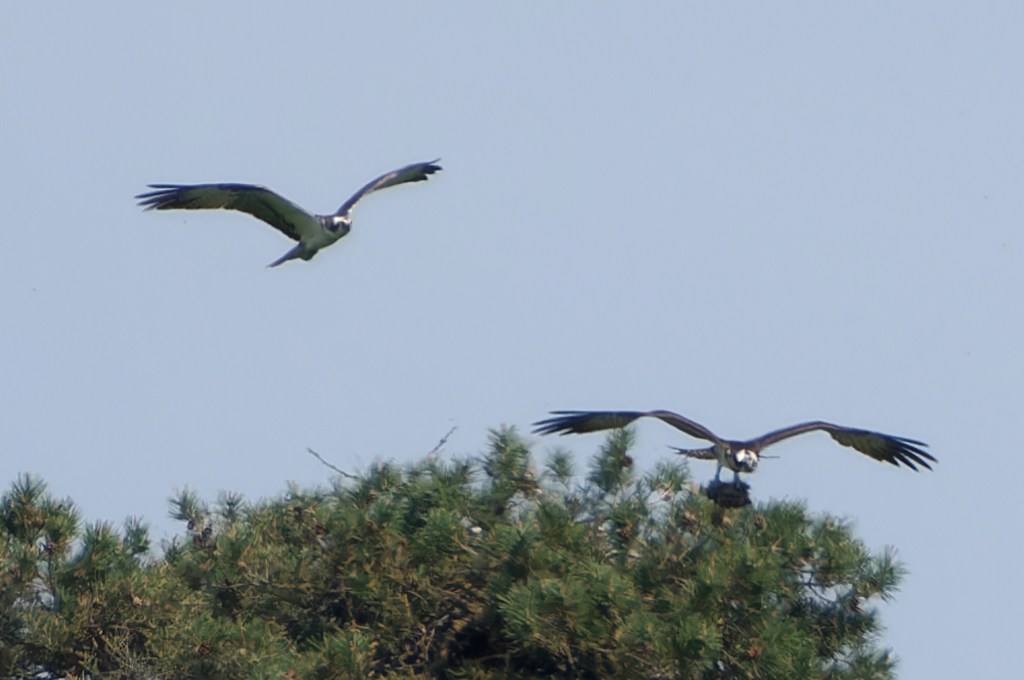
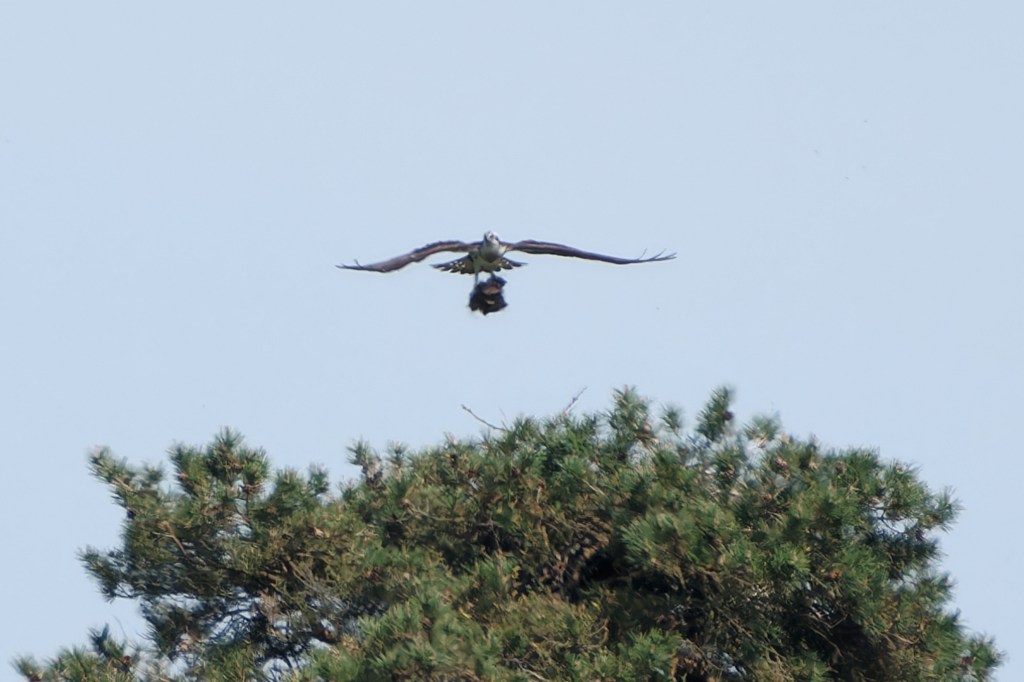
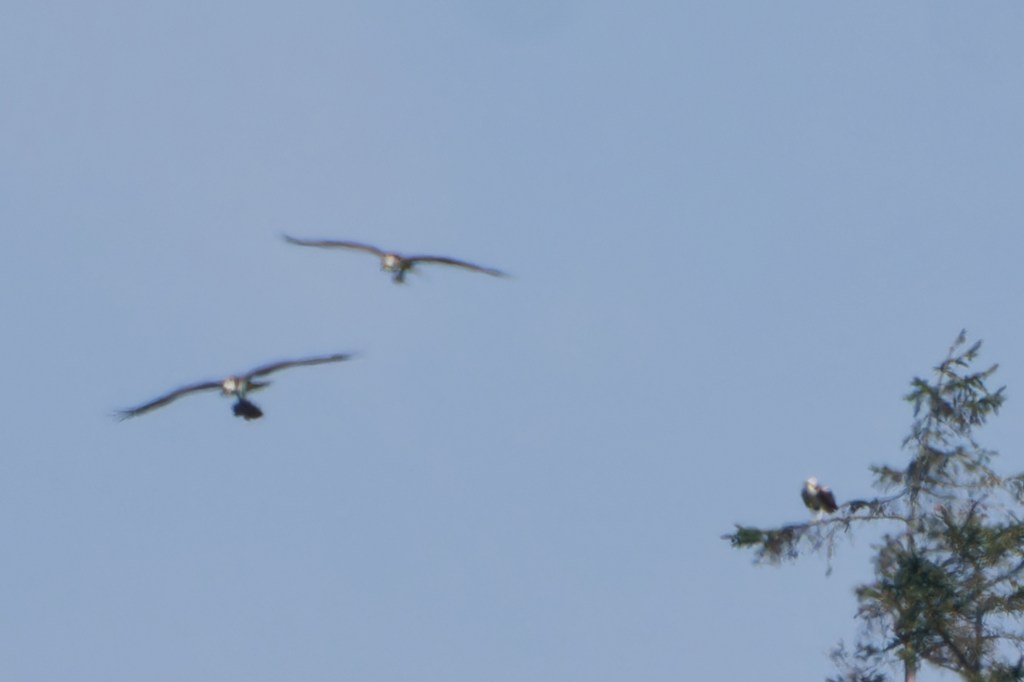
So no prizes for saying “hey, these images aren’t up to your usual standard, you busker!”. Agreed, but this is very long range shooting. Backwoodsman would be pretty confident of putting one through Bibi at this range but getting a sharp focus on a dynamic raptor, rather than a wizened and corrupt war criminal, is a tough gig, especially in very bright sunlight. Backwoodsman suspects that the birds probably covered fewer pixels than the spot area used to meter and inform the autofocus, which can mean that the camera spends most of its time hunting for a focal position. Backwoodsman feels he was pretty fortunate to get anything at all, and is only posting because the Ospreys threw some beautiful shapes, exhibited some interesting behaviour and are really not that common. One day, we’ll have to go sit in a hide somewhere and get the money shot of large Osprey with fish.

We were expecting to see an established pair on a nest, with regular traffic to feed ravenous chicks; this really isn’t what we saw. There was definitely a tree of interest – an old pine – but there was no evidence of a nest. A bird flew around the top of the pine regularly, sometimes perching, sometimes swooping by. And then, there were two birds.

The new arrival seemed to be carrying something; it looked more like a Greggs pasty than a fish but it was hard to tell at that range. It definitely interested a passing Buzzard and some Corvids. The laden bird seemed to be trying to attract the attention of the first Osprey but it wasn’t exactly welcomed with open wings. This went on for a while and then a third bird showed up.

This was so not a passing Buzzard; while the quality is poor, the white head of each bird is quite clear. Our friends Sabine and Peter had taken us to the RSPB Gartocharn reserve on Loch Lomond and we had seen some Osprey action across the Loch, so this area between the Clyde and the Loch clearly attracts Ospreys. Apart from Loch Lomond itself, and the Clyde, there is even a Trout Fishery quite close to hand (their website even mentions Ospreys).

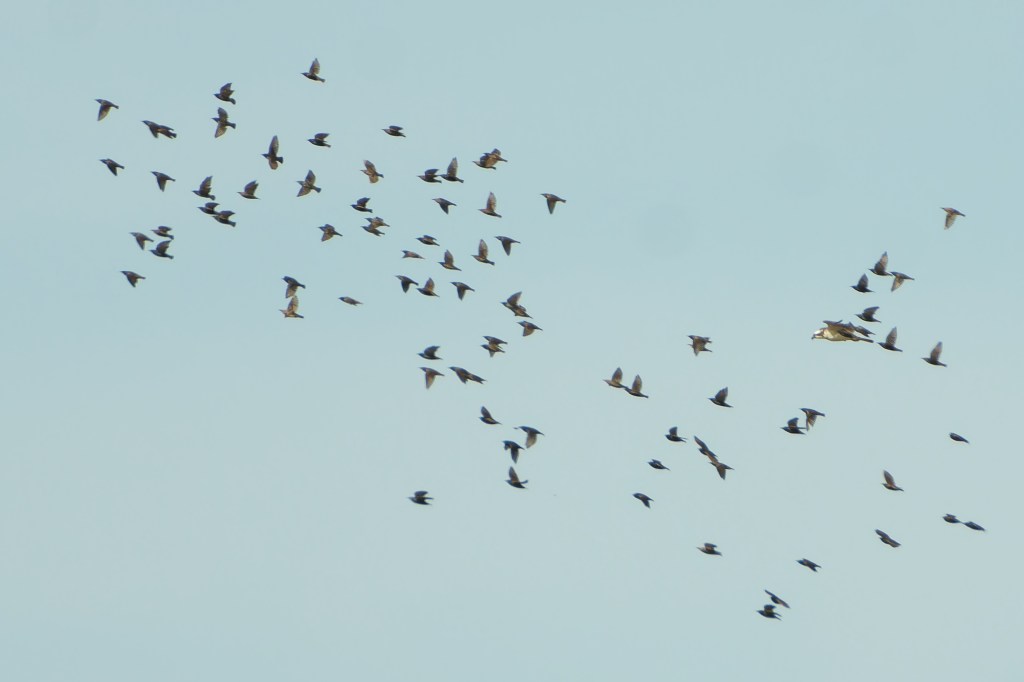
BTO population data is seven years out of date – they report 240 pairs breeding in the UK between 2013 and 2017. A recently edited Wikipedia entry tells us that “The population in Scotland was estimated at 250 breeding pairs in 2023” so it’s pretty special to see three birds together so close to home. We’ve been very lucky with Ospreys, what with this sighting, and the previous one at Cardross. We had seen a pair on Loch Etive near Taynuilt a few years ago (no camera) and an individual over the beach at West Kilbride (August 2023), terrifying a flock of Starlings. And all of this without venturing to Loch Garten.

Since our Cardross visit, Backwoodsman has striven to get the de-noising software to sharpen up these images, hoping for some extra pixels within the vague outlines. On Saturday, we learned that a Tory Big Beast (the only man able to defeat The Blob according to Simon Heffer writing in today’s Sunday Telegraph) had decided not to stand in the forthcoming general election. To mark the occasion, EJ Thribb (171/2)  might write:

So farewell then, Michael Gove,

They say you were the brains behind Brexit.

You were never short of big ideas,

But you left the detail to someone else.

As a proud former member of The Blob, it is with some regret that Backwoodsman feels that in the vagueness of these images, he now has something in common with the member for Surrey Heath, and hopes to post some sharper and more detailed stuff next time.

Fuut (or Great-crested Grebes) in Rotterdam)

If you’re only in it for the birds, do scroll to the end because that’s where they are. Backwoodsman headed to the Netherlands to stay on the SS Rotterdam and shoot some pictures, in camera-for-hire mode in support of Faye’s Ocean Modern project, and to admire the city and have some nice dinners.

It has been some years since this great ocean-liner greeted the waves bound for the sea, its home, to paraphrase Louis Dudek, but it is still an imposing sight, and to Backwoodsman, a nostalgic one. In the nineteen-sixties, Backwoodsman was often taken by his Granny Dagnall to see the Pier Head in Liverpool. Childhood memories sometimes privilege impact at the expense of accuracy, but in recollection, it seems that it was possible to turn right by the landing stage for the Mersey ferries, and walk along the quayside beside the towering steel plate of big ships secured by the bewildering catenaries of mooring lines, ropes that seemed thicker than tree trunks to a small boy. Seeing the SS Rotterdam from the quay on the Maashaven brought back many happy memories.

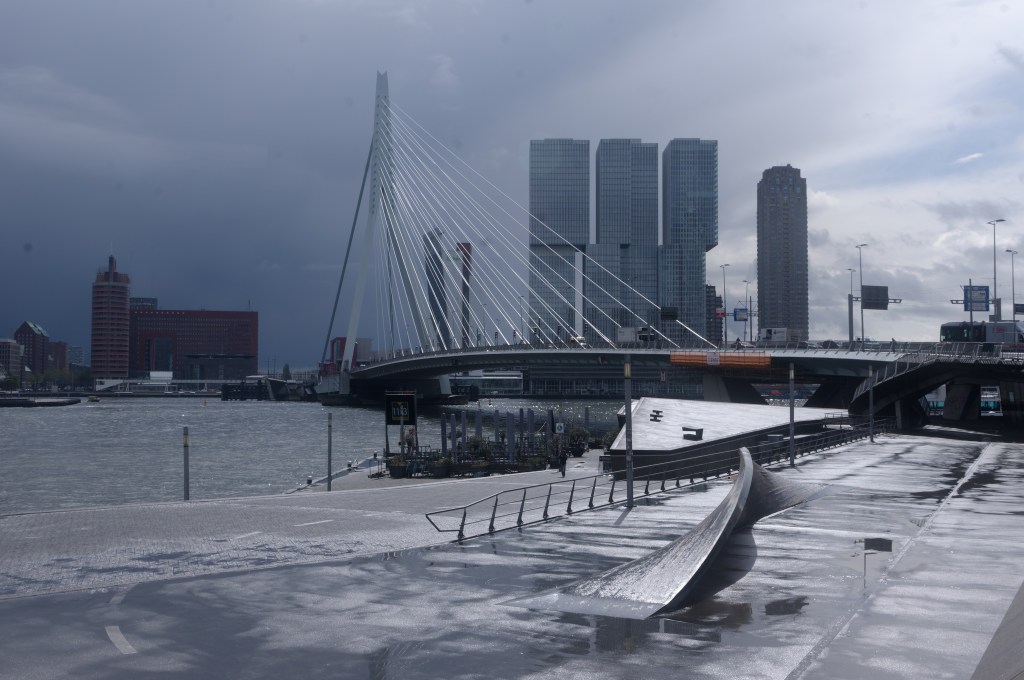
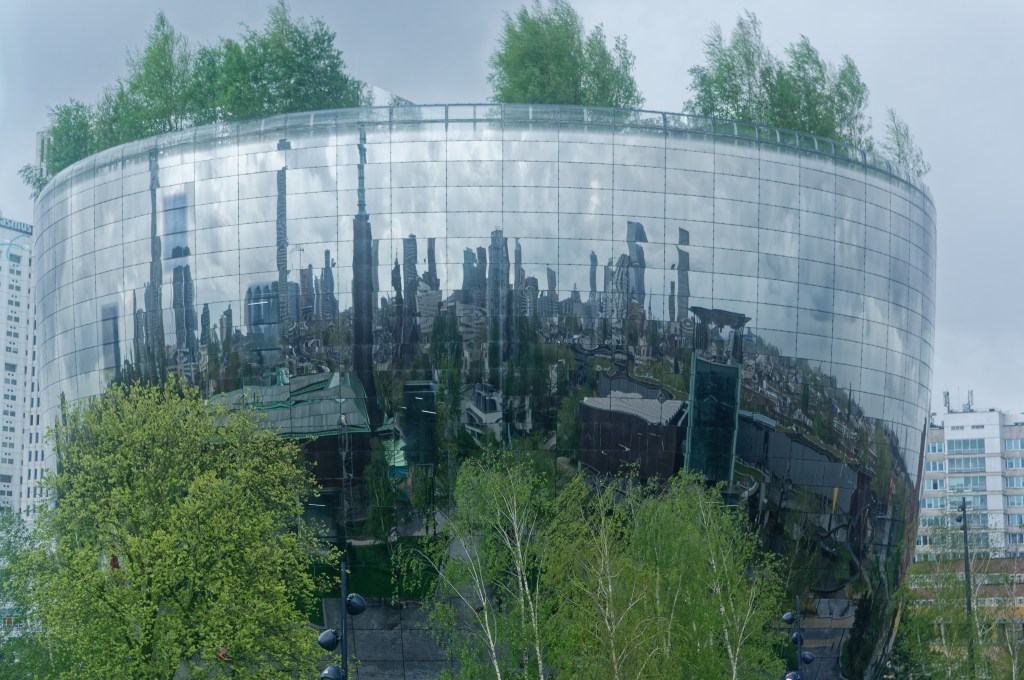
Built environment is not generally Backwoodsman’s best thing but Rotterdam seemed to have some very interesting buildings. He was particularly struck by the interconnected towers that are De Rotterdam (seen here behind the Swan bridge), and Depot Boijmans Van Beuningen, shown here with the reflected high rise of the city.

There were many examples of built environment of a much softer kind; Wisteria clearly enjoys the harbourside climate, they were everywhere and in full and glorious bloom.

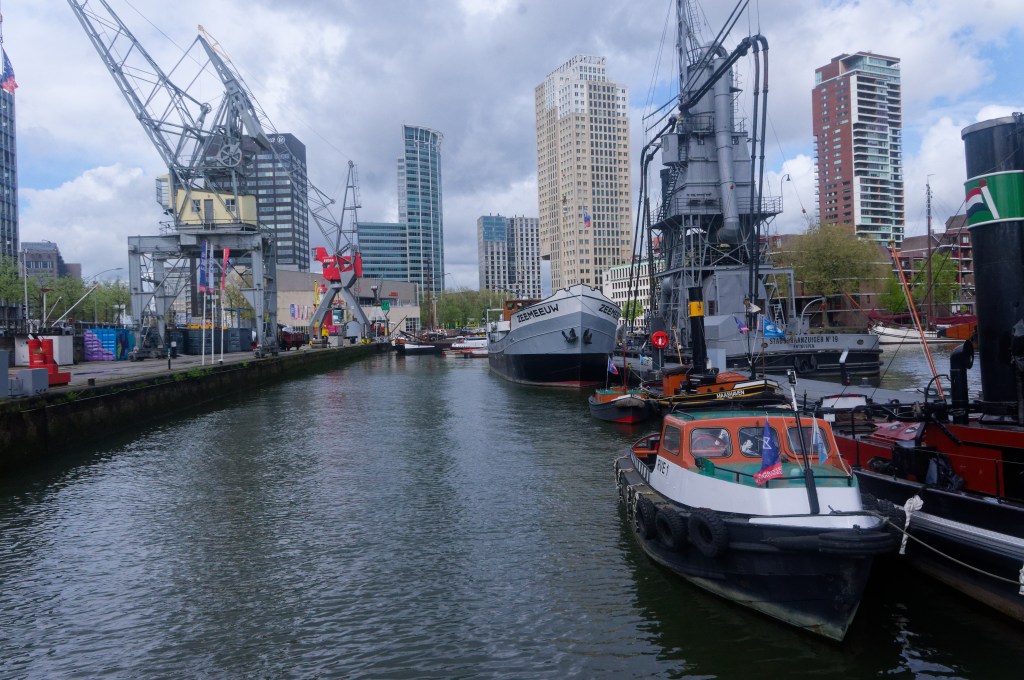
The weather was hostile but it opened up for a trip to the Maritime Museum which sits at the junction of Leuvehaven and Wijnhaven.

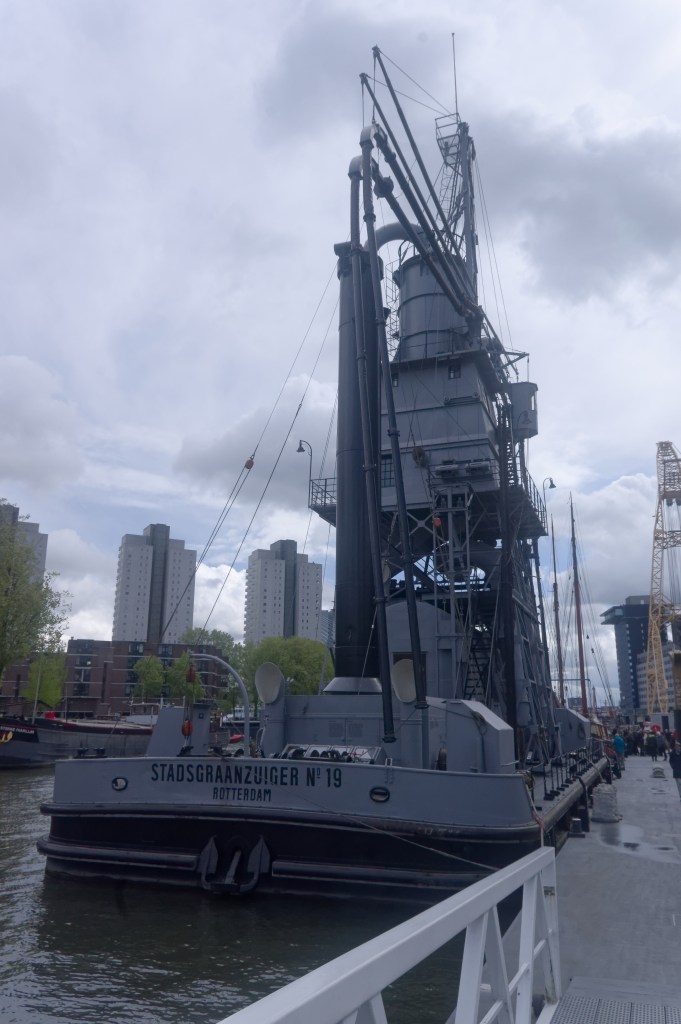
The most impressive of the many vessels moored outside the museum was the grain elevator Stadsgraanzuiger No 19, a class of vessel used to decant grain from the holds of very large vessels onto much smaller barges of shallower draft. The introduction of the grain elevators laid waste to the jobs of thousands of dockers in northern European ports.

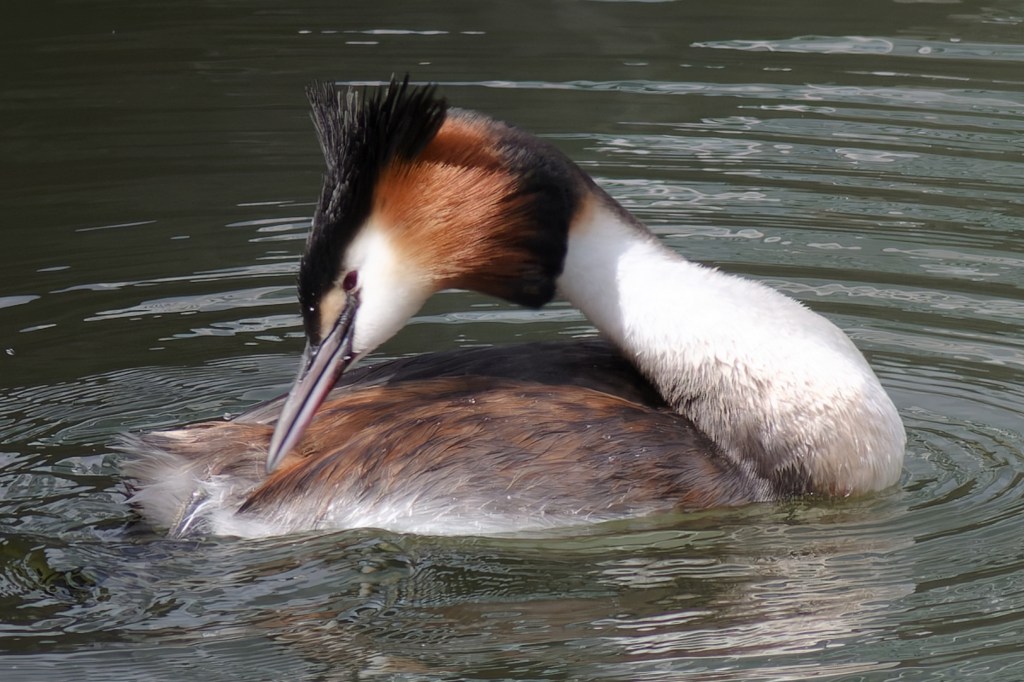
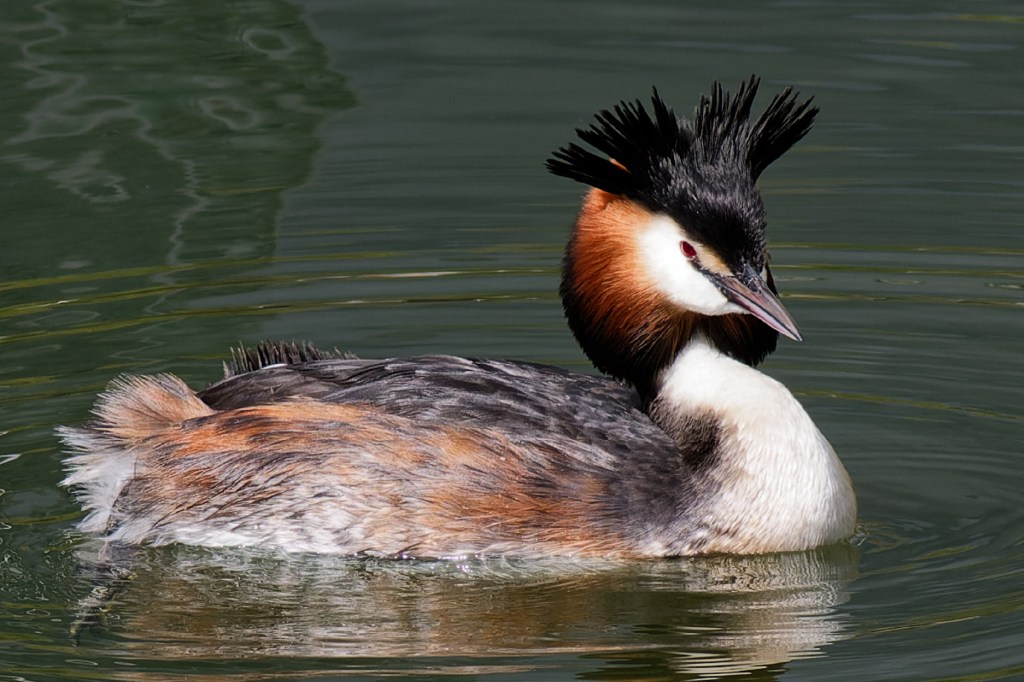
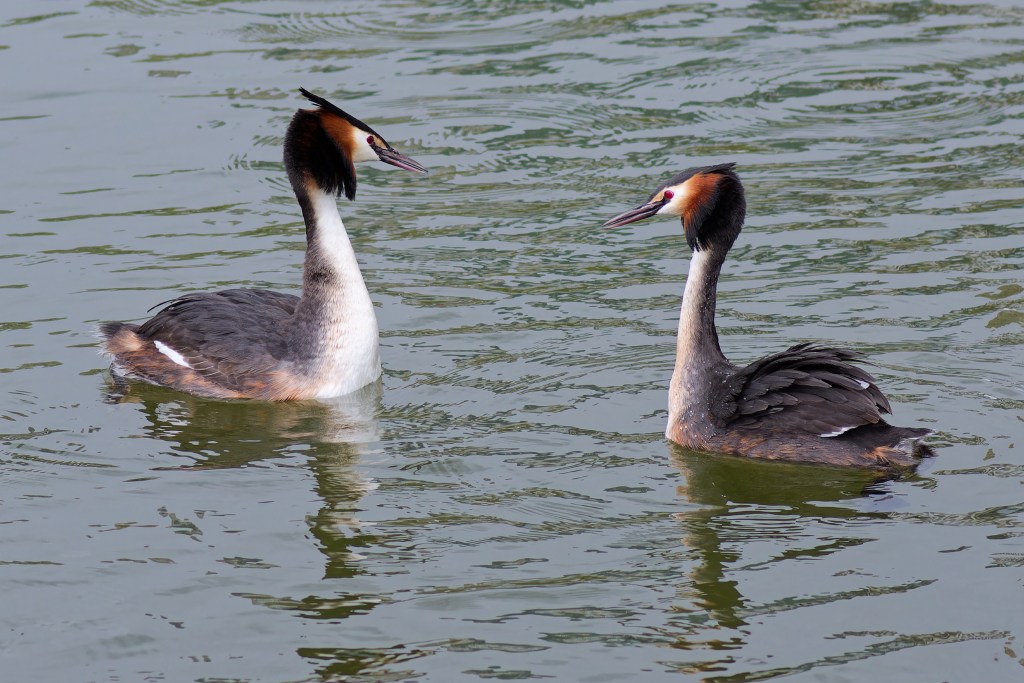
Backwoodsman had spotted a Great-crested Grebe on the water, and was very pleased to see it. A few shots were fired, more for form’s sake than in the hope of a decent image. He wasn’t prepared for what happened next as a relaxed-looking Grebe or Fuut, as it is in Dutch, came really close.

Really, what are the chances? These nervous birds usually sail away from this photographer until they are just out of range of a decent shot. Backwoodsman carried out a quick lens change (to the longest one available, a mere 100 mm telephoto) and knelt in the very limited cover available. The Fuut went about its business, and was then joined by its partner!

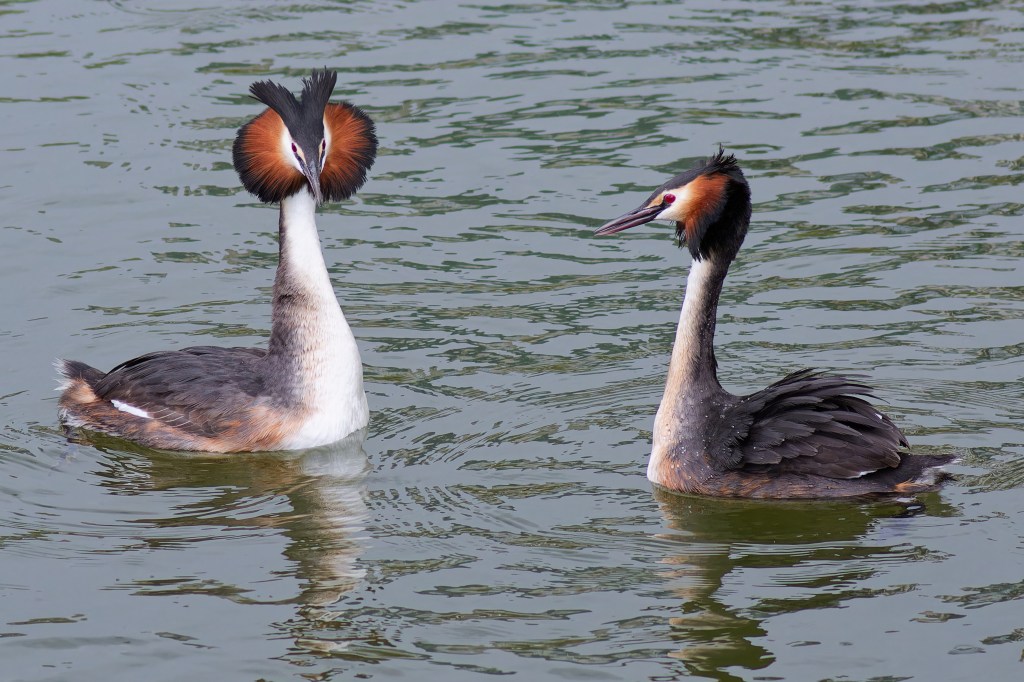
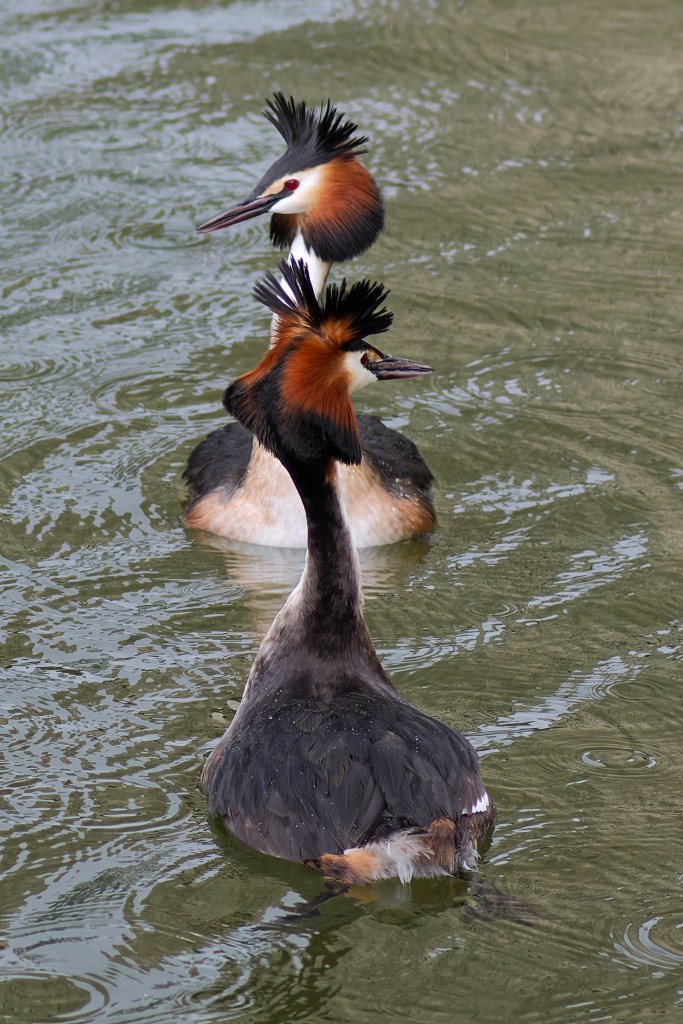
The rain started and the Grebes began to display. Backwoodsman has posted on this species before but these images are much better than what he had available at the time, so please enjoy them, if you will.

What a treat! It was also pleasing to capture some video footage, complete with passing euro-siren. Backwoodsman regrets shooting this in profile.

The rain grew heavier and it was time to leave the Grebes to their amour. A white knuckle ride on a water taxi into the teeth of the gale took us home to the SS Rotterdam.

And the dinners? The standout was HMB restaurant (for Hummingbird, birds again); McAfee really doesn’t like their website so I’m not putting in a link. Deft, delicate and delicious plates, but should you go, don’t be put off by front of house. Backwoodsman hasn’t been looked-up-and-down by a fat bloke in double denim since the nineteen eighties.

The final image is a draft poster of the displaying Grebes. It was made in Powerpoint so the quality of the jpg file is low; Backwoodsman is working on something he could print up for the wall.