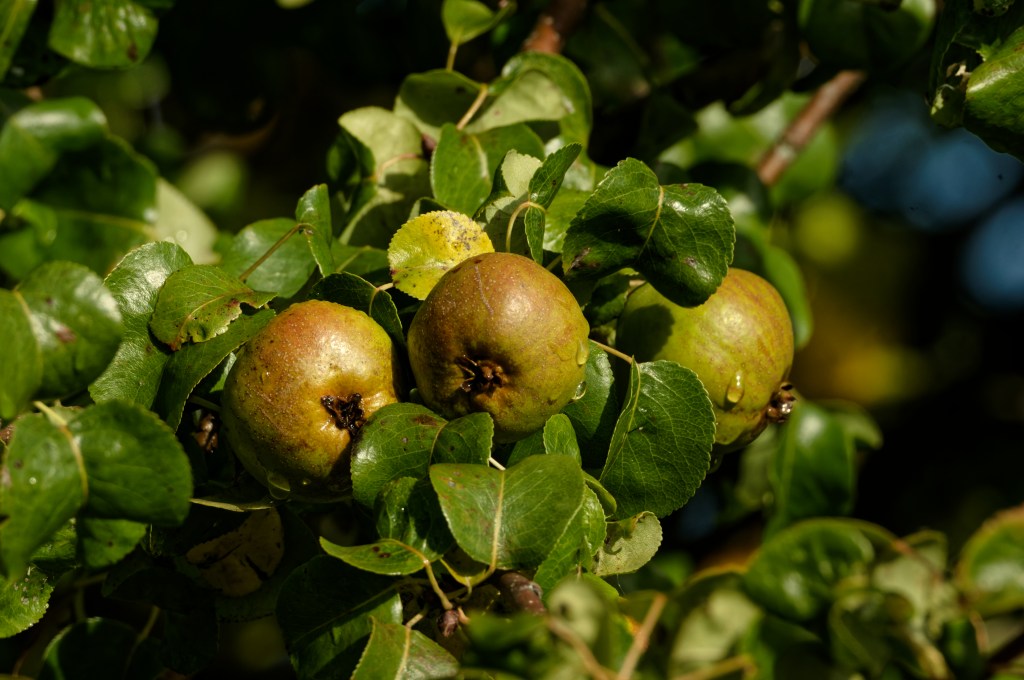
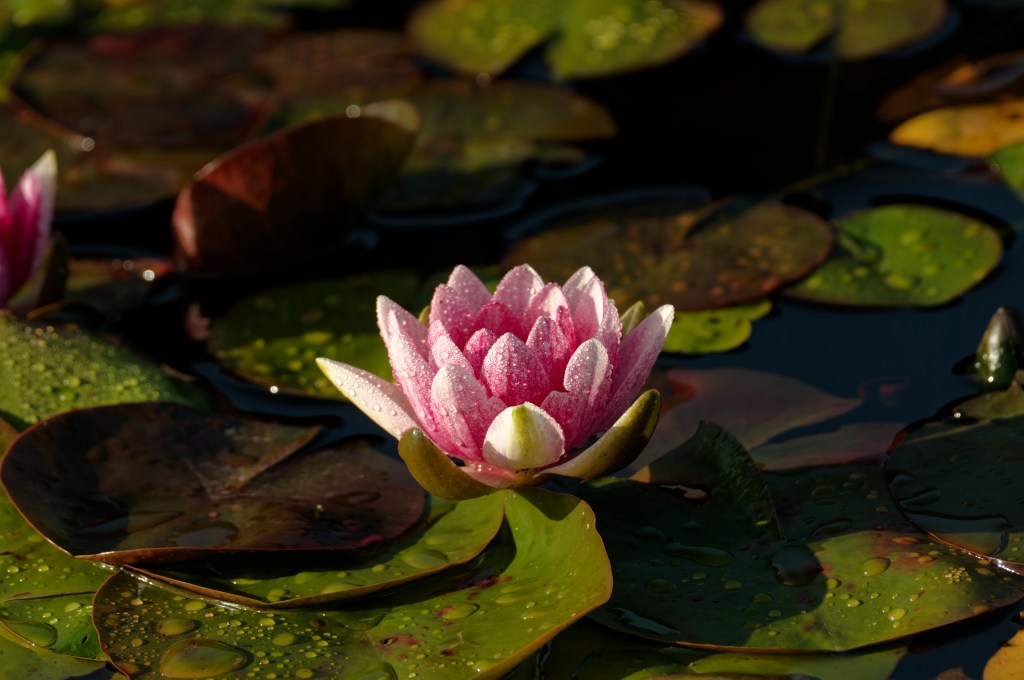
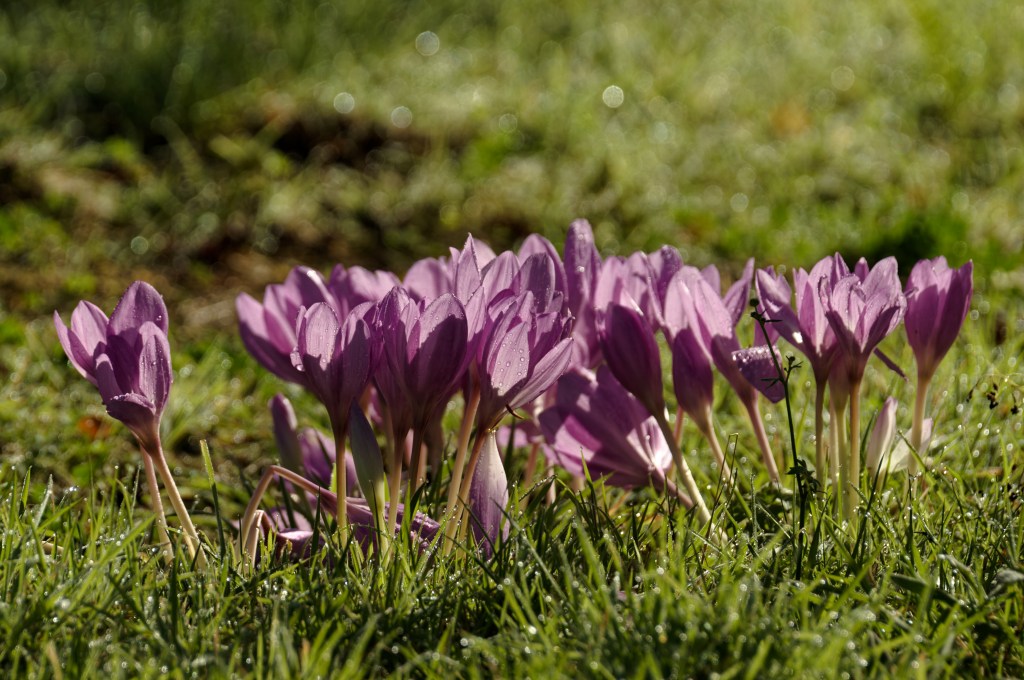
On a midweek run, Backwoodsman was surprised to see a stand of Autumn Crocus just by the Pinkston Road in the little parcel of land planted up by the developers of the NorthBridge estate, right at the edge of the new Sighthill Park. Wet weather came over the following days so Backwoodsman was pessimistic that there would be anything to see by the weekend; Autumn Crocus are usually flattened by the rain. Sunday morning was brilliant with blue skies, so we went to look, taking in the ripening Pear crop by the canal at Pinkston, and the Water Lilies in the SUDS ponds on the way.
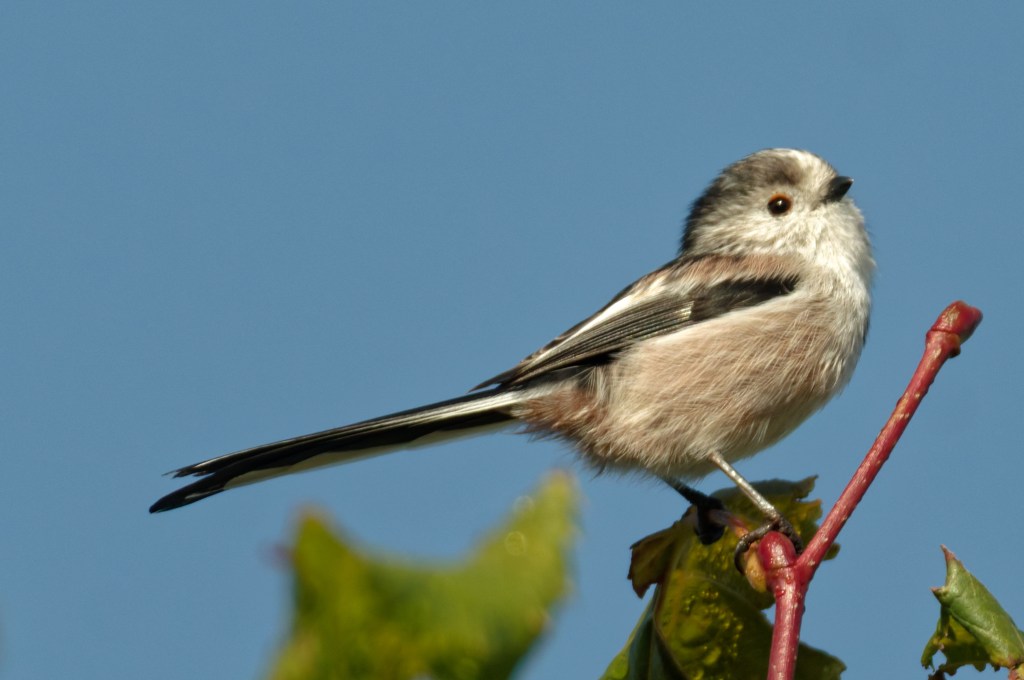
A small flock of Long-tailed Tits was enjoying the sunshine. They were unusually still in the tops of the Lime saplings; perhaps they were warming their tiny bones after a cold night.
The Autumn Crocus were doing very nicely despite the weather; more flowers had emerged, enlarging the groups and brightening the display, which was really pleasing.
Our eyes were drawn to a striking gallery of Starlings, mostly young birds.
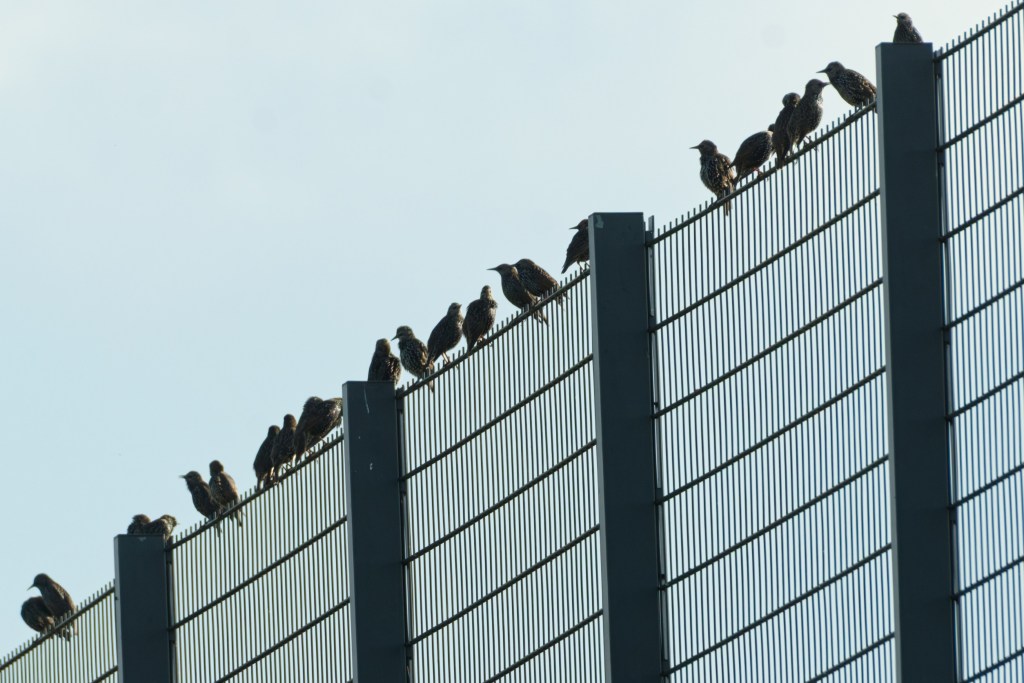
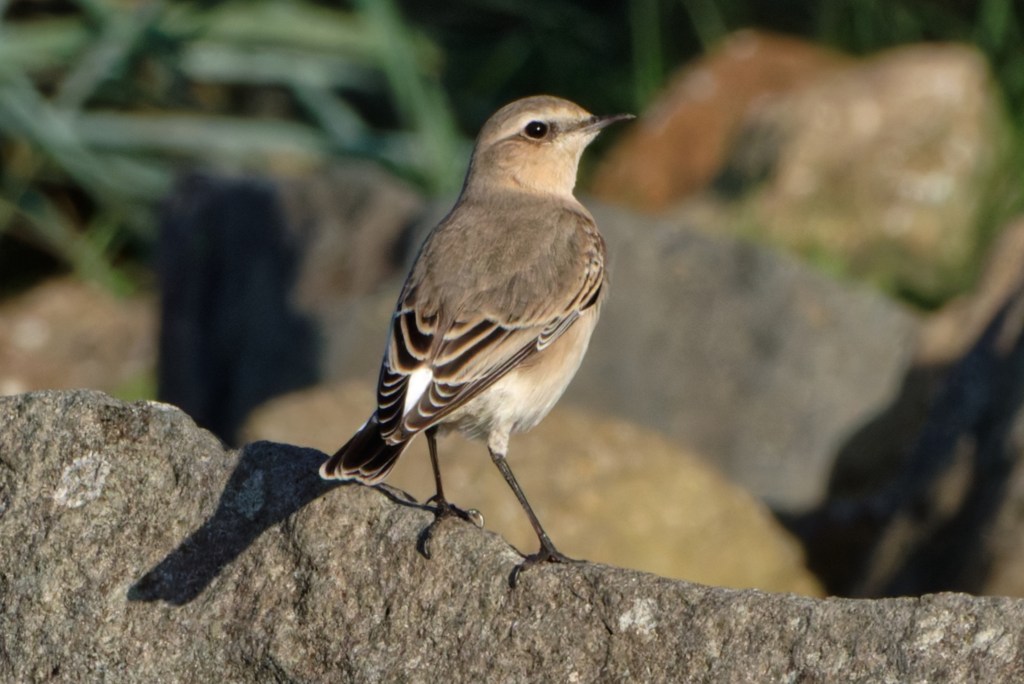
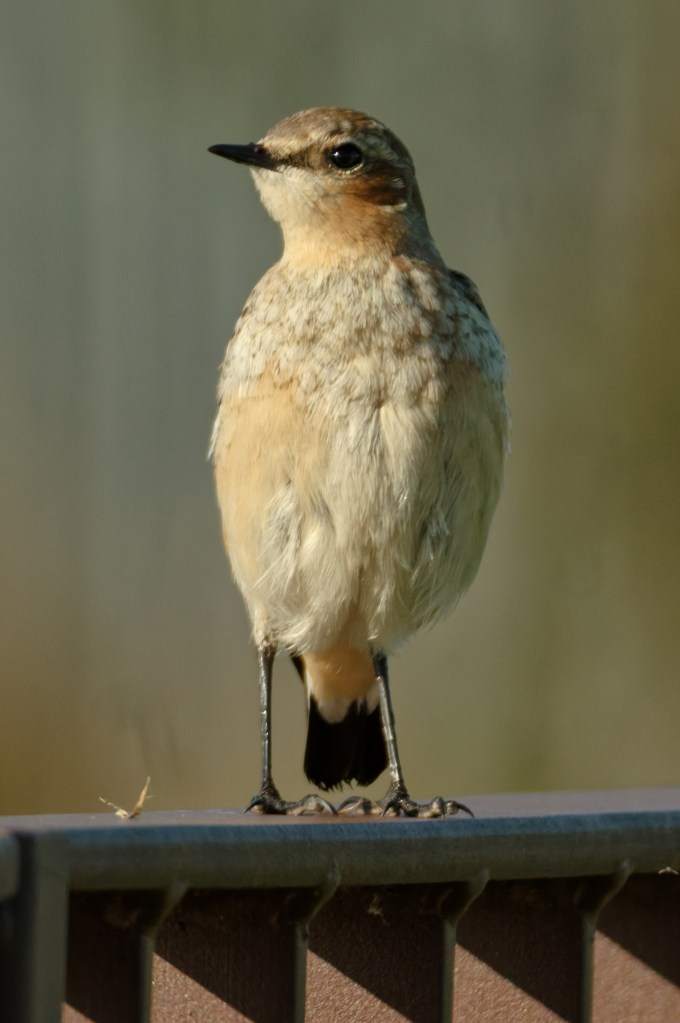
Starlings like this part of North Glasgow – it offers feeding opportunities on grassland and also on the Borron Street tip. As we walked away from the Starlings, an upright and pale bird hopped into view and perched on the iron rail beside a SUDS pond metres in front of us.
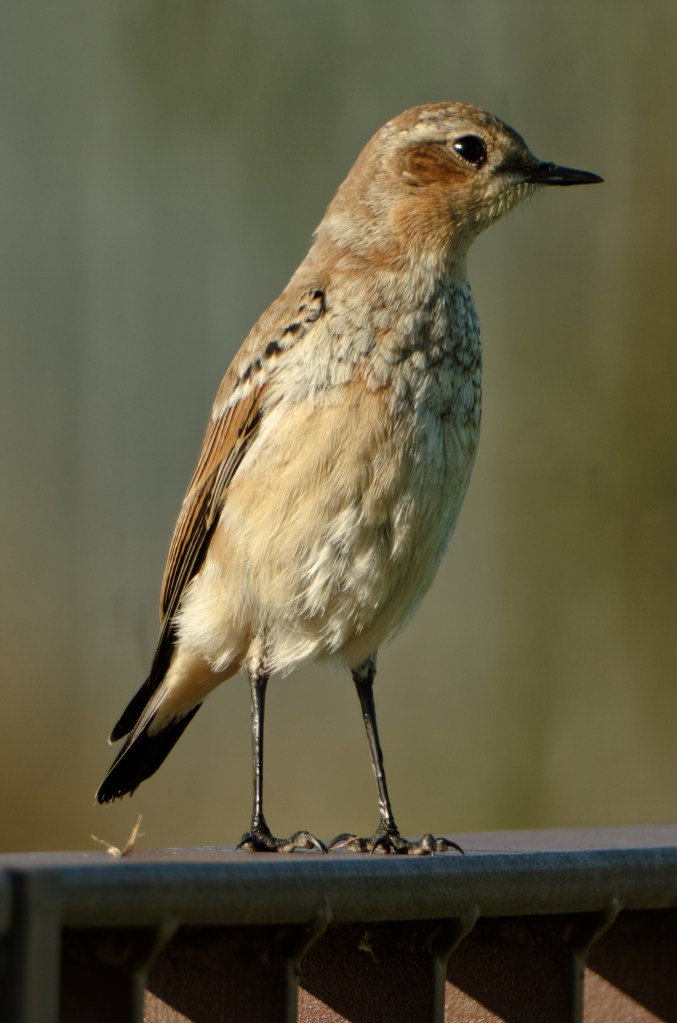
We caught a flash of a white rump as it flew to the rail – Wheatear, we thought. The posture looked right, and the perching habit. We sat down for a cup of tea and watched. There were plenty of places (concrete benches, guard rails, waste bins) for the bird to perch on, and it took full advantage, moving around us and trying out the possibilities. It was happy to let Backwoodsman approach it with the camera, suggesting that it was a young bird. Adult Wheatears usually flee from the approaching photographer or walker.
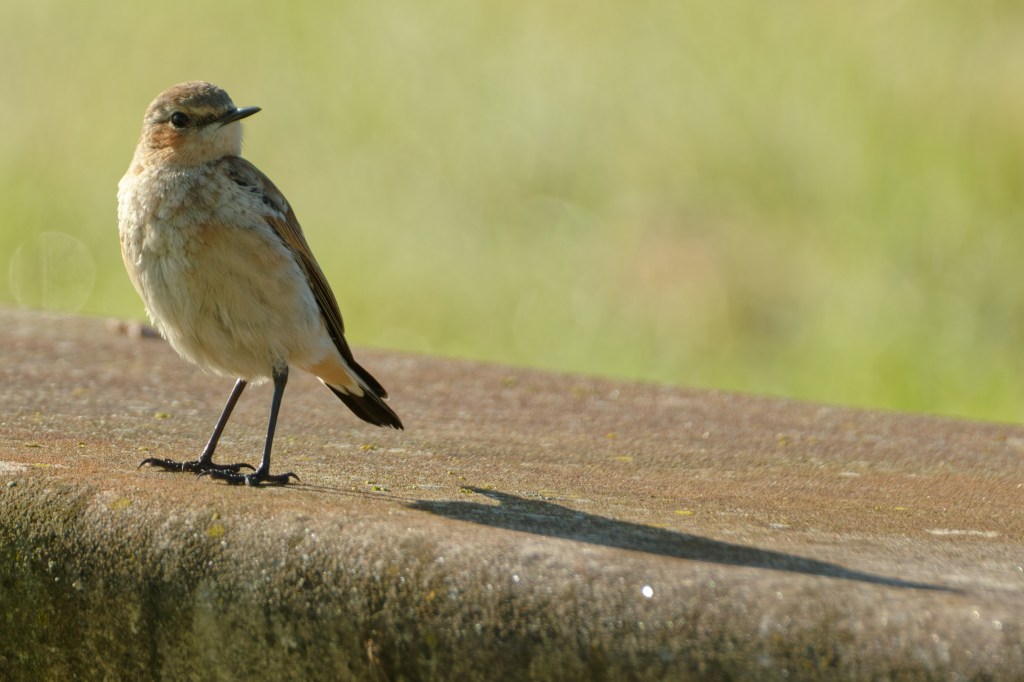
This was a one-off sighting; Backwoodsman runs through this area regularly and would have noticed the bird had it remained. It would not seem unreasonable that this young bird had fledged on the rough grassland to the north and was beginning to range south as a prelude to migration.
Backwoodsman looked back through the archives for other possible Wheatears and arrived at a folder of images taken at Cardross on September 21st in 2024. An adult bird, definitely a female, was feeding in the brambles.
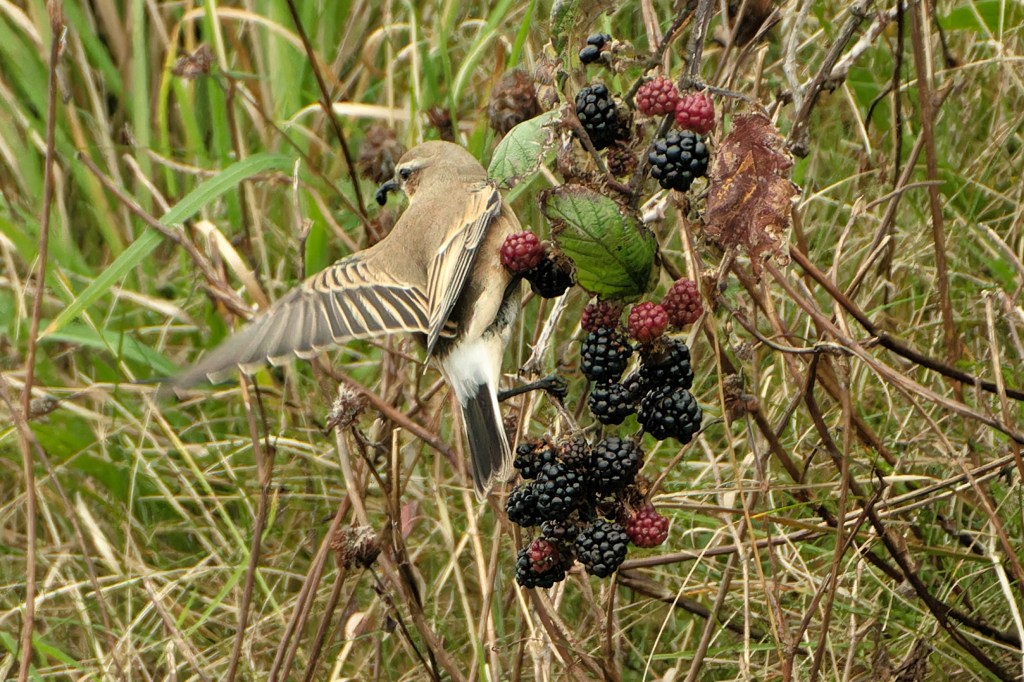
When she took off, the distinctive white rump was even more obvious.
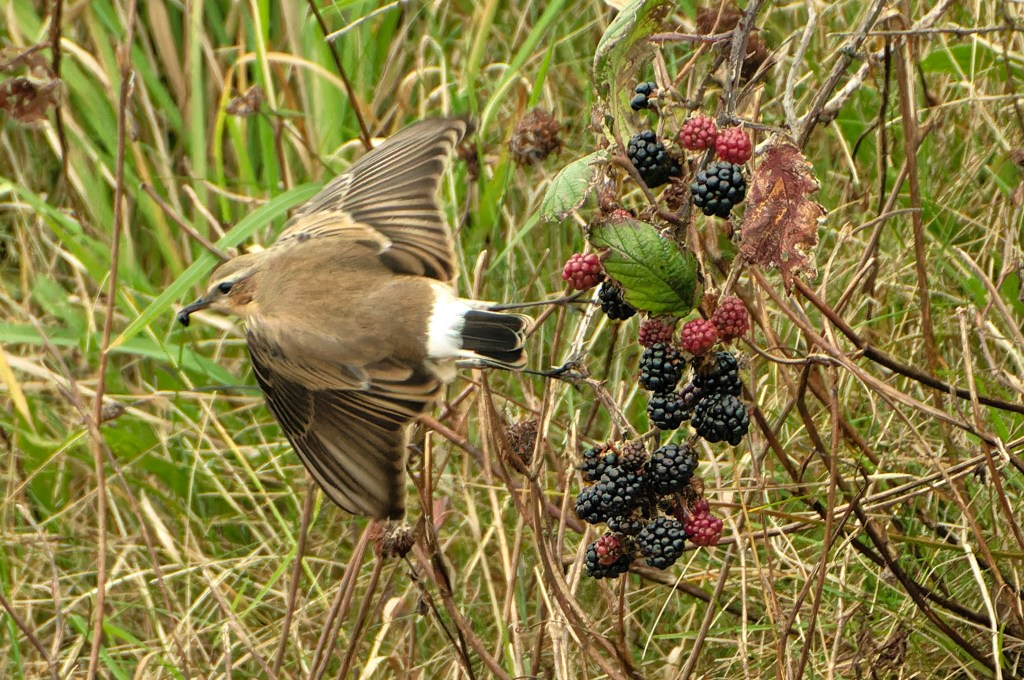
Further down the foreshore, she visited a pair of young birds, identifying them unambiguously in the process.
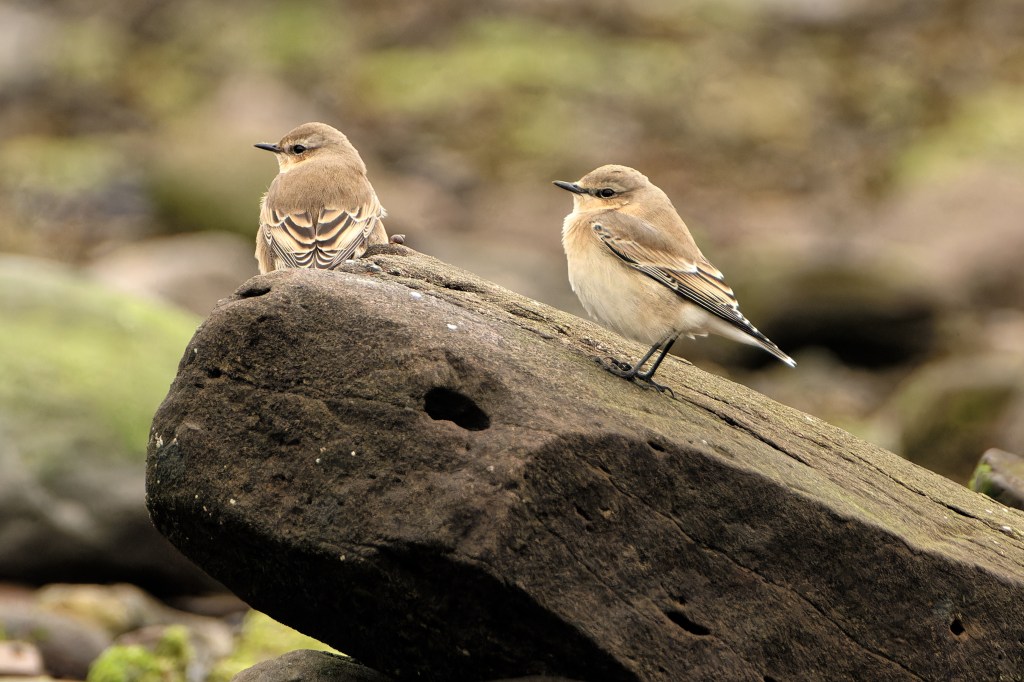
We might have struggled with these birds – they could be juvenile or female Stonechats, or Whinchats. Their posture makes them look quite rotund, whereas one of the key descriptors of the Wheatear is “sleek”. The adult plumage is clearly developing; there is a strong hint of the eye stripe and the white rump is clear to see.
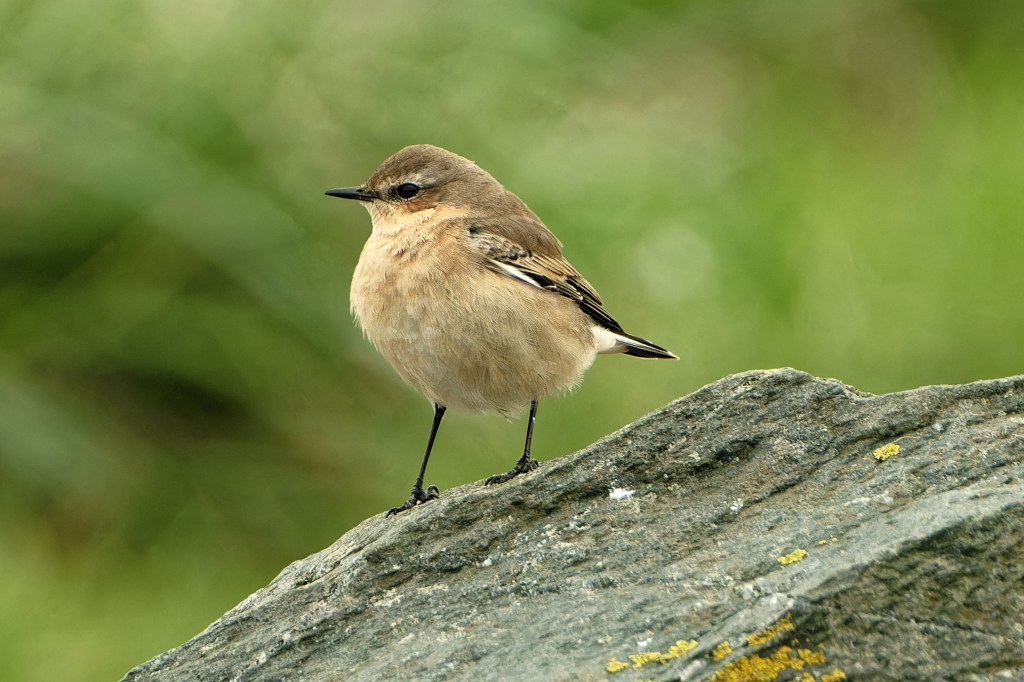
One Shetland sighting was particularly confusing. Backwoodsman spotted this individual some years ago on Sumburgh Head and was thinking Flycatcher, but it is probably a young Wheatear.
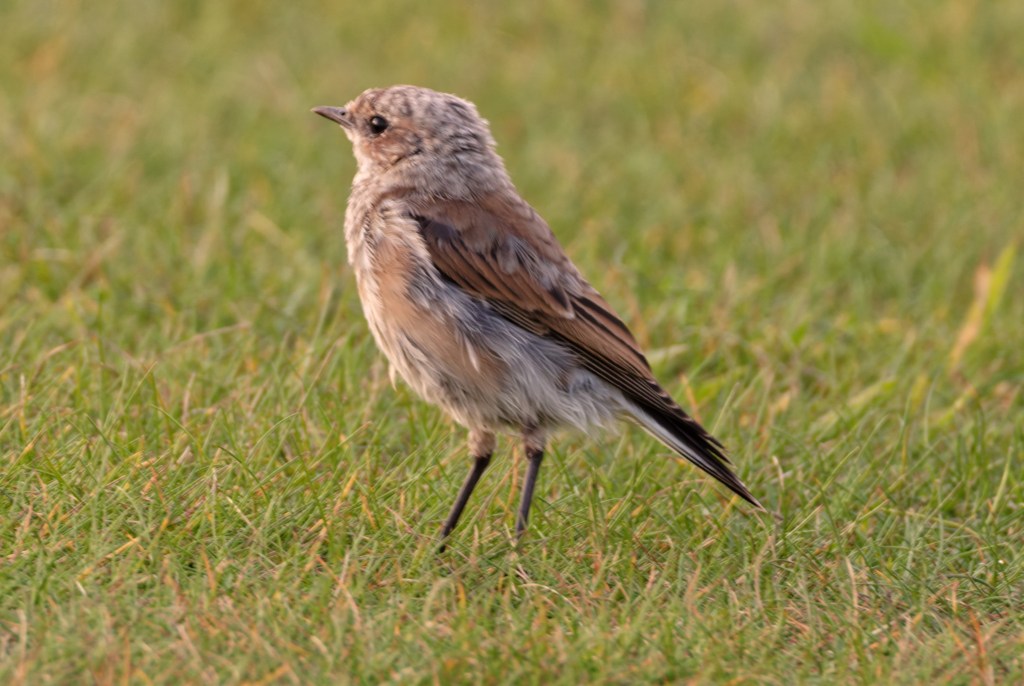
We spotted this bird not too far away; it may be in moult but it has some of the lovely grey colour which all the books give to adult Wheatears. It could be that this moulting adult was keeping an eye on the young bird as the latter learned its trade of foraging in the coastal grassland.
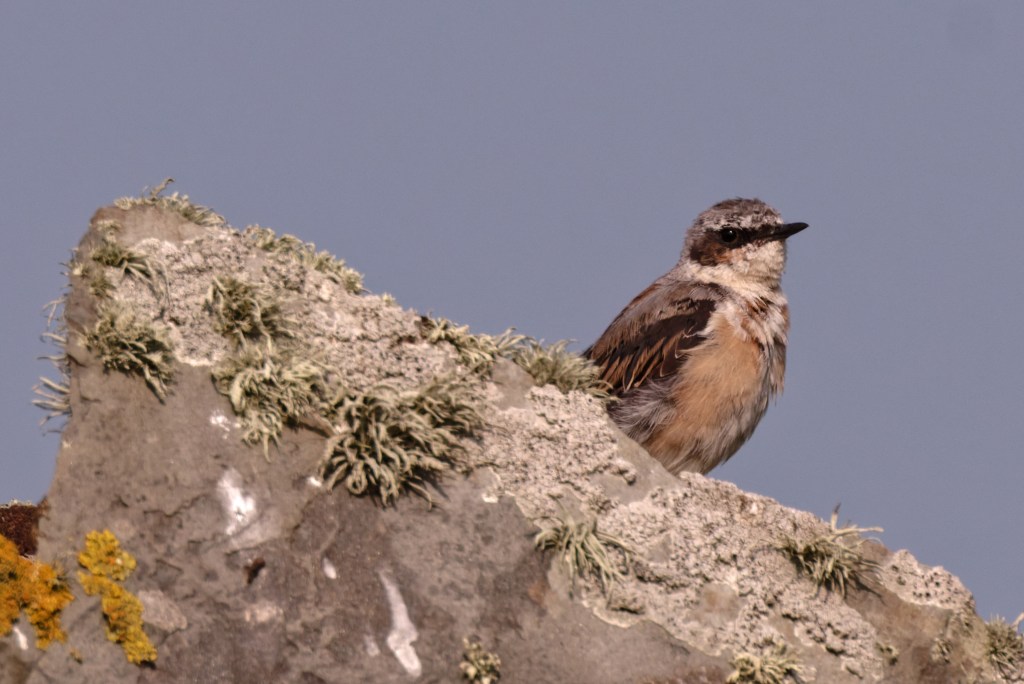
Any regular readers of these posts who track our movements will be ticking off the regular haunts, like North Glasgow and the Clyde at Cardross, and will be expecting to go to the Ayrshire coast any time soon. Stevenston has offered transient sightings of Wheatears, usually in the early autumn. We found this bird between Barassie Rocks and Irvine in mid-August.
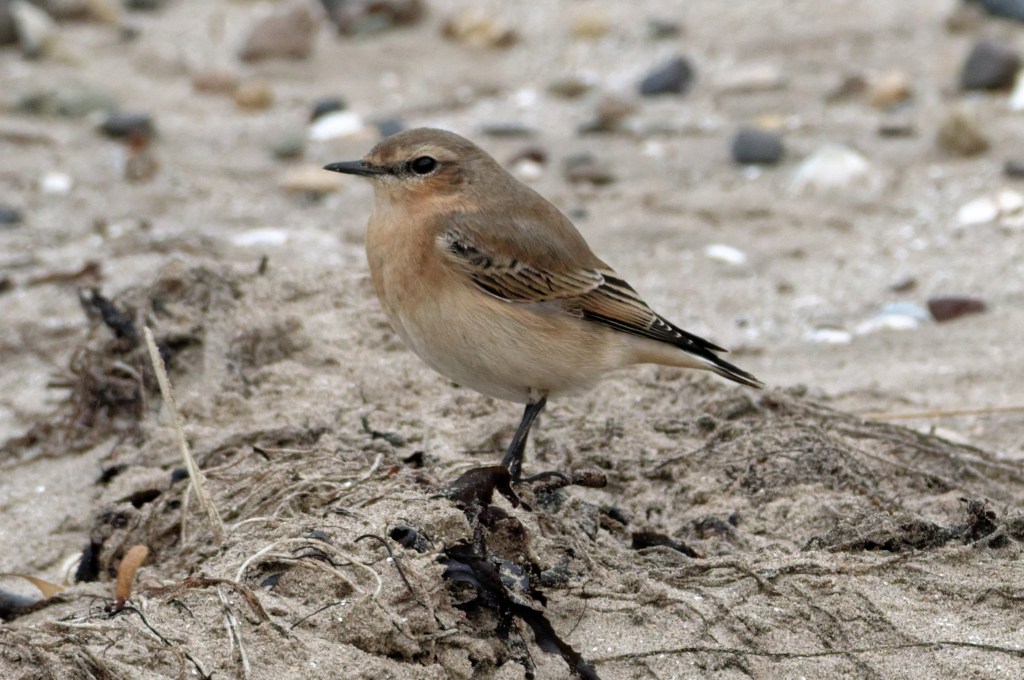
Wheatears have a huge breeding range in the northern hemisphere and head south into Africa for the winter. There is an excellent account of this to be read, and of other behaviours and habits, courtesy of a PhD student carrying out research at the the Fair Isle Bird Observatory.
By now and with any luck, all our Wheatears will be a long way south. We’ll look forward to their return, and will hope to catch some in the striking grey breeding plumage.
 backwoodsman.org
