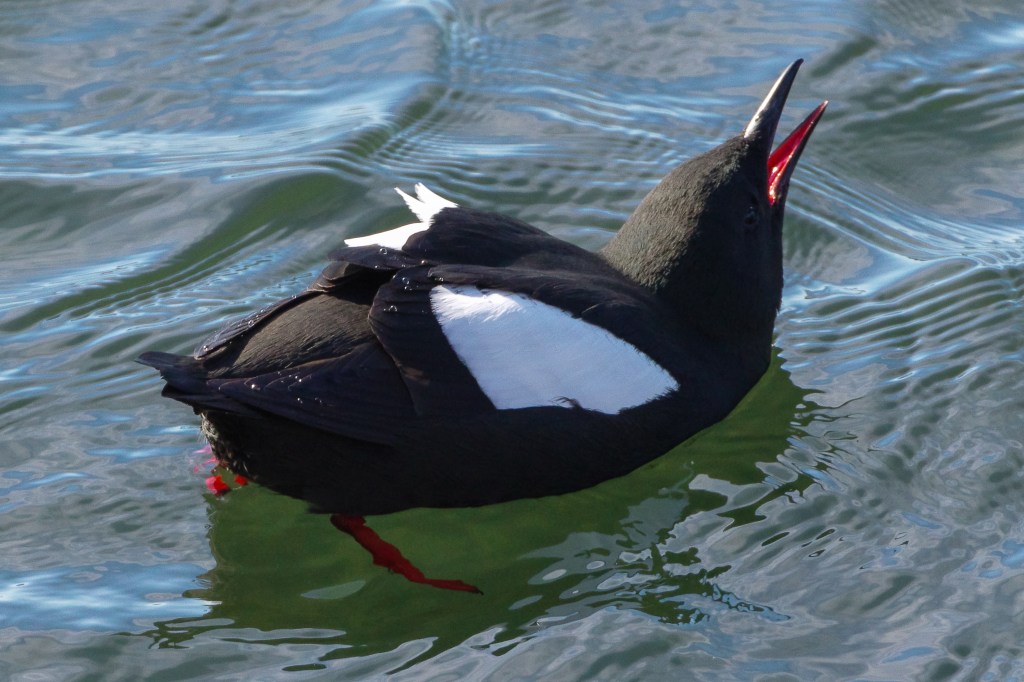
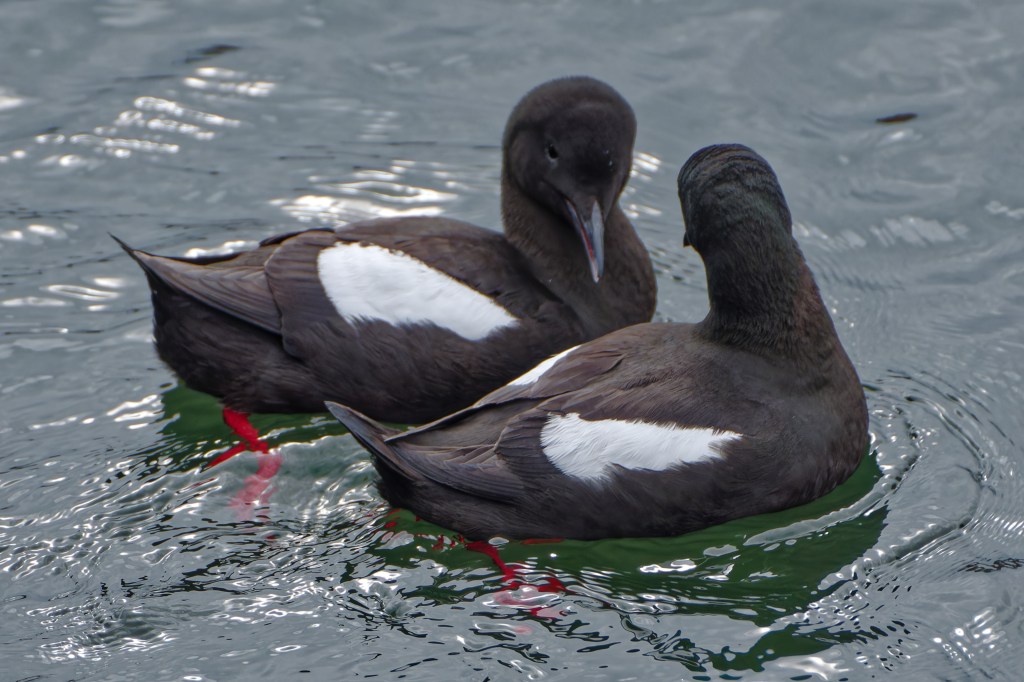
Some years ago, we visited Ardrossan Harbour just to see what was about, rather than to catch the Arran boat. A small waterbird caught our eyes – “Diver!” we chorused, but no, it was a Black Guillemot. We hadn’t seen them before and were struck by the red feet and gape when the bill opened. Our next sightings were in Shetland, where we found a pair in repose near Sumburgh Head in the summer sun, then one March at Saltcoats, where a small group in breeding finery had sailed into the old harbour. We returned to Ardrossan Harbour two weeks ago and found Black Guillemots again, really pleasingly, because the visit had been planned around them. They were on the water and sitting on the dockside.
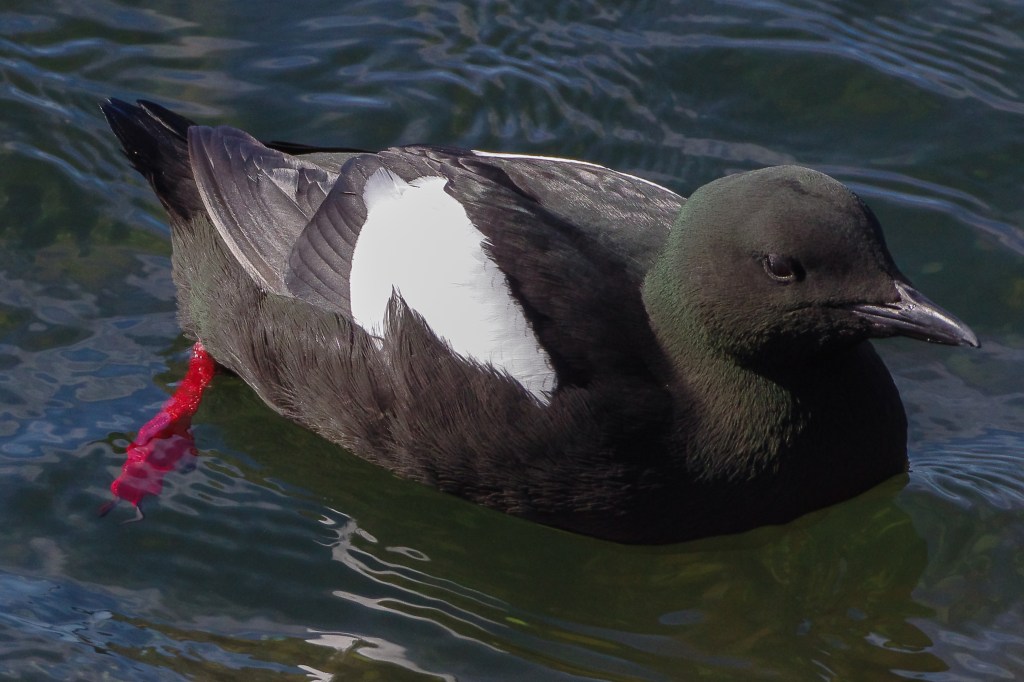
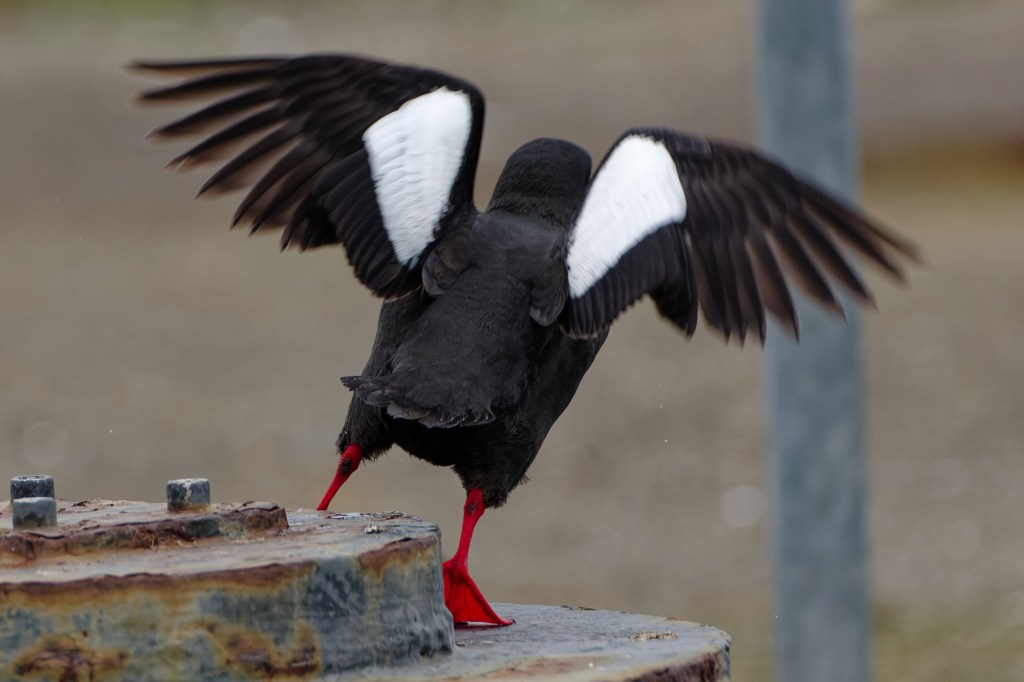
The JNCC (Joint Nature Conservation Committee) Seabird Survey reports that “The black guillemot or ‘tystie’ is a circumpolar species, concentrated around the North Atlantic, Barents Sea, Baltic and smaller numbers around the Chukchi Sea in northern Alaska and north-eastern Siberia. Approximately half of the UK’s population breeds around the Northern Isles, with the remainder confined mainly to the coasts and islands of north and west Scotland. Their distribution within the core range is determined by the availability of suitable nest cavities that are safe from land predators such as rats, American mink, stoats and otters. Between censuses in 1969-70 and 1985-91, there was an expansion in the range of black guillemots, in particular the colonisation of new sites around the Irish Sea, including man-made structures (e.g. harbour walls, jetties, piers), and into north-east Scotland.” The UK population is of the order of forty thousand, whereas Guillemots number over a million. Black Guillemots live for around eleven years, breeding after the fourth year and forming small colonies to do so, whereas Guillemots mass on cliffs.
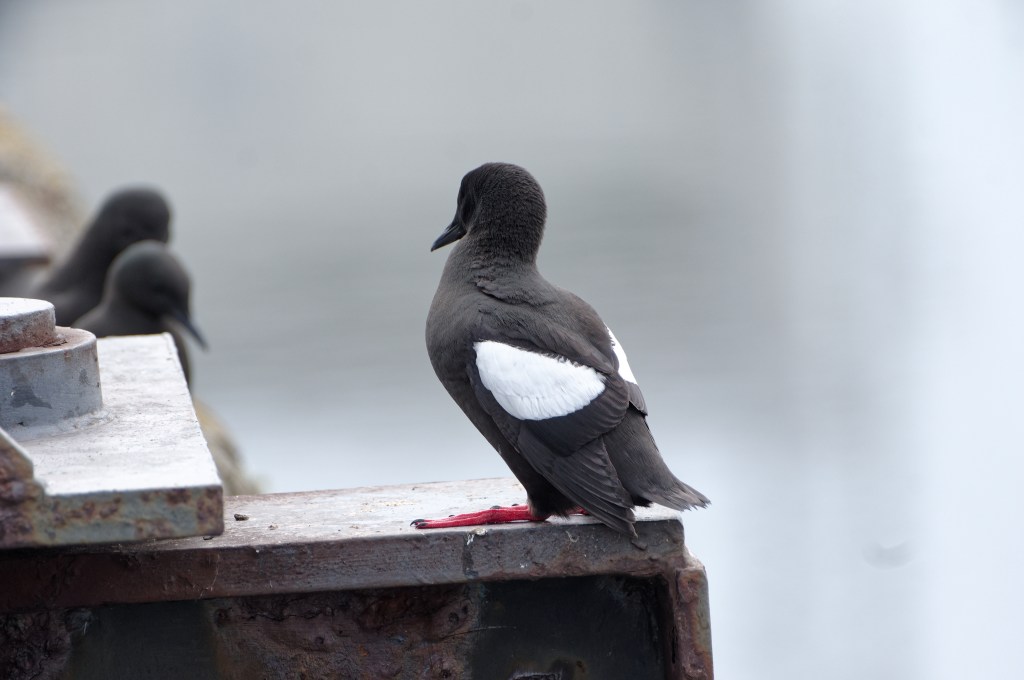
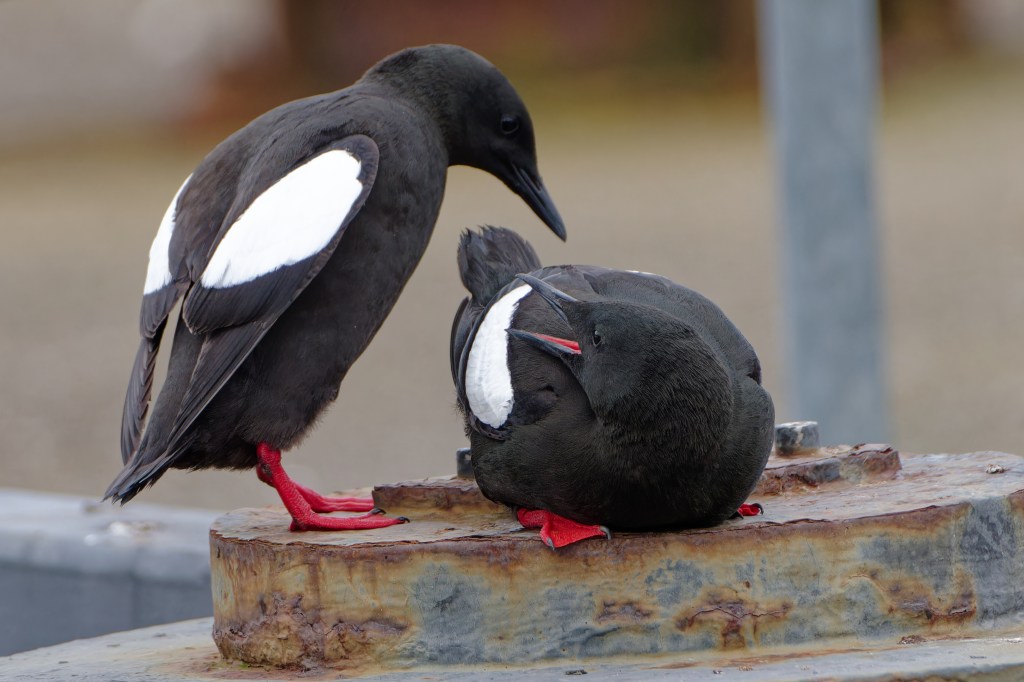
They were surprisingly tolerant of our approach, even when an excited Backwoodsman contrived to fall over this handsomely distressed and rather obvious bollard. A previous fall onto camera at Cardross had resulted in a cracked rib; Backwoodsman was more lightly wounded this time and the abrasions healed up within the week. More importantly, the camera was fine.

You may notice that there were three birds in the earlier shot, and three is definitely a crowd for seabirds in the breeding season. Before too long, the period of repose ended and the group took to the air and then the water.
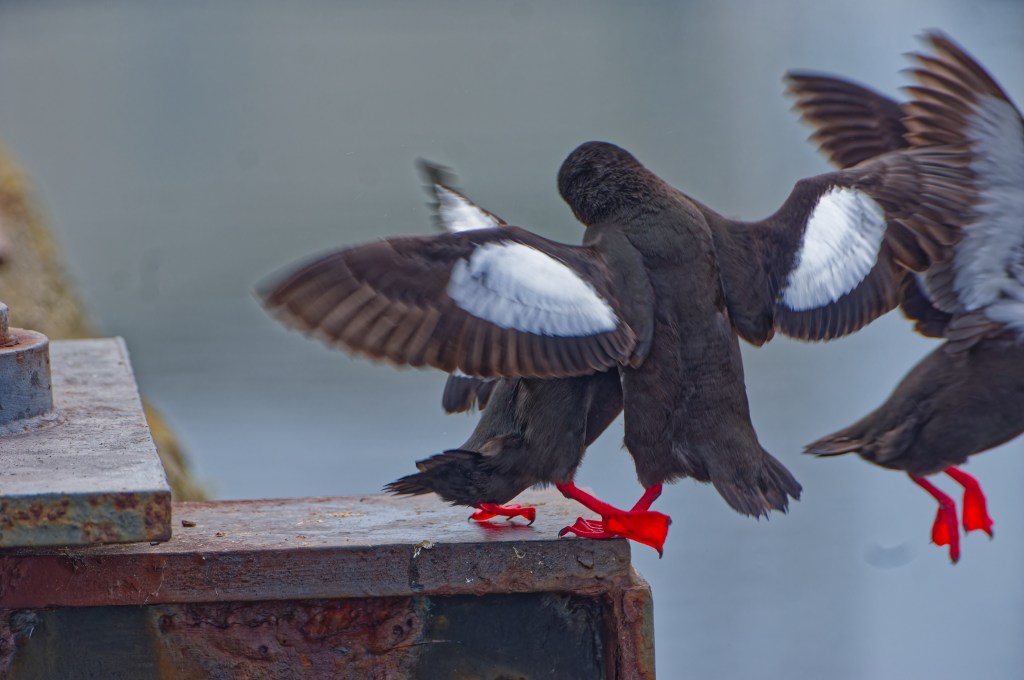
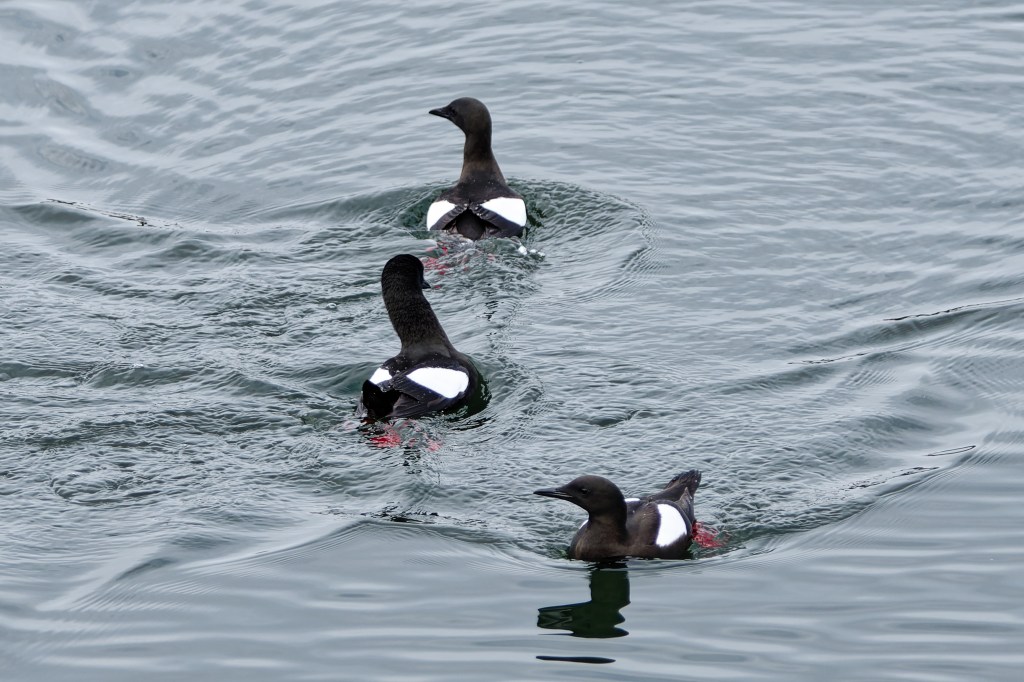
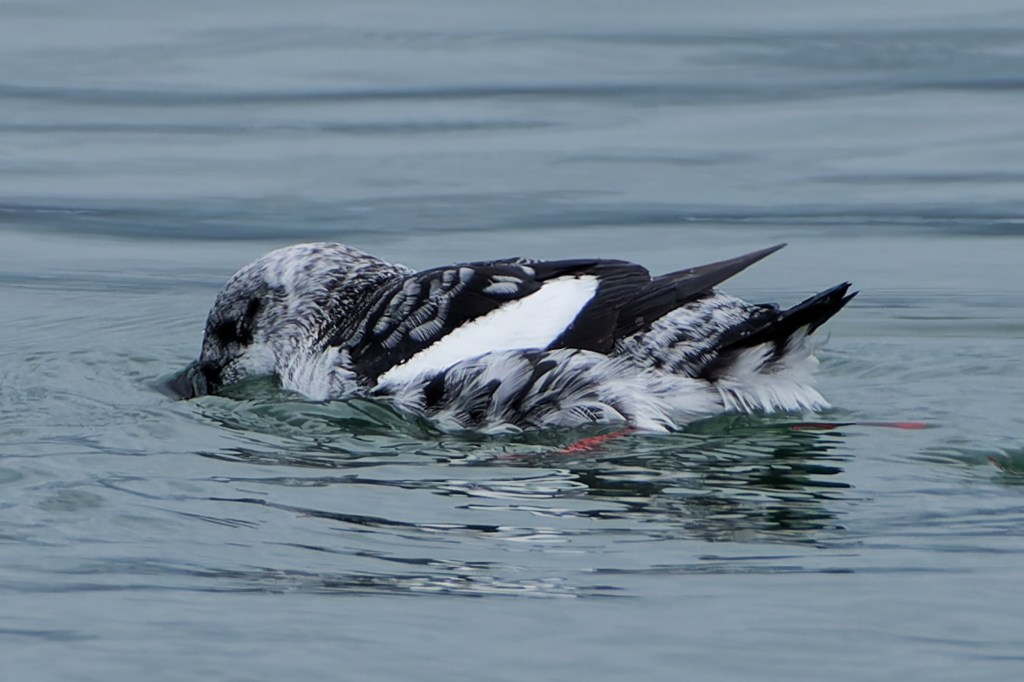
Violence ensued, as it tends to within avian threesomes; a pair of birds really went for each other, both on and below the surface. It was quite a sight. The shape of the bird in the second image is really interesting – are the wings and tail spread for stability and leverage, all the better to peck at the rival bird?
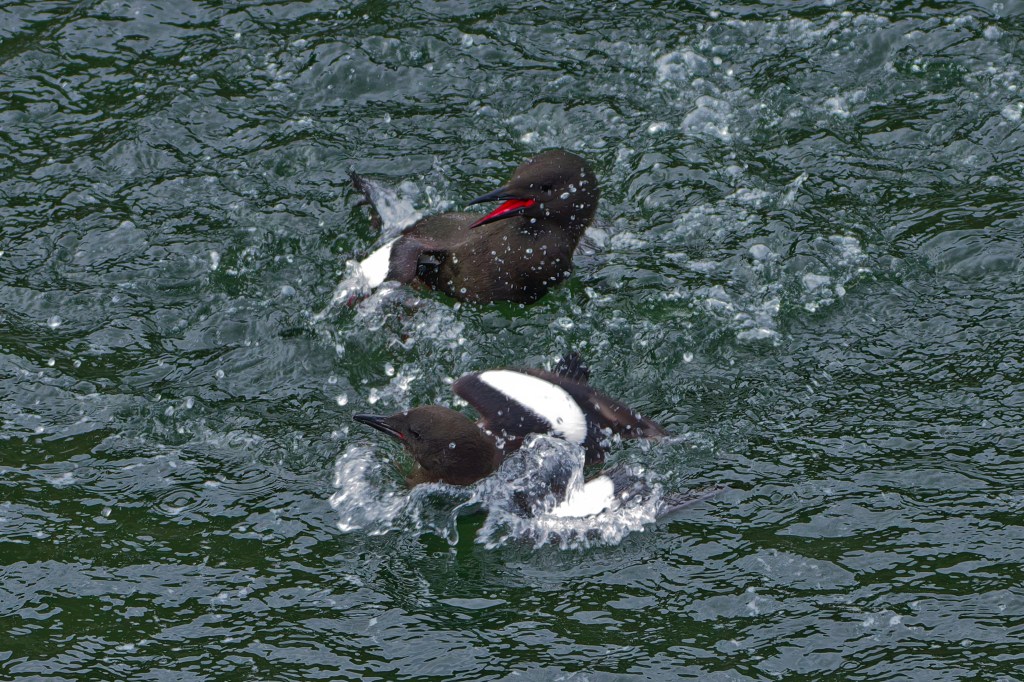
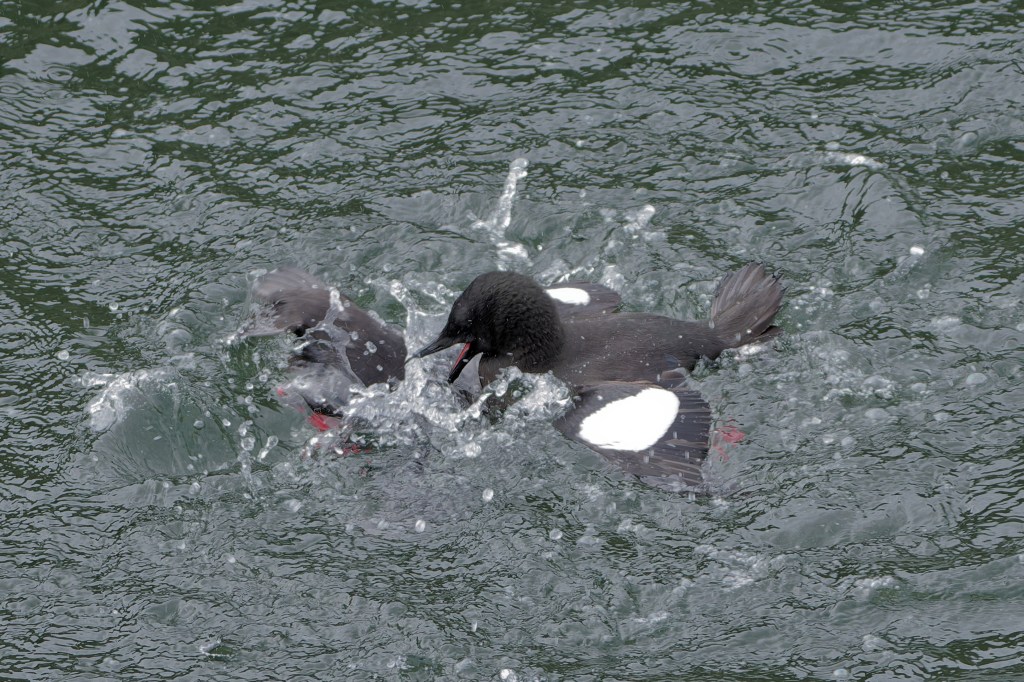
The vanquished bird was seen off and the victor displayed, had a freshen up, and then headed off for a bit of courting.
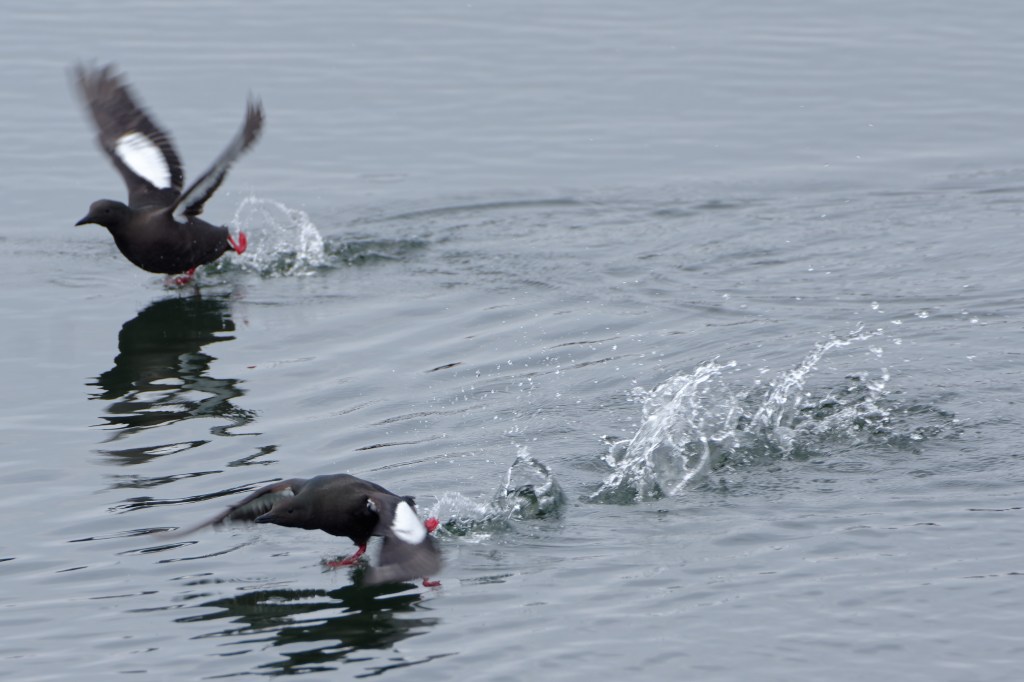
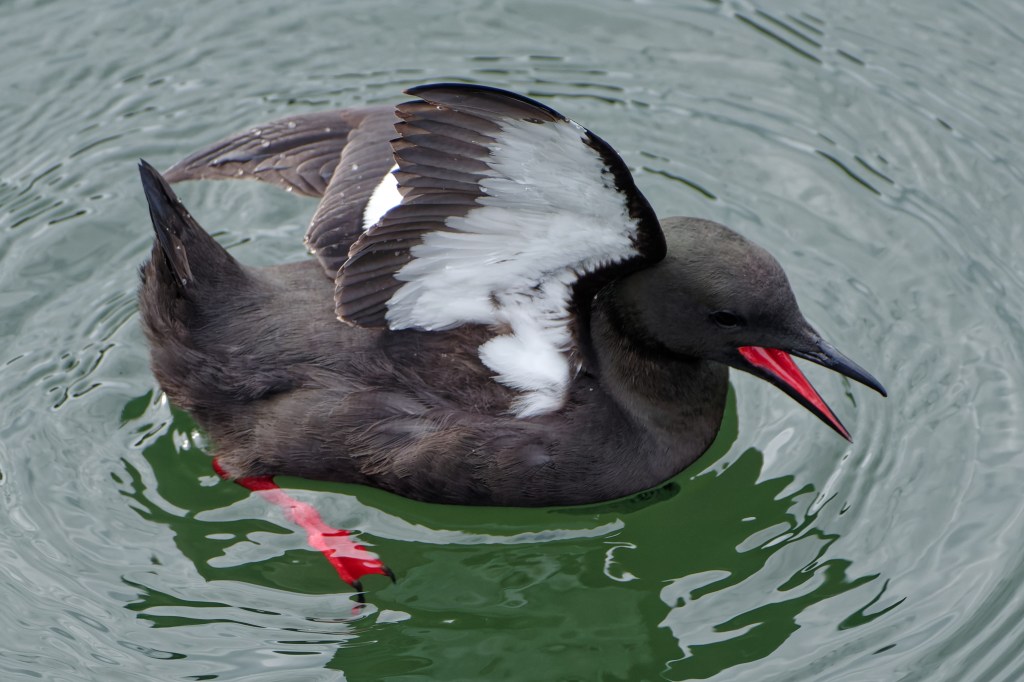
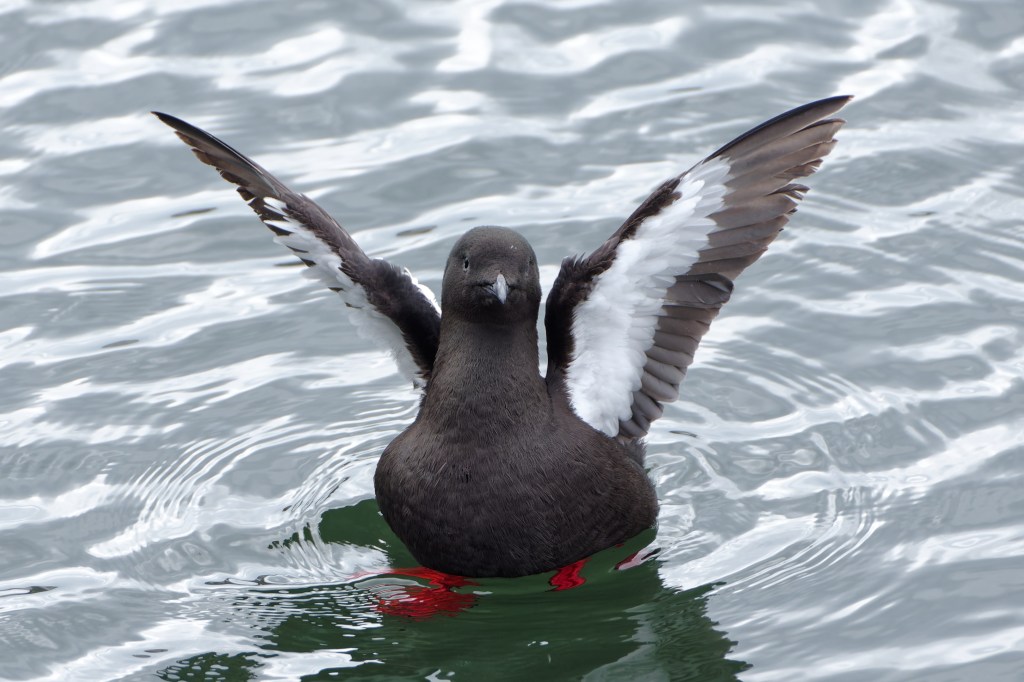
There was a display on the water, with the pair circling each other, then a second and vocal routine on the dockside.

The birds get noisy towards the end of the video. Please accept Backwoodsman’s apologies for the shakily framed video footage – it demonstrates the efficacy of sighting through the viewfinder rather than looking at the back of the camera.
When sighting through the viewfinder, you can brace the heavy camera against your head and crunch everything (arms, neck, lower body) tight to keep the gear steady, whereas the extension of the arms required to look at the back of the camera makes the shakes inevitable. It’s no big deal with a wee mobile but do try it with three-and-a-half kilos of camera, and then wonder why they want you to look at the back screen. It beats me.
The JNCC document quoted from near the top of the post states that “The species is one of the more problematic seabirds to survey. It tends to breed away from the large seabird cliff colonies and prefers small rocky islands and low-lying, indented stretches of rocky coast. Nests are hidden in rock crevices and under boulders, which makes them extremely difficult to census during the breeding season.” Black Guillemots also seem to like drainage holes in harbour walls; on arrival at Saltcoats Old Harbour, we saw a bird’s head protruding and in due course, a second bird came to join it in the hole.
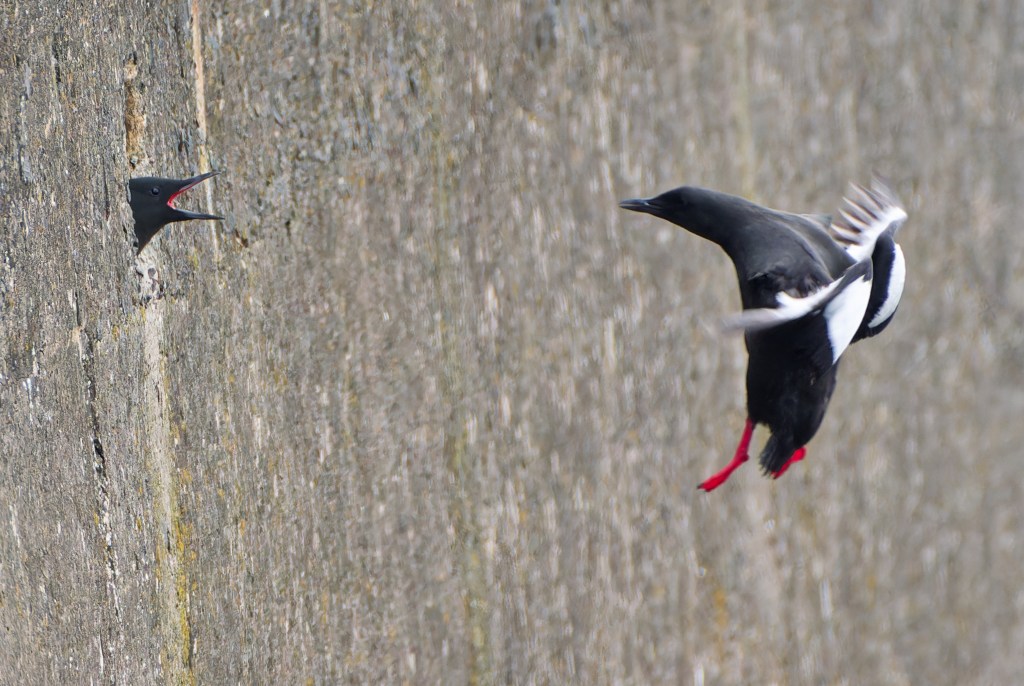
After a short interval, one of the birds left and flew right across to harbour to a second opening.
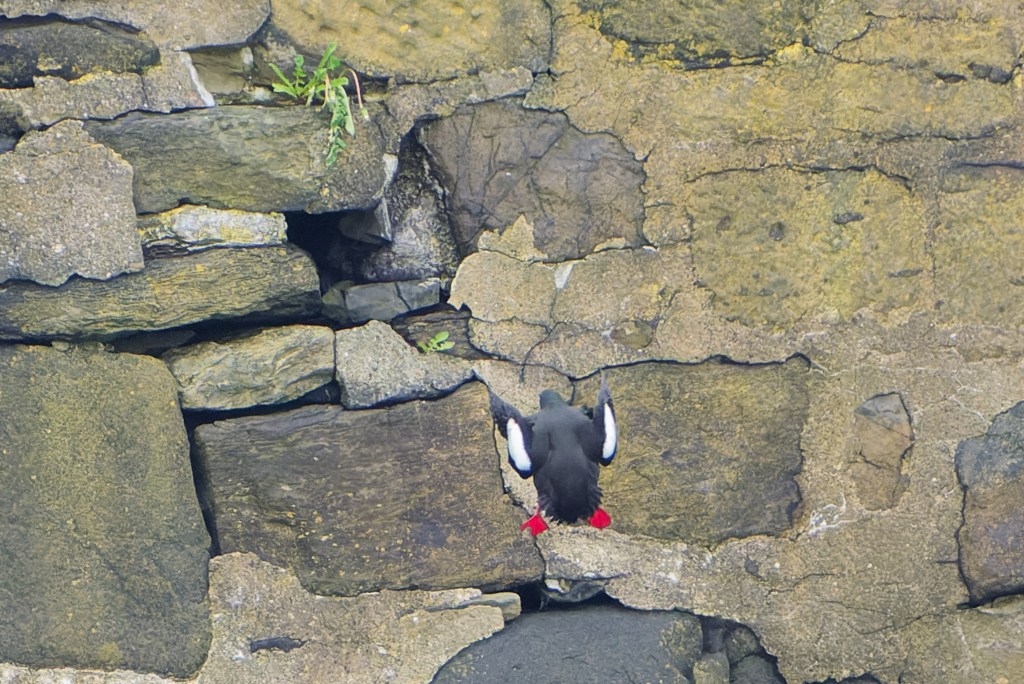
There were quite a few suitable holes in the harbour wall and others were occupied by birds. Some birds nesting in similar sites in Oban assumed celebrity status a couple of years ago.
While writing the post, Backwoodsman remembered some images from our trip to Belfast in March 2023 and re-examined them alongside the illustrations in the RSPB book. There are the brilliant and unbroken white wing patches, and the red feet of an adult in winter plumage: juveniles have two dark lines across the wing patch and more orange-coloured feet.
Those of you embedded in academic life will recognise the phrase “light touch review”. It means “someone sent me this paper to review and I haven’t actually read it properly (or possibly, at all). But it’s by my mate so it must be good… Accept without changes.” Well the research for this post is definitely light touch and Backwoodsman is relying on visual appeal to slip this one by you. Backwoodsman hopes you enjoy the images of these handsome birds, and don’t mind the thin text too much.

 backwoodsman.org