Backwoodsman is finding the cheerful spring weather to be a poor fit with events in the wider world; writing has not seemed like a worthwhile activity. It’s a bit like farting in a hurricane (“so what’s new?” you ask). For example, Backwoodsman had the misfortune to watch a speech made by the PM to an audience of captive NHS workers (Thursday 13th March), televised by the BBC. In full-on call-me-Keir mode, the man once described by Alexei Sayle as “a fatberg blocking the possibility of making the world a better place” explained how all would be swept aside, or bleed on the altar of growth. Here is the background to Backwoodsman’s interest as reported by the BBC under the headline “Charities accuse Starmer of misleading spider claims”:
“Writing in the Daily Telegraph on Thursday, Sir Keir said the project was to “build more than 15,000 new homes” with a “17-minute commute into central London”. He wrote that the previous government had bought 125 hectares of former industrial land and quarries to build homes on, but the plan had been “blocked by Natural England” due to “the discovery of a colony of ‘distinguished jumping spiders'”. He added: “It’s nonsense. And we’ll stop it.” In a speech in Hull later the same day, Sir Keir appeared to refer to Ebbsfleet again, saying that “jumping spiders” had stopped “an entire new town”. He added: “I’ve not made that example up, it’s where we’ve got to.””
So OK, it’s not ethnic cleansing in Gaza, or the US and Russia carving up the European continent to suit themselves but it was unpleasant to see an elected Labour leader displaying such a loathsome attitude. “Are you tories in disguise, are you tories in disguise?” they chorus from the terraces.
In an attempt to recover from all this gloom, Backwoodsman has been thinking of a bird which brings cheer in the most miserable of circumstances, for example, Backwoodsman’s walk to the office in his former employ. This took in the decaying shopping centre of Glasgow, leading to the bridge which takes Cathedral Street over Queen Street station. And here is the view of the last two hundred metres; please note the presence of Best Kebab in the foreground.

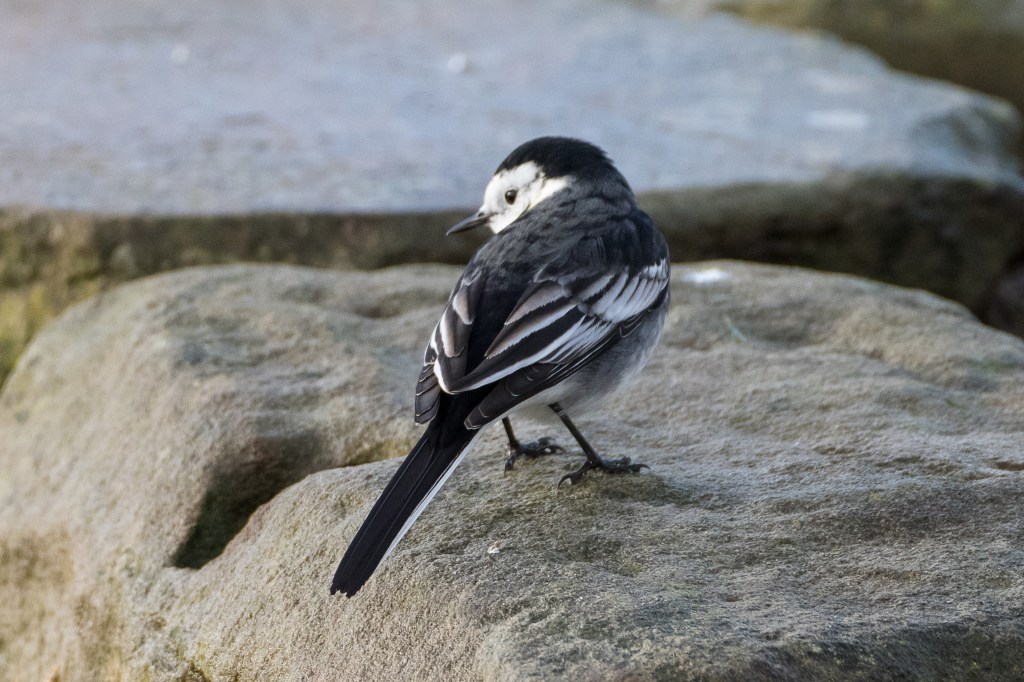
At lunchtime, this outlet would sell foul-smelling food to the University’s students; Backwoodsman shudders to think what went on in its premises as night came, but in the morning, it would occasionally resound with something that sounded like Rai music (as celebrated in Patrice Leconte’s 1990 film The Hairdresser’s Husband), and would usually be patrolled by a Pied Wagtail. There in a bob and a dart and a flash was something to improve the start of the working day.
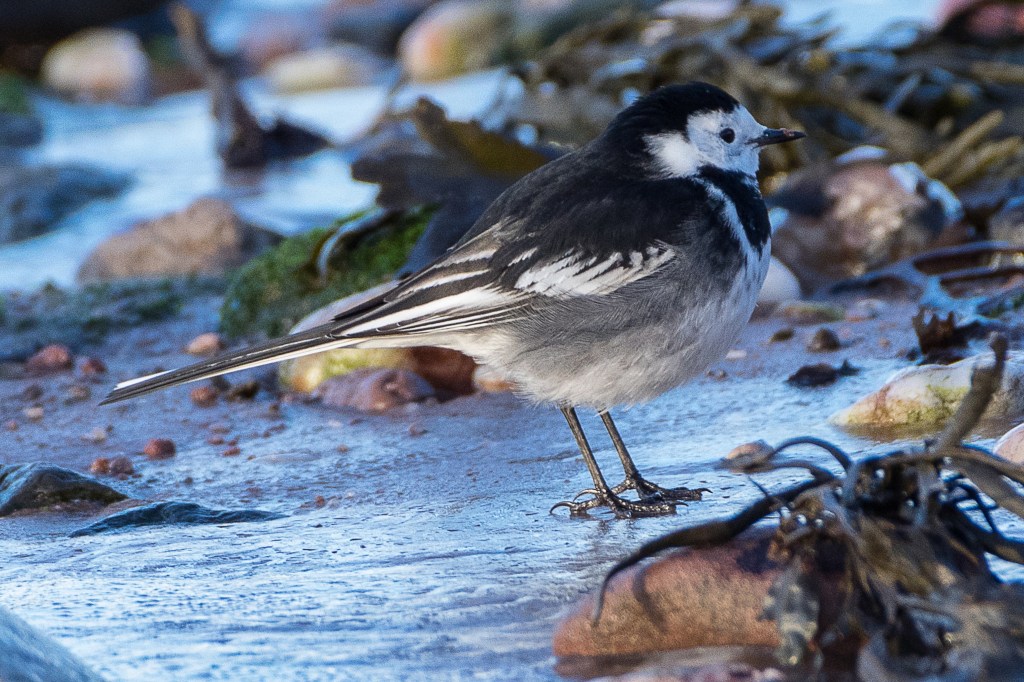
Pied Wagtails are just great, aren’t they? According to the BTO, they only last a couple of years on average but they pack a lot in, sometimes in hostile environments. There are quite a lot of them (half-a-million pairs) and their numbers seem to be growing. They are insectivores but are adaptable in their diets, a hallmark of a species which succeeds in an urban setting.
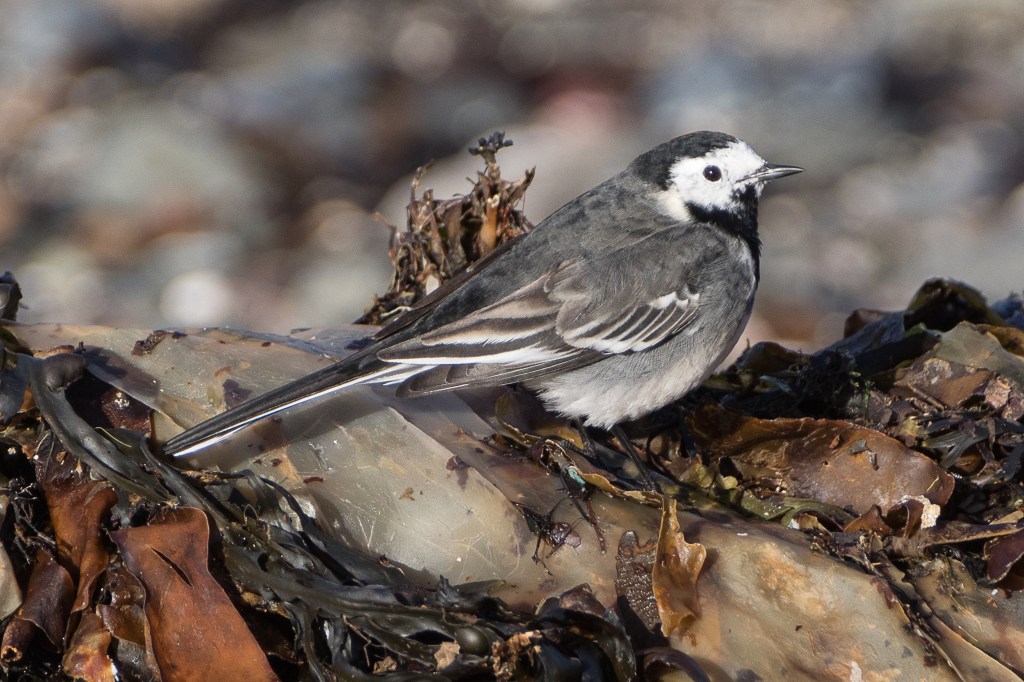
It is unusual not to see them on the Ayrshire beaches, particularly when the tide has rolled up a good crop of weed. It doesn’t take the insects long to colonise the decaying material and then there is food for all, Wagtails, Turnstones, Corvids and Starlings alike. Backwoodsman’s best Wagtail sighting was at Stevenston one recent winter afternoon when ten individuals could be seen in as many metres of beach. We used to see them from the windows of our flat; they would patrol the stonework of the neighbouring terrace. There is a territory on the Glasgow Harbour, and several on the new North Bridge estate (running routes) – how many could there be across the whole city?
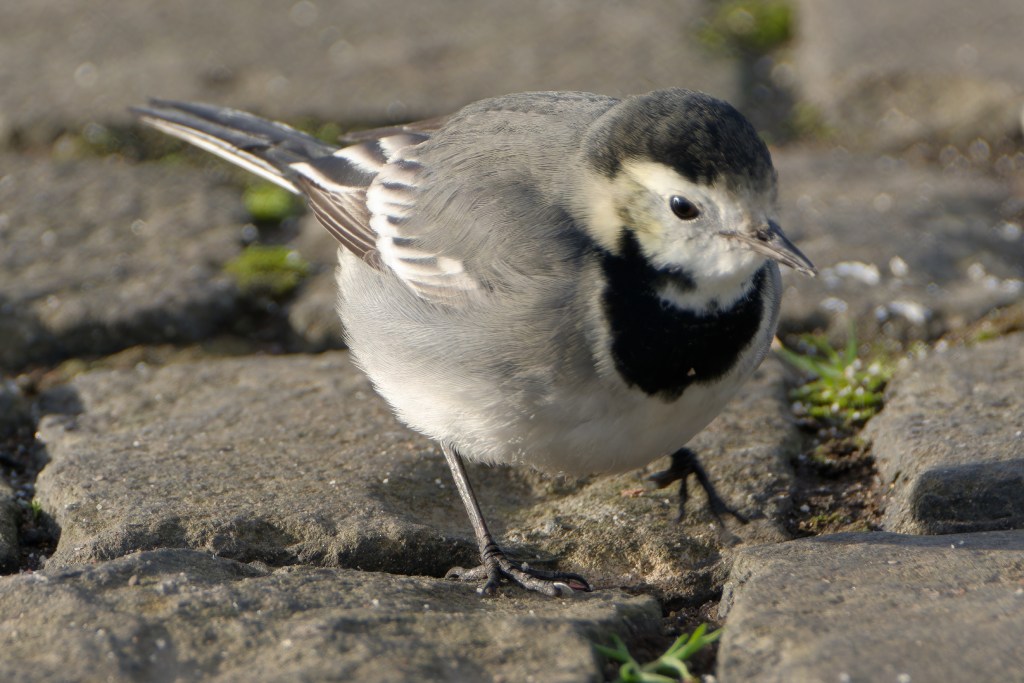
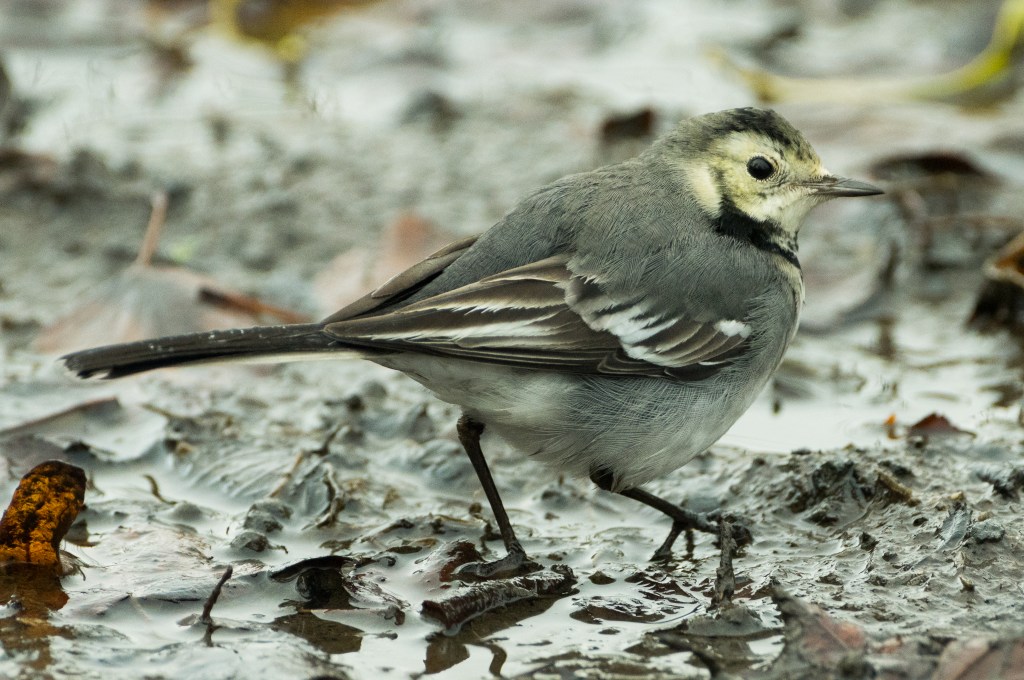
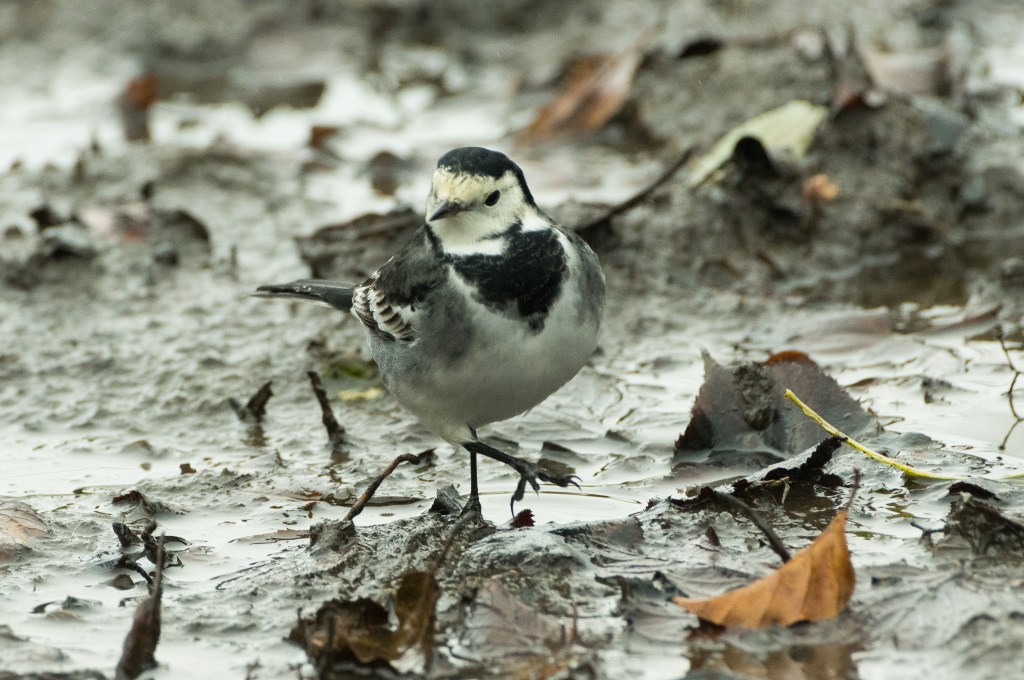
Backwoodsman finds them hard to photograph; they seem to vibrate, requiring a high shutter speed and then we get into all the usual boring stuff about high ISO, wide aperture and low depth of field. But every now and again, you get one when it is busy and neither looking nor moving. Here are two birds, one juvenile and one more mature adult, in the mini-Somme created by grazing stock at RSPB Baron’s Haugh in January. The juvenile has more yellow-cream, the adult more black-and-white.
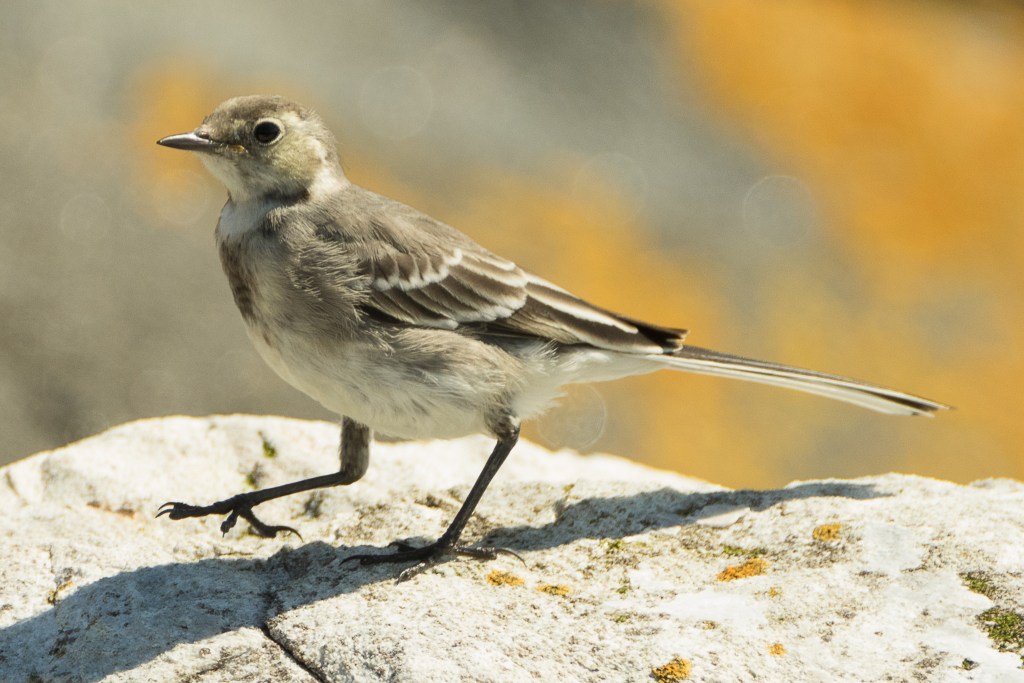
First year or fresh birds are very pale; we found some at Troon. They were quite hard to see against the rocks of the coastal defences.
One almost gave Backwoodsman the shot he has always wanted of an adult, the one where the tail feathers are fanned in flight.
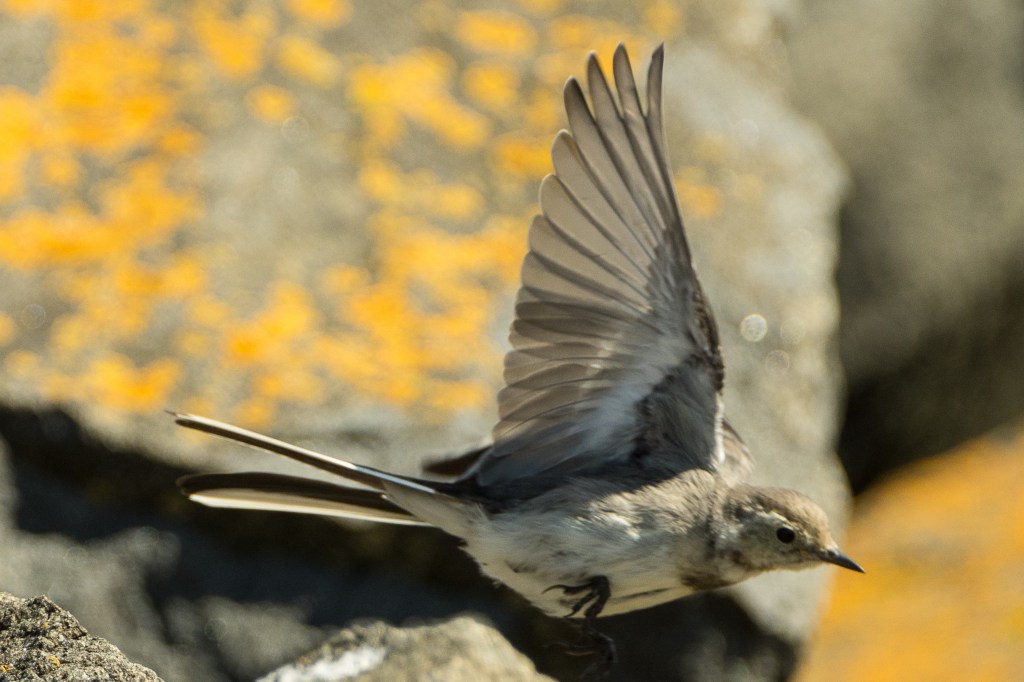
After many fruitless attempts in which a nicely focussed bird executes a vertical take-off and leaves the frame empty, Backwoodsman has abandoned this project.
But Pied Wagtails will continue to provide joy, wherever and whenever. They are always worth a look, and a second.
 backwoodsman.org