These are birds of the winter for us in the UK. Backwoodsman remembers reading, some years ago, a piece in an RSPB Magazine which described the extraordinary lengths one photographer had gone to in obtaining exactly the image of roosting Red Knot that he wanted. He had found a gravel bank favoured by the birds as a roost site and bedded down on it at dusk, camera at the ready. The birds settled around him and they all passed a peaceful night together. At dawn, he acquired his images of sleepy Knot and the birds flew off to feed. Alas, the RSPB Magazine cannot be searched on-line and our hard copy went to the recycling bin some years ago but it is a very clear memory.
Red Knot hit the beaches of the UK in huge numbers in the autumn and winter; reserves like RSPB Snettisham welcome birds from the panoramic mud flats of the Wash. Backwoodsman would not normally have anything to do with products from the Zckrbrg empire but here is an extremely effective video of a very large number of birds falling over each other on a gravel spit.
We enjoyed some footage of Knot in Morecambe Bay from Hamza’s Hidden Wild Isles Series 1: 3. Autumn. At about 40 minutes and again at 44 minutes, Knot do their amazing murmuration thing. He doesn’t name the species but it is clear what he is filming.
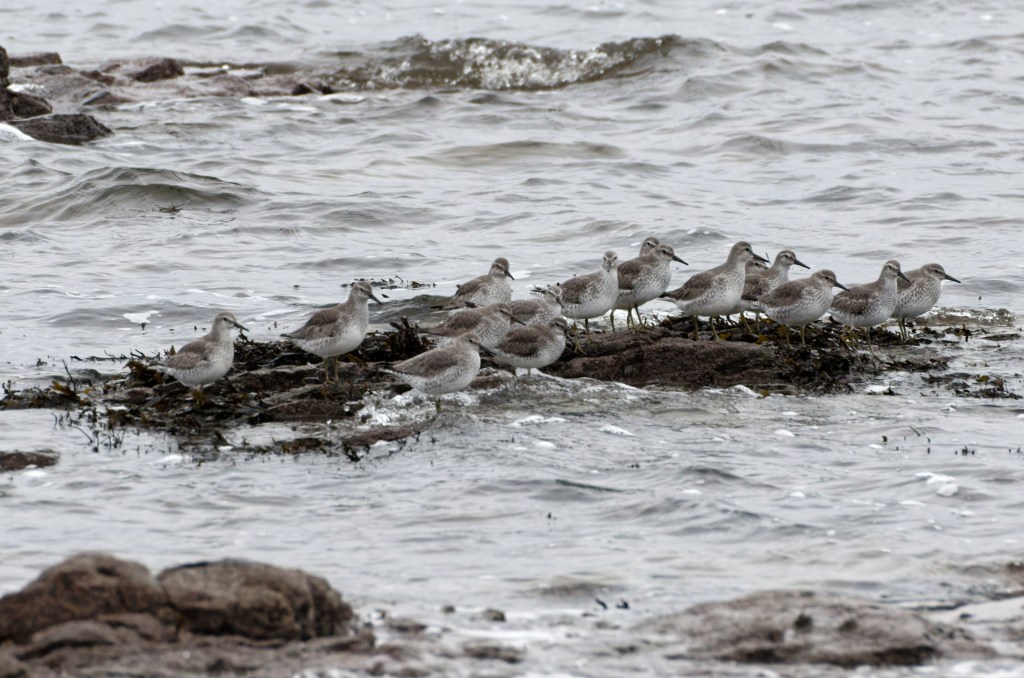
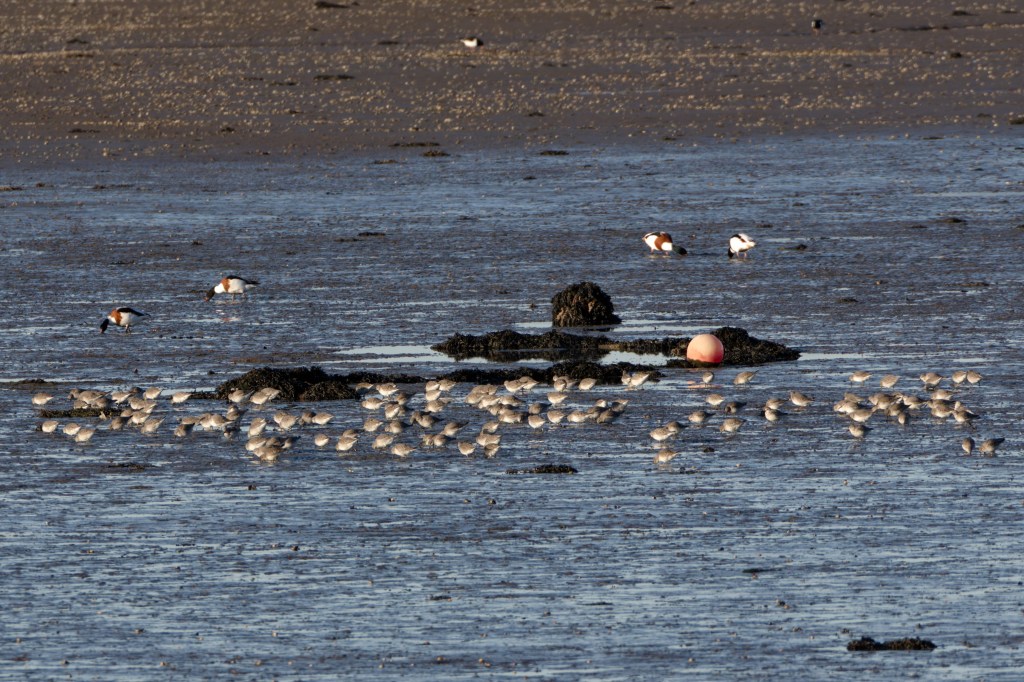
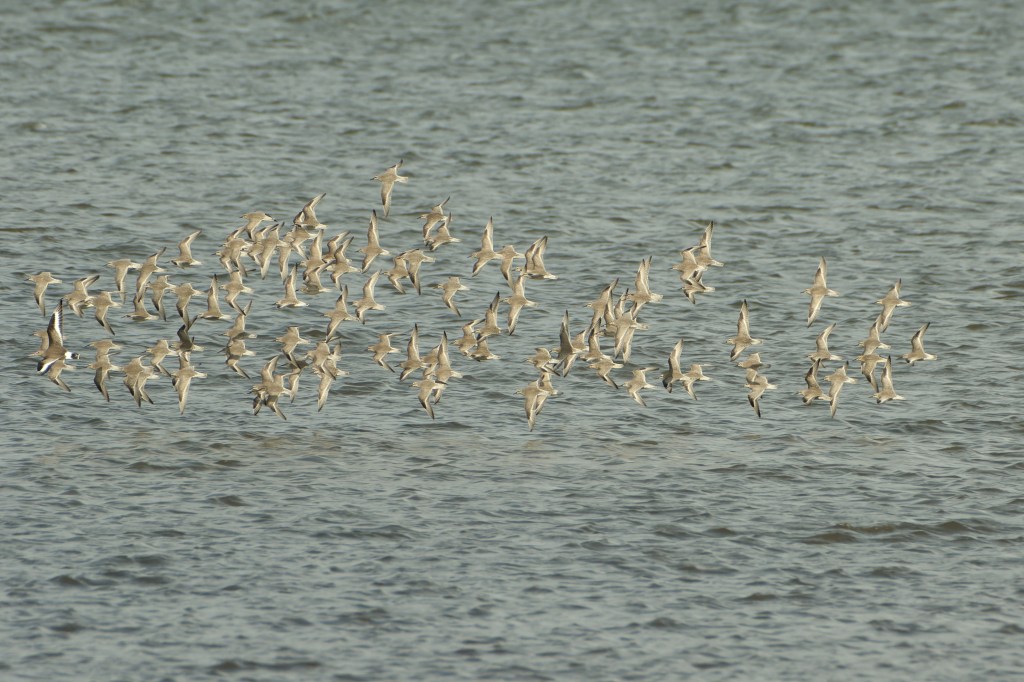
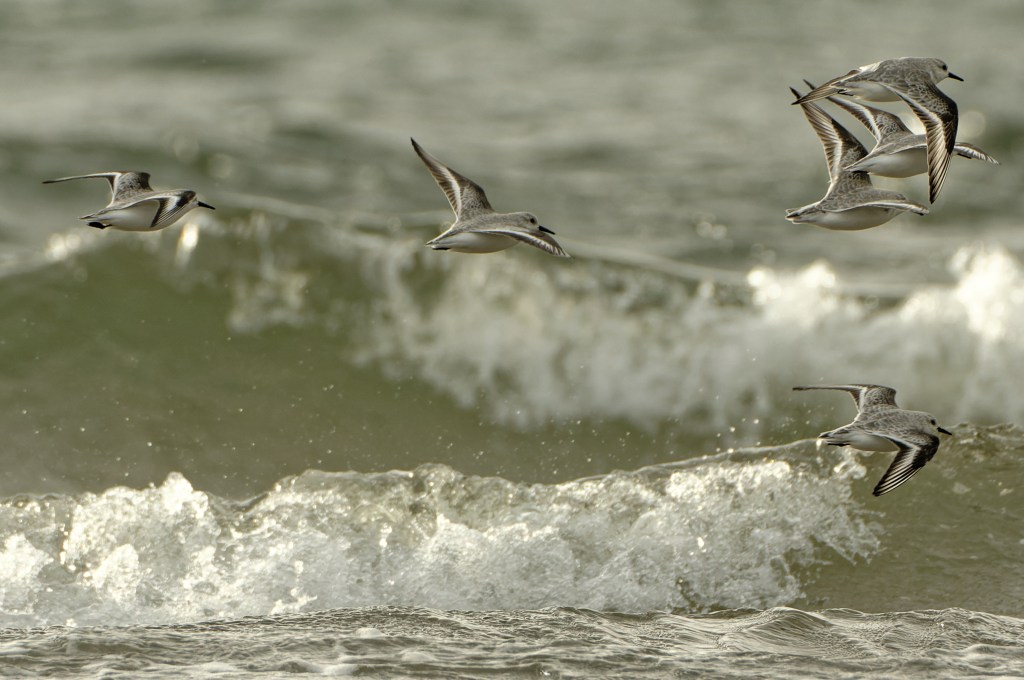
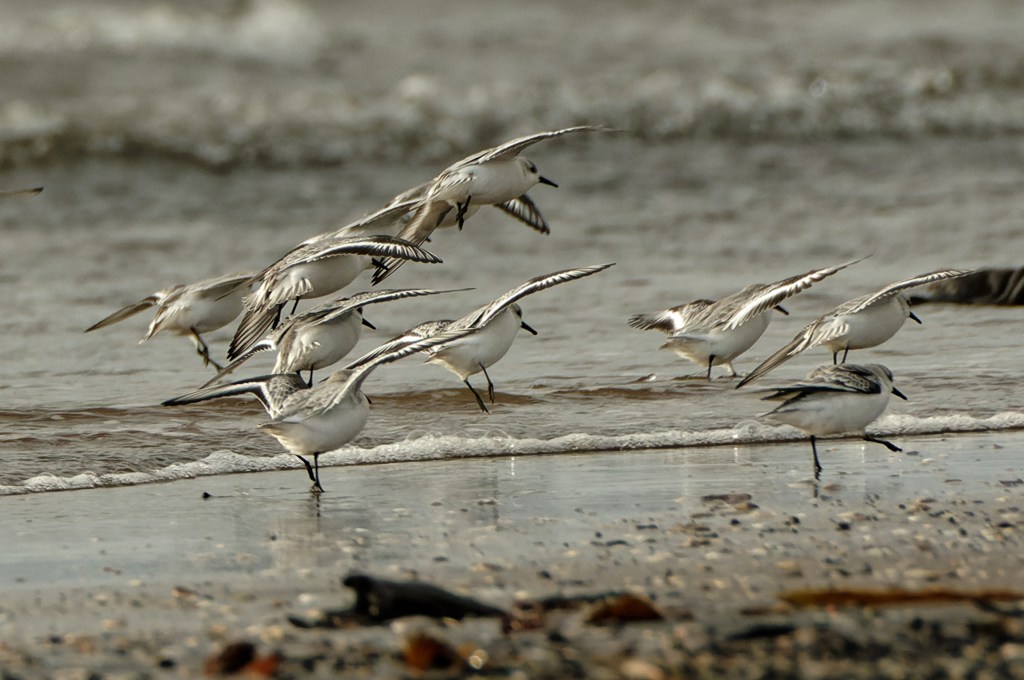
Backwoodsman has found Red Knot at Cardross, Kinneil, Montrose and Troon; they were only ever present in small numbers, and often distant. These images are representative; this small group sat out the highest point of the tide at Cardross, and then flew upriver, presumably to forage on the mud as it began to appear.
The group contains two Bar-tailed Godwits, one near the leading birds and another towards the back.
Wikipedia tells us that:
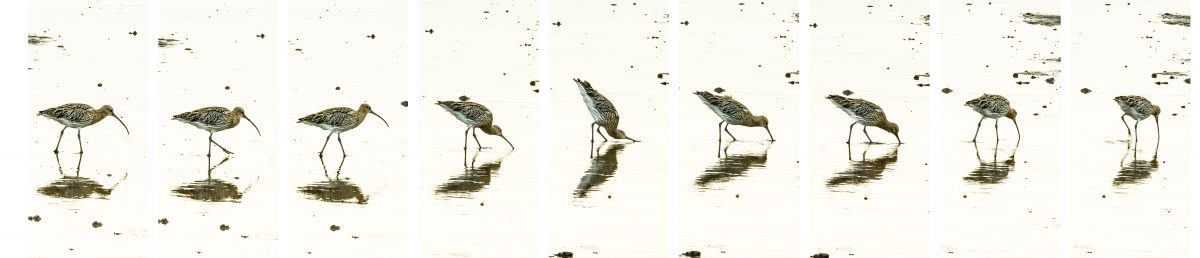
“While feeding in mudflats during the winter and migration red knots are tactile feeders, probing for unseen prey in the mud. Their feeding techniques include the use of shallow probes into the mud while pacing along the shore. When the tide is ebbing, they tend to peck at the surface and in soft mud they may probe and plough forward with the bill inserted to about 1 cm (0.39 in) in depth. The bivalved mollusc Macoma is their preferred prey on European coasts, swallowing them whole and breaking them up in their gizzard [sic]. …They are able to detect molluscs buried under wet sand from changes in the pressure of water that they sense using Herbst corpuscles in their bill.”
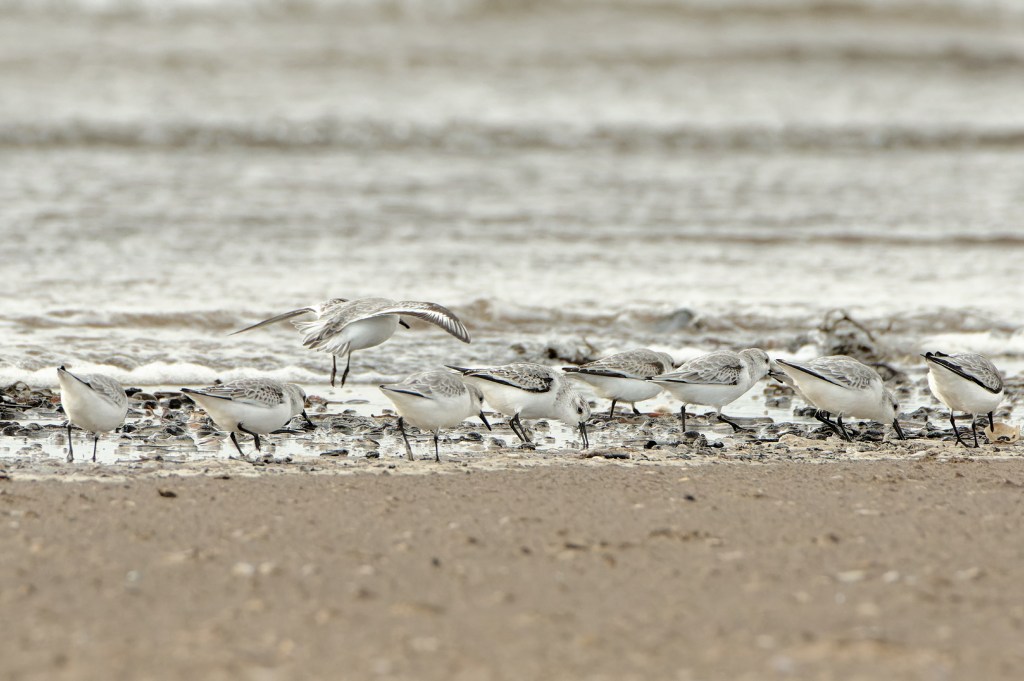
These birds from Montrose Basin seem to be marching steadily forward as they feed.
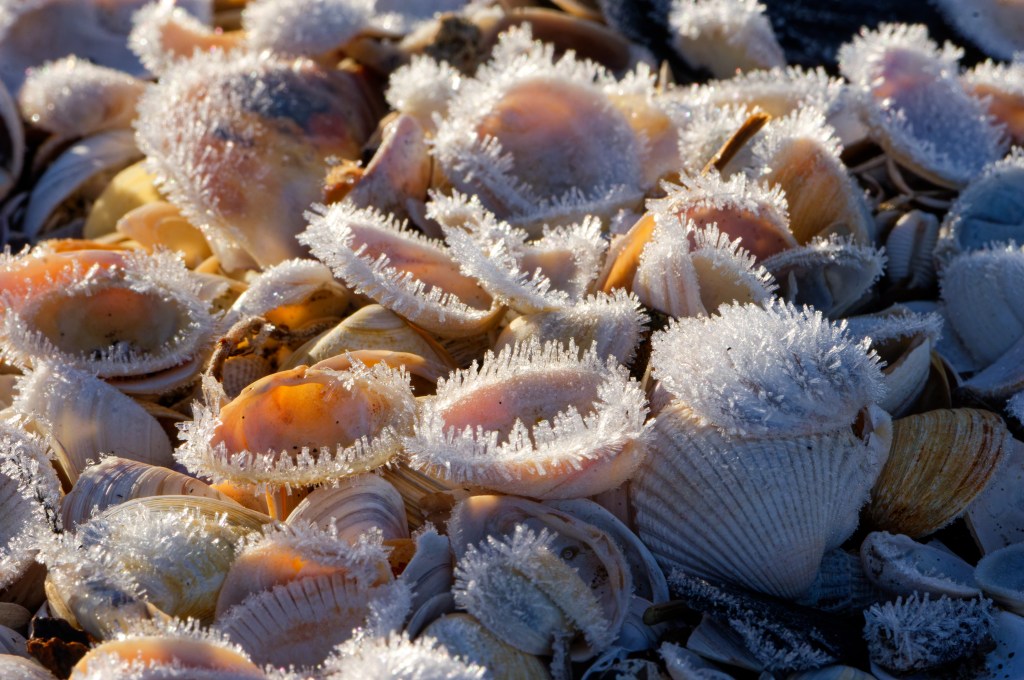
The Baltic tellin (Macoma balthica) is widespread across UK shores and may be a staple; the Thin tellin (Macomangulus tenuis) also seems to have a wide distribution and we see both on the beaches we frequent. The Scottish Seabird Centre has some informative pages about the food offered up by mudflats, and mentions mud shrimps (Corophium volutator), mud snails (Hydrobia spp.), and common cockles (Cerastoderma edule) as part of the buffet for the shorter-billed birds. Here are some Tellins and small Cockles from a frosty day at Barassie.
Some detailed research has been carried out into aspects of the Knot diet; Zwarts and Blomert worked at a wintering site on the Dutch Wadden Sea and found that:
“Prey selection may be described by 5 rules: (1) Prey are not ingestible by Knot if the circumference is more than 30 mm. (2) Prey are not accessible to Knot when they lie buried deeper than 2 to 3 cm. (3) The probability of a prey organism being detected depends on its surface area, measured in the horizontal plane. (4) Prey are ignored when they are unprofitable, i.e. when the rate of intake whlle handling the prey is below the current overall average intake rate during feeding. (5) Knot prefer thin-shelled to thick-shelled prey species, possibly because a high inorganic content has an inhibitory effect on the rate at which energy can be extracted from the food. The first rule of ingestion is set by the gape width, and is therefore invariable. The fraction of the prey which is accessible varies according to the probing depth of the bird. The lower size threshold of prey taken is determined by the profitability rule and so varies according to the current feeding rate of Knot. Unfortunately for Knot, the majority of the preferred thin-shelled prey live out of reach of the bill, whereas the thick-shelled species live at at the surface. Medium-sized Macoma balthica is the best compromise available…”
A Goldilocks situation!
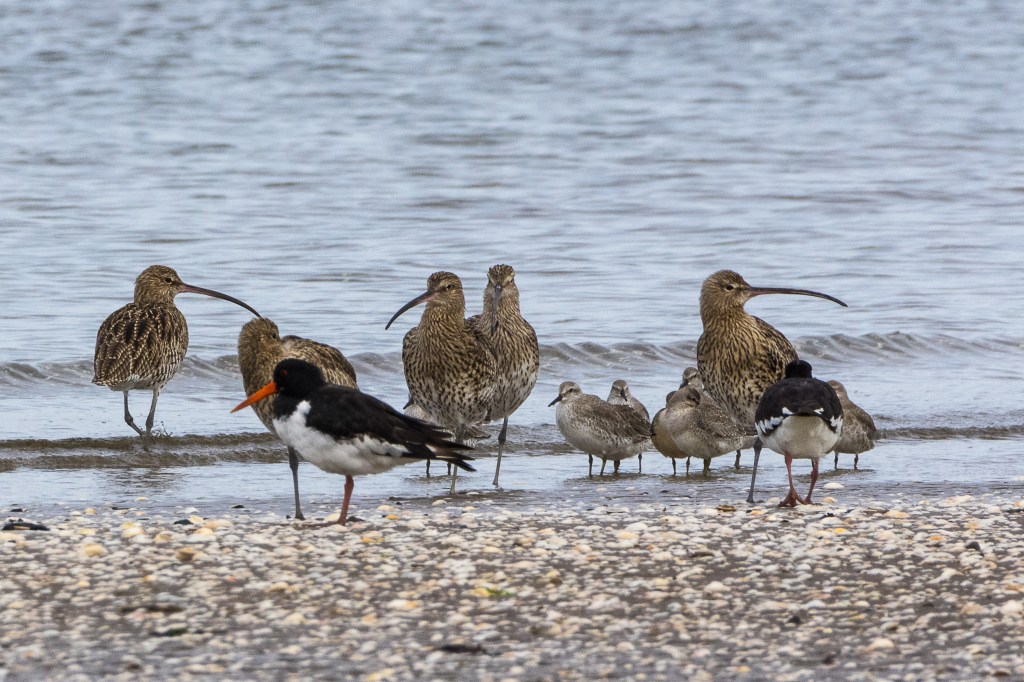
This image was taken at Troon North Beach; the size contrast between the three wader species is amusing, and the beach is carpeted with the shells of Tellins.
The Wash Wader Research Group is usually an excellent source of information about our shorebirds and their discussion of Knot contains this graphic (© BTO), reproduced from Time to Fly by Jim Flegg. Backwoodsman has edited the caption; is seems clear that the orange arrows do not involve Greenland at any point.
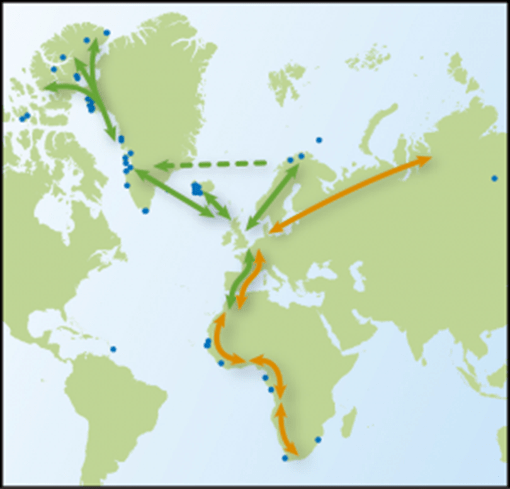
“Knot are circumpolar breeders of the high Arctic. Two populations use The Wash, birds that breed in Siberia (race canutus – green orange arrows on map) pass through The Wash on their way to wintering areas in Africa, while birds that breed in Greenland (race islandica – orange green arrows) spend the winter here [in the UK].”
Here is a nice tight group of Knot photographed at Kinneil – almost leading the group is a Black-tailed Godwit.
There is an excellent album of photographs of Knot taken on far northern breeding sites here; the stunning brick-red colour of the breeding birds can be seen in some of these images. There are ridiculously cute chicks too.
Other races of Knot, roselaari and rufa, migrate down length of the American landmass, an epic movement. In Delaware Bay, Red Knot feed in large numbers on the eggs of Horseshoe Crabs, a rich, easily digestible food source. The crabs spawn just as the birds arrive in spring. These birds form the subject of a superb article in the Audubon magazine (and a book) by Deborah Cramer. She has much better photographs than anything taken by Backwoodsman, respect.
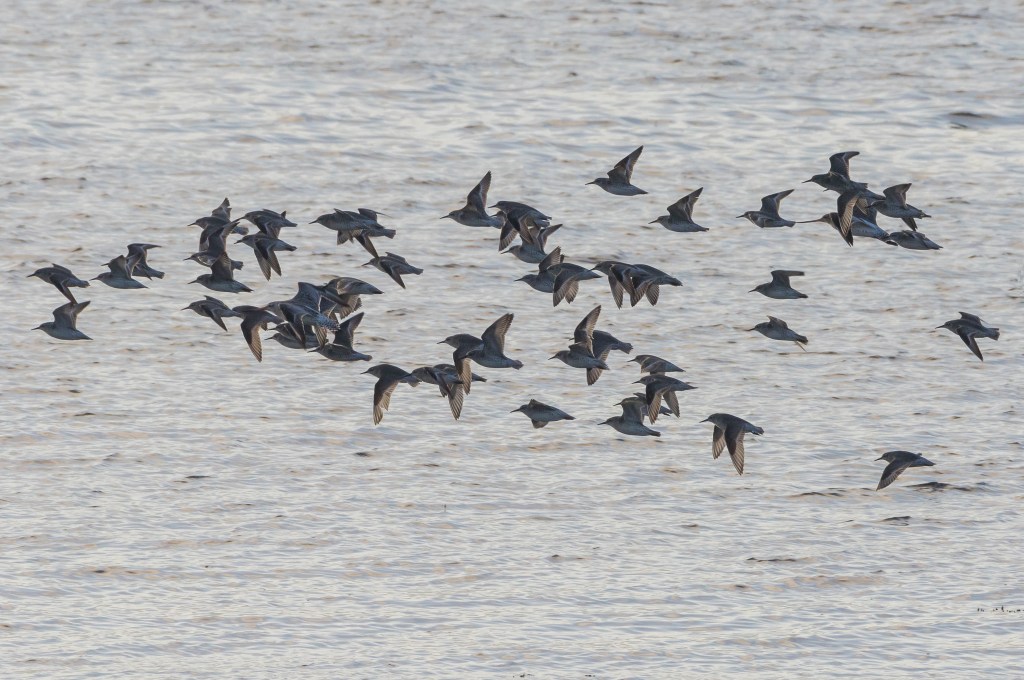
So what do you have, you busker, is that it, a few grey wee birds from miles away? Well, we can do a bit better. Our first (and best) sightings were from two visits to Troon in the second half of December in 2019. We were on the path which runs around the foot of the Ballast Bank and had paused to drink tea on one of the benches. Birds were coming towards us from the direction of the South Beach and they caught the light as they turned in the air (there is a solitary Golden Plover at the front of the shot).
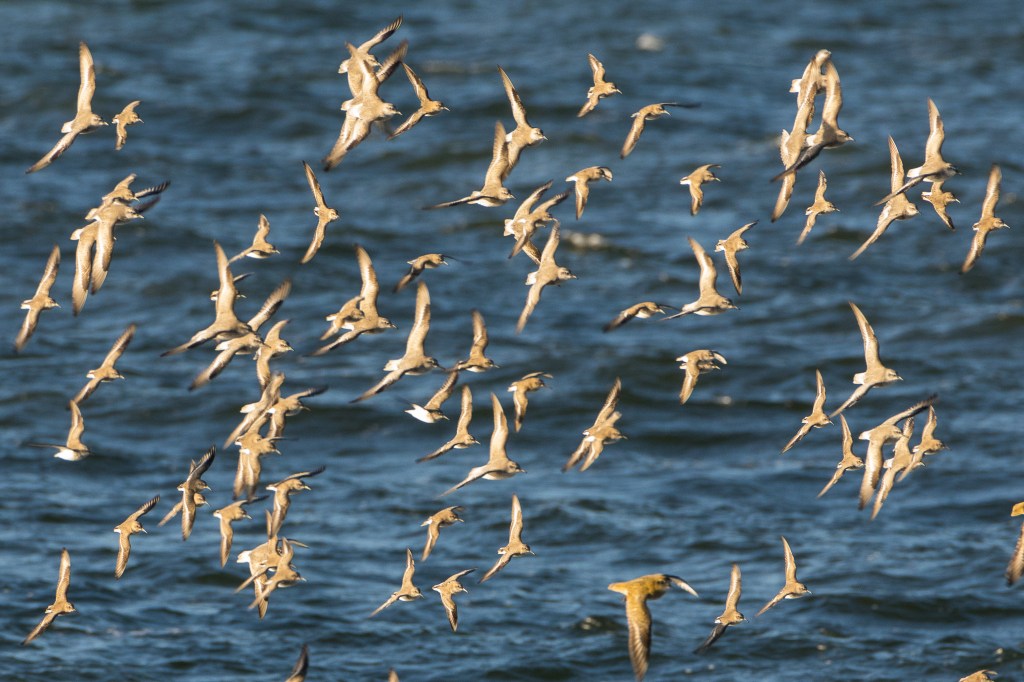
It seemed most unlikely that they would land, and yet they did, right in front of us.
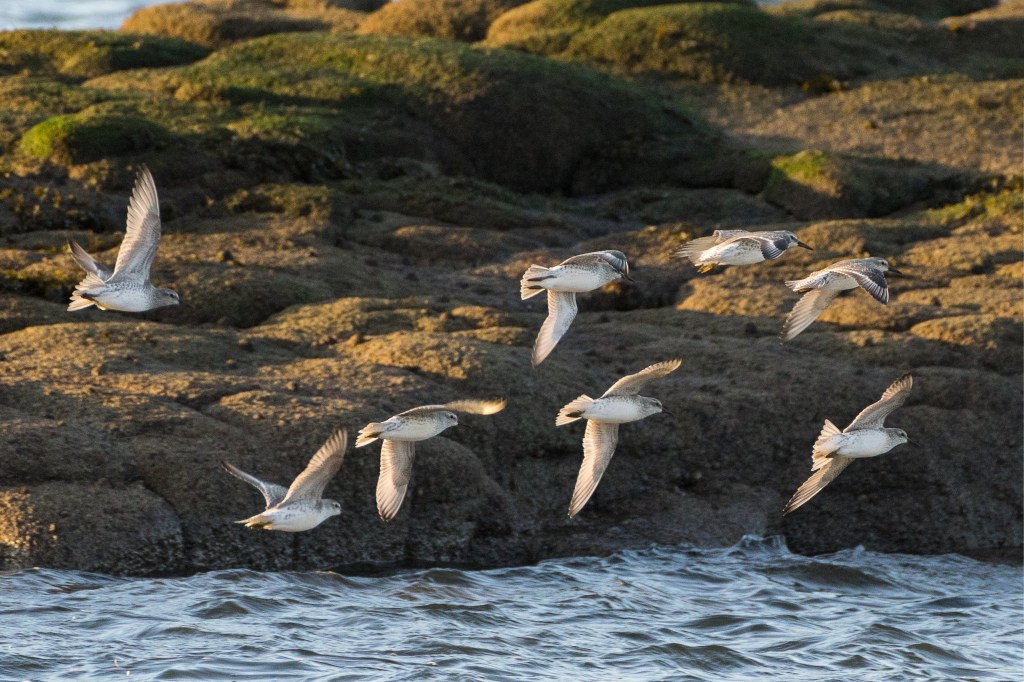
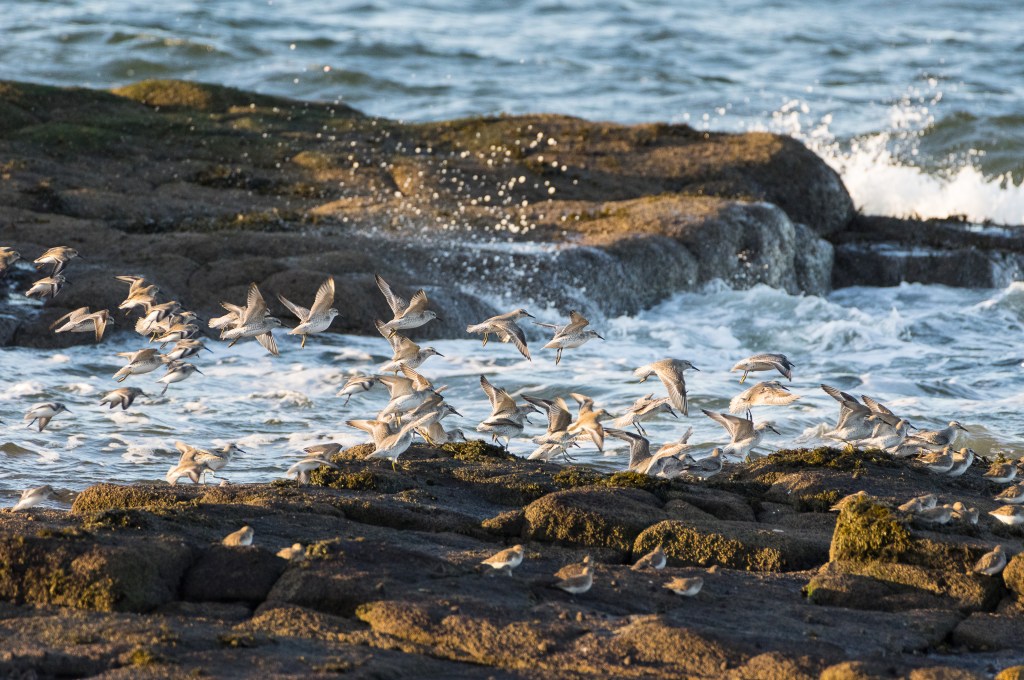
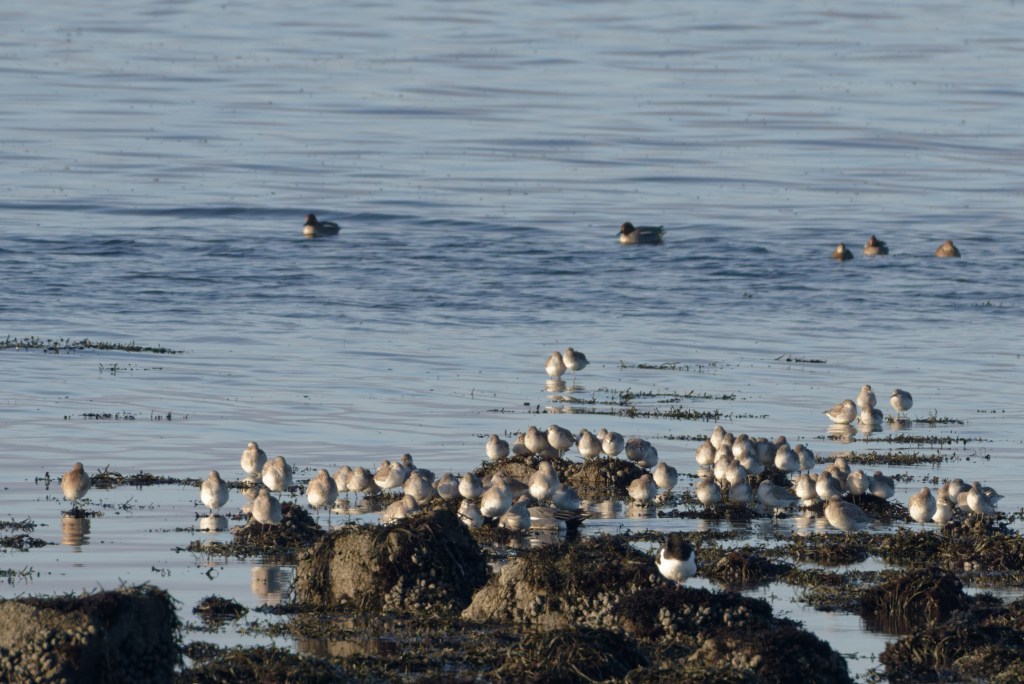
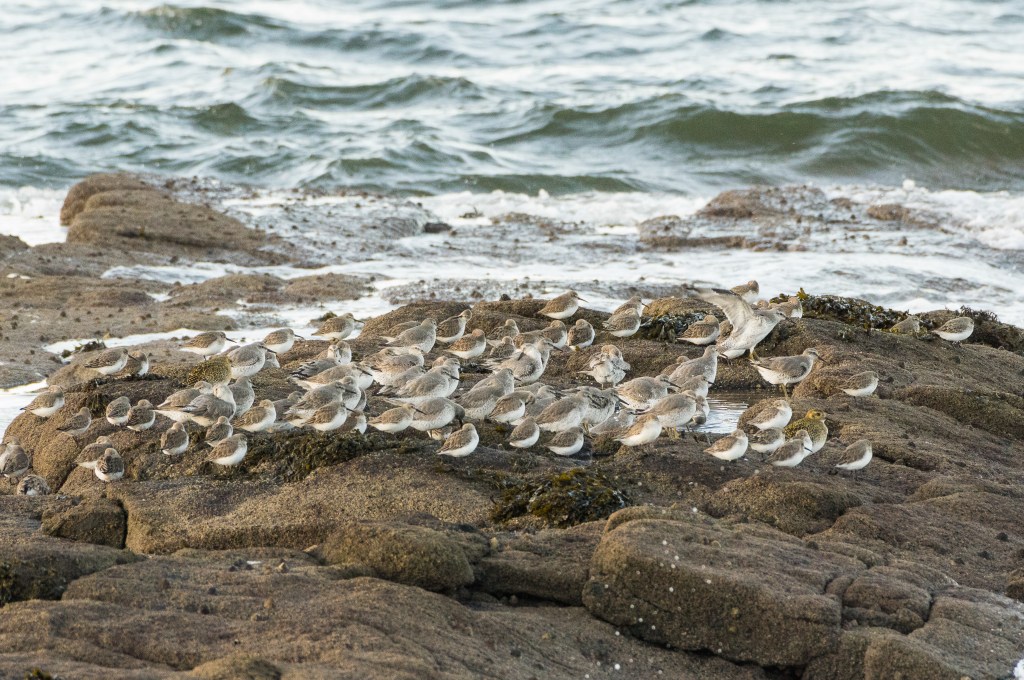
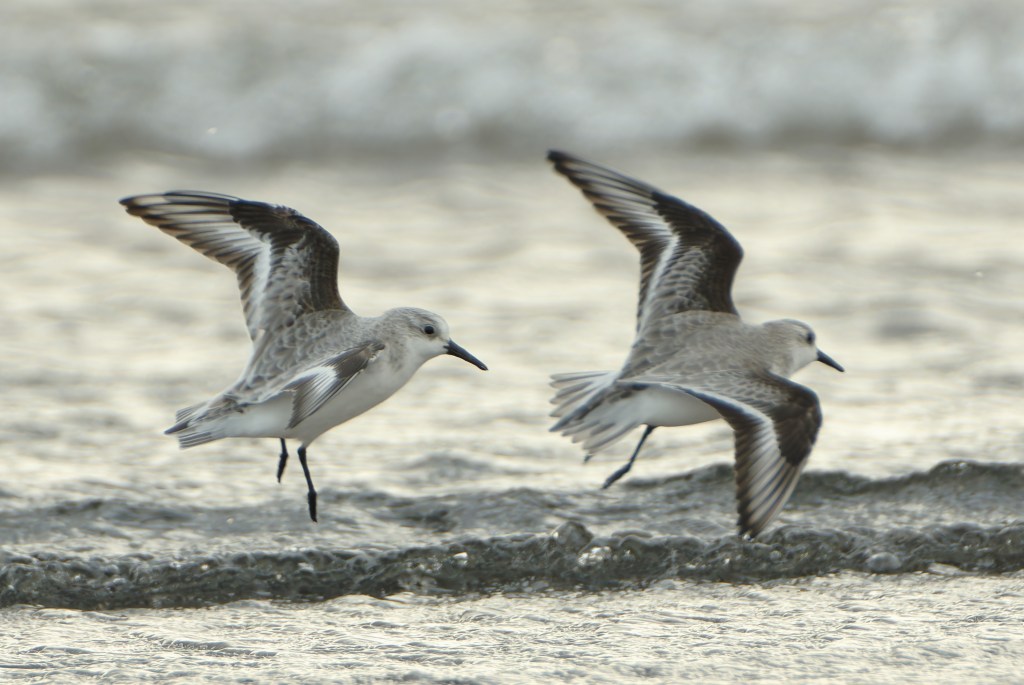
They were Red Knot; seen alone, they could be mistaken for Dunlin but the markings under the wing allows unambiguous identification. A second visit a few days later allowed us to see the Knot with Dunlin and the odd Golden Plover.
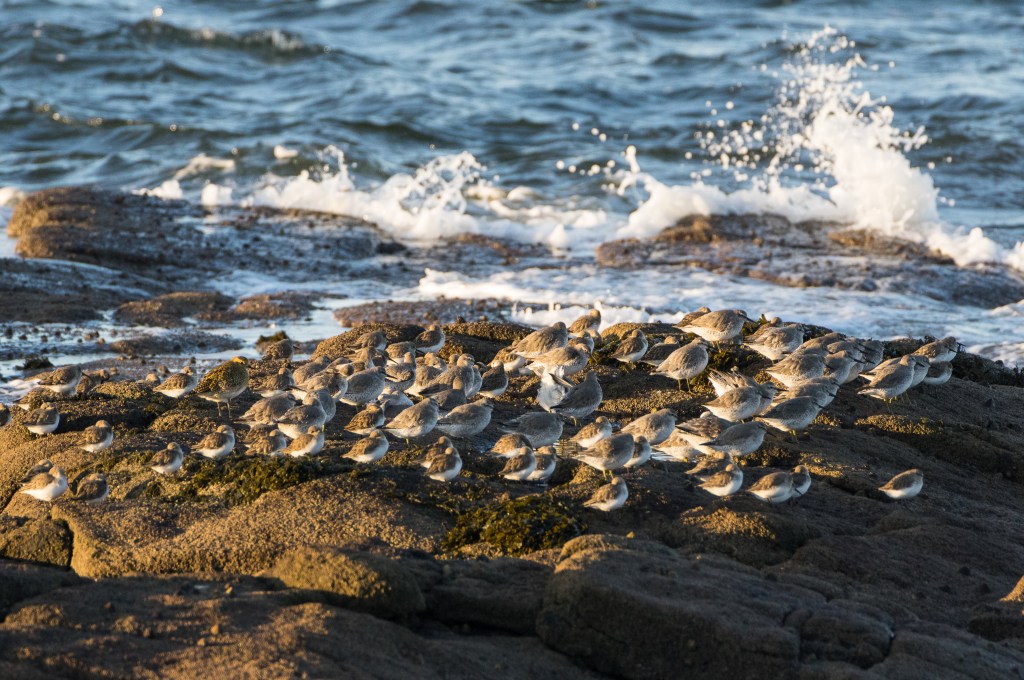
The size differences then become apparent; in these images, the golden hour light brings out the brown colour of the Dunlin and emphasises the greyness of the Knot.
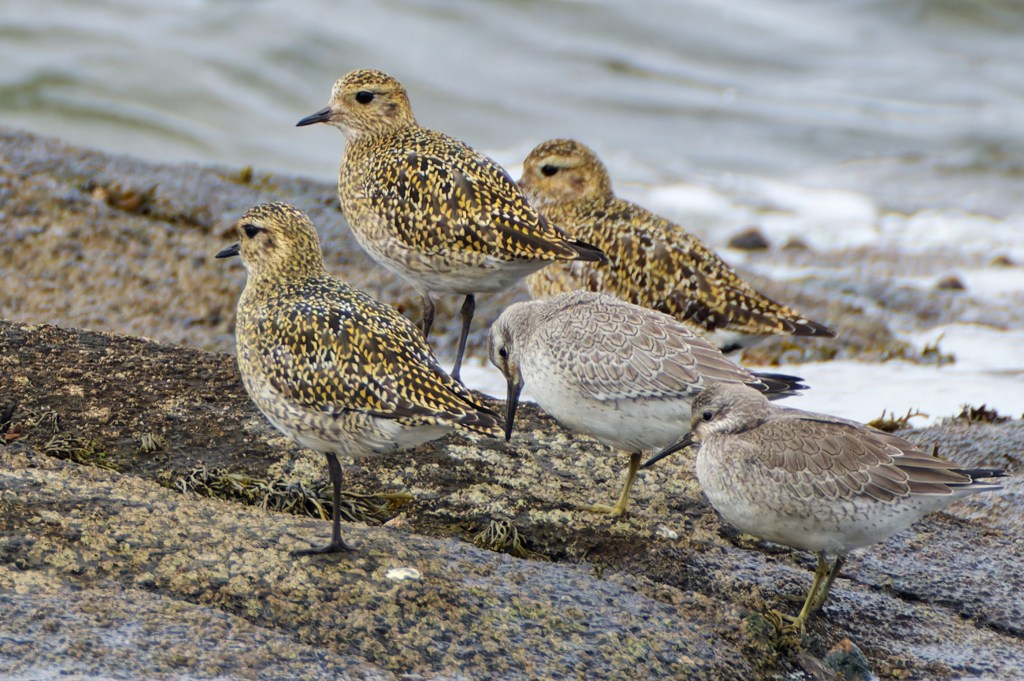
In this image, the birds really aren’t too far away. There is some beautiful detail to be seen in the plumage and some very strikingly marked feathers. Backwoodsman was very fortunate to find Golden Plovers and Knot quite so relaxed and reasonably close to the camera. The birds were still sitting when Backwoodsman said “thank you very much” and left.
Six years have passed since these images were taken; the Ballast Bank is no longer (in our experience) any kind of place to find waders. On a recent visit to Barassie Rocks, we saw Knot and Golden Plover, but they were absolutely as far from the shore as they could get. The Ayrshire beaches (or those which boast car parks and coffee outlets) are just so much busier than they used to be. The birds have mostly flown, and it is hoped that they can still find good places to feed and roost, well away from humans and their companions. One of the good things about Morecambe Bay, habitat-wise, is that it boasts vicious tides and a good deal of quicksand! Those attributes should guarantee the Knot a bit of peace as they forage.






















 backwoodsman.org