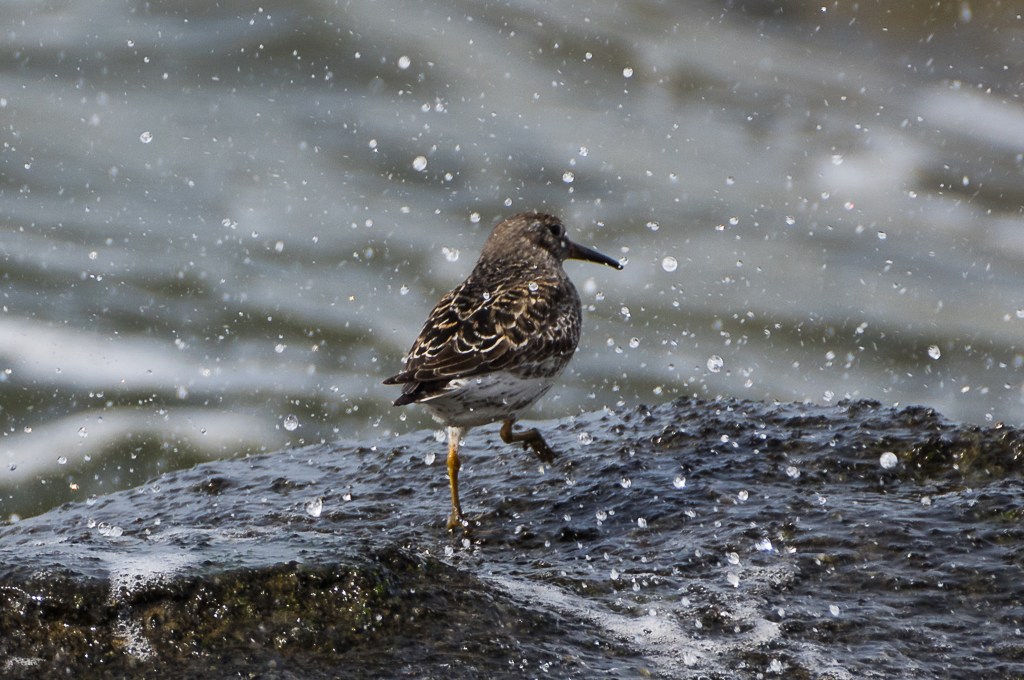
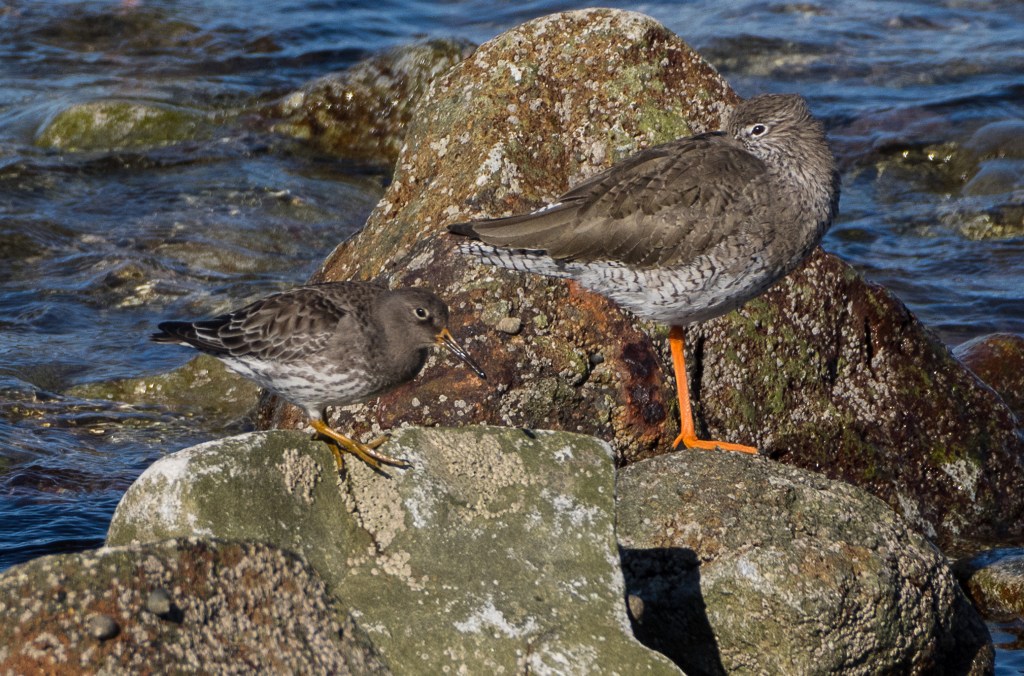
We used to see Purple Sandpipers regularly at Troon on the Ballast Bank, our main place for the species, back in the day before the invasion by the Troon Tadpoles. Backwoodsman had taken a few pictures there but was stranded short of enough material for a post, and had begun to despair of seeing these pretty little waders again. The odd bird would turn up at Stevenston or Saltcoats but they were always distant. For example, this shot is a long range effort taken at Stevenston Point; the size contrast with the Redshank is quite striking.
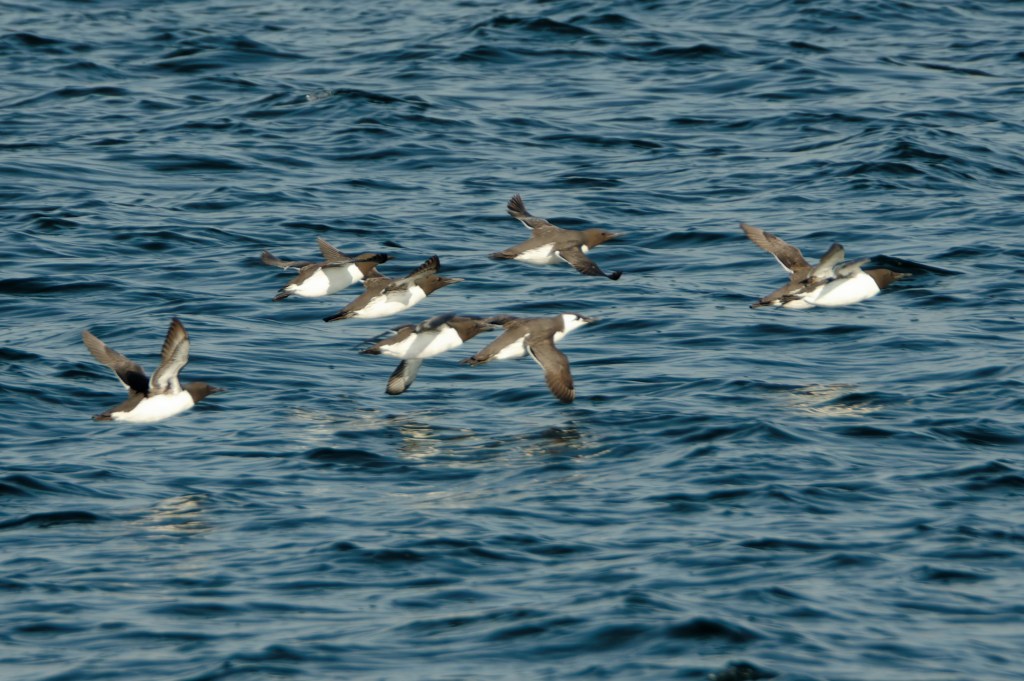
A recent trip solved the problem. On a Saturday in mid-April, we had taken an early train from Glasgow Central to Gourock and boarded the ferry to Dunoon. It was a brilliant morning, and flat calm. The crew member collecting fares took note of the camera and spoke of dolphins on the inbound voyage. Backwoodsman scanned the middle distance; there were no cetaceans to be seen but small groups of Guillemots were flying low across the water, heading east and further into the mouth of the Clyde. This is a long-range shot made more difficult by the speed of the vessel in one direction and the birds in the other.
The vessel docked, the handful of passengers disembarked, and a larger group of gaudily-clad racegoers heading for the Scottish Grand National in Ayr boarded the empty vessel. We looked around the pier, initially hearing, and then seeing Black Guillemots courting.
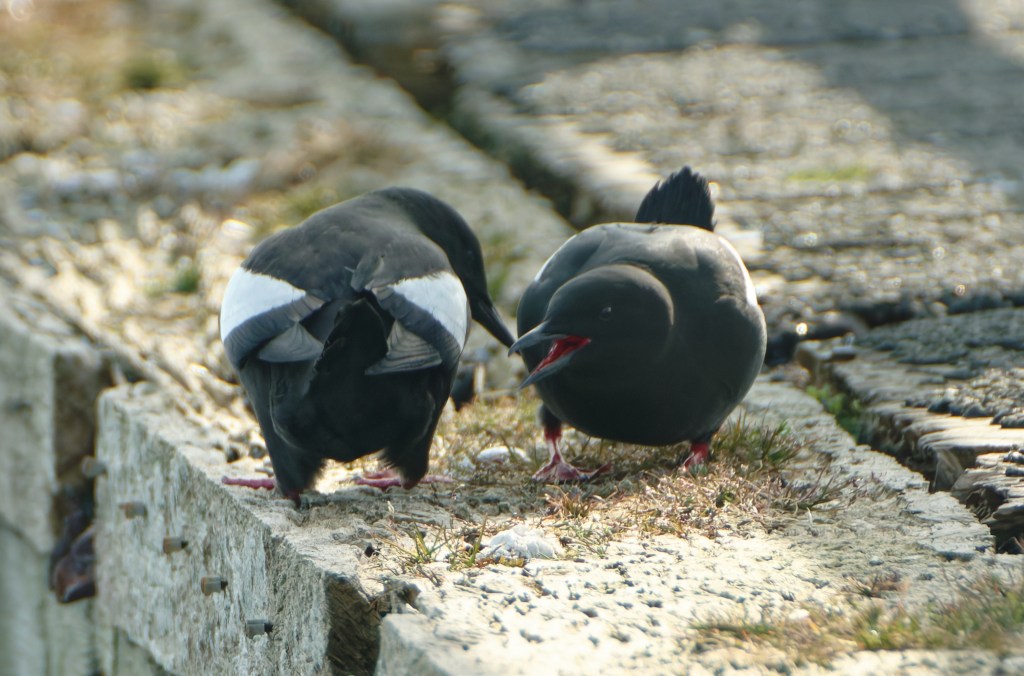
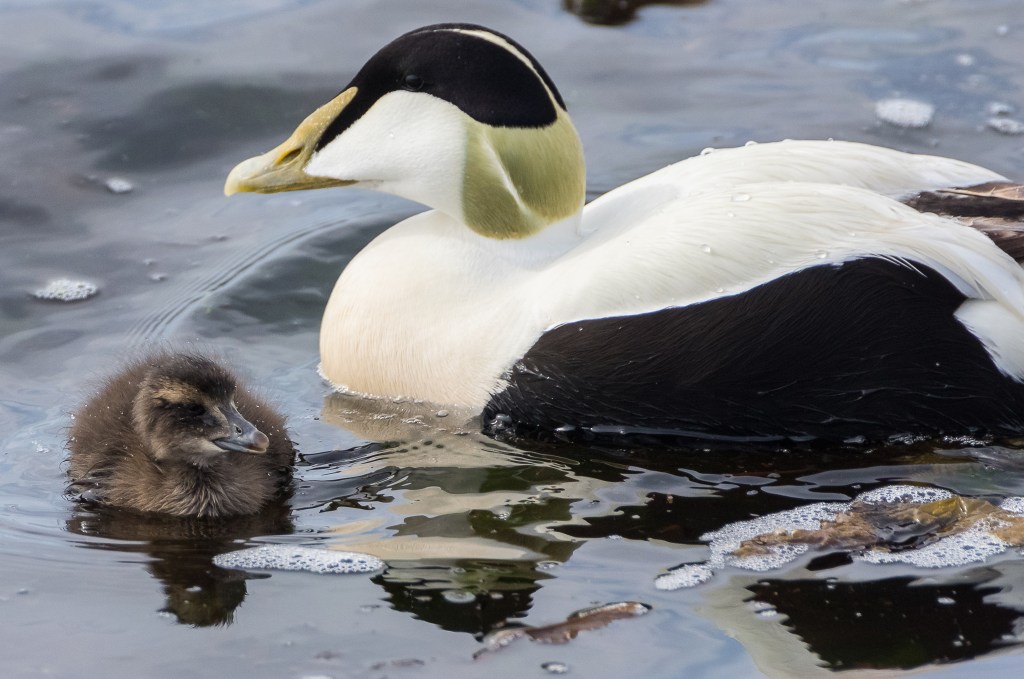
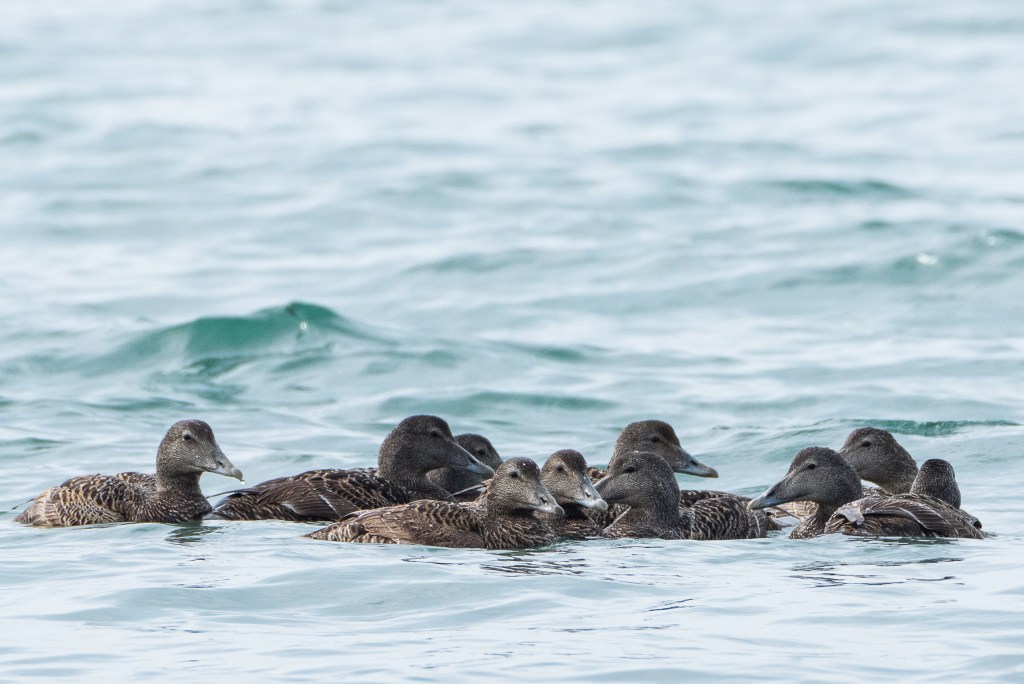
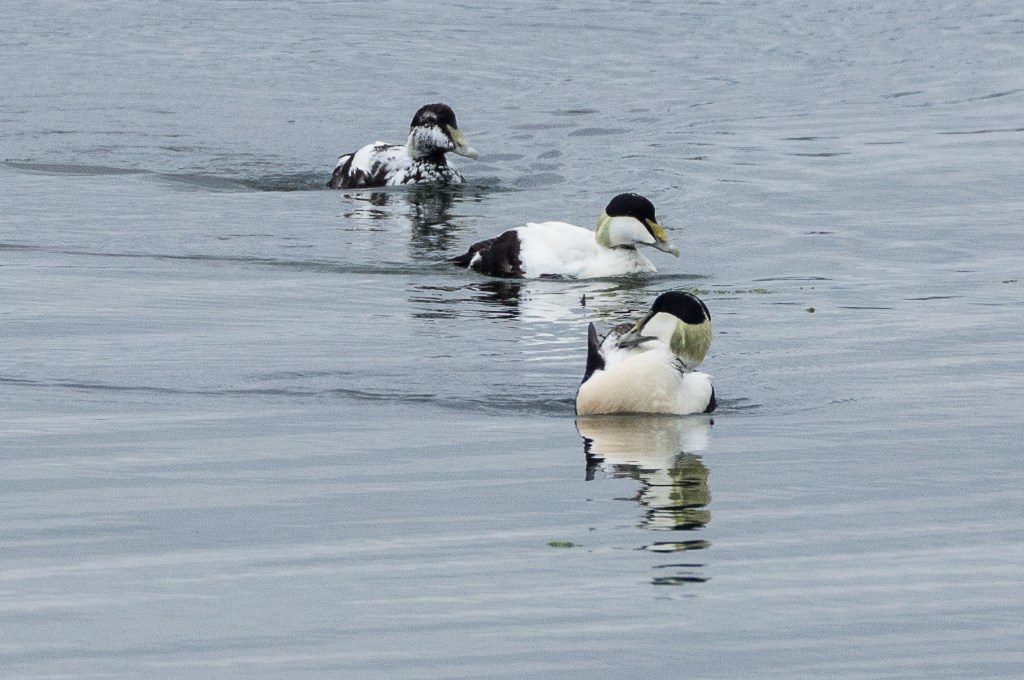
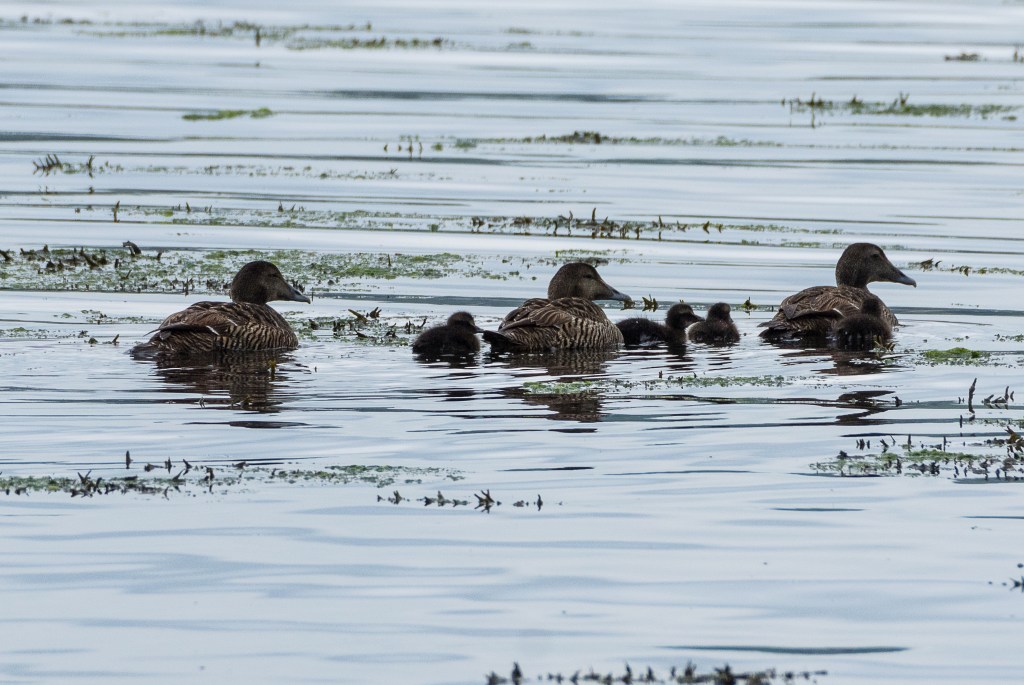
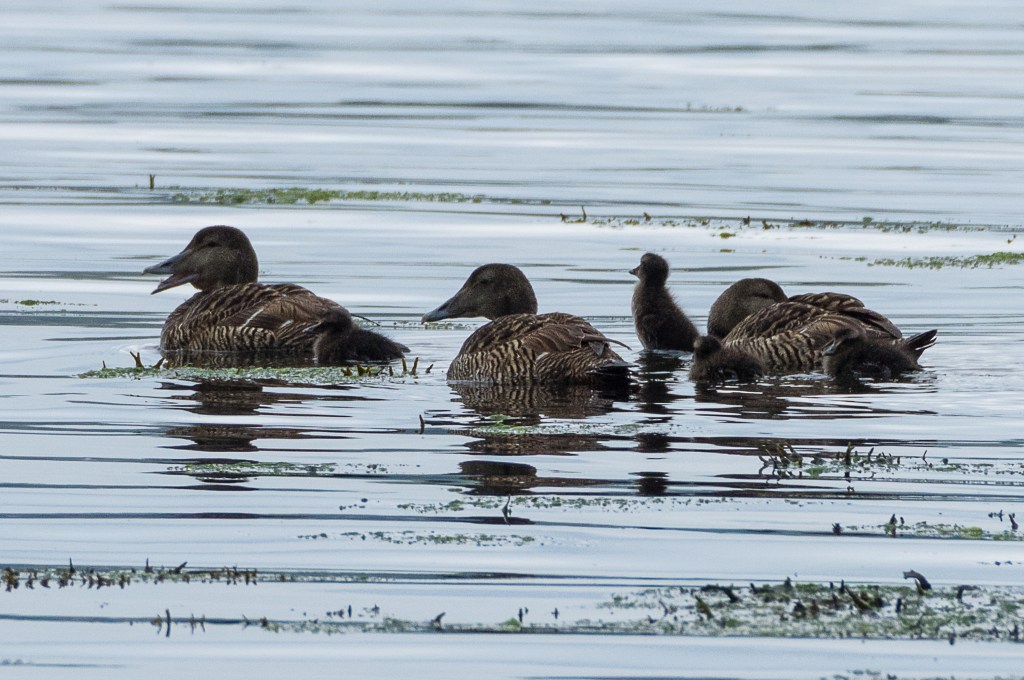
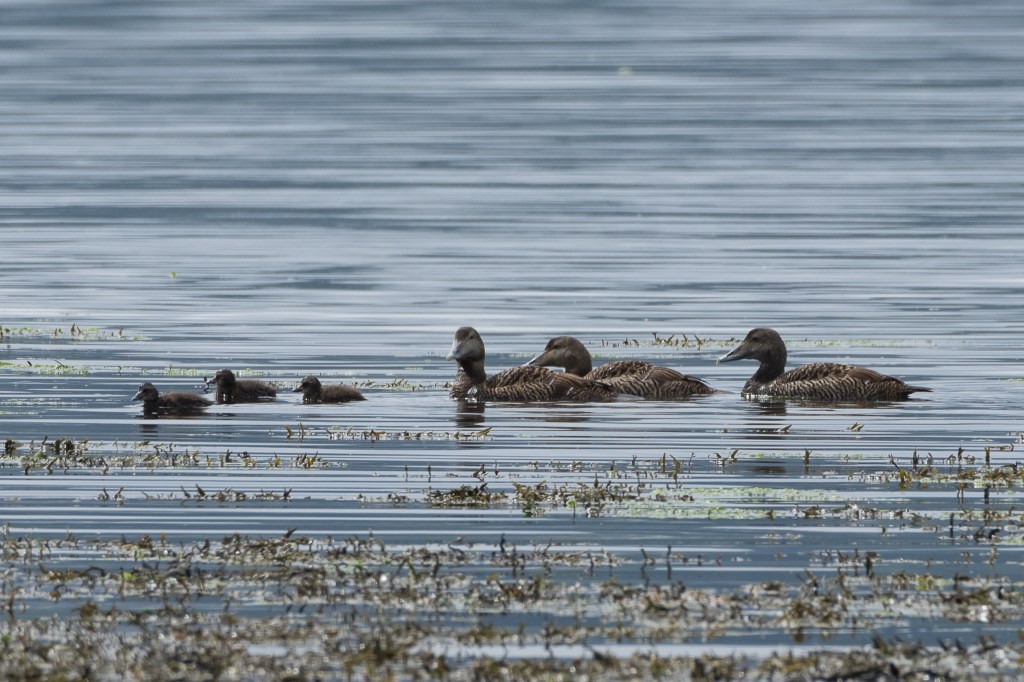
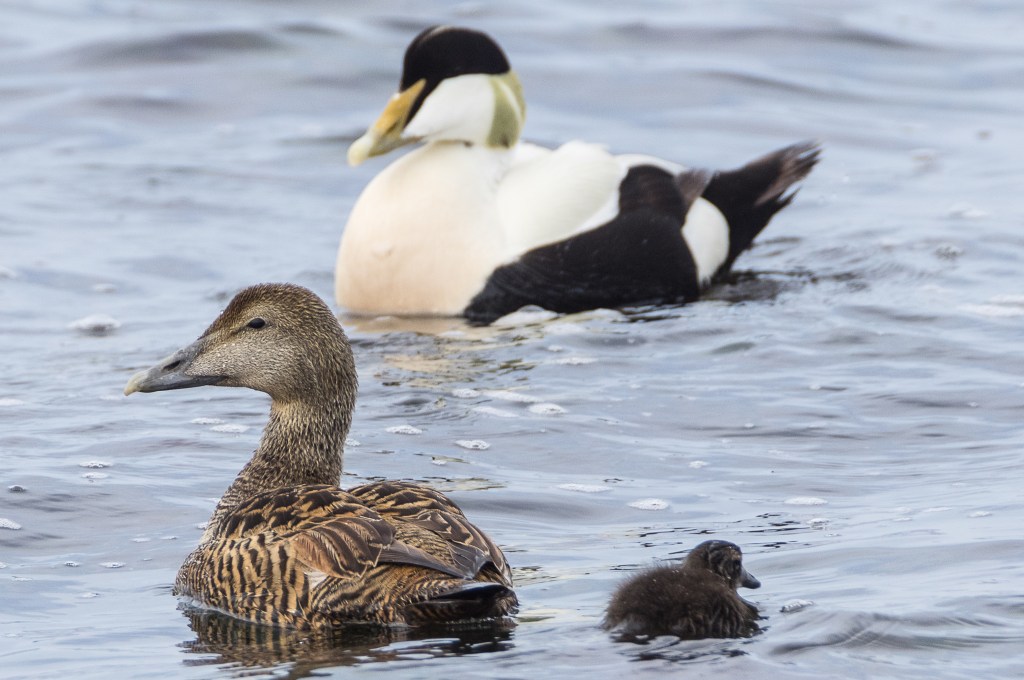
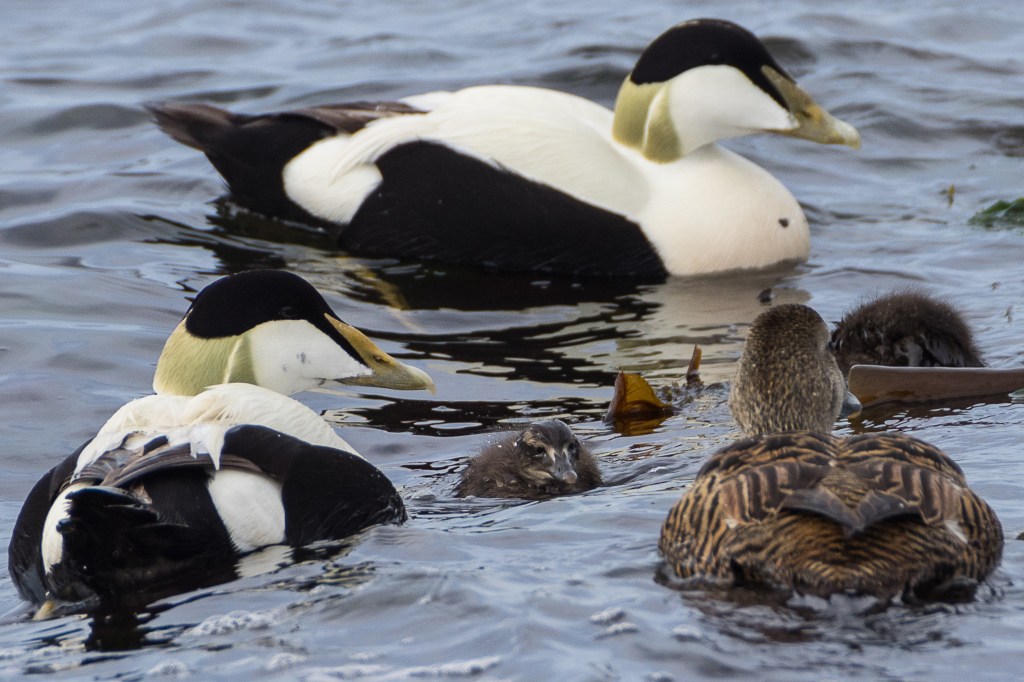
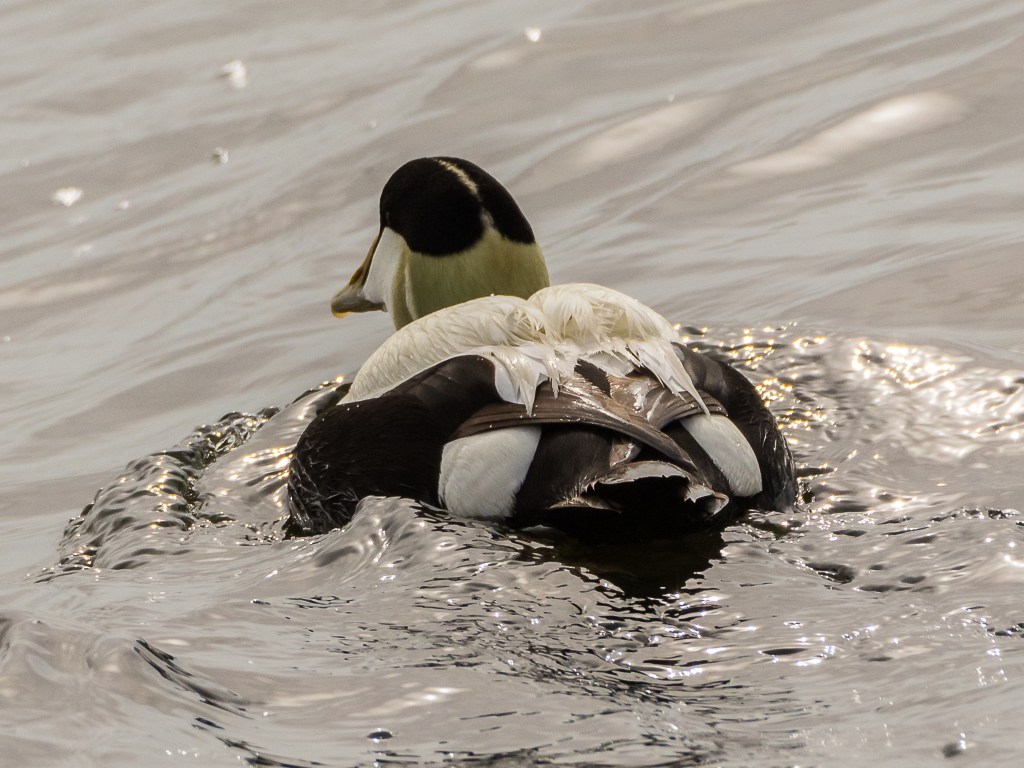
We enjoyed watching the birds for a while before heading north east along the Esplanade into Kirn. Familiar sounds made their way to us across the water, the “yah-roo!”calls of displaying Eiders. We usual hear this call from a distance but it is even more pleasing at close quarters. Backwoodsman had recorded this video at WWT Martin Mere on the recent visit and was wondering if it would ever be useful for anything – here are some loud Eider calls.
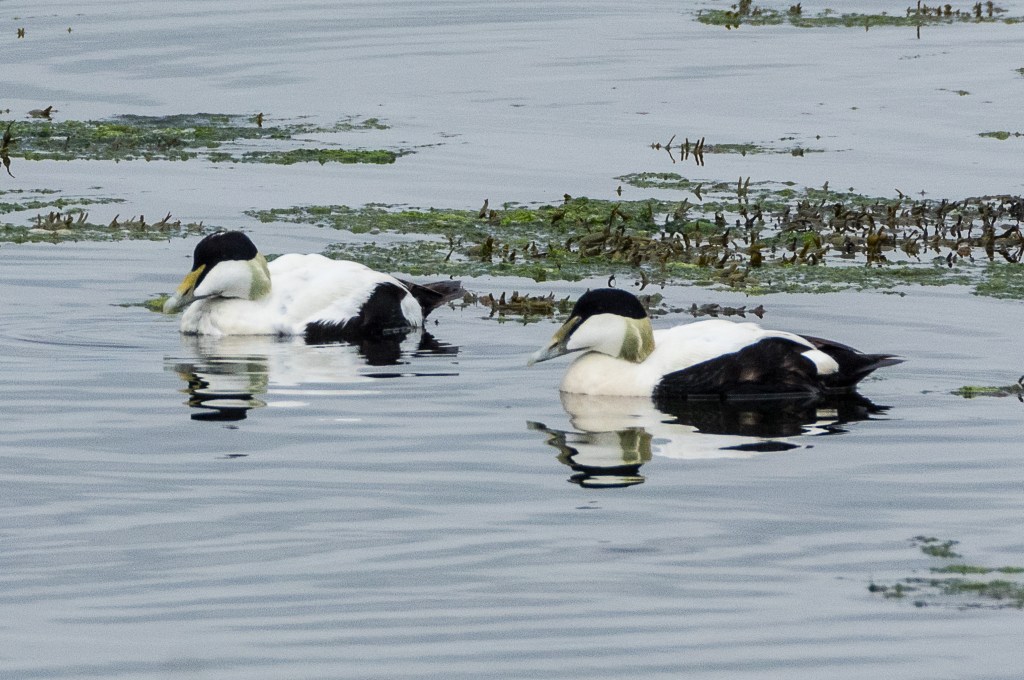
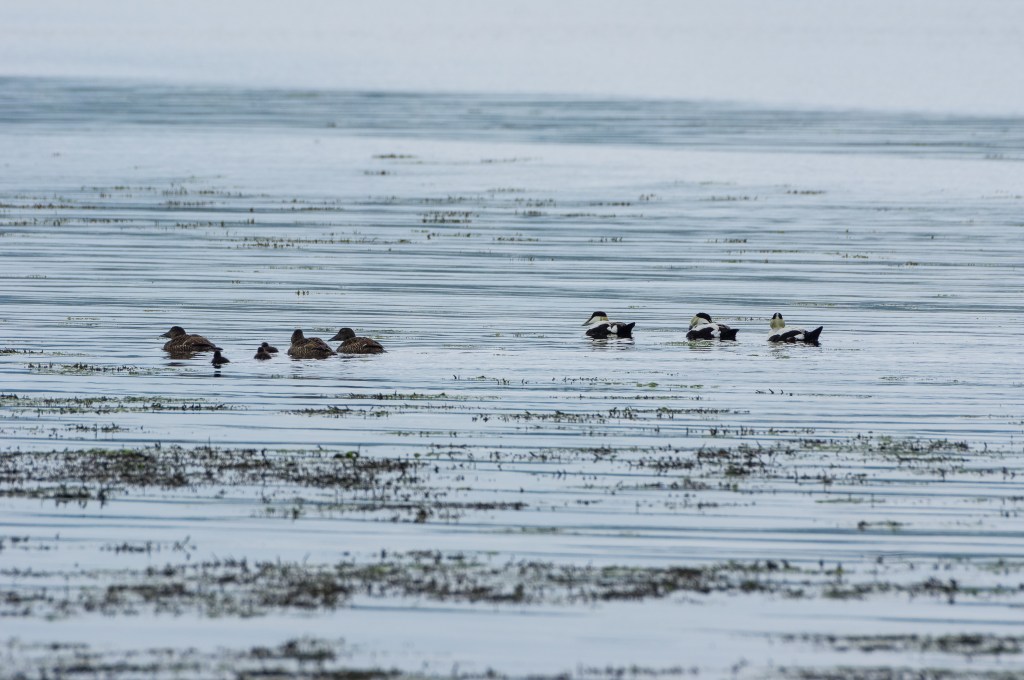
The group of Dunoon birds came in quite close – they were too busy courting to be upset by figures on the shore.
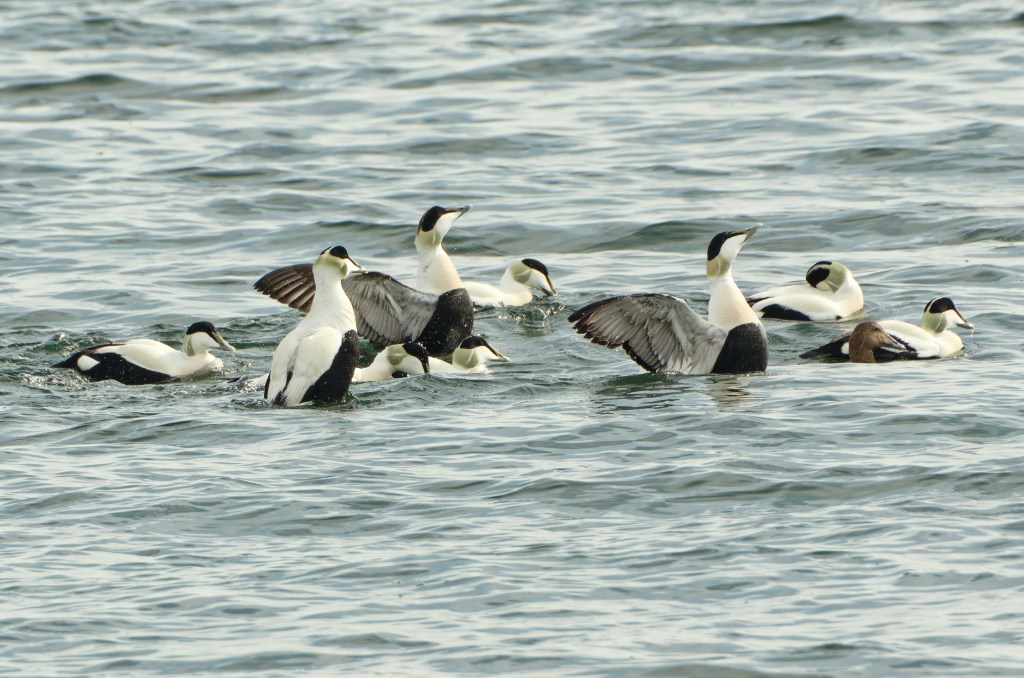
We could see up to ten drakes and one duck at a time; they would sail about and call, and then the whole group would dive. The colours looked vibrant in the excellent light, particularly that incongruous botanical green on the back of the neck.
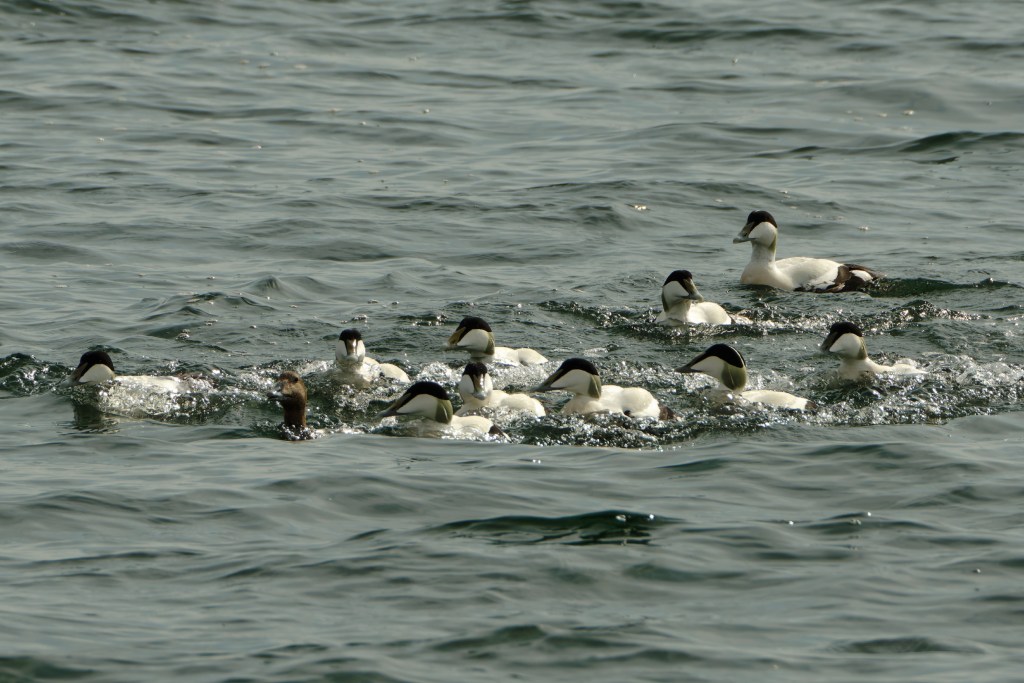

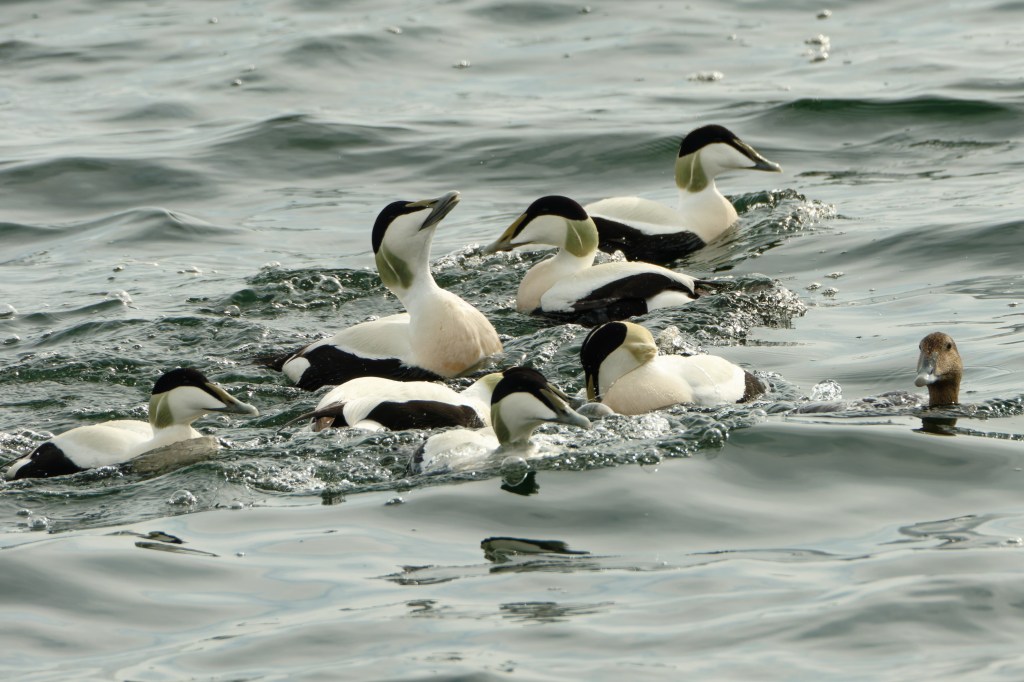
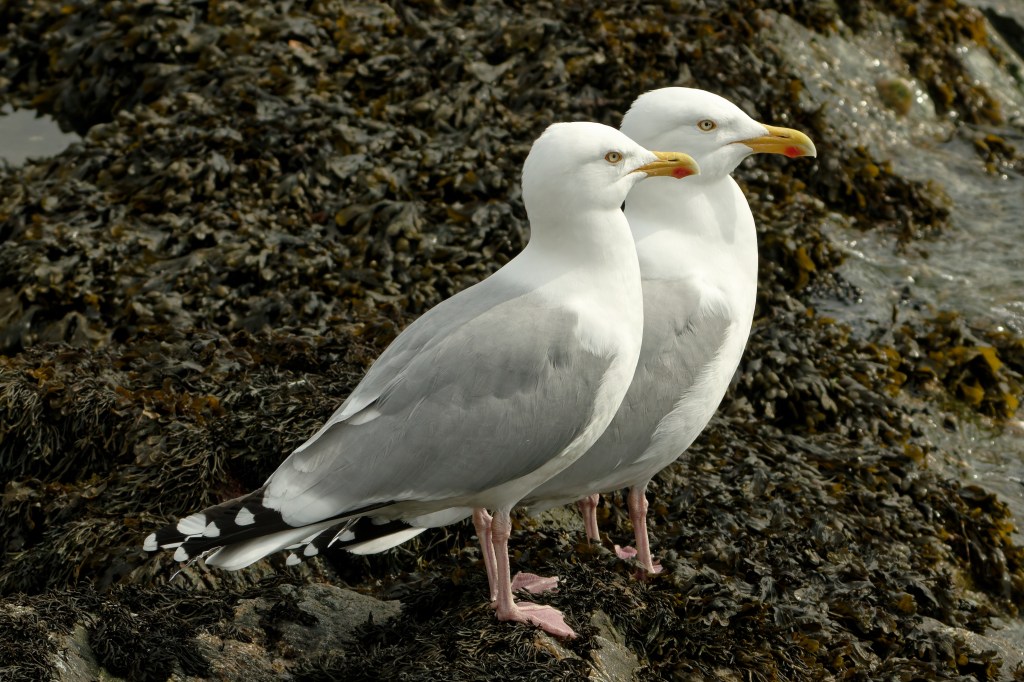
Herring Gulls watched them too.
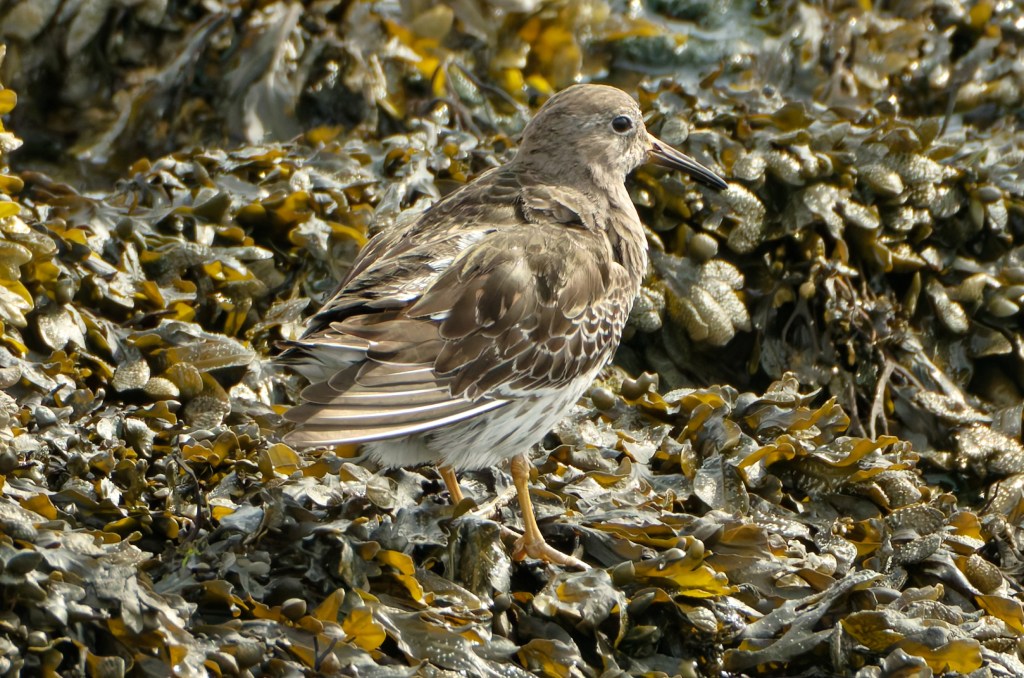
We moved along, finding Turnstones, and then, oh joy, Purple Sandpipers. It was almost high tide by now but the Purple Sands were still foraging.
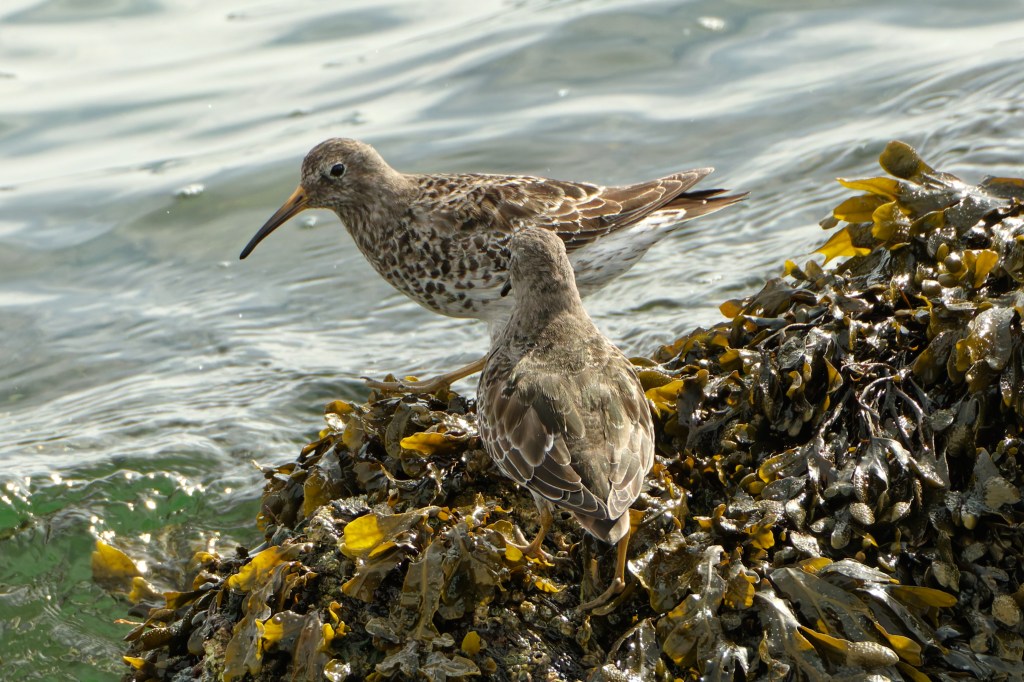
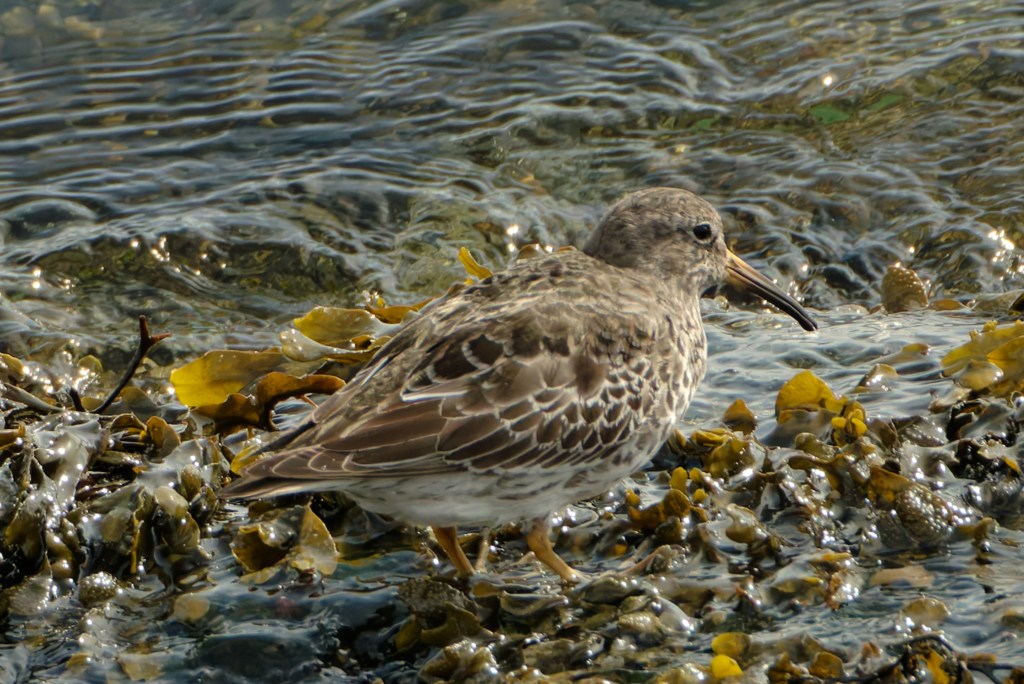
Summers et al. investigated the diet of these birds. At high tide, they feed on Kelp Fly up in banks of drying weed, and eat small shellfish when the water is lower and more of the shore accessible. Females have longer bills which allow them to take larger shellfish, Summers et al. referring to this as sexual size dimorphism.
According to the BTO, Purple Sandpipers do not breed regularly in the UK; their data for 2013-2017 has one pair breeding in northern Scotland, with of the order of ten thousand birds spending the winter with us.
Summers et al. also studied Purple Sandpiper migration making use of tracking devices. This seemed interesting:
“Purple Sandpipers winter at relatively high latitudes compared to other waders. It is suspected that the majority that winter in Britain and Ireland originate from Canada, but there is no primary evidence of their breeding grounds and migratory routes. These birds, characterised by their long bills, start to arrive in Britain and Ireland in late October/early November, after completing their post-nuptial moult at an unknown location. Fifty geolocators were attached to Purple Sandpipers in northern Scotland and southwest Ireland and we established for the first time their Canadian origin (Baffin Island and Devon Island), migration routes and post-nuptial moulting areas. Spring departure from Scotland and Ireland took place mainly in late May, followed by staging in Iceland and/or southwest Greenland before reaching the breeding grounds. Those that staged in Iceland departed earlier than those that flew directly to Greenland. Post-nuptial moulting areas were in southern Baffin Island, northern Quebec/Labrador (the Hudson Strait), and southwest Greenland. Migration from Baffin Island and Labrador took place during late October – early November, and during mid to late December from Greenland, usually in a single trans-Atlantic flight. Therefore, this migration was scheduled at a time when most other wader species are already on their wintering grounds. No birds staged in Iceland on the return trip. The flight from Baffin Island to Scotland and Ireland was accomplished in about 2.5 days at an average speed of about 1400 km per day. Freezing of coastal waters may be the reason for the eventual departure from the Hudson Strait. The more northerly route via Iceland, taken in spring by most birds, and the more southerly route in early winter were associated with seasonal shifts in the Atlantic low pressure systems (depressions) whose anti-clockwise wind-flows would have assisted flights.”
This material comes from an open access journal and the title page features a charming pencil sketch of Purple Sandpipers on the wing.
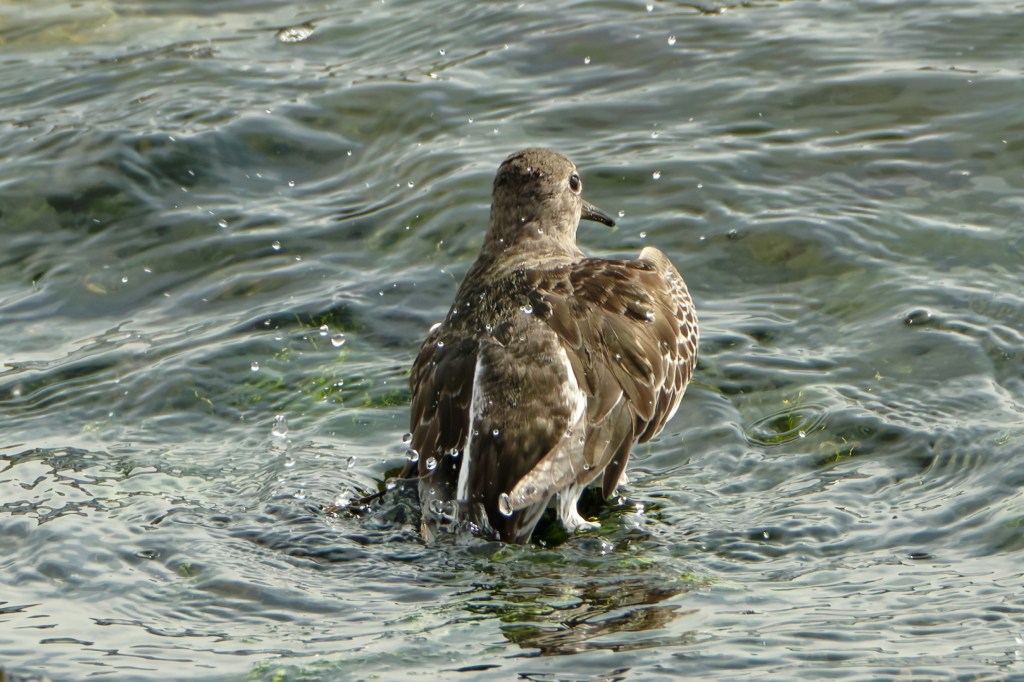
The birds do not look remotely purple in the strong morning light but a greyer sky and lower colour temperature bring out the effect for which they are named.
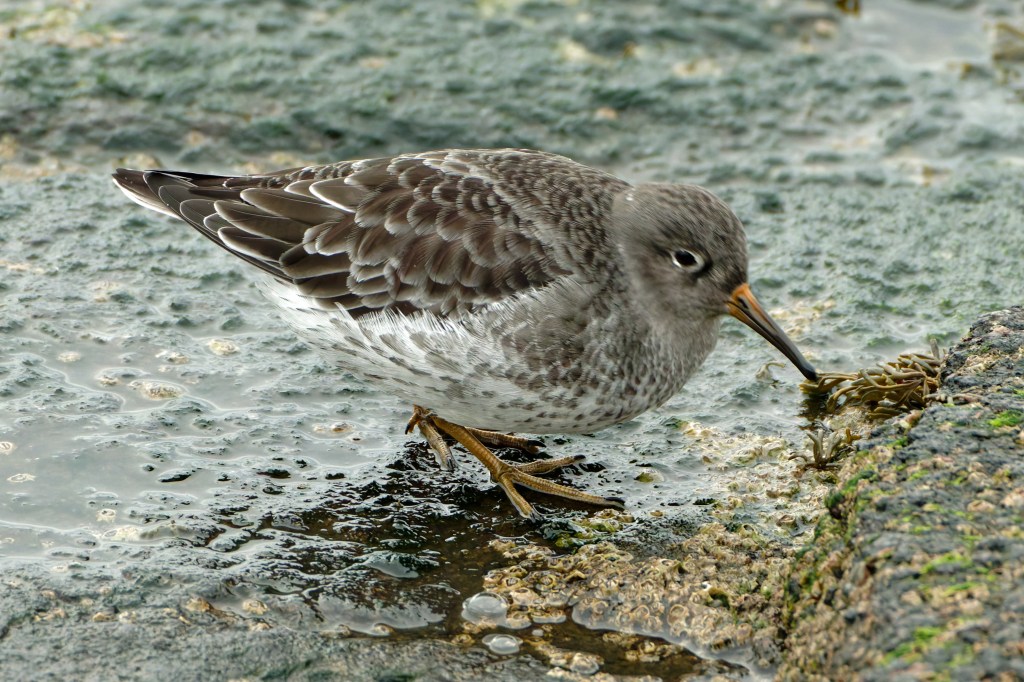
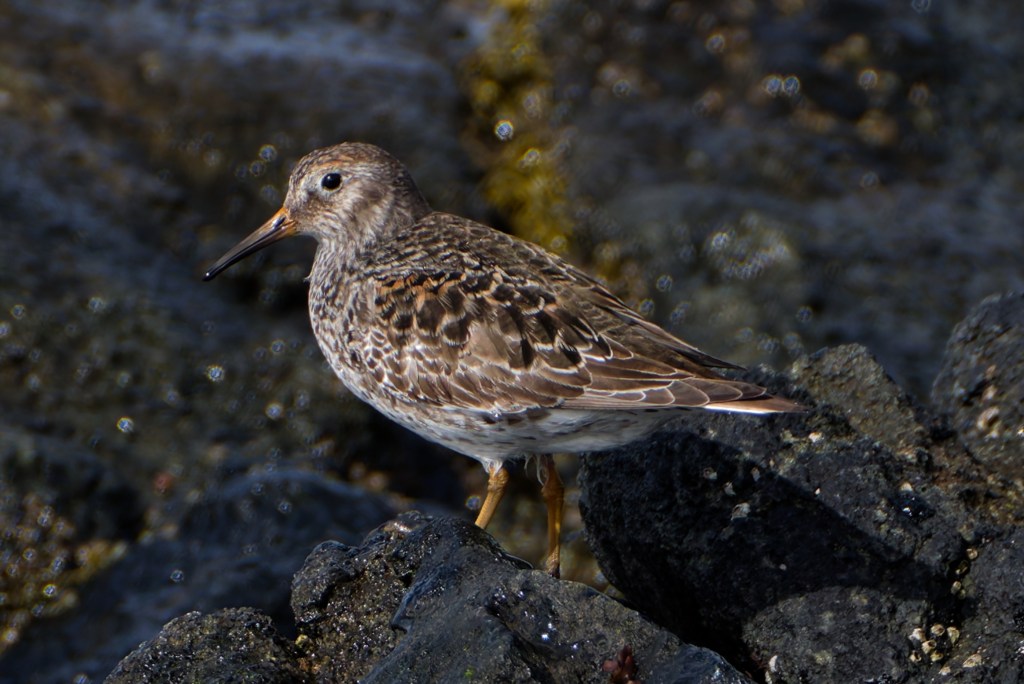
This image from Troon in early May shows a bird starting to develop some chestnut colour in the plumage below the neck in preparation for the long flight north and breeding.
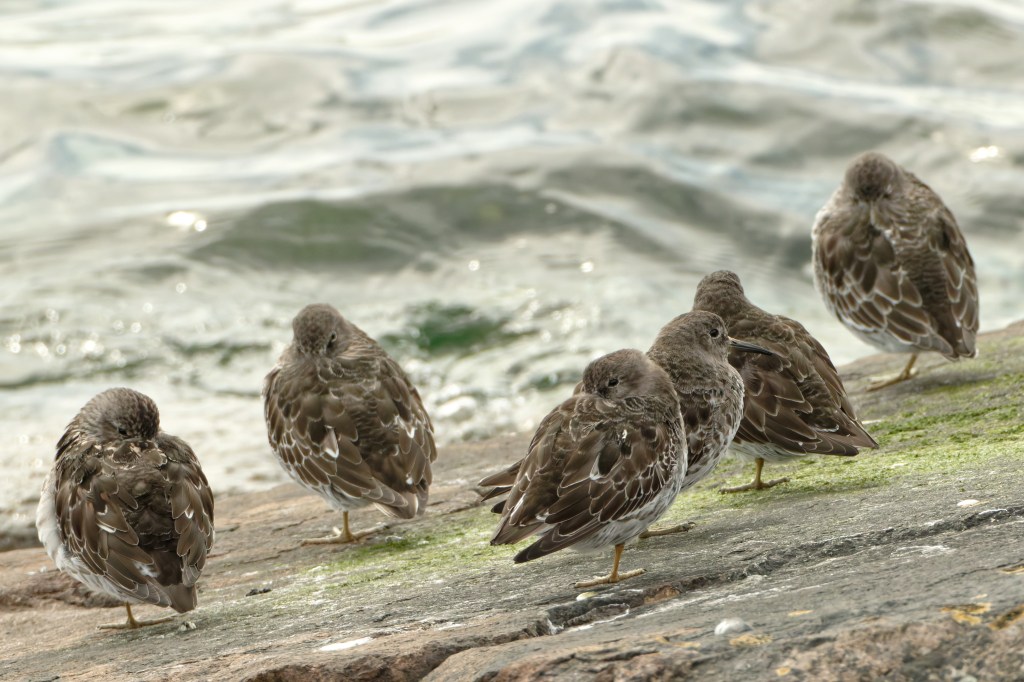
At the highest point in the tide in Dunoon, we found birds in repose.
The light had gone by now and we headed back to the ferry. It had been a very enjoyable and productive morning. Perhaps there would be dolphins to see on the return trip? Alas, there were not, but the Purple Sands had delighted and now there was enough material for a post. Yah-roo!


 backwoodsman.org