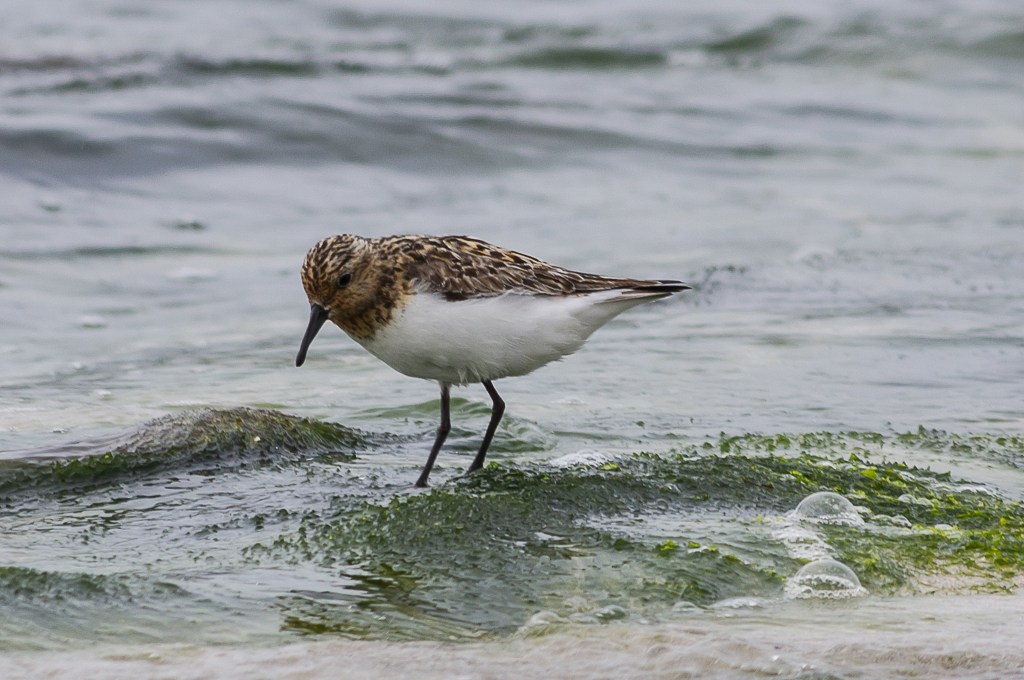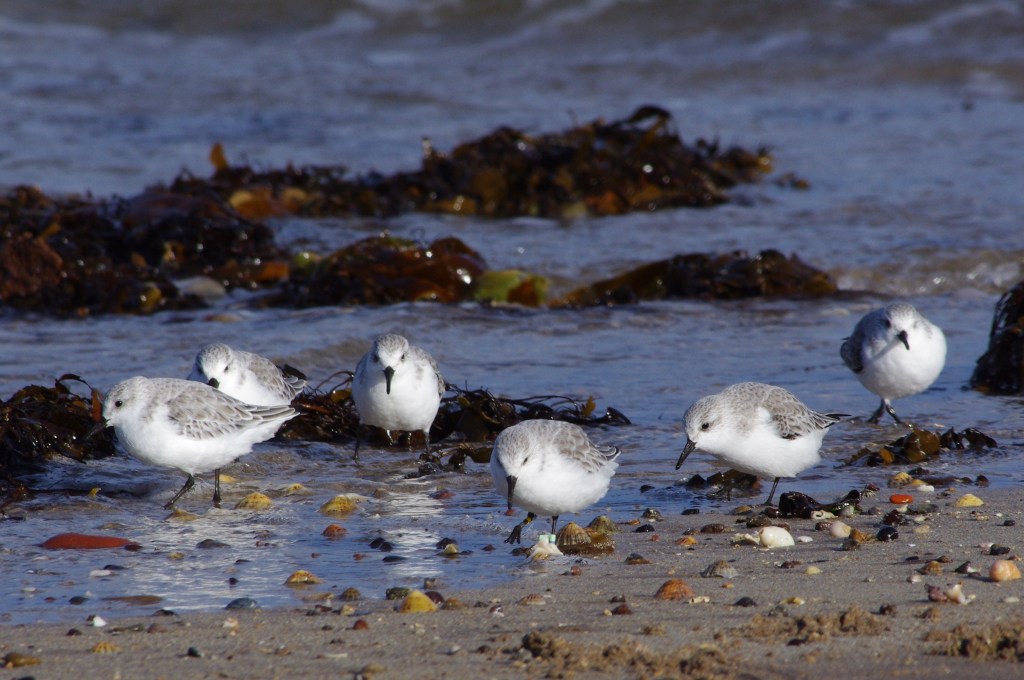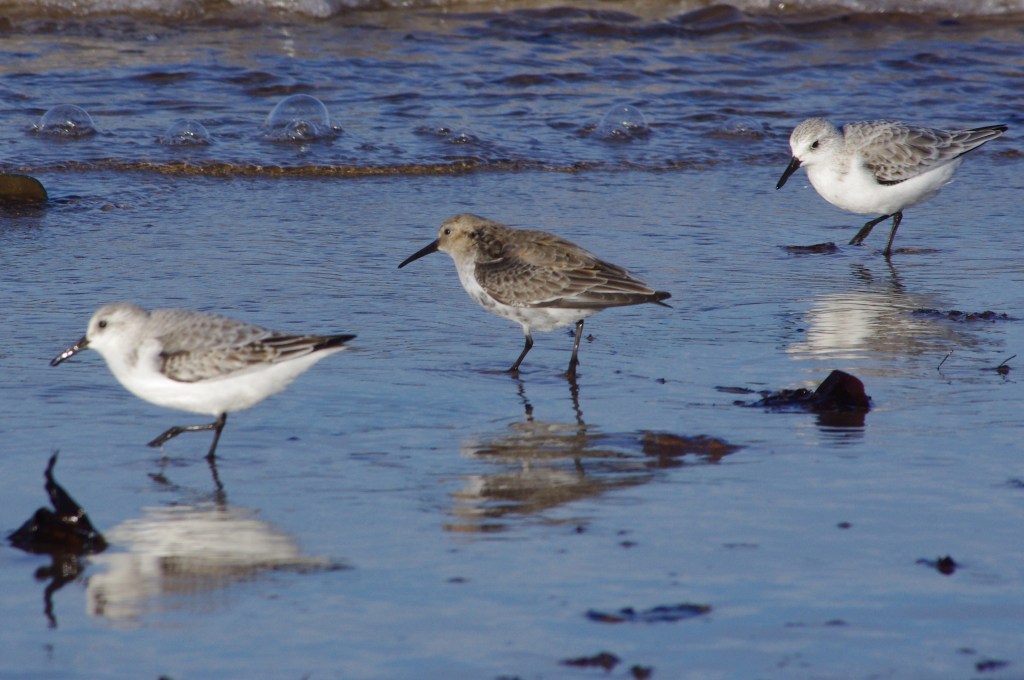
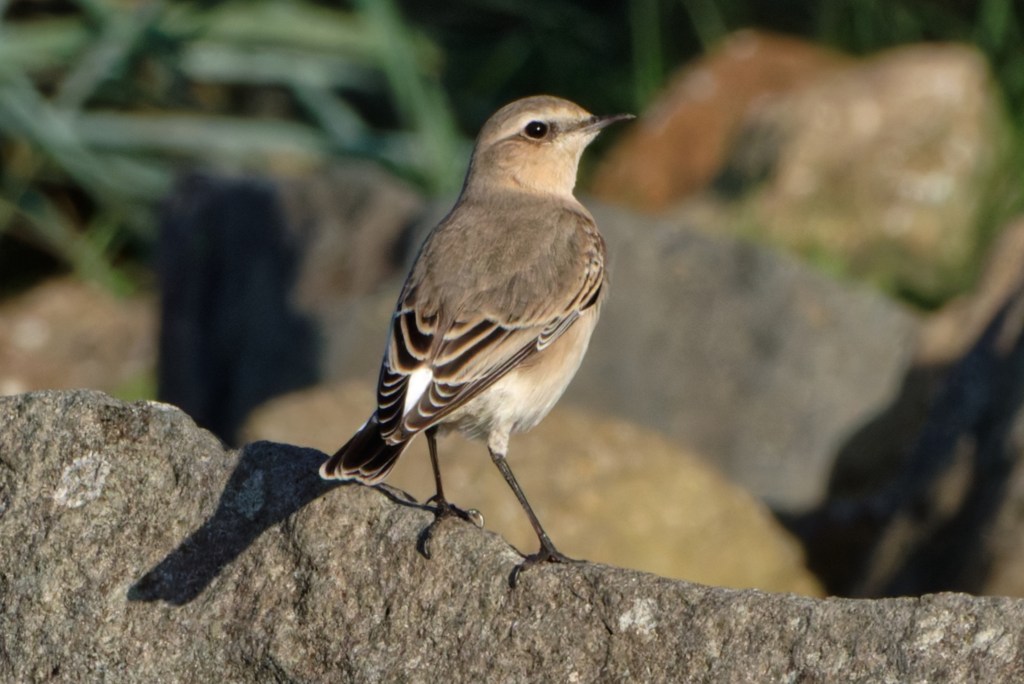
Wheatear

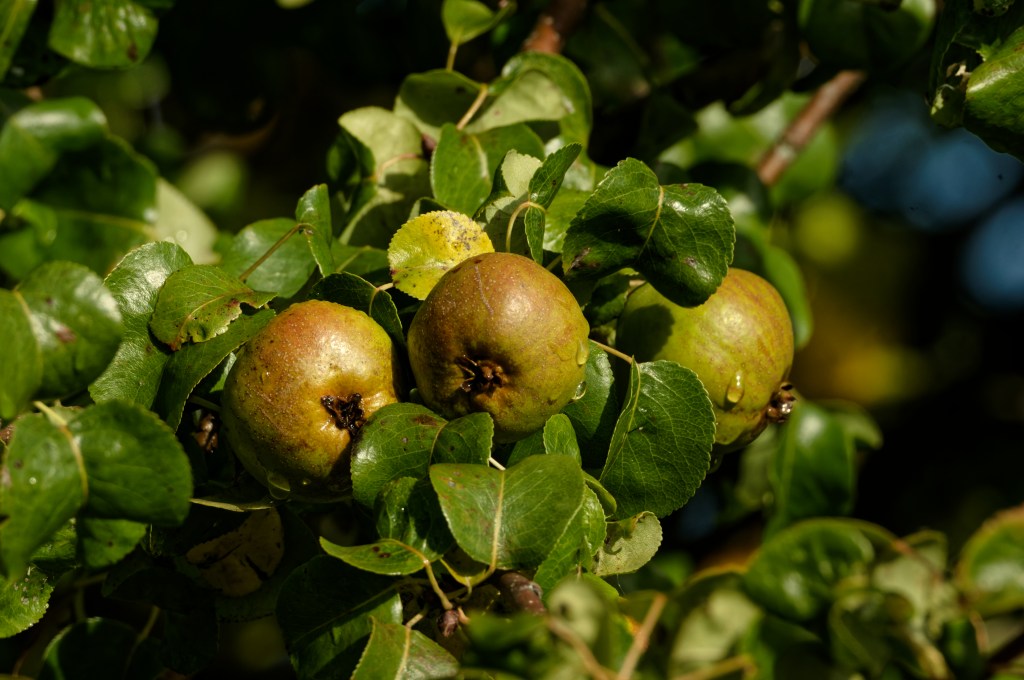
On a midweek run, Backwoodsman was surprised to see a stand of Autumn Crocus just by the Pinkston Road in the little parcel of land planted up by the developers of the NorthBridge estate, right at the edge of the new Sighthill Park. Wet weather came over the following days so Backwoodsman was pessimistic that there would be anything to see by the weekend; Autumn Crocus are usually flattened by the rain. Sunday morning was brilliant with blue skies, so we went to look, taking in the ripening Pear crop by the canal at Pinkston, and the Water Lilies in the SUDS ponds on the way.

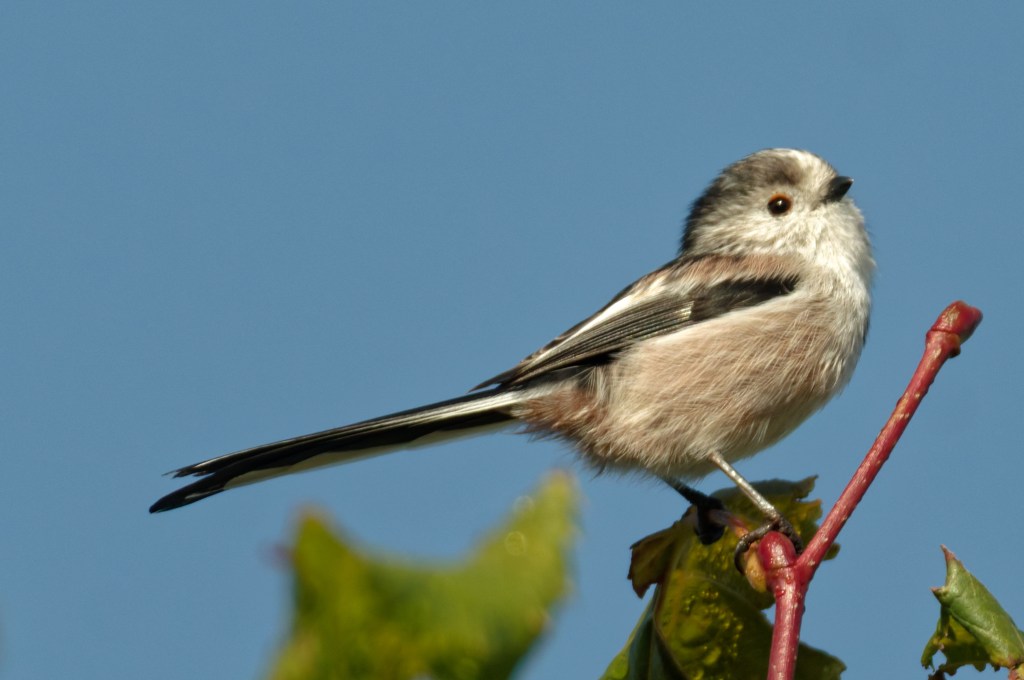
A small flock of Long-tailed Tits was enjoying the sunshine. They were unusually still in the tops of the Lime saplings; perhaps they were warming their tiny bones after a cold night.
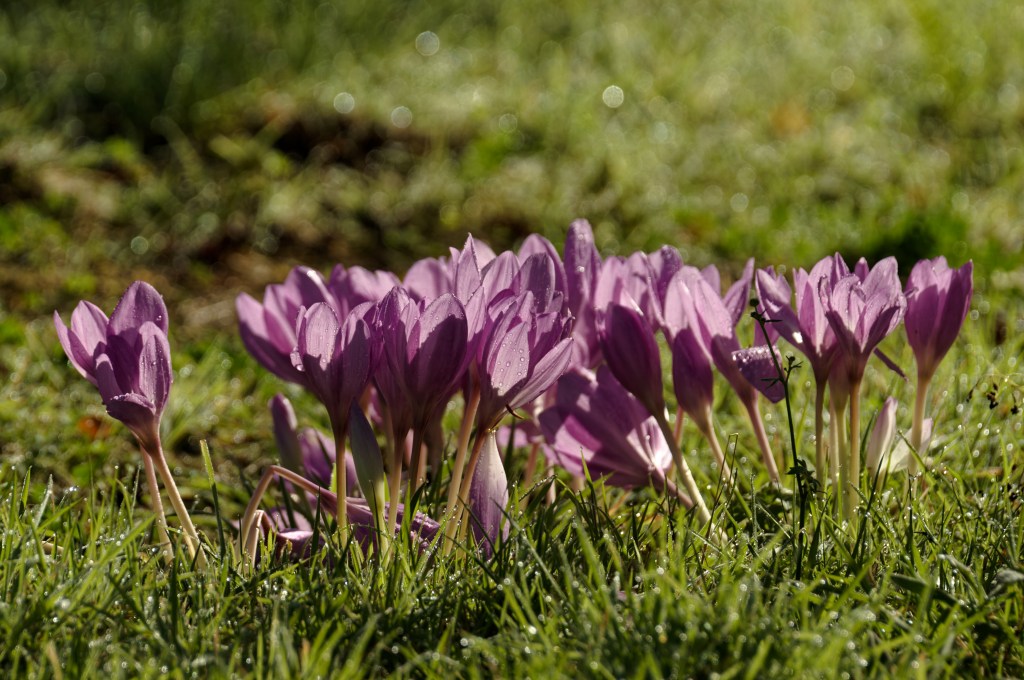
The Autumn Crocus were doing very nicely despite the weather; more flowers had emerged, enlarging the groups and brightening the display, which was really pleasing.
Our eyes were drawn to a striking gallery of Starlings, mostly young birds.
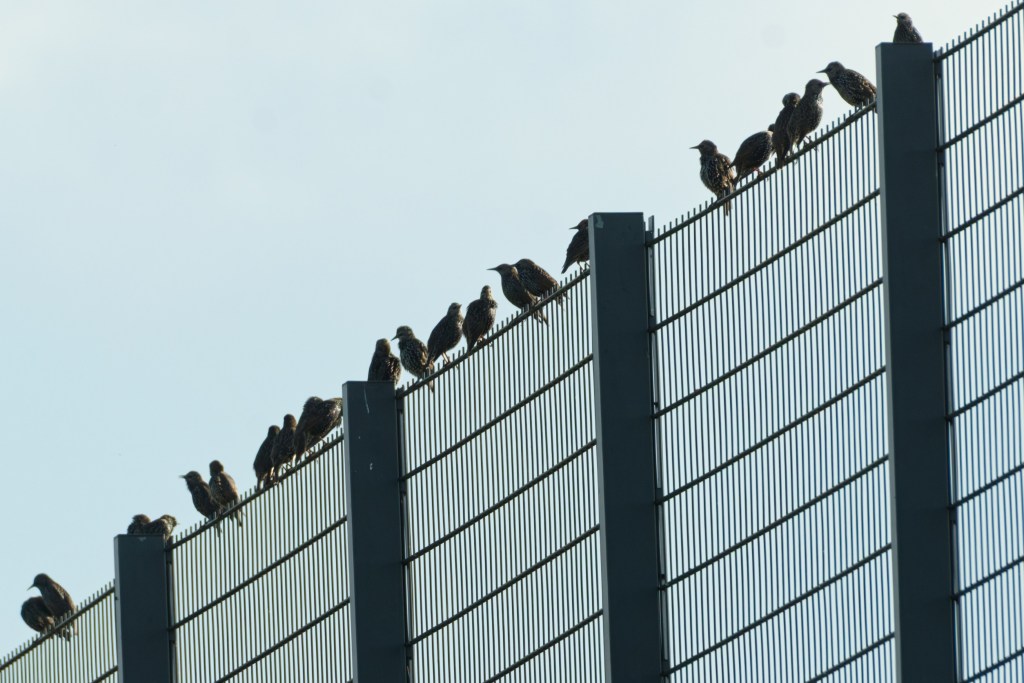
Starlings like this part of North Glasgow – it offers feeding opportunities on grassland and also on the Borron Street tip. As we walked away from the Starlings, an upright and pale bird hopped into view and perched on the iron rail beside a SUDS pond metres in front of us.
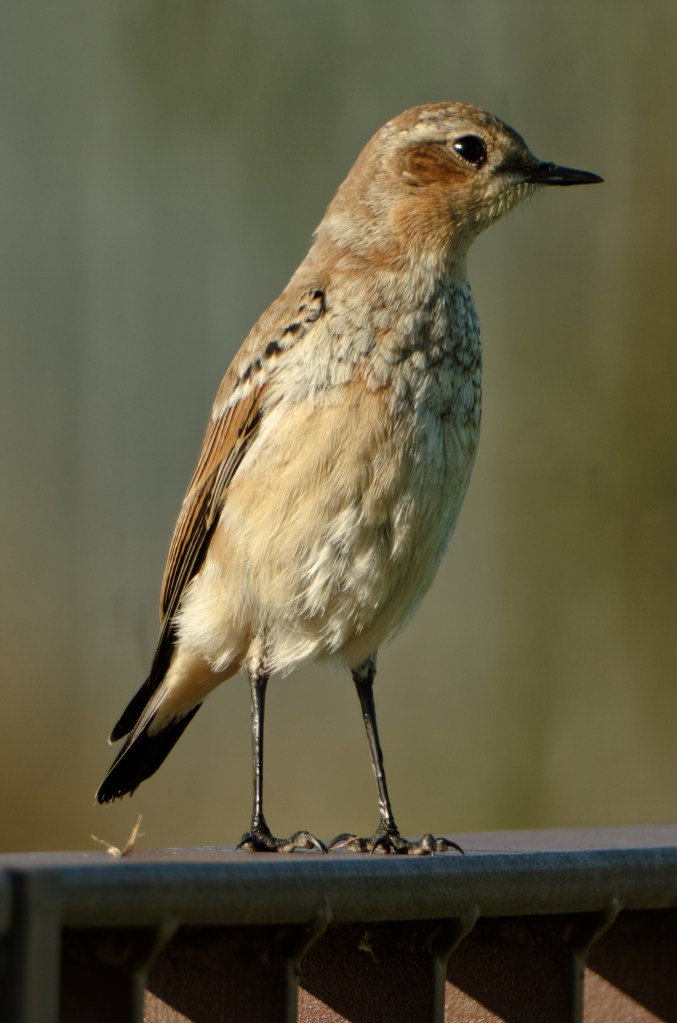
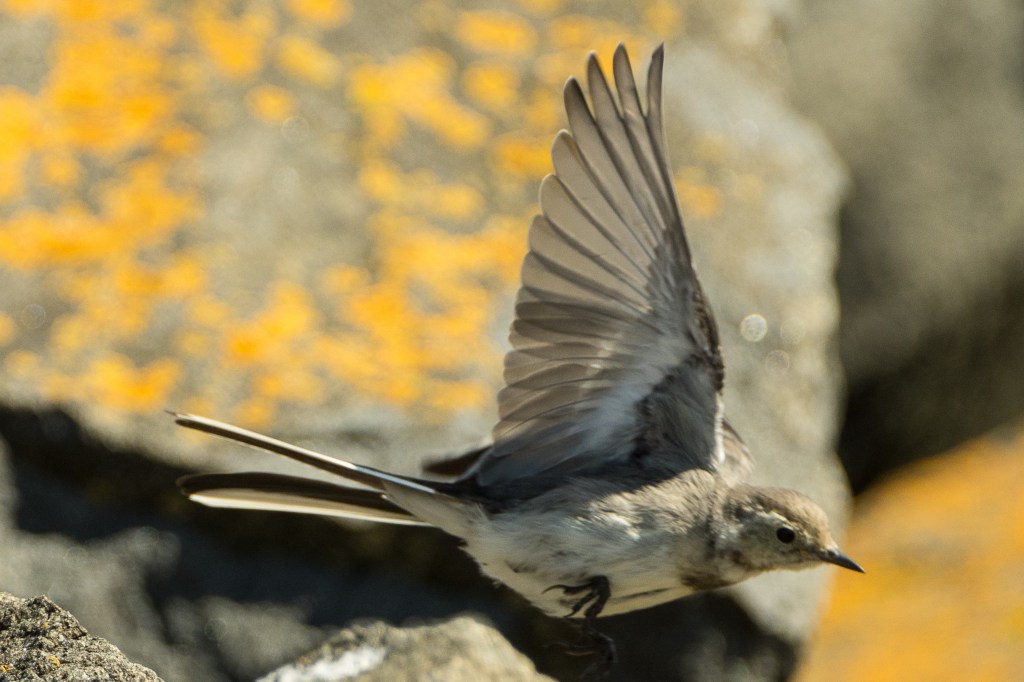
We caught a flash of a white rump as it flew to the rail – Wheatear, we thought. The posture looked right, and the perching habit. We sat down for a cup of tea and watched. There were plenty of places (concrete benches, guard rails, waste bins) for the bird to perch on, and it took full advantage, moving around us and trying out the possibilities. It was happy to let Backwoodsman approach it with the camera, suggesting that it was a young bird. Adult Wheatears usually flee from the approaching photographer or walker.
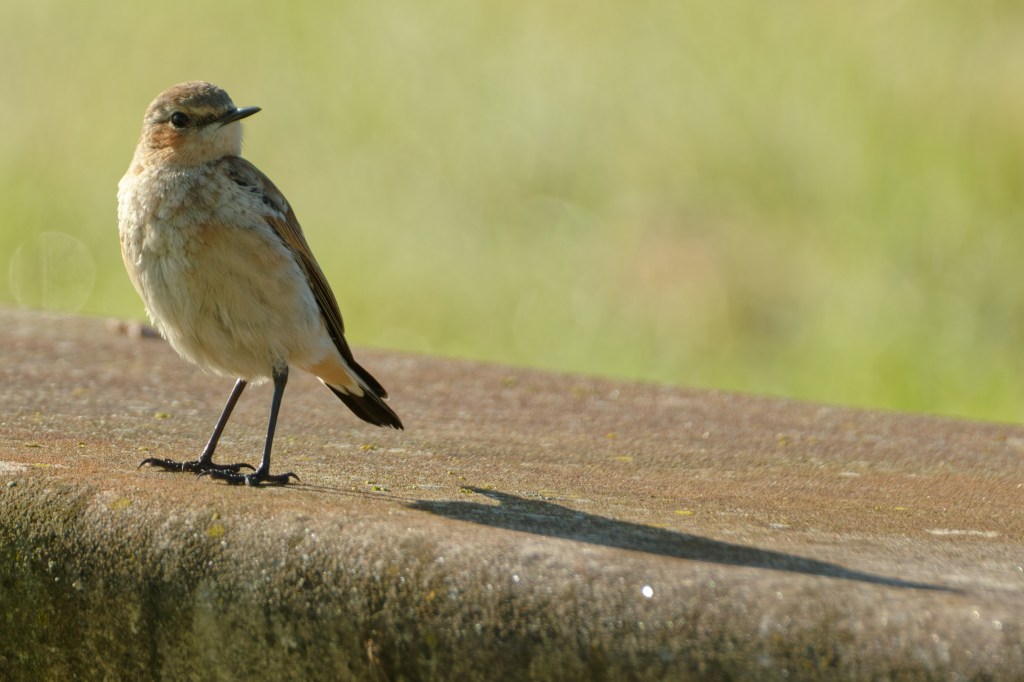
This was a one-off sighting; Backwoodsman runs through this area regularly and would have noticed the bird had it remained. It would not seem unreasonable that this young bird had fledged on the rough grassland to the north and was beginning to range south as a prelude to migration.

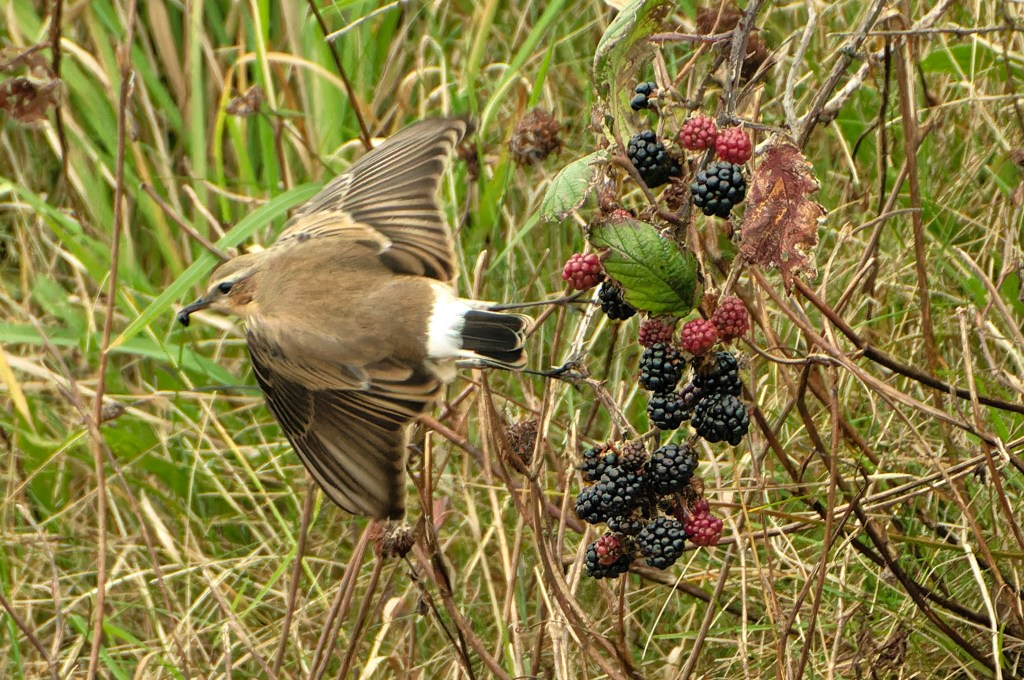
Backwoodsman looked back through the archives for other possible Wheatears and arrived at a folder of images taken at Cardross on September 21st in 2024. An adult bird, definitely a female, was feeding in the brambles.
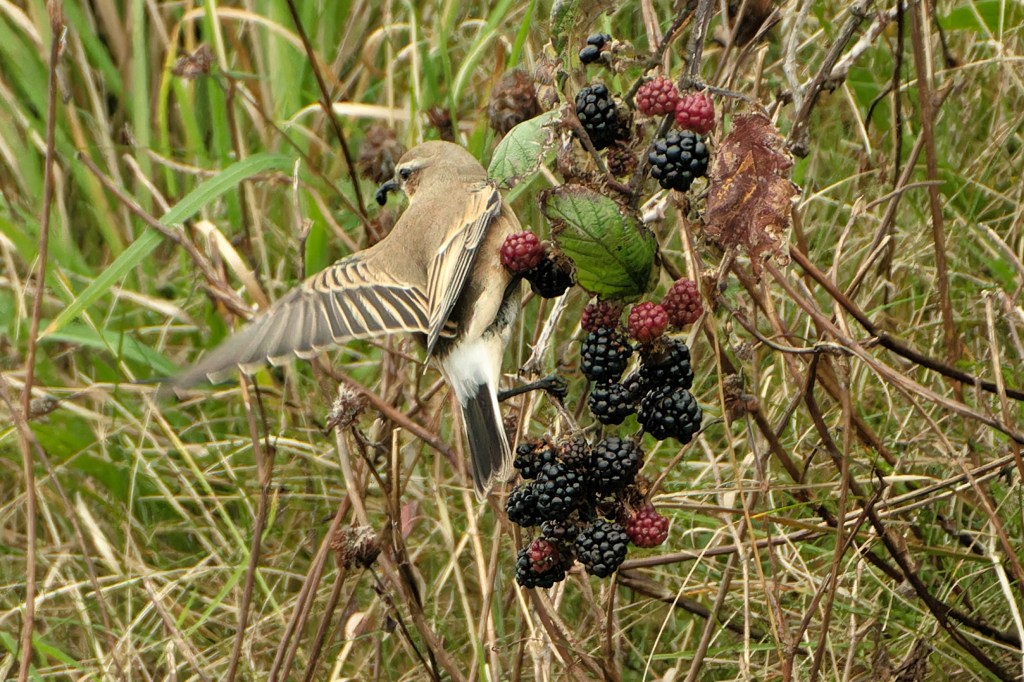
When she took off, the distinctive white rump was even more obvious.
Further down the foreshore, she visited a pair of young birds, identifying them unambiguously in the process.
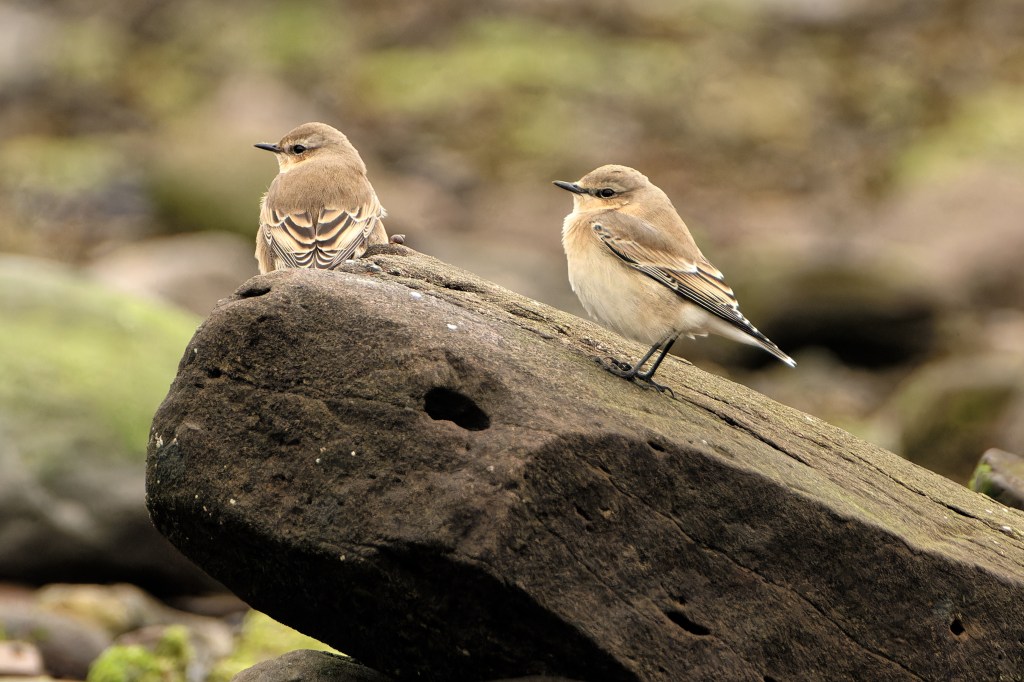
We might have struggled with these birds – they could be juvenile or female Stonechats, or Whinchats. Their posture makes them look quite rotund, whereas one of the key descriptors of the Wheatear is “sleek”. The adult plumage is clearly developing; there is a strong hint of the eye stripe and the white rump is clear to see.
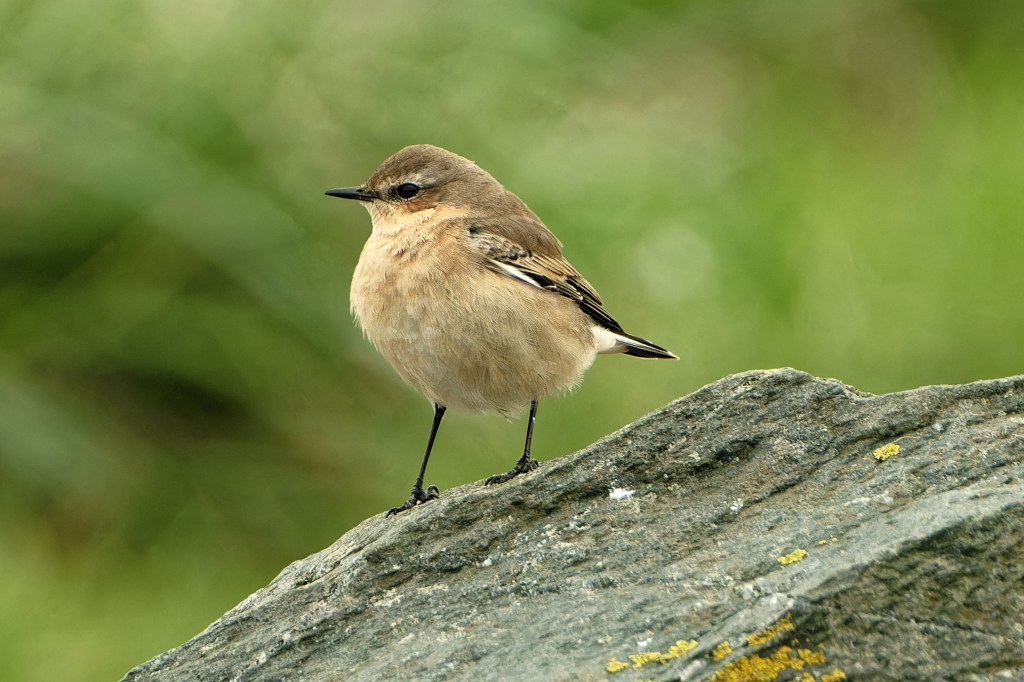
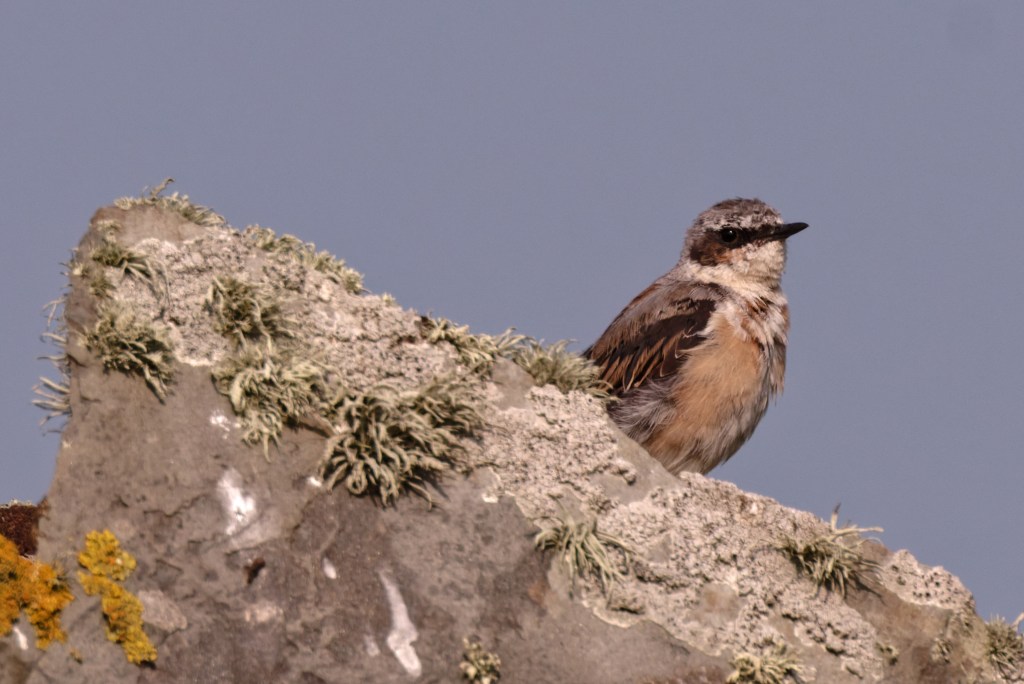
One Shetland sighting was particularly confusing. Backwoodsman spotted this individual some years ago on Sumburgh Head and was thinking Flycatcher, but it is probably a young Wheatear.
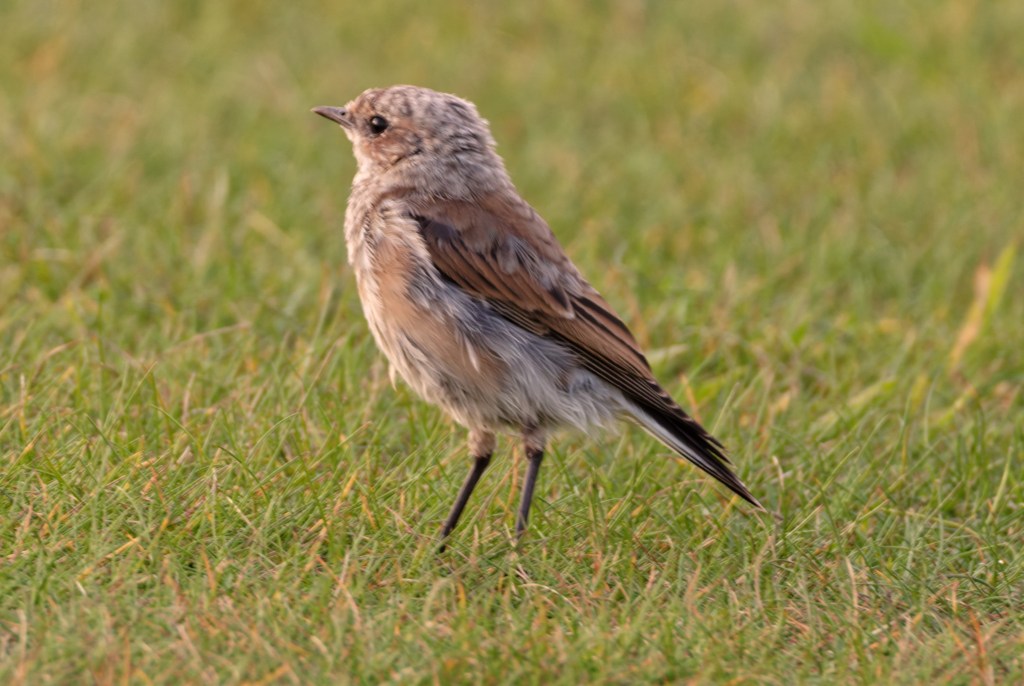
We spotted this bird not too far away; it may be in moult but it has some of the lovely grey colour which all the books give to adult Wheatears. It could be that this moulting adult was keeping an eye on the young bird as the latter learned its trade of foraging in the coastal grassland.
Any regular readers of these posts who track our movements will be ticking off the regular haunts, like North Glasgow and the Clyde at Cardross, and will be expecting to go to the Ayrshire coast any time soon. Stevenston has offered transient sightings of Wheatears, usually in the early autumn. We found this bird between Barassie Rocks and Irvine in mid-August.
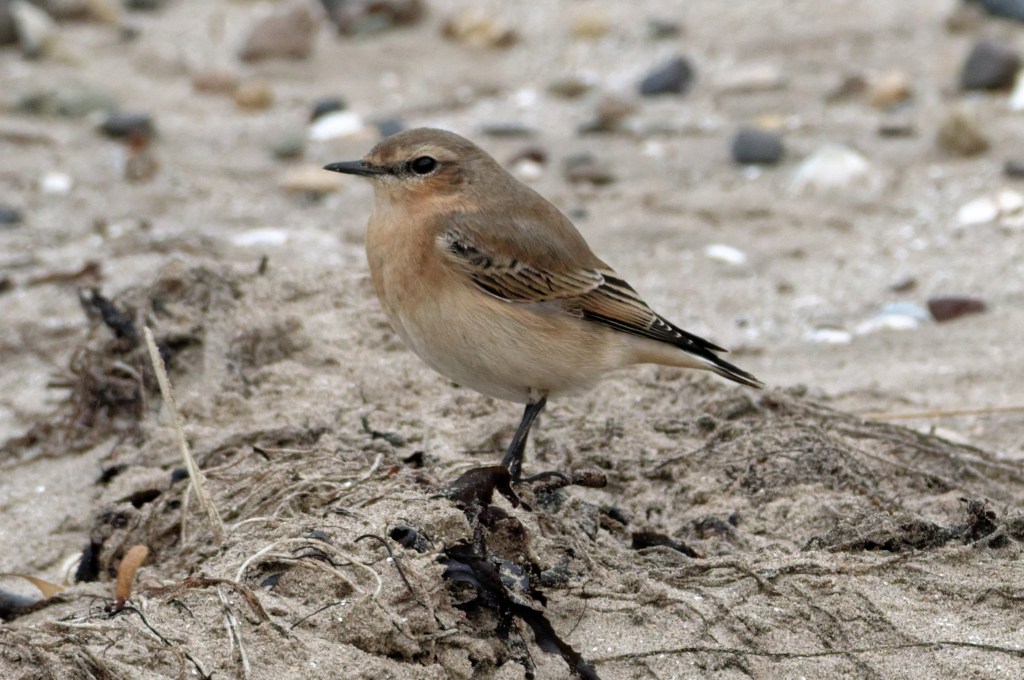
Wheatears have a huge breeding range in the northern hemisphere and head south into Africa for the winter. There is an excellent account of this to be read, and of other behaviours and habits, courtesy of a PhD student carrying out research at the the Fair Isle Bird Observatory.
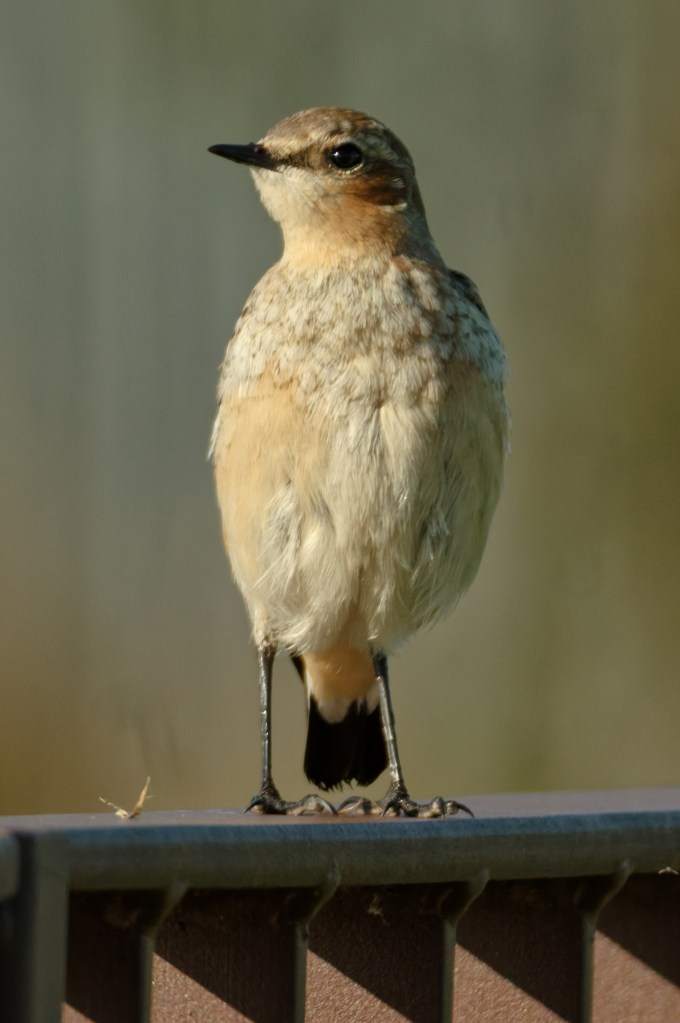
By now and with any luck, all our Wheatears will be a long way south. We’ll look forward to their return, and will hope to catch some in the striking grey breeding plumage.
Gannets

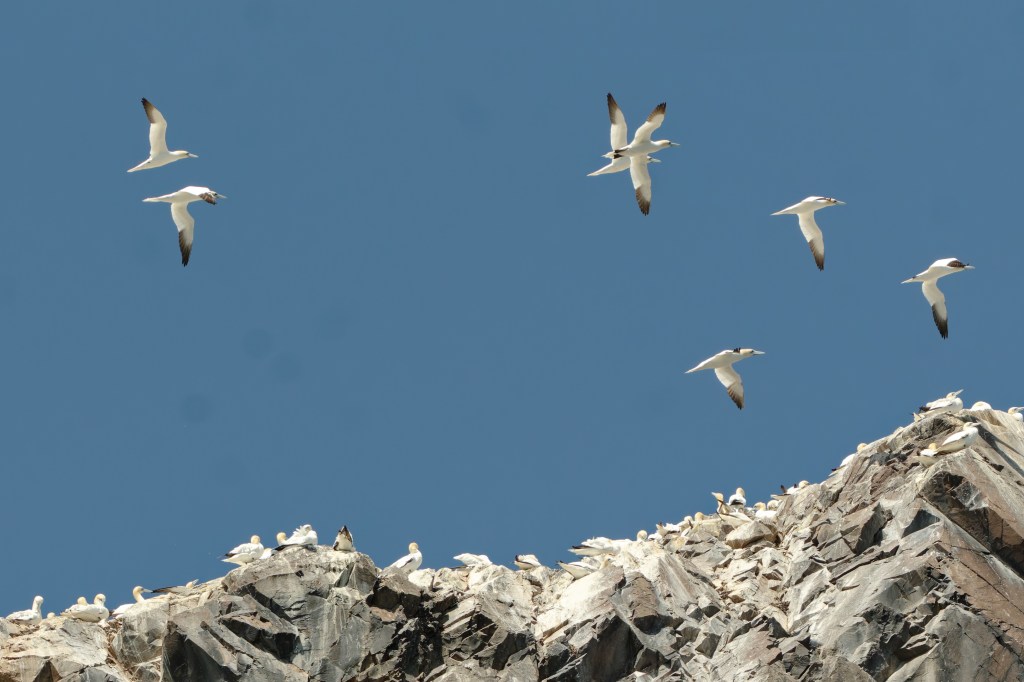
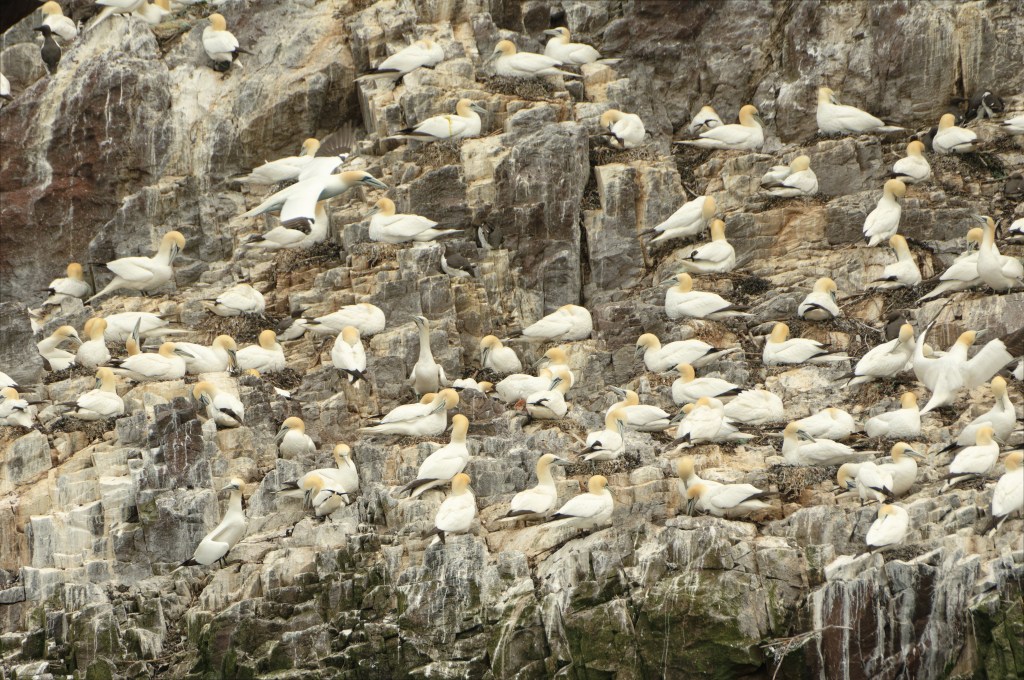
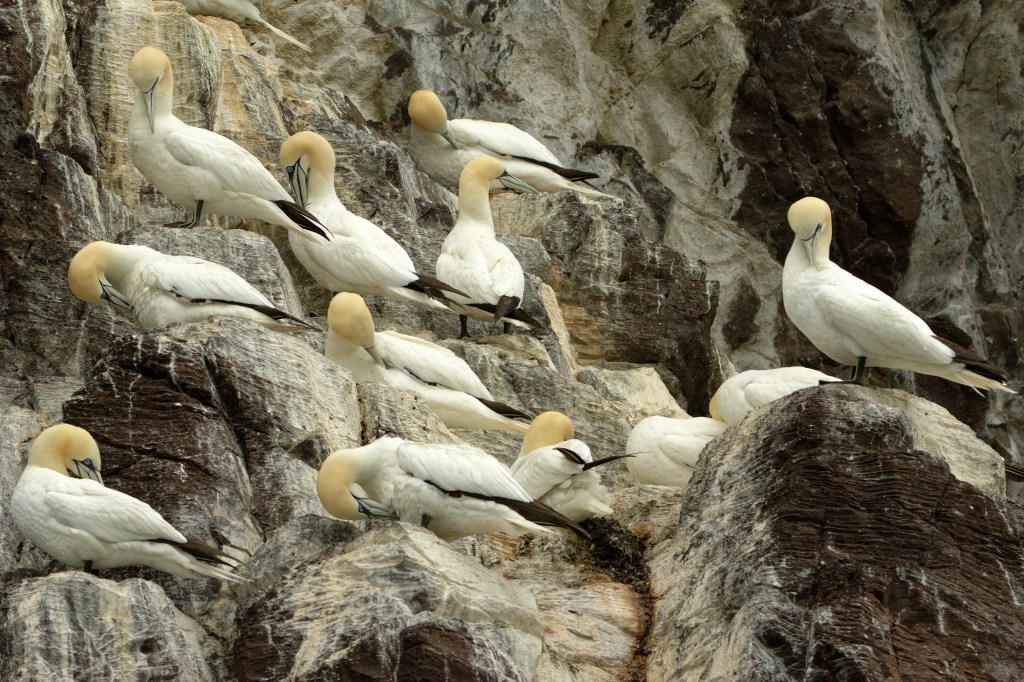
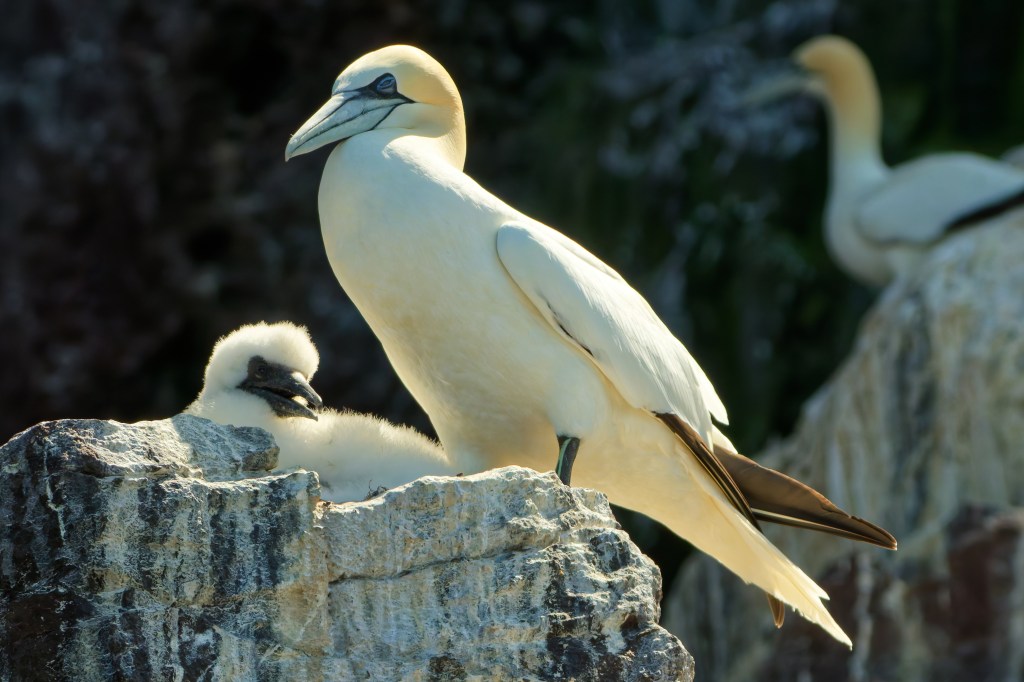
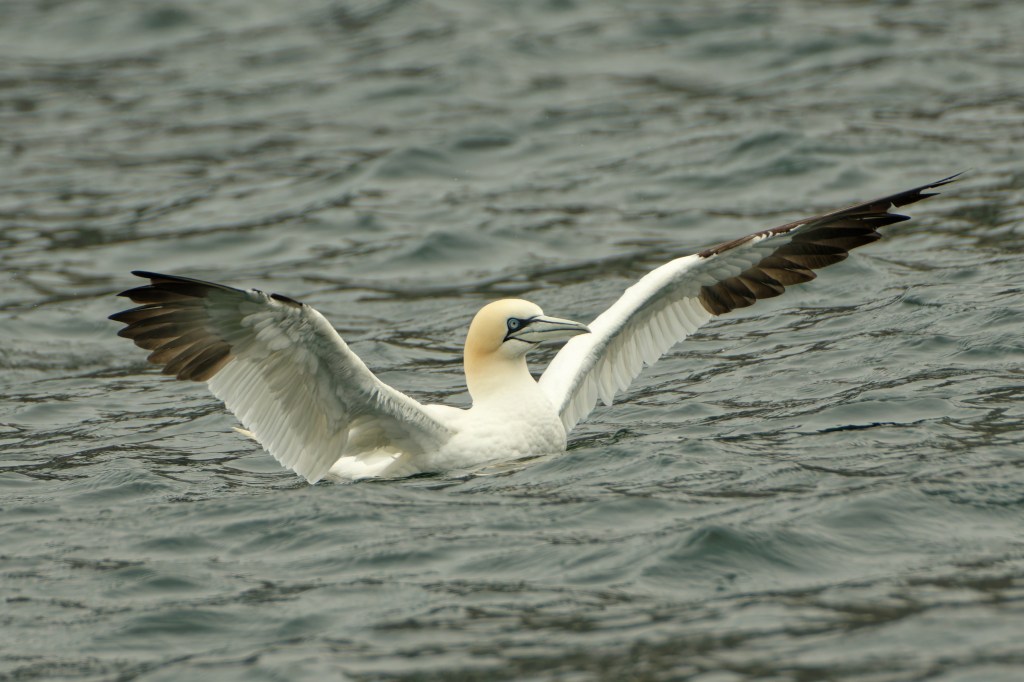
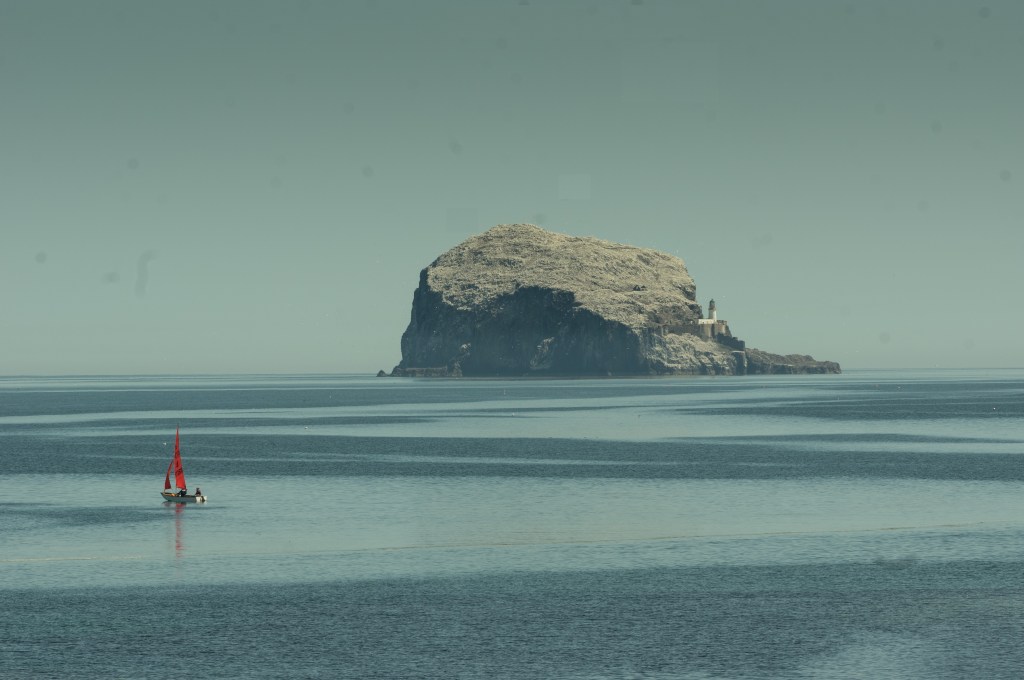
Backwoodsman has made not one but two visits to Bass Rock, “the world’s largest northern gannet colony”, recently. Both visits took place on trips organised through the Scottish Seabird Centre in North Berwick. We’ve been trying to get on one of these boats for a year or two; they are booked up well in advance and Faye made our bookings early in the new year. As the dates approached, we scrutinised weather forecasts, dreading the possibilities of gales and downpours. Neither arose; instead, we had two dry days, one grey and slightly gloomy and one blessed with brilliant light. The view of the rock through the window of the Scottish Seabird Centre on the much brighter day is at the top of the post. If you can scroll up on the image, you will see individual Gannets in the sky and sitting on the rock in the colony.

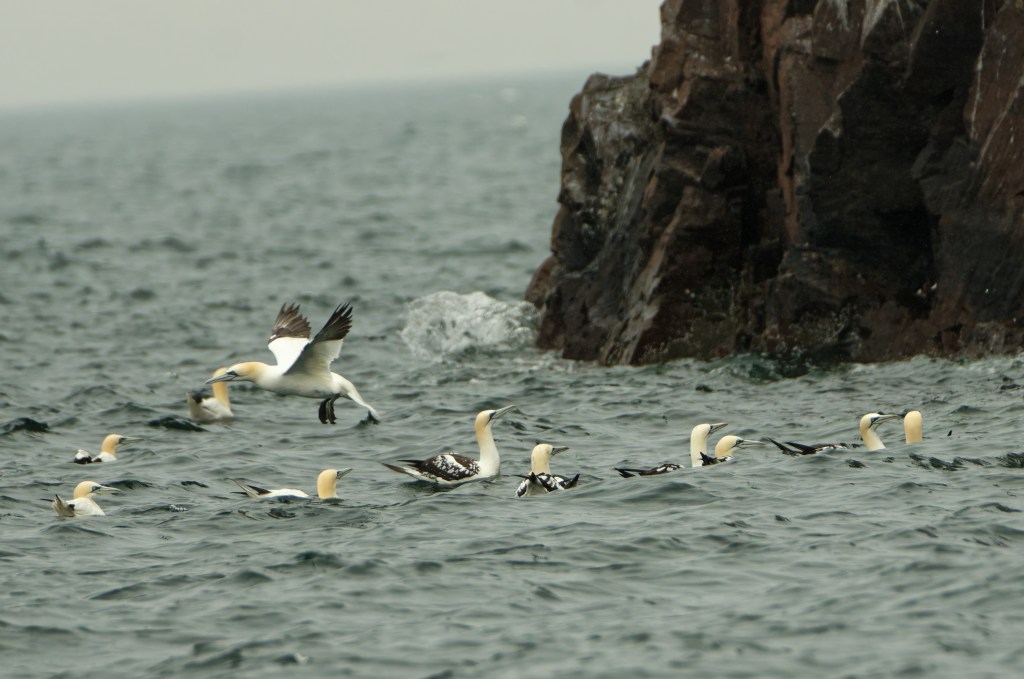
Distant views of these birds were fairly common from our visits to the Ayrshire coast, with the stretch from Stevenston Point to Saltcoats usually the best bet. The Ayshire Gannets could well be from Ailsa Craig, one of the major gannetries in the west of the UK. The birds would stay well offshore and fish, and photography would be unproductive. We were about to have a very different experience.

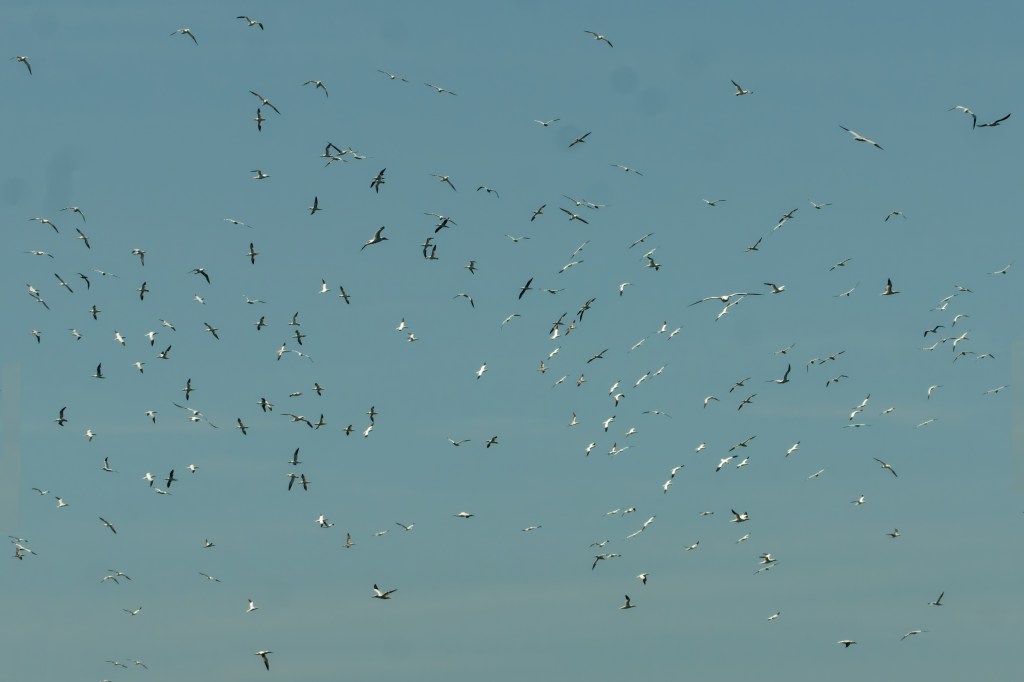
As we approached the Bass, we saw a sky full of Gannets. They were not fishing, but soaring on stiff wings and glittering in the bright sunlight. In Sightlines, Kathleen Jamie describes a visit to a Gannetry beautifully. Indeed Gannets grace the cover of her book. She writes, of her approach to the colony: “It was exciting, like a fun fair; the closer we got to the cliff edge the more we could hear the racket, the more the breeze brought us the smell.”

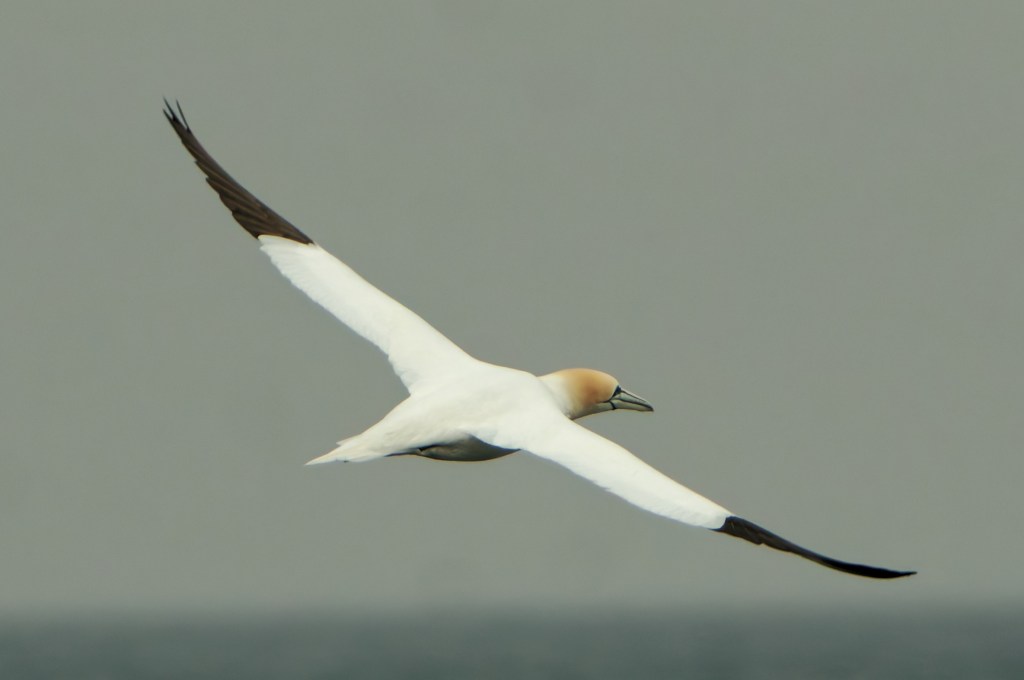
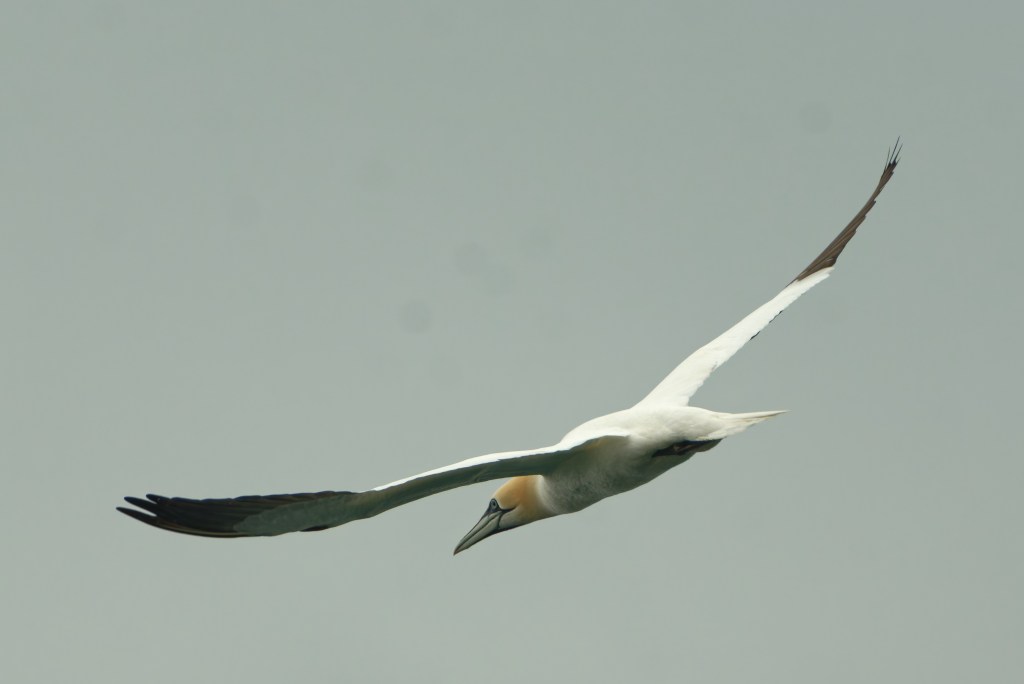
Sensory impacts all round! As we grew closer to the rock, birds crossed our path and the two metre wingspan made its considerable visual impact.

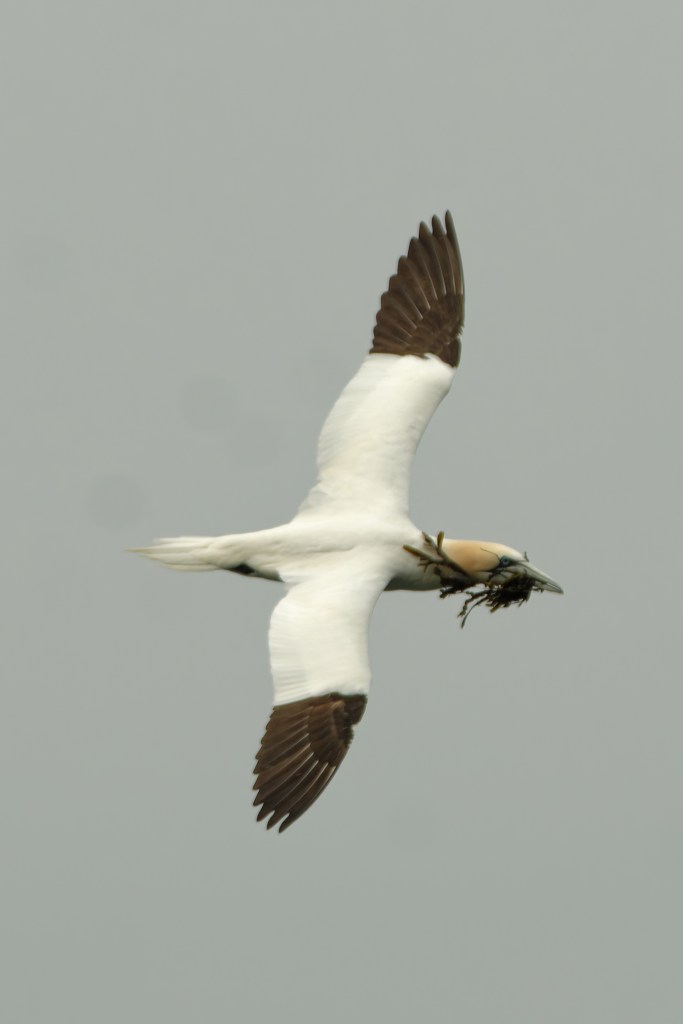
Birds approached bearing feathers and seaweed for nesting material.

The smell and clamour grew and we began to see birds sailing by.

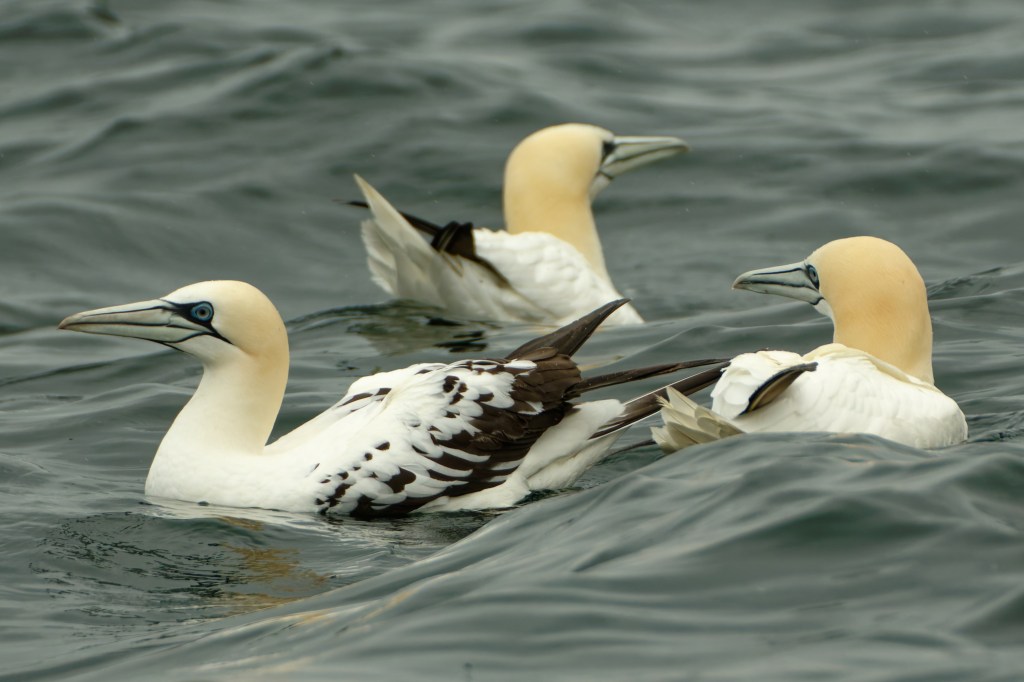
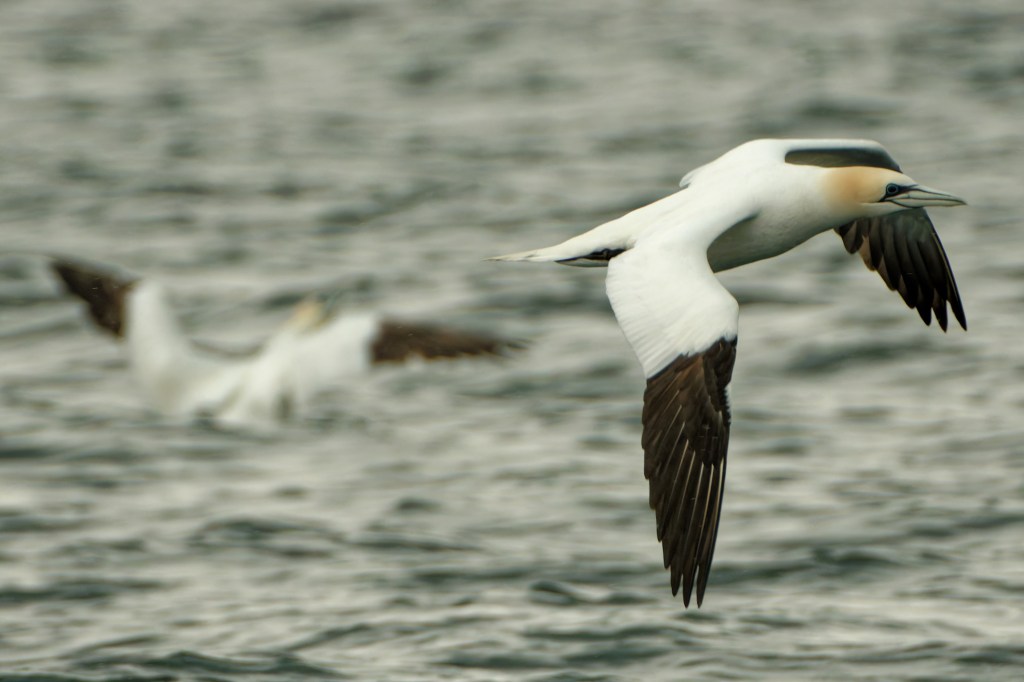
You’ll notice birds with quite a lot of black feathers; these are sub-adult birds. Gannets attain their adult plumage after four to five years.

The view (and the smell and the sound) at the foot of the rock was overwhelming. The nature programmes often explain how a raptor attacking a flock of birds will be confused by all the movement and may fail to catch anything. Backwoodsman felt somewhat bewildered by the sheer range of targets. Time to focus (ho ho).

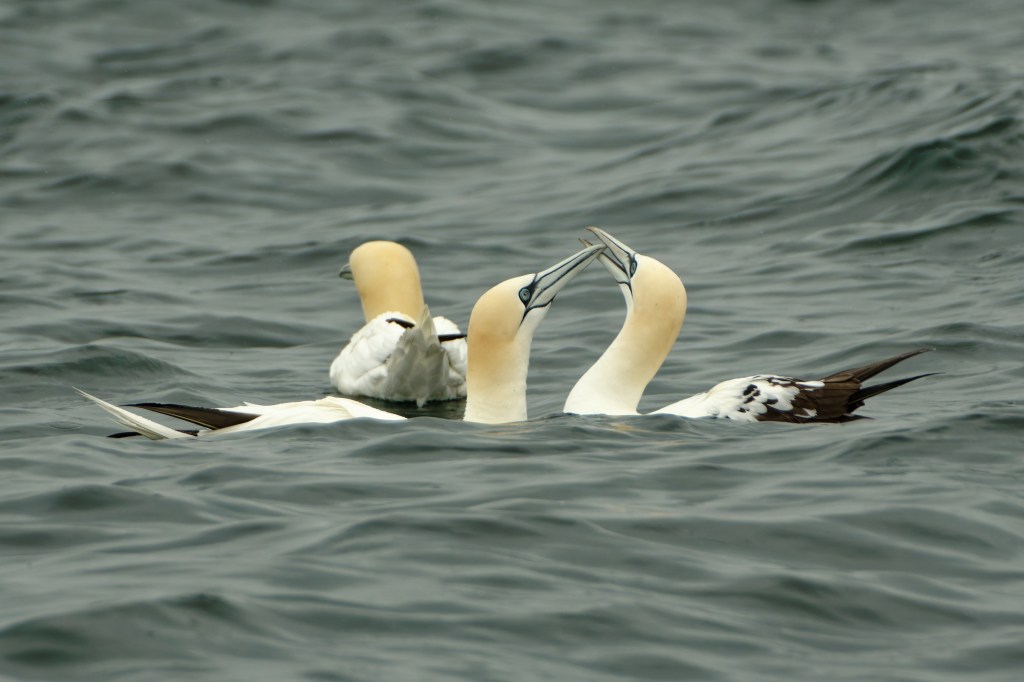
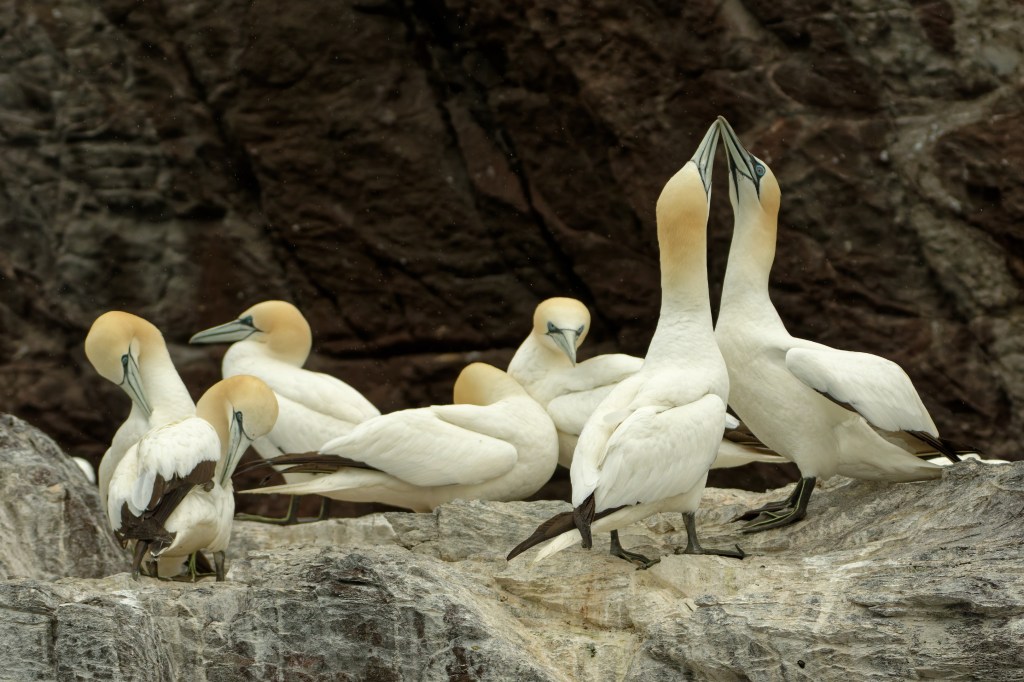
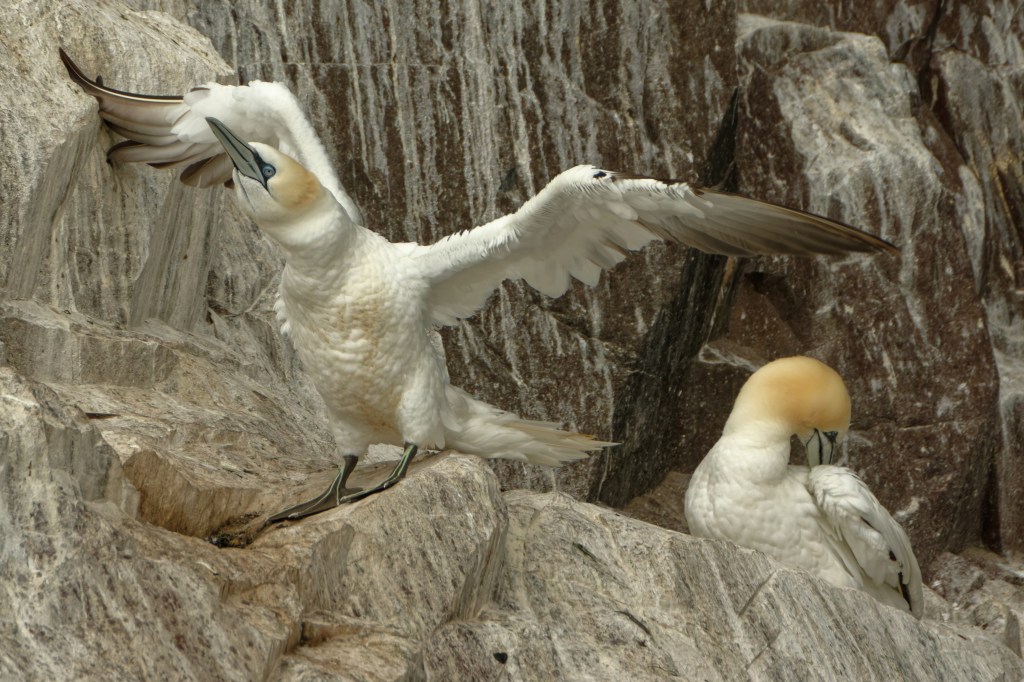
The Gannets are bonding in the top photograph; this seems to be only part of their ritual life, described in this review.

Gannets boast some remarkable adaptations (air sacs, binocular vision, lens shape changes) which help them to survive their extreme dives, and locate and home in on fish from the air and below the surface. The original publication of the vision study  has a very nice graphic describing Gannet dives (it refers to a related species).

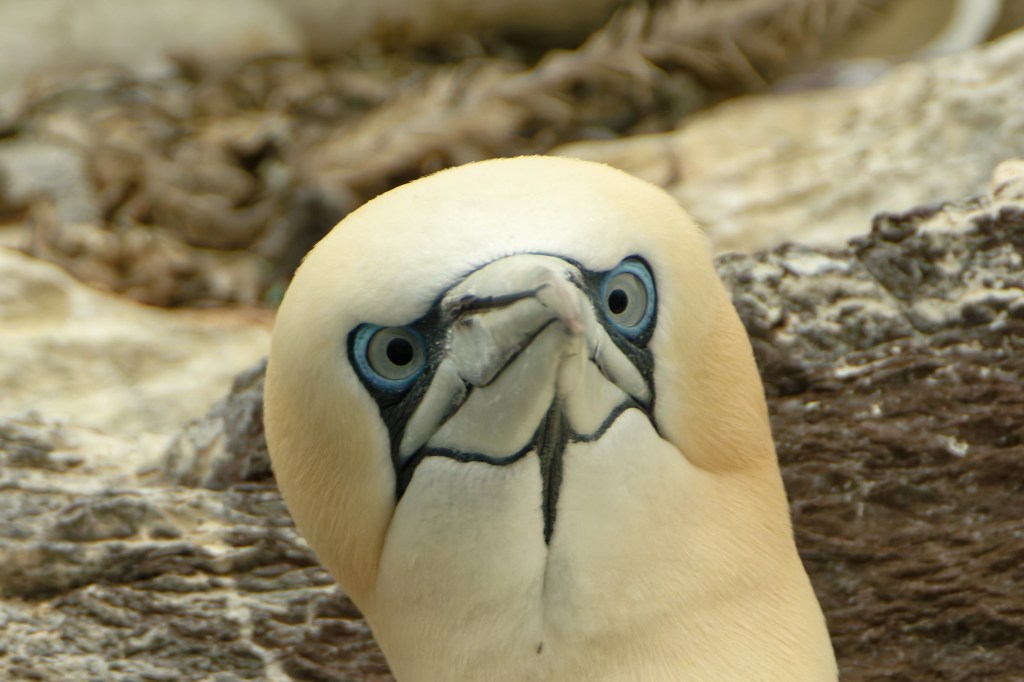
Being looked at by a Gannet is a slightly disconcerting experience.

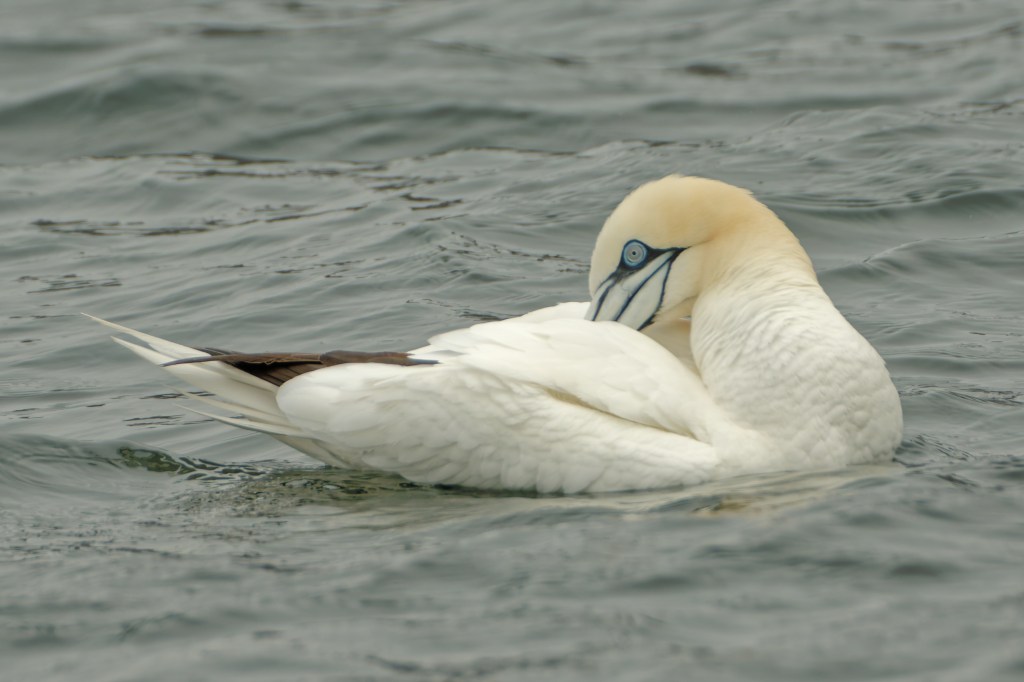
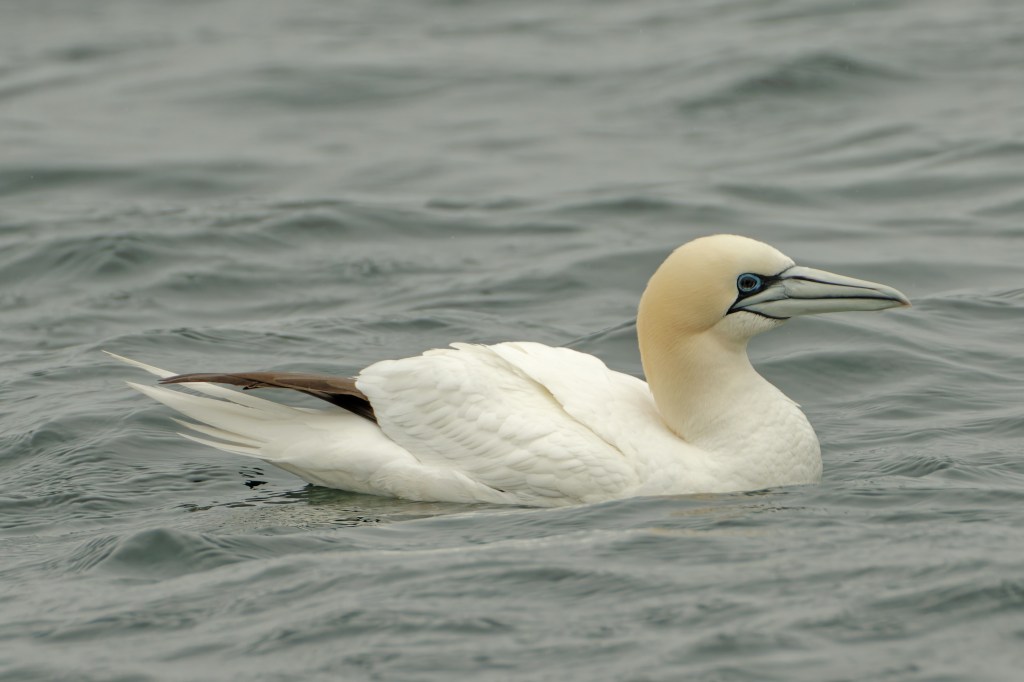
The eye colour also reveals a bird’s history of Avian ‘Flu; in the first image below with the blue rings, the bird has not been infected with the virus, but the bird with the black eye in the second image is a survivor.

A pair of Gannets will attempt to raise a single chick – some were visible when we visited on the bright day. As it grows, this bird will take on the dark plumage of the juvenile.

As we left the Seabird Centre, we passed a table upon which some campaign material had been set out – it referred to the Berwick Bank Project proposed by SSE Renewables. The company say that “We have conducted comprehensive aerial bird surveys during the development of Berwick Bank. The enormous amount of data we have collected has enabled us to refine our proposals and put forward a more environmentally friendly design.” In a recent post (15th June 2025), the company revealed that it was reducing the area of the project by 20% as it prepared for consent submission.

Glasgow-based environmental consultants MacArthur Green (now part of the multinational SLR Group) wrote an opinion on Gannets and windfarms in 2021, which includes this:

“A case might be made that there should not be a requirement for compensation for offshore wind farm impacts on gannets because the UK SPA suite for gannet is certainly overall in Favourable conservation status, with breeding numbers on the suite as a whole about 90,000 pairs above the population level at designation of these sites, and with every SPA in Favourable conservation status for breeding gannets. Furthermore, it could be argued that there is over-provision of SPA protection of this species, with more than 95% of the UK population of gannets breeding within sites where they are a designated feature. However, Britain and Ireland hold most of the breeding population of gannets, so this species is particularly important for us in a global context.”

Quite a lot is known about Gannet migration: “The Gannet Morus bassanus is one of the seabirds considered most at risk from collision mortality at offshore wind farms in UK waters, so a better understanding of migration routes informs assessments of risk for different populations. Deployment of geolocators on breeding adults at the Bass Rock, Scotland, and Skrúður, Iceland, showed that the timing of migrations differed between populations, birds from Bass Rock passing south through UK waters mostly in October and back in February while birds from Skrúður passed south through UK waters mostly later, in November, but returned north earlier, in January. Many birds from both colonies made a clockwise loop migration around Britain and Ireland. Only a minority of birds from the Bass Rock returned northwards to the colony through the southern North Sea. A counter-intuitive consequence is that many Gannets moving northwards through waters to the west of Britain and Ireland in spring may be birds from North Sea colonies. Although Gannets normally remain over the sea, one tracked bird appears to have made a short overland passage in spring from the west of Scotland through central Scotland to the Bass Rock, whereas most returned around the north of Scotland.”

The case against the project is based more on the presence of the installation in an area which the birds will use to feed, rather than it being a hazard flung across a migration route: “A globally important area for seabirds will be severely at risk if a proposed offshore wind development, Berwick Bank, is approved. The proposed development is immediately next to the Outer Firth of Forth and St Andrews Bay Complex Special Protection Area. This is designated for its globally-important seabird populations. The proposal is for a 4.1 GW project with 307 turbines, each one 355 metres high to blade tip. If it is built, it will be one of the largest in the world. Berwick Bank, in its current form, would be more destructive to seabirds that [sic] any other proposed offshore wind farm in Scottish waters. It has the potential to kill tens of thousands of seabirds and to displace tens of thousands more over its lifetime. This area is used extensively for Kittiwakes, Puffins and Gannets. What’s more, shallow waters near the shore are the most important for many seabirds to find food for their young.”

It remains to be seen how the Scottish Government will handle this. There is more about the campaign here and a link to a petition.

Would it be trivial to end by saying that one of Backwoodsman’s favourite restaurants is named for this most impressive seabird – The Gannet in Finnieston! Backwoodsman hopes not, and likes how a diving bird is celebrated in the logo.

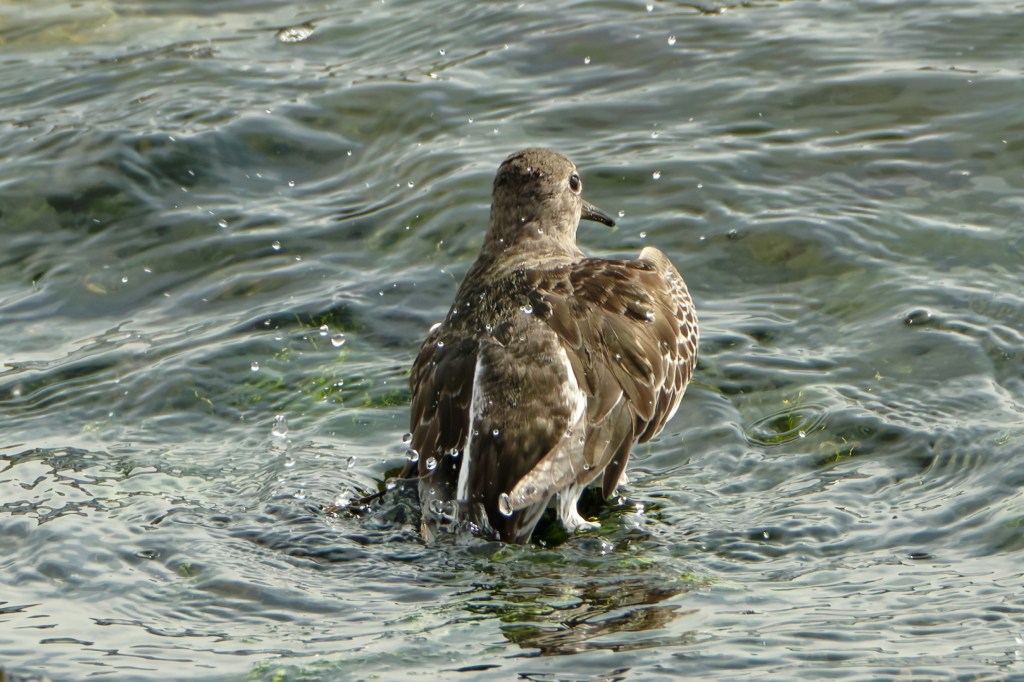
Purple Sandpipers

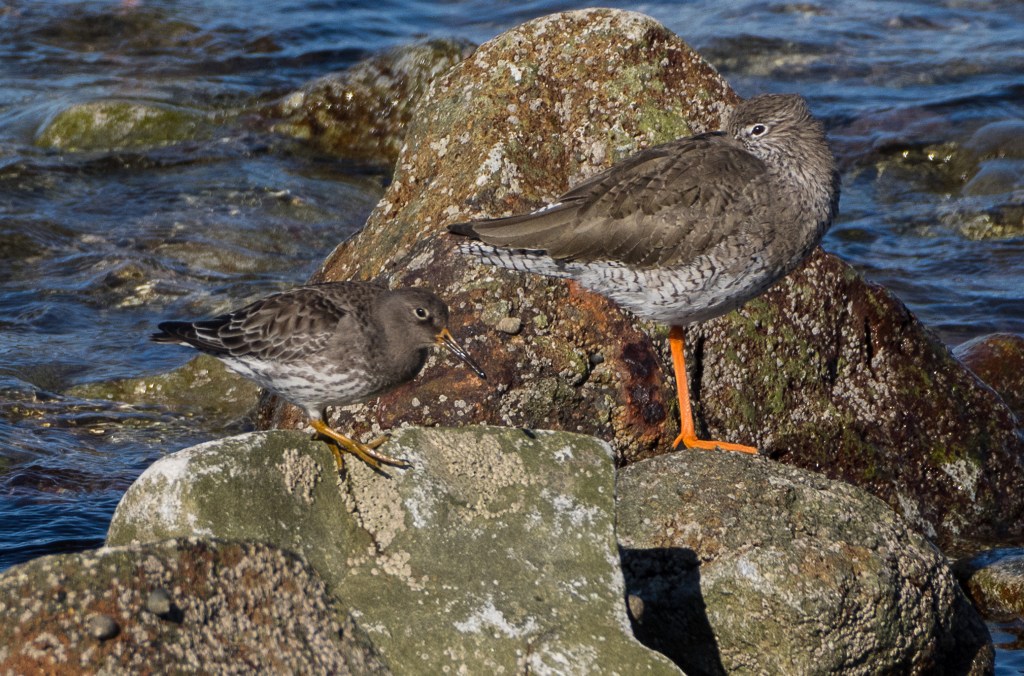
We used to see Purple Sandpipers regularly at Troon on the Ballast Bank, our main place for the species, back in the day before the invasion by the Troon Tadpoles. Backwoodsman had taken a few pictures there but was stranded short of enough material for a post, and had begun to despair of seeing these pretty little waders again. The odd bird would turn up at Stevenston or Saltcoats but they were always distant. For example, this shot is a long range effort taken at Stevenston Point; the size contrast with the Redshank is quite striking.

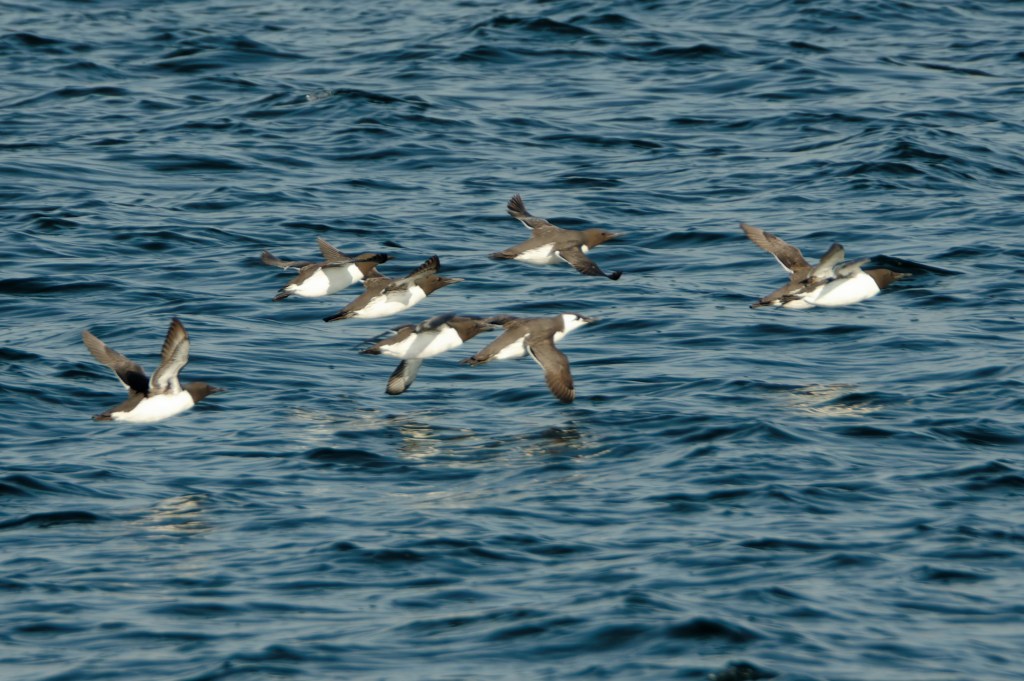
A recent trip solved the problem. On a Saturday in mid-April, we had taken an early train from Glasgow Central to Gourock and boarded the ferry to Dunoon. It was a brilliant morning, and flat calm. The crew member collecting fares took note of the camera and spoke of dolphins on the inbound voyage. Backwoodsman scanned the middle distance; there were no cetaceans to be seen but small groups of Guillemots were flying low across the water, heading east and further into the mouth of the Clyde. This is a long-range shot made more difficult by the speed of the vessel in one direction and the birds in the other.

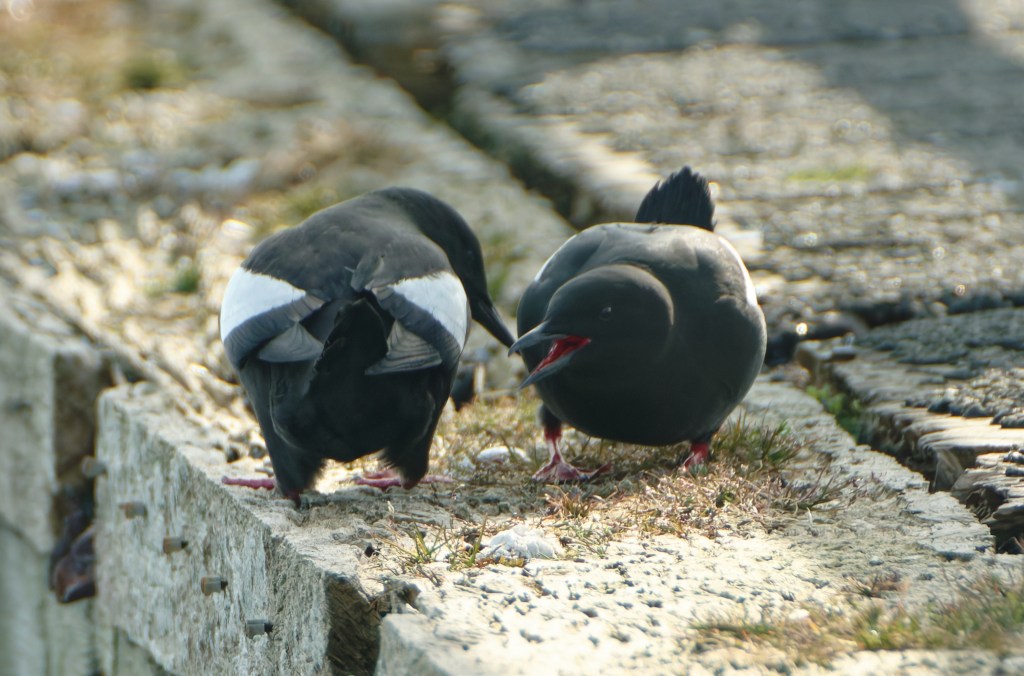
The vessel docked, the handful of passengers disembarked, and a larger group of gaudily-clad racegoers heading for the Scottish Grand National in Ayr boarded the empty vessel.  We looked around the pier, initially hearing, and then seeing Black Guillemots courting.

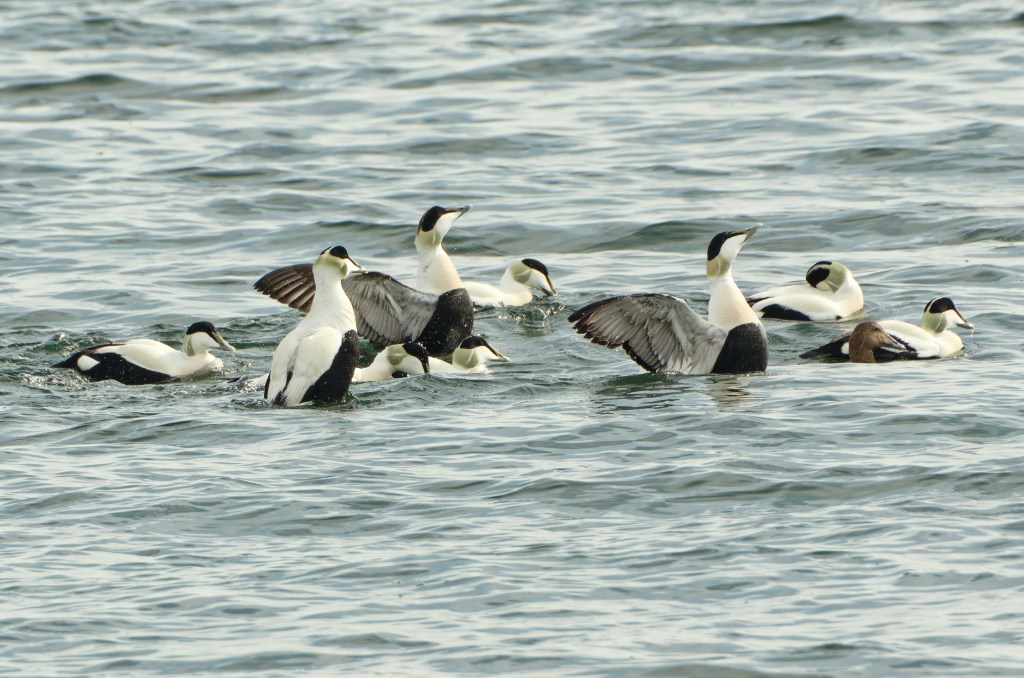
We enjoyed watching the birds for a while before heading north east along the Esplanade into Kirn. Familiar sounds made their way to us across the water, the “yah-roo!”calls of displaying Eiders. We usual hear this call from a distance but it is even more pleasing at close quarters.  Backwoodsman had recorded this video at WWT Martin Mere on the recent visit and was wondering if it would ever be useful for anything – here are some loud Eider calls.

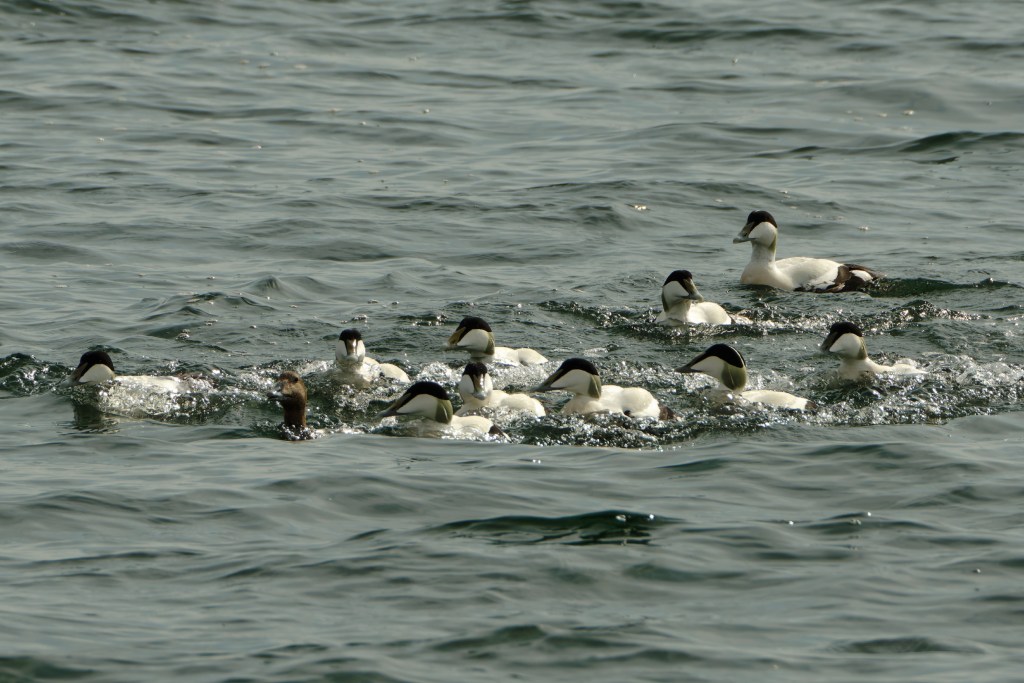
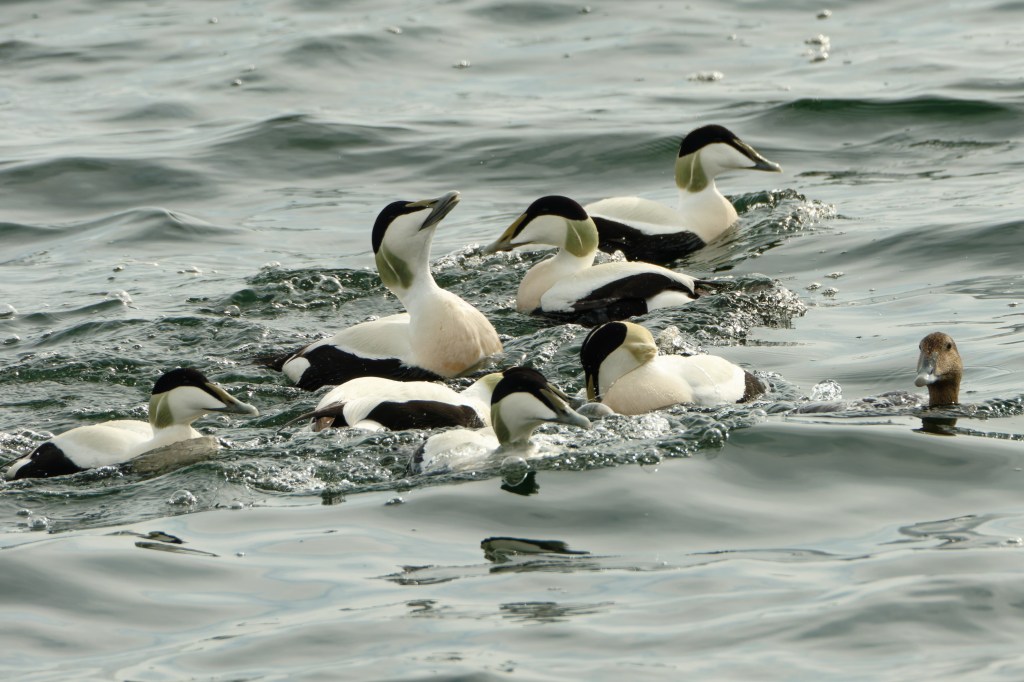
The group of Dunoon birds came in quite close – they were too busy courting to be upset by figures on the shore.

We could see up to ten drakes and one duck at a time; they would sail about and call, and then the whole group would dive. The colours looked vibrant in the excellent light, particularly that incongruous botanical green on the back of the neck.

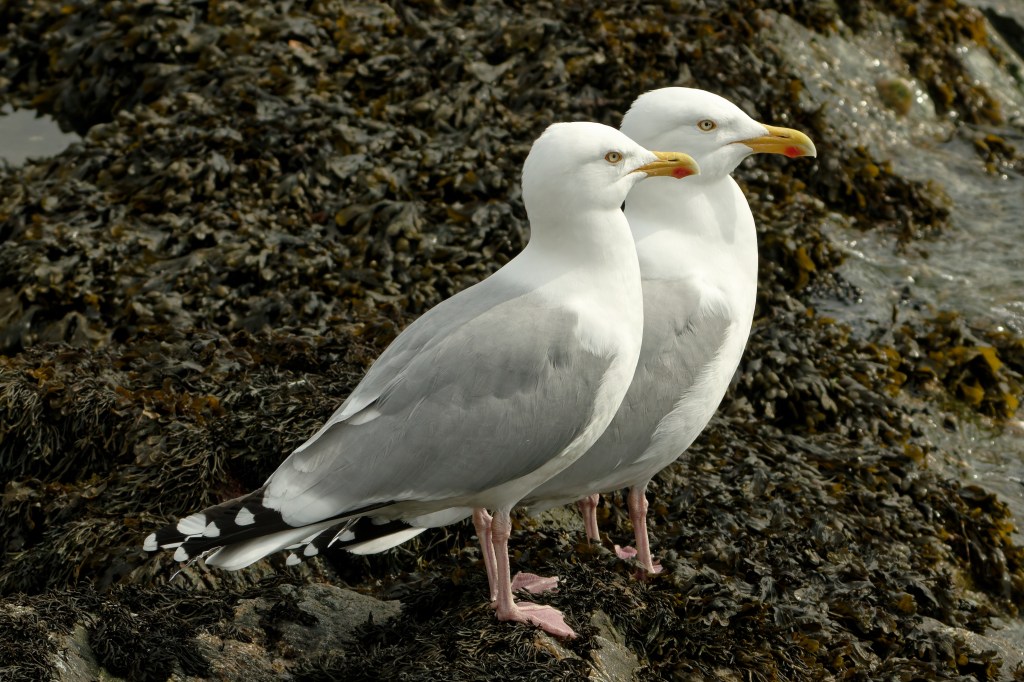
Herring Gulls watched them too.

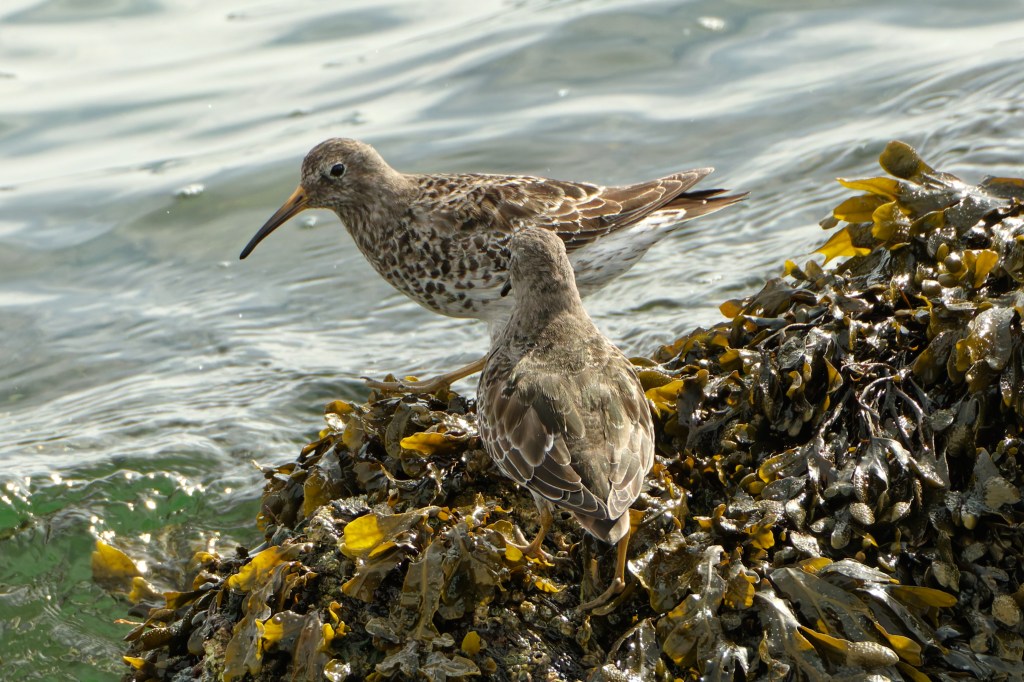
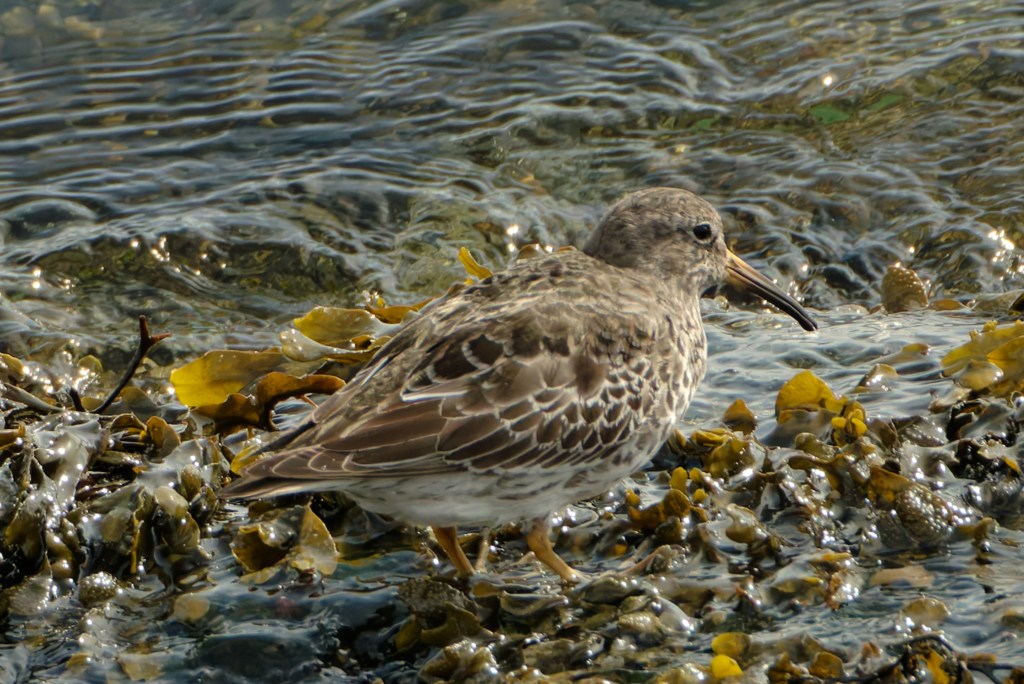
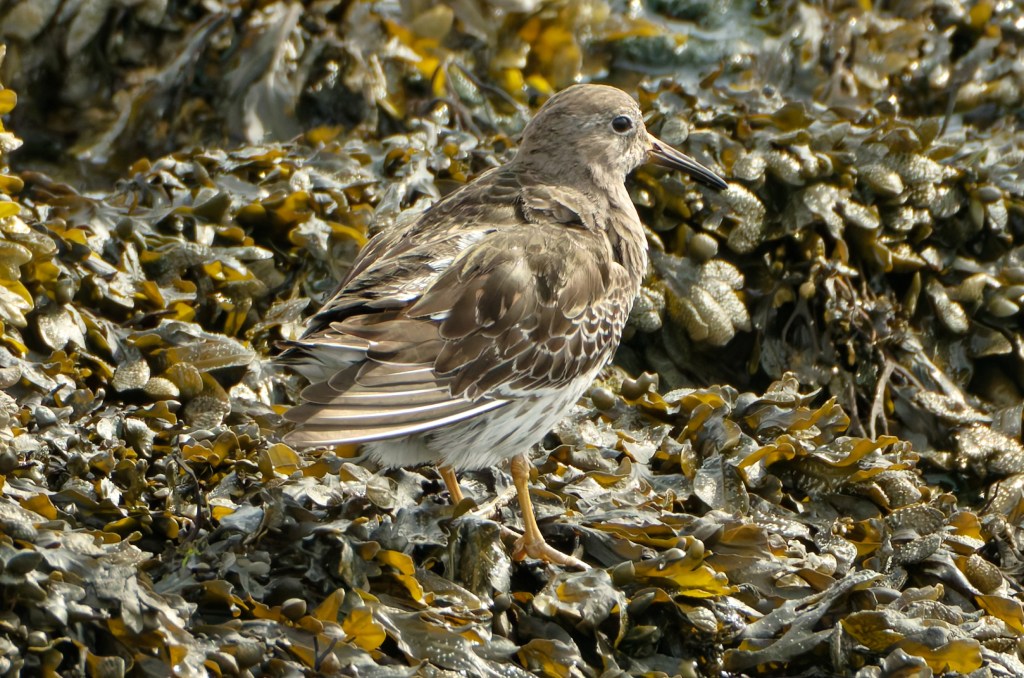
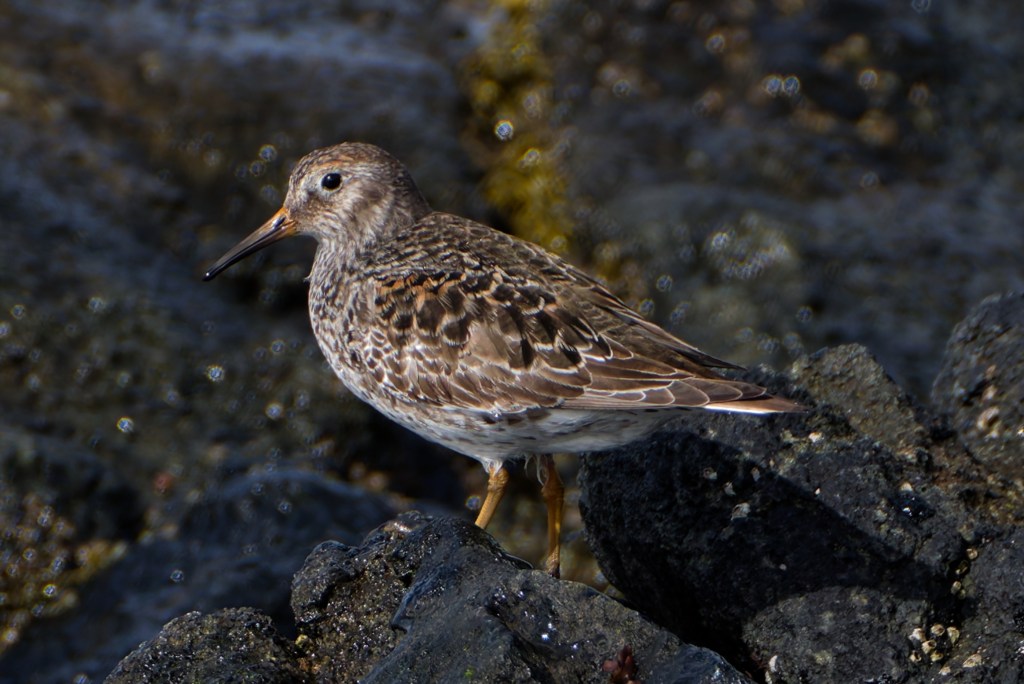
We moved along, finding Turnstones, and then, oh joy, Purple Sandpipers. It was almost high tide by now but the Purple Sands were still foraging.

Summers et al. investigated the diet of these birds. At high tide, they feed on Kelp Fly up in banks of drying weed, and eat small shellfish when the water is lower and more of the shore accessible. Females have longer bills which allow them to take larger shellfish, Summers et al. referring to this as sexual size dimorphism.

According to the BTO, Purple Sandpipers do not breed regularly in the UK; their data for 2013-2017 has one pair breeding in northern Scotland, with of the order of ten thousand birds spending the winter with us.

Summers et al. also studied Purple Sandpiper migration making use of tracking devices. This seemed interesting:

“Purple Sandpipers winter at relatively high latitudes compared to other waders. It is suspected that the majority that winter in Britain and Ireland originate from Canada, but there is no primary evidence of their breeding grounds and migratory routes. These birds, characterised by their long bills, start to arrive in Britain and Ireland in late October/early November, after completing their post-nuptial moult at an unknown location. Fifty geolocators were attached to Purple Sandpipers in northern Scotland and southwest Ireland and we established for the first time their Canadian origin (Baffin Island and Devon Island), migration routes and post-nuptial moulting areas. Spring departure from Scotland and Ireland took place mainly in late May, followed by staging in Iceland and/or southwest Greenland before reaching the breeding grounds. Those that staged in Iceland departed earlier than those that flew directly to Greenland. Post-nuptial moulting areas were in southern Baffin Island, northern Quebec/Labrador (the Hudson Strait), and southwest Greenland. Migration from Baffin Island and Labrador took place during late October – early November, and during mid to late December from Greenland, usually in a single trans-Atlantic flight. Therefore, this migration was scheduled at a time when most other wader species are already on their wintering grounds. No birds staged in Iceland on the return trip. The flight from Baffin Island to Scotland and Ireland was accomplished in about 2.5 days at an average speed of about 1400 km per day. Freezing of coastal waters may be the reason for the eventual departure from the Hudson Strait. The more northerly route via Iceland, taken in spring by most birds, and the more southerly route in early winter were associated with seasonal shifts in the Atlantic low pressure systems (depressions) whose anti-clockwise wind-flows would have assisted flights.”

This material comes from an open access journal and the title page features a charming pencil sketch of Purple Sandpipers on the wing.

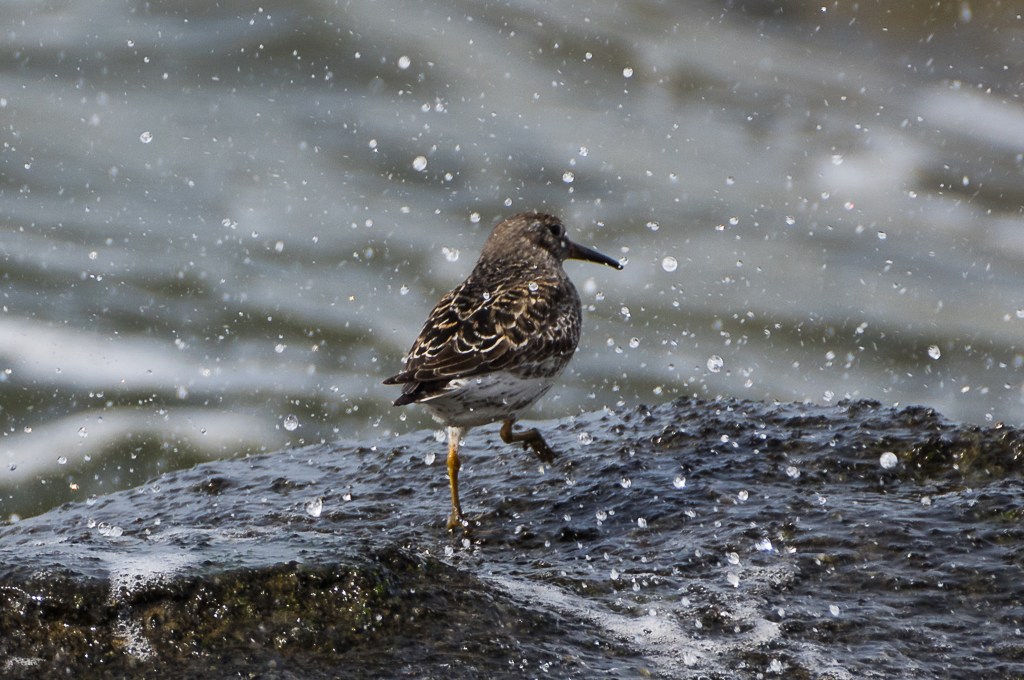
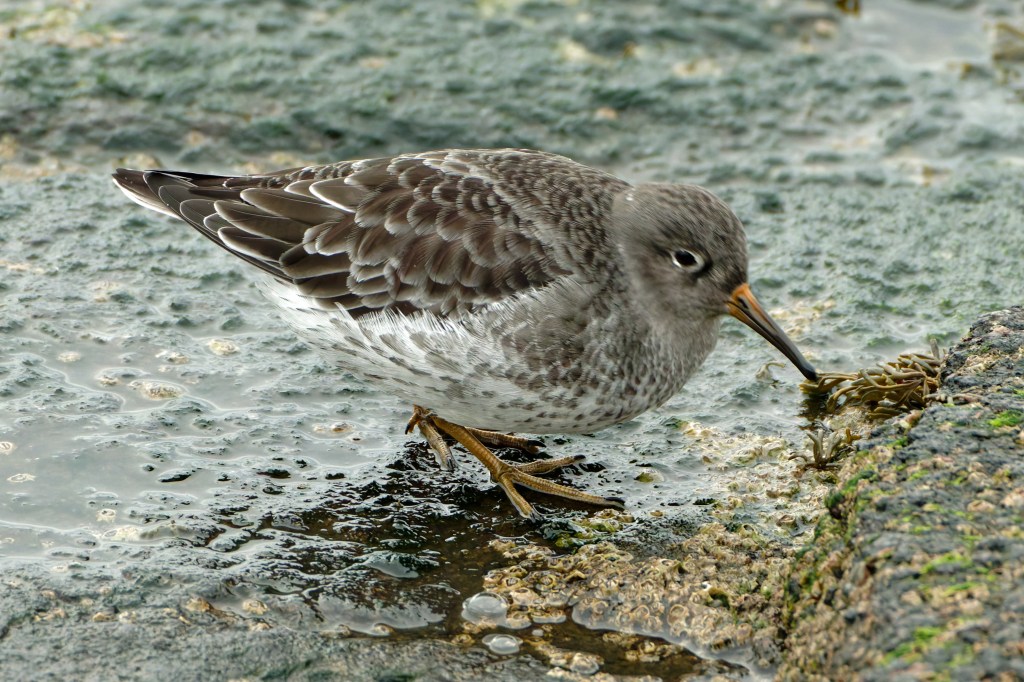
The birds do not look remotely purple in the strong morning light but a greyer sky and lower colour temperature bring out the effect for which they are named.

This image from Troon in early May shows a bird starting to develop some chestnut colour in the plumage below the neck in preparation for the long flight north and breeding.

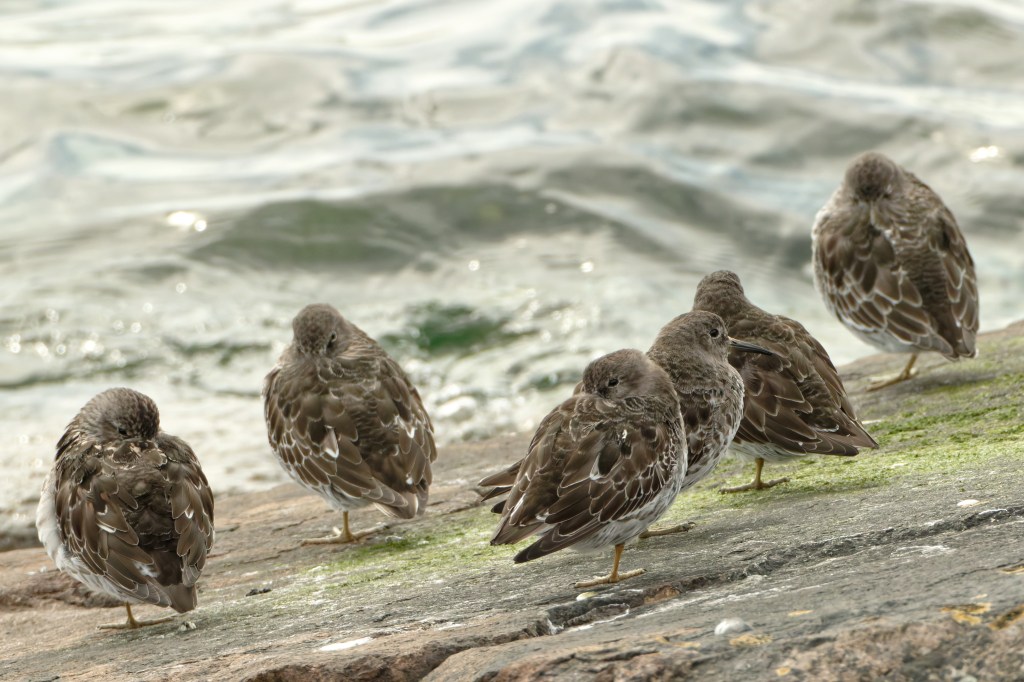
At the highest point in the tide in Dunoon, we found birds in repose.

The light had gone by now and we headed back to the ferry.  It had been a very enjoyable and productive morning. Perhaps there would be dolphins to see on the return trip? Alas, there were not, but the Purple Sands had delighted and now there was enough material for a post. Yah-roo!

Pied Wagtails

Backwoodsman is finding the cheerful spring weather to be a poor fit with events in the wider world; writing has not seemed like a worthwhile activity. It’s a bit like farting in a hurricane (“so what’s new?” you ask). For example, Backwoodsman had the misfortune to watch a speech made by the PM to an audience of captive NHS workers (Thursday 13th March), televised by the BBC. In full-on call-me-Keir mode, the man once described by Alexei Sayle as “a fatberg blocking the possibility of making the world a better place” explained how all would be swept aside, or bleed on the altar of growth. Here is the background to Backwoodsman’s interest as reported by the BBC under the headline “Charities accuse Starmer of misleading spider claims”:

“Writing in the Daily Telegraph on Thursday, Sir Keir said the project was to “build more than 15,000 new homes” with a “17-minute commute into central London”. He wrote that the previous government had bought 125 hectares of former industrial land and quarries to build homes on, but the plan had been “blocked by Natural England” due to “the discovery of a colony of ‘distinguished jumping spiders'”. He added: “It’s nonsense. And we’ll stop it.” In a speech in Hull later the same day, Sir Keir appeared to refer to Ebbsfleet again, saying that “jumping spiders” had stopped “an entire new town”. He added: “I’ve not made that example up, it’s where we’ve got to.””

So OK, it’s not ethnic cleansing in Gaza, or the US and Russia carving up the European continent to suit themselves but it was unpleasant to see an elected Labour  leader displaying such a loathsome attitude.  “Are you tories in disguise, are you tories in disguise?” they chorus from the terraces.

In an attempt to recover from all this gloom, Backwoodsman has been thinking of a bird which brings cheer in the most miserable of circumstances, for example, Backwoodsman’s walk to the office in his former employ. This took in the decaying shopping centre of Glasgow, leading to the bridge which takes Cathedral Street over Queen Street station. And here is the view of the last two hundred metres; please note the presence of Best Kebab in the foreground.

At lunchtime, this outlet would sell foul-smelling food to the University’s students; Backwoodsman shudders to think what went on in its premises as night came, but in the morning, it would occasionally resound with something that sounded like Rai music (as celebrated in Patrice Leconte’s 1990 film The Hairdresser’s Husband), and would usually be patrolled by a Pied Wagtail. There in a bob and a dart and a flash was something to improve the start of the working day.

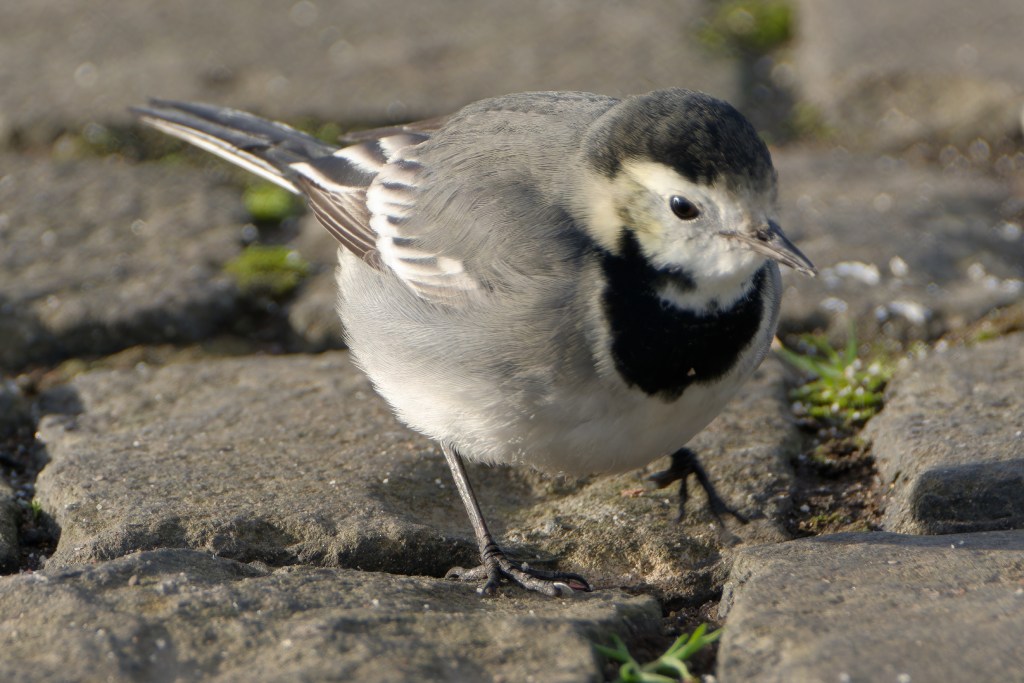
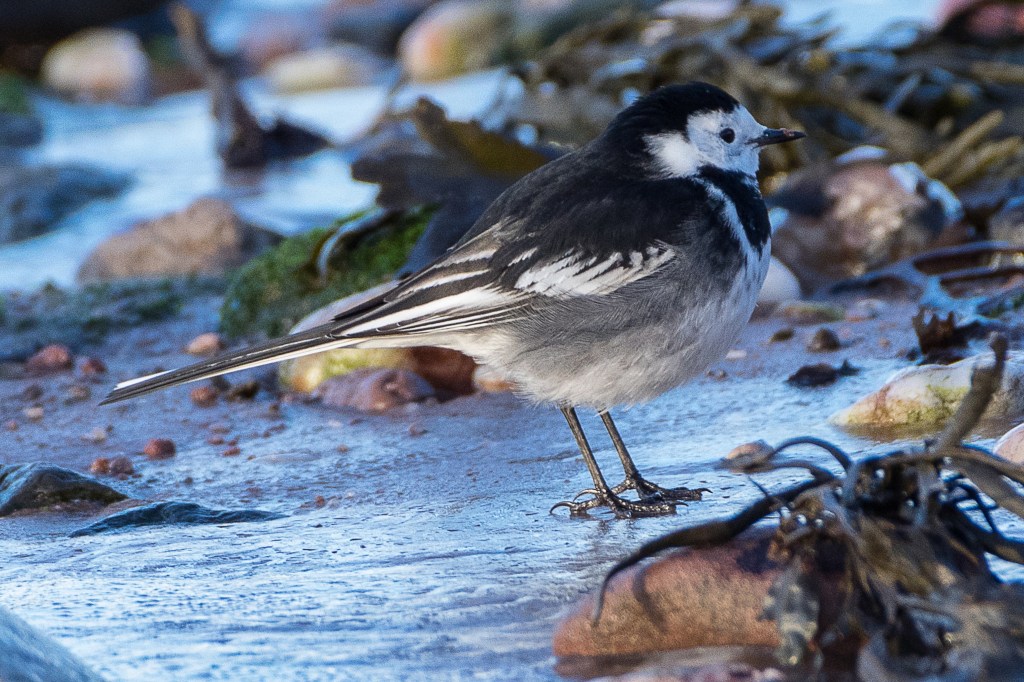
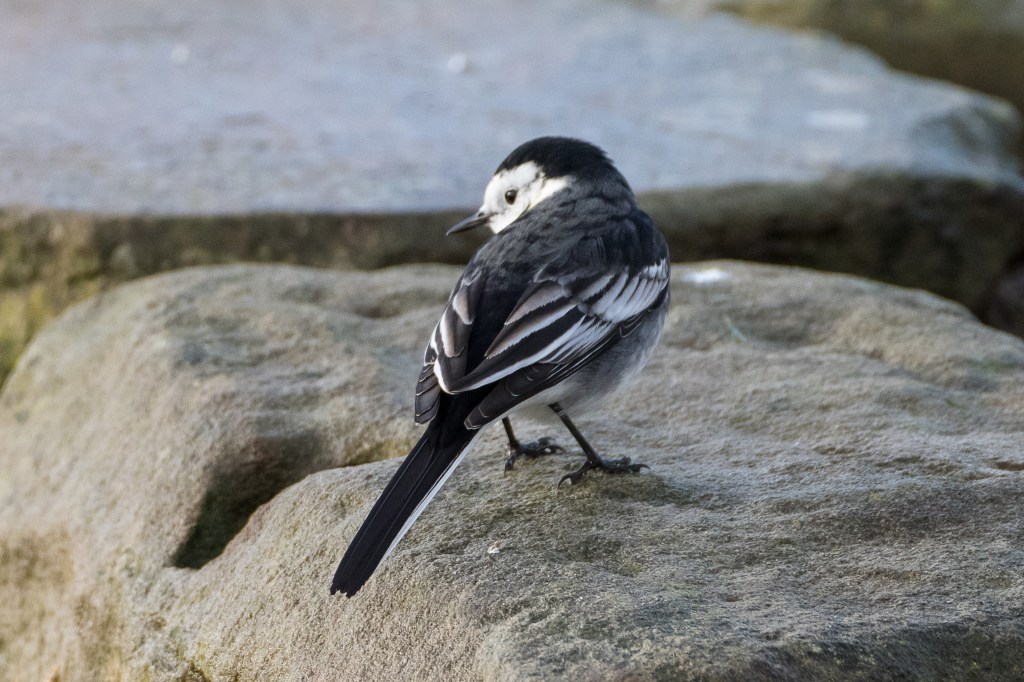
Pied Wagtails are just great, aren’t they? According to the BTO, they only last a couple of years on average but they pack a lot in, sometimes in hostile environments. There are quite a lot of them (half-a-million pairs) and their numbers seem to be growing. They are insectivores but are adaptable in their diets, a hallmark of a species which succeeds in an urban setting.

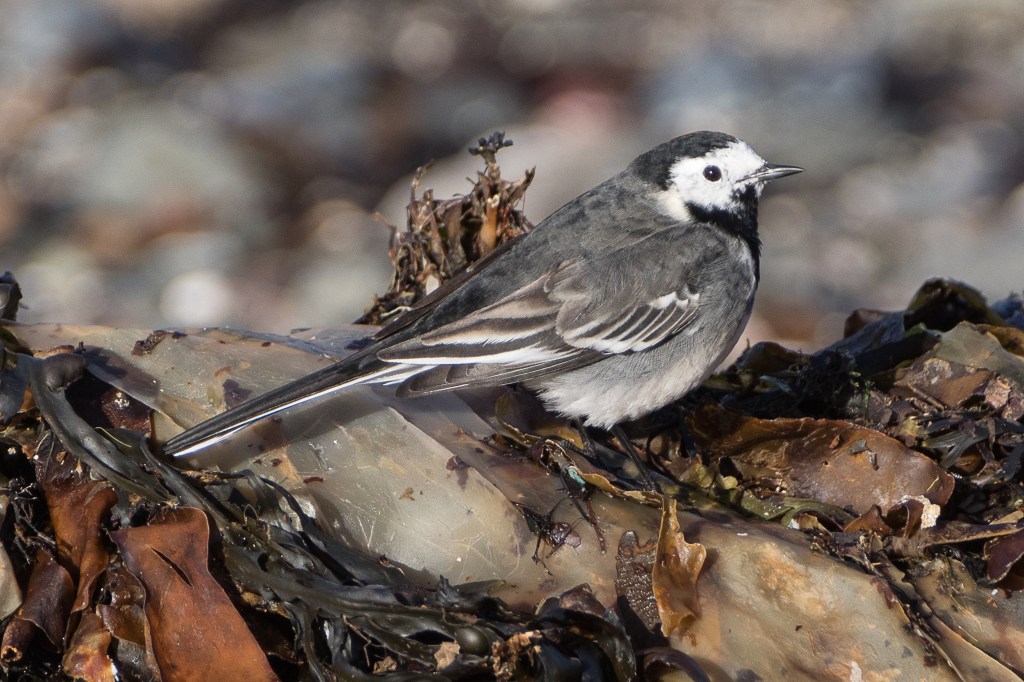
It is unusual not to see them on the Ayrshire beaches, particularly when the tide has rolled up a good crop of weed. It doesn’t take the insects long to colonise the decaying material and then there is food for all, Wagtails, Turnstones, Corvids and Starlings alike. Backwoodsman’s best Wagtail sighting was at Stevenston one recent winter afternoon when ten individuals could be seen in as many metres of beach. We used to see them from the windows of our flat; they would patrol the stonework of the neighbouring terrace. There is a territory on the Glasgow Harbour, and several on the new North Bridge estate (running routes) – how many could there be across the whole city?

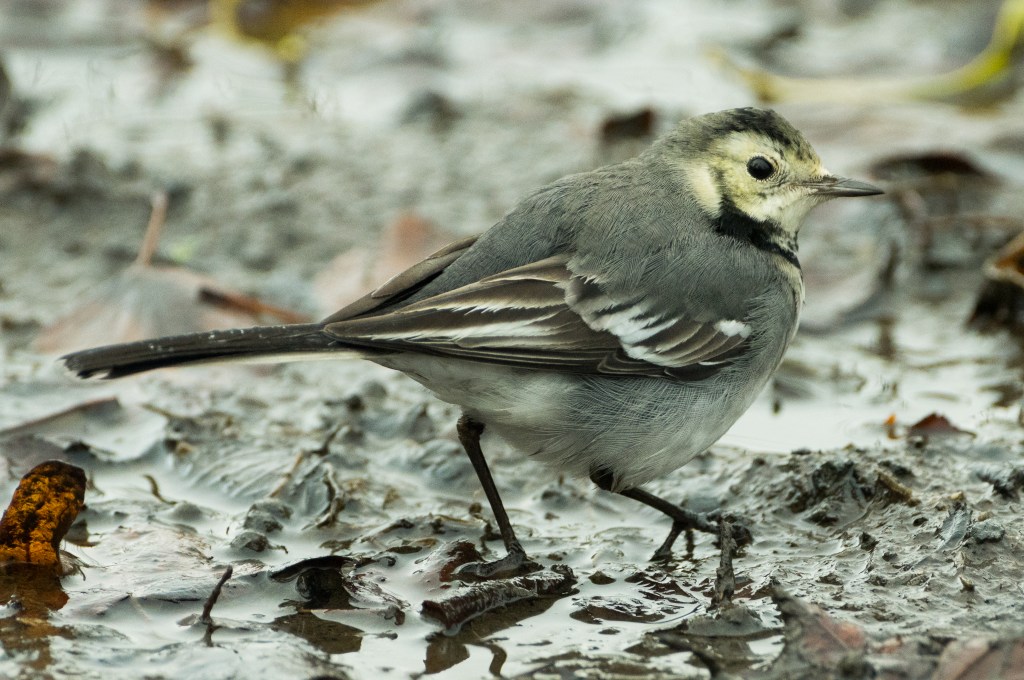
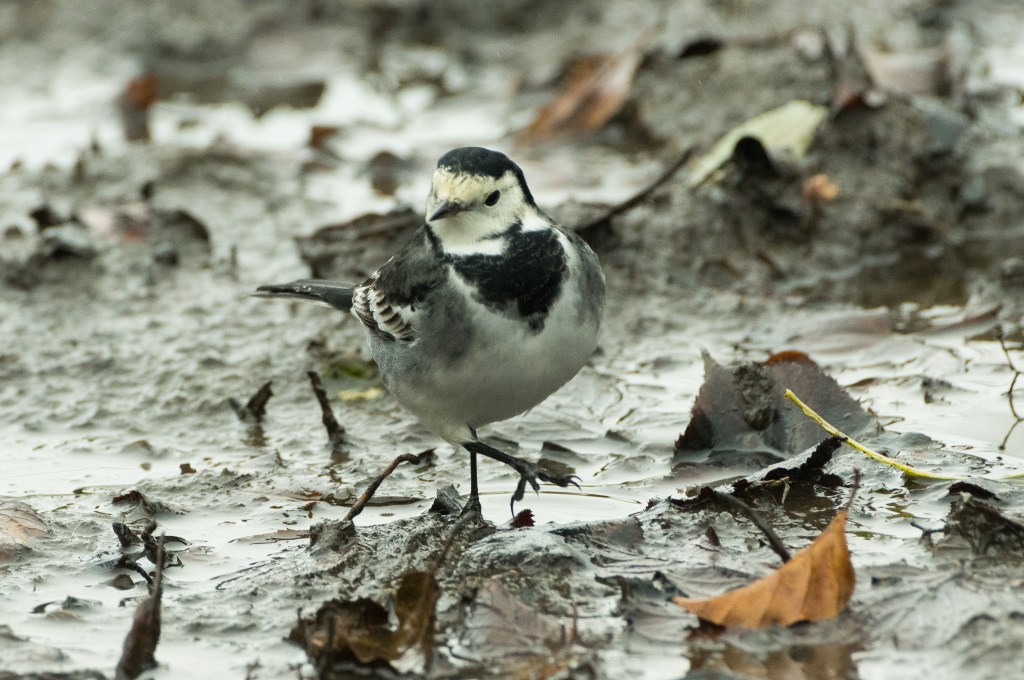
Backwoodsman finds them hard to photograph; they seem to vibrate, requiring a high shutter speed and then we get into all the usual boring stuff about high ISO, wide aperture and low depth of field. But every now and again, you get one when it is busy and neither looking nor moving. Here are two birds, one juvenile and one more mature adult, in the mini-Somme created by grazing stock at RSPB Baron’s Haugh in January. The juvenile has more yellow-cream, the adult more black-and-white.

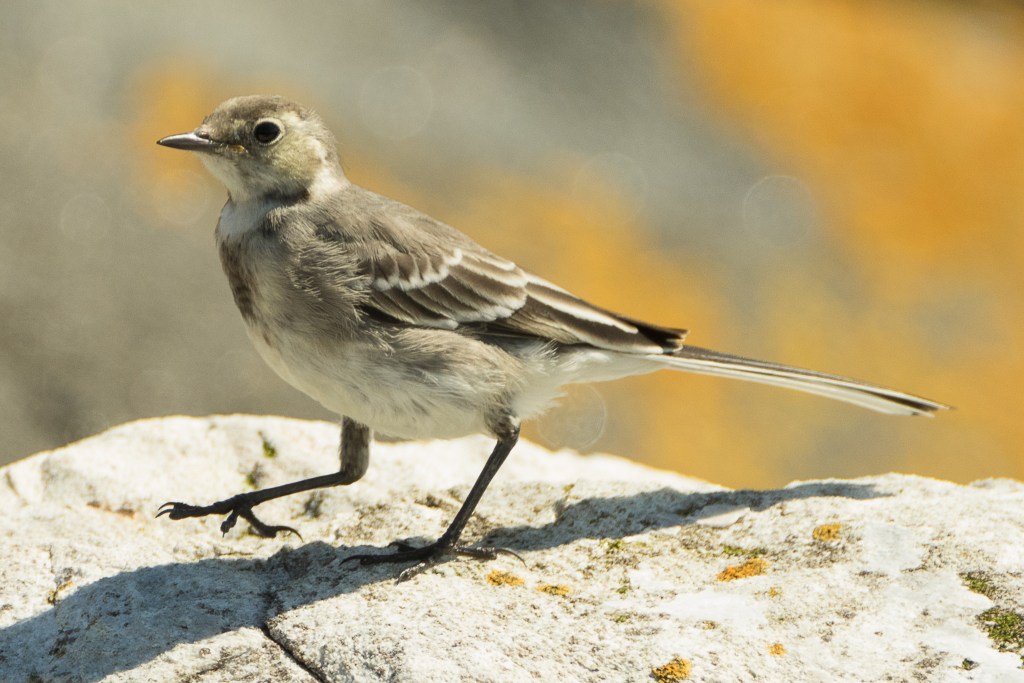
First year or fresh birds are very pale; we found some at Troon. They were quite hard to see against the rocks of the coastal defences.

One almost gave Backwoodsman the shot he has always wanted of an adult, the one where the tail feathers are fanned in flight.

After many fruitless attempts in which a nicely focussed bird executes a vertical take-off and leaves the frame empty, Backwoodsman has abandoned this project.

But Pied Wagtails will continue to provide joy, wherever and whenever. They are always worth a look, and a second.  

At the Claypits LNR

Backwoodsman feels that there has been little good light for months now. As he emerges blinking from the trees, fetched out by the longer days, he thinks back to a brilliant day just before Christmas when he visited the Claypits LNR on a mission – to find and photograph the Water Rail.

This visit had been thought about for months, ever since we saw a Water Rail on the Forth and Clyde Canal near Stockingfield Junction one Sunday morning. There was no camera to hand so Backwoodsman could only stand and gape as a Water Rail swam across the canal from the towpath side, emerged into the rushes on the far bank and began to forage in full view. All was serene for a few minutes until it was spotted by one of the local Moorhens; hostilities broke out immediately and the Water Rail was pursued down the canal towards the bridge. Our walk continued through the Claypits LNR where we found a couple of birdwatchers with cameras. We lingered too long and they were onto us: “We’ve got a Water Rail, have you seen it?” and so on. We told them about our canal sighting but they so weren’t listening. We left and Backwoodsman resolved to go back on a very bright, cold and midweek day when the reserve might be less contested.

On December 19th 2024, Backwoodsman headed off to the Claypits LNR. The plan was spend an hour or two on the reserve and then jump on a number 7 bus up to Possil Marsh to look for waterfowl.  It was a brilliant Thursday morning and absolutely freezing. Backwoodsman arrived at the reserve and crossed paths with a young woman on a mobility scooter; she had seen the bird but not for long enough to get it in focus and capture an image.
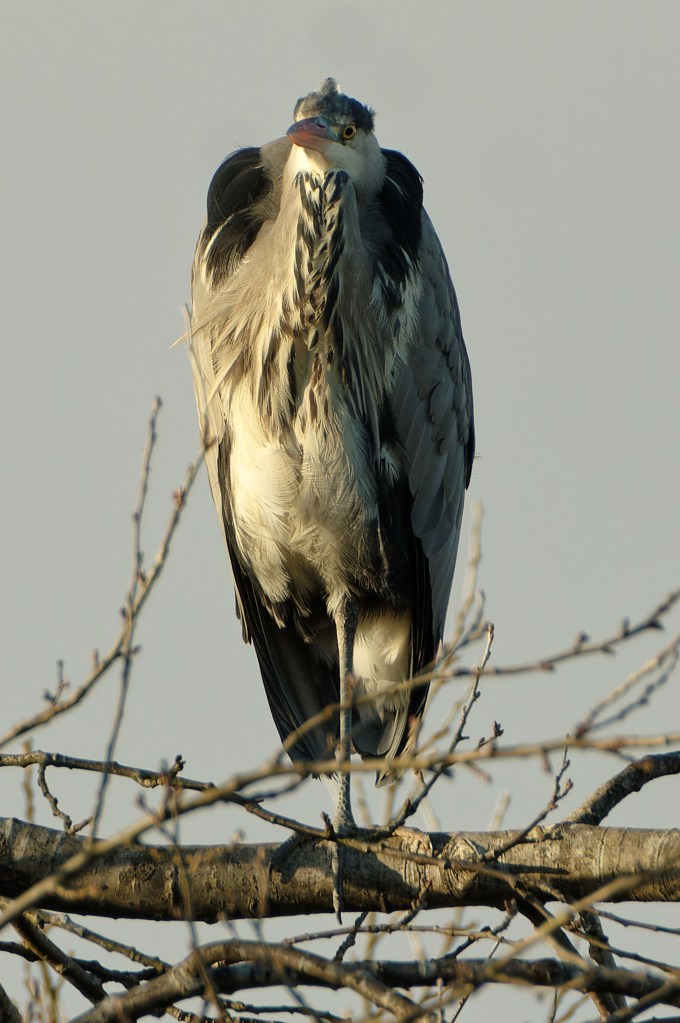
Backwoodsman took up a position on the small viewing platform which overlooks the reedy inlet from the canal. The platform looks a bit like a Juliet balcony; anyone standing on it definitely looms, so stillness and silence are essential if anything lurking in the reeds is likely to feel confident enough to emerge for very long. A Grey Heron looked down on Backwoodsman’s folly from its perch across the canal.

Backwoodsman watched; the sun went behind some cloud, the wind came up the canal like a swinging blade and the temperature dropped. Nothing much happened until a long string of bubbles appeared in the small patch of open water Backwoodsman was watching; then there were swirls in the water of the kind that a large Carp would make. A long brown shape with a tail broke surface for a second or two, and was gone. Both Otters and Mink are present in the area. Another time perhaps.

There was a growing clamour as two people in camo and woolly hats came into view. They were shouting, and in seconds, Backwoodsman found himself the filling in a numpty sandwich. Backwoodsman was interrogated; was he from the Clyde Bird Group, or Nature Scot, or the Bearsden Bird Botherers? They were loud, they were moving a lot and they were insufferable. Backwoodsman headed off on a circuit of the reserve.

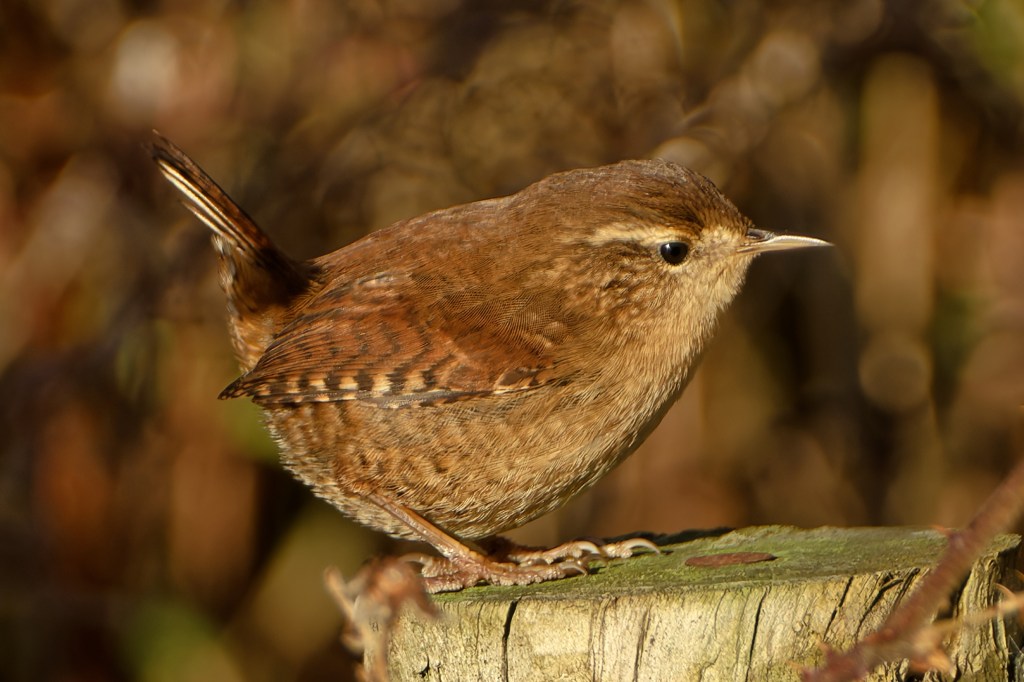
The numpties had gone when Backwoodsman returned and all was quiet again, save for the calls of a pair of Wrens. They sped through, but not before one had posed attractively in good light.

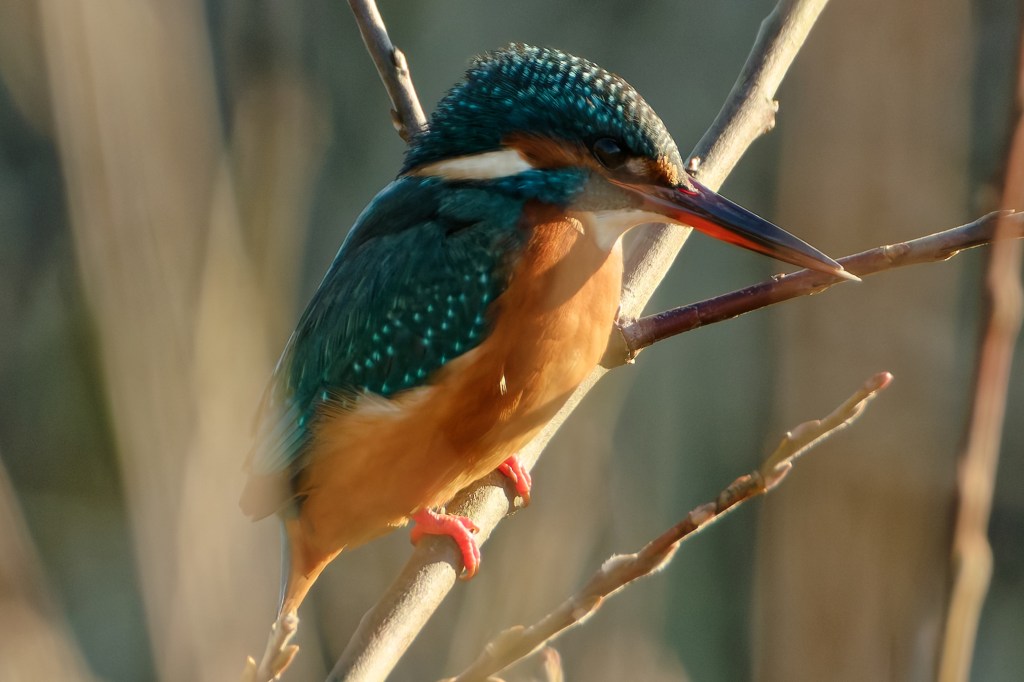
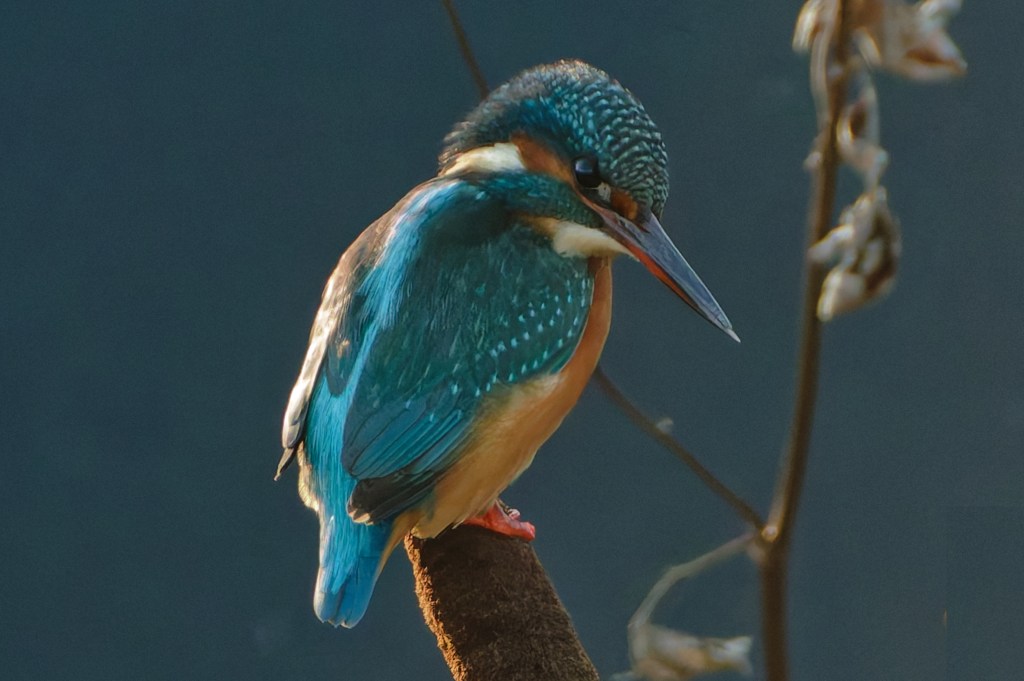
Then something rather wonderful happened; a female Kingfisher visited, and stayed for quite a long time. These are Backwoodsman’s best images of this species; good light striking the birds really brings the semi-iridescence to life. The bird visited a number of perches; Backwoodsman likes the use it made of the Great Reedmace.

Backwoodsman was very cold by now and started to head for home. While pausing by the inlet for a last look, he was overtaken by a couple of wild-looking chaps hurling whole slices of bread into the inlet. “Aye son”, they shouted, “have you seen the heron?” Backwoodsman was able to tell them that their quarry had been perching in a tree earlier that morning but had flown off. “Son, son”, one shouted, “there’s a wee Robin behind you.”

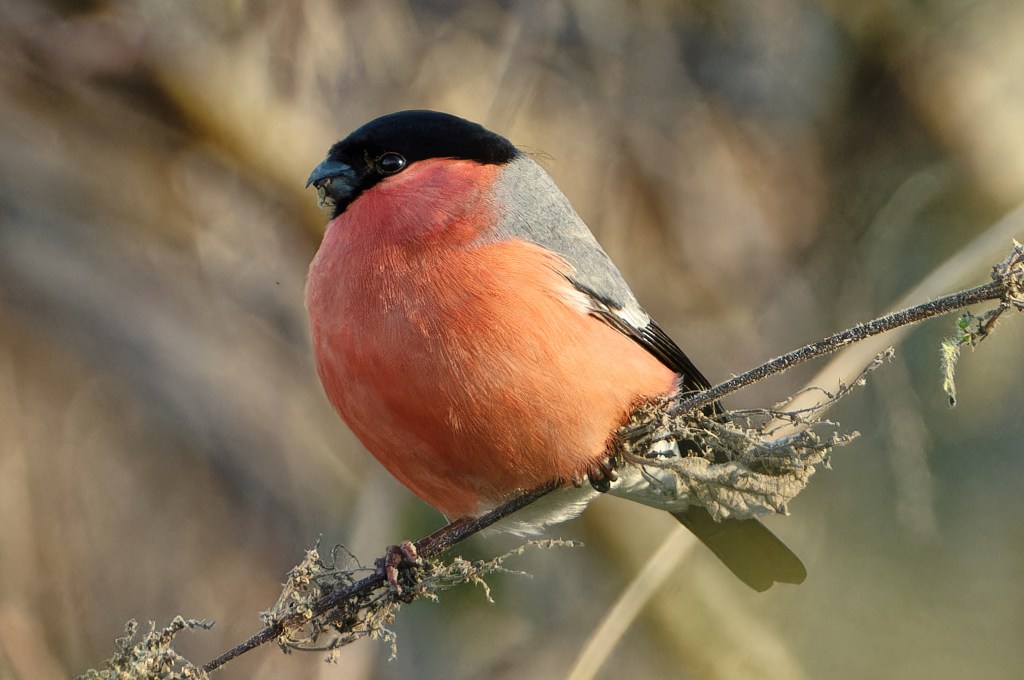
Backwoodsman turned to see two male Bullfinches in good light, so here is one of them. After a brief discussion of the differences between Bullfinches and Robins, the three of us agreed that it was pure freezing and time for home and we went our separate ways.

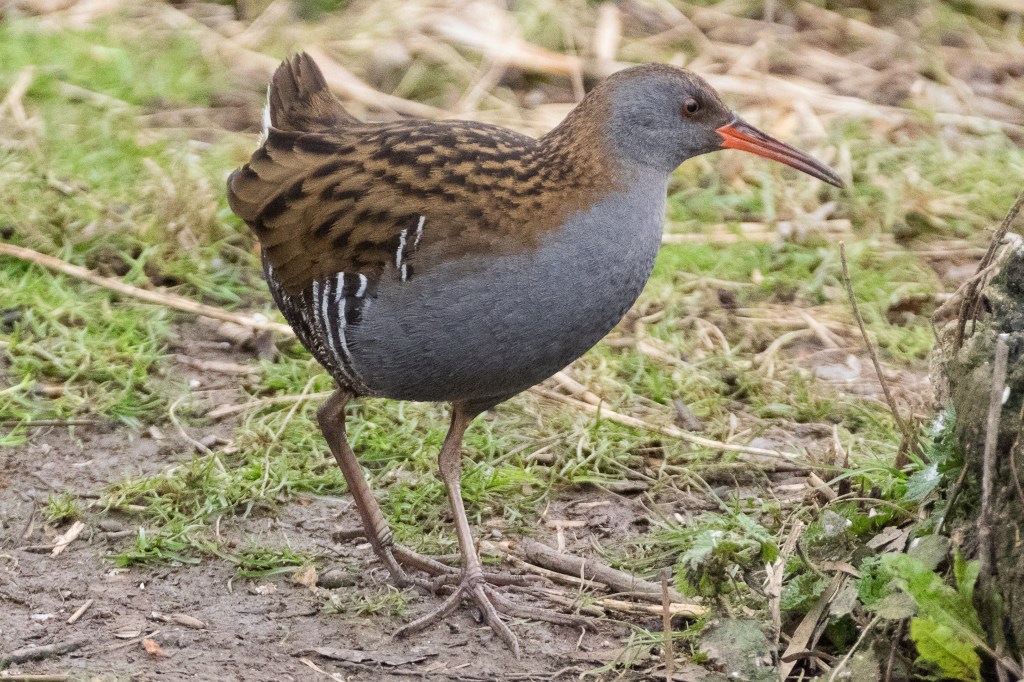
So no Water Rails then? Well not on this visit. As it seems unlikely that one will be seen and photographed in north Glasgow by this observer, Backwoodsman will share some images prepared on a visit to Slimbridge.
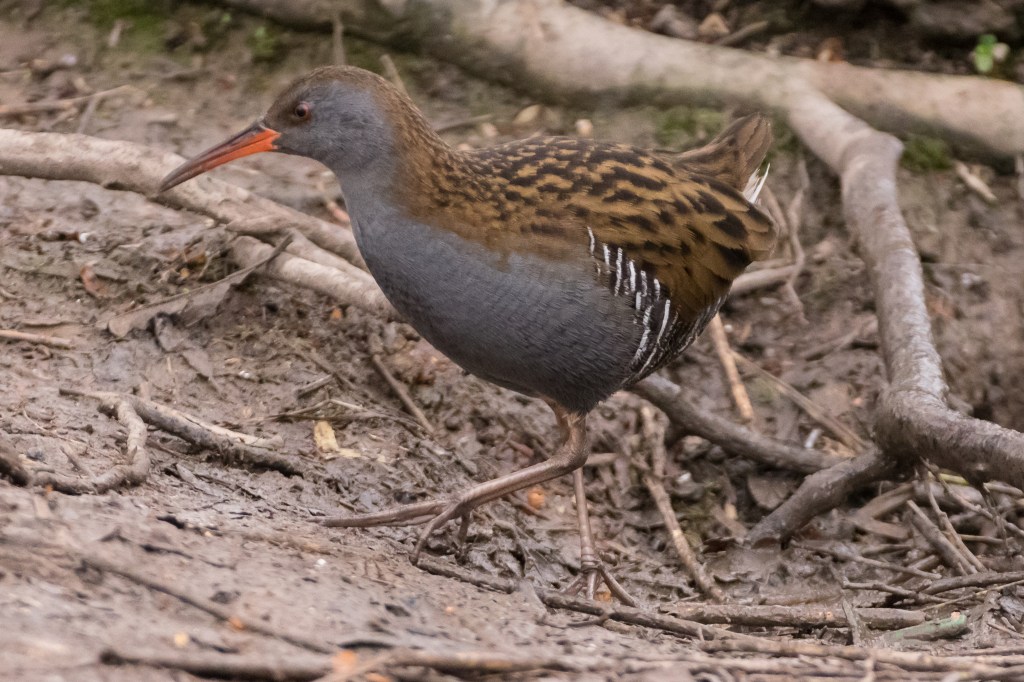
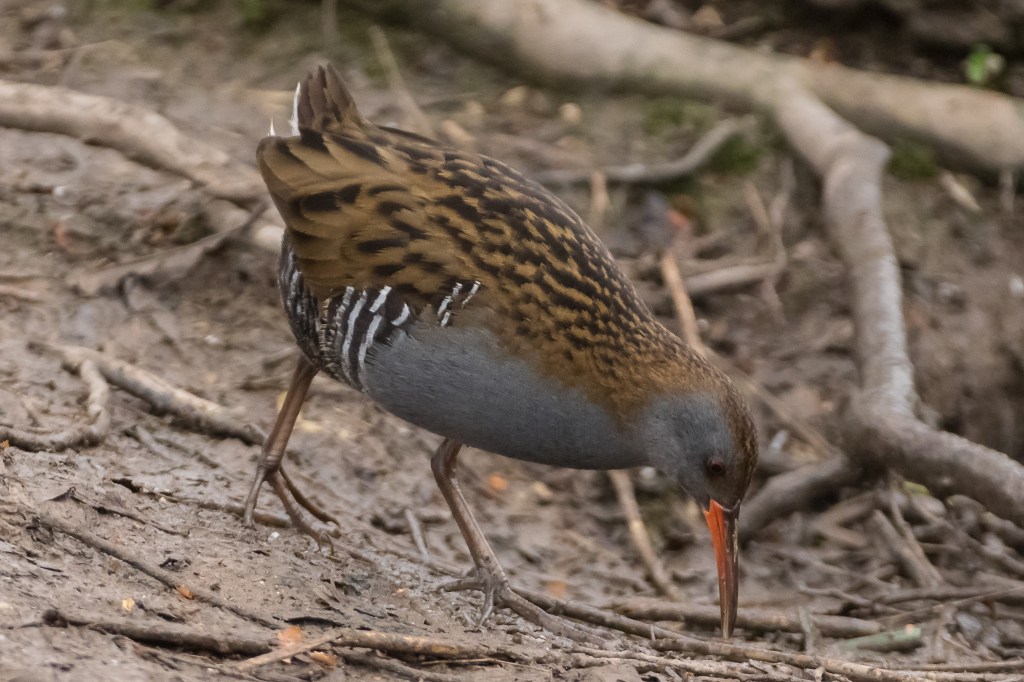
The Water Rail is really very striking, with the upper parts superbly camouflaged for foraging in reedbeds. This video has a bird foraging, and calling or “sharming” as it is known according to the BTO. The Wikipedia article cited at the top of this post is a recommended read: it is a good one.
It is hard to know how things will turn out for this bird on the Claypits LNR. Every time Backwoodsman runs through the Claypits site, he sees someone looming conspicuously by the inlet. Presumably they are after the same bird we saw near Stockingfield Junction, but it would be very exciting to think that there could be two individuals in this area of north Glasgow.

Swallows

In her first novel Oranges are not the only Fruit published in 1985, Jeanette Winterson described the strange upbringing of a young girl beset by an oddly religious parent. As if this were not challenge enough, she is forced to learn cross stitch at school. She produces a sampler bearing the following legend, from Jeremiah (8:20):

THE SUMMER IS ENDED AND WE ARE NOT YET SAVED

Academics huddled in the trenches and waiting for the whistles to blow and send them over the top to face the machine-gunned demands of wonks, and all those students with mennl-elf, will recognise the peculiar melancholy brought on by the second half of September. June came and you were confident of getting those calculations run, making some starting materials for some project students to do wonderful things with in the autumn, writing and submitting that grant, preparing all your classes and supporting materials in good time and order, and finishing those four star papers. But no-one would ever leave you alone for more than half–a-day at a time…and now ” The summer is ended etc.” And to make matters worse, many of the birds of summer are heading south, and it will be a while before wintering birds reach us.

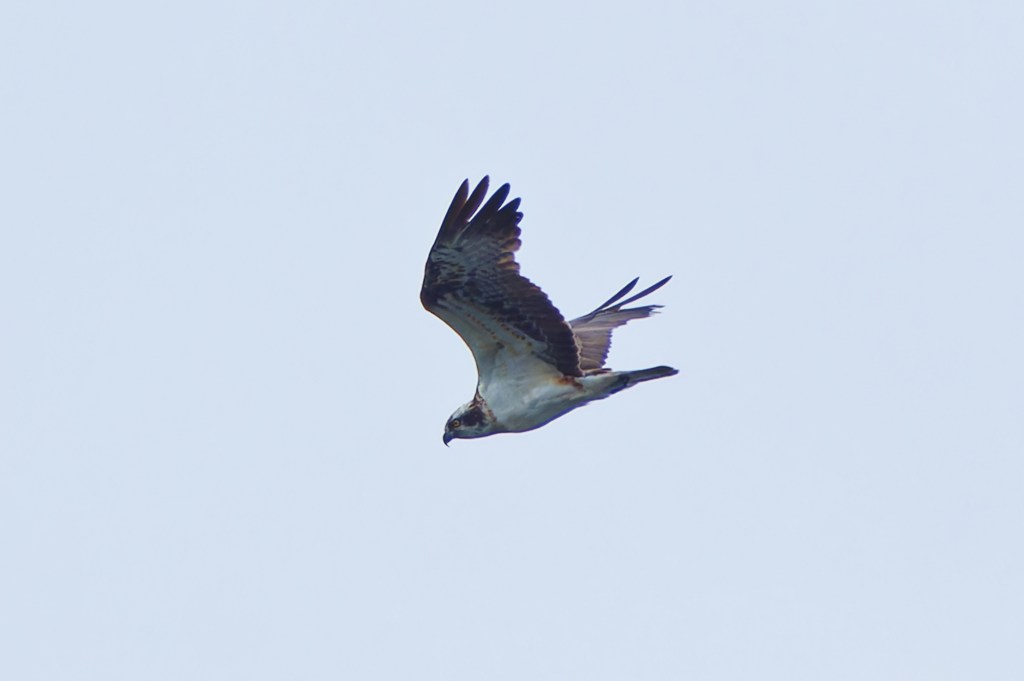
Backwoodsman has probably had his last sight of an Osprey over the Clyde estuary for this season (end of July in this case), and it seems most likely that the Hirundines will have left us too by the time this post is made.

Very unusually, Backwoodsman cannot remember his first sight of a European Barn Swallow with any confidence, which is a little disturbing. There are half memories of birds passing across the surfaces of school cricket fields, fast enough to set the dry grass of the outfield aflame, but the details which usually anchor these memories cannot be found. Instead, it was an enamel badge which provided Backwoodsman’s first recoverable memories of the Swallow.

A very small Backwoodsman wore a dark green anorak which was covered in enamel badges; he didn’t really care what they were and he lacked affiliation with any of the organisations represented upon them, but if he liked the badge, that was it. They could have been anything; a nice bit of enamel and it’s on there and worry about it later when you get quizzed by grown-ups. But this one is not to be forgotten; what a piece of design! The bird is styled superbly and the sunburst echoes the Kyokujitsu-ki  or Rising Sun Flag of Japan (another great bit of graphic design) persuasively. Details of the travel organisation which had these badges made are not to be found by Backwoodsman, alas.

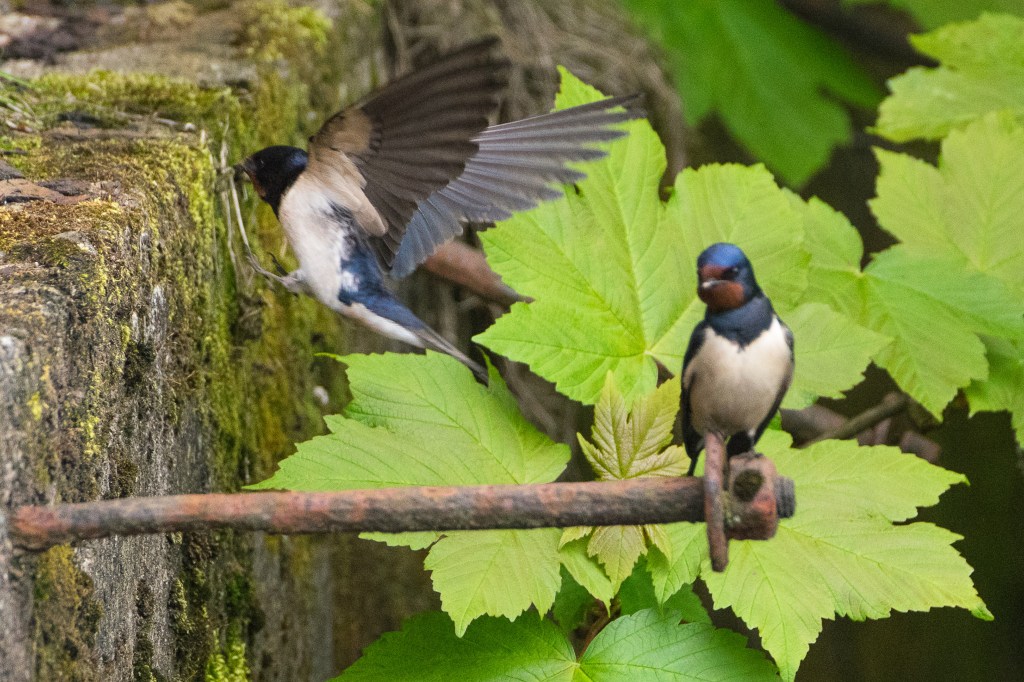
The BTO tells us that “Swallows must be amongst the most popular birds – their arrival each spring in the northern hemisphere presages the onset of summer. Swallows are easily recognised with their slender bodies, long pointed wings and forked tails; martins tend to have much less deeply forked tails. While the deeply forked tails may help their manoeuverability in pursuing aerial insects, in many species they are also used as a signal of male quality, those who can grow longer, and importantly symmetrical, streamers being the most favoured by the females.”

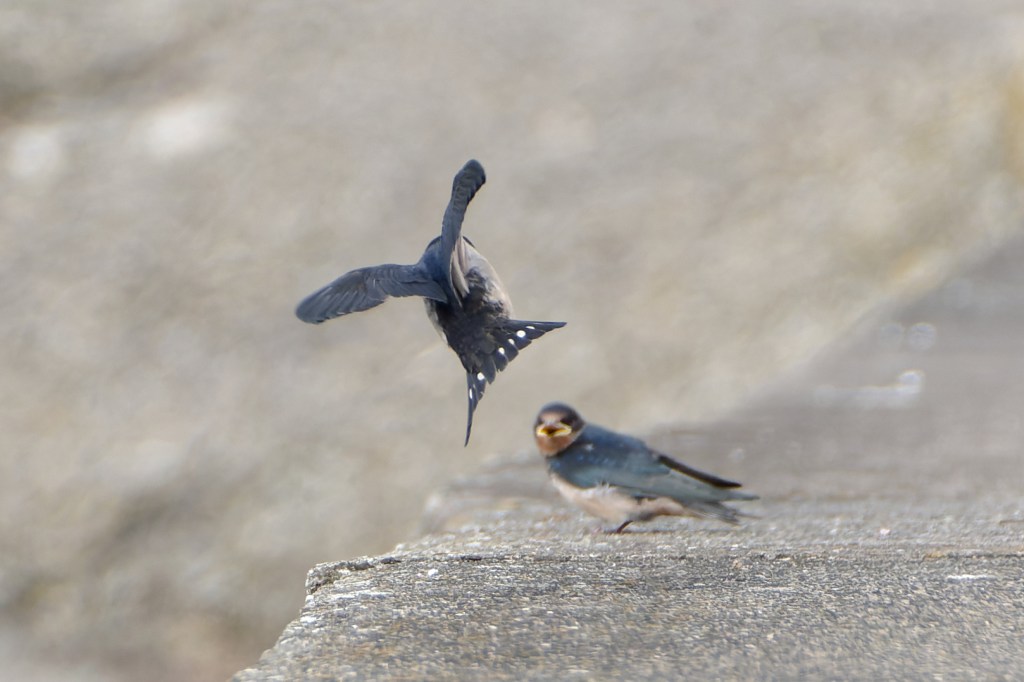
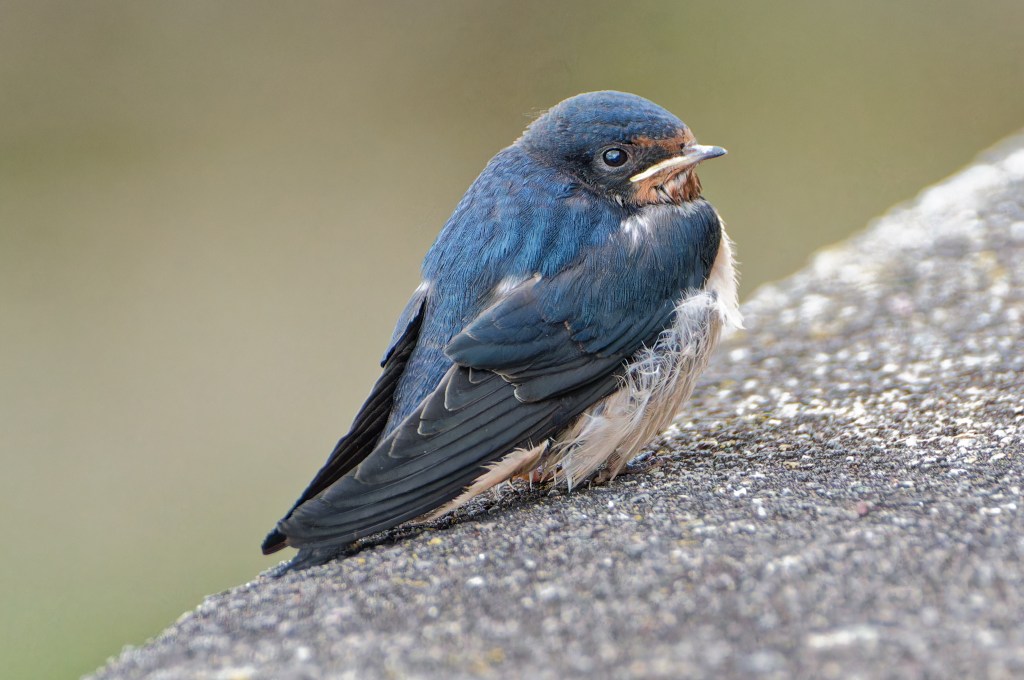
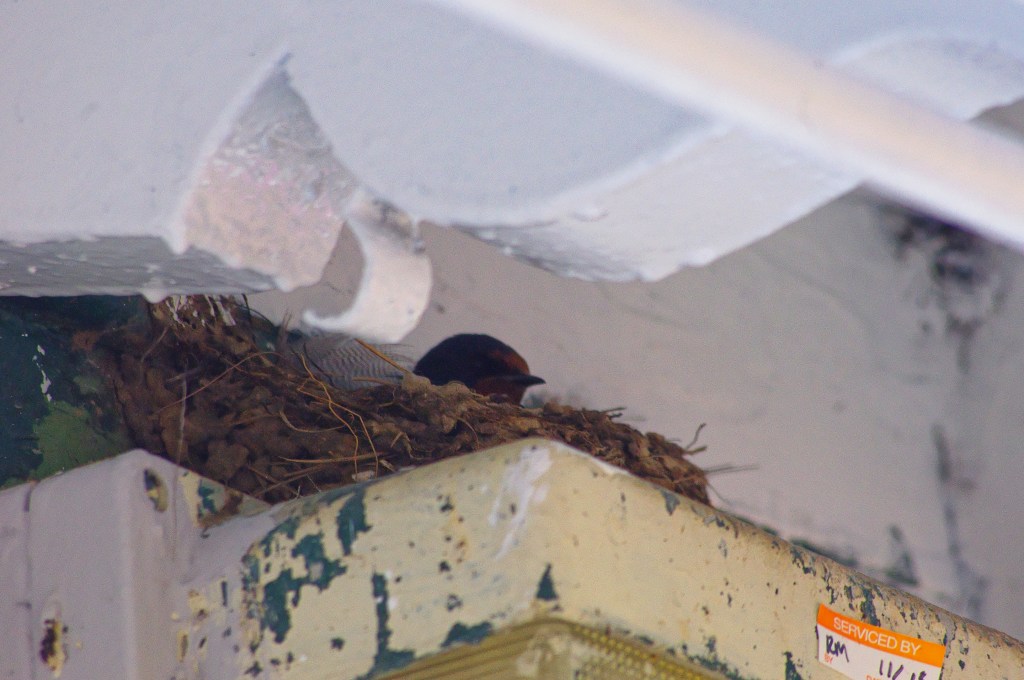
Swallows like the sawmill at Cardross and the place where the Geilston Burn spills out over the mud. Backwoodsman suspects that they make nests in the big (barn-like) shed at the western end of the sawmill yard. On a recent visit, Backwoodsman found a group of Swallows of various vintages. The young ones still have the yellow “feed me” mask.

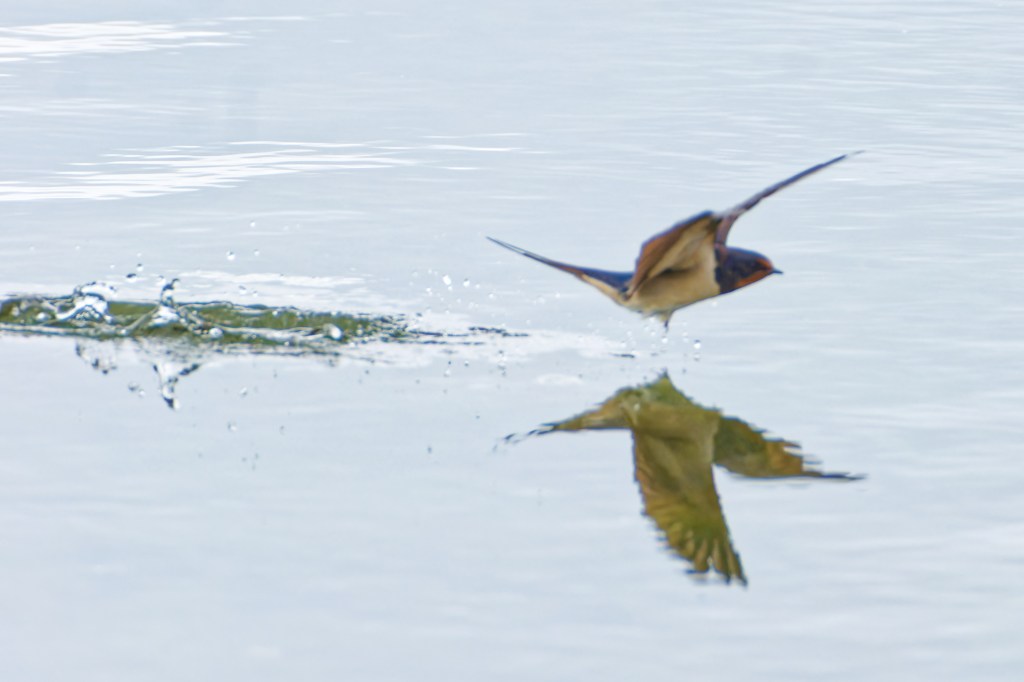
Backwoodsman attempted to track birds either taking insects from the surface of the burn, or drinking from the fresh water as it ran out into the estuary; it is hard to tell which. Better executions of these images would win competitions –  these would not.

We are told that the way to get good shots of fast-moving birds on the wing is to anticipate where they will be, pull a focus on that space, wait for the bird to enter and then fire. Of course, focussing on thin air is a challenge, so you have to find something solid at about about the right focal range (some ripples on the water in these cases) and hope for the best. As you need a fast shutter and therefore probably a wide aperture to keep the ISO down, your depth of field will be shallow and the scope for error almost unlimited. This is what you get, v1.0. Backwoodsman is a mere novice when it comes to birds on the wing.

Sometimes, the Swallows are still – they must get quite tired from all their “hawking“. Backwoodsman has failed to find a satisfactory definition of this term, though it is very widely used. Presumably it means to fly rapidly after prey and catch it on the wing? Swallow flight has been studied quantitatively using fast cameras and wind tunnels (and written up in an open access paper): there is something called the Strouhal number which relates wing beats and speed. The quantitative work has wingbeats around 7-8.5 Hz and speeds across the ground of up to 14 m s-1, or of the order of 30 mph in Rees-Mogg units. There is, of course, some infamous discussion about Swallow flight dynamics in Monty Python and the Holy Grail, which you will find here, and here.

Somewhat aspirationally perhaps, InterCity trains used to sport a swallow livery. This recollection got Backwoodsman thinking about the national rail system we used to have, and the fragmented thing we have now, and how the future of rail transport is being ransomed by HS2; the thoughts follow a depressing trajectory. No-one can revel in the national pickle that is HS2 but there is some amusement to be had from the situation. In the recent Panorama programme  HS2: The Railway that Blew Billions, Andrew Gilligan says (see 38:30-39:50) of Johnson, grand emperor of “levelling up”, “he quite liked big, stupid projects…of course, this was big and stupid to an extraordinary degree…”.

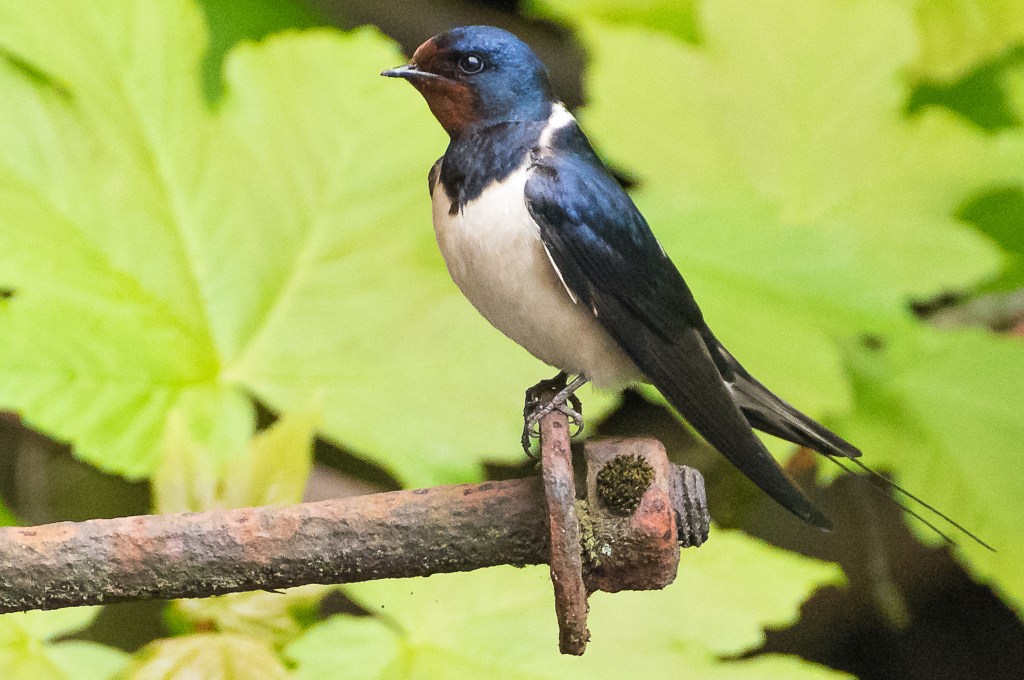
When Swallows do sit still in good light, their semi-iridescence can be enjoyed fully. There is a nice walk from Bishopbriggs towards Kirkintilloch along the Forth and Clyde Canal and it passes through an awkward space beneath the Hungryside Bridge, where your life may be taken by a weekend warrior on a bicycle. The bridge seems to be a Swallow nesting site and we were fortunate to find some birds resting. It was early May; presumably, they were busy building nests, or possibly looking after eggs. They look in really good condition.

Swallows are said to return to the places where they hatched and fledged; Crianlarich station has hosted nesting Swallows for as long as we have been visiting. They make nests on the tops of small pillars which are up close to the roof. Crianlarich station really isn’t busy and the Swallows will have hours without disturbance while they gorge themselves; there are always plenty of insects in the Highlands when the sun comes out. This image was taken in mid-June and the birds were definitely on eggs by then.

If Backwoodsman was a Swallow, he would head south through the UK while the weather was good, feeding up along the way, before starting on the long flight to South Africa. The EuroBirdPortal shows the Swallows clearing out of Europe almost completely around mid-November in 2023. The data for the UK is a bit confusing, but it is interesting to follow the timeline from the end of January, as the birds begin to show up on the Iberian peninsula, and then flood north and east through the rest of the landmass. Backwoodsman will be waiting.

Greenfinches

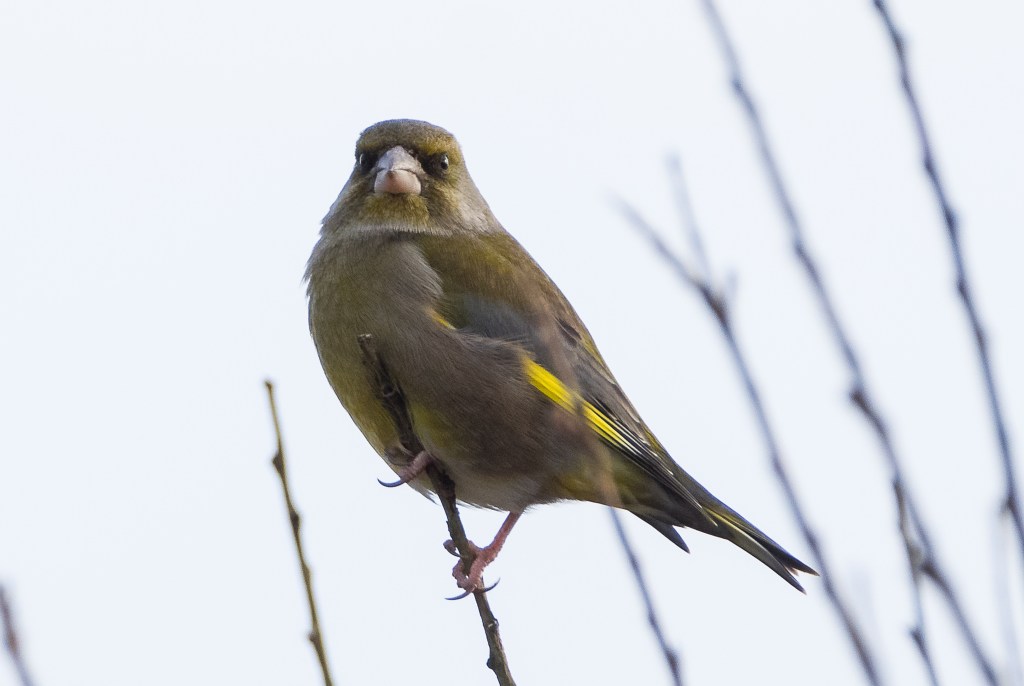
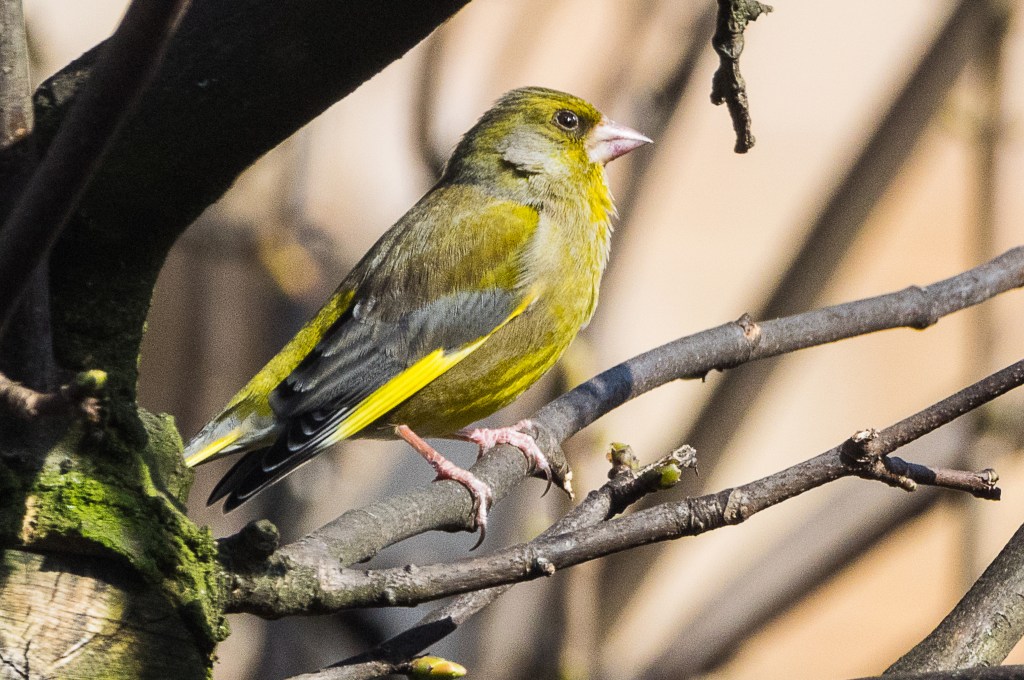
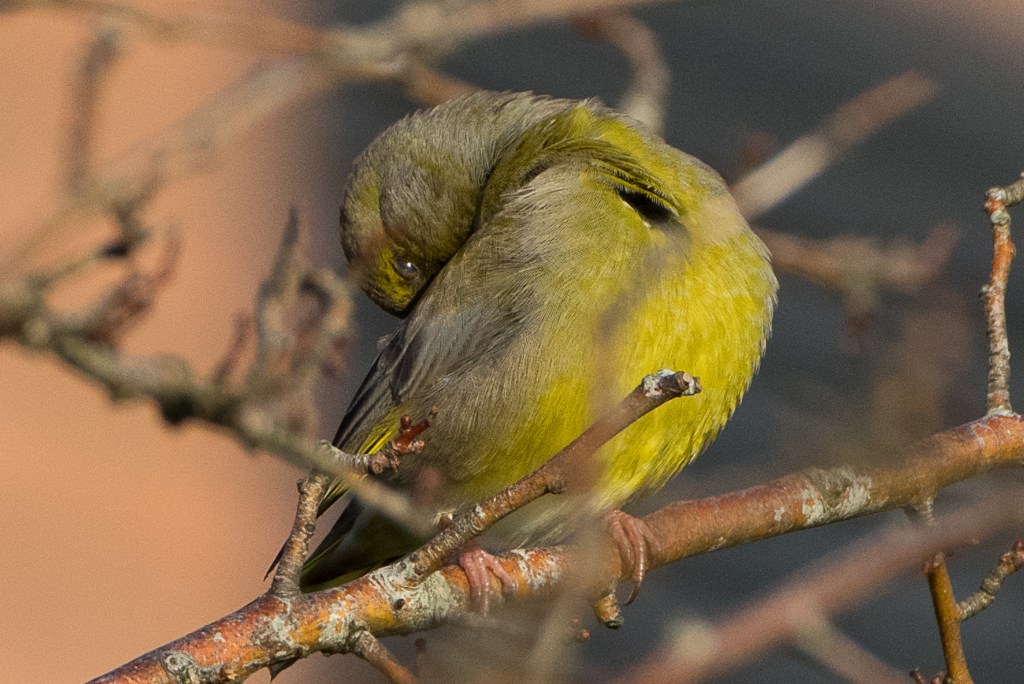
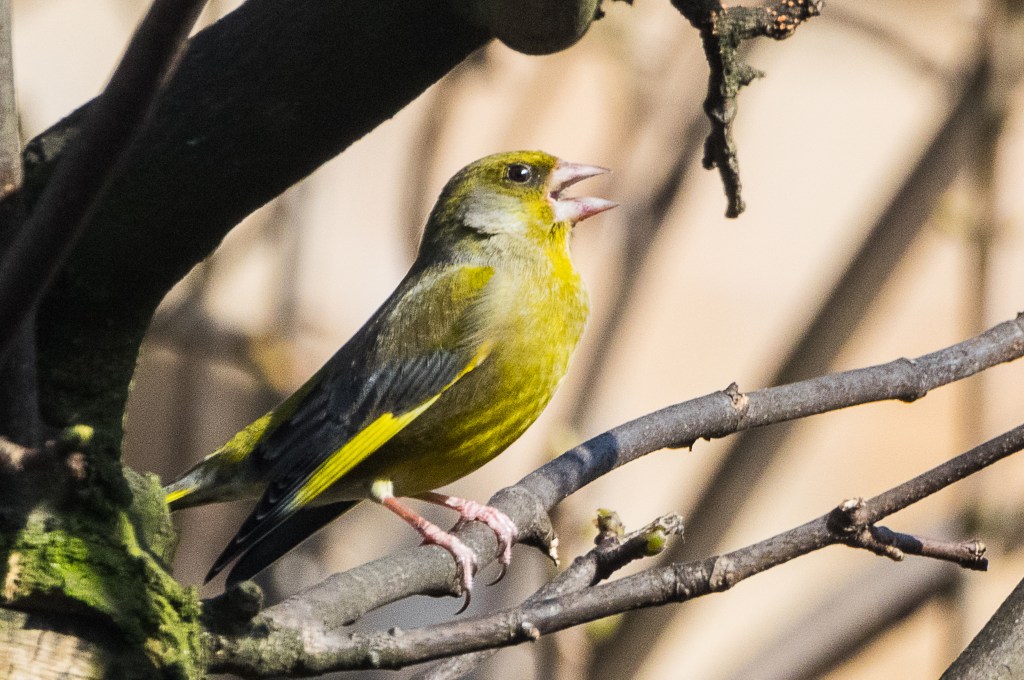
I remember Greenfinches vividly from childhood; I was a member of the Young Ornithologists Club and my parents would put a bag of peanuts up in the garden to attract birds and give me something to look at from the house. The Greenfinches would turn up en masse and compete vigorously for food, flashing their yellow wing bars and bickering. I became very used to seeing them and I guess I began to think them commonplace, a great injustice given the astonishing range of colours they are possessed of. Now they seem exotic and vulnerable, all the more so given the precipitous decline in population caused by the Trichomonosis parasite.

This calamity was documented in 2012 by Cunningham et al. (Phil. Trans. R. Soc. B, 2012, 367, 2852–2863).  The infection was first identified in 2005, with epidemic mortality identified in 2006 and in subsequent years. The disease is most unpleasant and I won’t go into detail; Cunningham’s open access paper provides an introduction to the nature of the disease and the grim business of counting the dead. Greenfinches now have Red UK conservation status.

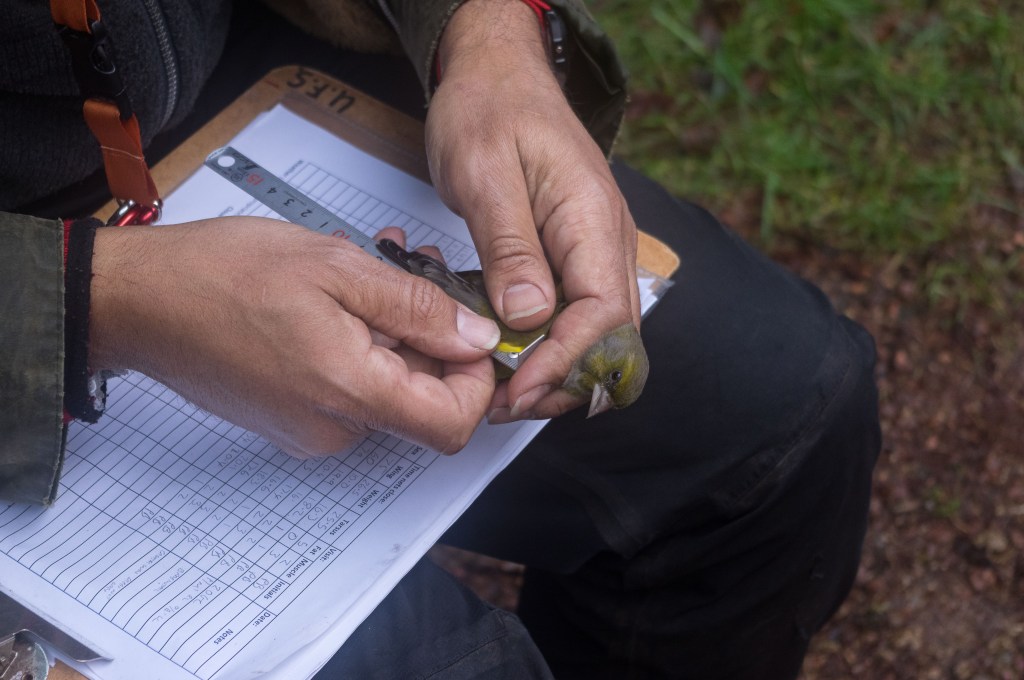
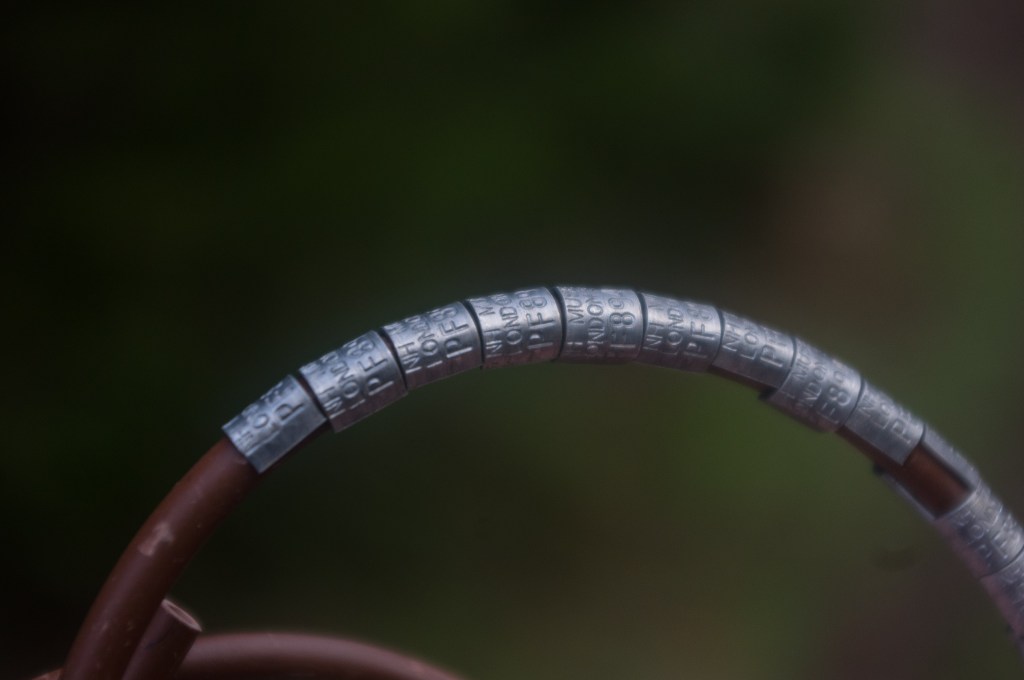
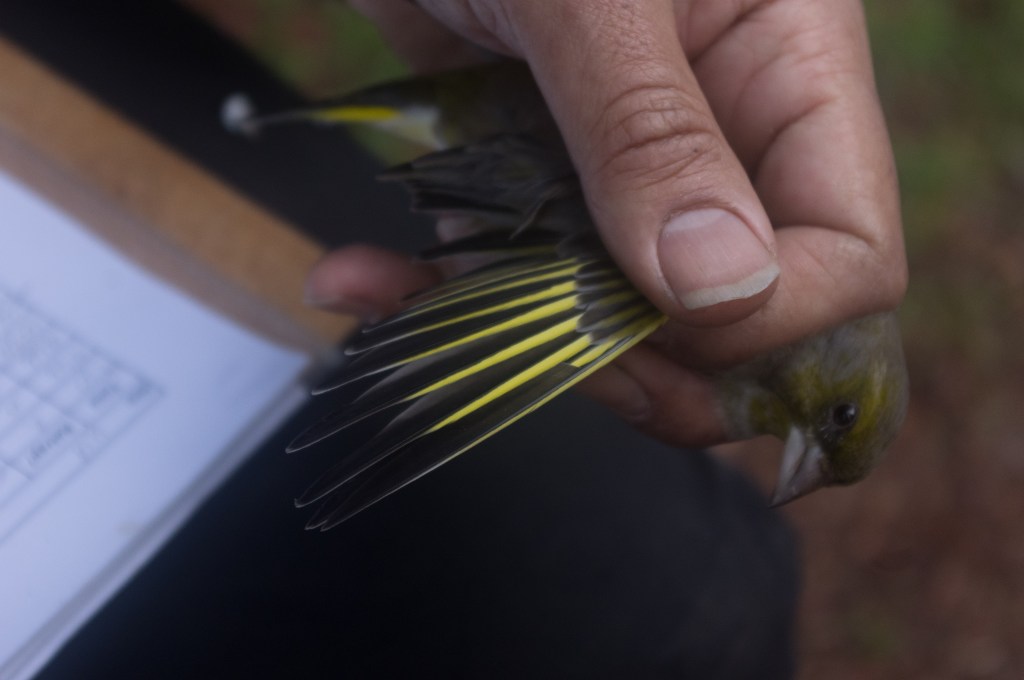
Much of the data used to track the infection and the changing Greenfinch population was provided by the long term BTO Garden Bird Feeding Survey, a rigorous activity involving regular monitoring at ca 275 sites across the UK between October and March. The Survey continues to yield useful information; for example, the changes in composition of British bird communities associated with long-term garden bird feeding have been assessed using data from the Survey (Plummer et al., Nature Comm., 2019, 10, 1-8). The progress of the epidemic was also tracked via the recovery of rings from dead birds. The BTO has a long established ringing programme which we’ve interacted with close to home in Kelvingrove Park. I’ve some images of a Greenfinch which was caught, measured and ringed during a session in December 2022.

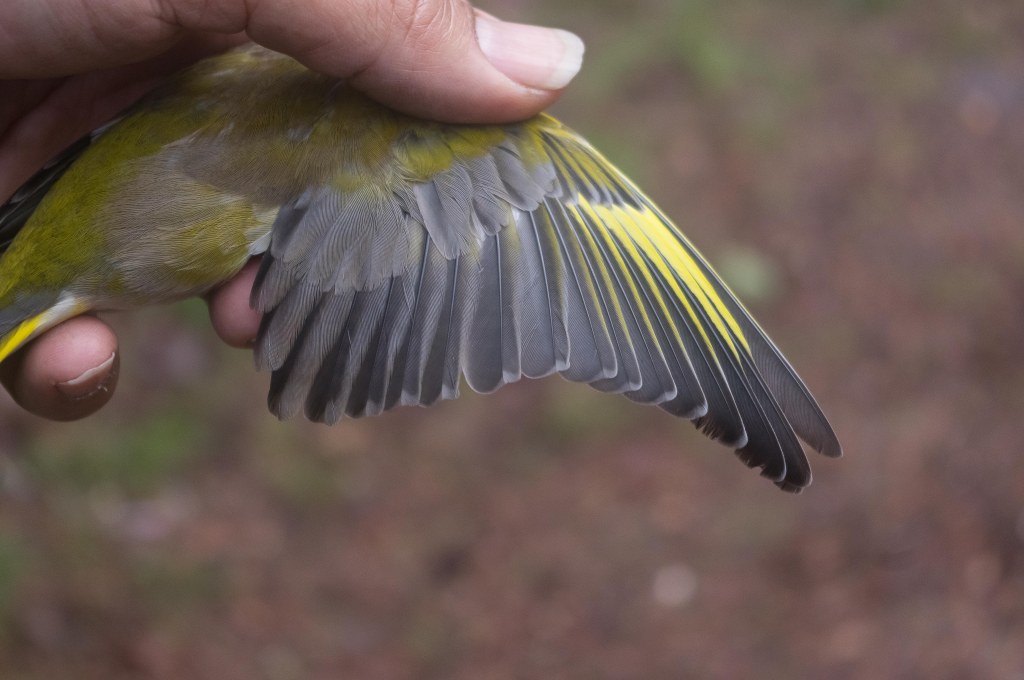
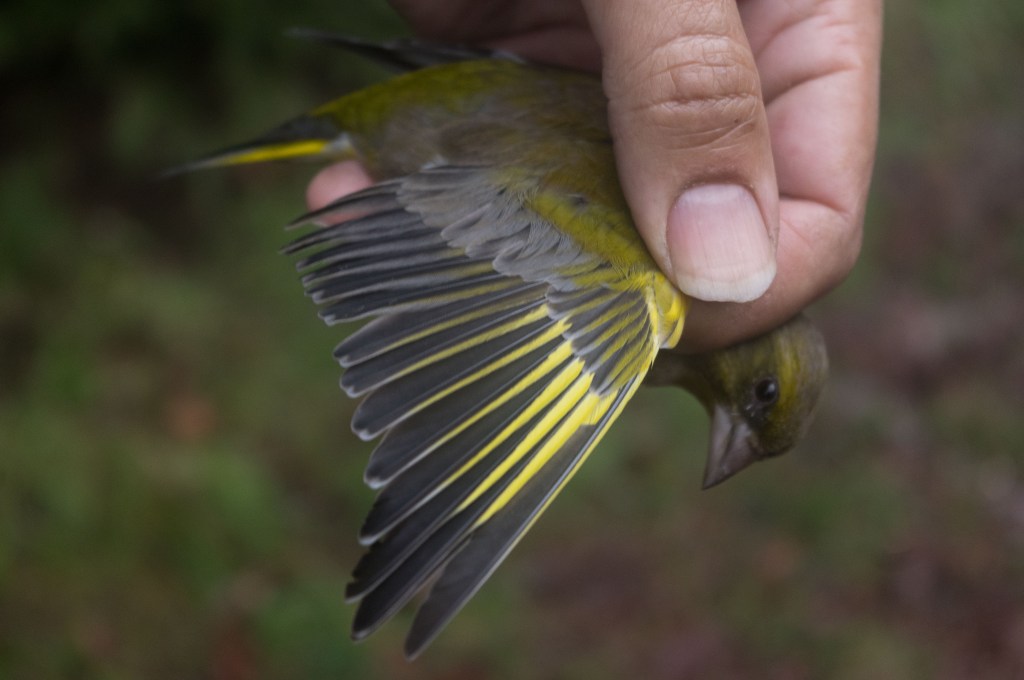
I wasn’t aware of the extent of the data collected on these occasions; birds are weighed (this involves them spending a short time head down in a plastic tub) and measured, and their general condition is assessed. I was really interested to learn that periods of poor feeding can be identified from tiny grooves across the feathers. These datasets enable the BTO to profile bird health across the population. I enjoyed the opportunity to see one of these brilliant birds at close range. I particularly liked the opportunity to see the wings, which were extended and spread as part of the examination, rather than for my benefit.
White balance is always tricky but I hope I’ve rendered the colours accurately; these finches have several yellows, greens and greys. The ringing took place on a dark December day but when the sun hits these finches, they are dazzling.

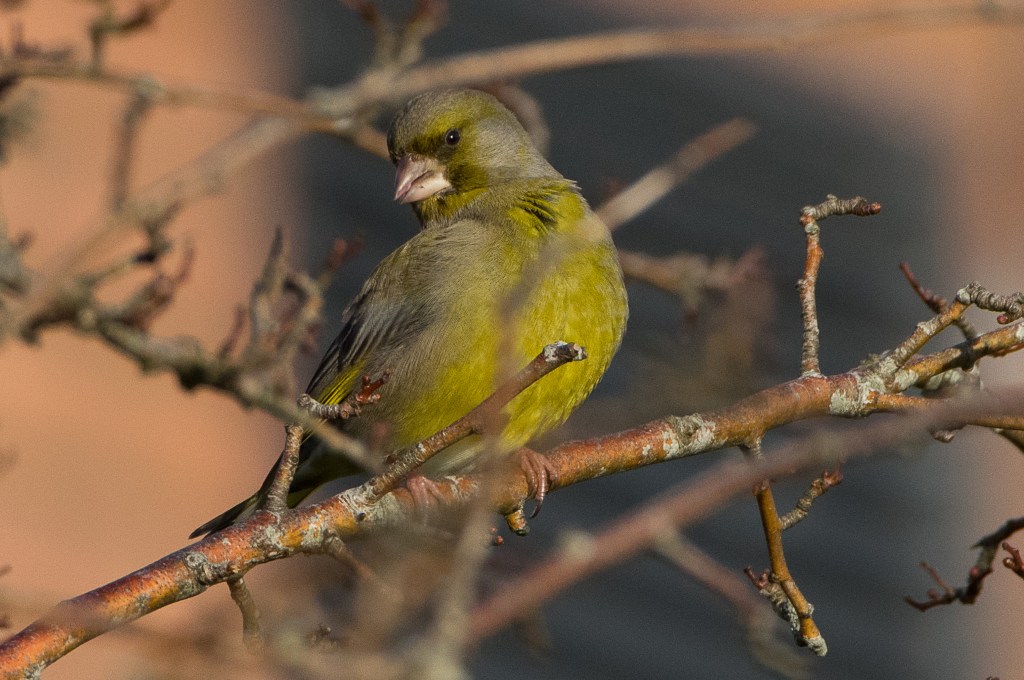
Though this image is a little grainy (the bird was about 15m away and through a window), I like it because of the iridescence of the breast feathers.

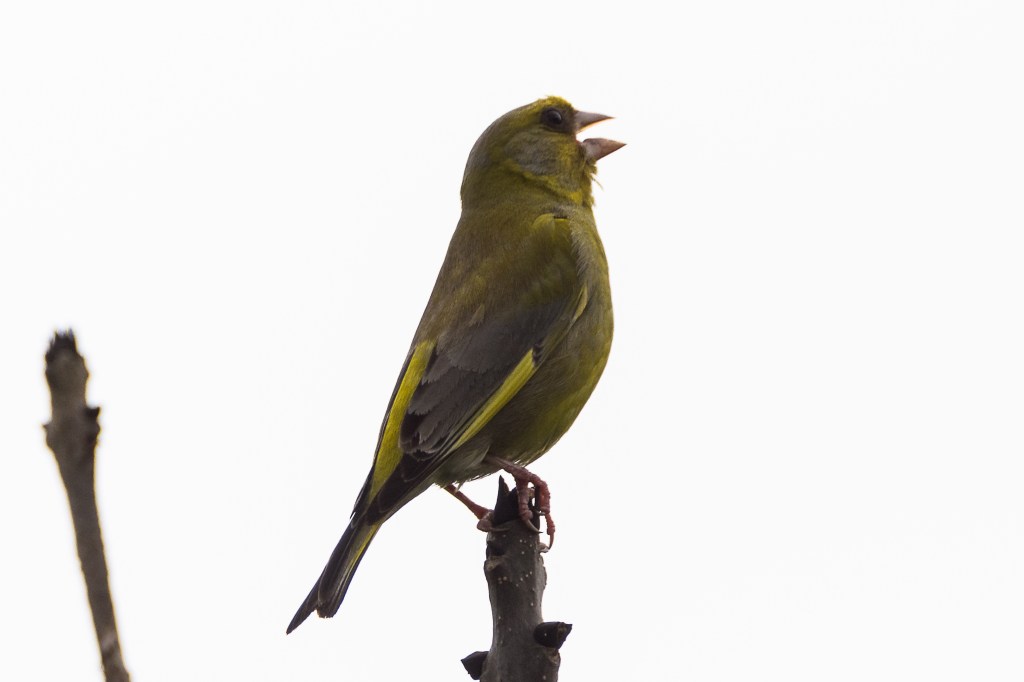
We heard this chap before we saw him; we were walking along the Clyde towards Cambuslang and he was commanding his territory with some vigour.

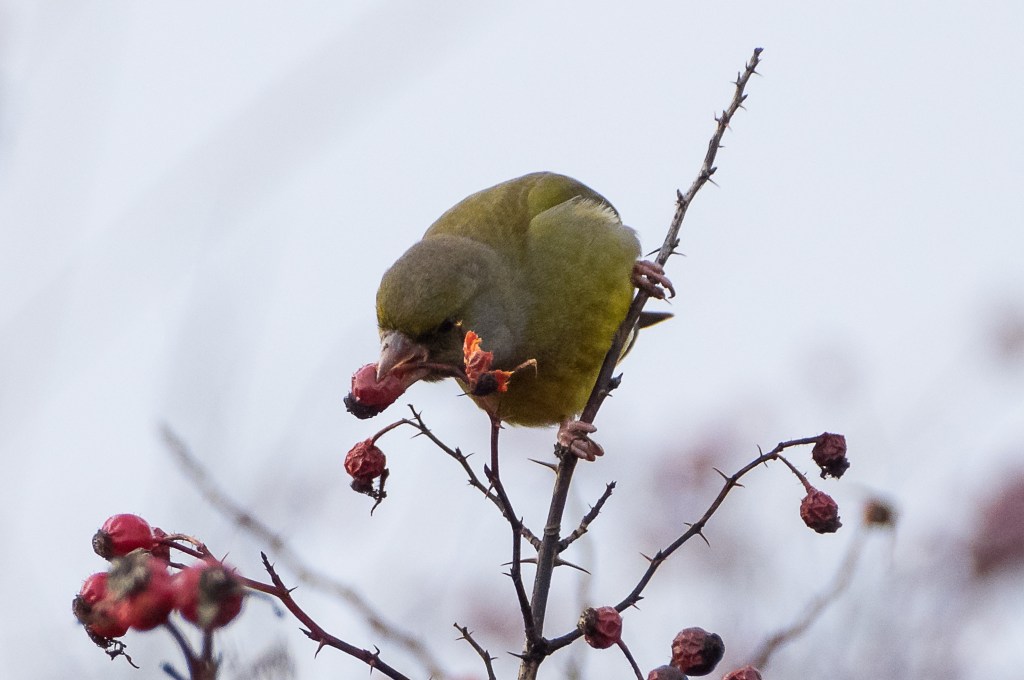
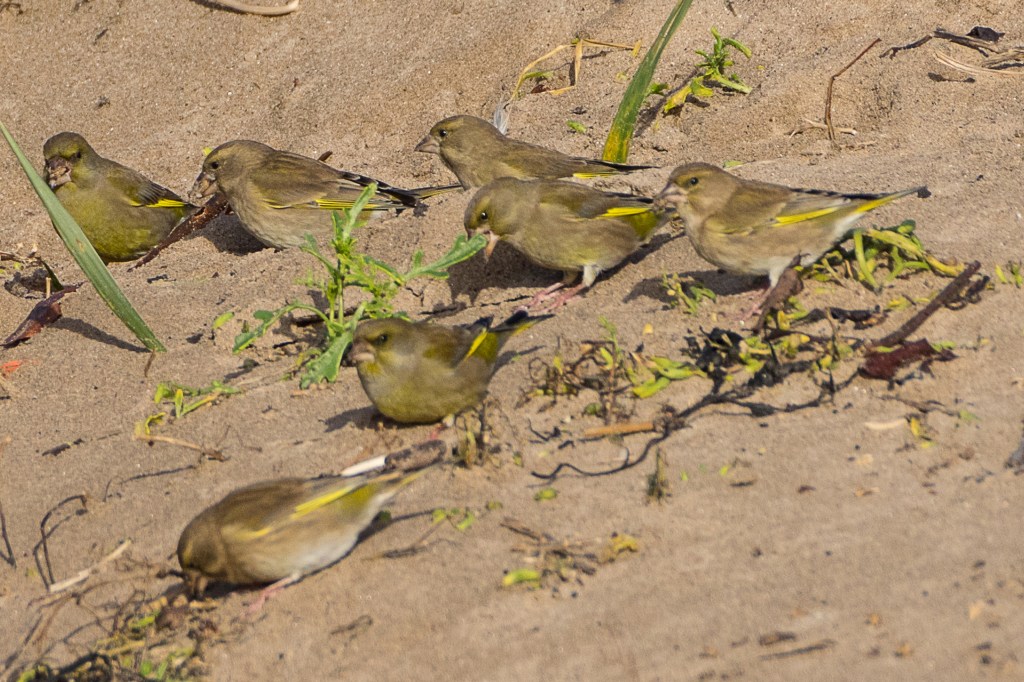
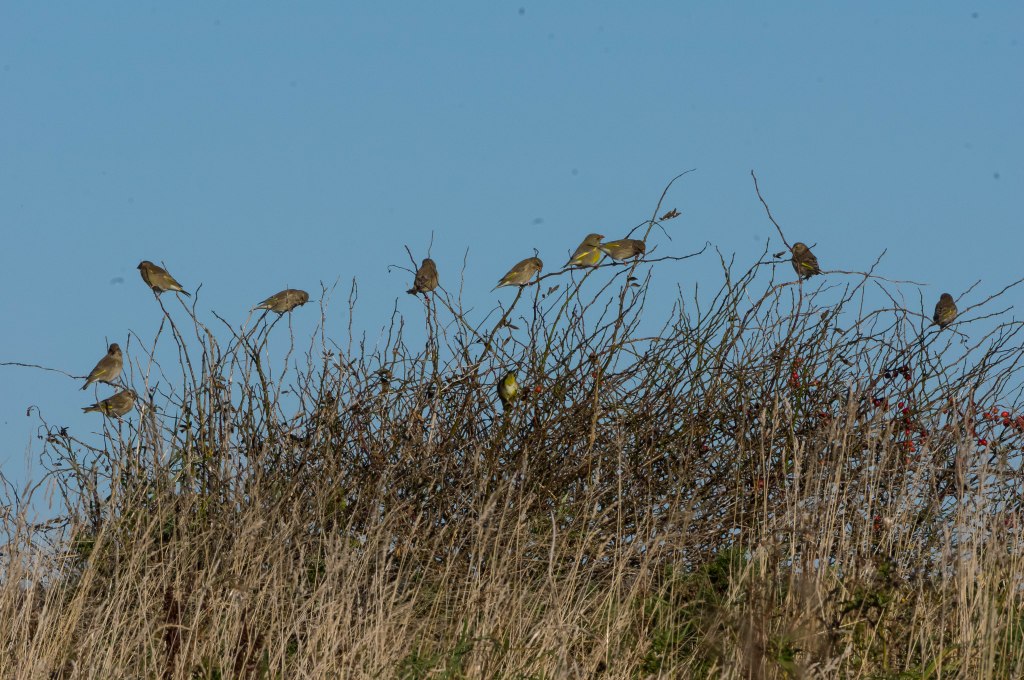
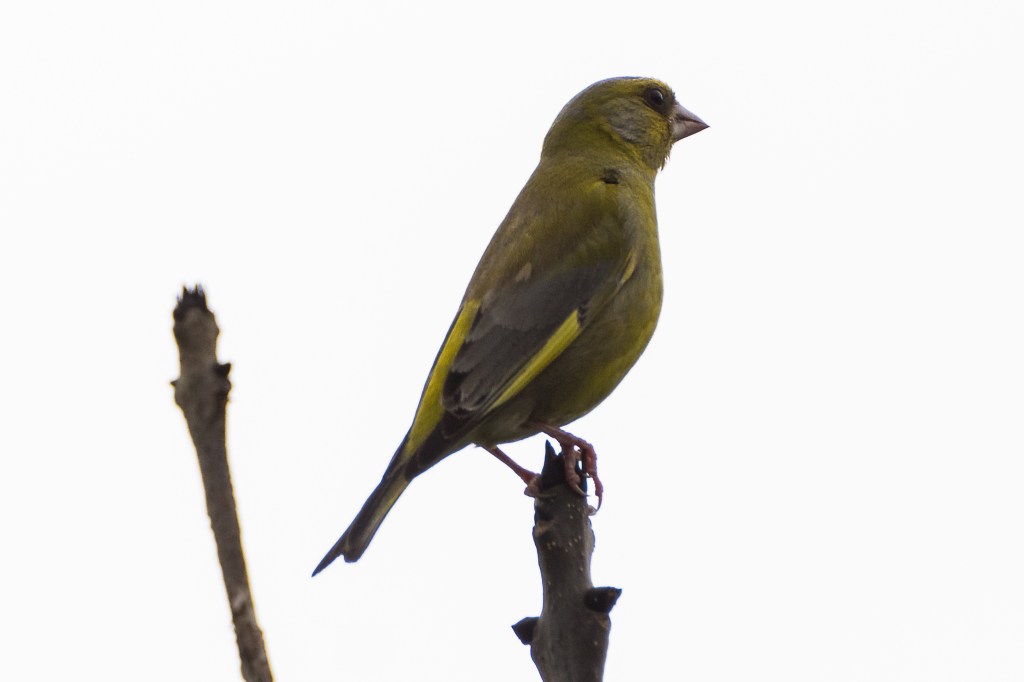
We see them regularly at the seaside, perching and feeding on the wild roses behind the dunes. They often flock with Linnets and we’ve seen them feeding on the sand above the high water line.
Although they were on a busy beach and their visits to the ground were short, all the birds in the image seem to have a beak full of something, but what? I was surprised to see a huge amount of Beech mast in the sea very close to where the birds were feeding. I wondered if the water had freed the nuts from their cases and cast them higher up the beach. I can’t find a good source to tell me if 2022 was a mast year (when acorns, nuts, winged and other seeds cascade from the trees). It could be that they’ve found a crop of mature seeds from a sea vegetable – that’s probably a simpler explanation.
This weekend sees the Big Garden Birdwatch and I imagine our regular Greenfinch will turn up and compete for sunflower hearts. Being a bit of a unit, he isn’t easy to shift from the feeder but weight of numbers of other species cramp his style. Plummer et al. (PLoS ONE 2018, 13(9), 1-13, e0202152) found “a significant positive association between body mass and dominance across ten passerine species of birds that were observed to compete regularly at supplementary feeding sites.” I’ll come back to this hierarchy one day in a post about another finch species. I haven’t seen our Greenfinch today so I hope he’s well and getting in good nick for a successful breeding season.

Stonechats

There’s a walk we used to do when my wife worked in Cardiff; it started at Llantwit Major station and followed the Nash Brook down to Cwm Nash, emerging onto the beach through a huge notch in the cliffs. There was a café there – a couple of leathery surfers wouldn’t look out of place lounging by it. The first image represents the view to the left.

The limestone pavement and cliffs run all the way to Nash Point, where there is a lighthouse and a foghorn to warn mariners of the considerable perils of Bristol Channel. I was a strict manual camera user then, shooting only slide film, probably Kodachrome 64 in this case. The image is scanned from a slide so it’s grainy but the point of the image is the grandeur of the beachscape.

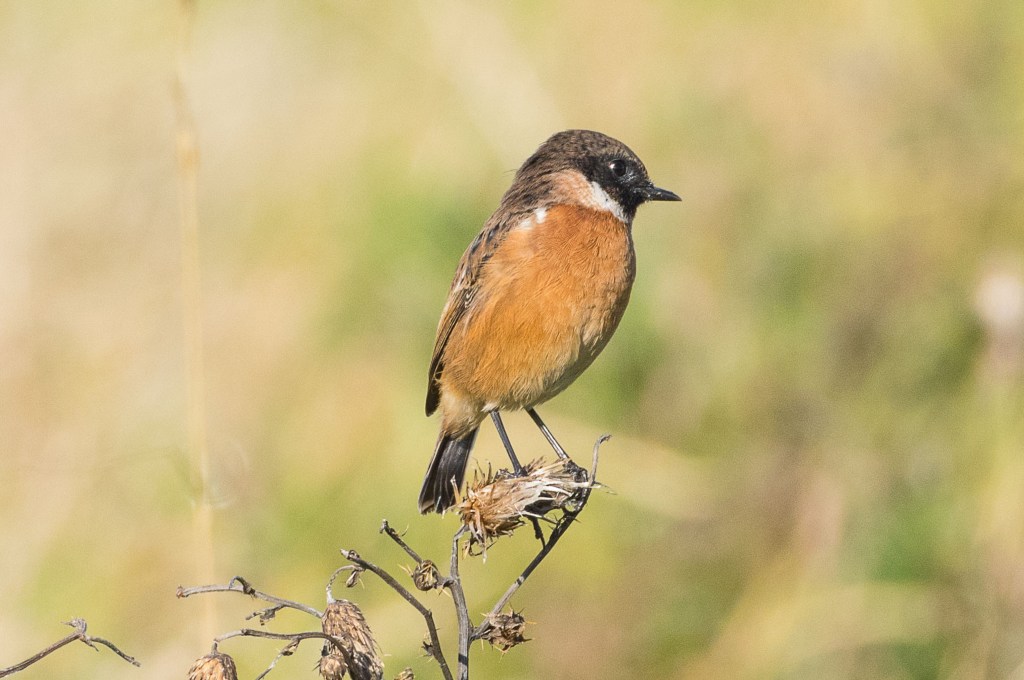
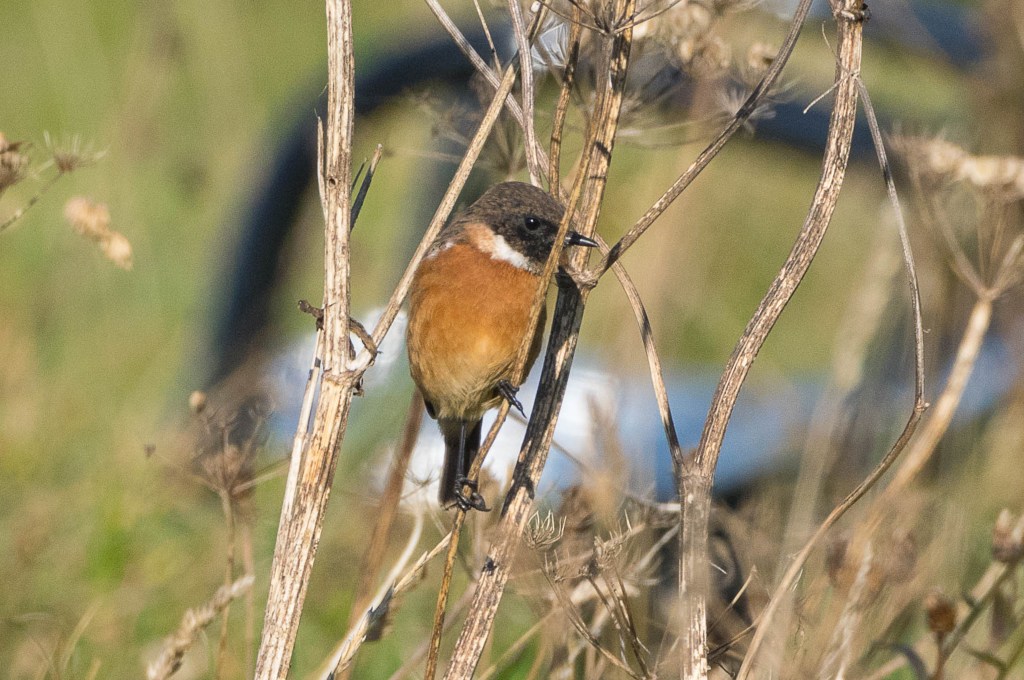
A path rises up the cliff from Cwm Nash and takes you along the top with spectacular views and when we visited, Choughs, corkscrewing and calling up and down the sheer faces, red talons extended and red bills agape. I wish I had tried to photograph them but I was all set up for landscape and thought success most unlikely. The landscape by Nash Point was crossed by old stone walls and studded with gorse bushes, and it resounded with sharp and insistent percussion. Wrens perhaps? Not quite the right sound. And then we were able to see a small bird, and then a pair of them, perching and dipping, then making short swooping flights to another perch nearby. As we advanced, they would work around us and follow us back into their territory. Stonechats of course, unmistakeable with hindsight and a good look at the book.

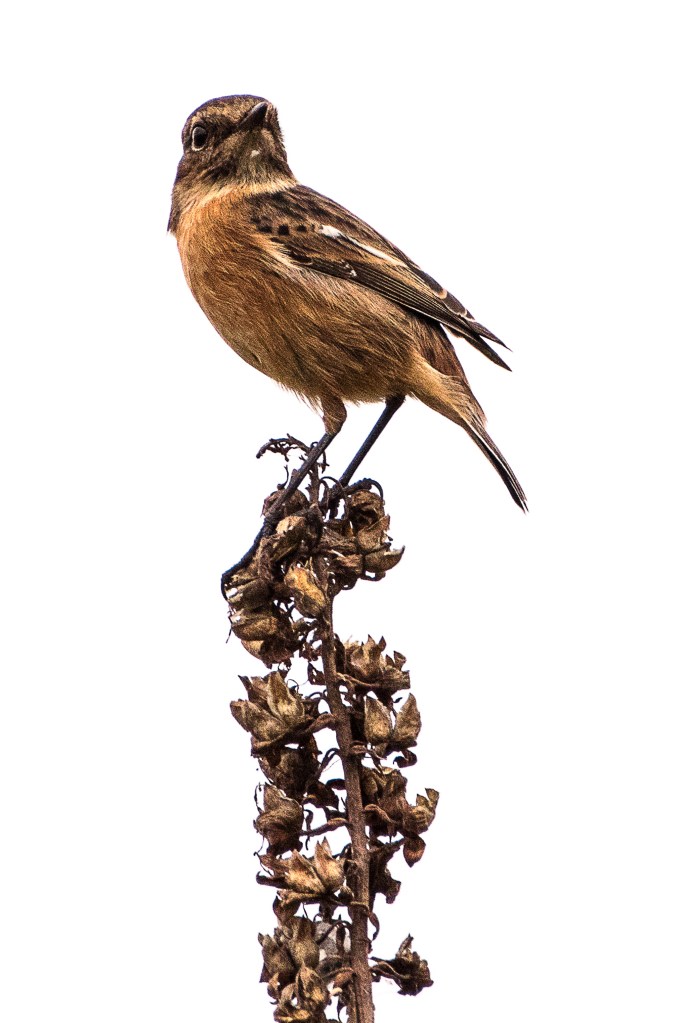
Stevenston is a good place for them closer to home and that’s where most of my pictures come from. There’s rough ground all along the top of the beach with a great range of perches and, or so I would imagine, a lot of insect habitats. We’ve also seen them regularly on the way up the Kilpatrick Hills. Even with up to a year between the visits, the Stonechats are never far from where we saw them first.

I had assumed from these regular-as-clockwork sightings that Stonechats were sedentary but Callion (British Birds, 2015, 108, 648-659) shows otherwise in a rigorous study of a Cumbrian population in which there was considerable mobility between breeding and wintering territories, and further afield.

Small birds which eat mostly insects are very vulnerable in hard winters. Stephen Moss wrote a nice piece about them in the Guardian in 2013 (though with a truly awful illustration) and there is an interesting account of their wintering behaviour in Cheshire and on the Wirral, based on work carried out by the BTO and using ringing data. The executive summary involves a combination of shocking levels of Stonechat mortality, mitigated by southerly migration followed by furious levels of breeding activity to restore numbers.

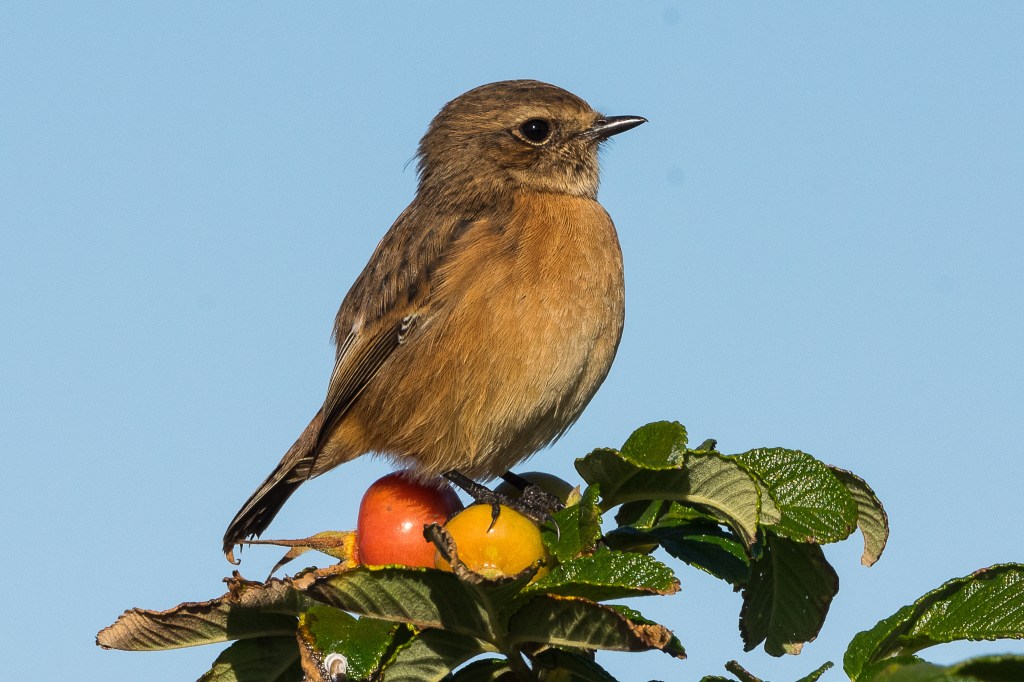
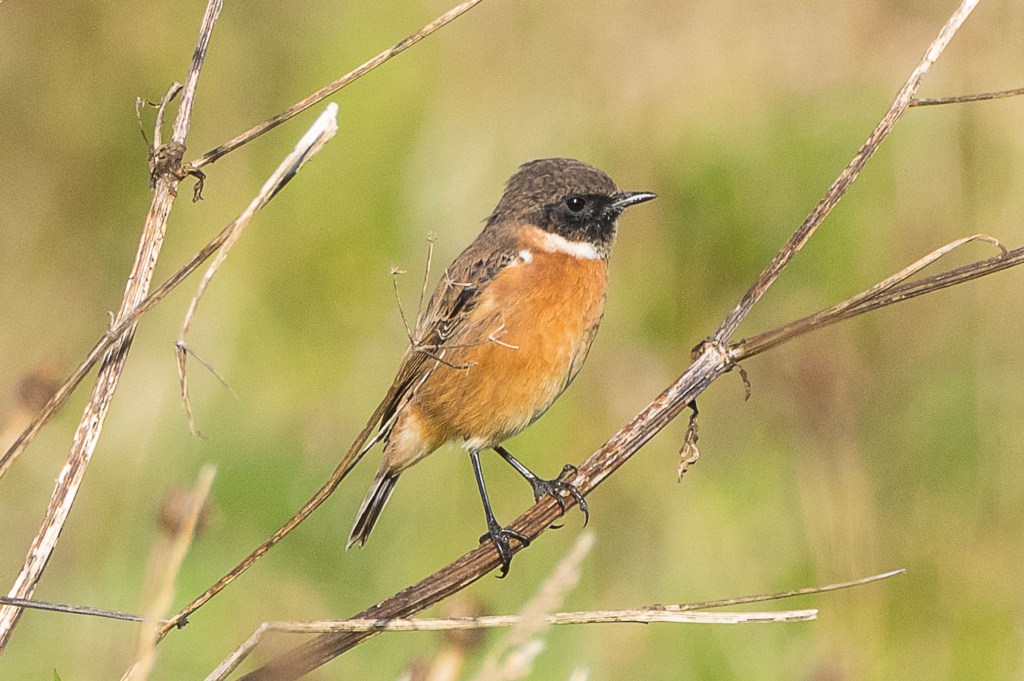
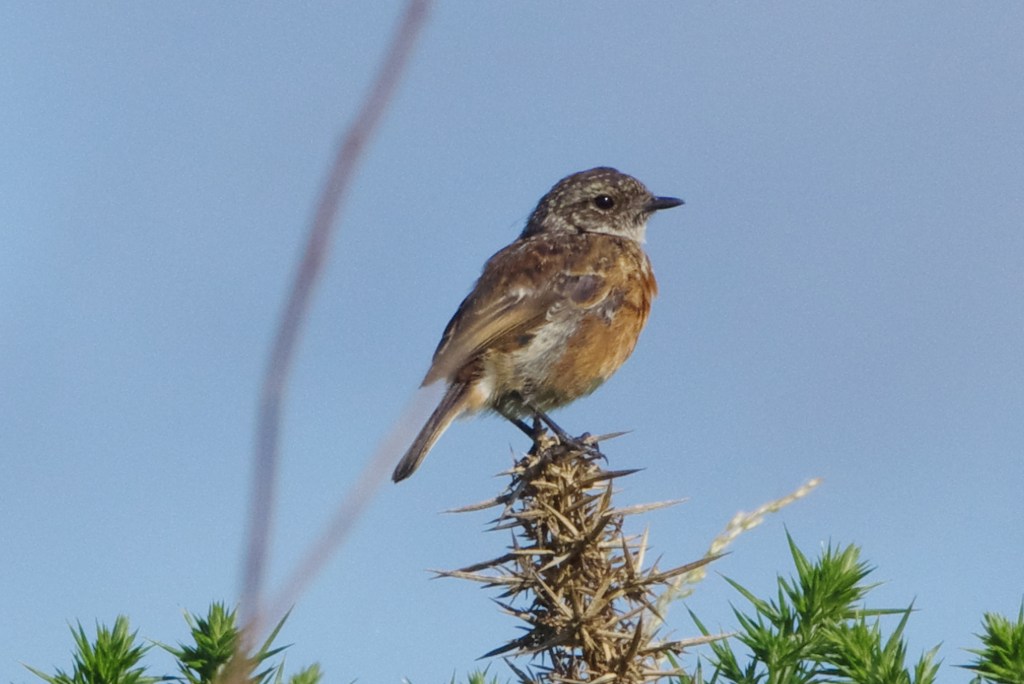
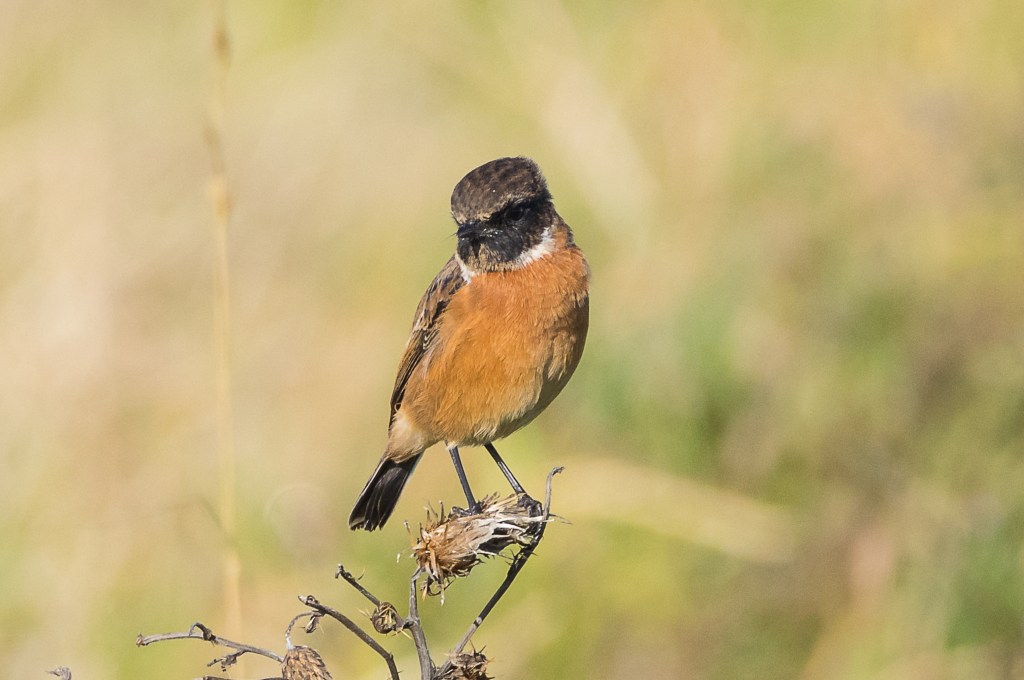
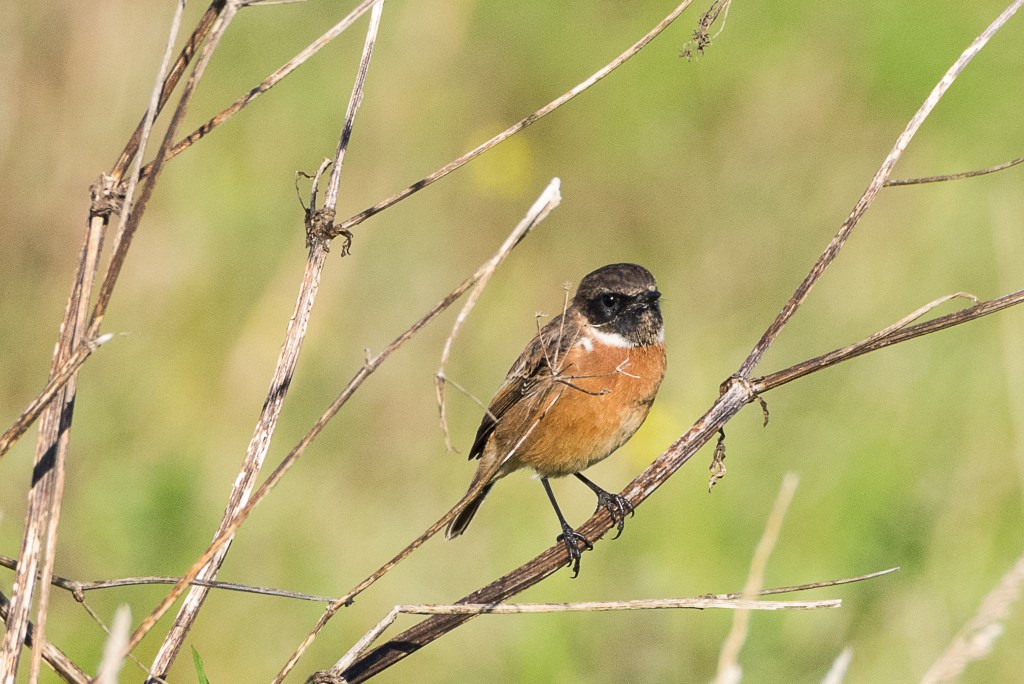
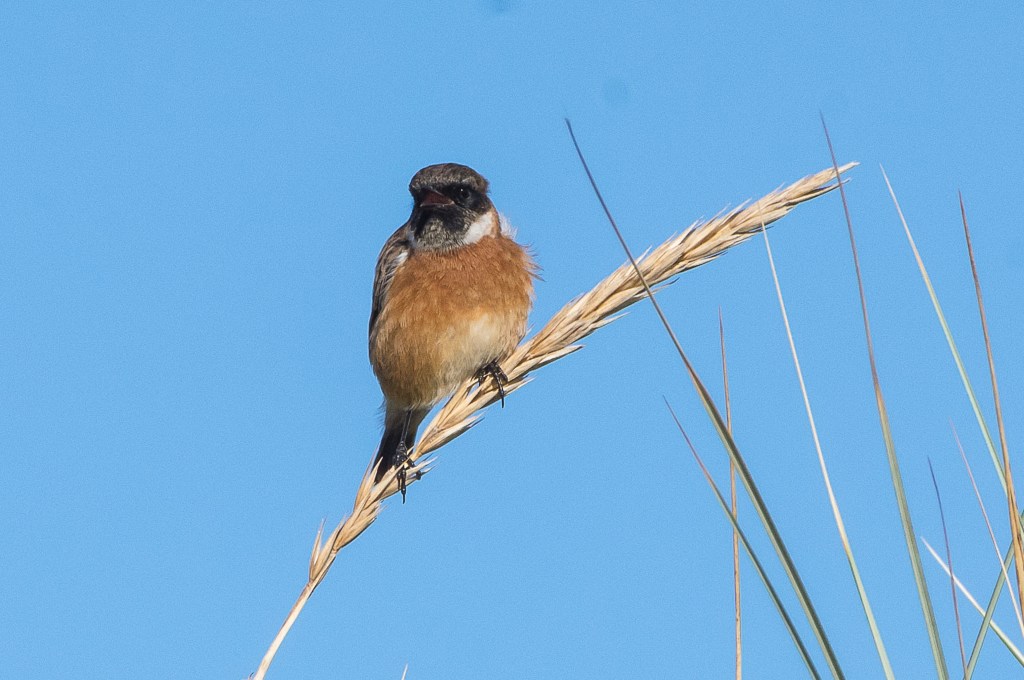
Stonechats always command a vantage point; no skulking in the lower branches for them. Naturally, a Stonechat would find the highest point of a rose bush for a perch (a female this time, above), all the better if it’s atop some prettily coloured rosehips for that extra inch or two, or – below – on the most slender stalks in the parched grassland with the best view of the surrounding microforest.

Once seen, never forgotten and always a most cheering sight. Some more poised and nicely posed Stonechats follow in the gallery.

Sanderlings

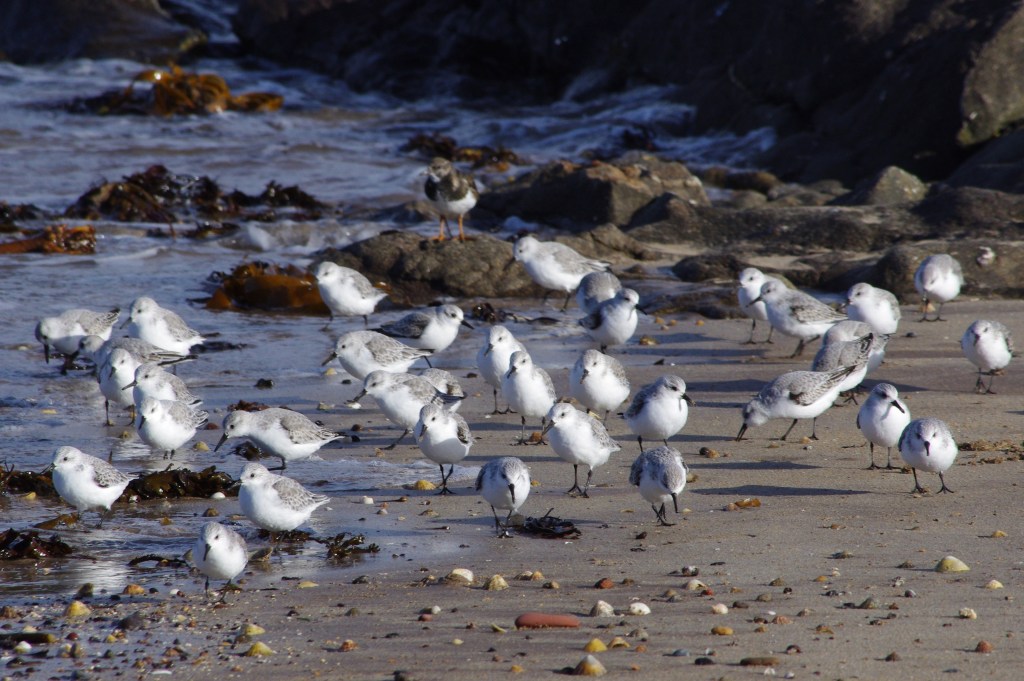
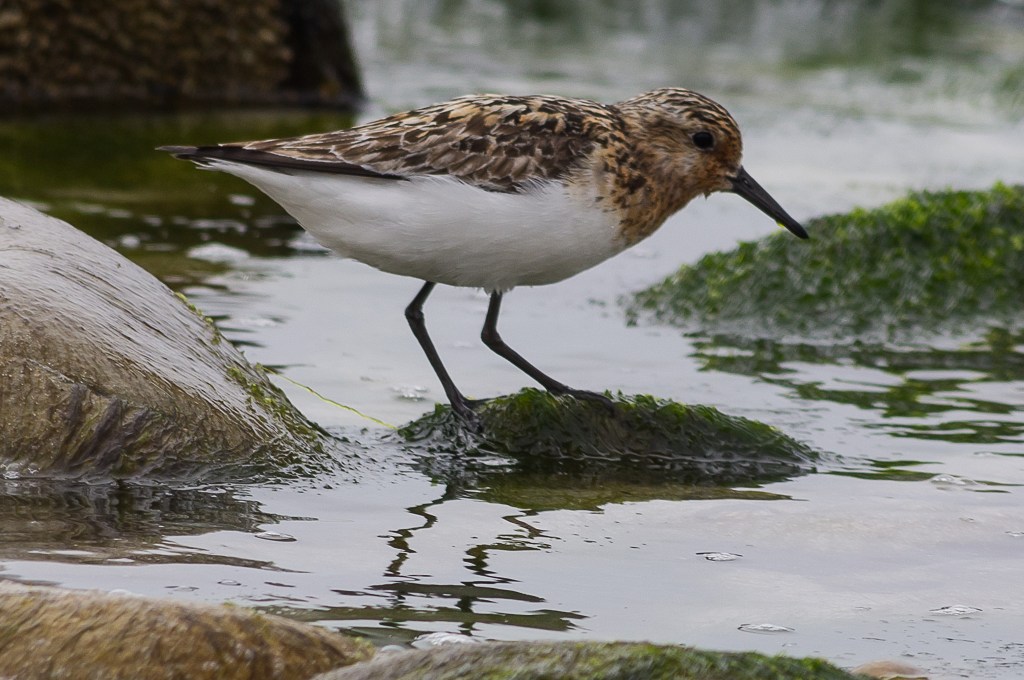
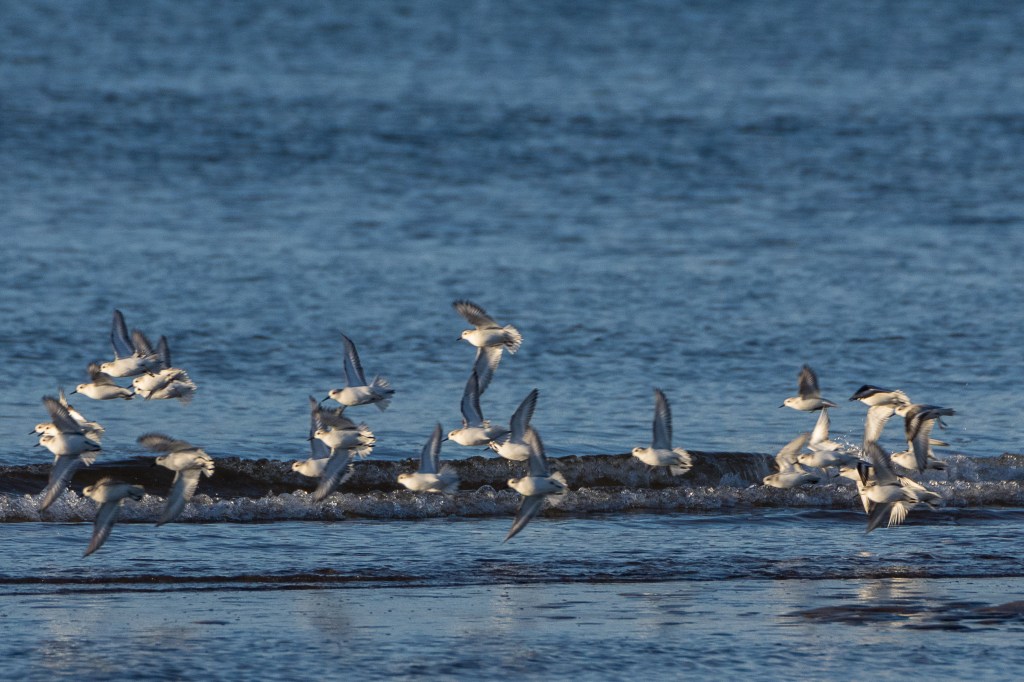
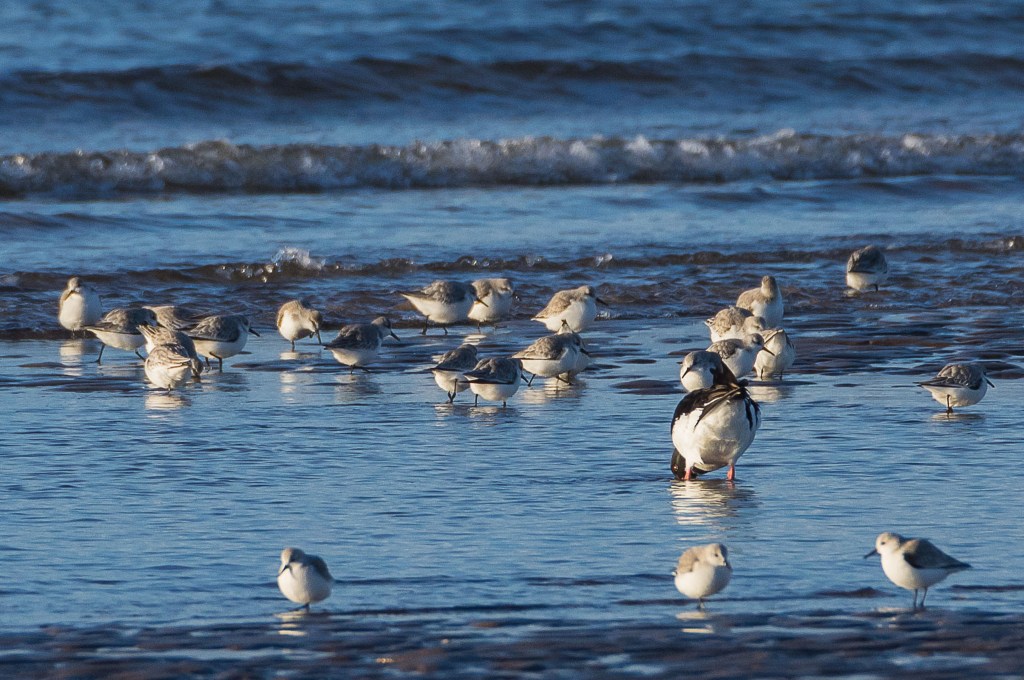
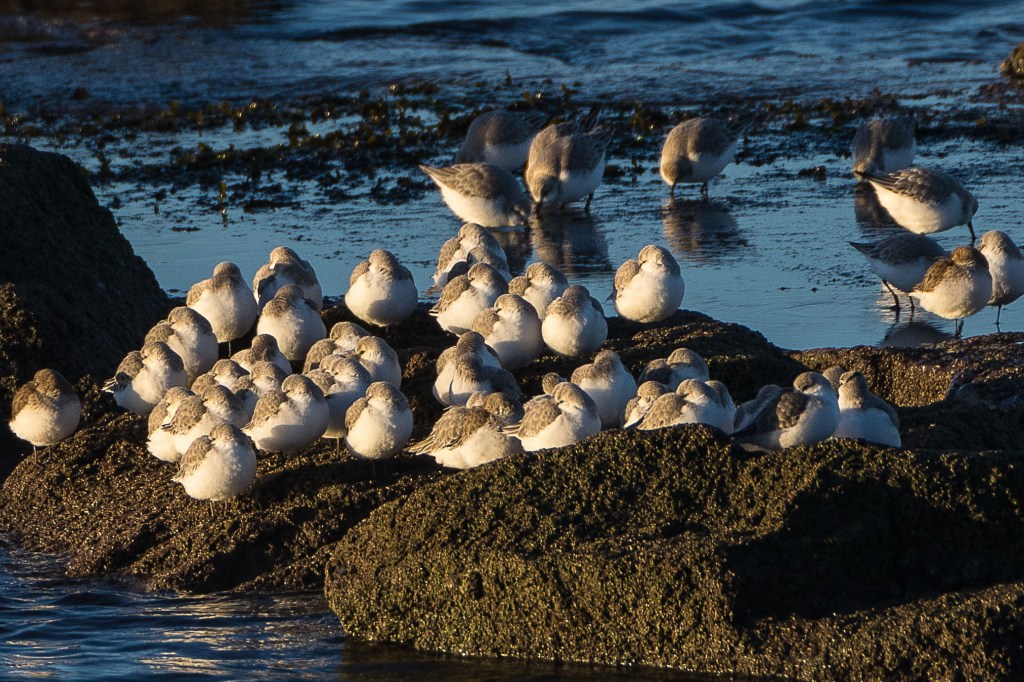
A visit to a a very cold Stevenston on Saturday last afforded a sighting of a small flock of Sanderlings. There were close to fifty individuals in repose on the old pipeline which runs out into the sea next to the point. They look tawnier than they should in the photograph because of the golden hour light of a very sunny winter morning.

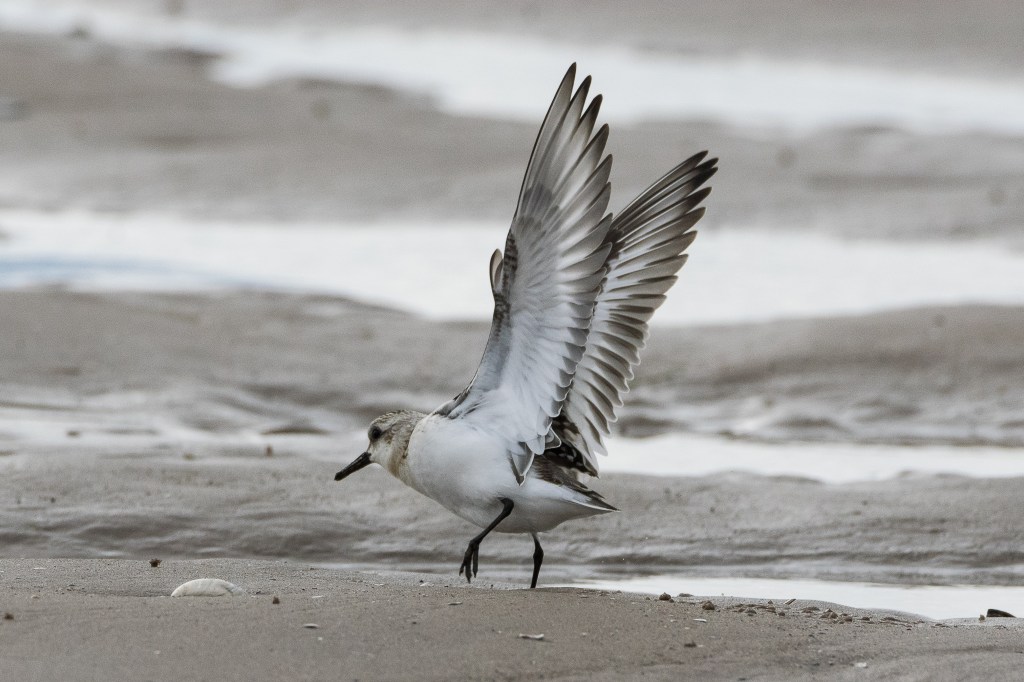
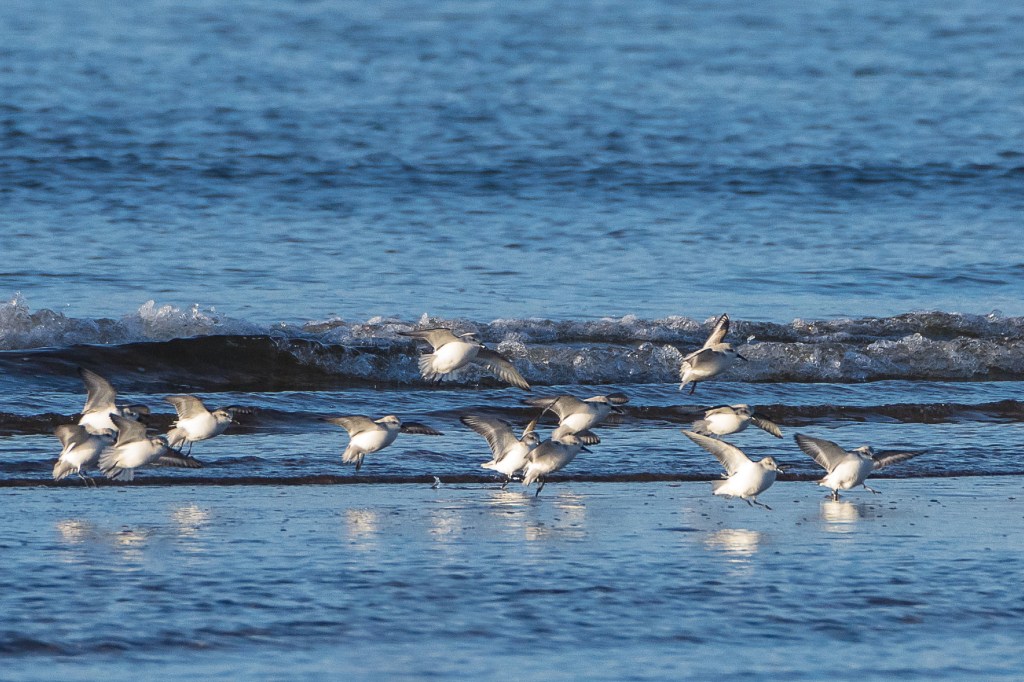
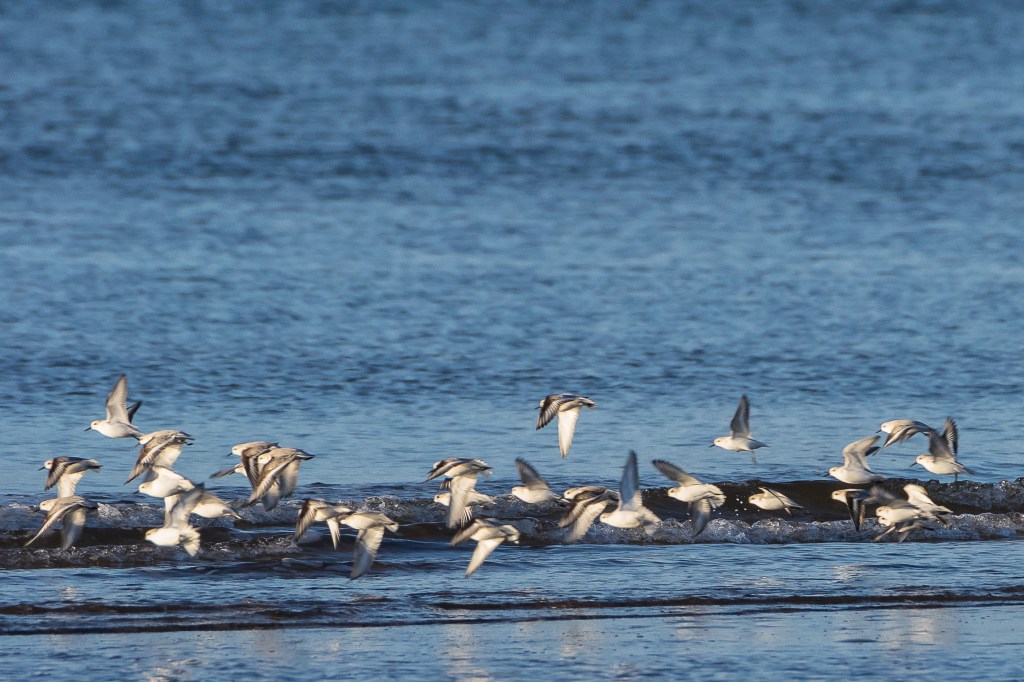
The tide had turned and was falling and soon, it seemed that the right kind of shore had been revealed and the Sanderlings took to the wing to reach it, landing elegantly and beginning their sprints along the sea’s edge.

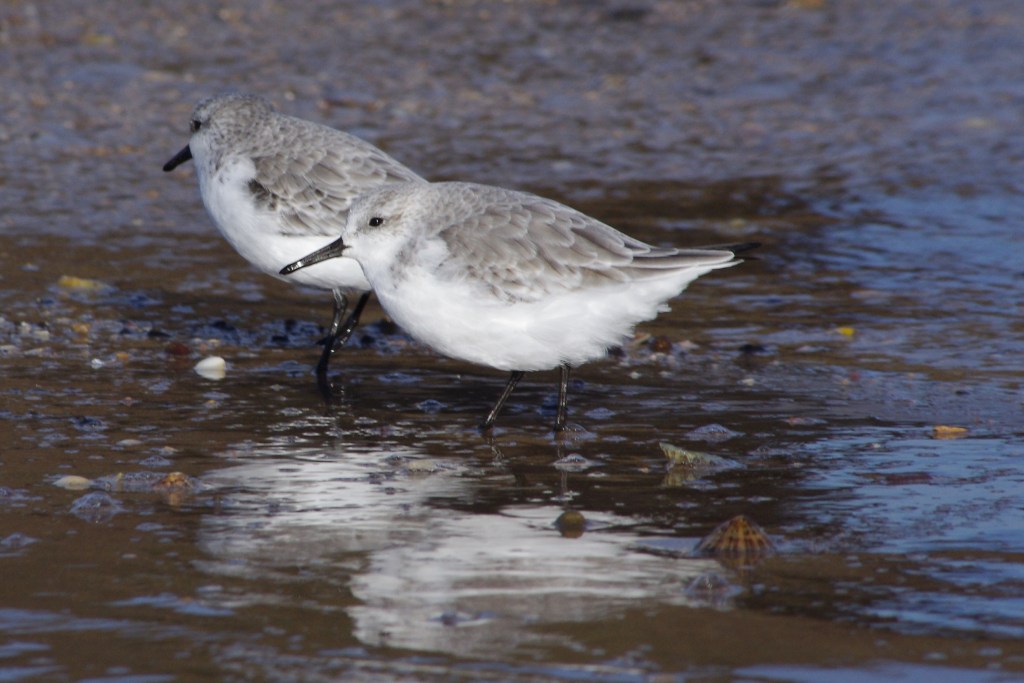
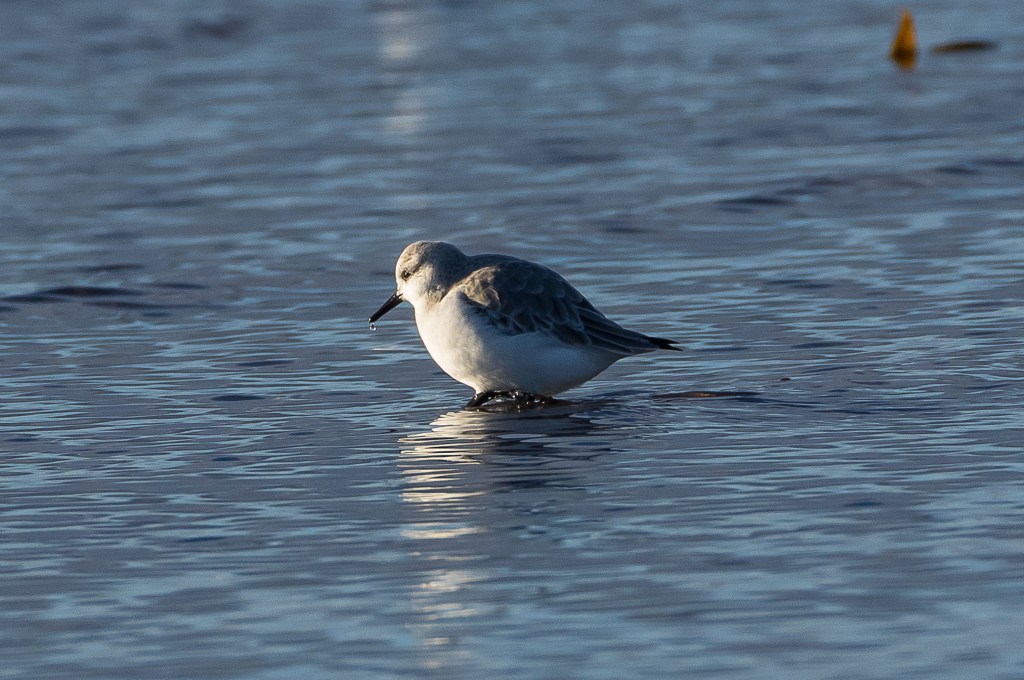
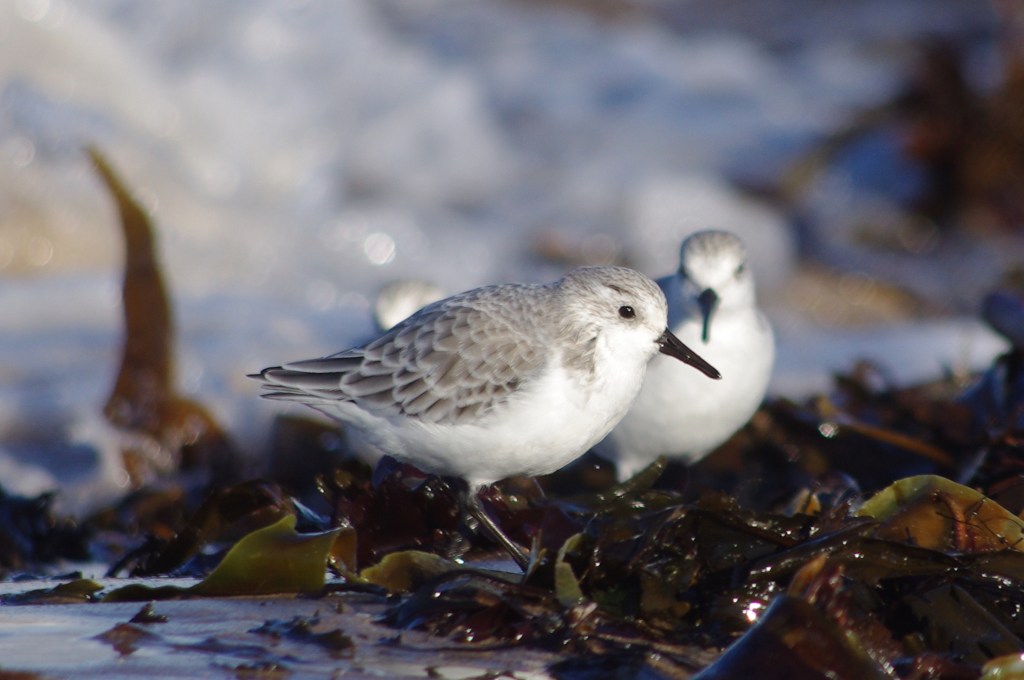
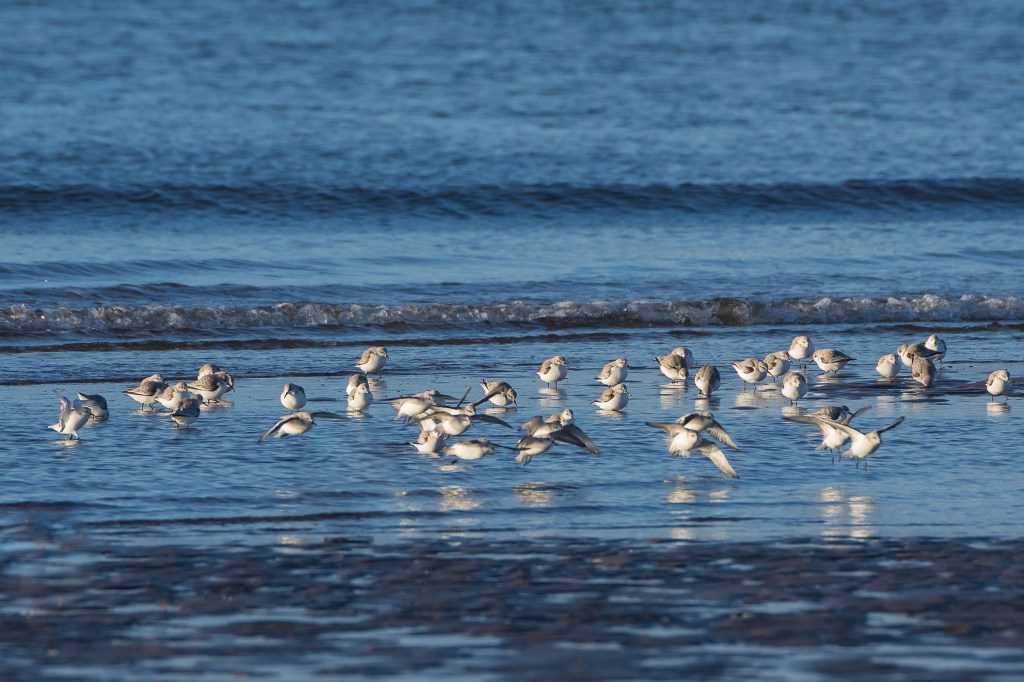
The beach wasn’t busy and the Sanderlings seemed relaxed – I kept my distance (so there is some unwanted pixellation in most of these images). My RSPB book tells me that Sanderlings should not be disturbed while feeding in winter. They’ve a lot of fuelling up to do, increasing their body masses by up to 60% to get them to northern Greenland or north east Canada. Some fly non-stop, others put down in Iceland for a day or two. Reneerkens et al. (Wader Study Group Bulletin, 2009, 116, 2-20) reviewed the (then) current knowledge in 2009.

There was another occasion on the east coast when the Sanderlings came to me. It was during a visit to North Berwick on a very cold November day. I was aware of a white procession in the distance at the water’s edge and I lay on the sand in preparation; in time, they passed by quite close to me. I had a much shorter photographic reach at the time but the proximity of the birds and the brightness of the day was really helpful.

I’ve never tried to video them but there is excellent resource on YouTube; I particularly liked this BTO Bird ID video which captures their frenetic activity really effectively.  I think the sequence around 0:45-1:00 must be an optical illusion. I mean, is it me or are they going backwards at speed? Presumably not but it really looks like it. I also liked Sergey Shkarupo’s video of juvenile Sanderlings (of which more later).

This level of activity raises questions about energy accounting – or the benefit versus cost of feeding in this way. I can’t do the physics but I did discover something about Sanderling prey species. Reneerkens et al. have some useful information about diet, some of the information obtained the hard way by prising apart Sanderling pellets and analysing the contents. A wildlife project based in Oregon gave me this (my italics): “Because their quarry is small and all but indistinguishable beneath the sand, sanderlings must make several probes with each dash….They tweeze the just-wetted beach because it is softer, and because the invertebrates themselves come up to feed in the wavebreak. The window of opportunity is narrow, indeed—a mere wave’s breadth of time. Sanderlings appear frenetic in their feeding simply because it is the only way to get enough to eat.”

A bit more detail came from animalia.bio : “Sanderlings feed on invertebrate prey buried in the sand in the upper intertidal zone. In North America, this diet largely consists of the isopods Excirolana linguifrons, Excirolana kincaidii, and the mole crab, Emerita analoga. When the tide is out, these crustaceans live in burrows some way beneath the surface. When the tide comes in, they move into the upper layers of sand and feed on the plankton and detritus that washes over them with each wave. They then burrow rapidly down again as the water retreats. They leave no marks on the surface, so the sanderlings hunt for them by plunging their beaks into the sand at random, consuming whatever they find. Their bills can penetrate only 2 or 3 cm (0.79 or 1.18 in) and as the water swirls around and retreats, the sand is softer; this makes it easier for the birds’ beaks to penetrate further. In the spring, when much breeding activity is taking place in the benthic community, there may be as many as 4000 invertebrates per square metre, but their average size is smaller than later in the year. The birds appear to rush madly around at the edge of the surf, but in reality they are maximising their chances of catching as many prey animals as possible when they are at their most vulnerable near the surface.”

Benthic in this context refers to the uppermost layer of seabed, irrespective of the depth of water which covers it. UK waters host different species of isopods (species very similar to wood lice), for example Eurydice pulchra (Speckled Sea Louse). Haustorius arenarius and Corophium volutator (European Mud Scud) (which look more like shrimps) are also small (sub-centimetre long) burrowers in the sand. The British Marine Invertebrates Group tell me that Eurydice is similar to the Excirolana species.

In trying to find something out about these species, I’d first headed to the bookshelf; my copy of The Young Specialist Looks At Seashore (Burke, London, 1963) gave me Corophium volutator but not the other two species and I was puzzled, but then I noticed that the text had been adapted from Was find ich am Strande? (Keller, Stuttgart, 1961). I’m prepared to believe that there may be some species variations between Atlantic and Baltic coasts, and I much prefer the directness of the German title.

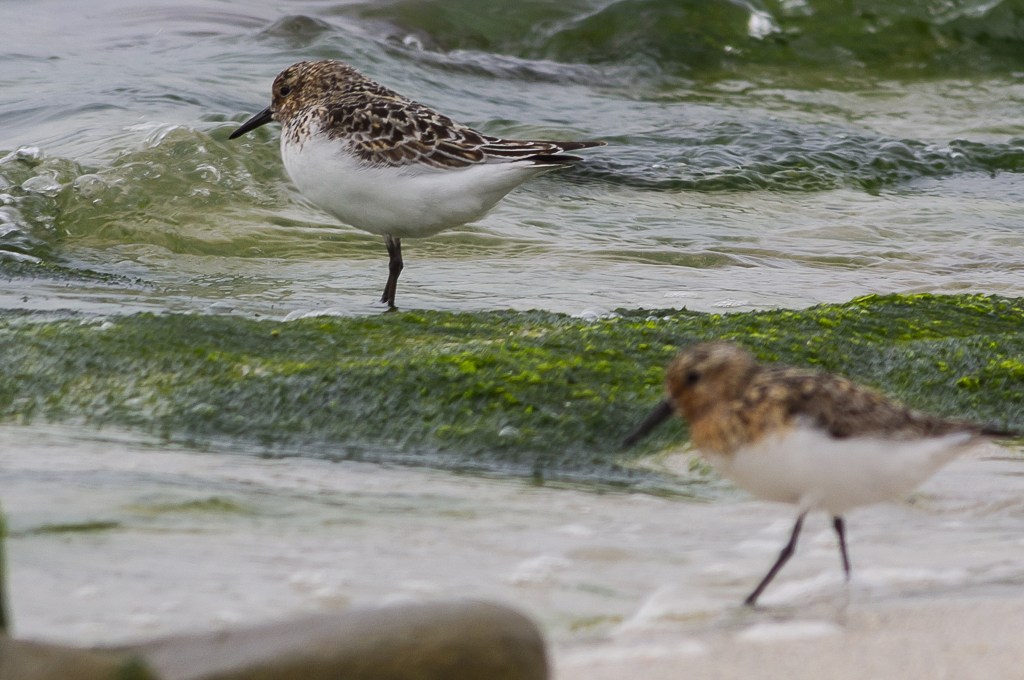
My only sight of Sanderlings in summer plumage came in Shetland, fleetingly. The pure white is still there but the brown and russet spangling on the upper part of the body is delightful.

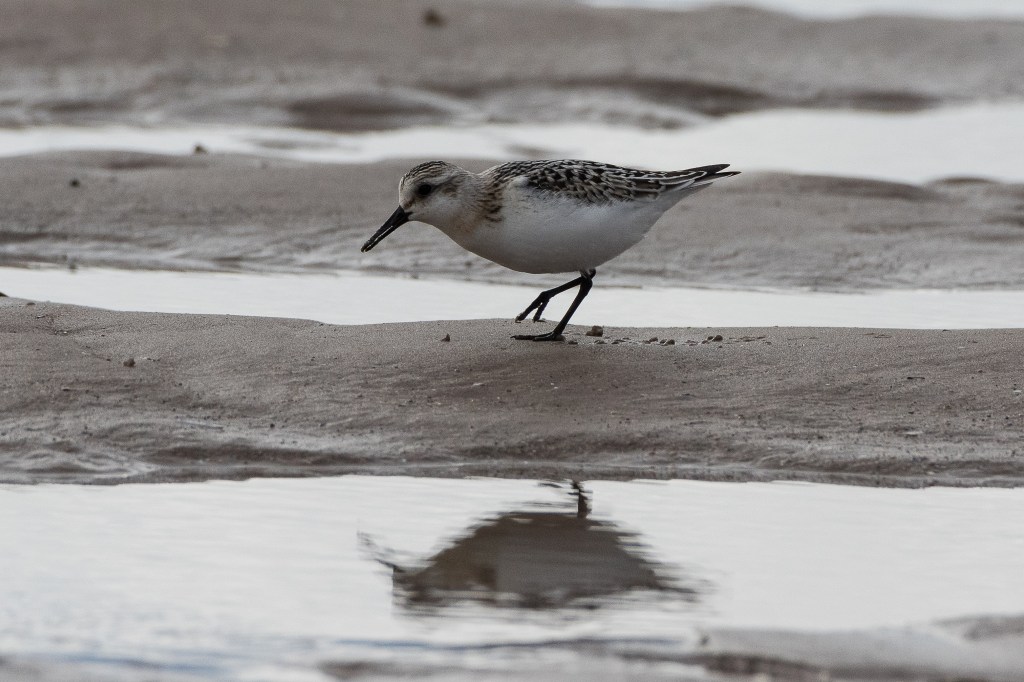
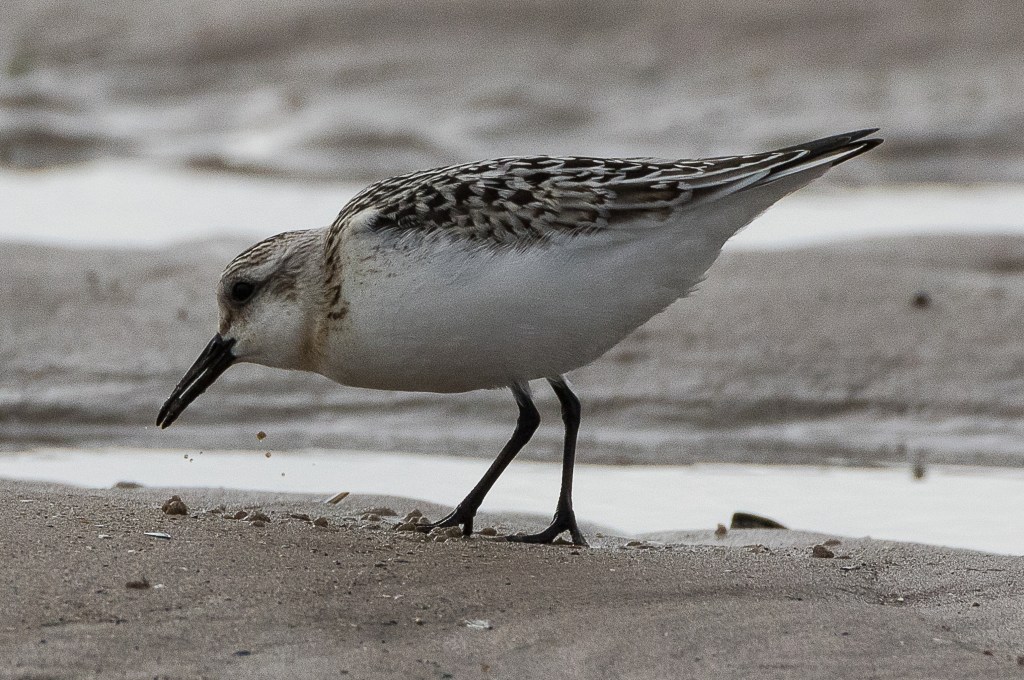
Juveniles have very dark spangling on the upper body; I’m lying in the wet again for this one, with the young bird probing away in the soft sand of Aberlady Bay.

It was with me for quite a long time before it flew away – how long and graceful the wings look. I think these are my best foot shots too – Sanderlings are the only sandpiper lacking a backward-pointing fourth toe, which isn’t easy to see in the field. I was very happy to have the opportunity.

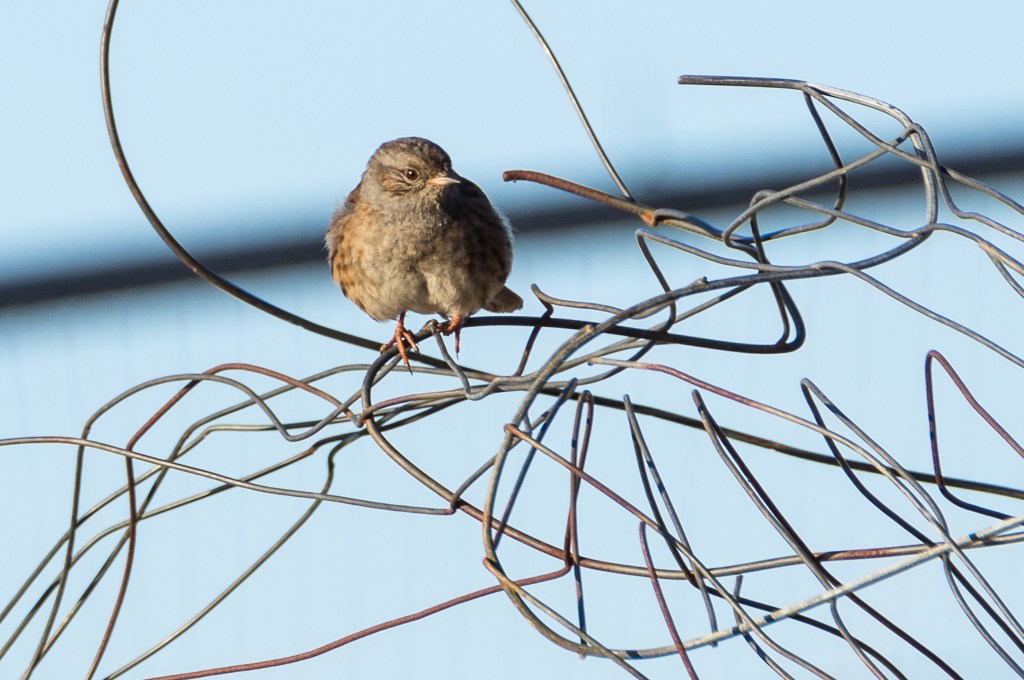
Dunnocks

‘”Unobtrusive, quiet and retiring, without being shy, humble and homely in its deportment and habits, sober and unpretending in its dress, while still neat and graceful, the Dunnock exhibits a pattern which many of a higher grade might imitate,with advantage to themselves and benefit to others through an improved example.’ With these carefully chosen words, the Reverend F. O. Morris (1856) encouraged his parishioners to emulate the humble life of the Dunnock Prunella modularis. His recommendation turns out to be unfortunate. We now know that the Dunnock belies its dull appearance, having extraordinary sexual behaviour and an extremely variable mating system. The result of the Reverend Morris’s advice would have made the relationships on current television soap operas appear dull by comparison.”

N. B. Davies, British Birds, 1987, 80, 604-624

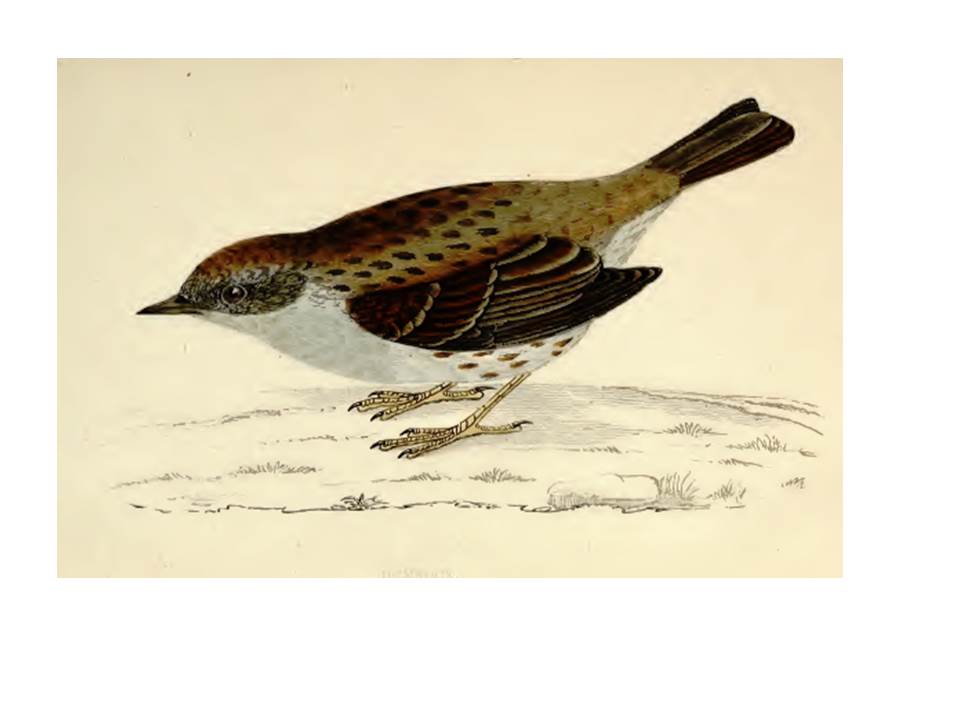
Professor Nick Davies FRS started his 1987 paper with a bang – what a great introduction. I think I can honestly say that writing about sigmatropic rearrangements or ring-closing metathesis reactions (as I did) provided no opportunities of this kind and I suspect that even had I been able to write one, reviewers would have done away with an opening paragraph of this level of impact out of sheer jealousy. Alas. The rest of the Morris (F. O. Morris, A History of British Birds,  London, 1856, 4, 8-13.) is quite engaging; I was able to download the relevant volume from archive.org.

Here is the line drawing from the Morris. I couldn’t do any better myself but it certainly has its limitations.

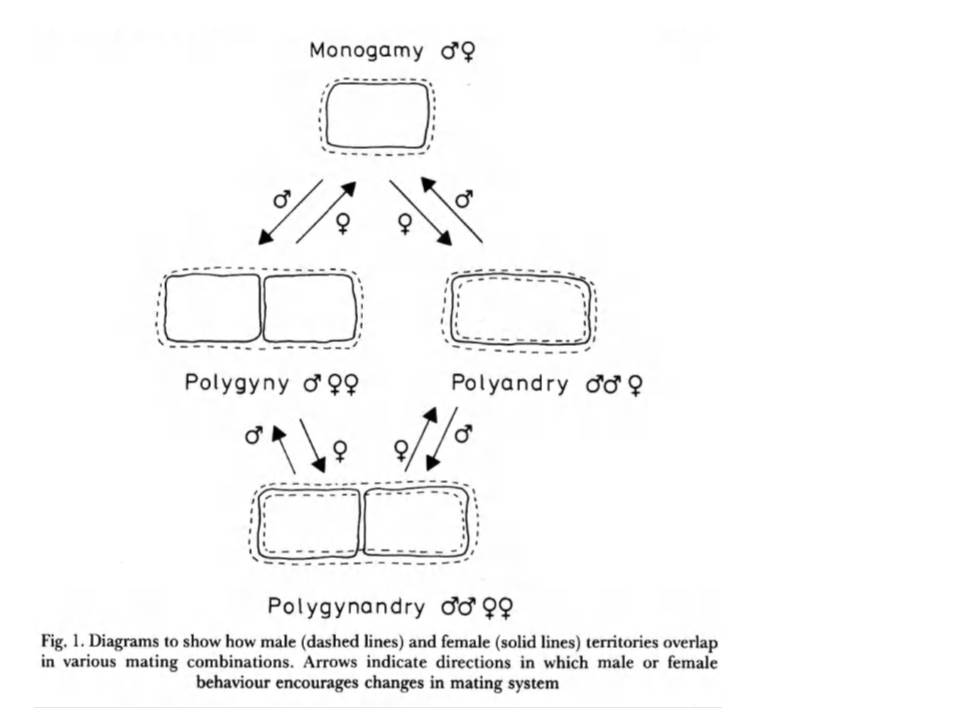
Davies studied a colour-ringed population of Dunnocks in the Cambridge Botanic Garden. It must have been demanding work keeping track of these tiny birds as they foraged on the ground and disappeared into the undergrowth. The diagram summarises the key features of the “extremely variable mating system” from the paper.

Davies recorded and quantified instances of all four arrangements, and discussed the advantages and disadvantages accruing to the two sexes.

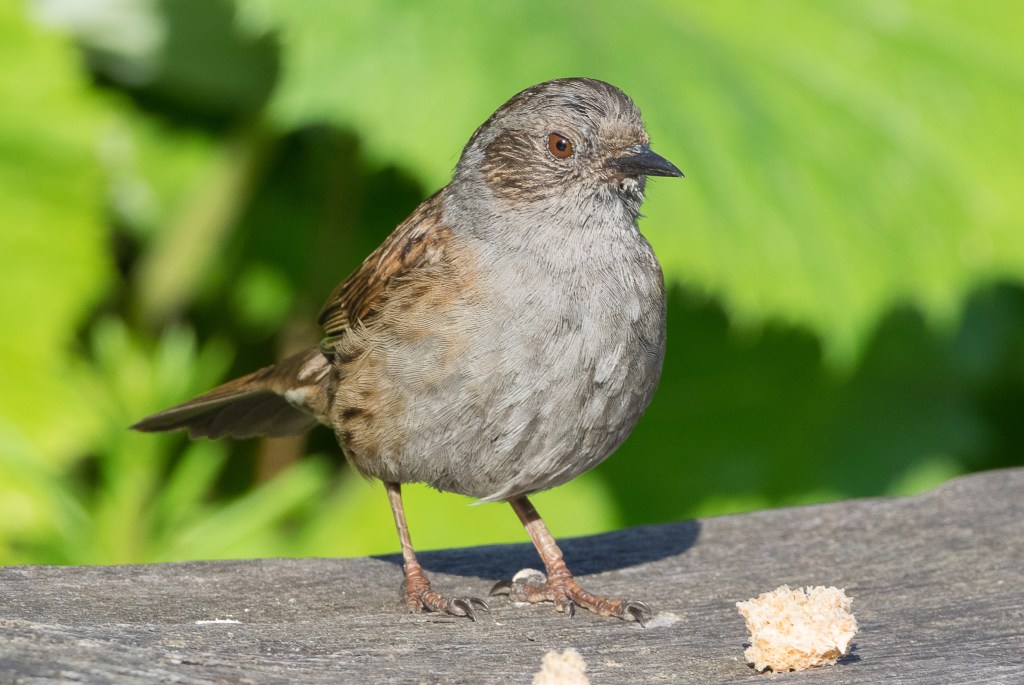
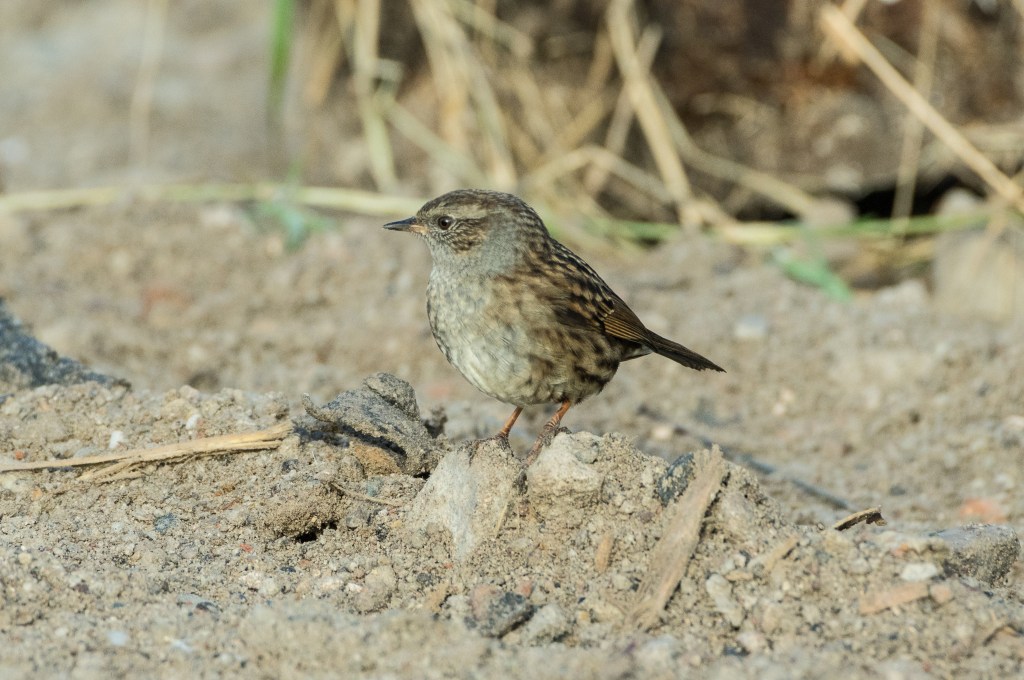
Dunnocks are familiar in urban and suburban environments. A pair were regulars in my mother’s garden, in and out of an old rose on the fence, and sweeping the space of lawn and herbaceous border beneath a bird feeder. In Glasgow, I see them way below me on the ground in the back close quite often.  I see them hopping under cars in the local streets foraging for the tiny things they eat – Dunnocks specialise in prey items so small that other species see their pursuit as unprofitable. The individual I photographed by Maryhill Locks is clearly overfaced by the enormous potential meal before it.

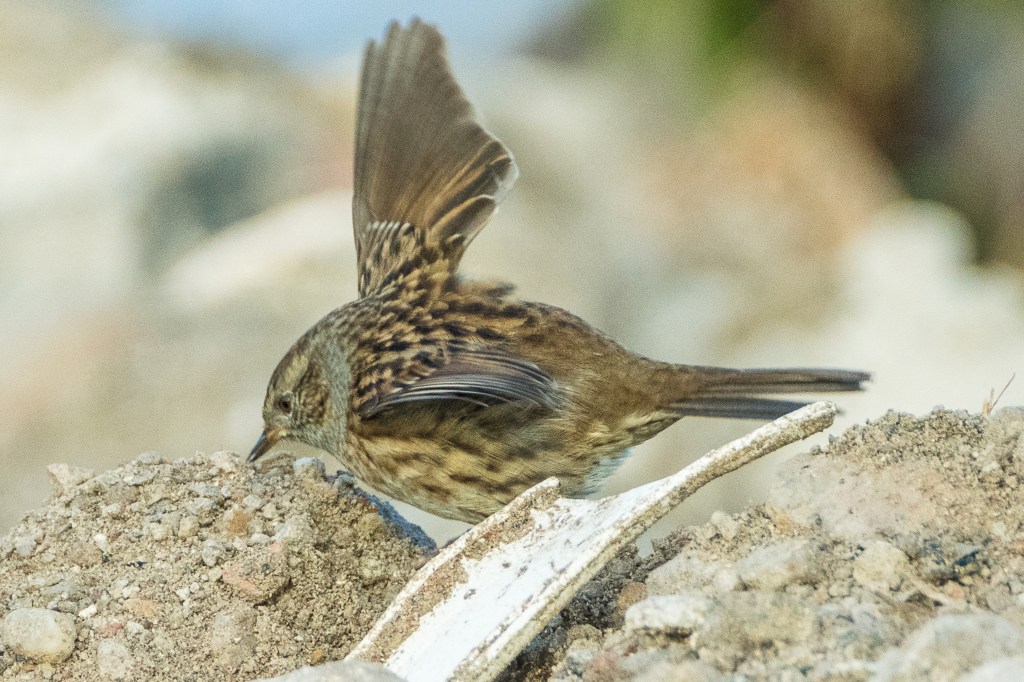
Davies stresses their sedentary nature which means that they don’t range far; the individuals I see regularly will be within metres of their usual pitches. There is a house near to Cardross marked as Murrays on the OS map; without wishing to be unkind, you might decribe it as a project house. I saw the wing-flicking courtship behaviour for the first time on the rustic driveway to the house.

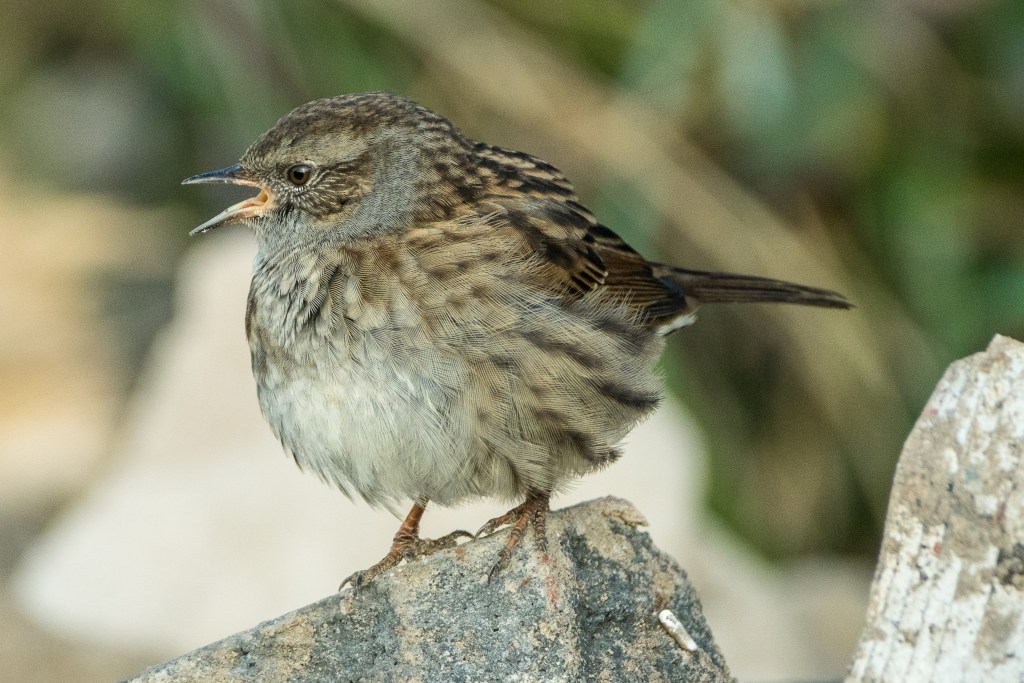
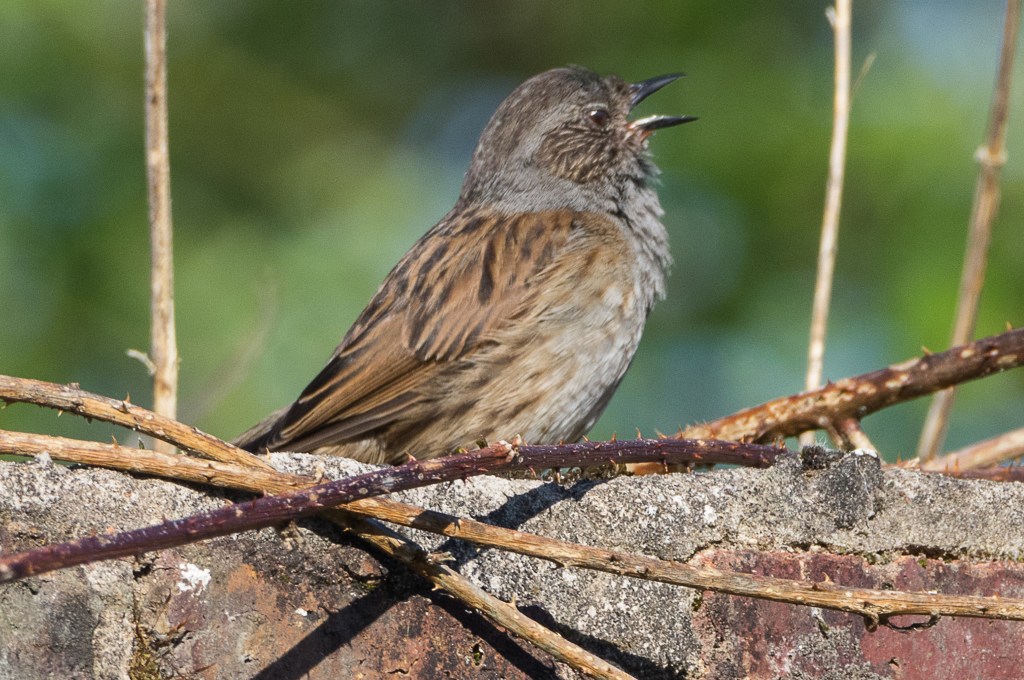
At first, I thought that the bird was injured and I regretted the photograph. I’m glad I was wrong. The bird hopped up onto a rock and started calling surprisingly loudly.

There always seem to be Dunnocks at Murrays, and many perches for them there. On our last visit, the landside was frozen really hard and the Dunnocks and Robins were foraging on the shore which had thawed a bit in winter sunlight, presumably releasing some tiny creatures for the foragers. The better images came from the perchers. Though the overall appearance of the birds doesn’t exactly set the pulse racing, the better images reveal a glorious range of textures.

Davies spoke about his work on The Life Scientific on Radio 4. He retained his interest in Dunnocks, watching a smaller population in the garden of his Cambridge house closely. In 2021, he published a short coda to his earlier work entitled “Male Dunnock kills the other male in a mating trio” as a Note in British Birds. He describes an almost cartoonish level of violence, reminiscent of the Joe Pesci characters in Martin Scorcese’s Goodfellas and Casino films and perhaps surprising in a small bird.

I will continue to watch Dunnocks, enjoy their precise quartering of their territories, and worry about them going under cars.

The last word goes to poet Tony Lopez (A Handbook of British Birds, Pig Press, Durham, 1982):

If its slumbers are disturbed, the Dunnock wakes with a snatch of melody. I have heard it sing when startled by the light of a passing cycle-lamp.

As well you might in Cambridge, where I was given my copy of the Handbook.