Pied Wagtails

Backwoodsman is finding the cheerful spring weather to be a poor fit with events in the wider world; writing has not seemed like a worthwhile activity. It’s a bit like farting in a hurricane (“so what’s new?” you ask). For example, Backwoodsman had the misfortune to watch a speech made by the PM to an audience of captive NHS workers (Thursday 13th March), televised by the BBC. In full-on call-me-Keir mode, the man once described by Alexei Sayle as “a fatberg blocking the possibility of making the world a better place” explained how all would be swept aside, or bleed on the altar of growth. Here is the background to Backwoodsman’s interest as reported by the BBC under the headline “Charities accuse Starmer of misleading spider claims”:

“Writing in the Daily Telegraph on Thursday, Sir Keir said the project was to “build more than 15,000 new homes” with a “17-minute commute into central London”. He wrote that the previous government had bought 125 hectares of former industrial land and quarries to build homes on, but the plan had been “blocked by Natural England” due to “the discovery of a colony of ‘distinguished jumping spiders'”. He added: “It’s nonsense. And we’ll stop it.” In a speech in Hull later the same day, Sir Keir appeared to refer to Ebbsfleet again, saying that “jumping spiders” had stopped “an entire new town”. He added: “I’ve not made that example up, it’s where we’ve got to.””

So OK, it’s not ethnic cleansing in Gaza, or the US and Russia carving up the European continent to suit themselves but it was unpleasant to see an elected Labour  leader displaying such a loathsome attitude.  “Are you tories in disguise, are you tories in disguise?” they chorus from the terraces.
In an attempt to recover from all this gloom, Backwoodsman has been thinking of a bird which brings cheer in the most miserable of circumstances, for example, Backwoodsman’s walk to the office in his former employ. This took in the decaying shopping centre of Glasgow, leading to the bridge which takes Cathedral Street over Queen Street station. And here is the view of the last two hundred metres; please note the presence of Best Kebab in the foreground.

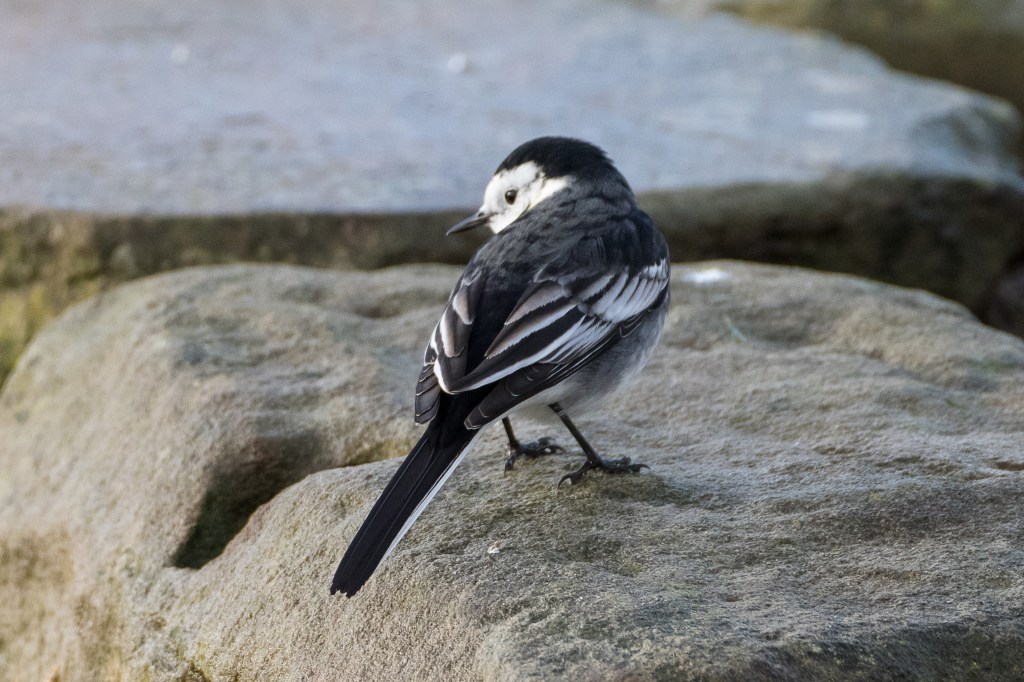
At lunchtime, this outlet would sell foul-smelling food to the University’s students; Backwoodsman shudders to think what went on in its premises as night came, but in the morning, it would occasionally resound with something that sounded like Rai music (as celebrated in Patrice Leconte’s 1990 film The Hairdresser’s Husband), and would usually be patrolled by a Pied Wagtail. There in a bob and a dart and a flash was something to improve the start of the working day.

Pied Wagtails are just great, aren’t they? According to the BTO, they only last a couple of years on average but they pack a lot in, sometimes in hostile environments. There are quite a lot of them (half-a-million pairs) and their numbers seem to be growing. They are insectivores but are adaptable in their diets, a hallmark of a species which succeeds in an urban setting.
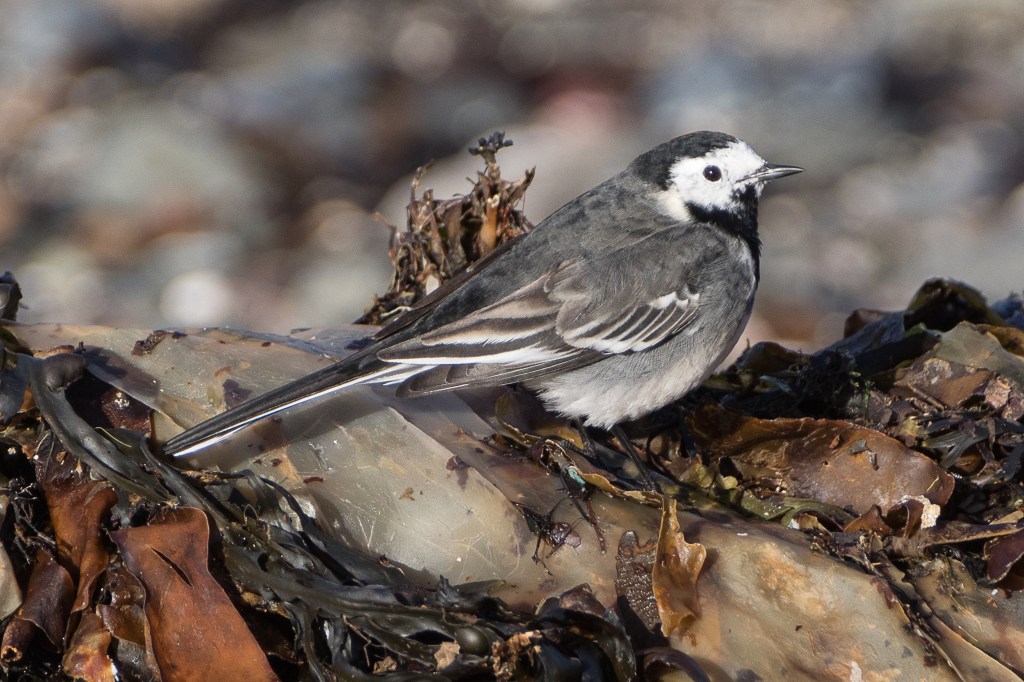
It is unusual not to see them on the Ayrshire beaches, particularly when the tide has rolled up a good crop of weed. It doesn’t take the insects long to colonise the decaying material and then there is food for all, Wagtails, Turnstones, Corvids and Starlings alike. Backwoodsman’s best Wagtail sighting was at Stevenston one recent winter afternoon when ten individuals could be seen in as many metres of beach. We used to see them from the windows of our flat; they would patrol the stonework of the neighbouring terrace. There is a territory on the Glasgow Harbour, and several on the new North Bridge estate (running routes) – how many could there be across the whole city?
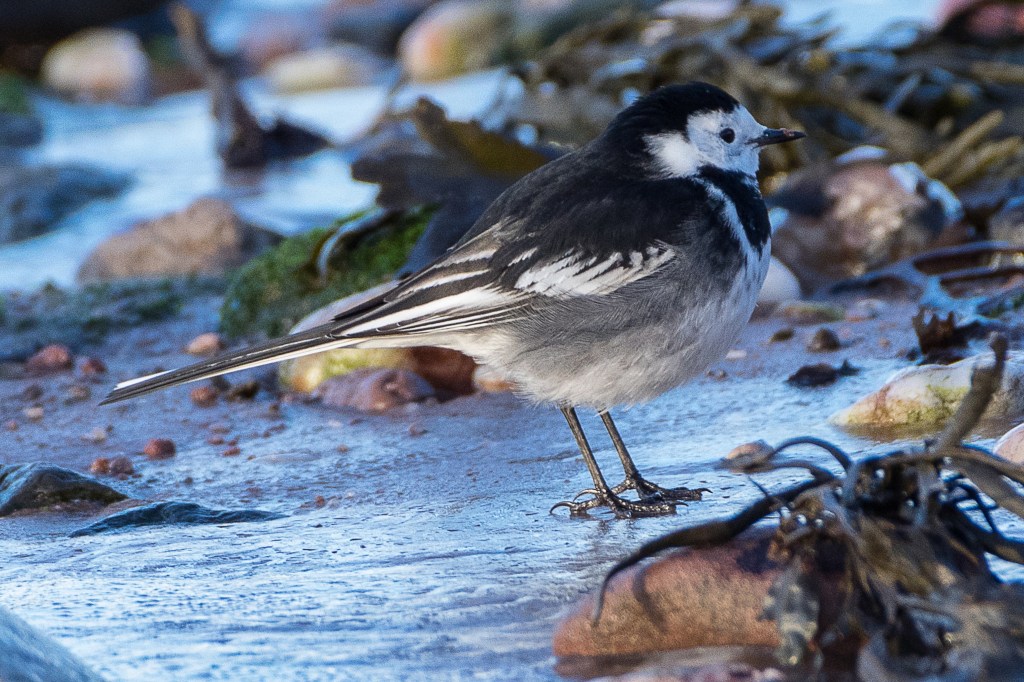
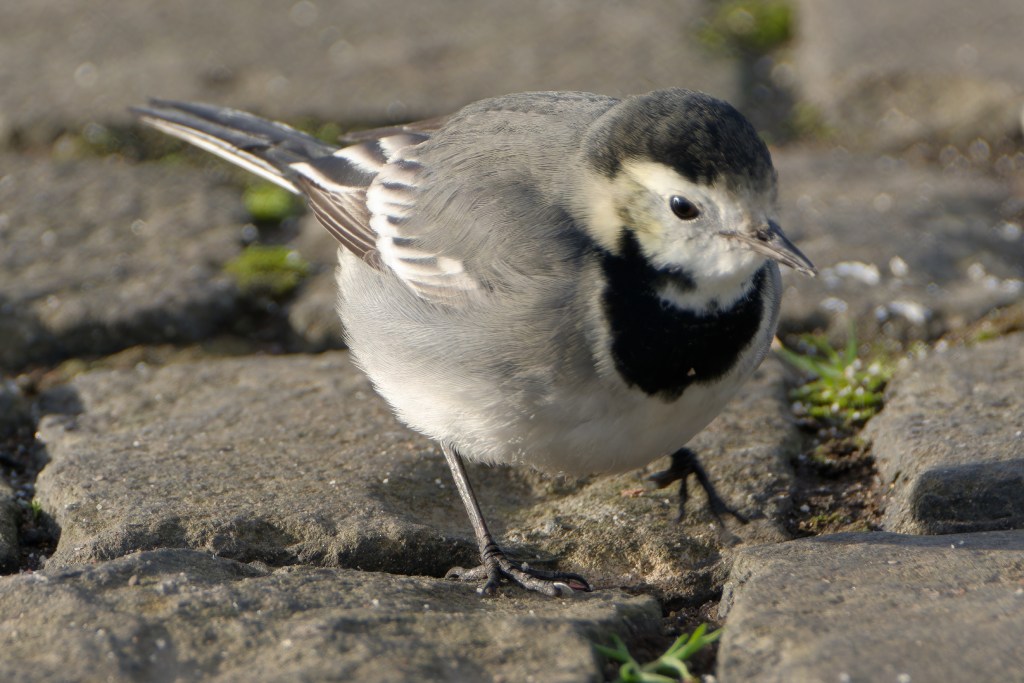
Backwoodsman finds them hard to photograph; they seem to vibrate, requiring a high shutter speed and then we get into all the usual boring stuff about high ISO, wide aperture and low depth of field. But every now and again, you get one when it is busy and neither looking nor moving. Here are two birds, one juvenile and one more mature adult, in the mini-Somme created by grazing stock at RSPB Baron’s Haugh in January. The juvenile has more yellow-cream, the adult more black-and-white.
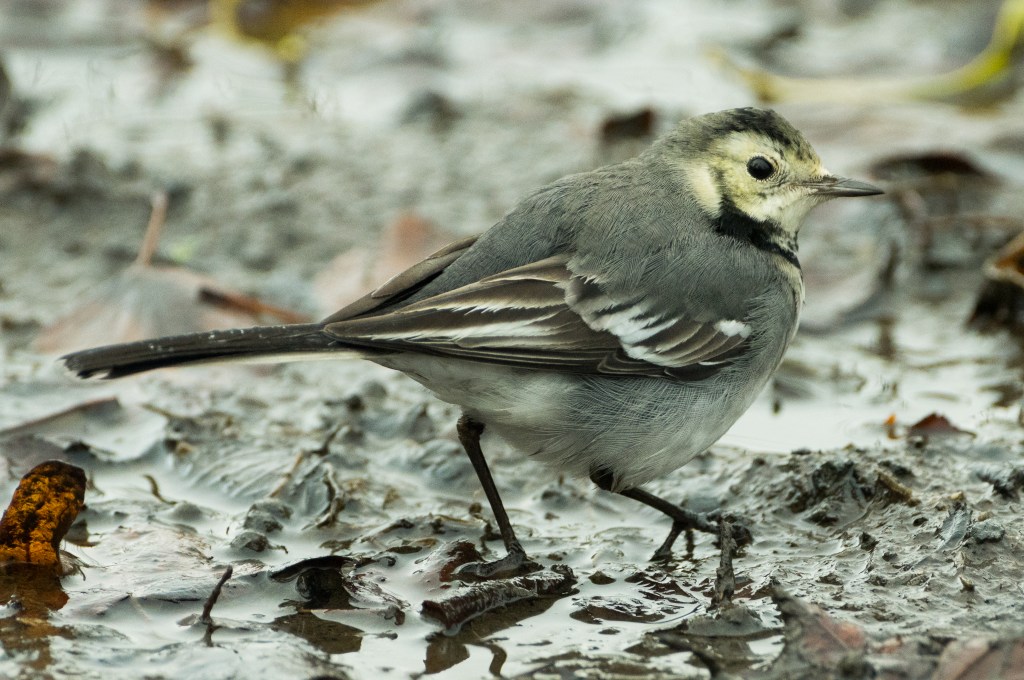
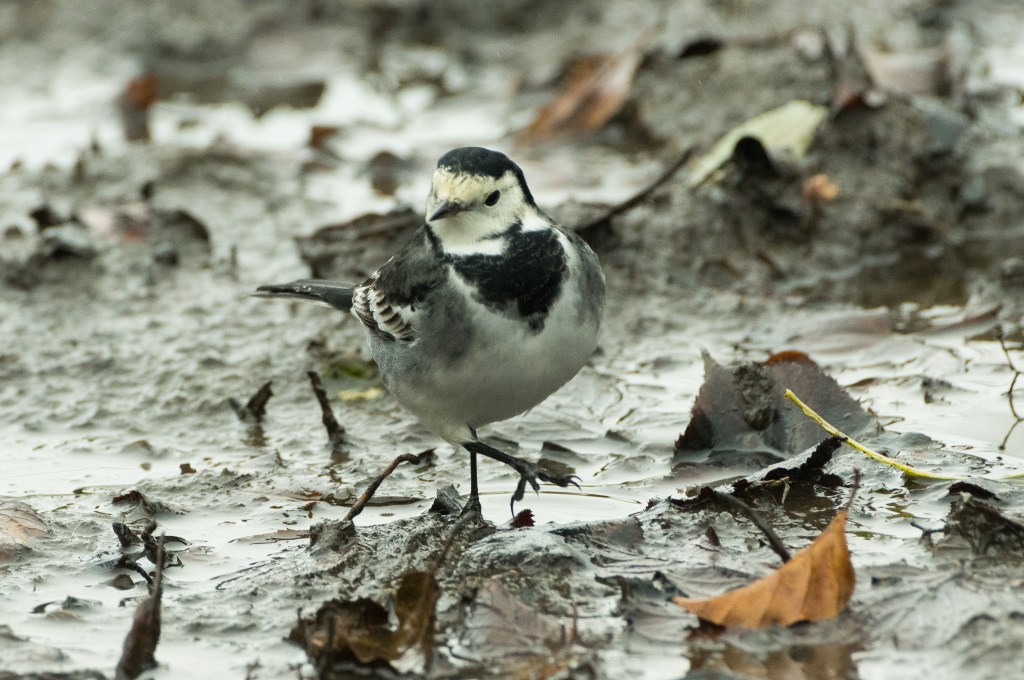
First year or fresh birds are very pale; we found some at Troon. They were quite hard to see against the rocks of the coastal defences.
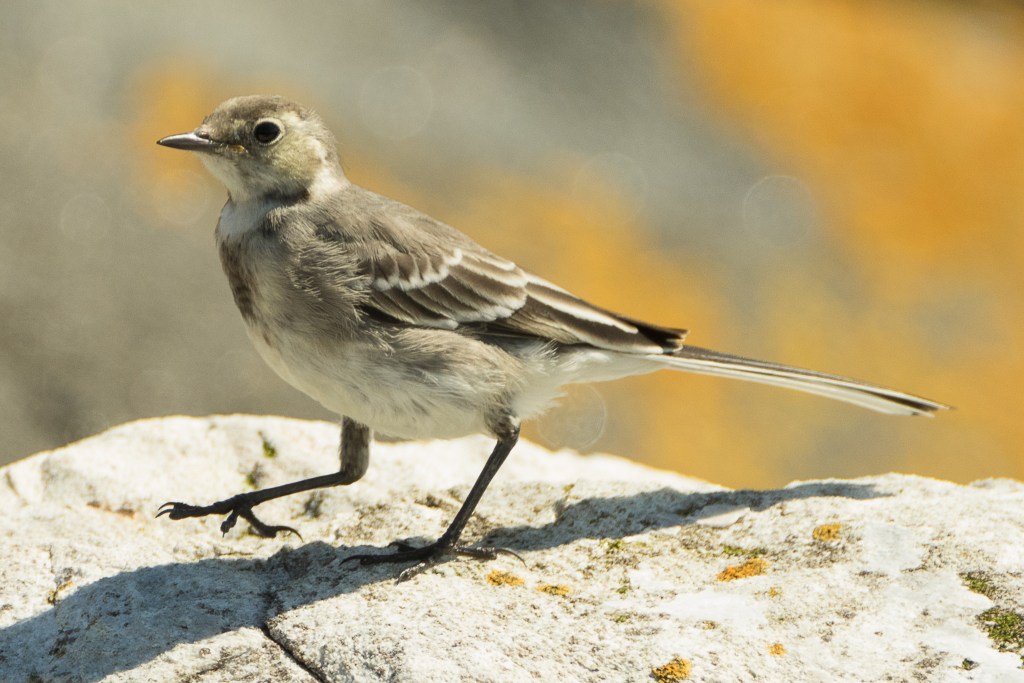
One almost gave Backwoodsman the shot he has always wanted of an adult, the one where the tail feathers are fanned in flight.
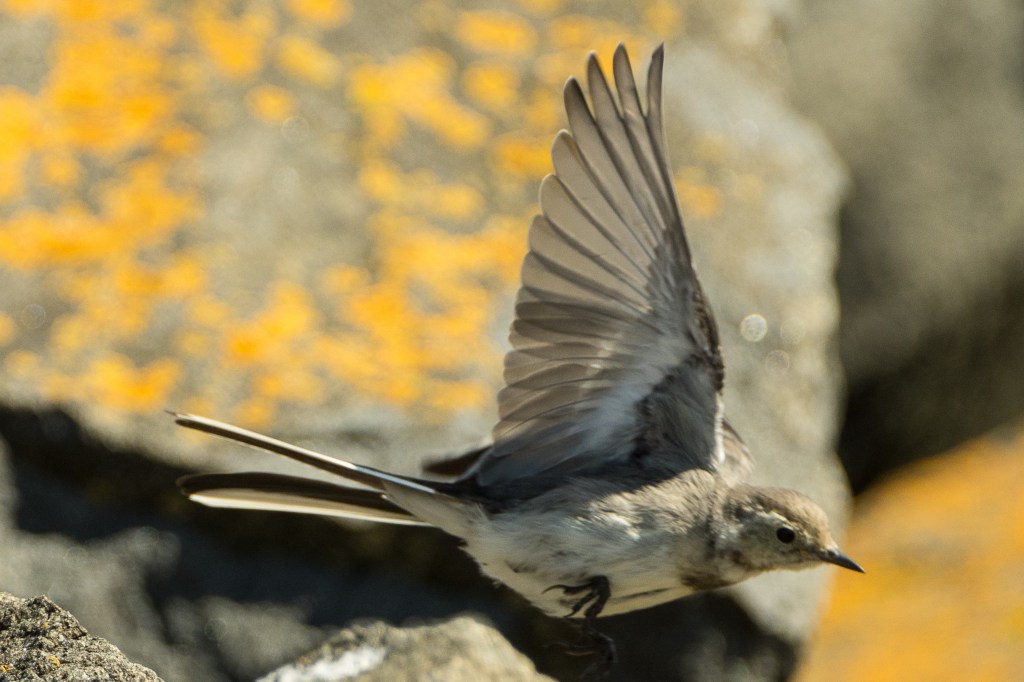
After many fruitless attempts in which a nicely focussed bird executes a vertical take-off and leaves the frame empty, Backwoodsman has abandoned this project.

But Pied Wagtails will continue to provide joy, wherever and whenever. They are always worth a look, and a second.  
Greenfinches

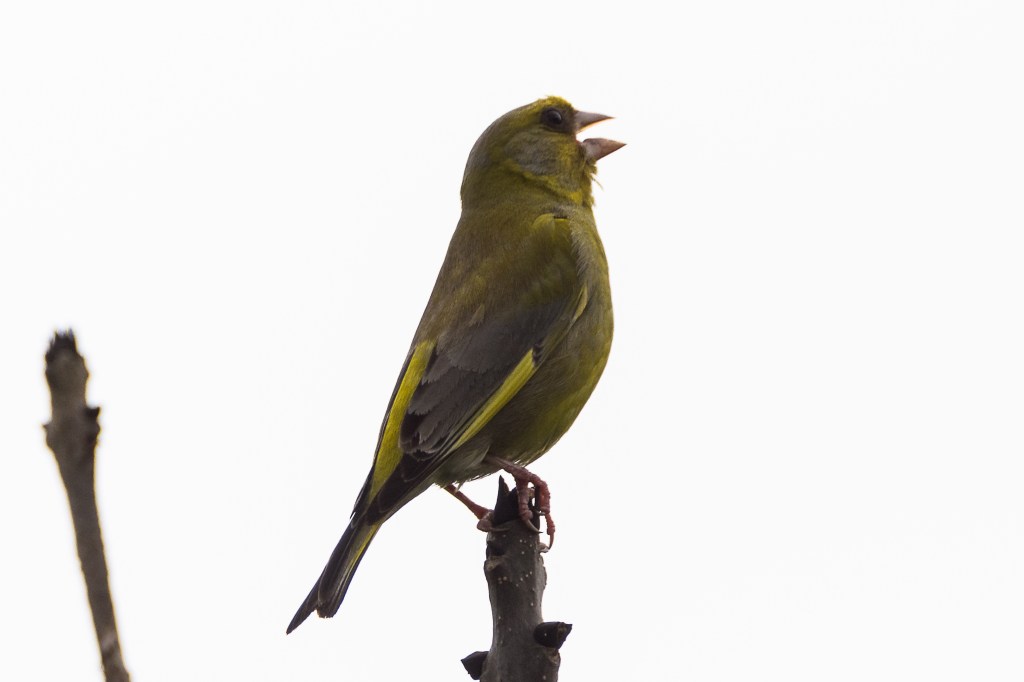
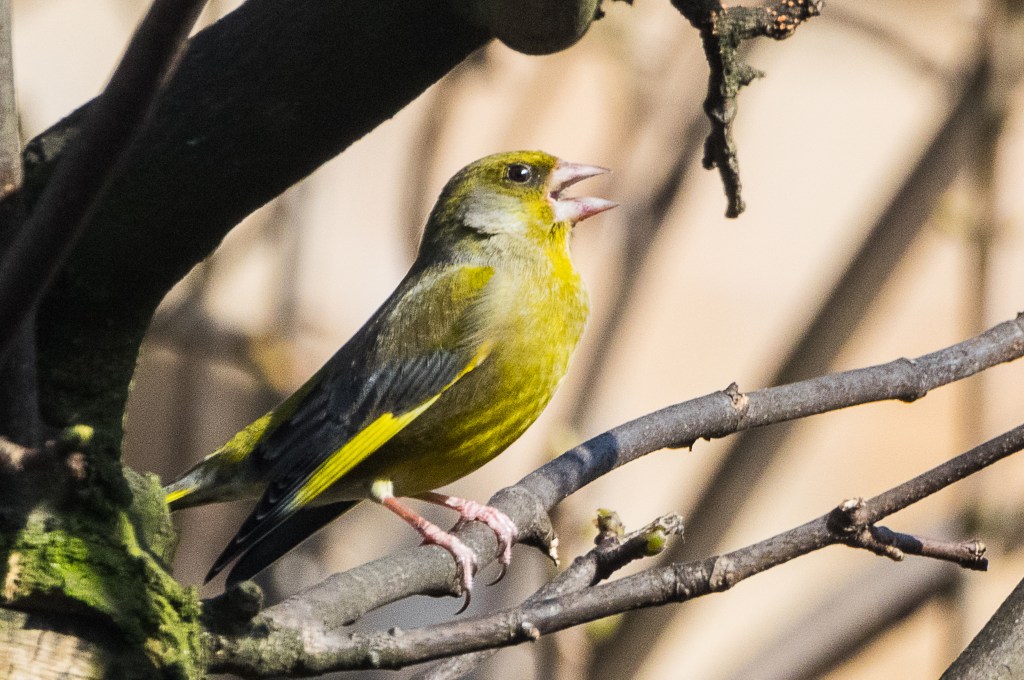
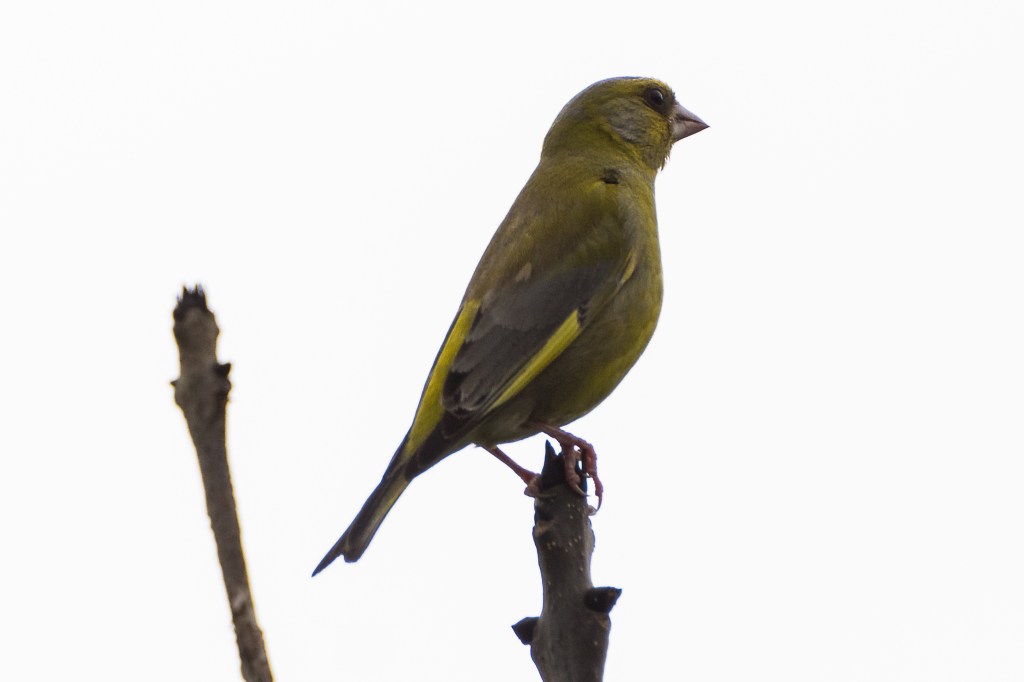
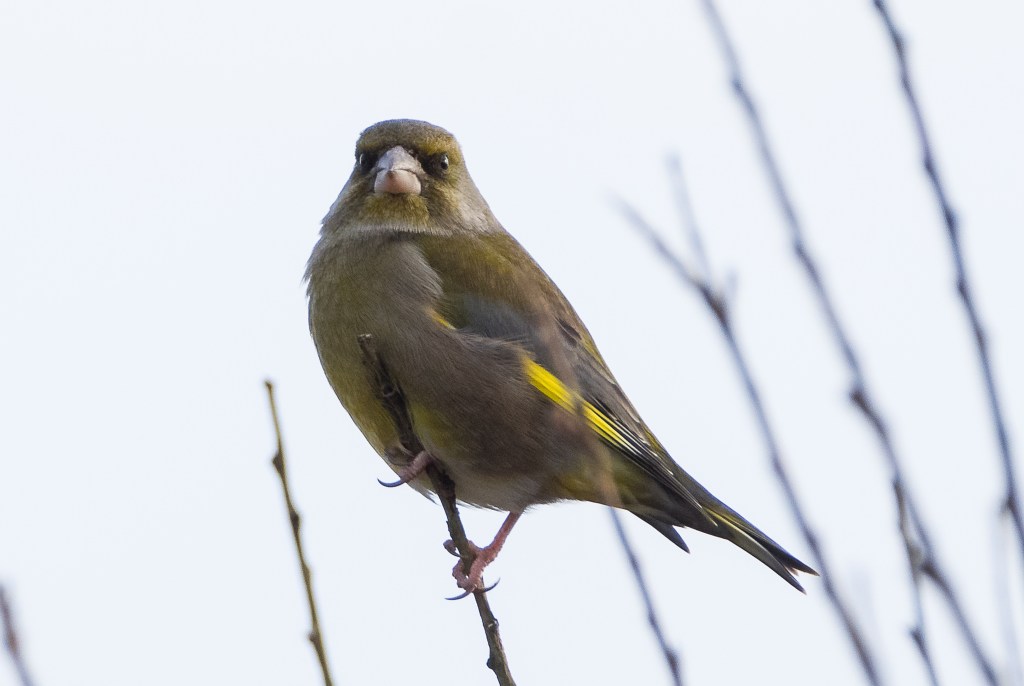
I remember Greenfinches vividly from childhood; I was a member of the Young Ornithologists Club and my parents would put a bag of peanuts up in the garden to attract birds and give me something to look at from the house. The Greenfinches would turn up en masse and compete vigorously for food, flashing their yellow wing bars and bickering. I became very used to seeing them and I guess I began to think them commonplace, a great injustice given the astonishing range of colours they are possessed of. Now they seem exotic and vulnerable, all the more so given the precipitous decline in population caused by the Trichomonosis parasite.

This calamity was documented in 2012 by Cunningham et al. (Phil. Trans. R. Soc. B, 2012, 367, 2852–2863).  The infection was first identified in 2005, with epidemic mortality identified in 2006 and in subsequent years. The disease is most unpleasant and I won’t go into detail; Cunningham’s open access paper provides an introduction to the nature of the disease and the grim business of counting the dead. Greenfinches now have Red UK conservation status.

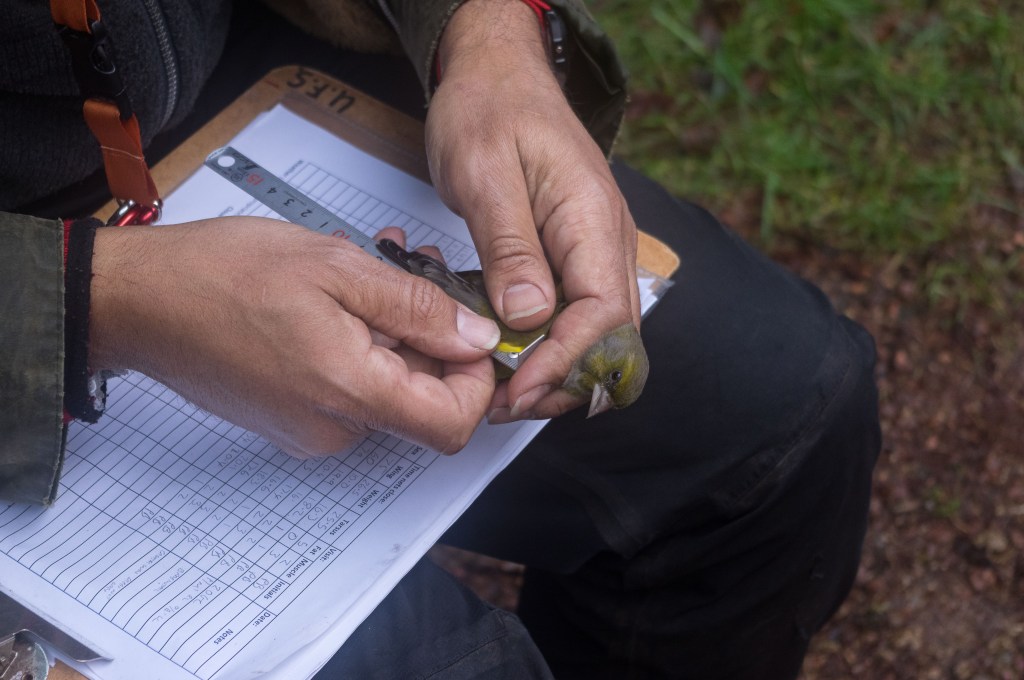
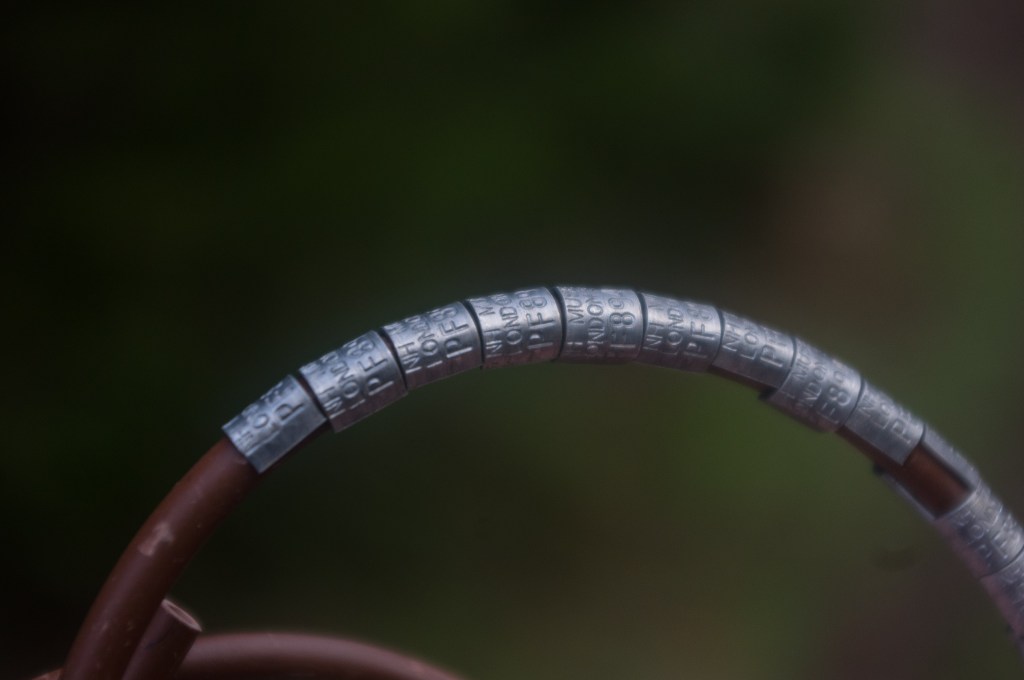
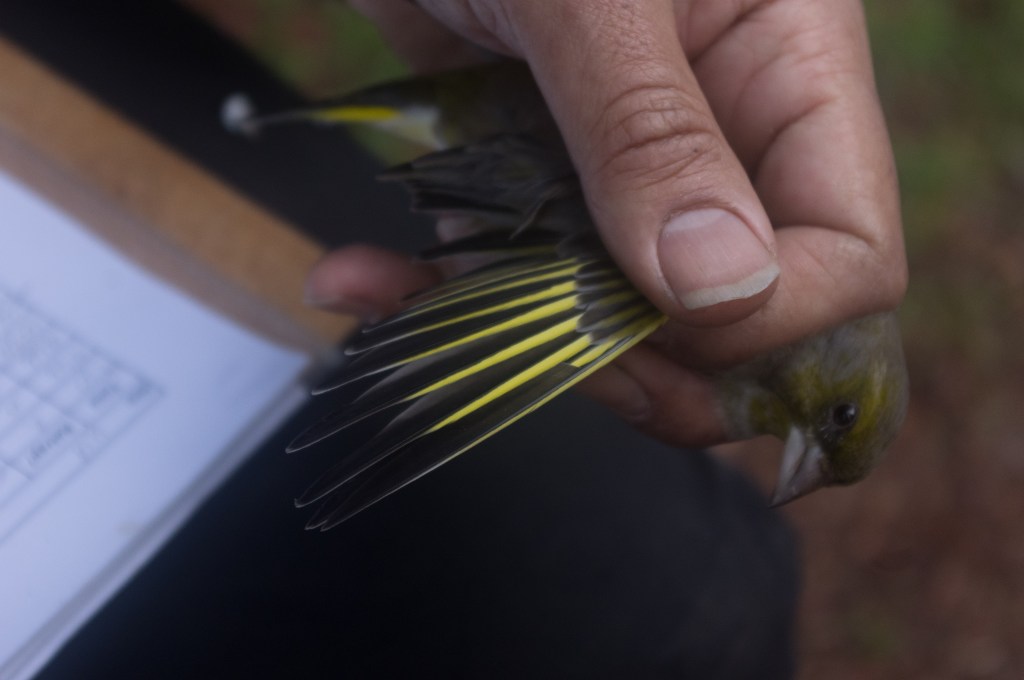
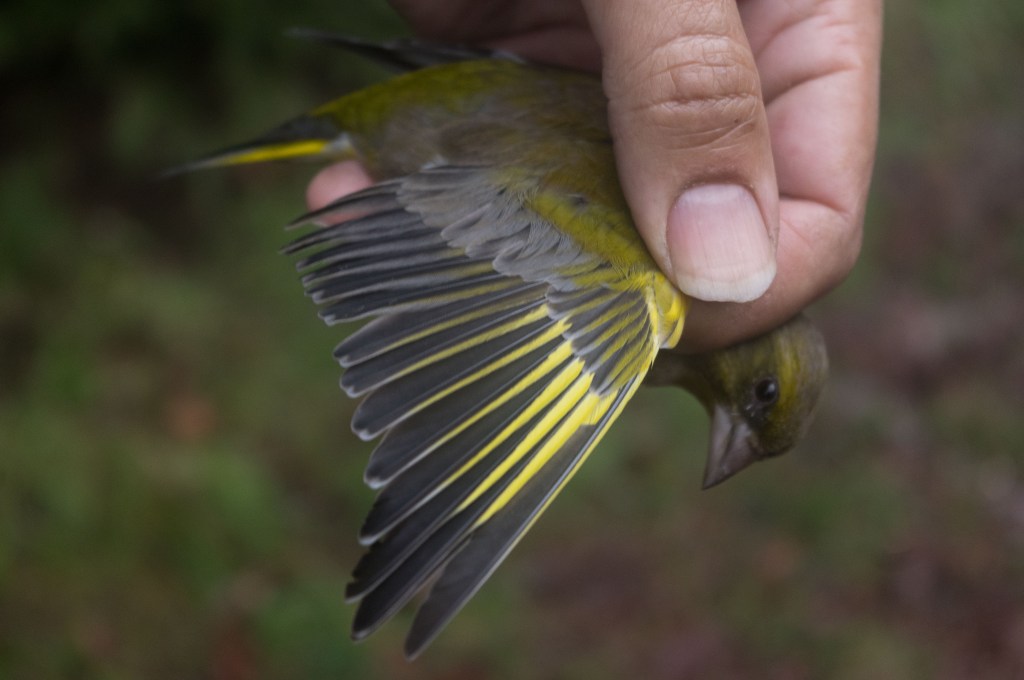
Much of the data used to track the infection and the changing Greenfinch population was provided by the long term BTO Garden Bird Feeding Survey, a rigorous activity involving regular monitoring at ca 275 sites across the UK between October and March. The Survey continues to yield useful information; for example, the changes in composition of British bird communities associated with long-term garden bird feeding have been assessed using data from the Survey (Plummer et al., Nature Comm., 2019, 10, 1-8). The progress of the epidemic was also tracked via the recovery of rings from dead birds. The BTO has a long established ringing programme which we’ve interacted with close to home in Kelvingrove Park. I’ve some images of a Greenfinch which was caught, measured and ringed during a session in December 2022.

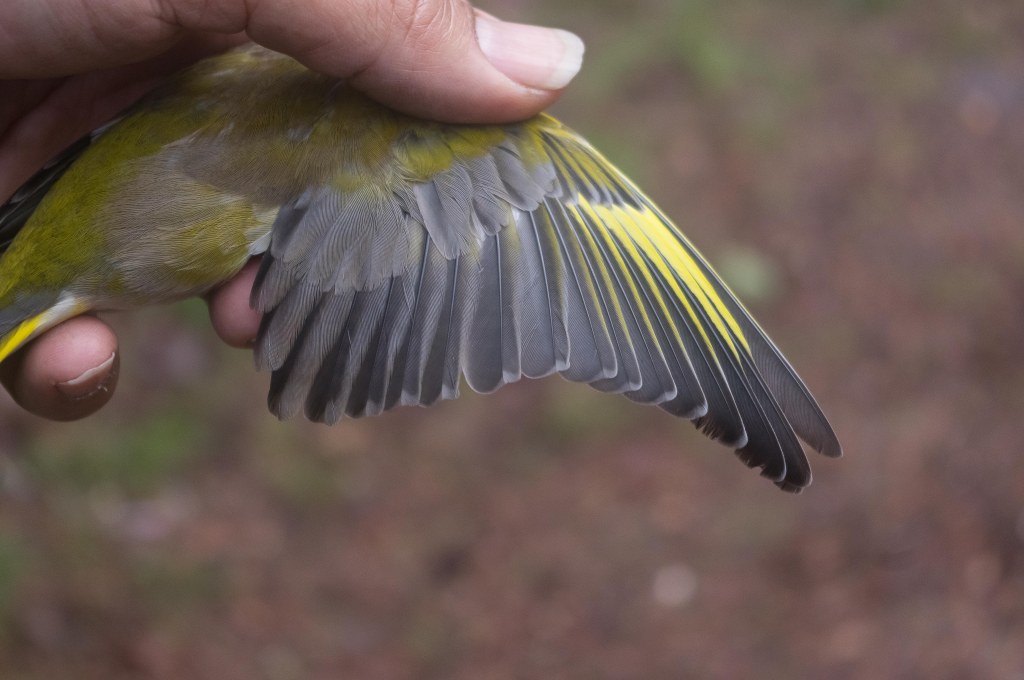
I wasn’t aware of the extent of the data collected on these occasions; birds are weighed (this involves them spending a short time head down in a plastic tub) and measured, and their general condition is assessed. I was really interested to learn that periods of poor feeding can be identified from tiny grooves across the feathers. These datasets enable the BTO to profile bird health across the population. I enjoyed the opportunity to see one of these brilliant birds at close range. I particularly liked the opportunity to see the wings, which were extended and spread as part of the examination, rather than for my benefit.

White balance is always tricky but I hope I’ve rendered the colours accurately; these finches have several yellows, greens and greys. The ringing took place on a dark December day but when the sun hits these finches, they are dazzling.

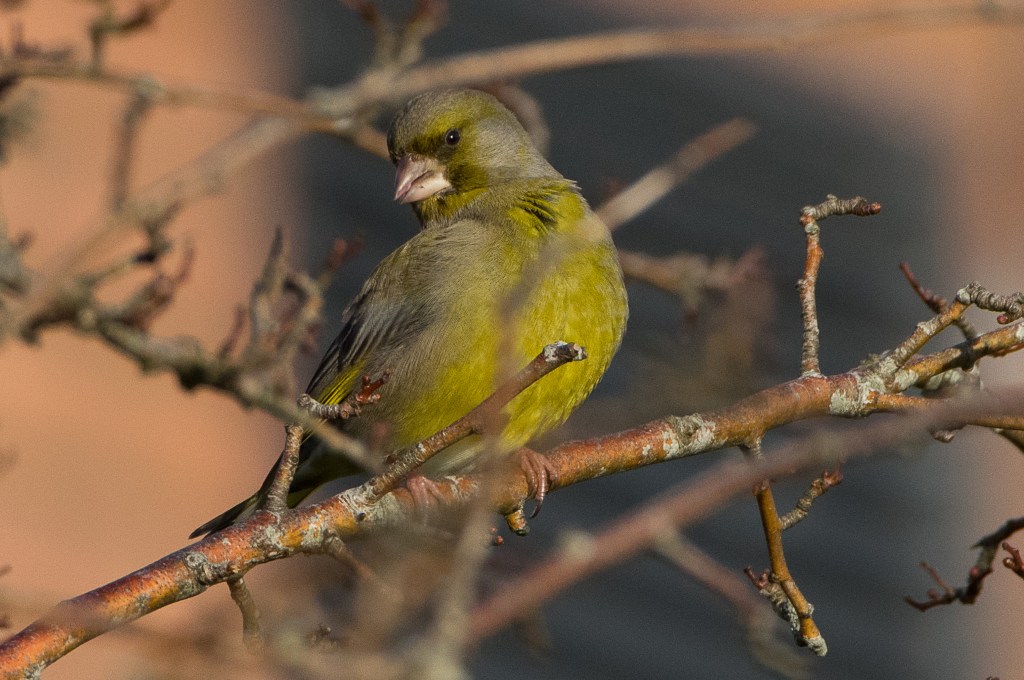
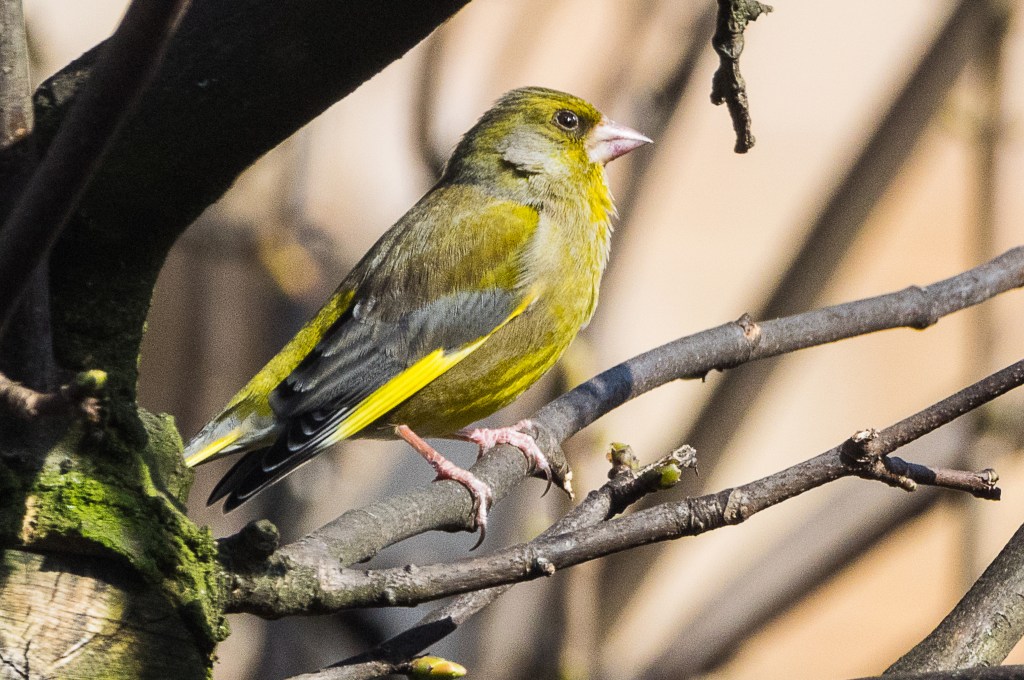
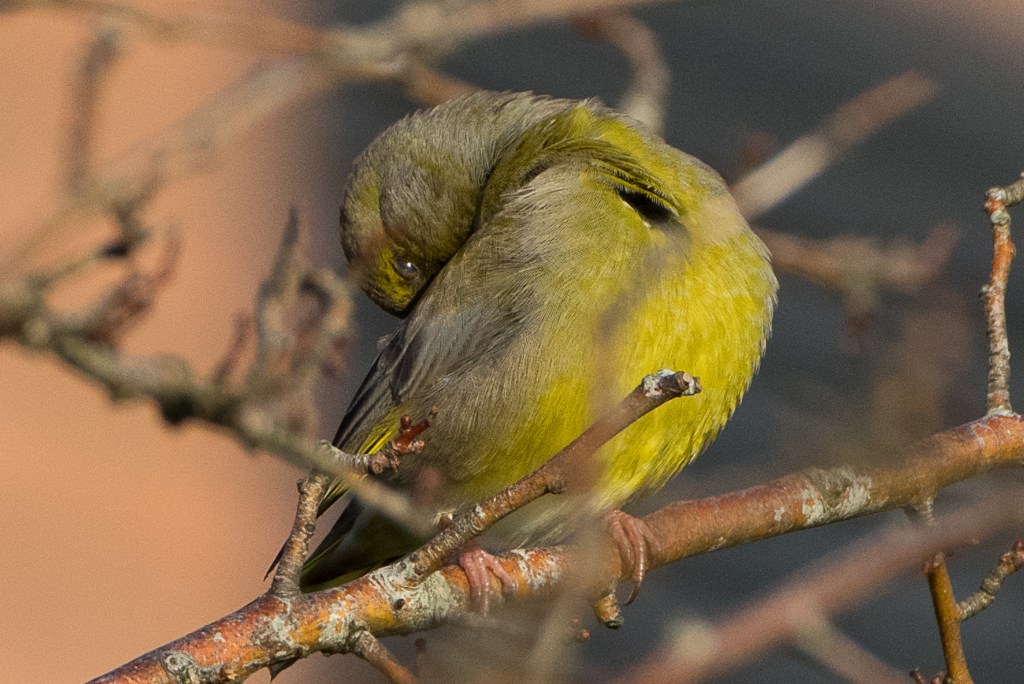
Though this image is a little grainy (the bird was about 15m away and through a window), I like it because of the iridescence of the breast feathers.

We heard this chap before we saw him; we were walking along the Clyde towards Cambuslang and he was commanding his territory with some vigour.

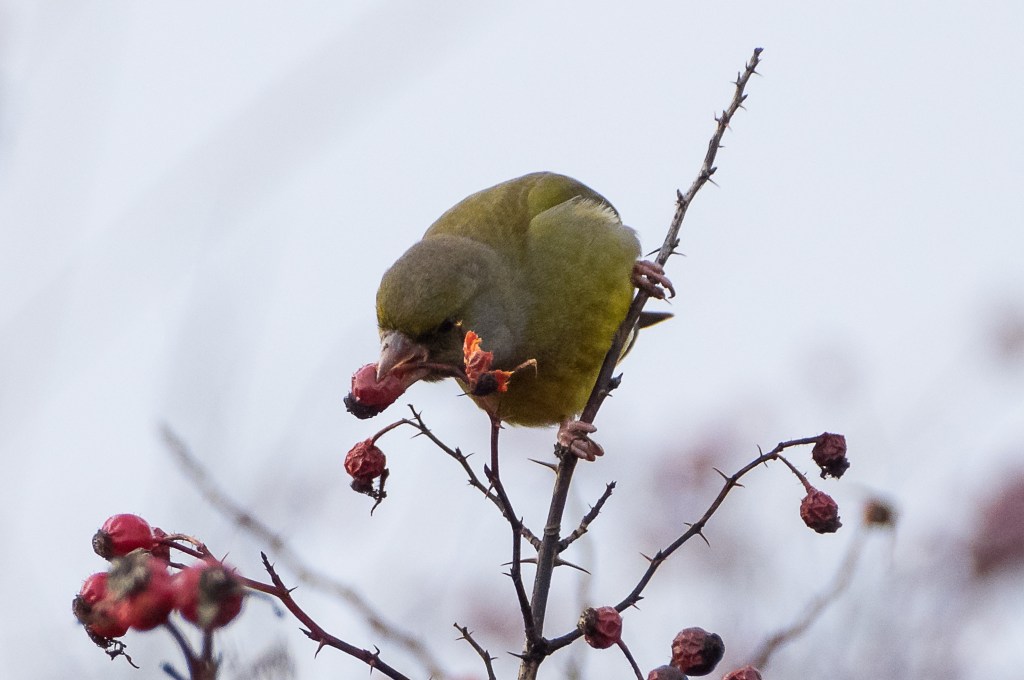
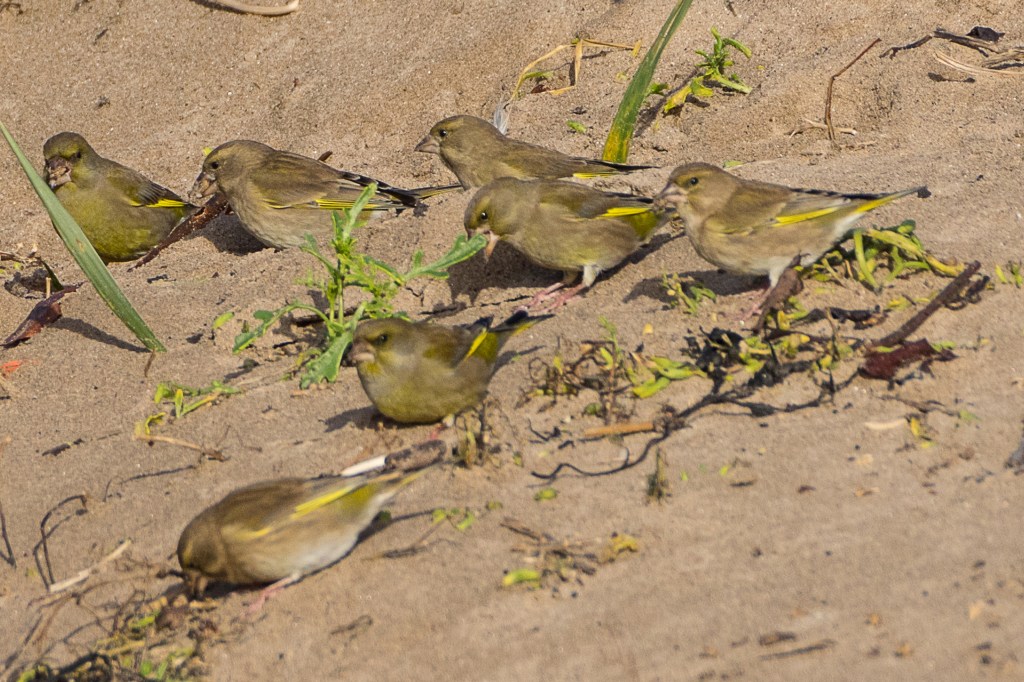
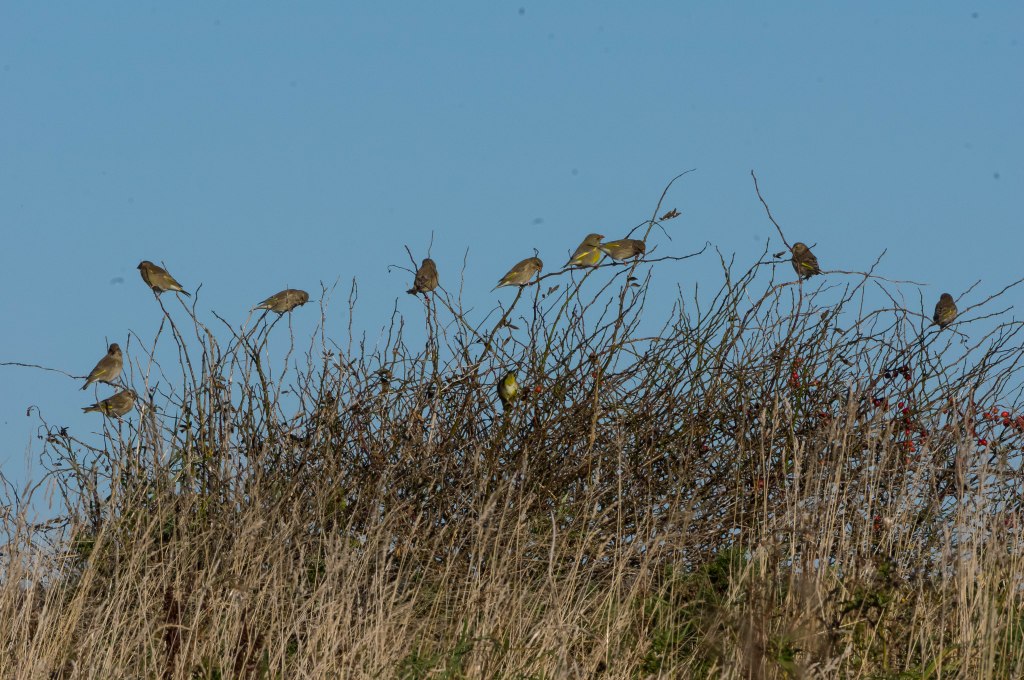
We see them regularly at the seaside, perching and feeding on the wild roses behind the dunes. They often flock with Linnets and we’ve seen them feeding on the sand above the high water line.

Although they were on a busy beach and their visits to the ground were short, all the birds in the image seem to have a beak full of something, but what? I was surprised to see a huge amount of Beech mast in the sea very close to where the birds were feeding. I wondered if the water had freed the nuts from their cases and cast them higher up the beach. I can’t find a good source to tell me if 2022 was a mast year (when acorns, nuts, winged and other seeds cascade from the trees). It could be that they’ve found a crop of mature seeds from a sea vegetable – that’s probably a simpler explanation.

This weekend sees the Big Garden Birdwatch and I imagine our regular Greenfinch will turn up and compete for sunflower hearts. Being a bit of a unit, he isn’t easy to shift from the feeder but weight of numbers of other species cramp his style. Plummer et al. (PLoS ONE 2018, 13(9), 1-13, e0202152) found “a significant positive association between body mass and dominance across ten passerine species of birds that were observed to compete regularly at supplementary feeding sites.” I’ll come back to this hierarchy one day in a post about another finch species. I haven’t seen our Greenfinch today so I hope he’s well and getting in good nick for a successful breeding season.

Stonechats

There’s a walk we used to do when my wife worked in Cardiff; it started at Llantwit Major station and followed the Nash Brook down to Cwm Nash, emerging onto the beach through a huge notch in the cliffs. There was a café there – a couple of leathery surfers wouldn’t look out of place lounging by it. The first image represents the view to the left.

The limestone pavement and cliffs run all the way to Nash Point, where there is a lighthouse and a foghorn to warn mariners of the considerable perils of Bristol Channel. I was a strict manual camera user then, shooting only slide film, probably Kodachrome 64 in this case. The image is scanned from a slide so it’s grainy but the point of the image is the grandeur of the beachscape.

A path rises up the cliff from Cwm Nash and takes you along the top with spectacular views and when we visited, Choughs, corkscrewing and calling up and down the sheer faces, red talons extended and red bills agape. I wish I had tried to photograph them but I was all set up for landscape and thought success most unlikely. The landscape by Nash Point was crossed by old stone walls and studded with gorse bushes, and it resounded with sharp and insistent percussion. Wrens perhaps? Not quite the right sound. And then we were able to see a small bird, and then a pair of them, perching and dipping, then making short swooping flights to another perch nearby. As we advanced, they would work around us and follow us back into their territory. Stonechats of course, unmistakeable with hindsight and a good look at the book.
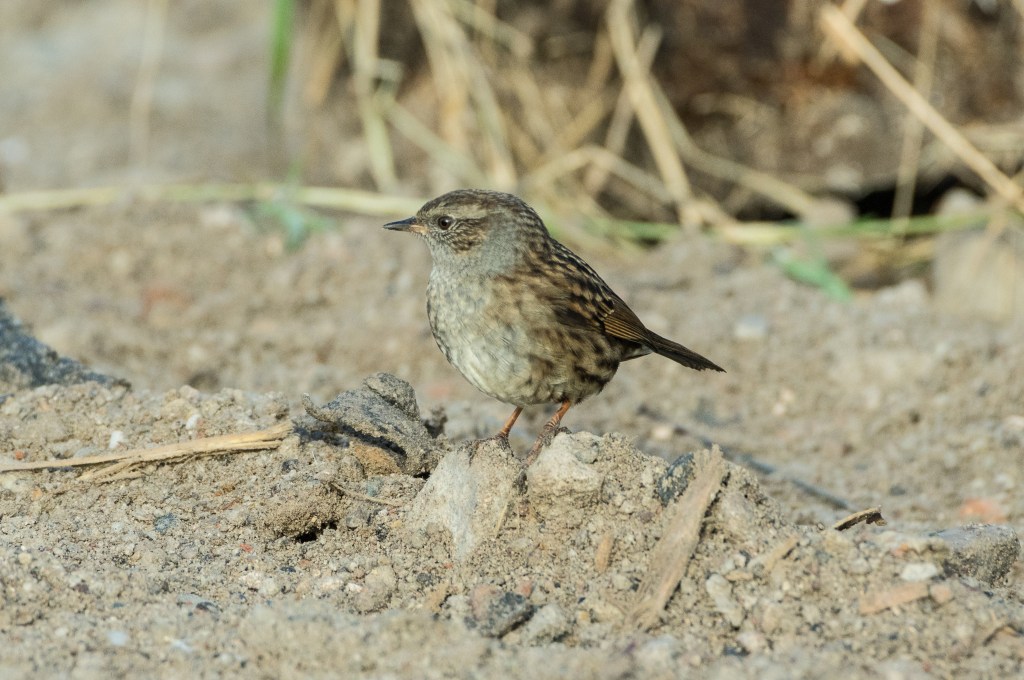
Stevenston is a good place for them closer to home and that’s where most of my pictures come from. There’s rough ground all along the top of the beach with a great range of perches and, or so I would imagine, a lot of insect habitats. We’ve also seen them regularly on the way up the Kilpatrick Hills. Even with up to a year between the visits, the Stonechats are never far from where we saw them first.

I had assumed from these regular-as-clockwork sightings that Stonechats were sedentary but Callion (British Birds, 2015, 108, 648-659) shows otherwise in a rigorous study of a Cumbrian population in which there was considerable mobility between breeding and wintering territories, and further afield.
Small birds which eat mostly insects are very vulnerable in hard winters. Stephen Moss wrote a nice piece about them in the Guardian in 2013 (though with a truly awful illustration) and there is an interesting account of their wintering behaviour in Cheshire and on the Wirral, based on work carried out by the BTO and using ringing data. The executive summary involves a combination of shocking levels of Stonechat mortality, mitigated by southerly migration followed by furious levels of breeding activity to restore numbers.
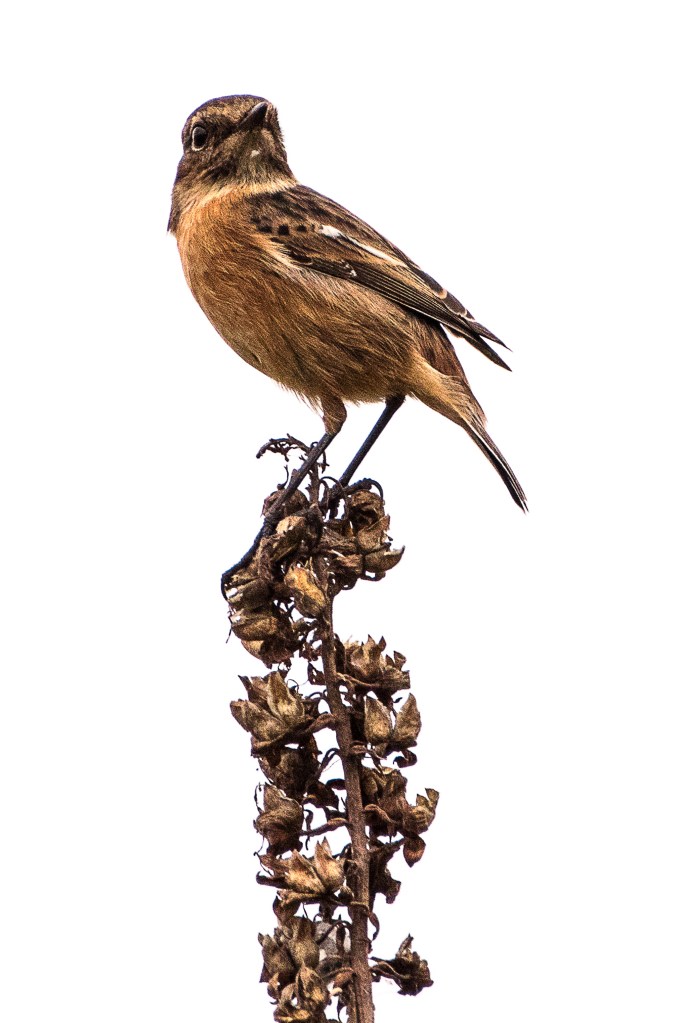
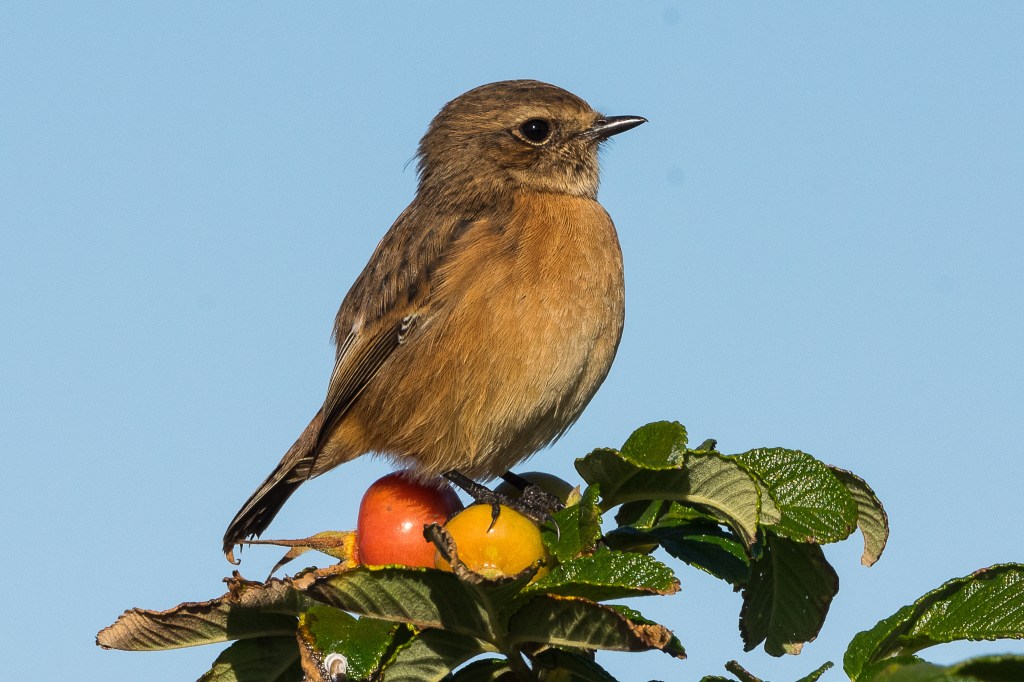
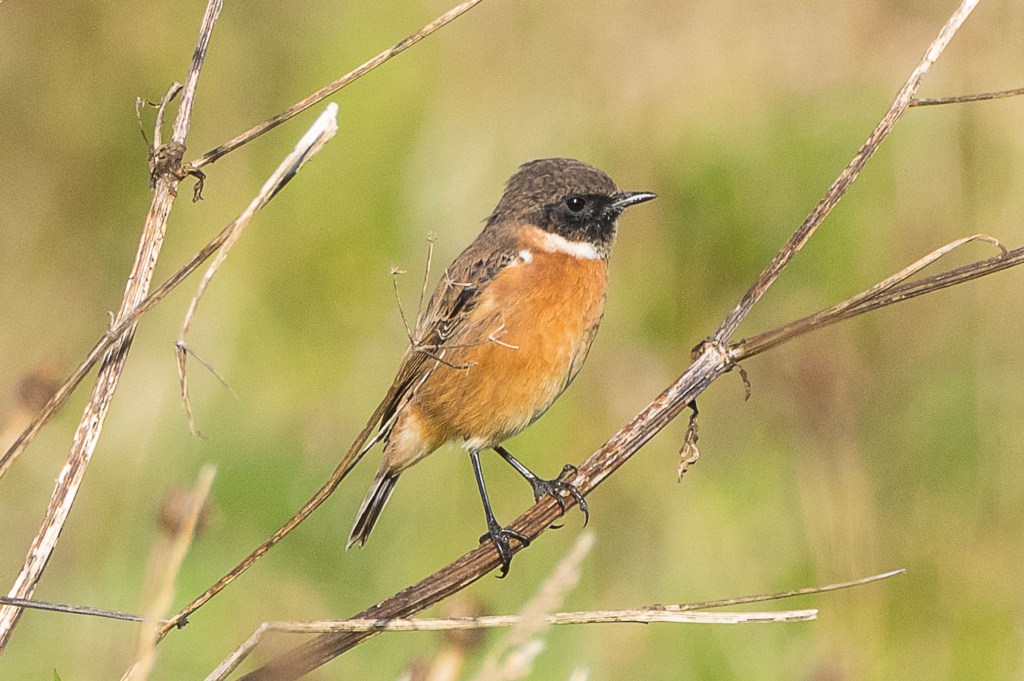
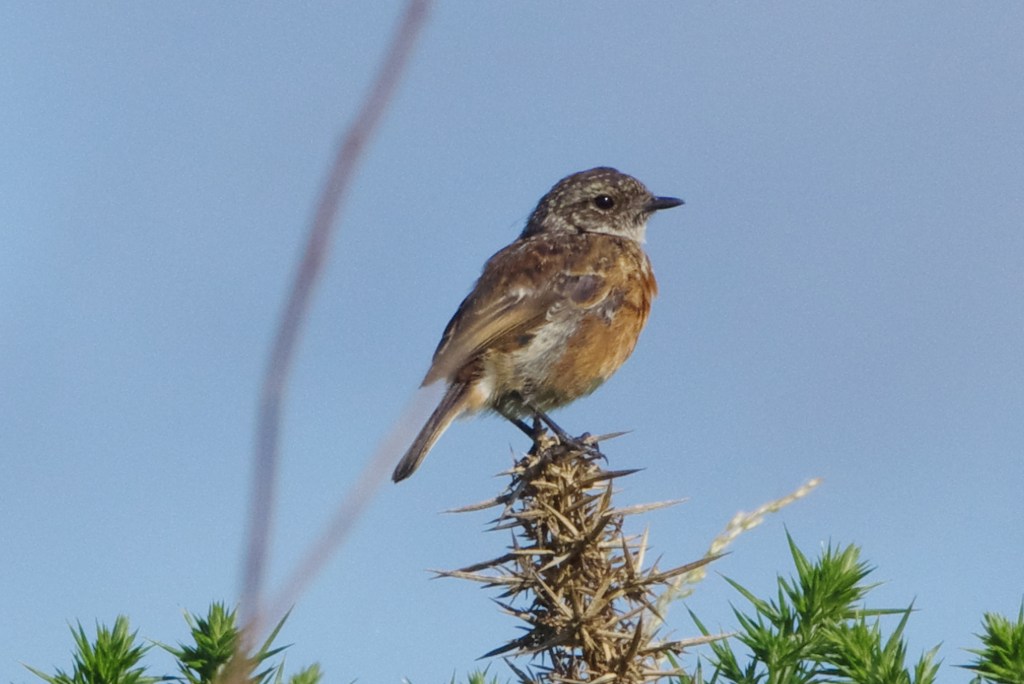
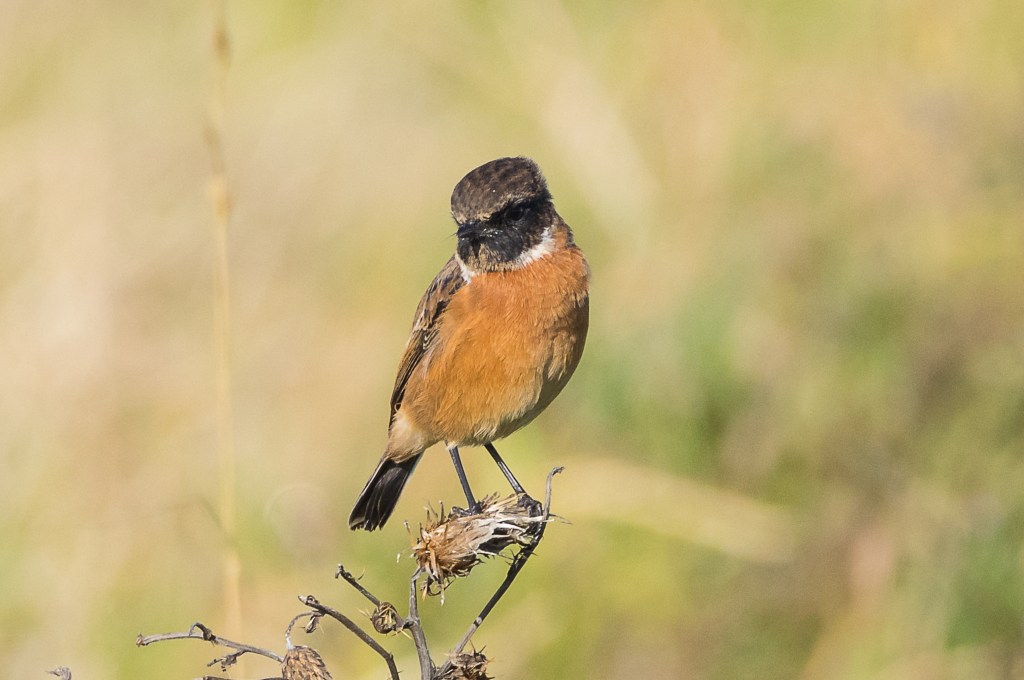
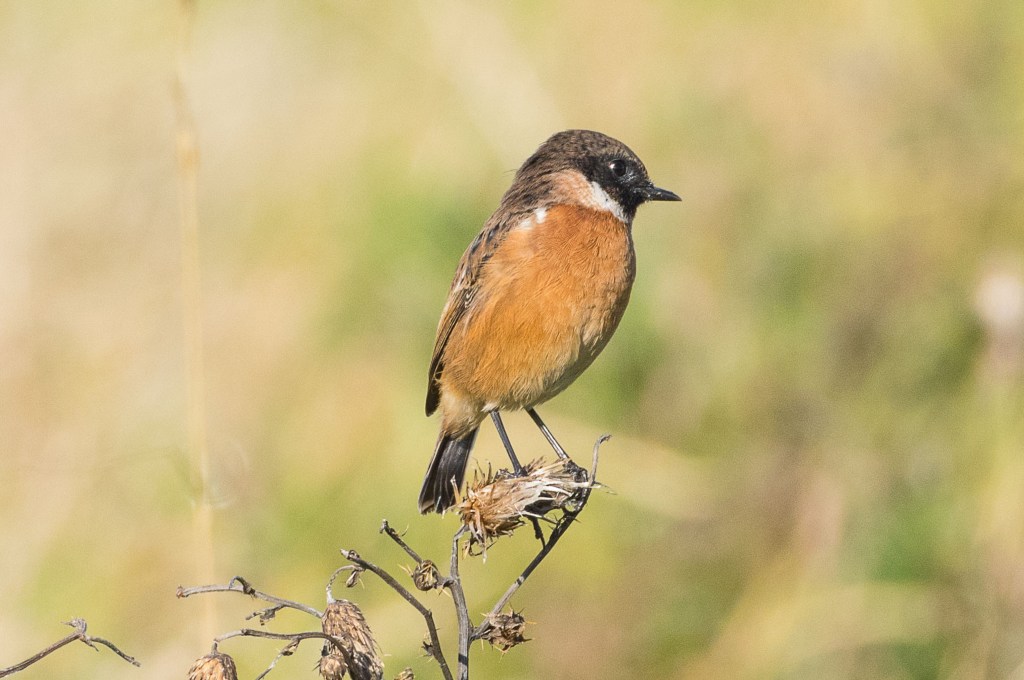
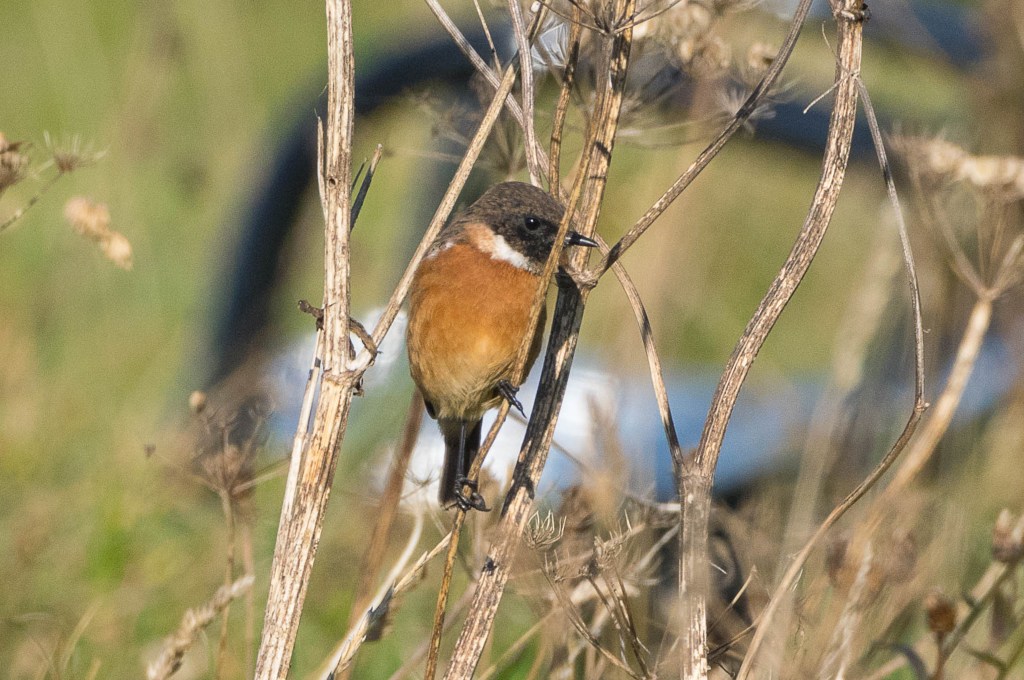
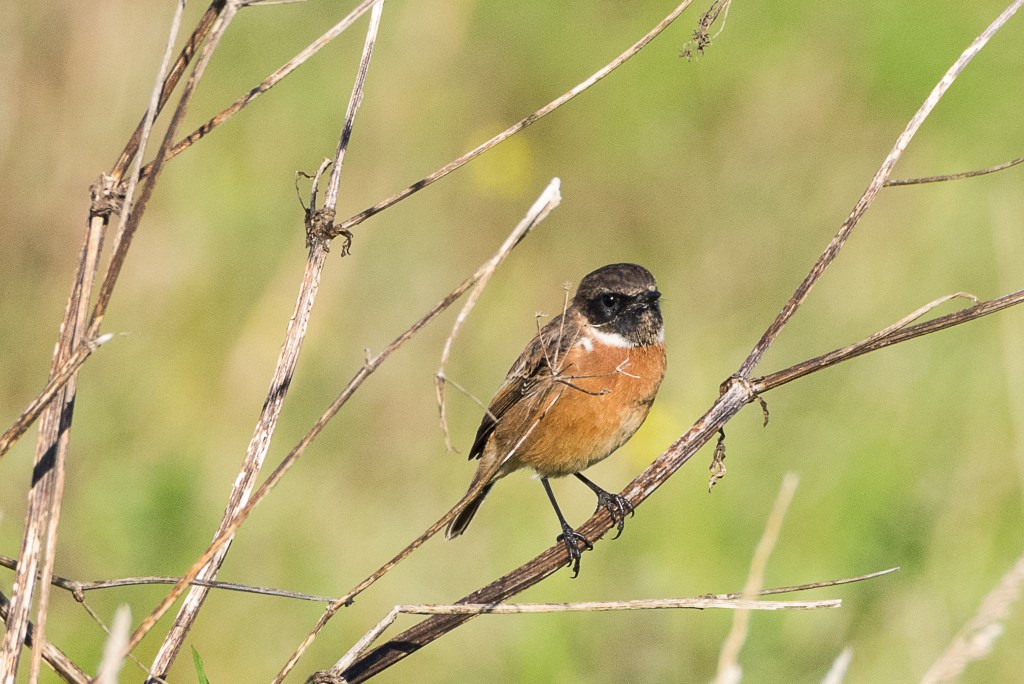
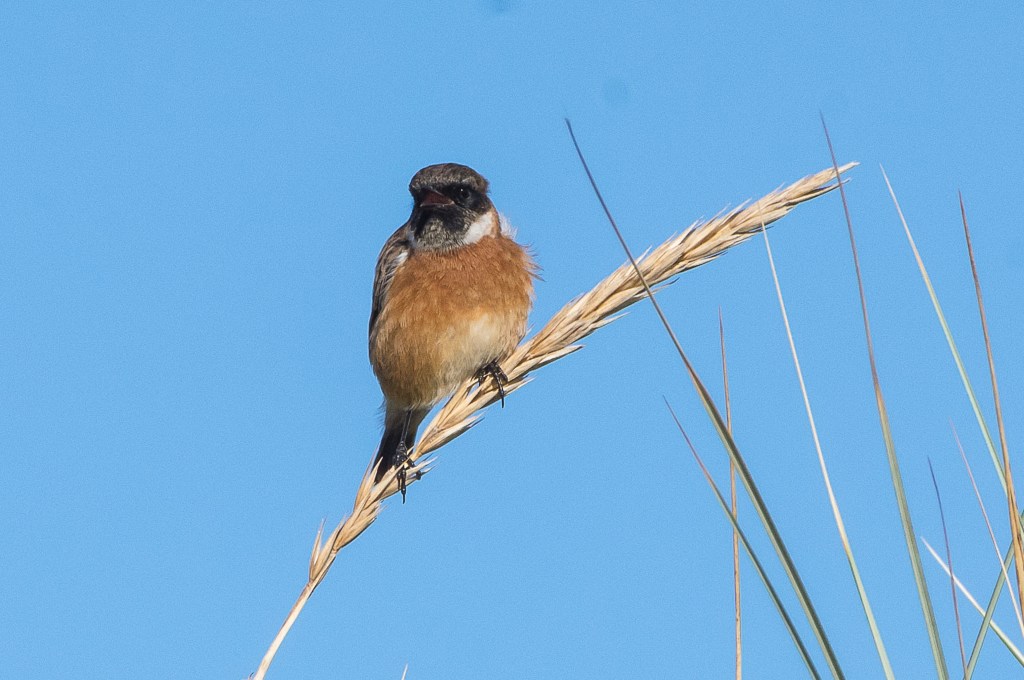
Stonechats always command a vantage point; no skulking in the lower branches for them. Naturally, a Stonechat would find the highest point of a rose bush for a perch (a female this time, above), all the better if it’s atop some prettily coloured rosehips for that extra inch or two, or – below – on the most slender stalks in the parched grassland with the best view of the surrounding microforest.

Once seen, never forgotten and always a most cheering sight. Some more poised and nicely posed Stonechats follow in the gallery.

Dunnocks

‘”Unobtrusive, quiet and retiring, without being shy, humble and homely in its deportment and habits, sober and unpretending in its dress, while still neat and graceful, the Dunnock exhibits a pattern which many of a higher grade might imitate,with advantage to themselves and benefit to others through an improved example.’ With these carefully chosen words, the Reverend F. O. Morris (1856) encouraged his parishioners to emulate the humble life of the Dunnock Prunella modularis. His recommendation turns out to be unfortunate. We now know that the Dunnock belies its dull appearance, having extraordinary sexual behaviour and an extremely variable mating system. The result of the Reverend Morris’s advice would have made the relationships on current television soap operas appear dull by comparison.”

N. B. Davies, British Birds, 1987, 80, 604-624

Professor Nick Davies FRS started his 1987 paper with a bang – what a great introduction. I think I can honestly say that writing about sigmatropic rearrangements or ring-closing metathesis reactions (as I did) provided no opportunities of this kind and I suspect that even had I been able to write one, reviewers would have done away with an opening paragraph of this level of impact out of sheer jealousy. Alas. The rest of the Morris (F. O. Morris, A History of British Birds,  London, 1856, 4, 8-13.) is quite engaging; I was able to download the relevant volume from archive.org.

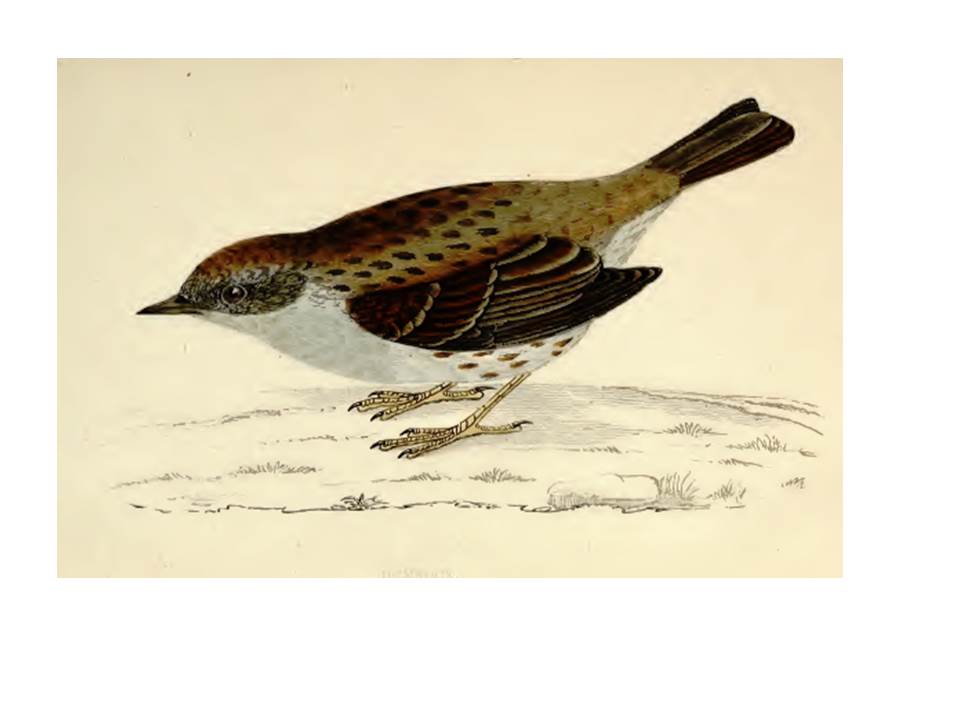
Here is the line drawing from the Morris. I couldn’t do any better myself but it certainly has its limitations.

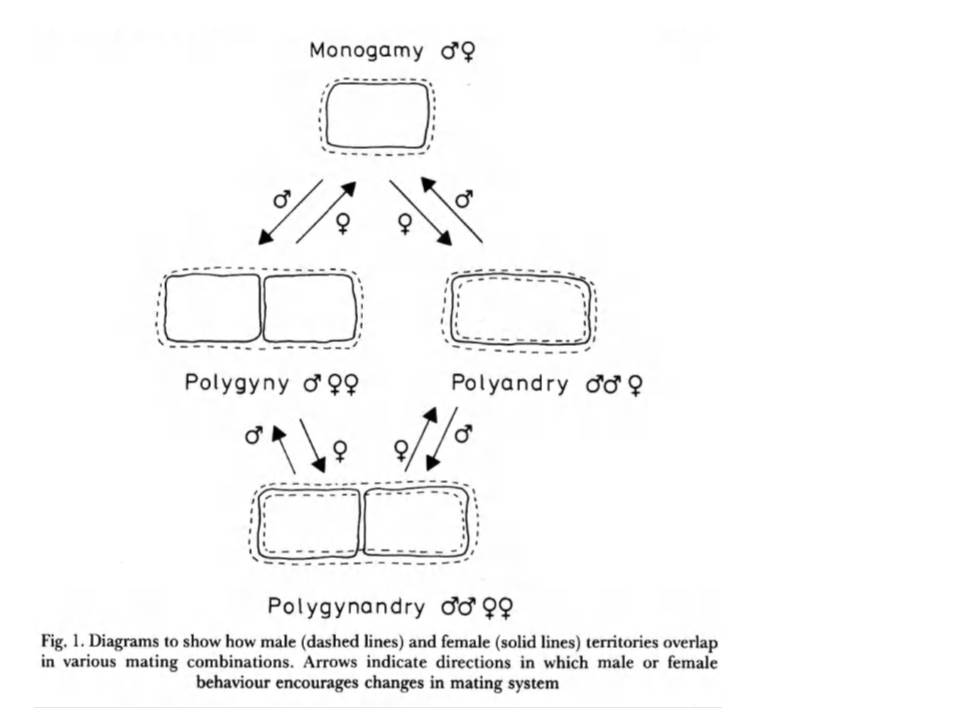
Davies studied a colour-ringed population of Dunnocks in the Cambridge Botanic Garden. It must have been demanding work keeping track of these tiny birds as they foraged on the ground and disappeared into the undergrowth. The diagram summarises the key features of the “extremely variable mating system” from the paper.

Davies recorded and quantified instances of all four arrangements, and discussed the advantages and disadvantages accruing to the two sexes.

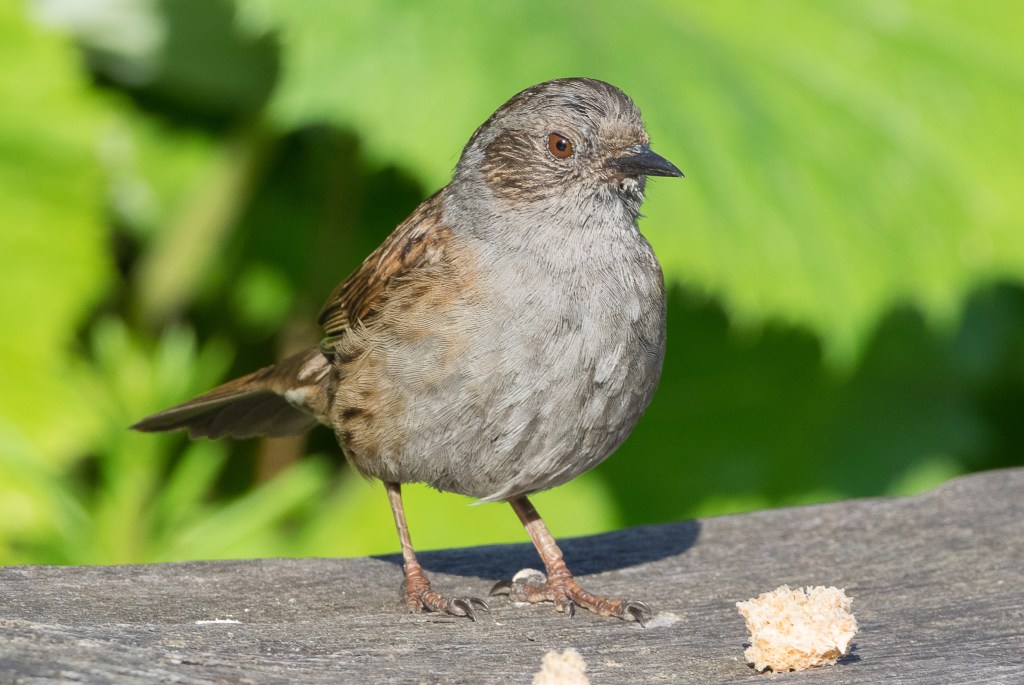
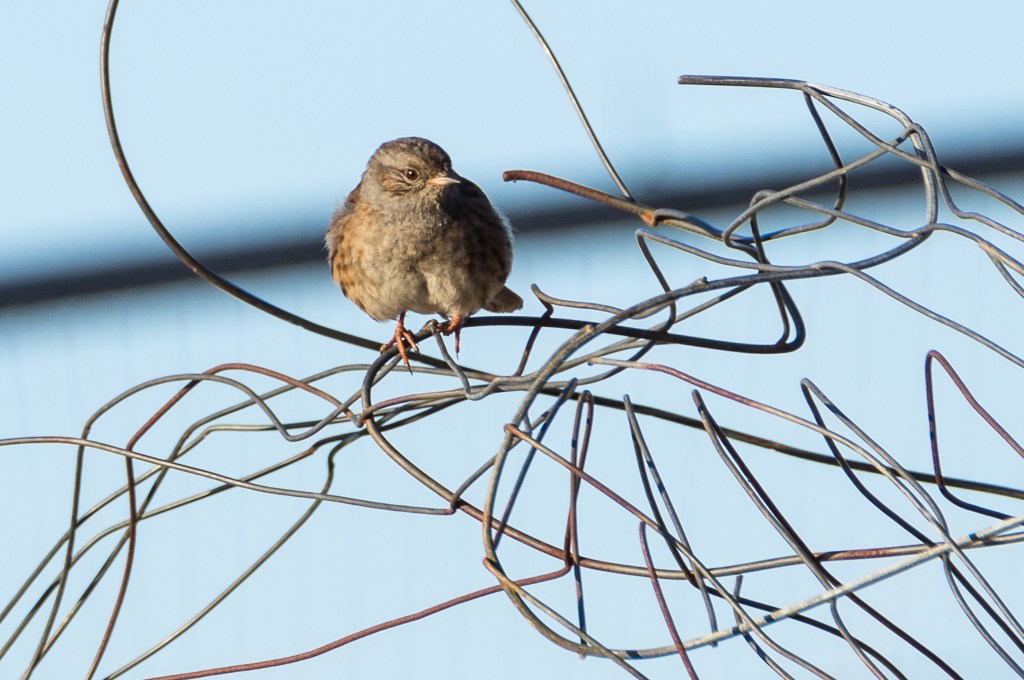
Dunnocks are familiar in urban and suburban environments. A pair were regulars in my mother’s garden, in and out of an old rose on the fence, and sweeping the space of lawn and herbaceous border beneath a bird feeder. In Glasgow, I see them way below me on the ground in the back close quite often.  I see them hopping under cars in the local streets foraging for the tiny things they eat – Dunnocks specialise in prey items so small that other species see their pursuit as unprofitable. The individual I photographed by Maryhill Locks is clearly overfaced by the enormous potential meal before it.

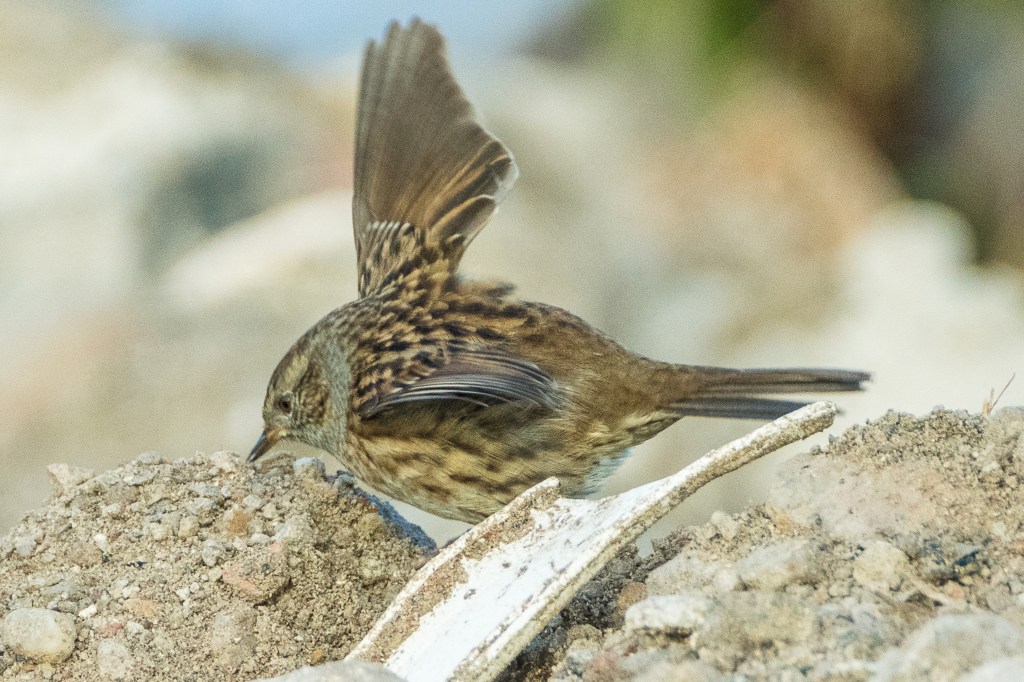
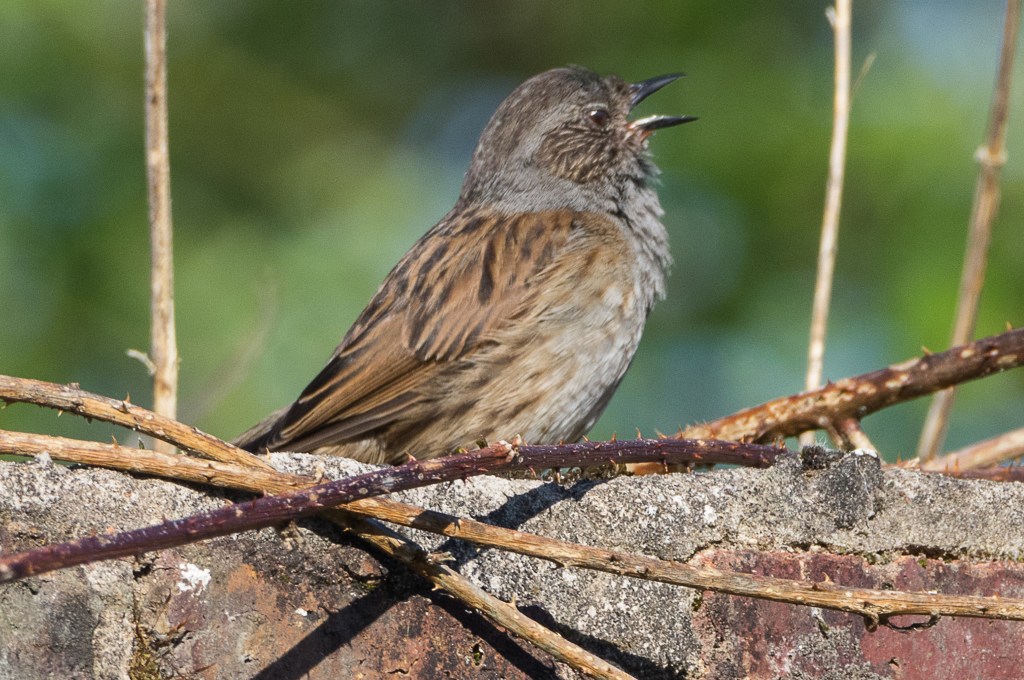
Davies stresses their sedentary nature which means that they don’t range far; the individuals I see regularly will be within metres of their usual pitches. There is a house near to Cardross marked as Murrays on the OS map; without wishing to be unkind, you might decribe it as a project house. I saw the wing-flicking courtship behaviour for the first time on the rustic driveway to the house.

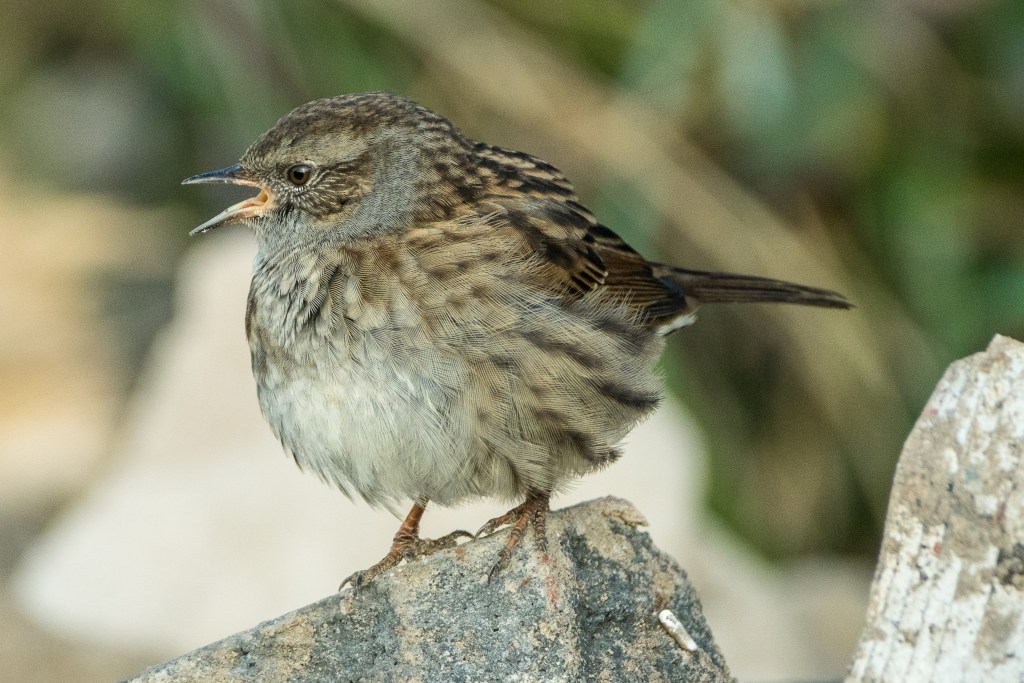
At first, I thought that the bird was injured and I regretted the photograph. I’m glad I was wrong. The bird hopped up onto a rock and started calling surprisingly loudly.

There always seem to be Dunnocks at Murrays, and many perches for them there. On our last visit, the landside was frozen really hard and the Dunnocks and Robins were foraging on the shore which had thawed a bit in winter sunlight, presumably releasing some tiny creatures for the foragers. The better images came from the perchers. Though the overall appearance of the birds doesn’t exactly set the pulse racing, the better images reveal a glorious range of textures.

Davies spoke about his work on The Life Scientific on Radio 4. He retained his interest in Dunnocks, watching a smaller population in the garden of his Cambridge house closely. In 2021, he published a short coda to his earlier work entitled “Male Dunnock kills the other male in a mating trio” as a Note in British Birds. He describes an almost cartoonish level of violence, reminiscent of the Joe Pesci characters in Martin Scorcese’s Goodfellas and Casino films and perhaps surprising in a small bird.

I will continue to watch Dunnocks, enjoy their precise quartering of their territories, and worry about them going under cars.

The last word goes to poet Tony Lopez (A Handbook of British Birds, Pig Press, Durham, 1982):

If its slumbers are disturbed, the Dunnock wakes with a snatch of melody. I have heard it sing when startled by the light of a passing cycle-lamp.

As well you might in Cambridge, where I was given my copy of the Handbook.

Eiders

I’m resisting the seasonal temptation to do a post about Robins. The BBC Your pictures of Scotland page has a couple of nice Robin images and we’ve some lovely Robin cards, but I’m going to keep my stock back for a future occasion. Instead, I’d like to look back in this short post to images made in May, a warmer time of year, even on the west coast. The winter connection arises from my first sightings of Eiders or I should say, hearings. The breeding call of the male Eider, commonly rendered as yar-oooo, begins to be sounded in the winter – once heard, never forgotten.

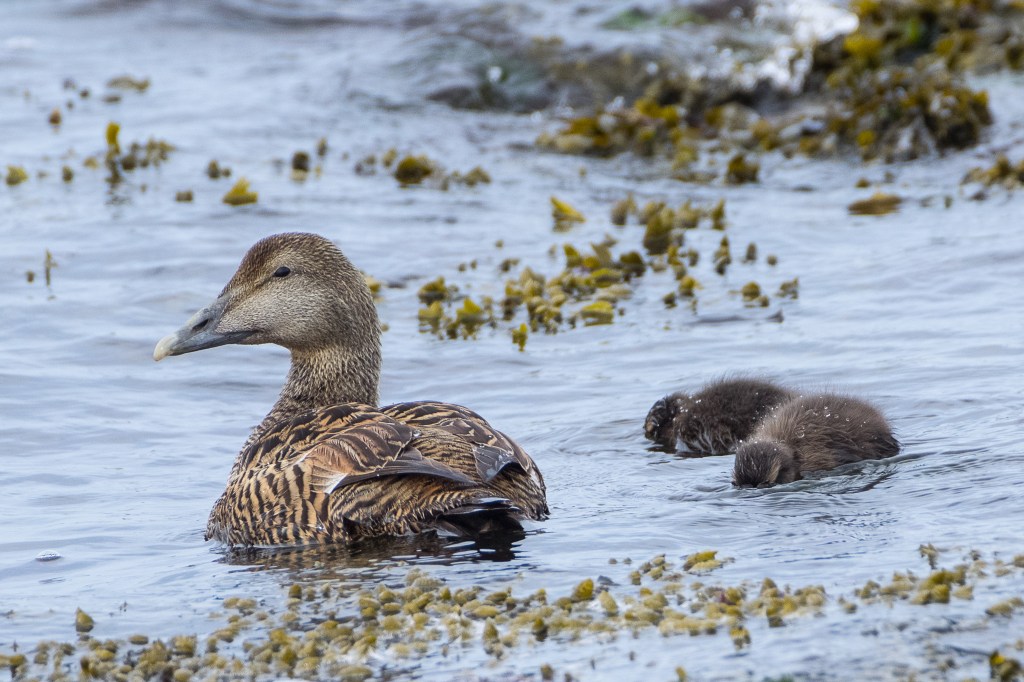
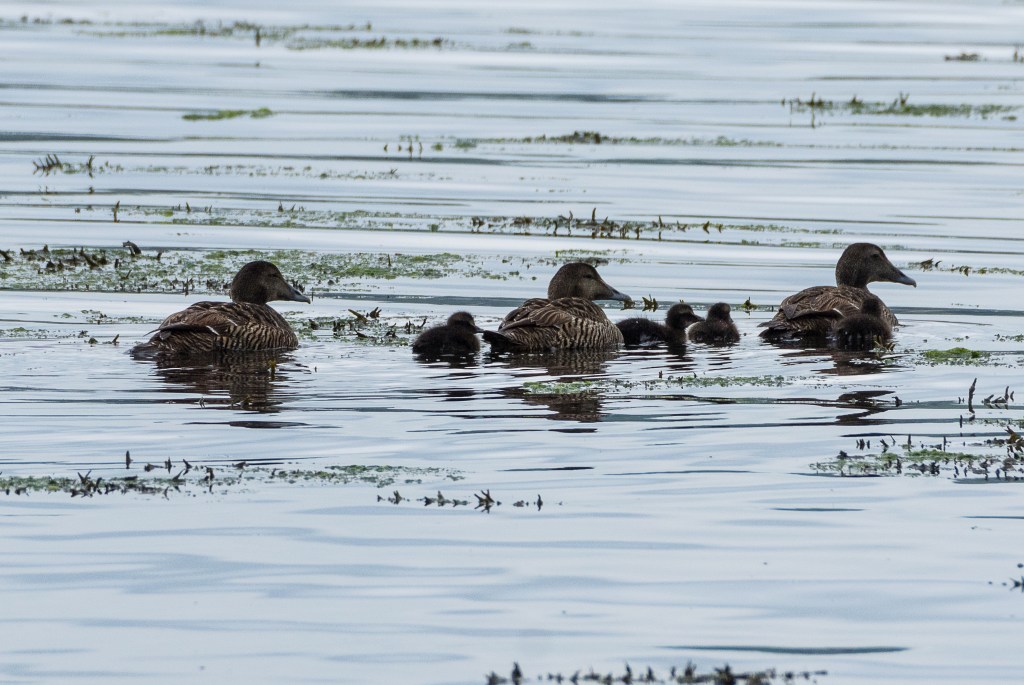
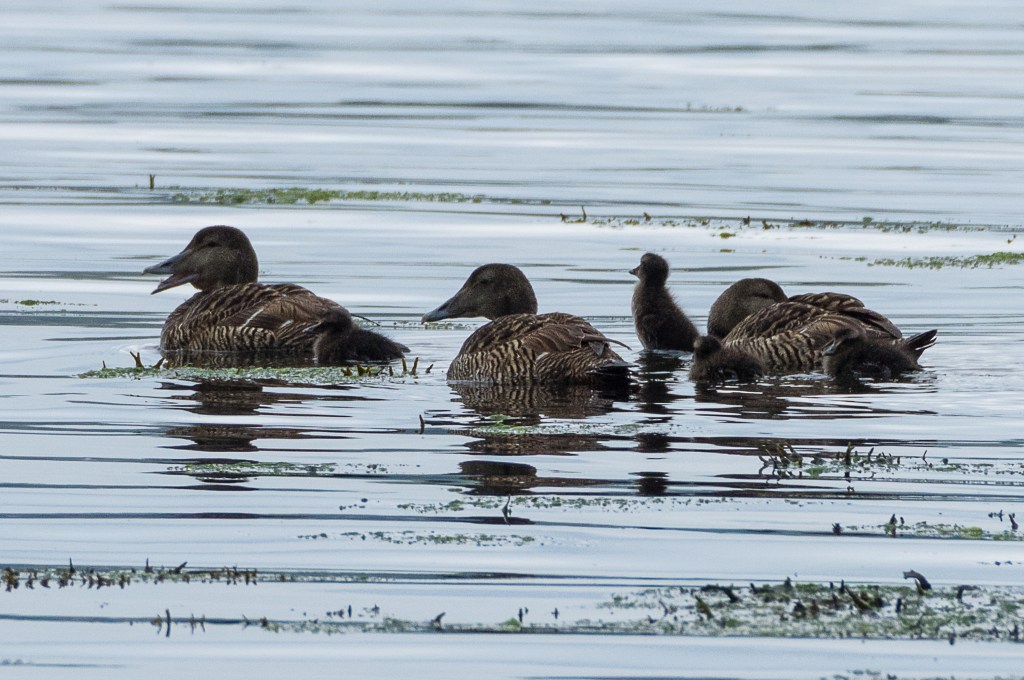
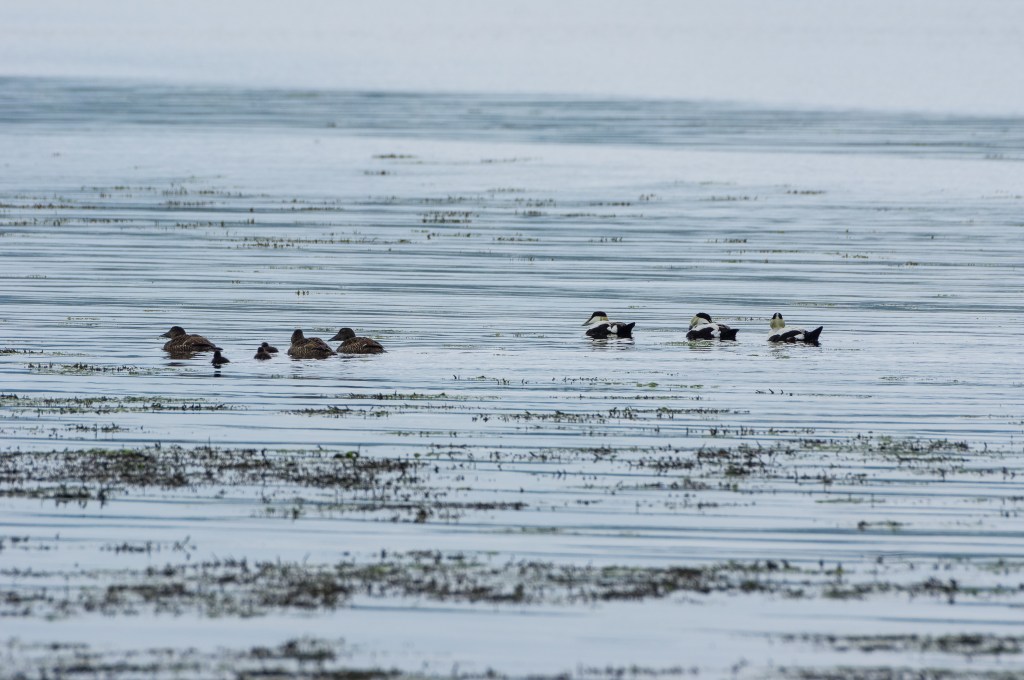
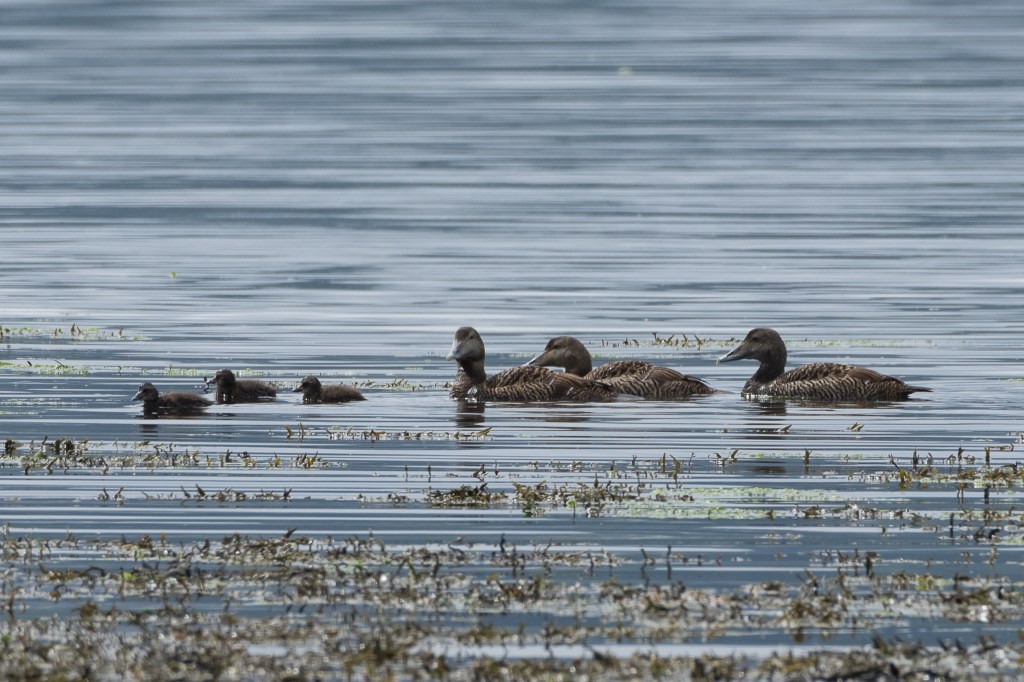
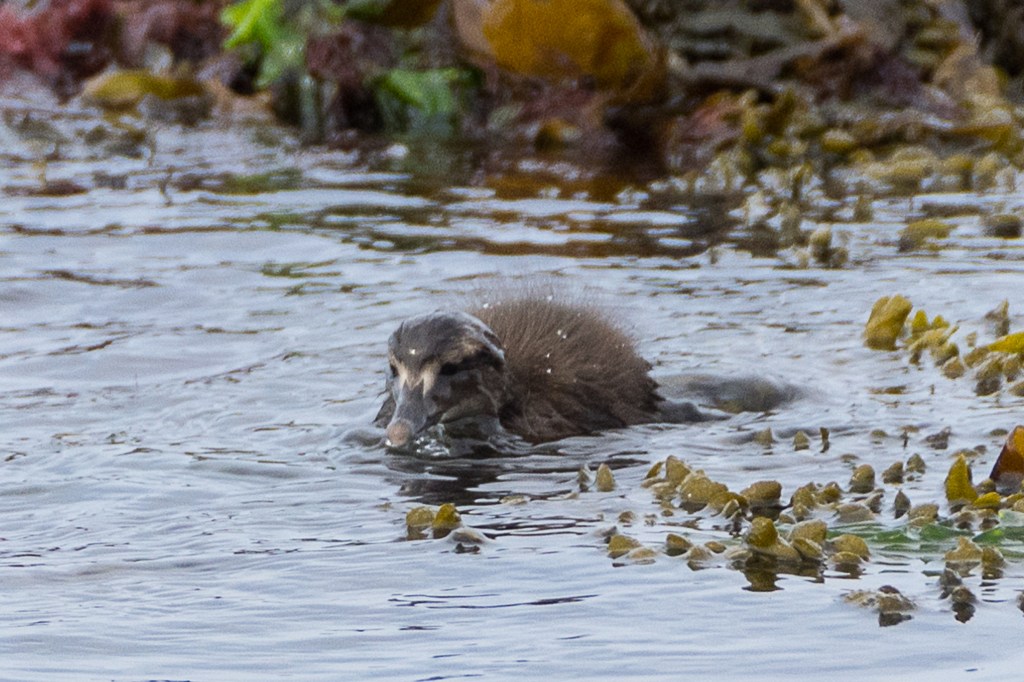
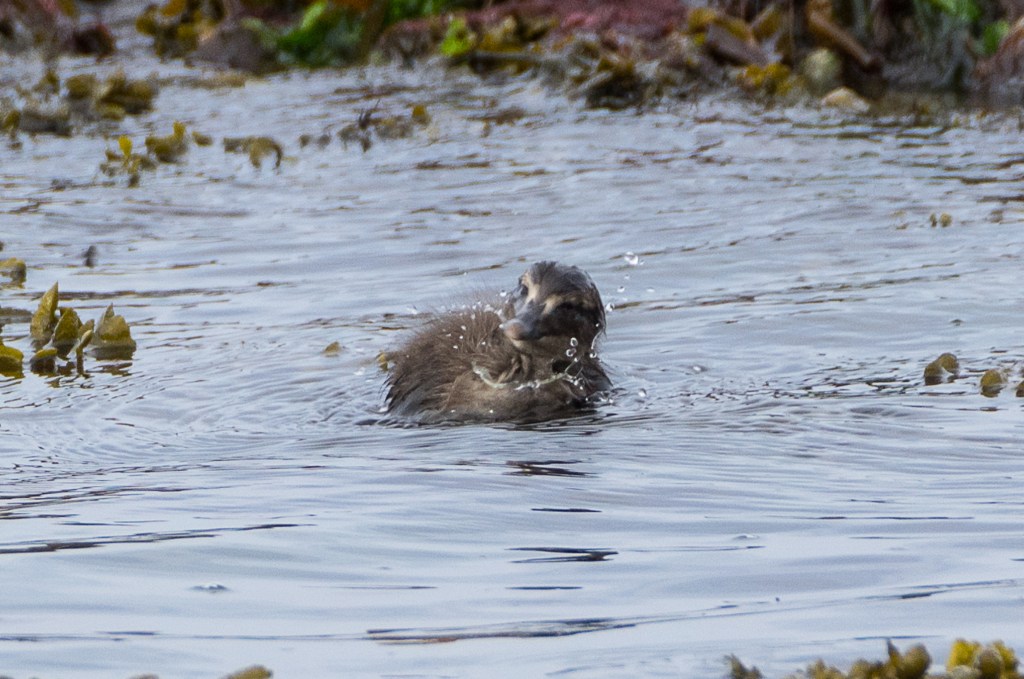
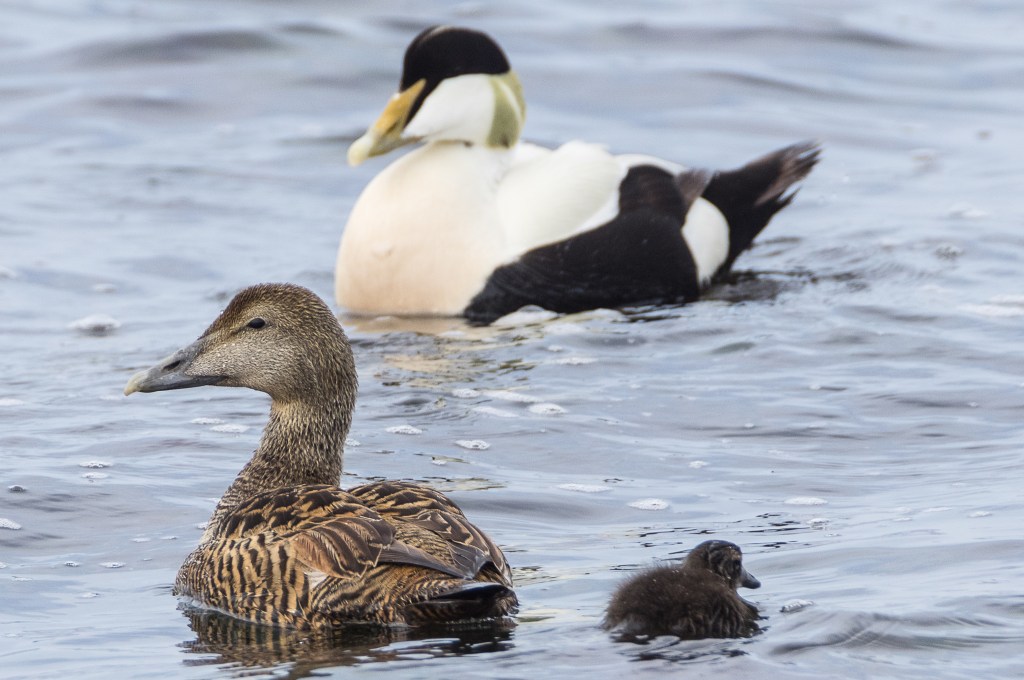
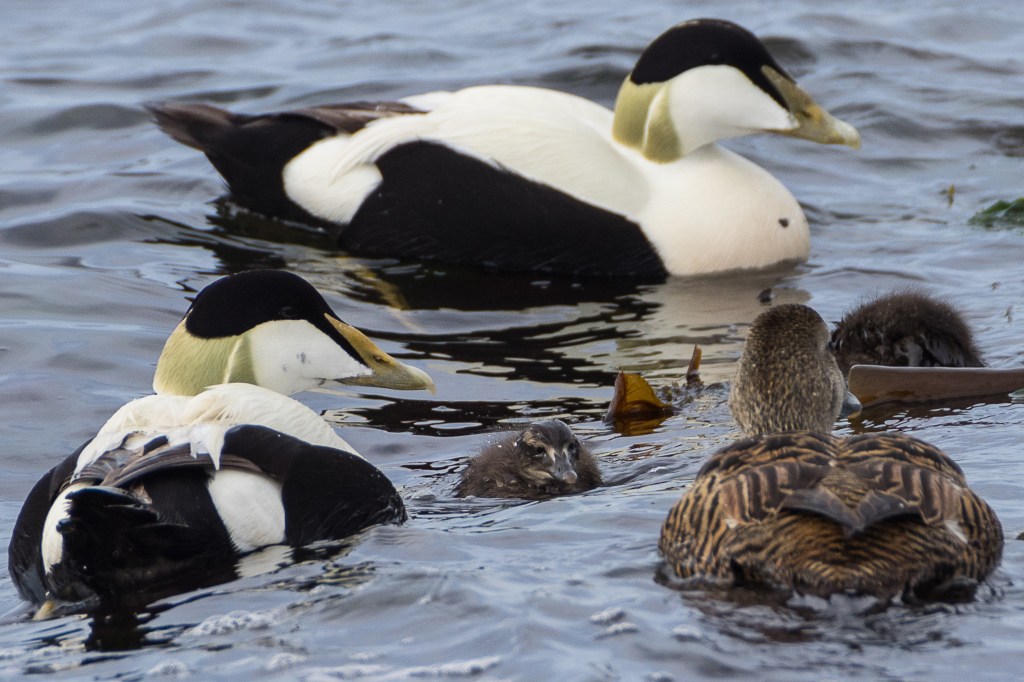
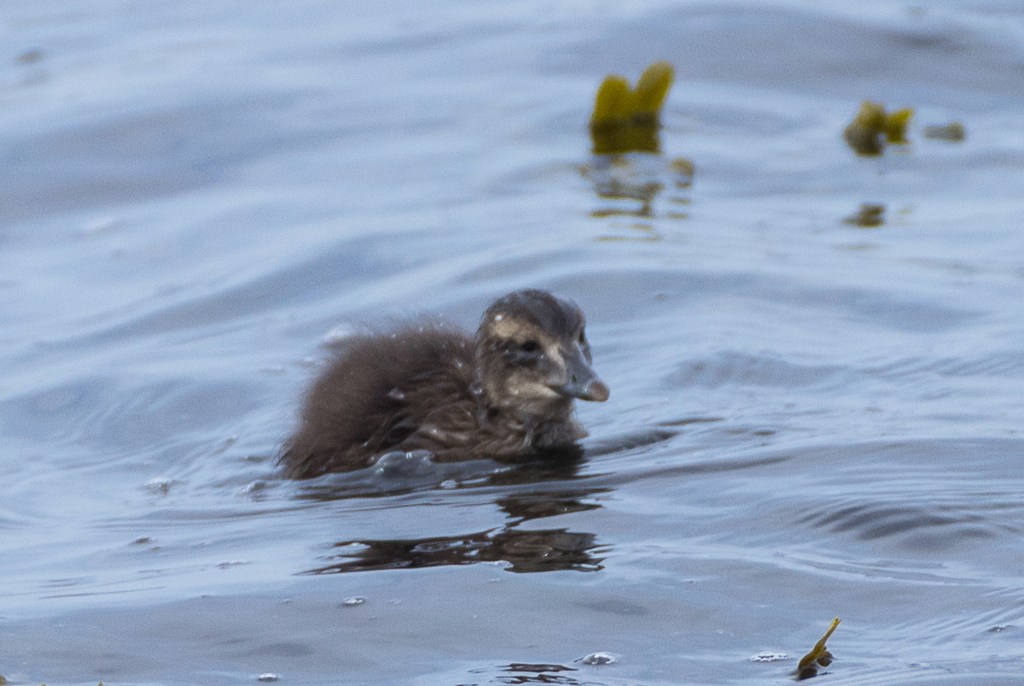
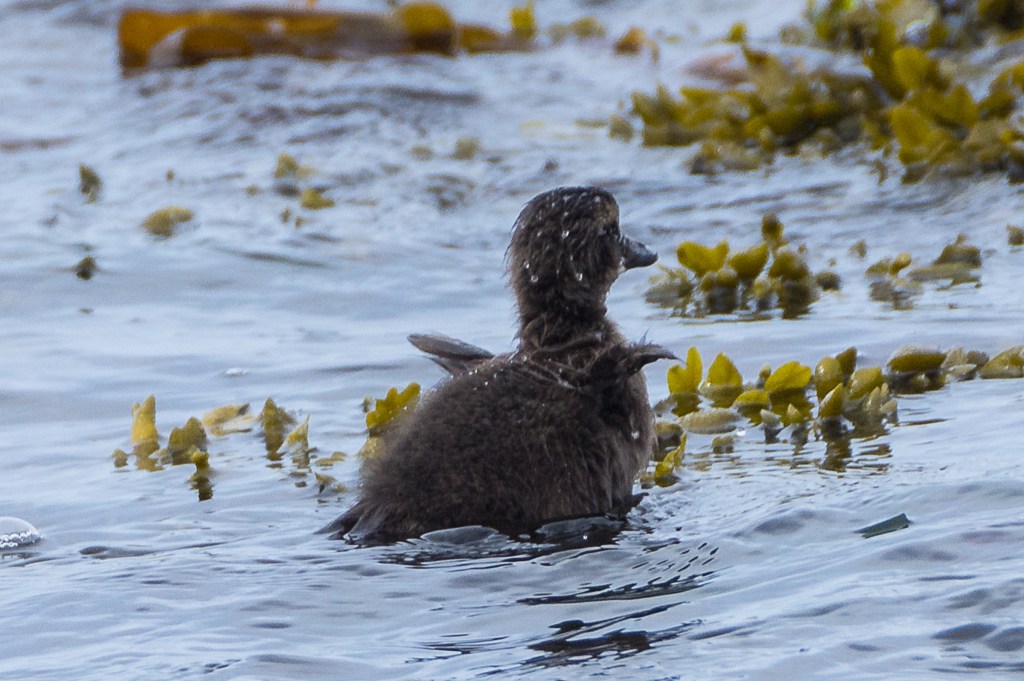
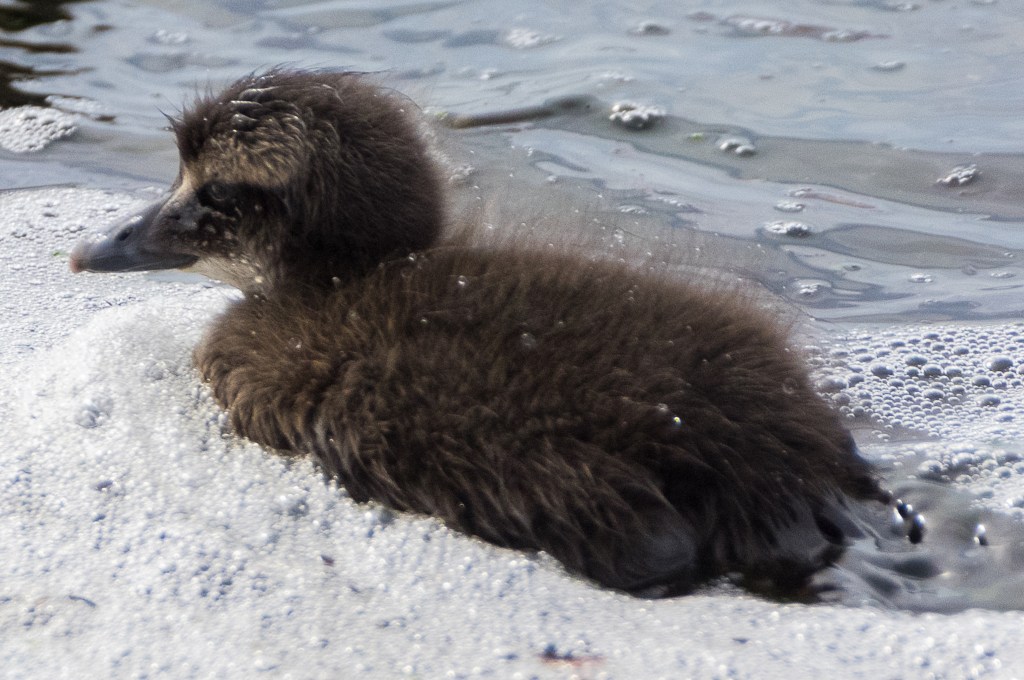
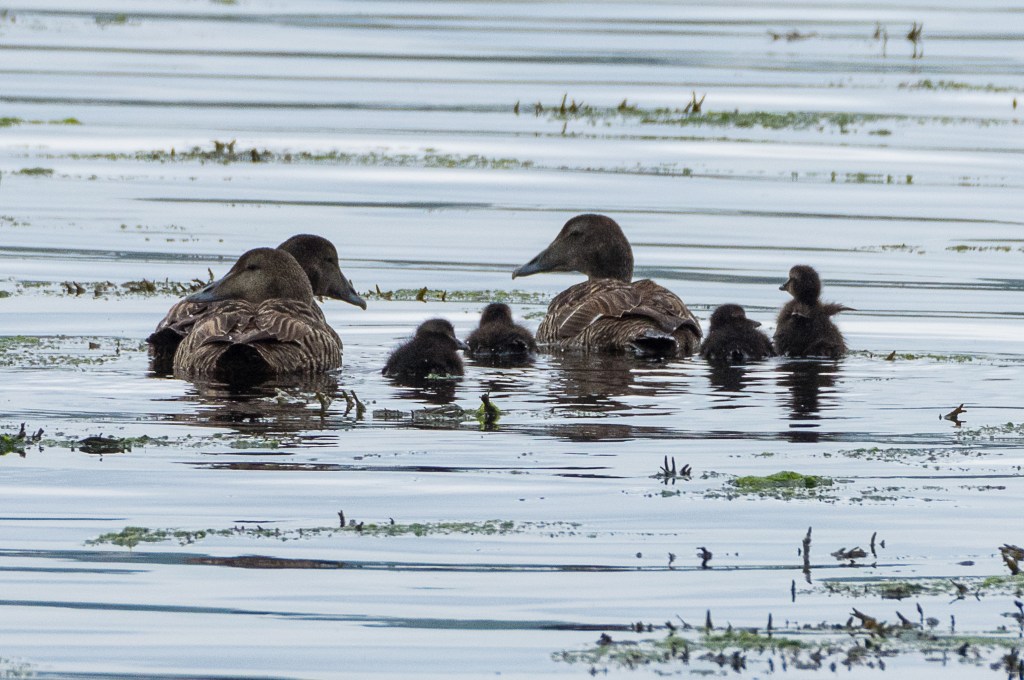
But my best sightings and photographic opportunities have occurred in the spring and summer months when the birds are close to the shore with young. I’m posting images from Troon (May), Cardross (June) and Stevenston (June). Ducklings in general are such a worry but the Eiders seem to make very promising crèching arrangements with good numbers of adult birds around the young ones. A walk from Ardmore Point to Cardross disturbed one of these groups (four young, three females and three males) which moved smoothly away from the tideline across a mussel bed.

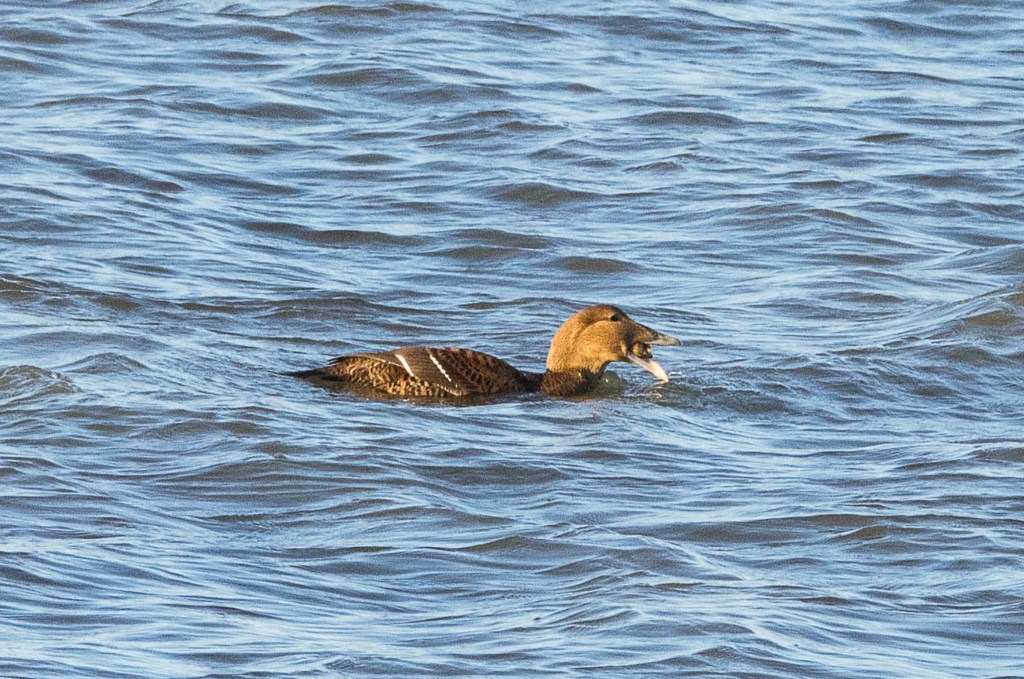
My shallow dives into the literature tell me that there can be conflict between commercial shellfish producers and Eiders (great consumers of mussels). I’ve one image (from Montrose) of a female about to swallow a large shelled mollusc whole. The avian gizzard is a thing of mystery and wonder.

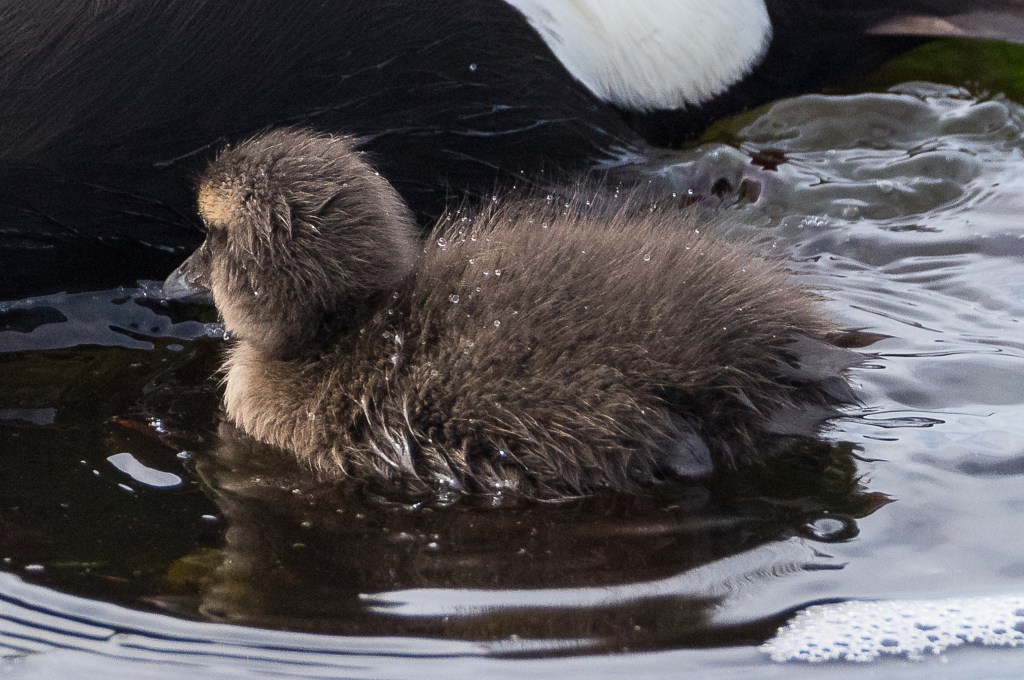
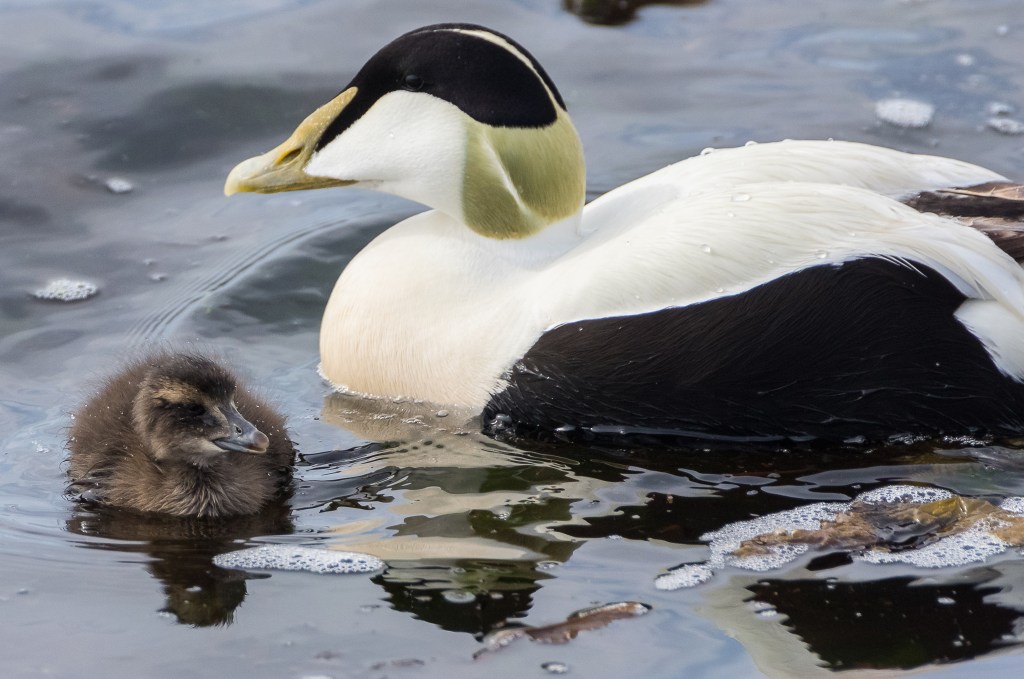
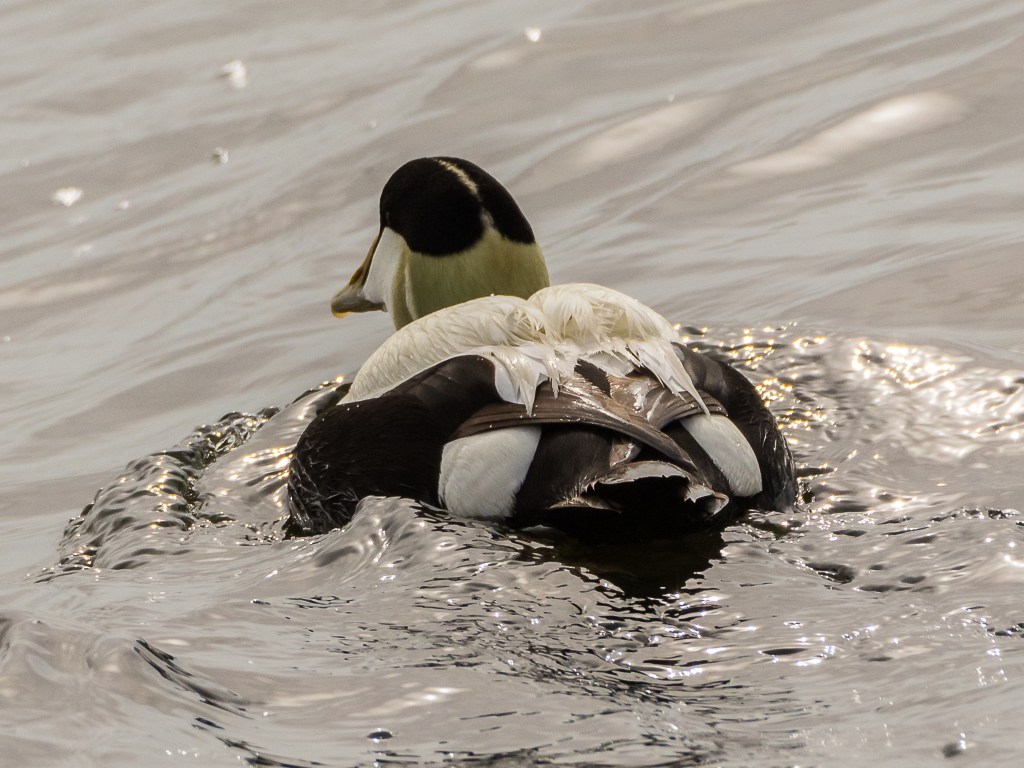
At Troon, the family group or crèche was extremely close inshore, near the old Lido; I lay on top of the sea wall in sniper position, shooting away while the young practised their Eider repertoire. I don’t think these images require much comment from me apart from an expression of my enthusiasm for their spectacular plumage.

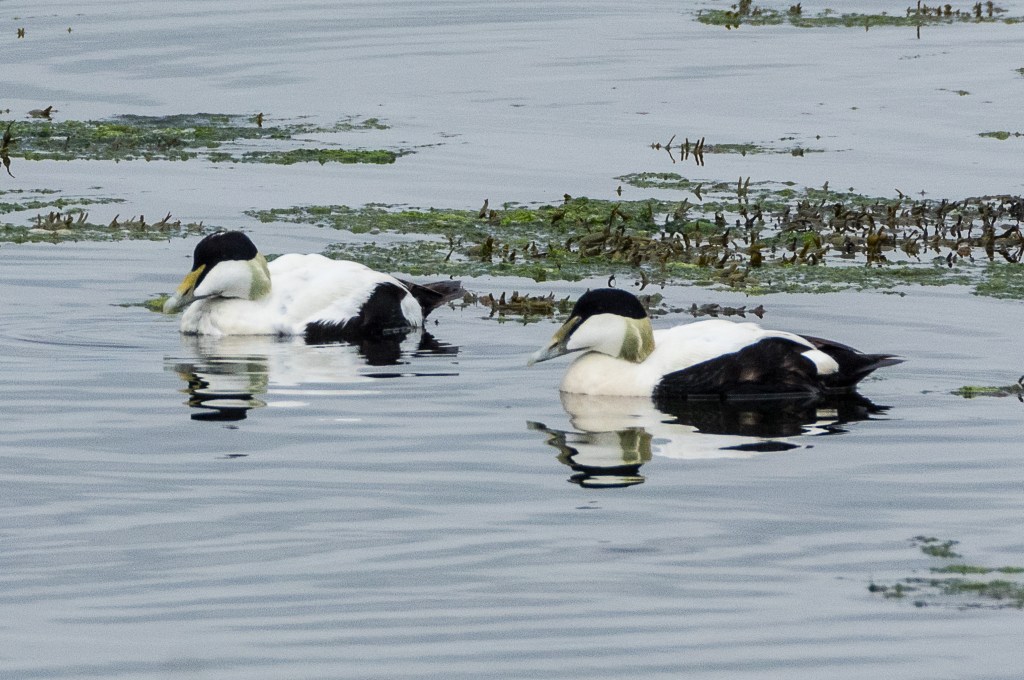
Both sexes are beautifully marked and I can’t think of any other species which displays that strange shade of green found on the back of the drake’s neck. I think I’ve got the colour right but I prefer a dark print because the texture in the white feathers becomes visible. The water droplets also look more interesting when the image is slightly underexposed – there is a gradient of tone across them which I like. I found some really nice images at Birdfact and I think we have the same shade of green.

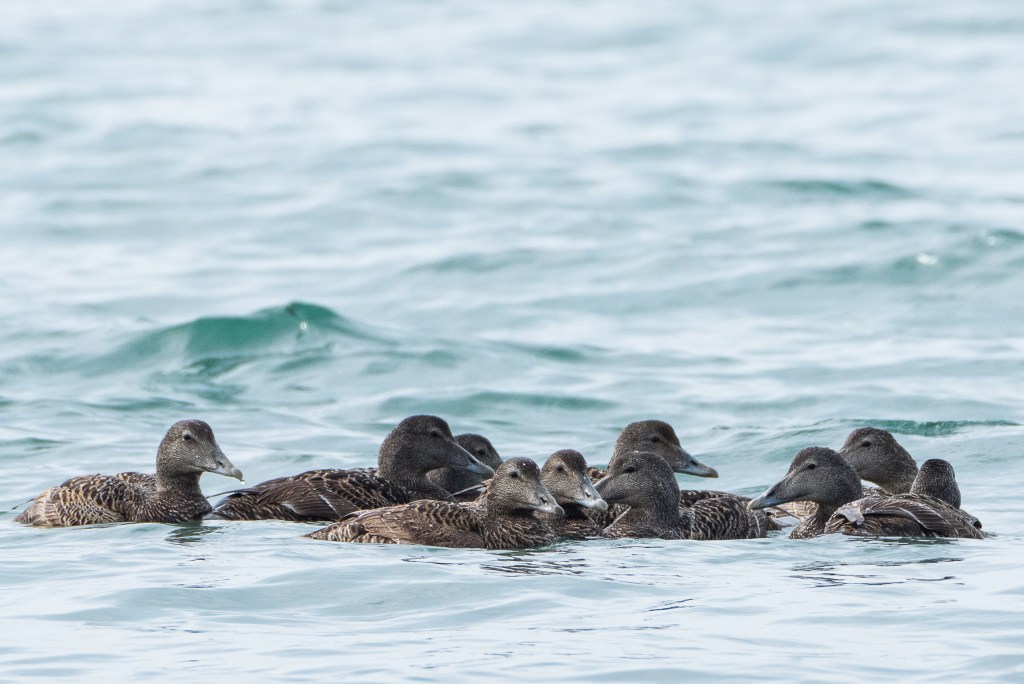
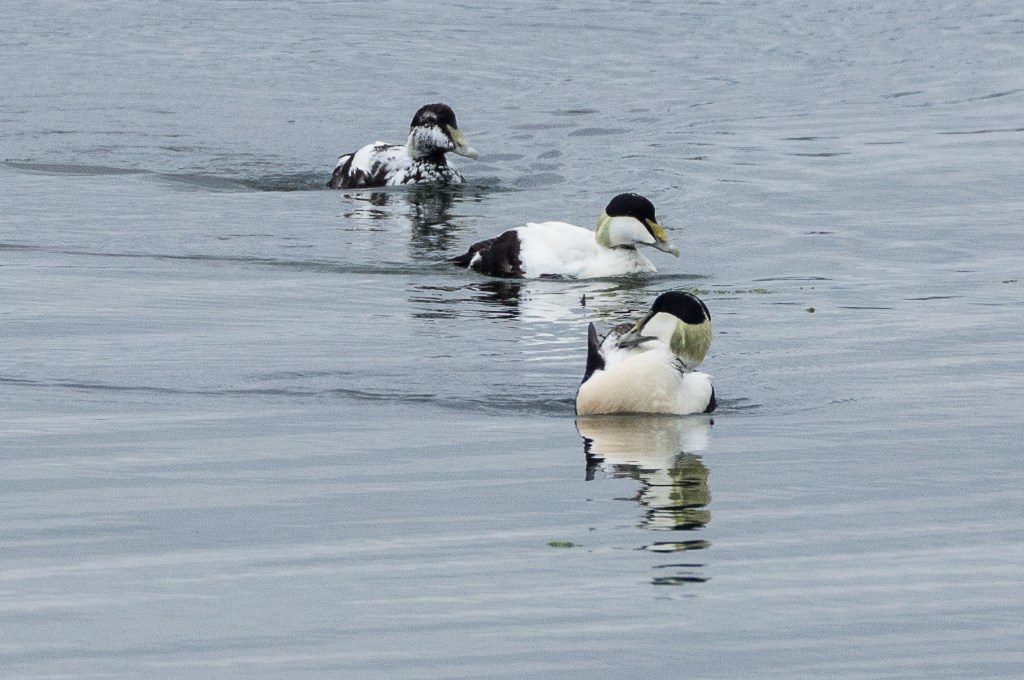
The image from Stevenston seems to contain a group of females but I thought there were significant differences in the sizes of the individuals, and in the patterns of white on the wing feathers. This suggests that some of them might have been juveniles; could there have been time for a brood to have grown to such a size? Perhaps someone will put me right. It seems that male Eiders take a few years to develop their spectacular formal dress.

Eiders seem to be very well studied by ecologists – I would definitely pick something big and easy to see and count if I was interested in populations (so definitely not little brown jobs). I found Vital rate estimates for the common eider Somateria mollissima, a data-rich exemplar of the seaduck tribe and I attempted to read it only to be confounded by the statistical nature of the analysis (I failed statistics in my first year at university, just can’t do it). I was hoping it would tell me how many young Eiders need to be produced every year per breeding pair to ensure a healthy population but I couldn’t find what I was looking for, alas. Eiders are monogamous and long-lived. Once the trains start up again, I’ll be back to the seaside listening out for yar-oooo…