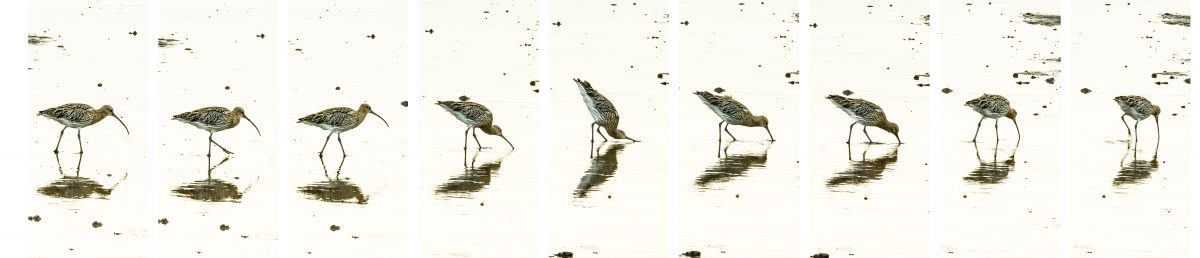
I remember Lapwings wheeling up and away from the arable fields of south west Lancashire as we drove in the family car towards Ormskirk or Southport, or perhaps towards the Saracens Head on the Leeds Liverpool Canal for some fishing. Agricultural practice was different fifty years ago, with stubble burning finishing the season and releasing towering plumes of smoke above the Lancashire plain. My RSPB book identifies a change of sowing time for cereal crops as one of the factors responsible for the decline of the UK breeding population – by fifty percent over the last twenty-five years, numbers echoed by the British Trust for Ornithology. Cereal crops sown in autumn (the current practice in raising these crops) are simply too tall by the spring for the Lapwings to use as cover.
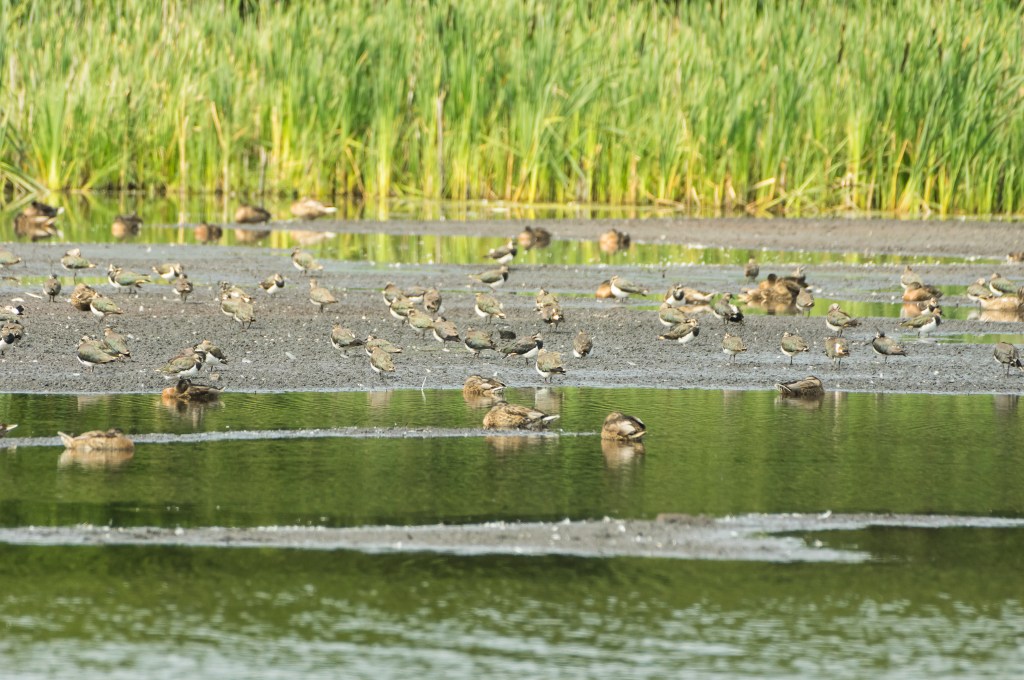
We seem to be quite well placed to see Lapwings here in Glasgow. The River Clyde (between Erskine and Bowling), RSPB Barons Haugh, RSPB Lochwinnoch and Frankfield Loch clearly all have what Lapwings like (mud and wet grassland I guess). Visits to Kinneil Lagoon have also afforded good sightings. All of these venues can be host to large numbers of birds, but at considerable distances from the photographer, unless special circumstances prevail. For example, a frozen Barons Haugh allowed Backwoodsman to get quite close to a group of birds for a little while.
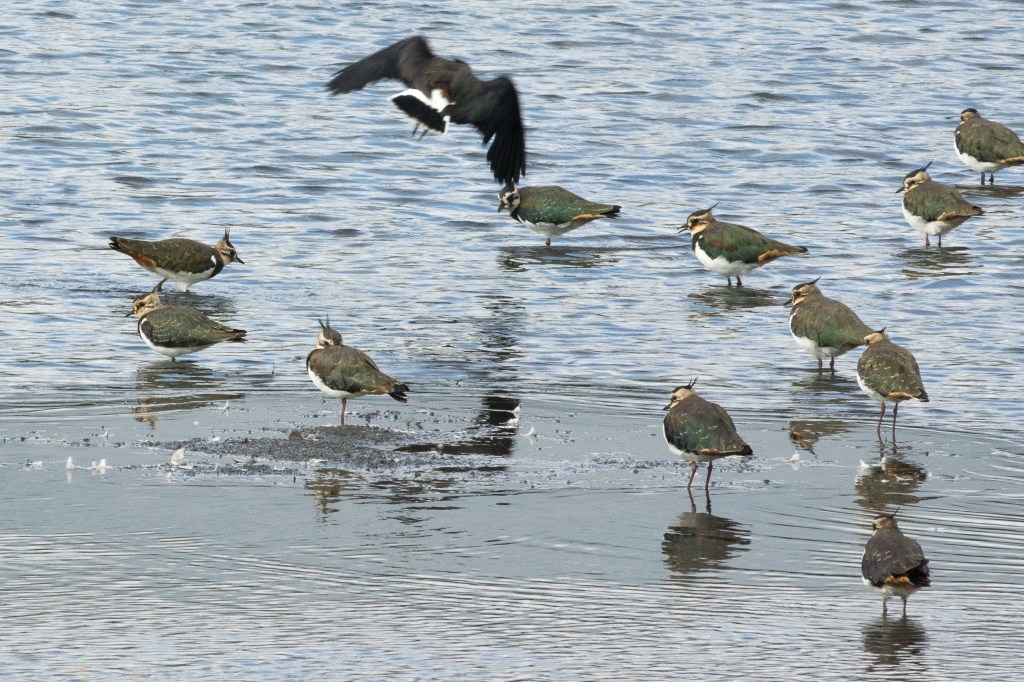
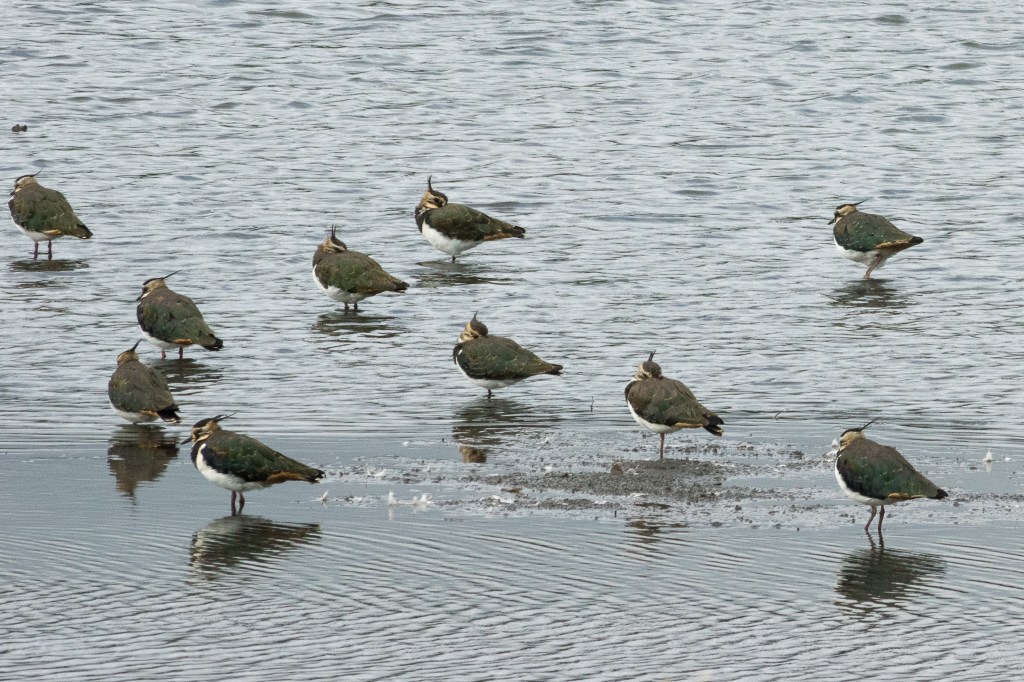
A strip of open water outside an empty Causeway Hide held the birds in repose; these images were taken with a rather shorter lens than Backwoodsman is able to use currently so the viewer will see some grain. The hide was stormed by a party of very noisy green-clad twitchers shortly after these images were acquired and off went the Lapwings.
The iridescent green of the Lapwing’s back is tricky in photographs. On a grey morning or afternoon, the colour is a little flat; this large group from Frankfield Loch hints at what might be seen in better light. When the sun hits them, their colours are stunning; the second image, again from a frozen Barons Haugh is truer to the ideal colour palette of a rich burnished metallic green with purple highlights.

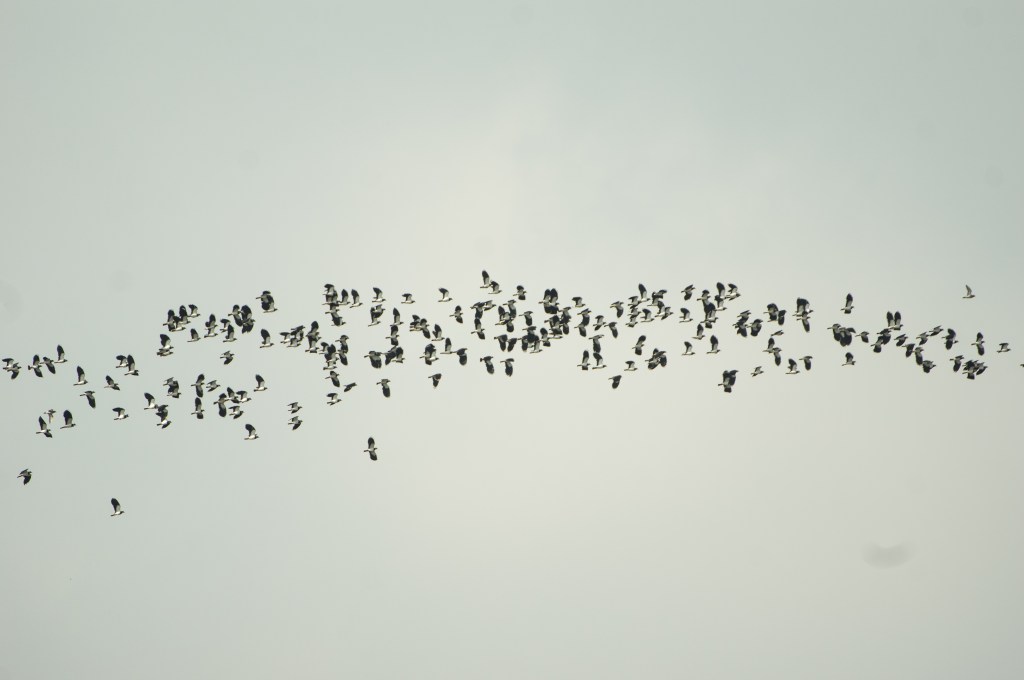
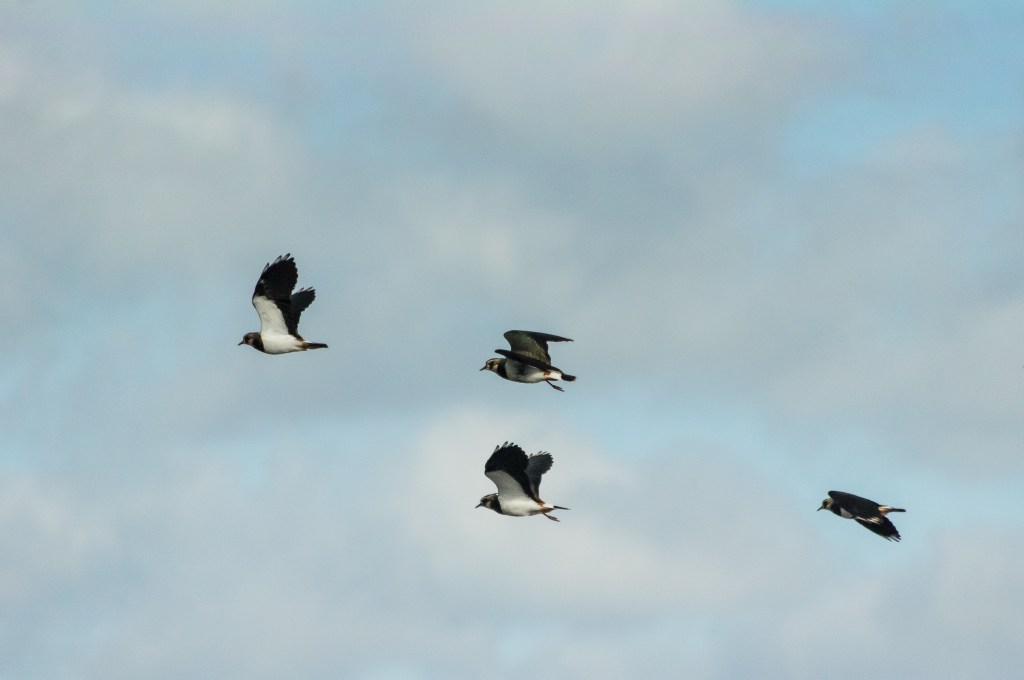
Lapwings are Plovers but their wings are so unlike those of the related species. Grey, Golden and Ringed Plovers have angled pointed wings, the classic wader shape. Lapwings have broad rounded wings with spatulate ends. They are most impressive on the wing in their tumbling flocks.
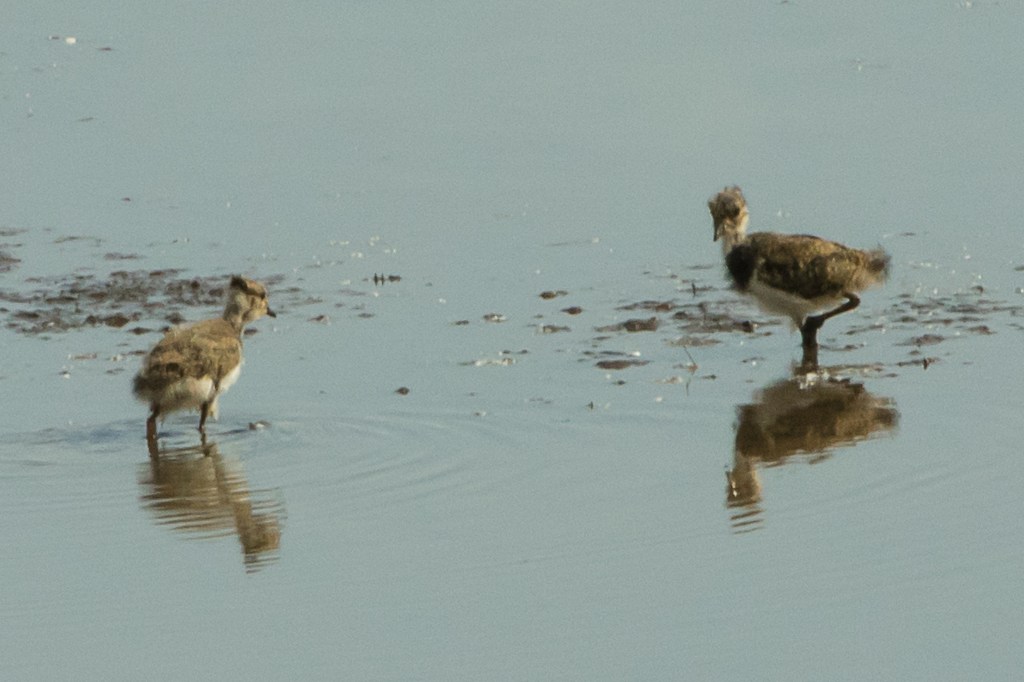
Lochwinnoch hosted a breeding pair this year; two chicks could be seen foraging on the mud when Backwoodsman visited at the end of July. The image was obtained at maximum reach and it really will not stand closer scrutiny.
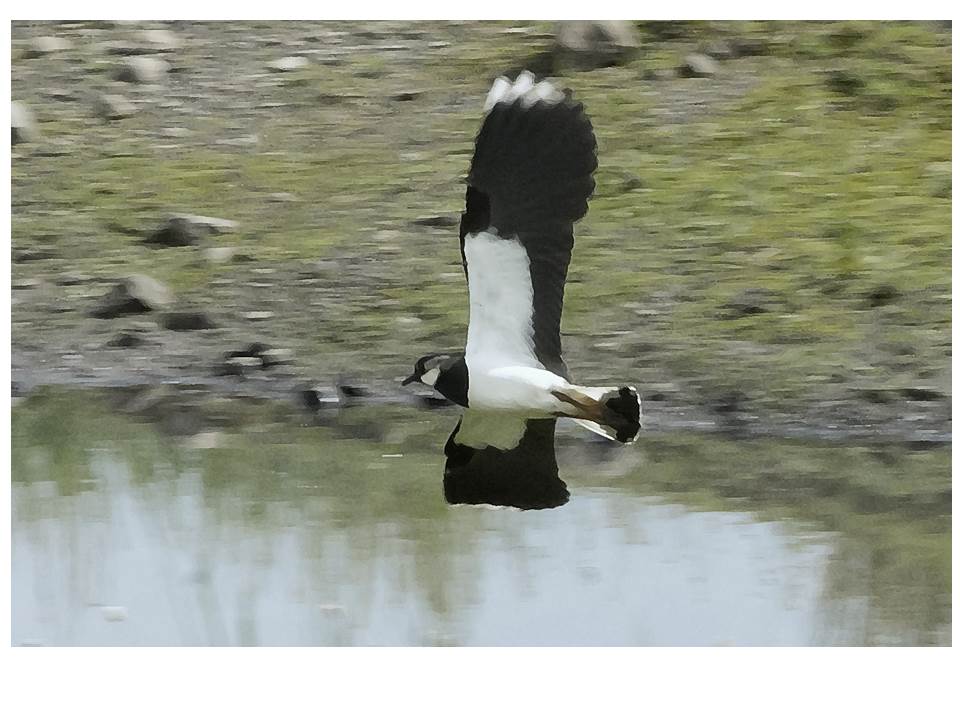
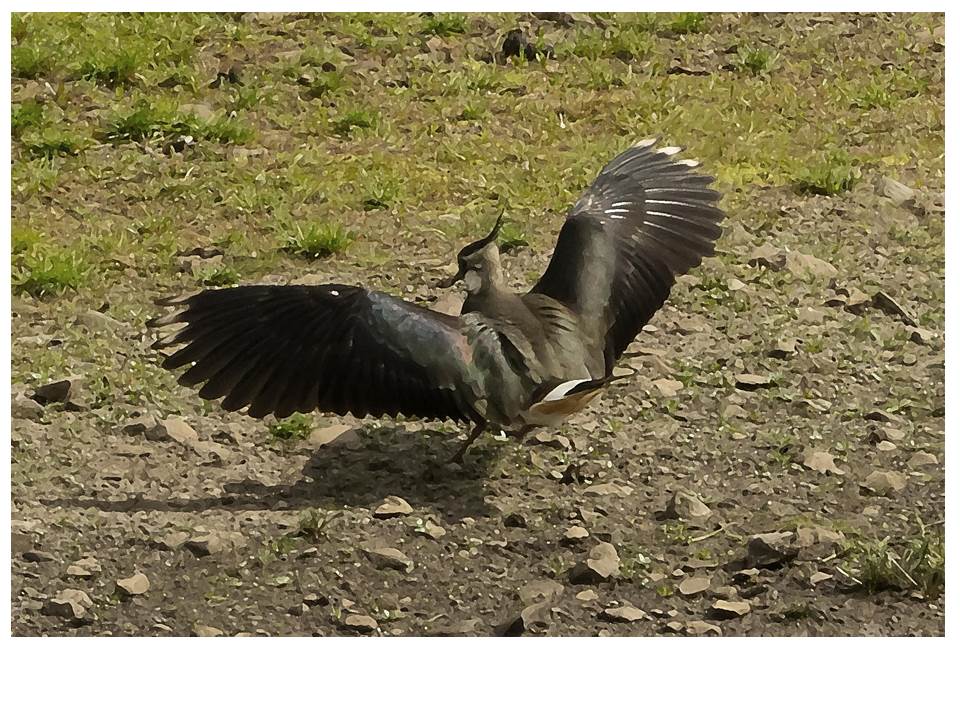
While the chicks were busy foraging, the adults were watchful and running air defence operations against the speculative fly-bys of corvids, and making some extremely attractive shapes in the process. Once again, these are long range efforts, so Backwoodsman has processed them in PowerPoint to make the grainy originals into “digital prints”.
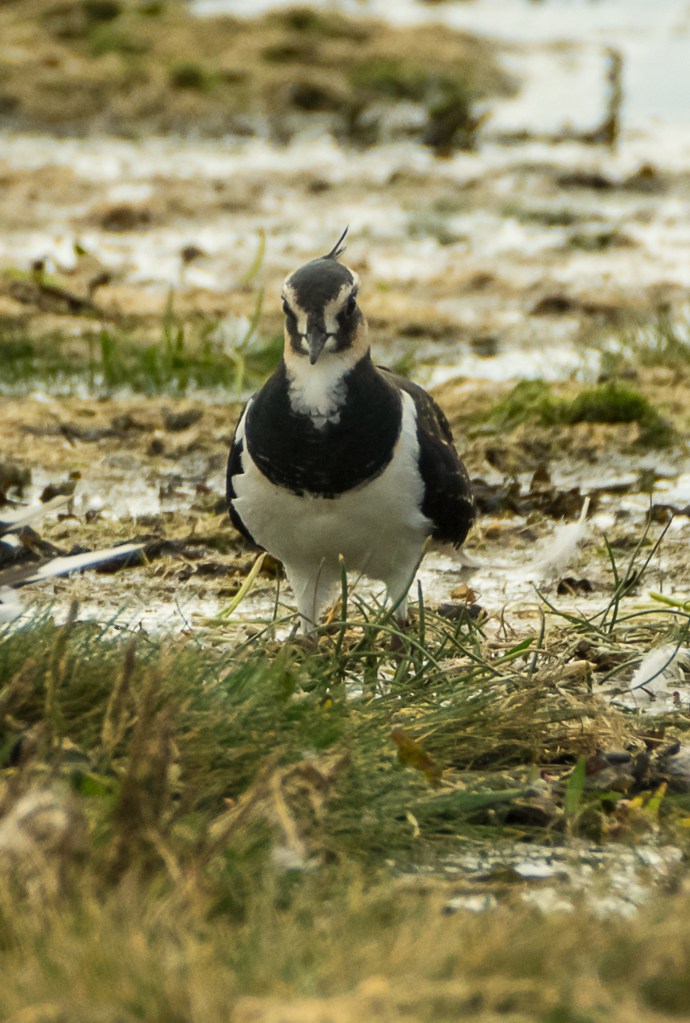
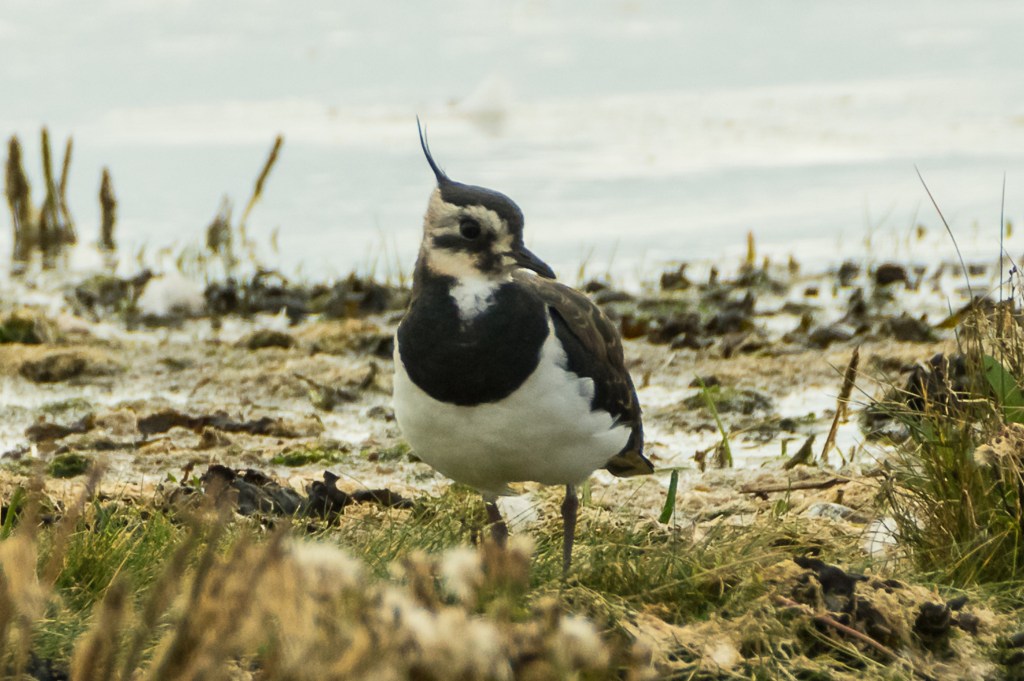
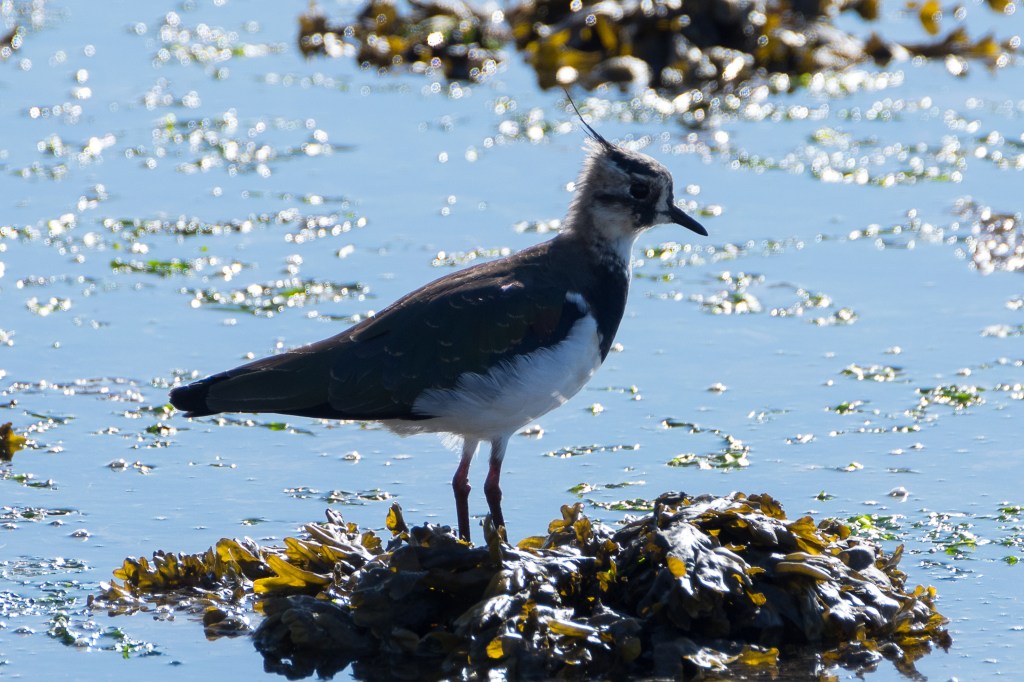
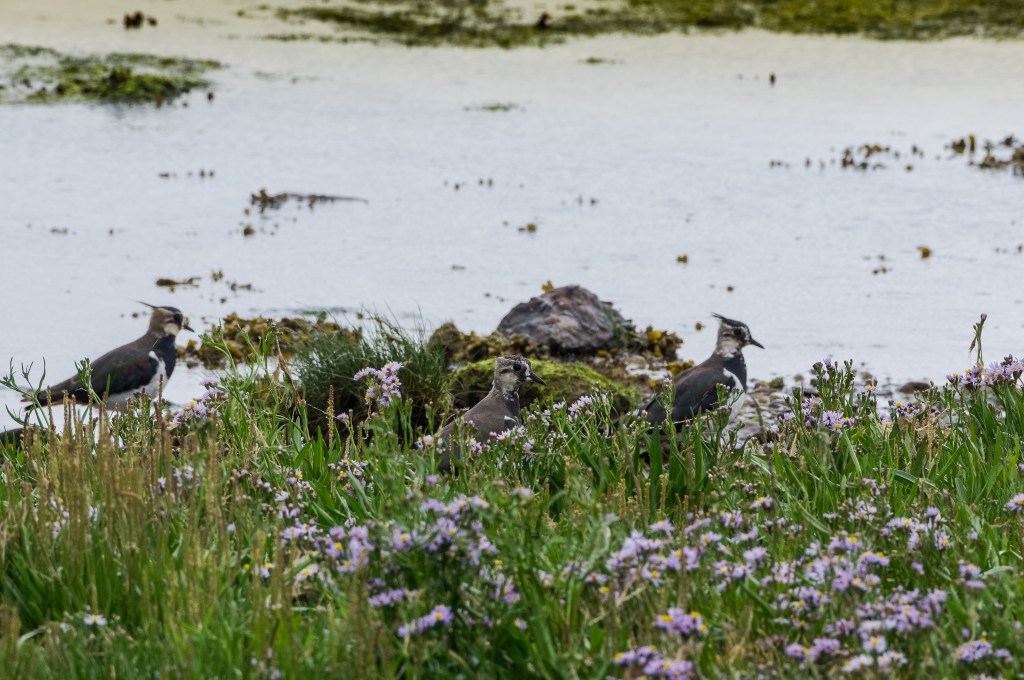
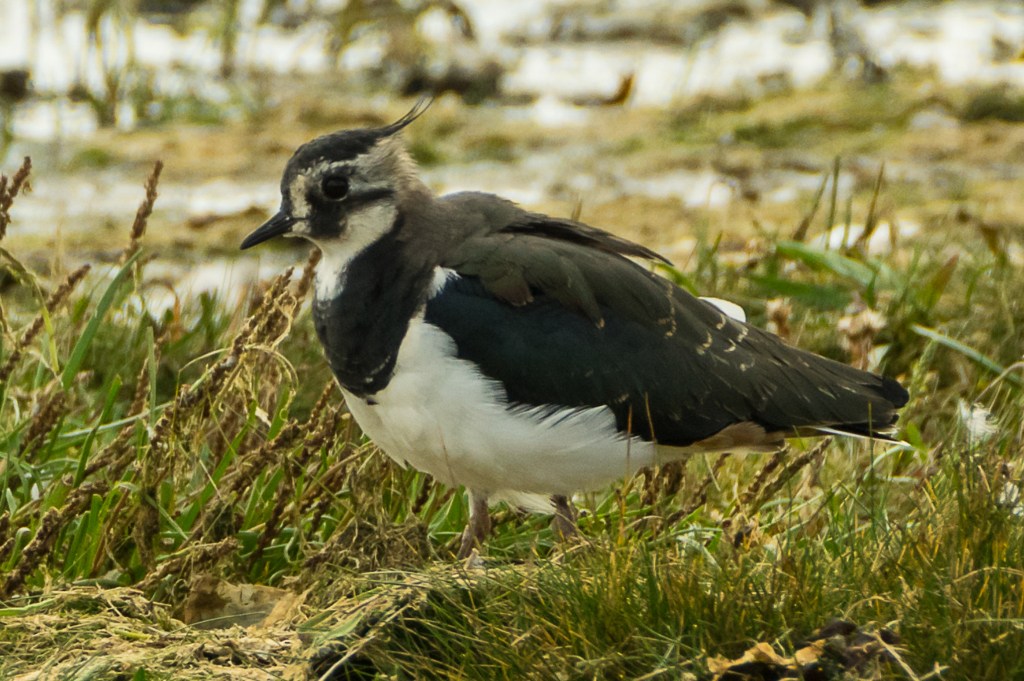
Backwoodsman has managed to get close to Lapwings a couple of times only. At Cardross by the sawmill, there is a very narrow strip of land which stands above all but the highest tides and Lapwings will sometimes rest there in the Sea Aster or on clumps of weed while they wait for their feeding grounds to resurface. Lapwings are usually very nervous but they have stood for the camera. These images are possibly of juveniles – the plumage is rough and the crests relatively short but in the absence of an adult bird in all its iridescent glory, they’ll have to do.
 backwoodsman.org