Backwoodsman had the great good fortune to be taken to WWT Martin Mere on his recent birthday – thank you, Mother! Like the Slimbridge reserve, WWT Martin Mere has a good collection of non-native waterfowl which provide a lot of interest if the areas in front of the hides are a bit quiet. The WWT states that “Most of our wetland sites have collections of non-native wildlife telling the story of wetlands around the world. Some are part of international breeding programmes. Others test prototype tracking equipment for research. Our aviculturists develop unrivalled skills in rearing rare species – which they use to save species from extinction in the wild.”
Project Godwit and the headstarting initiative for Spoon-billed Sandpipers demonstrate the Trust’s activity in breeding programmes. The story-telling activity is also important; many of their non-native species will have relatives which are native to the UK and it is interesting to see familial characteristics across waterfowl from different continents.
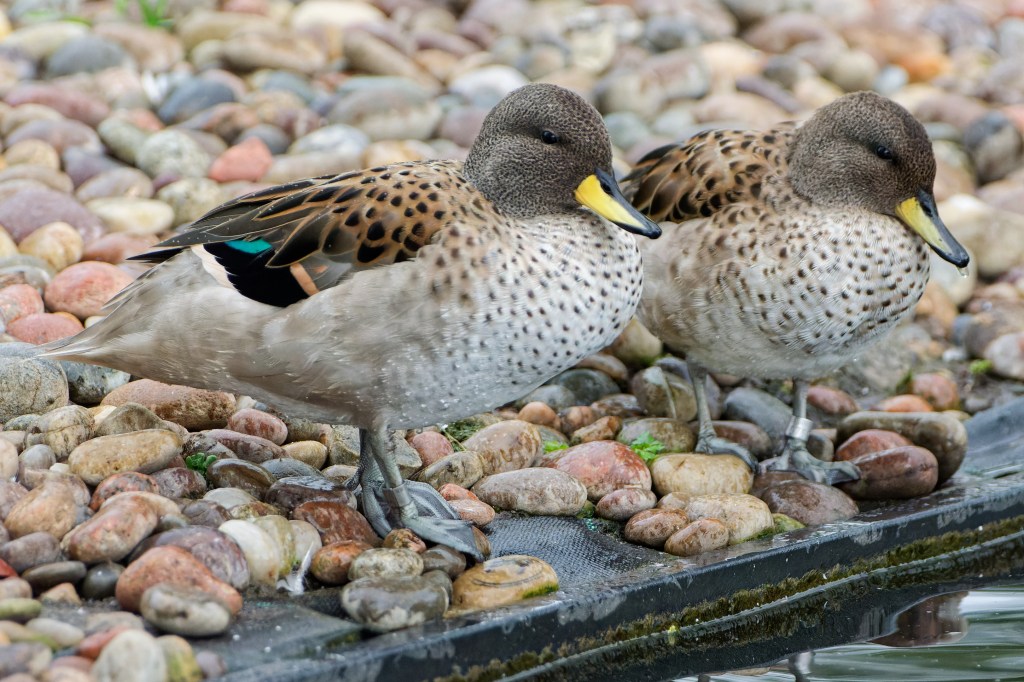
For example, readers of previous posts may remember Backwoodsman’s enthusiasm for the family Anas represented in the UK by Teal and Wigeon inter alia. The WWT have a range of related ducks including the Yellow-billed Teal (A. flavirostris) from South America, described as a dainty species. The speculum has photographed well here and there is some lovely texture visible on the white parts of the bird. The vermiculation of the head is striking but Backwoodsman is particularly keen on those fringed feathers which bear a dark thumbprint. The identification was confirmed at this useful site.
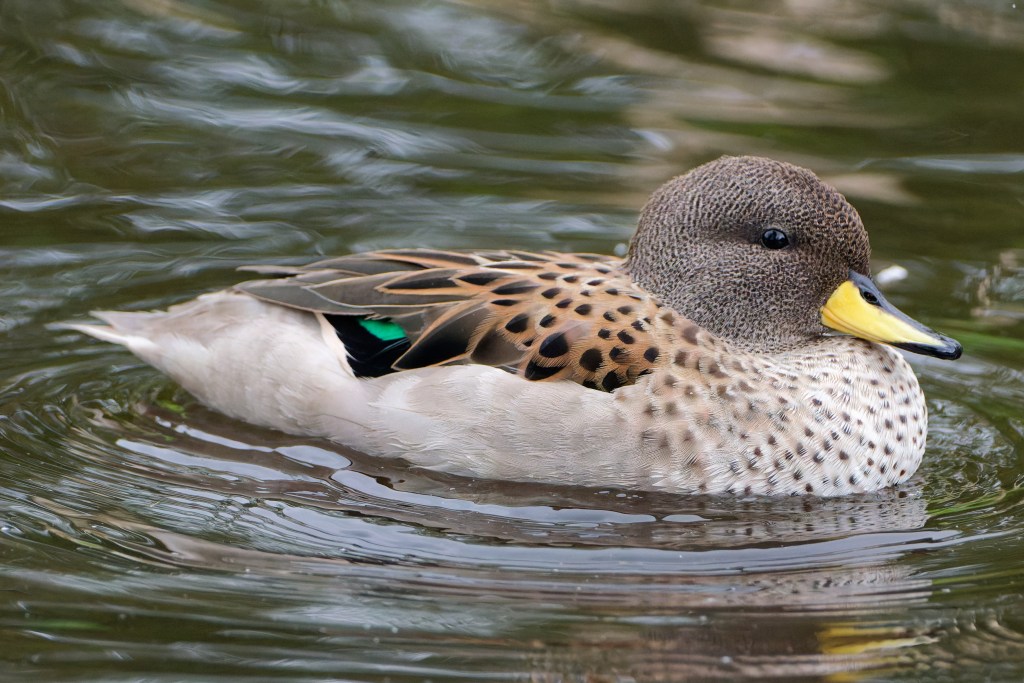
Wikipedia has two sub-species; the northern sub-species, the Sharp-winged teal Anas flavirostris oxyptera inhabits the highlands of central Peru to northern Chile and Argentina. Backwoodsman believes this was the assignment made on a small plaque by their pond at Martin Mere. It must be a tricky business matching these non-native species with suitable habitats; getting the right depth of pond with appropriate material and vegetation on its bottom is probably essential if these birds are to last for any length of time.
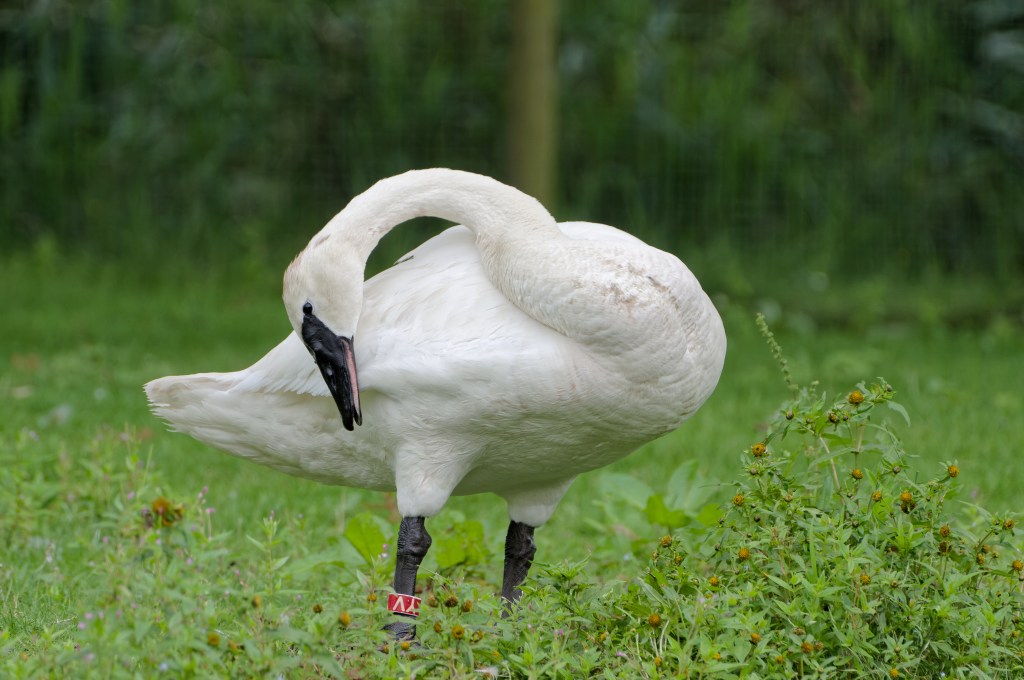
Martin Mere is probably best known for the geese and swans which visit for the winter months and are well fed in reward. The Trumpeter Swan is present in the permanent collection; it is native to North America and is one of the largest water birds. It is a close relative of the familiar Whooper Swan, which abounds at the Mere in the winter.
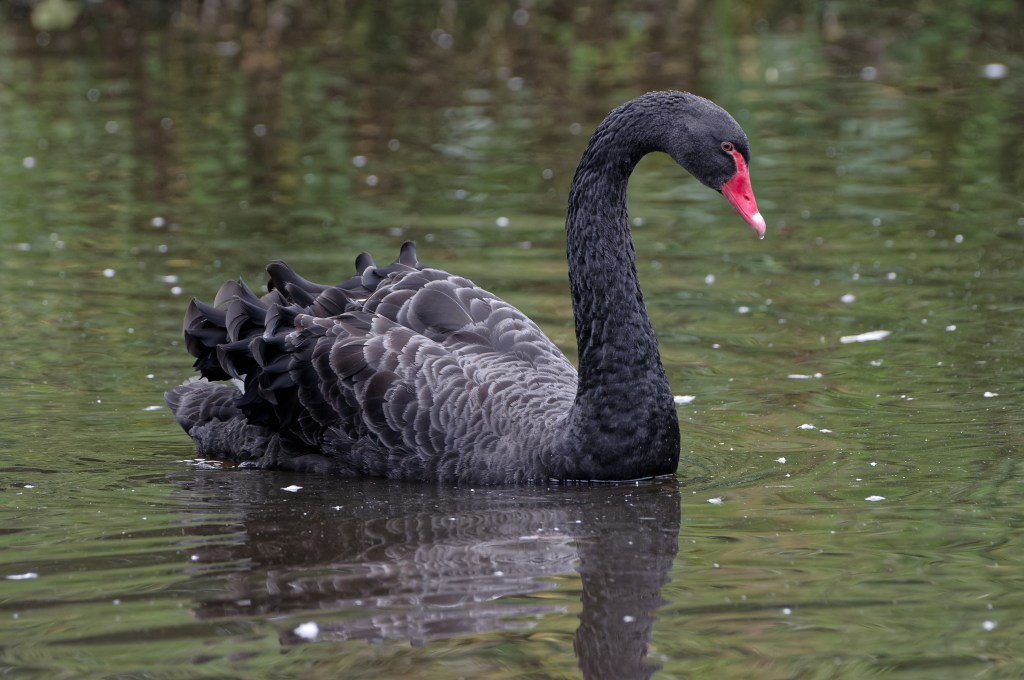
In sharp contrast (!) , the reserve also has Black Swans from Australia, or possibly east Norfolk. The BTO tell us that: “This popular ornamental species, introduced from Australia, is occasionally encountered in the wild, mostly as single individuals but sometimes in small groups. The species favours rivers and freshwater lakes…The Rare Breeding Birds Panel regularly receives double-figure records of breeding attempts from across the UK, and there is an established breeding population in east Norfolk, centred on the Broads.”
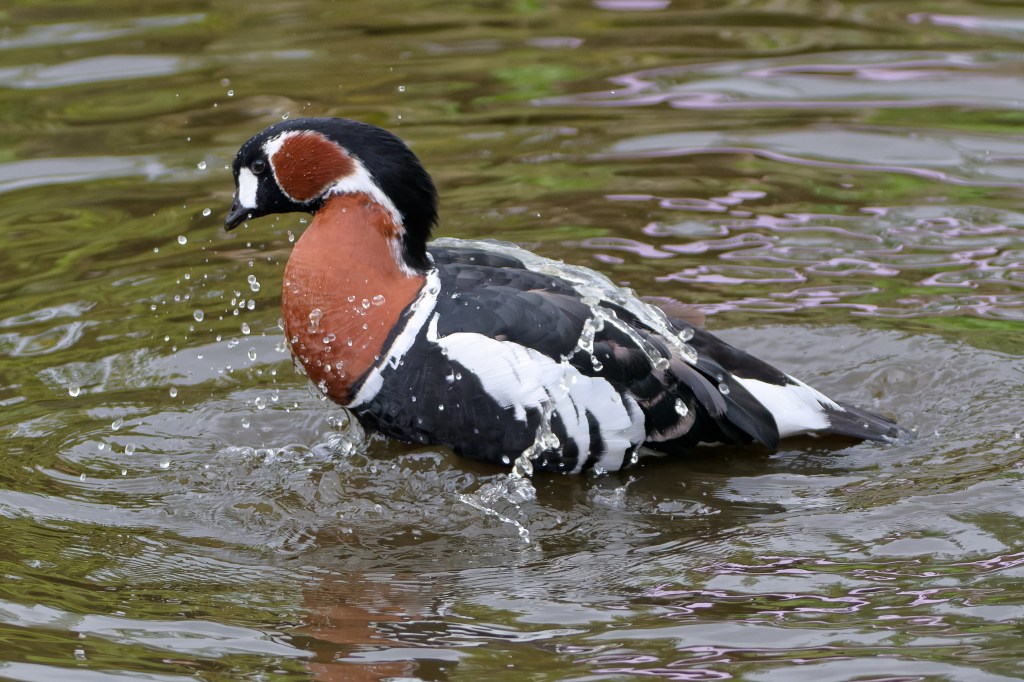
Backwoodsman took a lot of photographs at Martin Mere and may populate a gallery with tentative identifications in the near future, but before moving on, here are three rather marvellous goose species. Firstly, the Red-breasted Goose which is “A rare, but more or less annual, visitor to Britain in winter” according to the BTO. They add that “numbers of this Arctic breeding goose on its usual wintering grounds in SE Europe, though variable, are thought to be declining”. It would be really exciting to find one of these amongst the Canadas or Greylags.
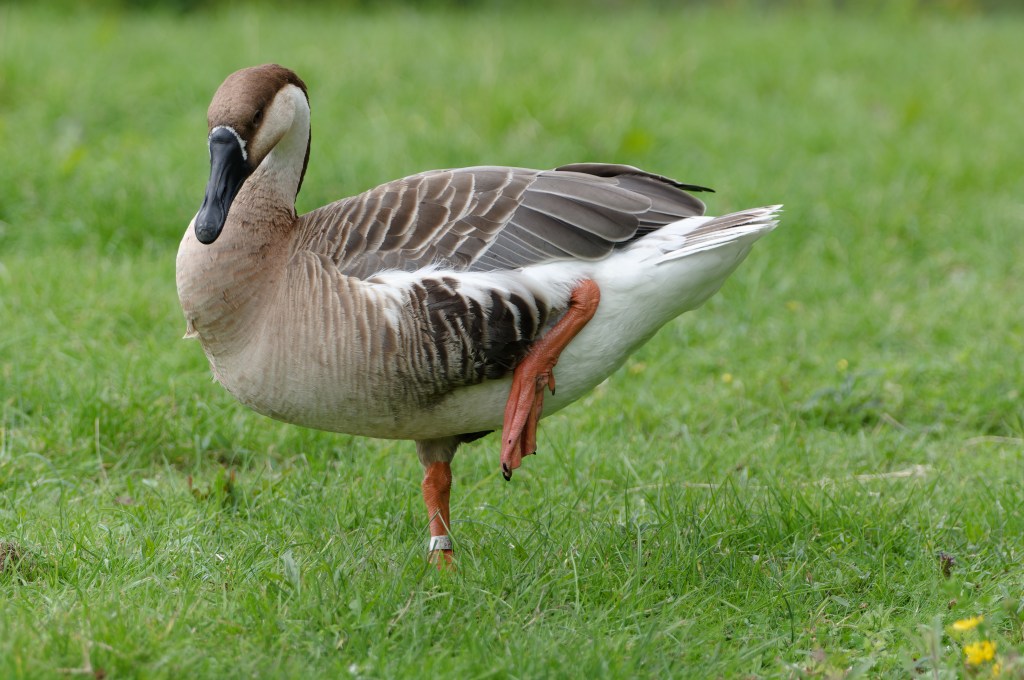
It seems rather less likely that Backwoodsman will find a Swan Goose at Hogganfield Loch as these huge striking birds are natives of Mongolia, Northern China and the far east of Russia.
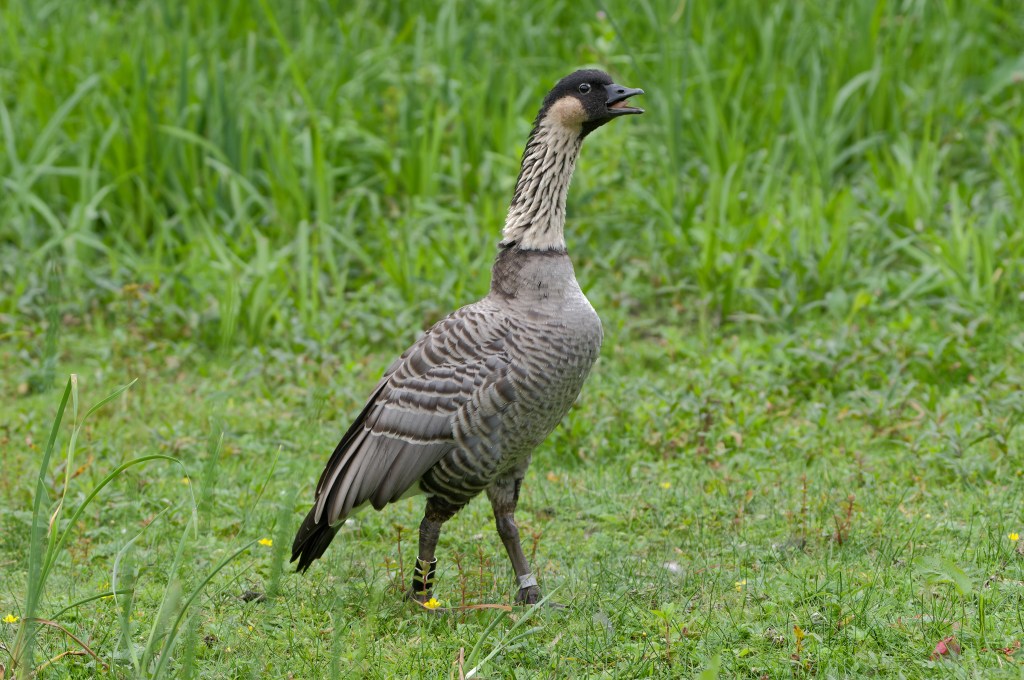
As for the Hawaiian Goose, there’s no need to elaborate, they’re so not coming to the West of Scotland any time soon. Backwoodsman enjoyed having a really good look at all three species. There were other geese present and some may turn up in future posts about our native species.
On previous visits to Martin Mere, Backwoodsman has been able to get really close to some interesting species in the Weird or Wonderful (WOW) Aviary. Martin Mere had excelled themselves this time with the Inca Terns. A group of twelve terns arrived at the reserve in early summer 2021; we saw half-a-dozen when we visited recently (four make a better framing) but it is entirely possible that they all remain on the reserve and are in good health.

There was a talk about them, and an attempt was made to feed them by hand but they weren’t compliant. The appearance of the feed bucket brought them to the roof of the aviary hide, where they rattled their feet and vocalised, but they would not seize the sardines offered by the keeper. Backwoodsman guesses that a ageing sardine from a zinc bucket is likely to become a little over familiar when you are used to plucking glittering anchovies fresh from the foaming ocean. Some birds went to perch nicely at the side of the aviary though.
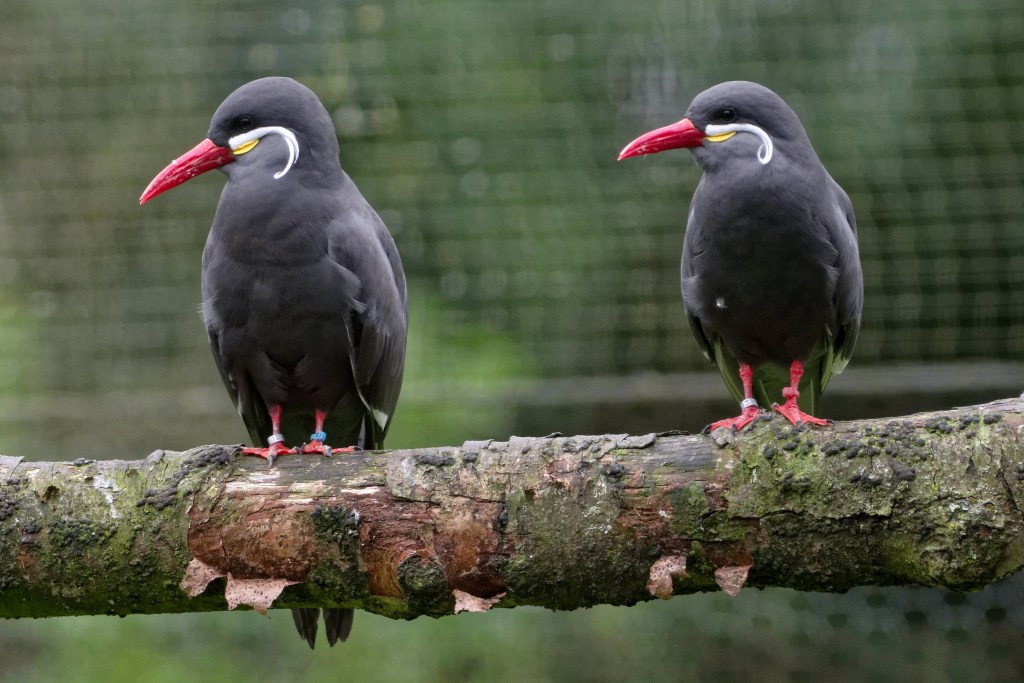
Inca Terns fly up and down the Humbolt Current which sweeps the western seaboard of South America, subject to the whims of the El Niño Oscillation. The WWT comment that “[the] population in the wild is estimated to be around 150,000 but this represents a population decline over the last fifty years, with the principal factors for the drop in numbers being overfishing and ocean pollution”.

Unlike most terns, which favour ground nesting, Inca Terns use crevices or old penguin nest holes to lay their eggs in. Velando and Màrquez studied an Inca Tern breeding colony, mapping the relationship between nest location (specifically proximity to the cliff edge) and chick size and other breeding outcomes. Adult birds with nests close to the cliff edge could feed their chicks more successfully despite the attentions of Peregrine Falcons, their main predator species.
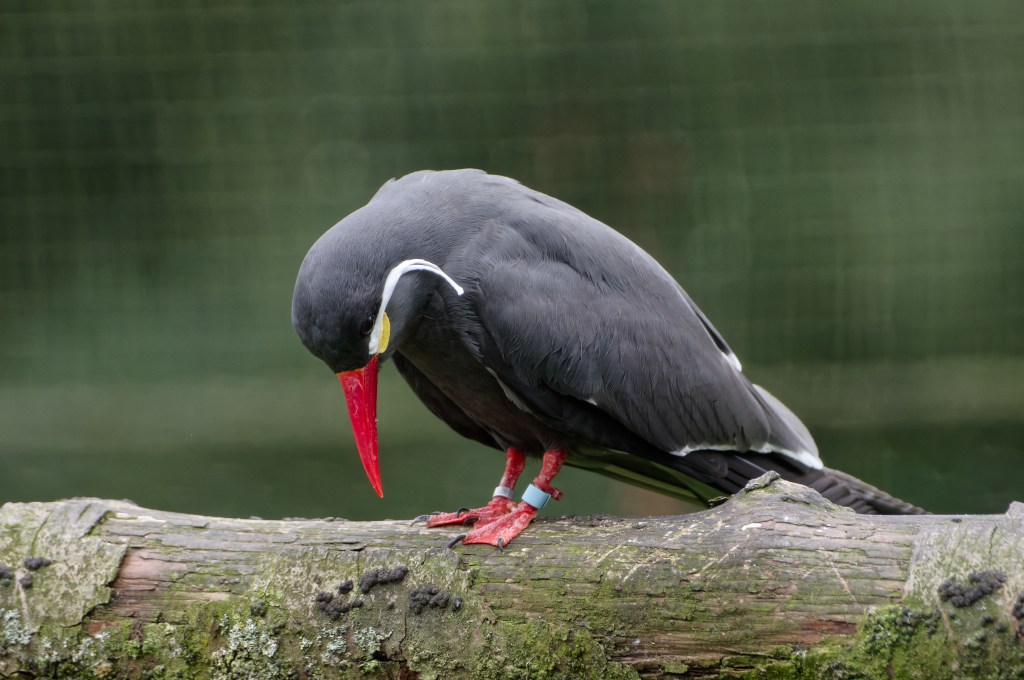
The same authors had also looked for correlations between the length of the extravagant white feather moustache and breeding performance measured by factors such as number of chicks fledged, chick mass and immunocompetence. Unfortunately, this publication in the Journal of Avian Biology sits behind a paywall but some of you may be able to access it through the link. And yes, there did seem to be some sort of relationship along the lines of longer is better.

Any bird species laying only one or two eggs seems in a perilous position; yes, the adults can focus their rearing activities on a small number of chicks but the odds look stacked against a good outcome. Will Martin Mere be attempting to breed them? This may have been covered in the talk but Backwoodsman had zoned out completely and was concentrating on his images – he wasn’t listening at all. Perching terns are one thing, but terns in flight are something else entirely: unfortunately, only images of static birds could be captured on this visit but it was most exciting to see these very striking birds in relatively close proximity.
Backwoodsman is hoping to go back to Martin Mere when everything gets a good deal colder and the migrants come. For anyone in the area in the near future, LWT Mere Sands Wood Nature Reserve and RSPB Hesketh Out Marsh look very worthwhile too.
 backwoodsman.org