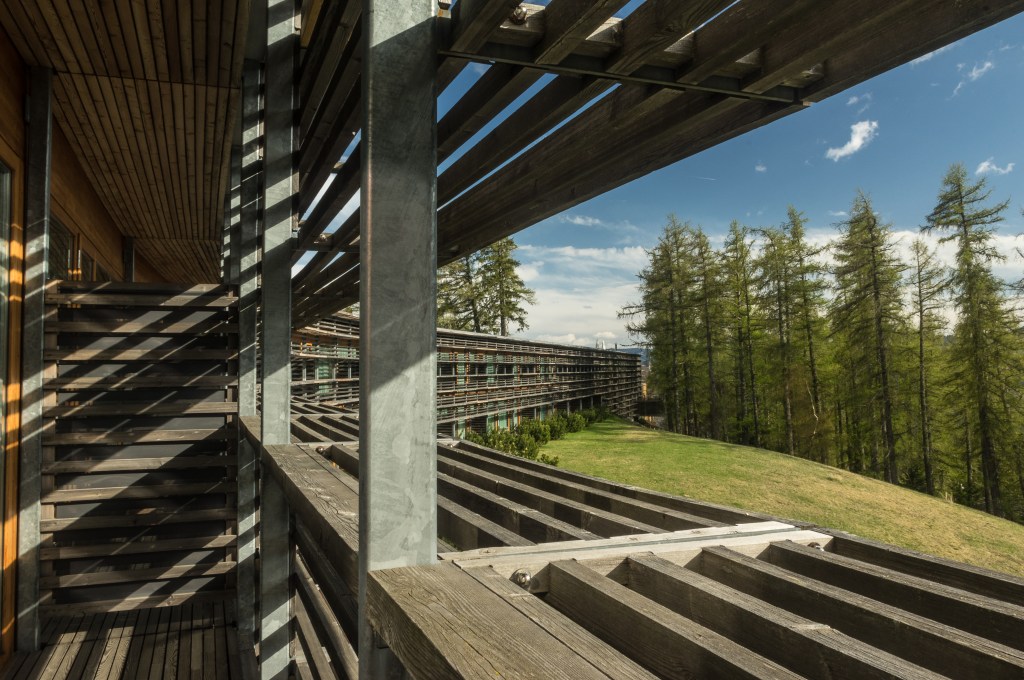
Backwoodsman had the good fortune to return to the Vigiljoch which stands above Lana in the Sud Tirol. The mountain is really the first high point on a long ridge which extends many kilometers to the south-west. We stayed in a beautiful hotel (Vigilius Mountain Resort) which is reached fron the valley by cable car (Seilbahn); a chairlift (Sessellift) climbs from the hotel at 1486m to a spot height of 1814m.
The ridge is broad and undulating at that point with many well-marked tracks; those which head south-west climb steadily, reaching a spot height of 2608m at Naturnser Hochwart. We’ll return to this topic in a subsequent post.
Our first visit took place early in May in 2019 when much of the land was trying to cast off winter: it was dry and tawny in colour. By mid-June, the timing of the 2024 visit, a transformation had taken place; there were flower-strewn meadows, much noise from crickets and grasshoppers, and butterflies on the wing. Backwoodsman is always pleased to be able to capture images of butterflies; looming is prevented by the use of the long zoom (though depth-of-field suffers). If you don’t loom, the butterfly may sit for you and show you both upper and lower wing surfaces. Patrick Barkham describes this approach of remote viewing in The Butterfly Isles.
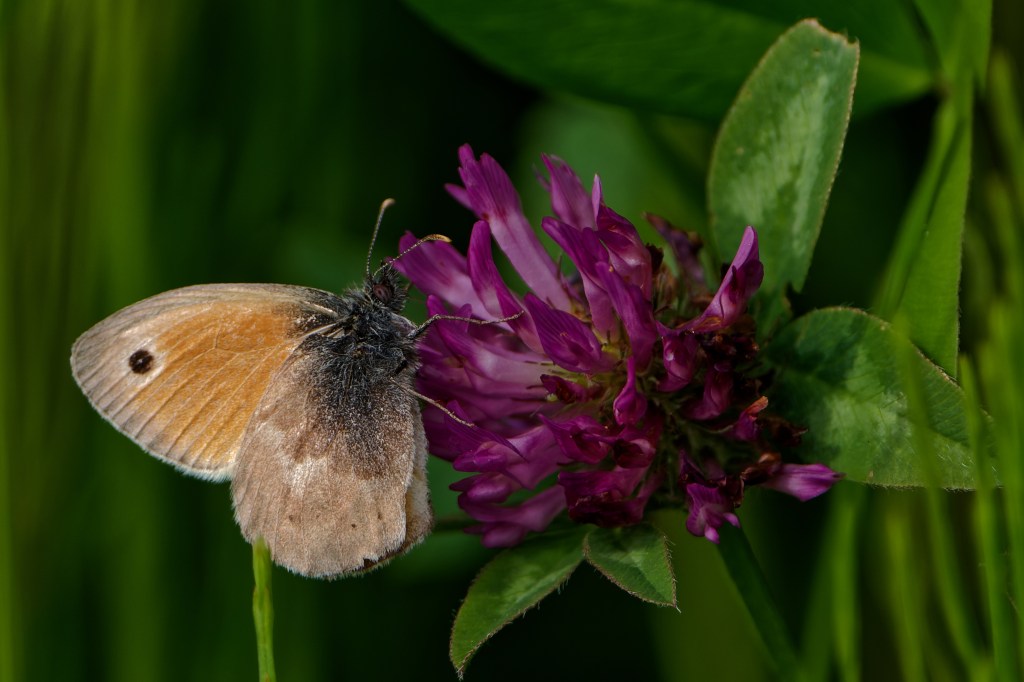
The Small Heath is not rare or unusual but it has settled on a Clover which makes for an attractive range of shades and tones in the image. Typically for this species, its wings are folded when feeding or at rest.
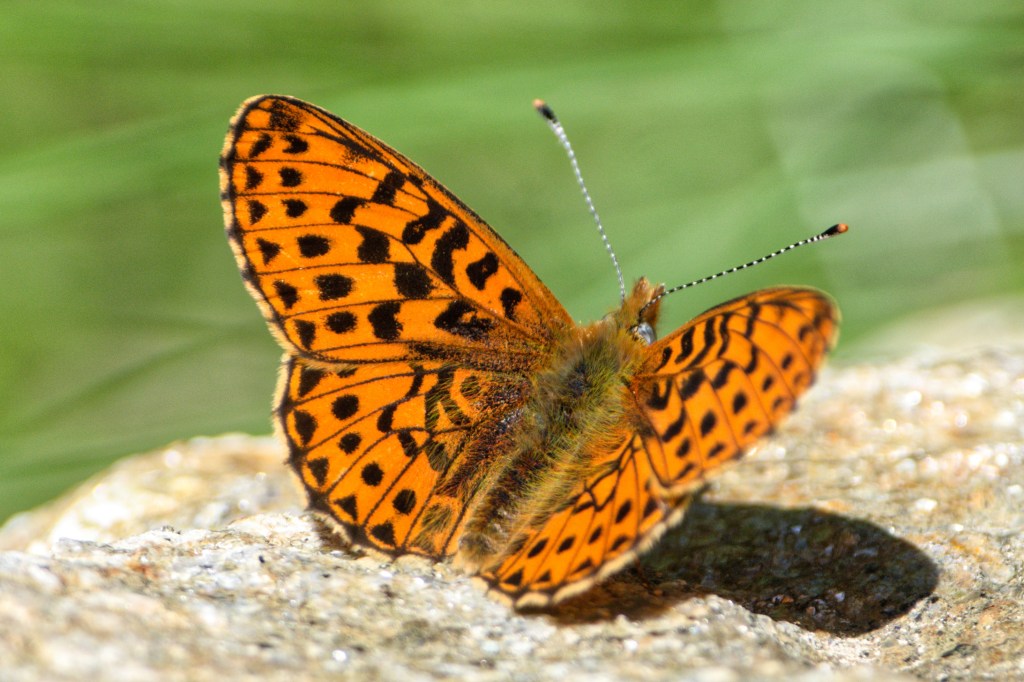
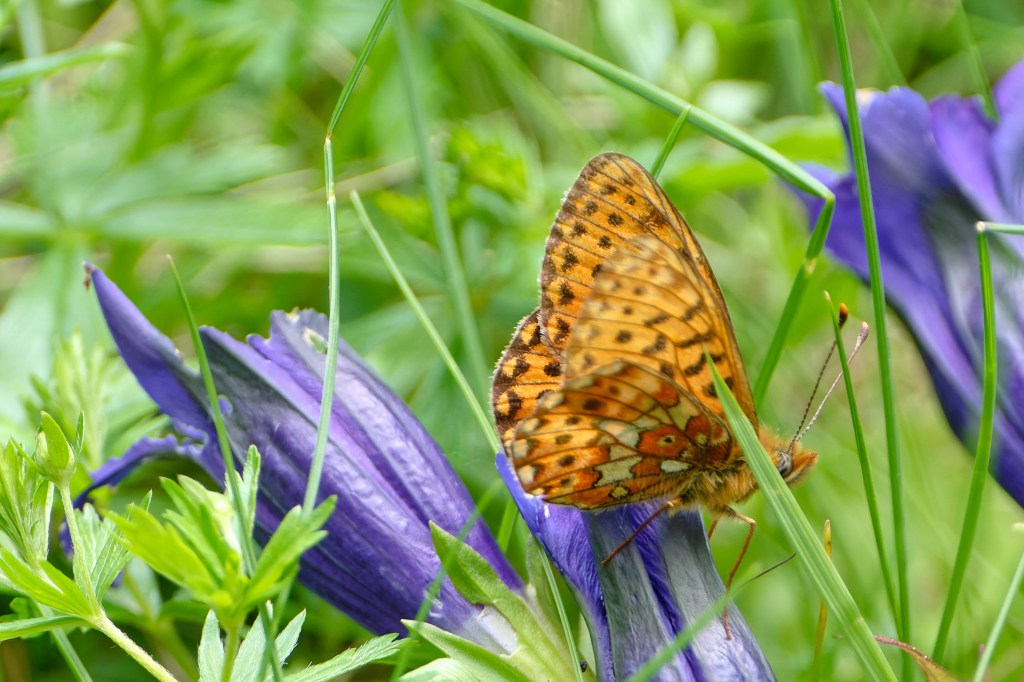
Strong light brought out the opulent colour of this Pearl-bordered Fritillary; the left hand wing and the body are in the same focal plane so the image is sharp, but the right hand wing is orthogonal to that plane. Backwoodsman is far from being a butterfly expert but believes the identification is correct; it is based on the pattern of black markings on the upper surface, and of white and yellow on the lower.
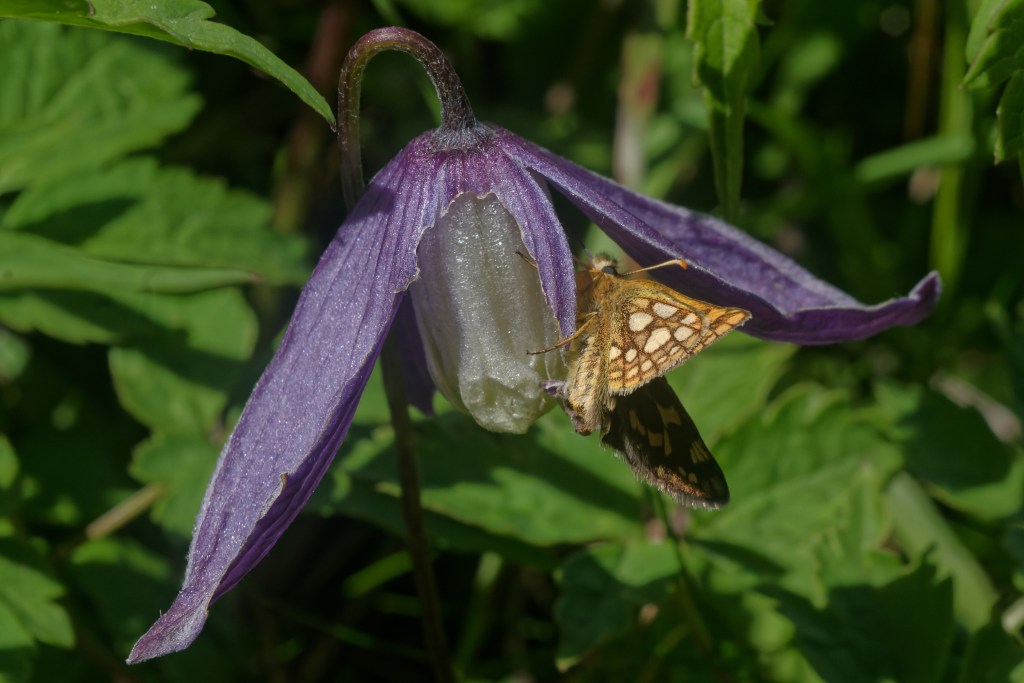
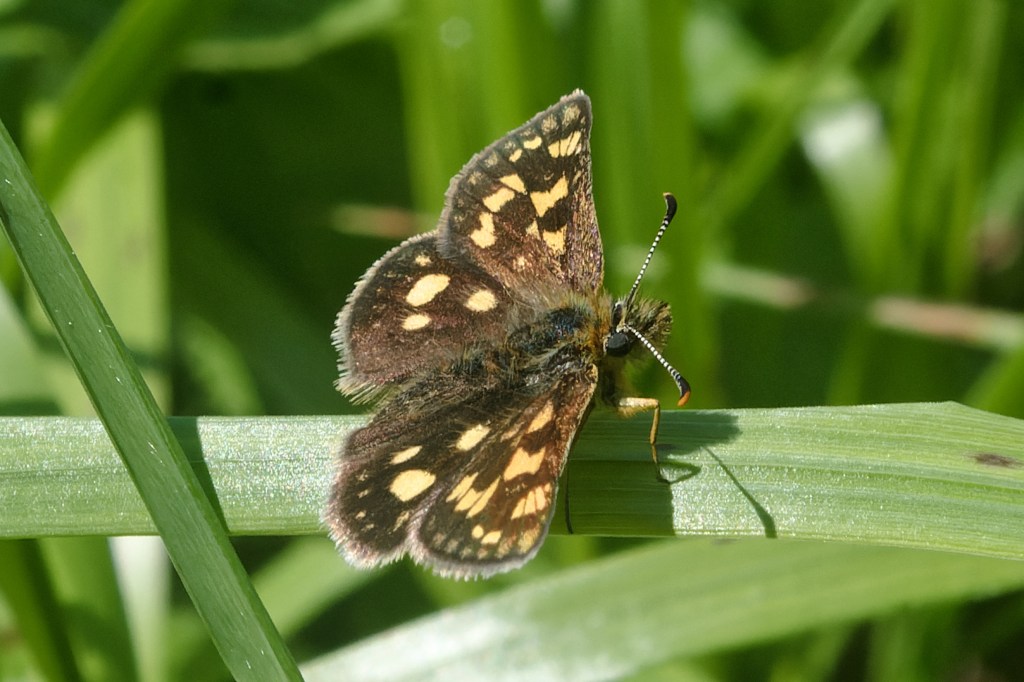
Backwoodsman has never set eyes on a Chequered Skipper before; this one posed very nicely, using a wild Clematis as a prop to show off the underwing. The depth-of-field in this image of the upper surface is quite good.
The meadow in front of the hotel yielded a couple of Blues, but Backwoodsman had to be very careful while prowling about here because of proximity to the buildings. The prospect of being mistaken for a papparazo was not pleasing, and might have led to a scene. Head down and be careful where you point that thing! This Small Blue is just showing the brown upper wing surface allowing the identification, but what is this second chap?
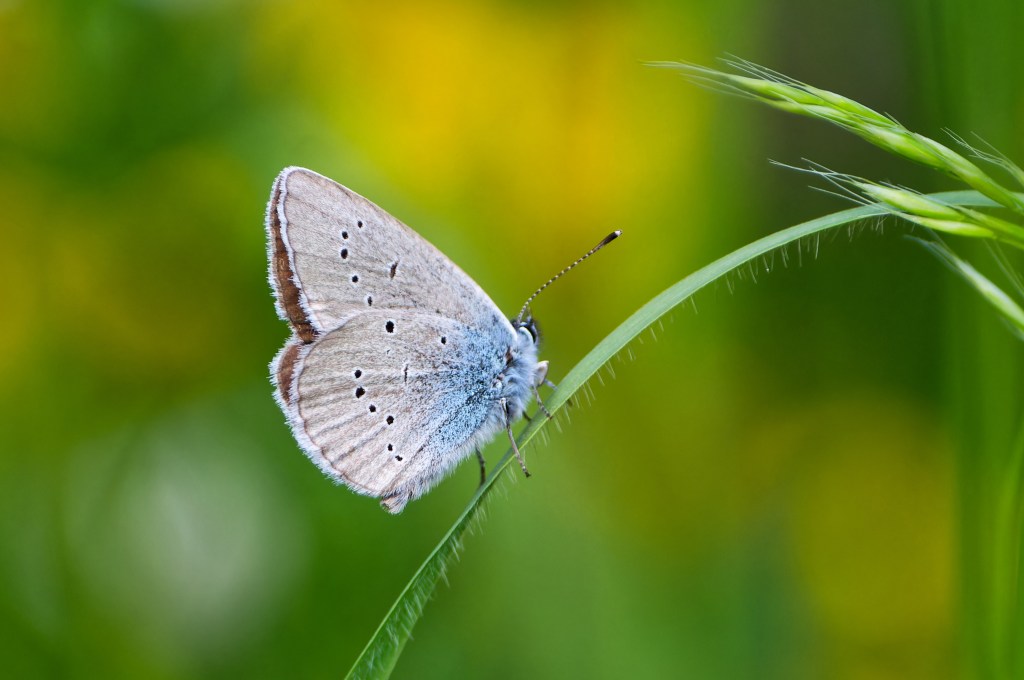
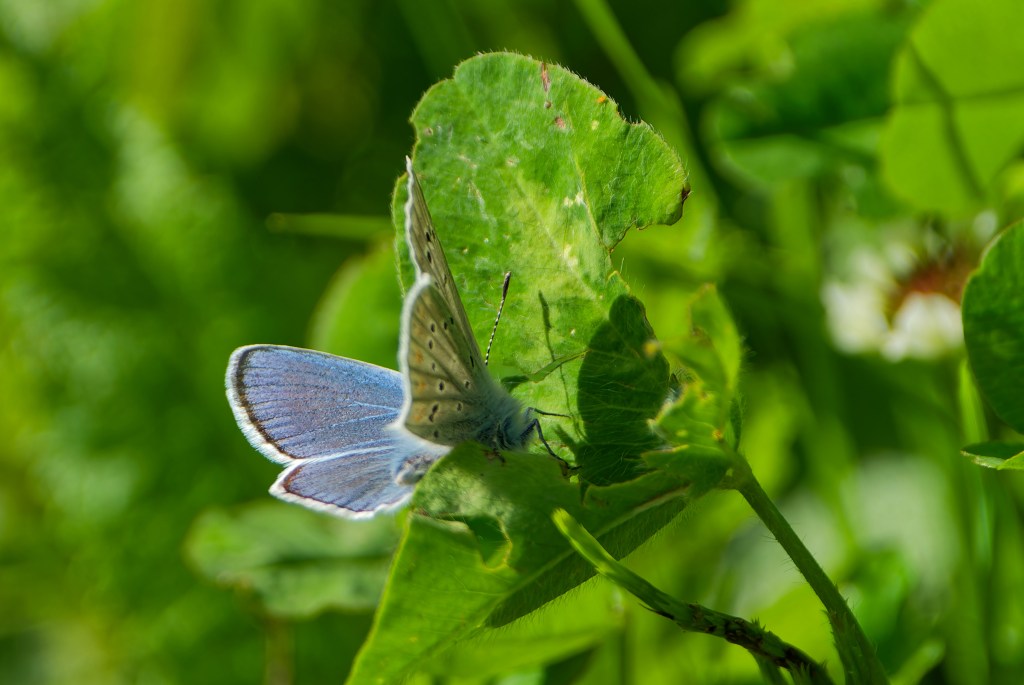
Backwoodsman’s money is on a Common Blue – this next one is definitely a Common Blue but please note the very strong pattern of spots on the lower wing surface. Could the strong light through the wing fade out that strong pattern of spots in the mystery species?
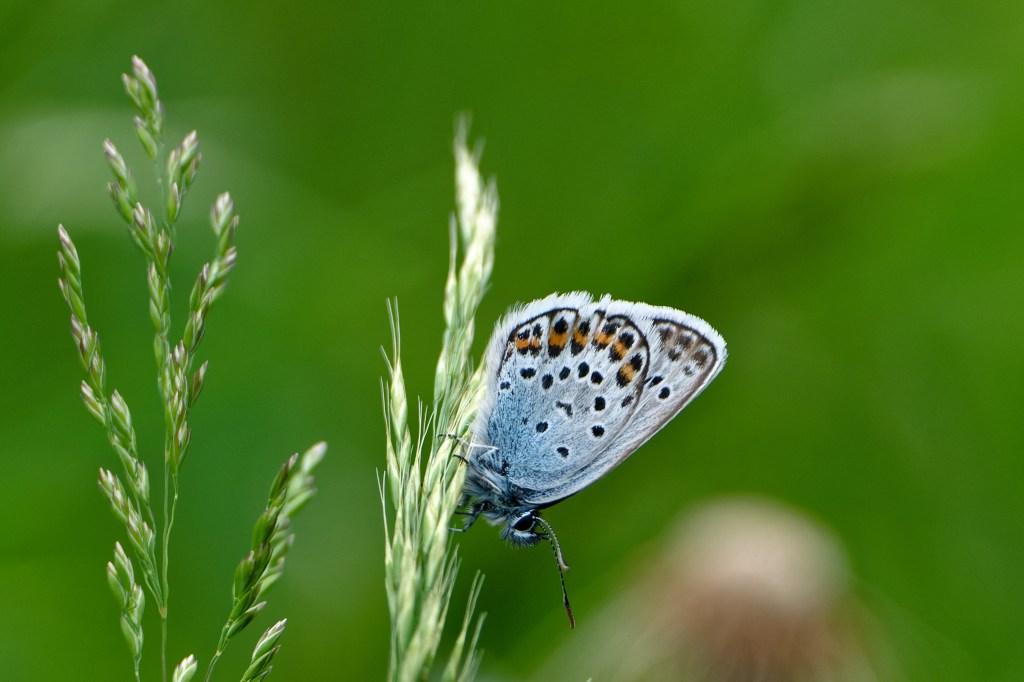
Finally, a female Silver-Studded Blue – little doubt about this one. The dusting of the body and wing bases is really quite something.

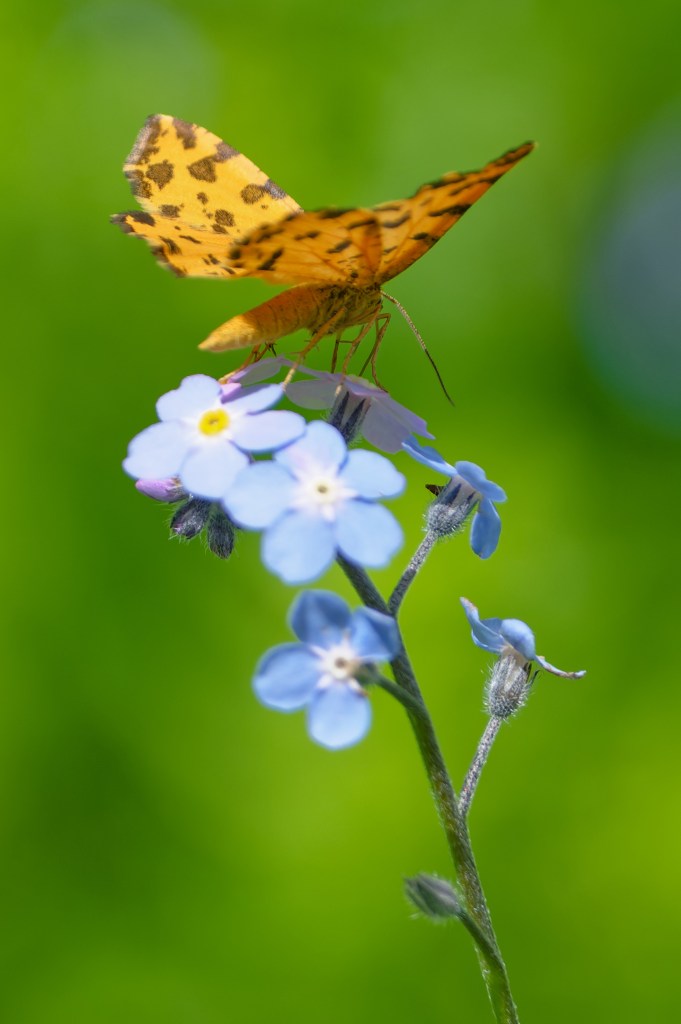
Backwoodsman was taunted by Clouded Yellows (shades of Omis again) – they would not settle. There were a few moments of exhilaration when an ochre creature flitted into view and settled but they were Speckled Yellow moths each time. One day, we’ll get a Clouded Yellow in the lens and focused.
Backwoodsman thought he had done quite well with this range of species but then, alas, he read a Naturetrek Tour Report from July 2018 and was well and truly put in his place. So many species! However, it is the case that groups of naturalists banged up together for a few days can get quite competitive, possibly imaginative even. On a visit to Shetland, we encountered a wildlife tour party lead by Iolo Williams from the BBC’s Seasonwatch operation, dining at the Sumburgh Hotel. “So, how many species have we seen today, then, look you, a hundred and seventeen wasn’t it?” intoned Iolo in ultra- lugubrious mode. “Don’t forget the Hobby”, said one of his clients. “Oh yes” he said “a hundred and eighteen then.” We were surprised, thinking a Merlin more likely given the northerly extremity. Anyway, everyone was definitely up for one more tick on the list, no matter how improbable.
So “where are the birds?” you bellow, “get to it you busker!”
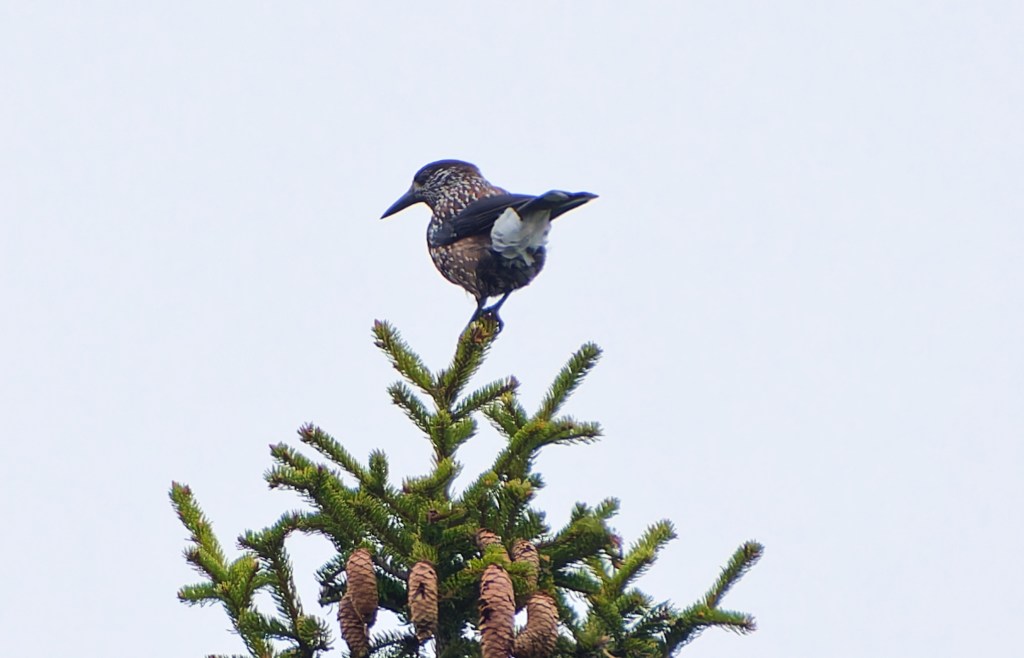
A hit list travelled to the Sud Tirol with Backwoodsman, because we had done astonishingly well last time. We had a one-off sighting of Spotted Nutcrackers in 2019. Snow came during our vist and there was some poor light; through the gloom, we saw a group of corvid-sized birds feeding on the ground in a woodland clearing. Perhaps the snow had brought some cones to the ground for them.

They were much in evidence this time, always right at the tops of trees, and noisy with it, but quite camera-shy. This one was photographed from the Sessellift in excellent light. The Wikipedia entry refers to their cacheing of pine nuts and their excellent memories of cache locations.
Various Woodpeckers flitted about; we caught a glimpse of the Black Woodpecker, an unmistakeable bird. Just a glimpse though, no time to photograph them. Great-spotted woodpeckers were about too, but not to be photographed. Backwoodsman made a recording of the Great-spotted which will turn up elsewhere; he also made this recording.
There is an interesting comparison of the two species drumming on the same tree on YouTube, along with separate recordings of the Black and Great-spotted on the excellent xeno-canto site. So what do you think? Backwoodsman thinks that the drumming in the recording seems more like that of the Black Woodpecker. I fear we’ll never know for sure.
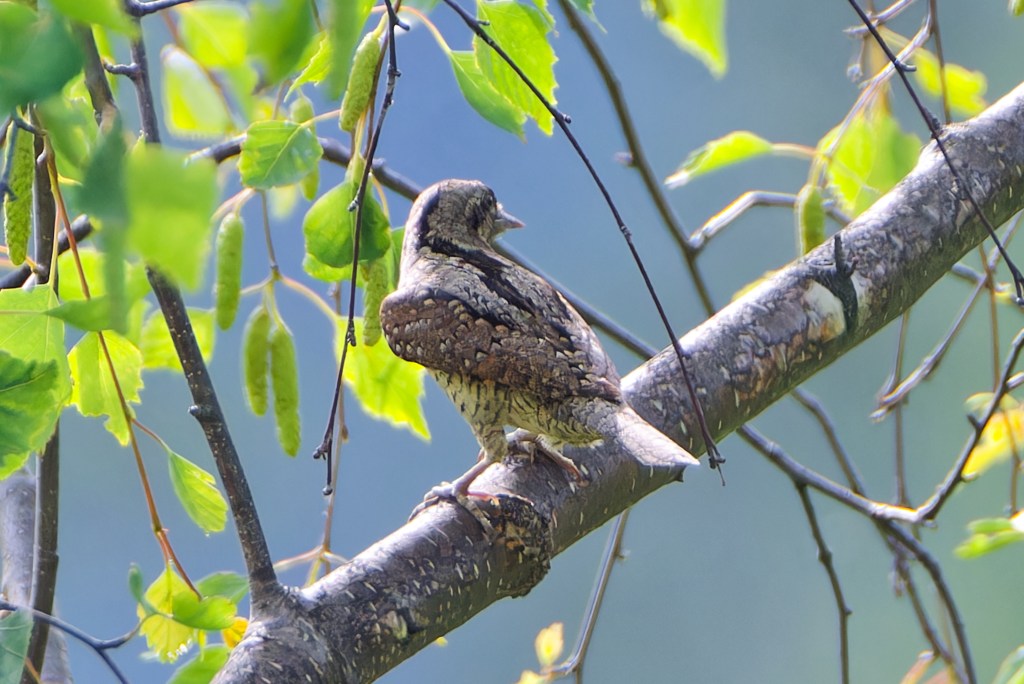
There is less ambiguity about the next Woodpecker species. On the way to the hotel meadow, Backwoodsman saw what he took for a distant Thrush lift off from the track and land on a branch in full sun, briefly. As usual, he shot first and worried about it later. He was quite surprised by what he saw in the back of the camera later on – a Wryneck, and what a lovely thing.
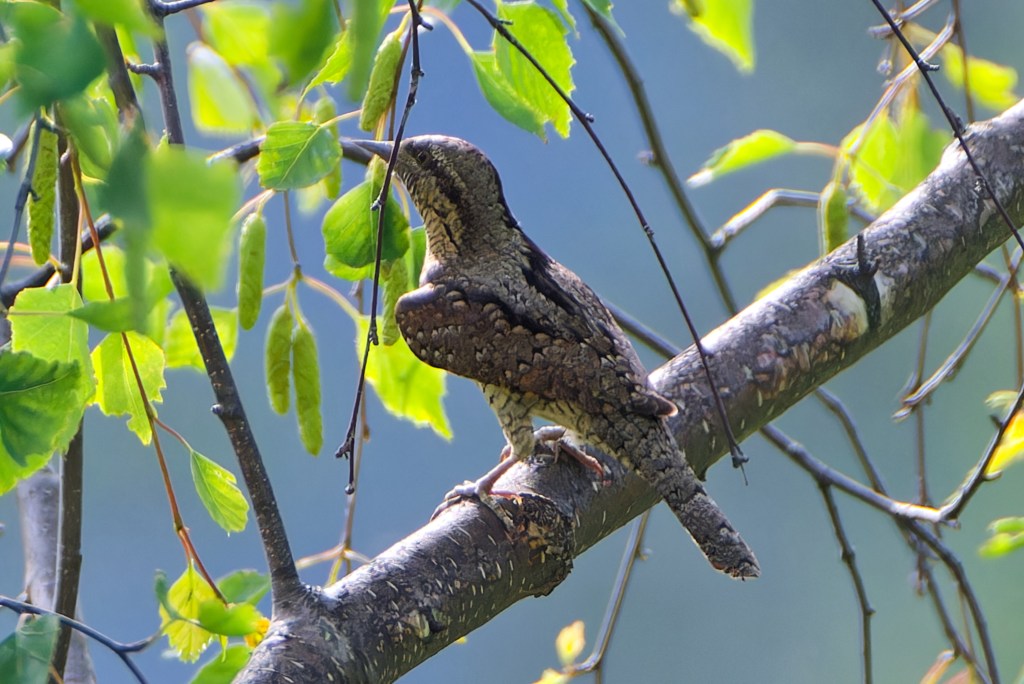
The similarity between markings on the bird’s back and those on the branch is really surprising; Backwoodsman has often wondered how birds seem to know where to stand, the case of Golden Plovers providing one of the most remarkable examples. The Wryneck is sitting in a Silver Birch; no shortage of those in this mountain environment but what an amazing complementarity. The feet are impressive and Backwoodsman is very taken with the boots.
Another list bird was the Ring Ouzel; we were beating them off with sticks in 2019, but they were more elusive this time, failing to show up when the camera was around. Perhaps Backwoodsman will catch up with them again in Scotland.
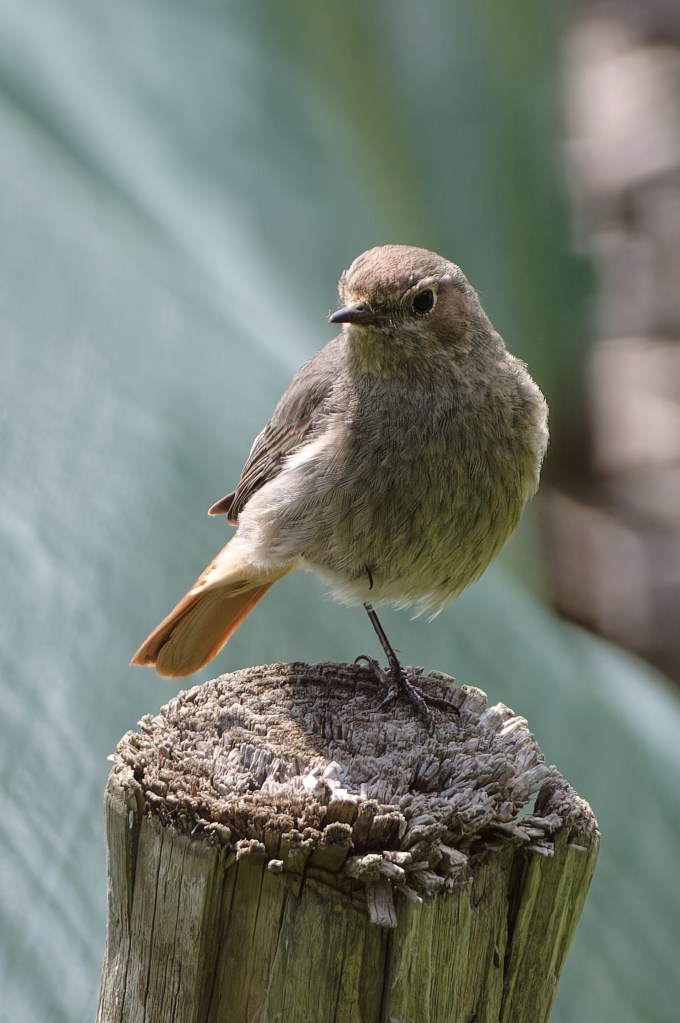
The Black Redstarts were more biddable but kept their distance. We spotted an adult male in the distance up on the top of the hill and photographed him.
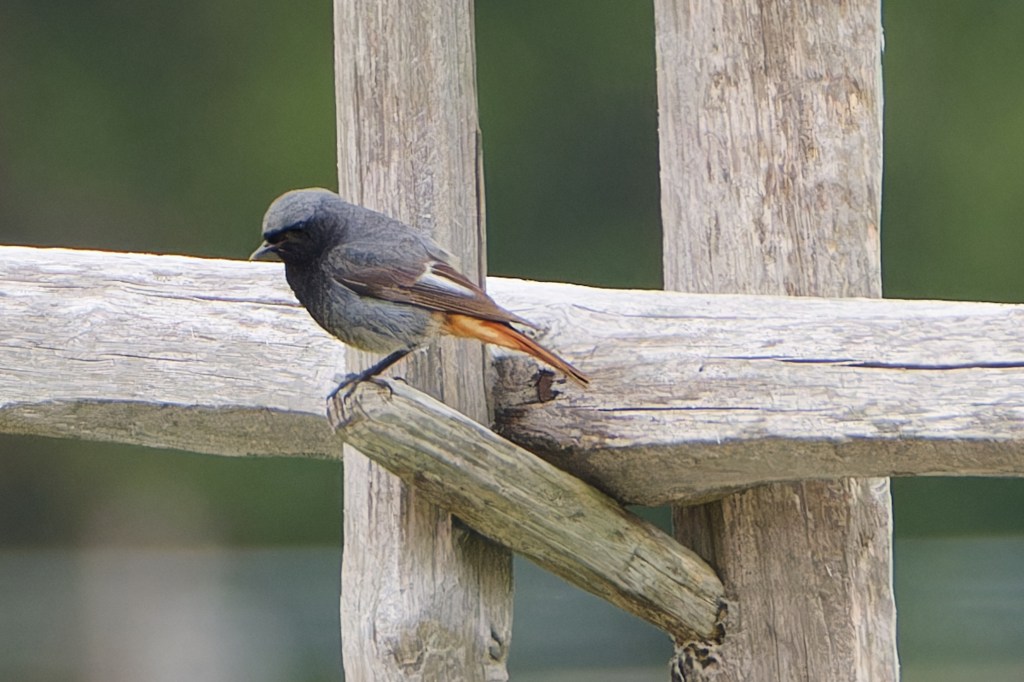
Then we returned from a trip to Merano to find an adult feeding a chick just outside the fire escape by our room. They were not to be photographed and Backwoodsman became pessimistic. He went outside to prowl and found a chick and an adult male; they liked a line of fence posts which descended a slope behind the hotel.
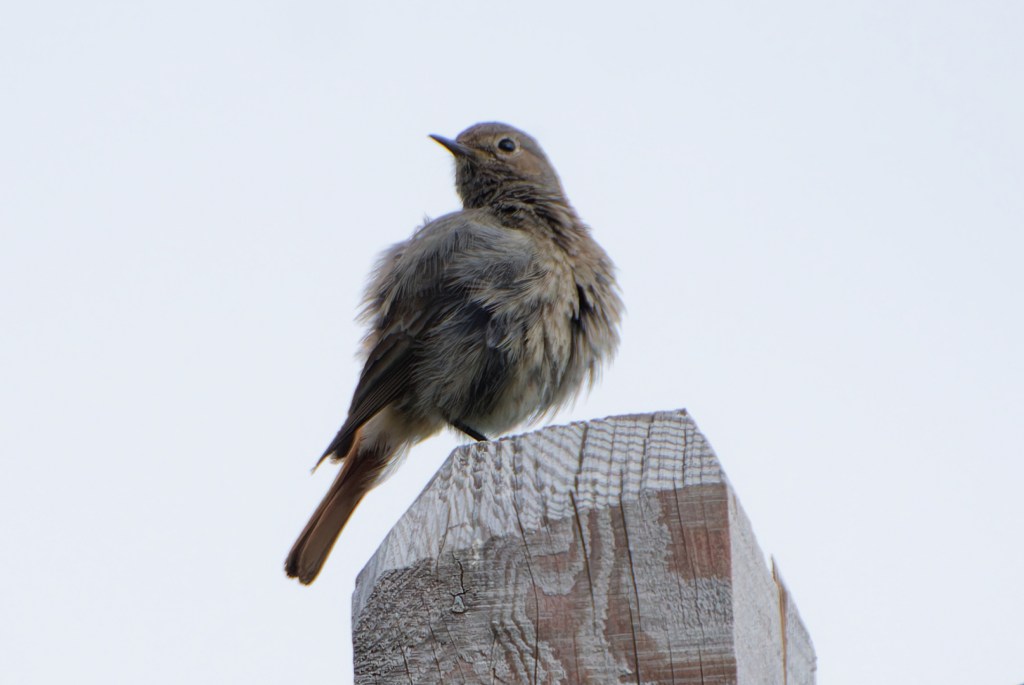

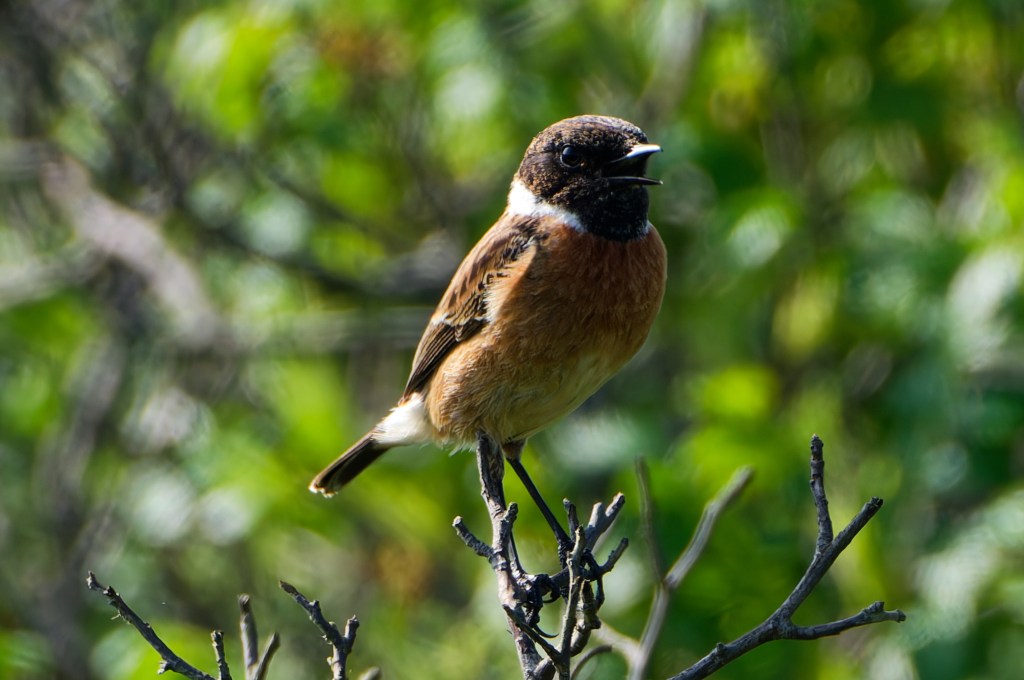
Things looked up on a subsequent walk in full sun. Redstarts are Chats, and like Robins, they do well around human habitation, and like Stonechats, they perch nicely. Here (second image) is a Stonechat from Barassie for postural comparison.
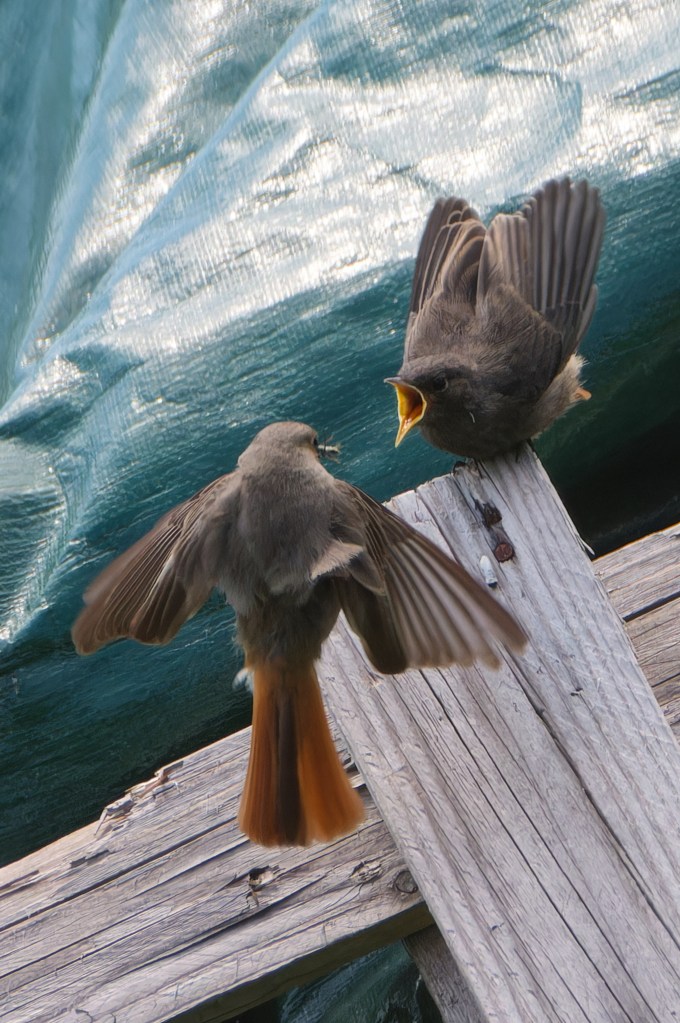
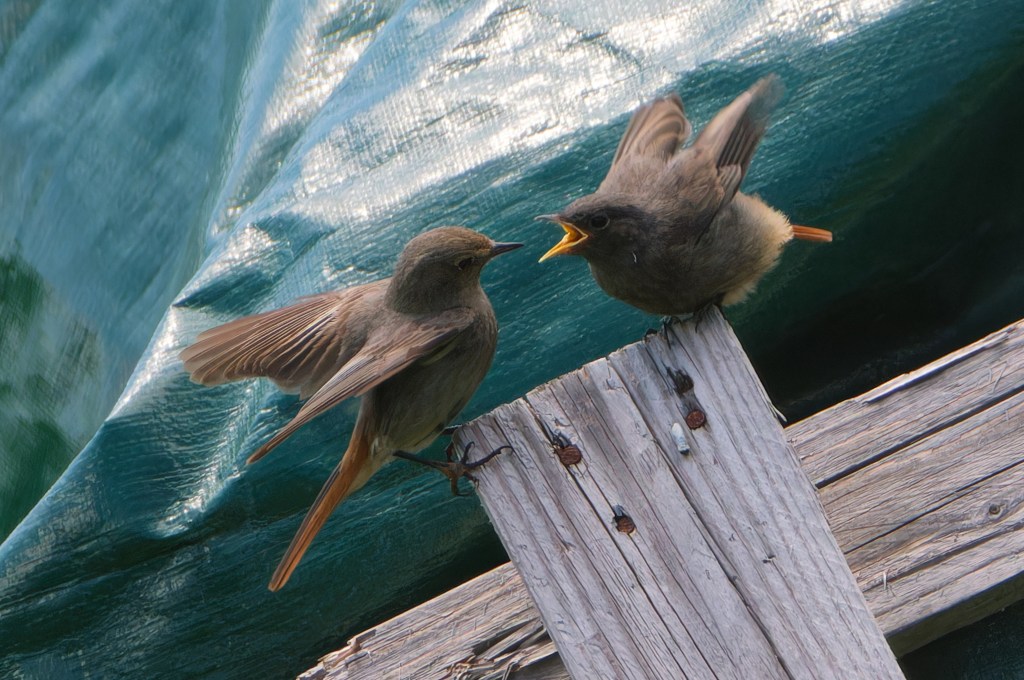
We detected some Redstart activity around a tarpaulin-covered woodpile near the fence of a house. The bars of the fence were sufficiently well-spaced for the camera to work at full zoom; things developed nicely on the other side of the fence as a chick appeared and was fed with morsels from the woodpile.
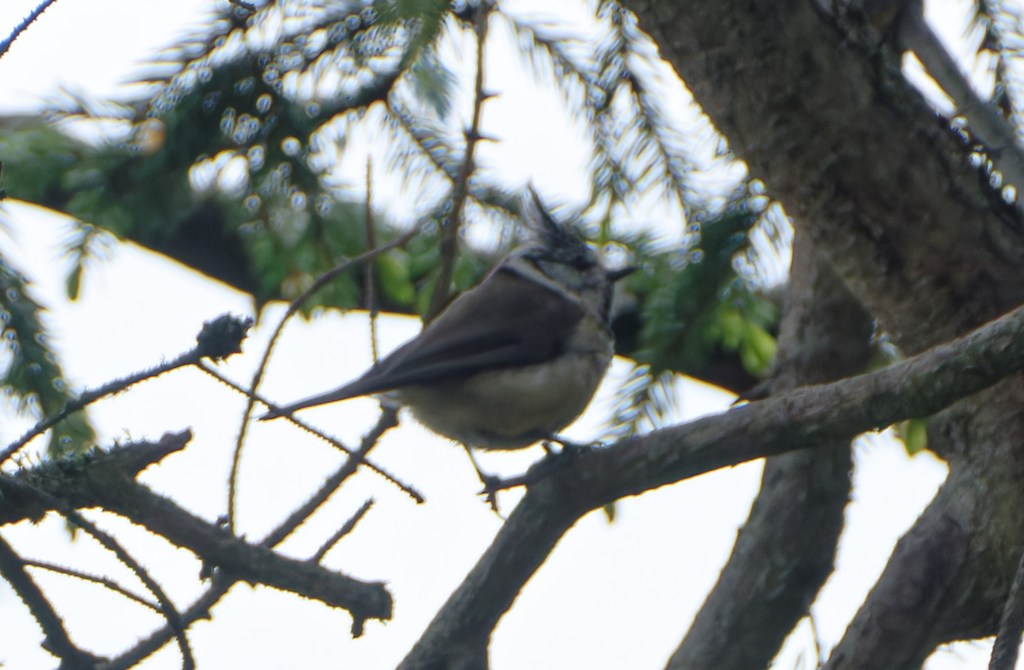
Crested tits were about and they were a tease. Backwoodsman managed a solitary image in poor light. There is a chance of catching up with these in Scotland, but it will take some work.
Finally, we spotted some parachute flight and very monotonous song, managing to trace it to this Water Pipit with the help of the Merlin App.
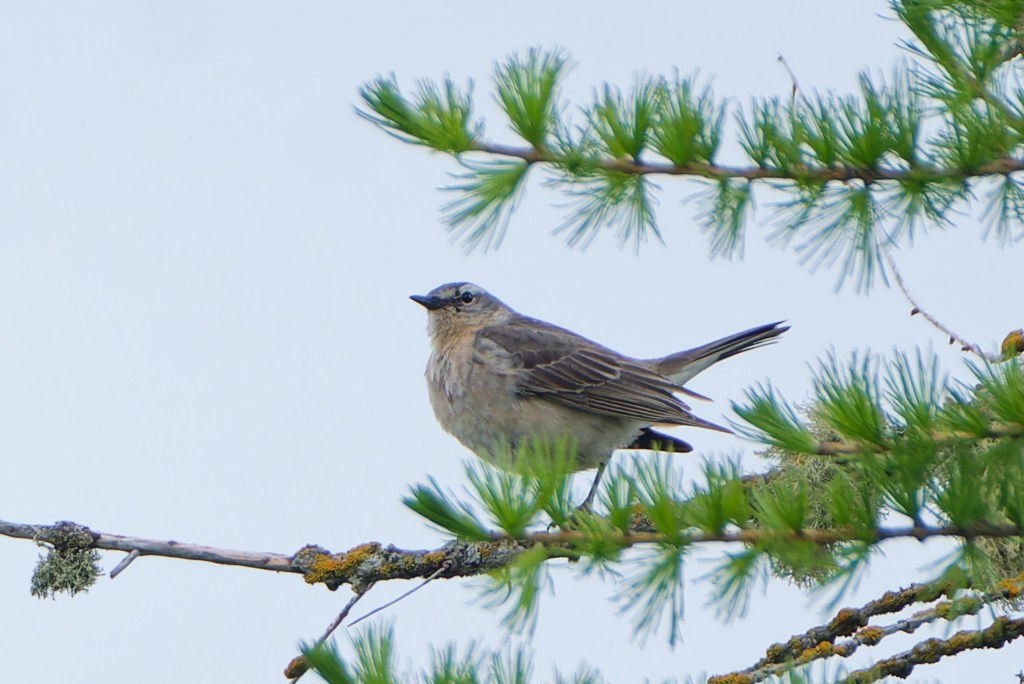
It was our first time to see this species; Rock and Meadow Pipits are more familiar from our Ayrshire and upland walks.
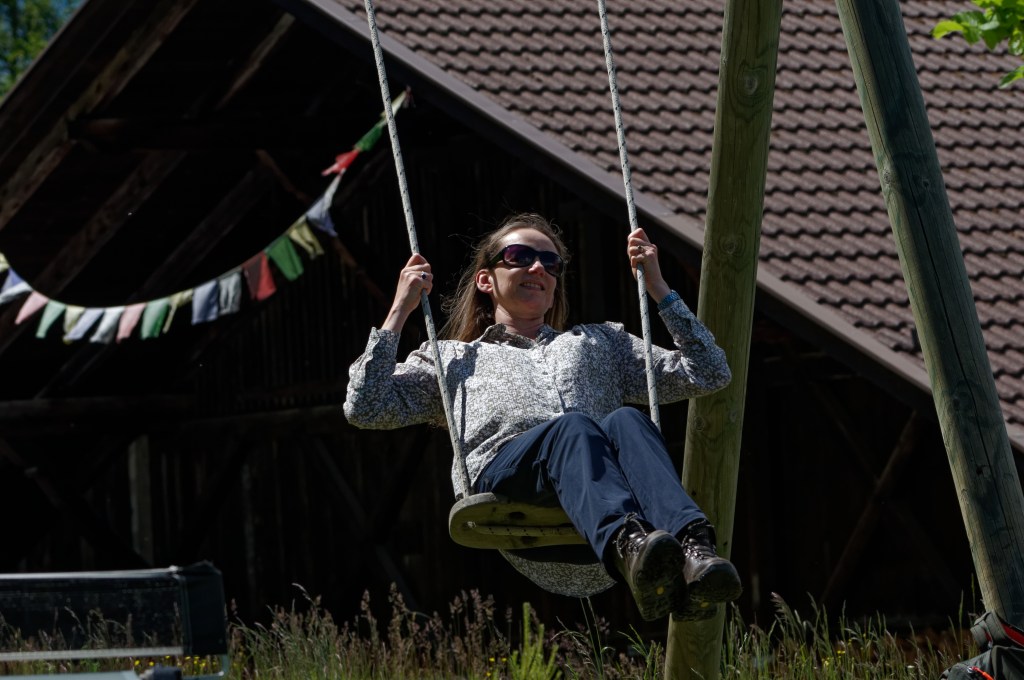
So that’s a short list but Backwoodsman hopes you find the images pleasing. There will be another post of flowers and landscapes once the processing is complete, probably in a couple of weeks. Until then, here’s Faye doing a bit of swinging (!) through the air at Eggerhof (we’ll be back there next time).
 backwoodsman.org