
Backwoodsman’s first sight of a Little Egret was at Cardross in front of the sawmill. Before the acquisition of the best zoom lens, Backwoodsman would travel with the just the birdscope and no camera. There across the mud was a tallish and poised white bird; through the scope, it was clearly a Little Egret. It was dithering its leading foot in a tide pool to disturb prey, probably crustaceans or small fish. It was a surprising sight to Backwoodsman, but not to a passing member of the RSPB Helensburgh group who was quite blasé about it. According to the British Trust for Ornithology:
“With its yellow feet, which are used to flush prey when feeding in shallow water, the Little Egret is a distinctive member of the heron family.
Little Egrets first bred in Britain in 1996 and since then have successfully colonised much of southern Britain and Ireland. Most of the breeding colonies have been established within existing Grey Heron colonies, the two species nesting alongside one another. The winter distribution is also currently restricted to the southern half of Britain & Ireland, despite the fact that young birds are known to move some distance from their natal site.”
BTO data shows that Little Egrets were rare vagrants until ca. 2000; the population then grew rapidly with the latest estimate running at around one thousand pairs. My RSPB Handbook of British Birds has broadly similar numbers, identifying an influx in the autumn of 1989 as the start of the UK population, with the first birds breeding in Britain in 1996. It would be interesting to know which aspect of climate change has brought about the expansion in their range.
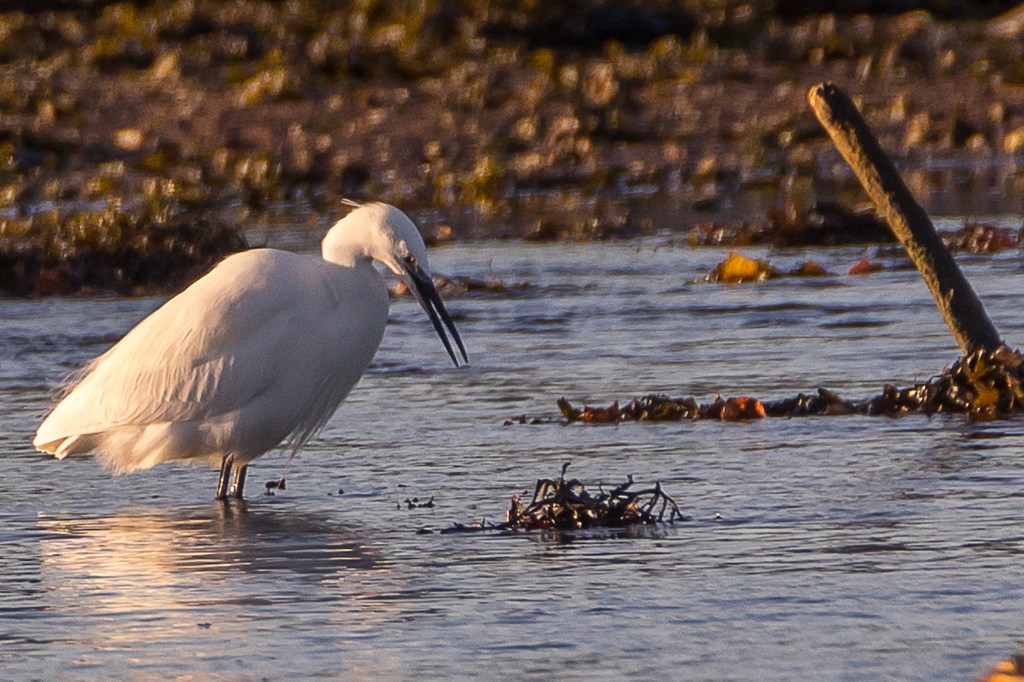
A subsequent visit to Cardross at the end of November in 2021 with the heavy camera allowed some long range shots to be had. The absolute quality of the images is questionable; though nicely lit, the bird was remote (and not allowing closer approach). Nevertheless, there are hints of some beautiful feather detail and texture, if only the bird could be settled twenty rather than one hundred metres away across the shining fields of mud left behind by the ebbing Clyde.
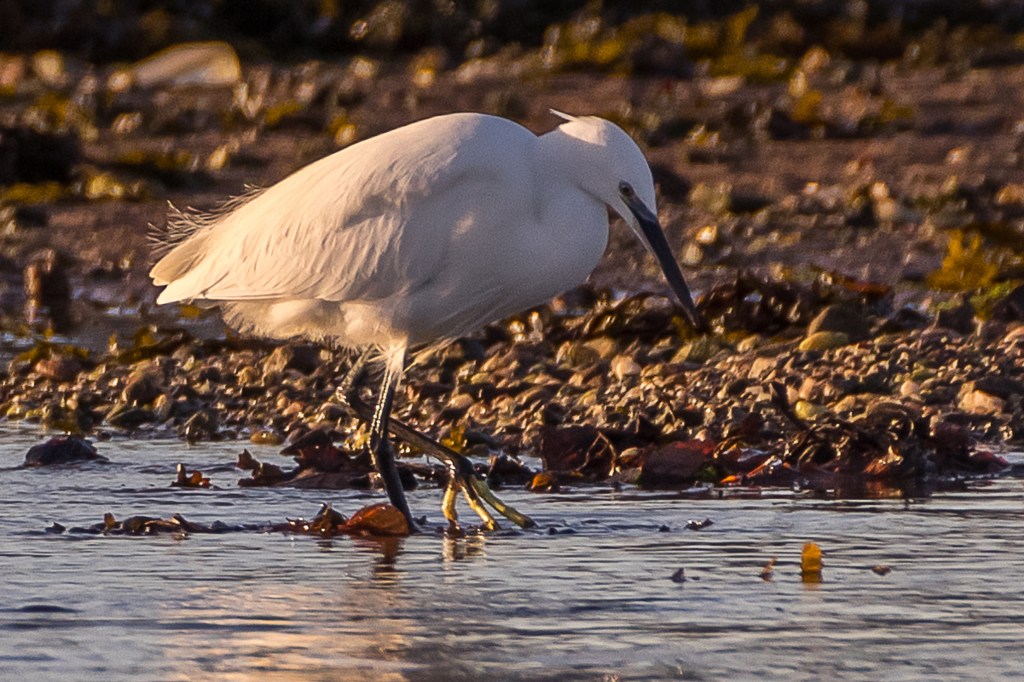
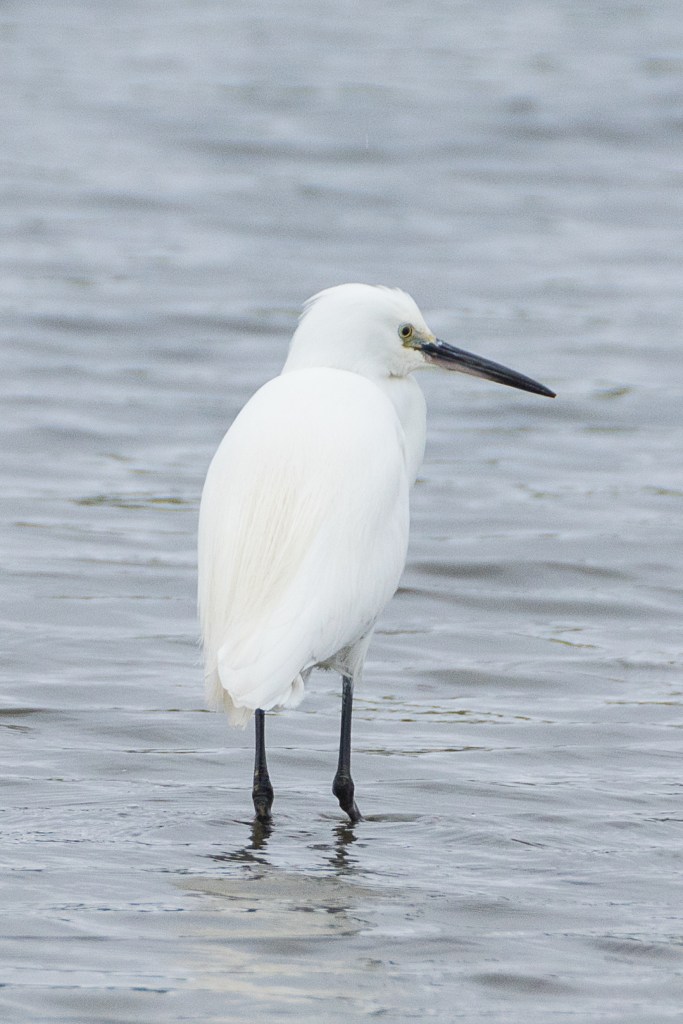
An opportunity for closer approach arose in Belfast in March, though Backwoodsman did get into some trouble. We had taken the train to Holywood and walked along The Esplanade past the Kinnegar Army Barracks heading for the RSPB Belfast WOW reserve. Photography is banned along this stretch of coastal path and Backwoodsman was getting an itchy shutter finger. There was a small pond near where the Esplanade met Shell Beach and on the pond was a group of roosting waders, some ducks and a Little Egret. Backwoodsman approached, partly for photographic purposes and partly to take advantage of the cover offered by a conveniently placed bush (nature calls in many ways).
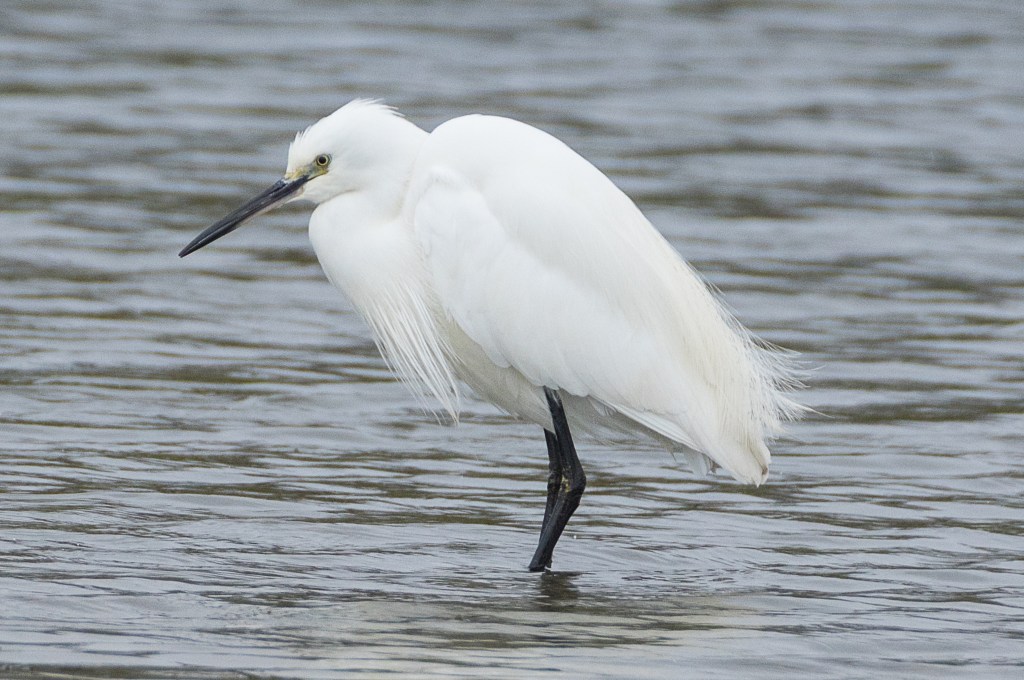
Some images were had, the birds grew restless and Backwoodsman retreated; blocking his retreat was what looked like an RUC retirees awayday. The skyline was filled with newly arrived cars and a dozen sturdy figures clad top-to-toe in dark green (if not bottle green). They weren’t happy – Backwoodsman had almost disturbed an Icelandic Gull (tick!). Visually, a Little Egret is more interesting by a considerable distance. No arrests were made.
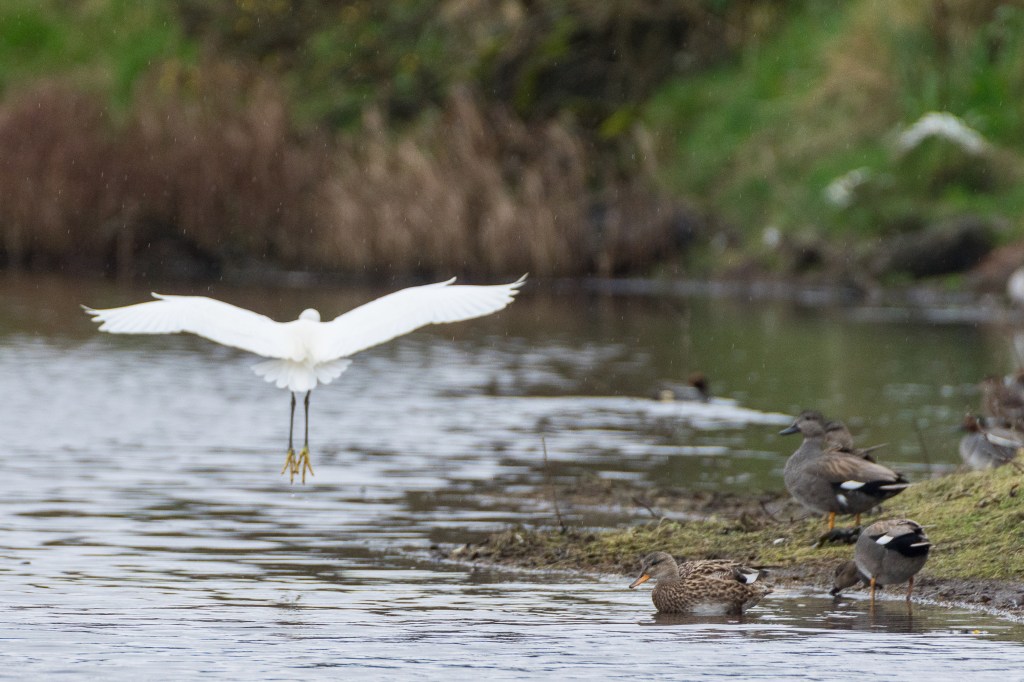
The Egret was still there on the return trip, but it was restless and took to the wing briefly – the image is blurred but the shape is very pleasing.
They really are entirely white feathered. The Featherbase website publishes images of the entire complement of feathers recovered from dead birds and the Little Egret provides a beautiful (if monotone) subject for this treatment.
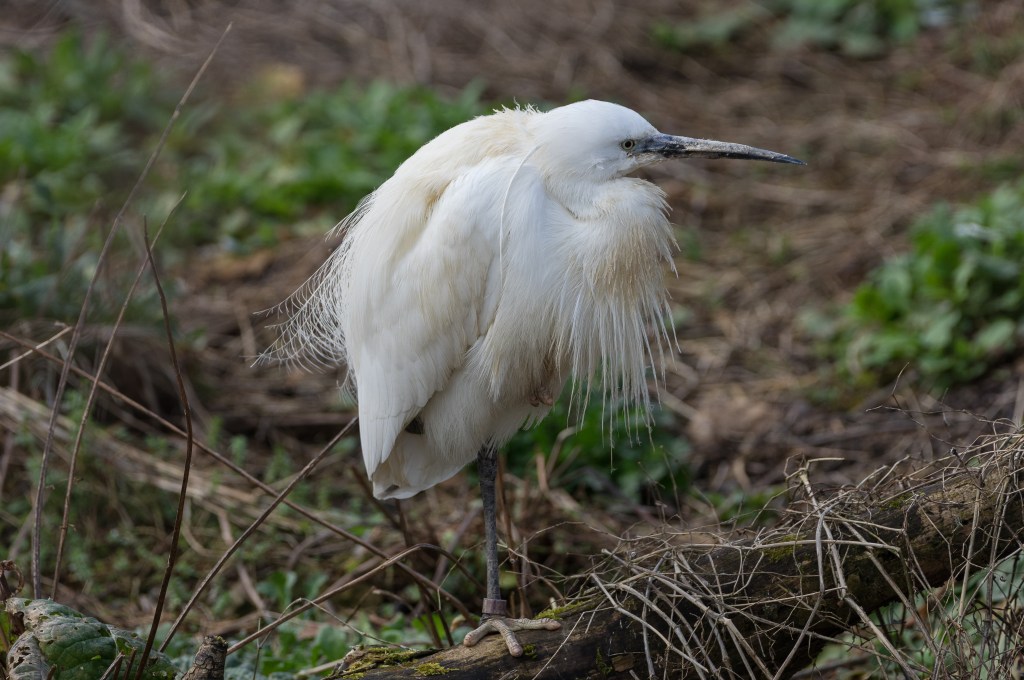
Backwoodsman’s closest approach was had at WWT Slimbridge in the Waterscapes Aviary; there were several Little Egrets in repose. They looked a little bored, and possibly in some degree of moult (they were a little off-white in places) but the herl is striking in these images and the translucence of the flight feathers in the lifted wing is very pleasing.

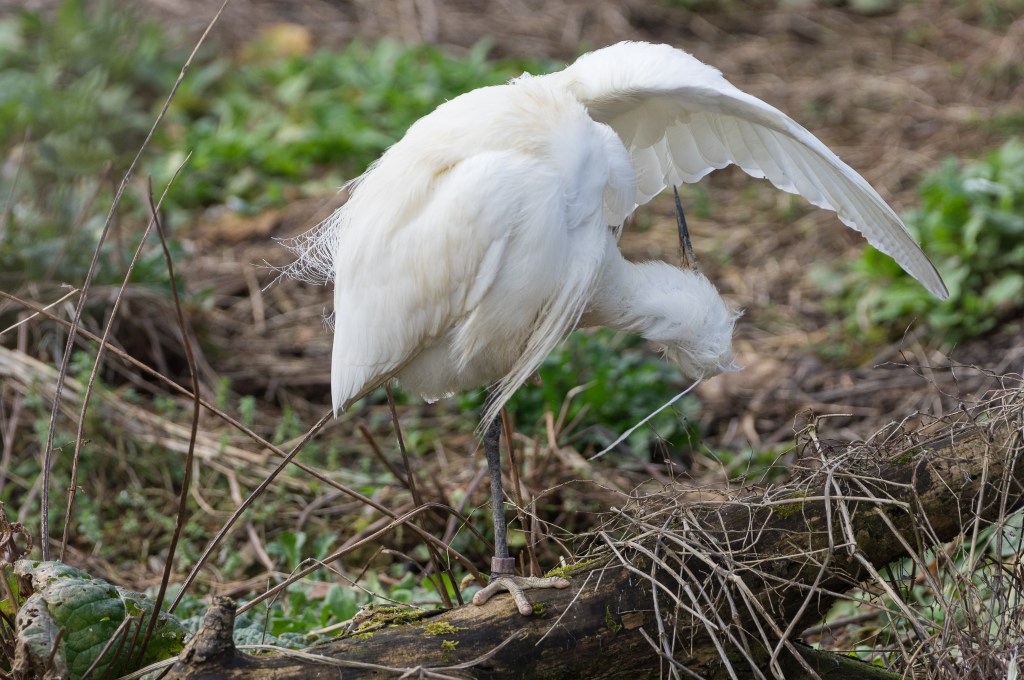
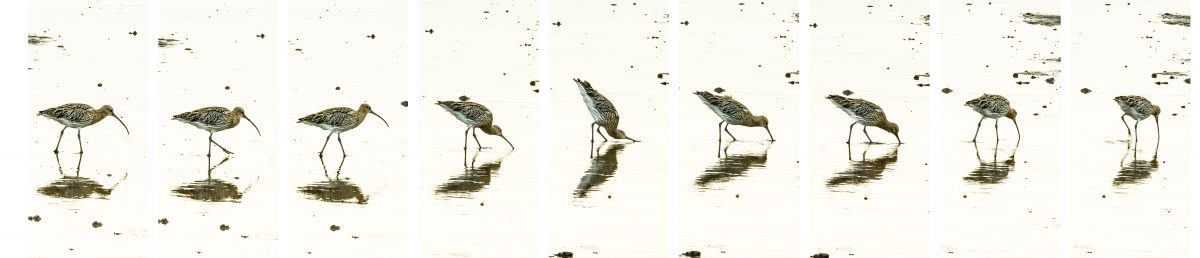
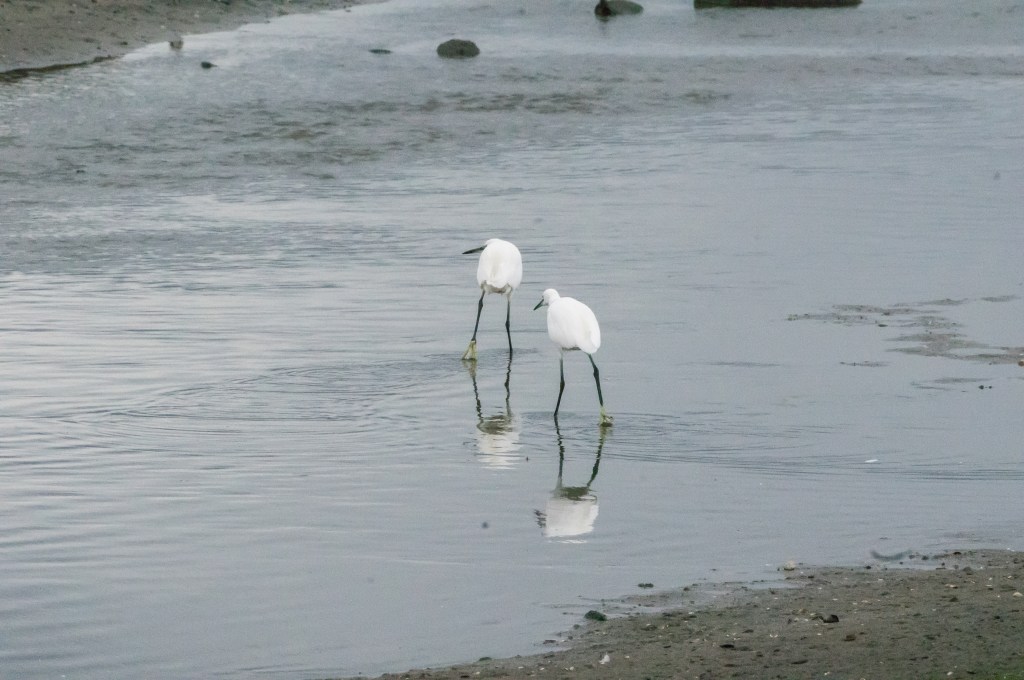
For numbers of birds, Aberlady LNR is Backwoodsman’s top place. We saw a group of five on one summer visit (no photographs, alas) but a September trip allowed some images of Little Egret choreography to be had. These images will not bear much expansion (they are grainy, Backwoodsman made a major ISO error in his excitement) but the elegant gait of the birds is conveyed well.

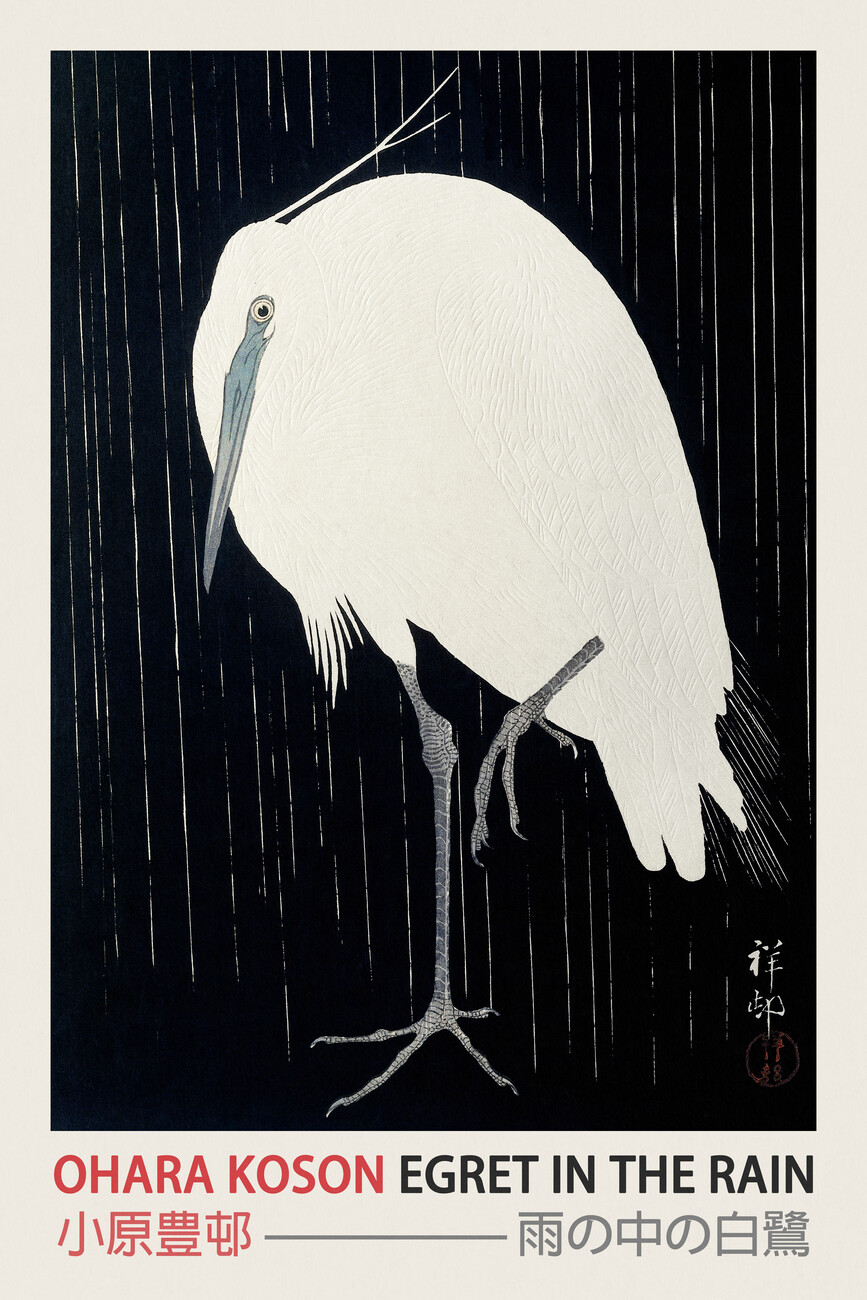
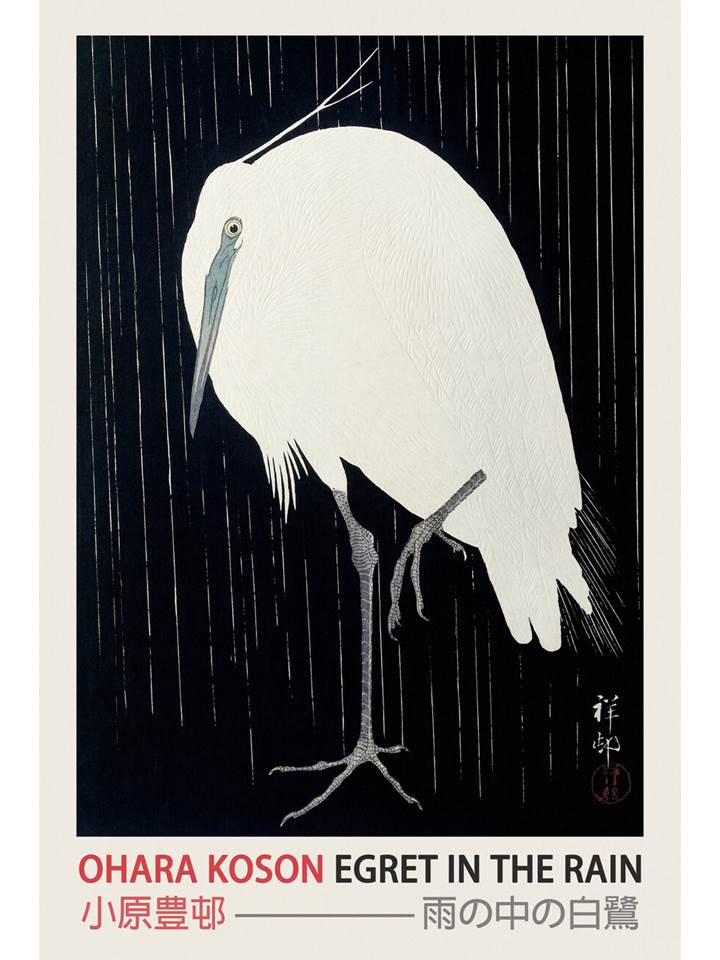
In an idle moment, Backwoodsman looked to see if Egrets had been treated by Japanese artists and found this immediately; the late Ohara Koson produced this marvellously crafted woodblock print entitled “Egret in the rain”. Backwoodsman had expected to find a screen painting in the Rinpa style perhaps, but looked no further; this seems a perfect way to end the post.
 backwoodsman.org