
There is always a tipping point with these posts – Backwoodsman collects images over an extended period of time and eventually, manages to find just a few more which convince him that he has something worth showing to third parties.

Wrens are a delight. It is said that they are very common; my RSPB book says “One of our most numerous species with an estimated 8.5 million territories in the UK”. Over one Wren per ten citizens; how nice it would be if the ratio were inverted. The RSPB website suggests that there are 11 million wren territories. They didn’t feature in the top ten in a 2016 BBC feature or in the 2022 RSPB Big Garden Birdwatch which means that the average punter doesn’t see them very much (too busy looking at the “Reconnecting with Nature” App, I expect). In that case, we ask, how is it known that there are so many of the little jewels flitting about?
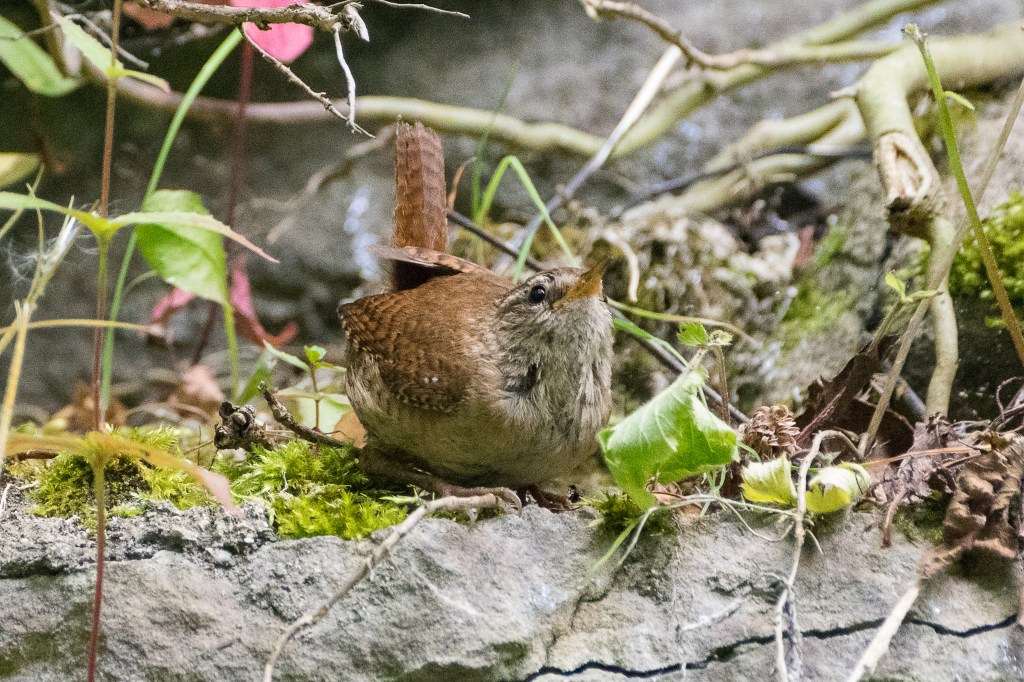
A mere 10g of avian dynamite, a two year (average) lifetime in perpetual motion and voice, ticcing, dipping, darting, singing more loudly than anything else gramme-for-gramme and exploding from foliage, generally just before you get the autofocus on and release the shutter. So there it is; they are an absolute bggr to photograph. All that energy and pure living packed into a tiny frame which never quite stops moving, and which blends seamlessly into most natural backgrounds. You have to be lucky to get one in the camera at all, never mind a proper photograph. I read that they spend a lot of time on the ground – there is probably a cat for every Wren, which may explain why Wrens don’t last very long. Or do they just wear themselves out through having elevated heart rates for protracted periods?
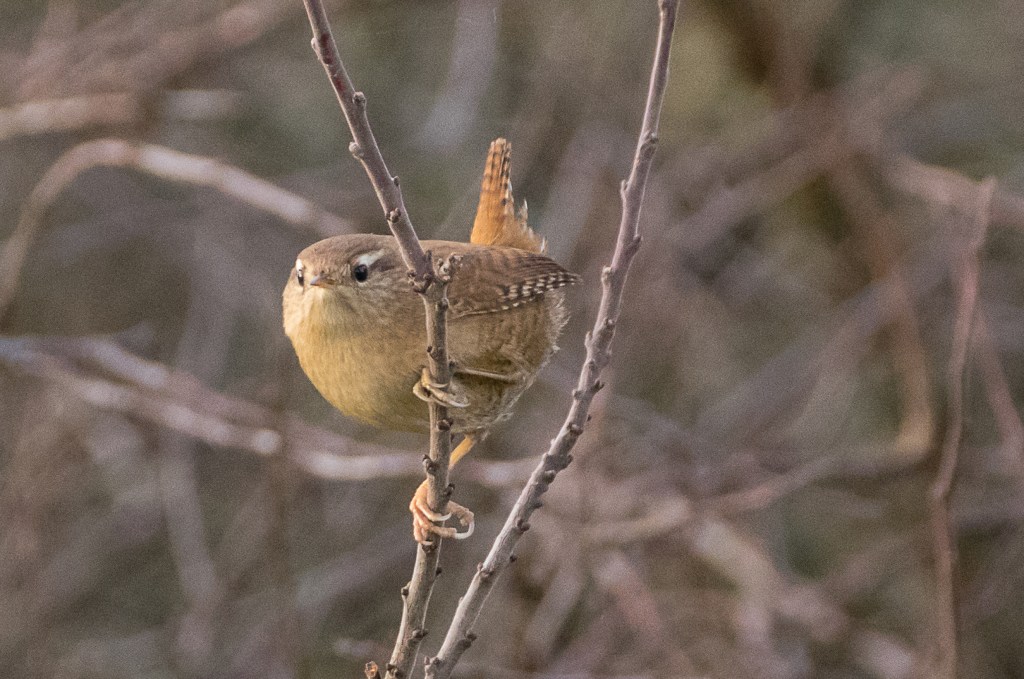
Of extreme flying things, bats may have very fast metabolisms with heart rates of 750-1000 bpm, and Hummingbirds clock in around 500-1200 bpm. I despaired of finding a range for Wrens and then, tra-la, a Science article from 1945 in which Troglodytes aedon, the American cousin of our dear creature appears in Table 1 on the first page, and has a heart rate range of 450-950 bpm which is not even top of the range for the small birds in the study. For now, I’m blaming predation and cold weather for the premature mortality of these tiny things (vide infra).
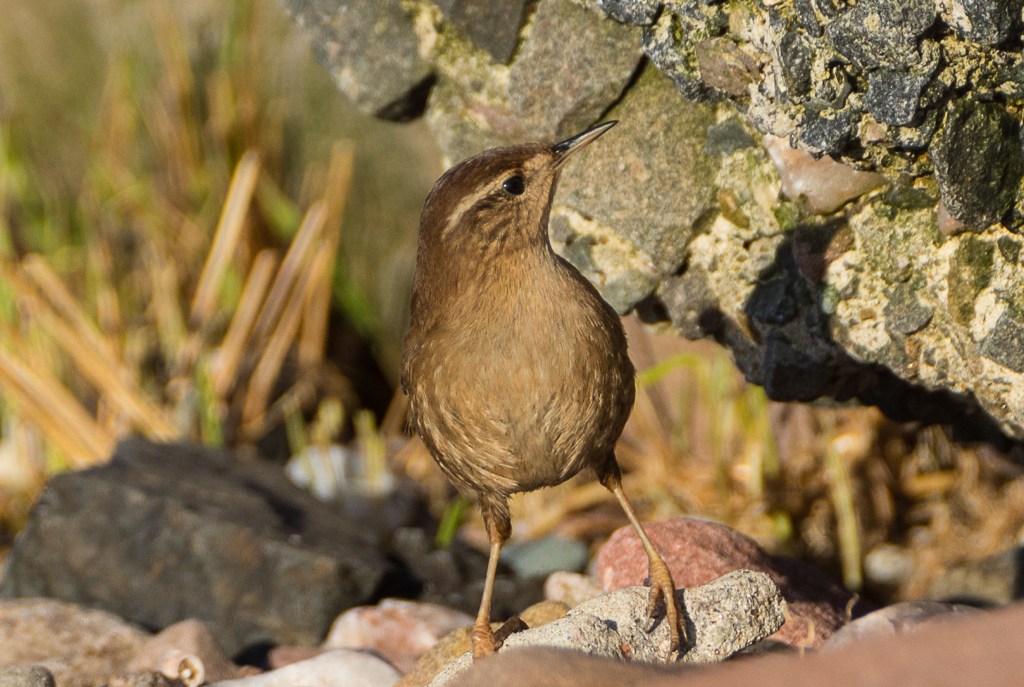
Cardross has a great Wren territory at Murray’s, the ultimate project house on the west coast of Scotland. I can usually find a Wren foraging in and out of the front of the comedy sea defences and if I’m sitting down and having a cup of tea, the Wren will show me some moves before it becomes concerned about my presence and retreats into cover. Decomposing seaweed must offer an extensive range of foodstuffs to a foraging Wren. I hadn’t seen this tall stretching-and-leaning posture before.
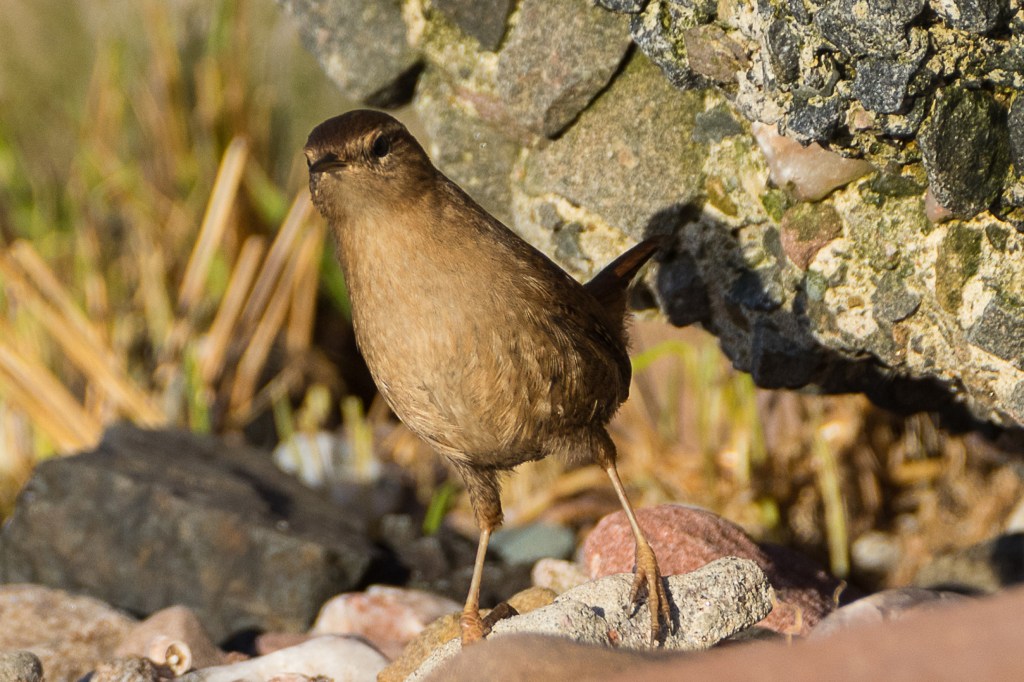
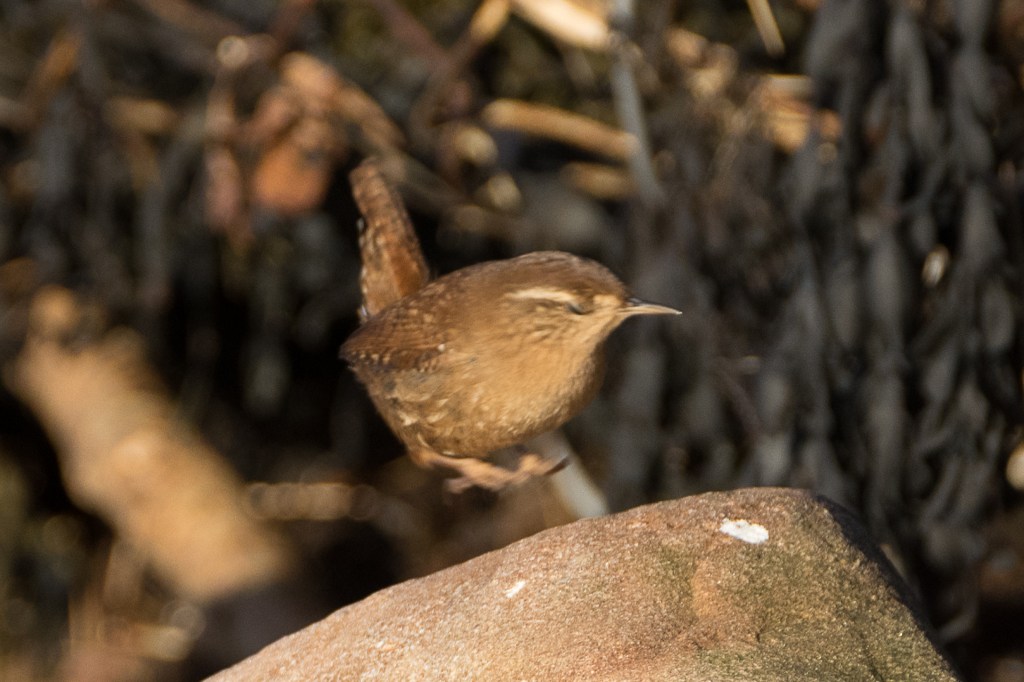
I particularly like this bouncing Wren image – it is slightly fuzzy but the shape is adorable. If you had to come up with a thumbnail sketch of a Wren, you might reproduce this marvellous tail-up posture with its crisp right angle.
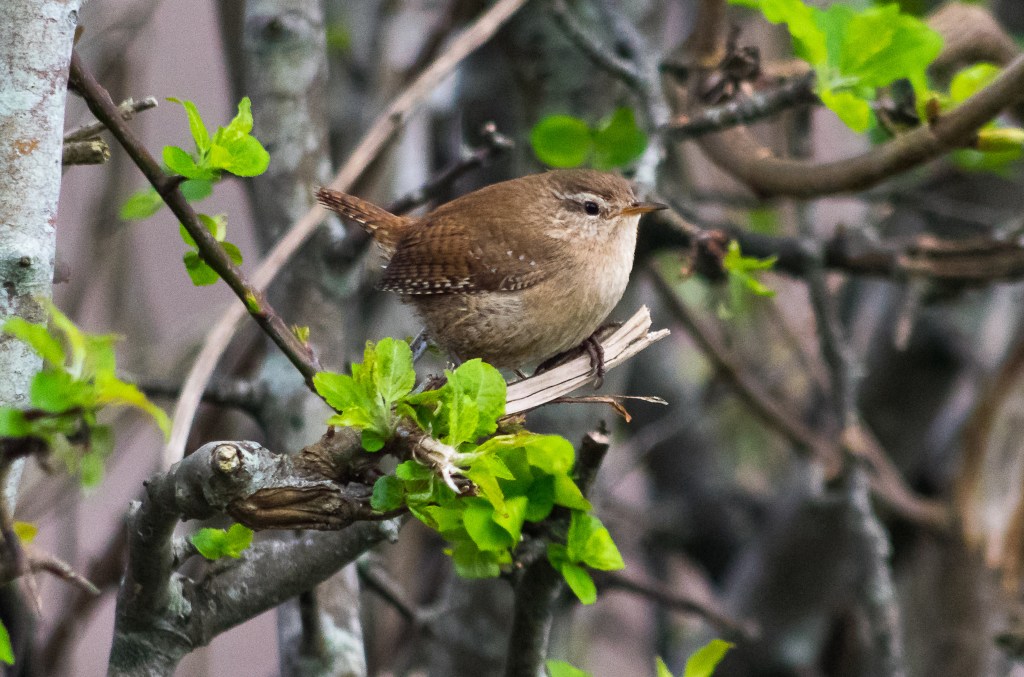
The walk away from Murray’s usually leads up Geilston Lane towards the level crossing; one spring, we found this Wren set off beautifully by the emerging foliage. We looked at each other for a while – the Wren probably needed a rest amidst its frenzy – before it sped away.
In the LRB of 15th June 2023, Philip McDaragh published “The Wren, The Wren”. The fourth stanza is:
The wren the wren
was a panic
of feathered air
in my opening hand
so fierce and light
I did not feel
the push
of her
ascent
away from me
All that oomph in a 10g frame. I can’t imagine how the poet came to have a Wren in his fist – I’m consoled by the thought that his grip on the Wren was purely imaginary.
Just above Irvine, we came across a wind-shaped and thorny thicket with Stoats (no pictures, too quick, curses) and then a Wren which had a great instinct for photogenic perches. It is said that Scottish Wrens are a bit heavier than their English counterparts to help them withstand the higher number of frost days in the Scottish winter.
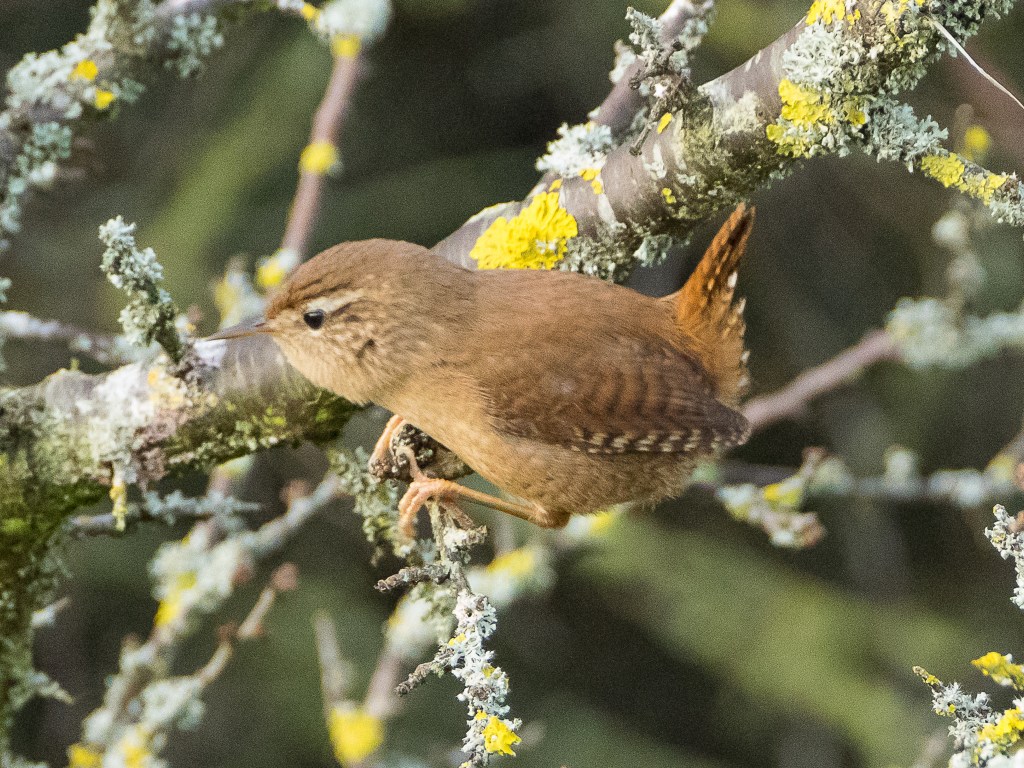
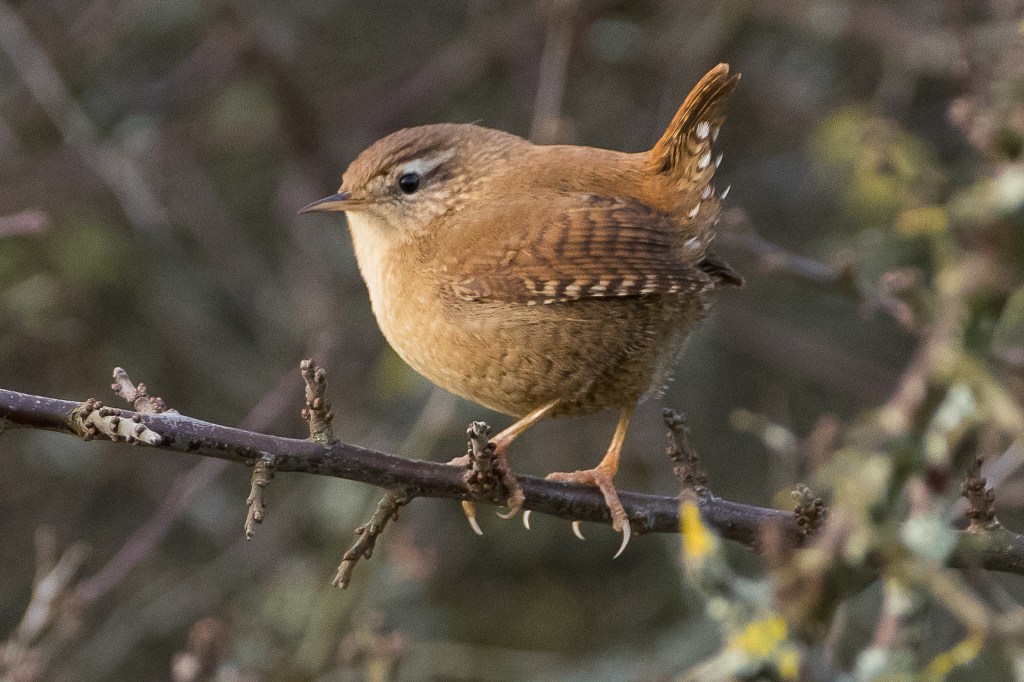
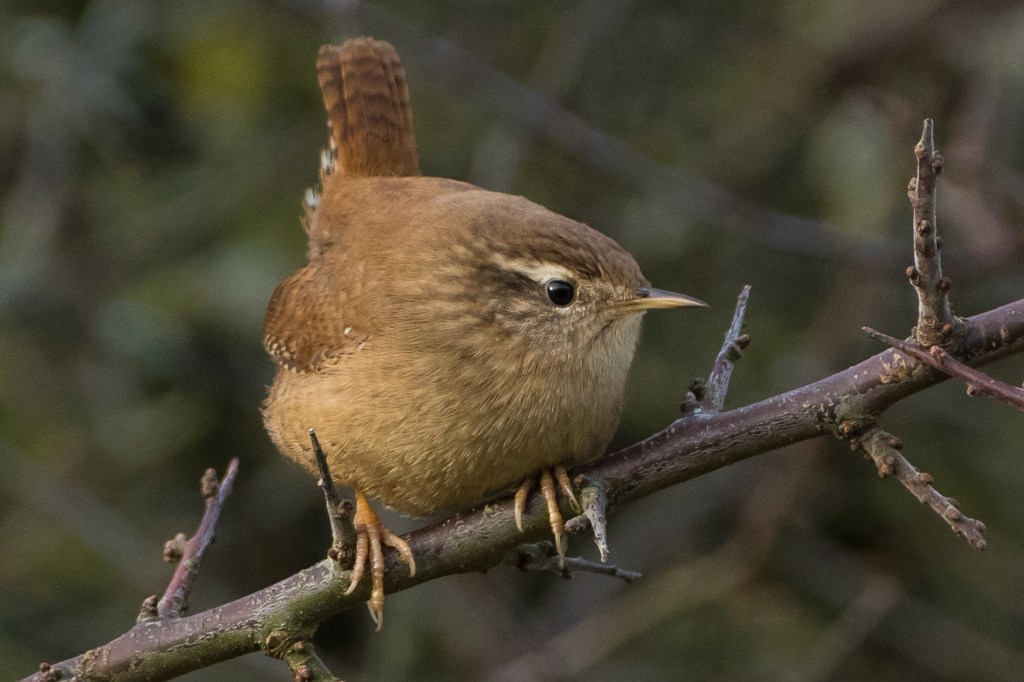
They are only 5% heavier though; I guess the average Sauchiehall Street Greggs customer allows themselves a slightly bigger buffer in anticipation of the Glasgow winter.
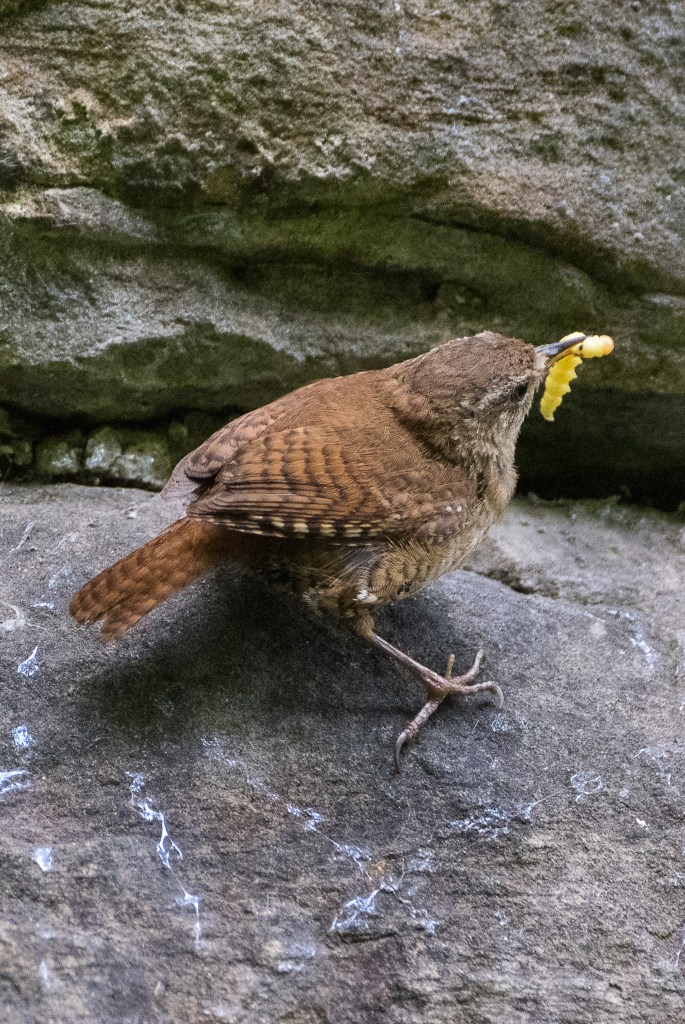
Wrens seem to eat most things that crawl, fly and wriggle. I think this Wren was probably nest-bound with this attractive grub. Which brings us to the tipping point images.
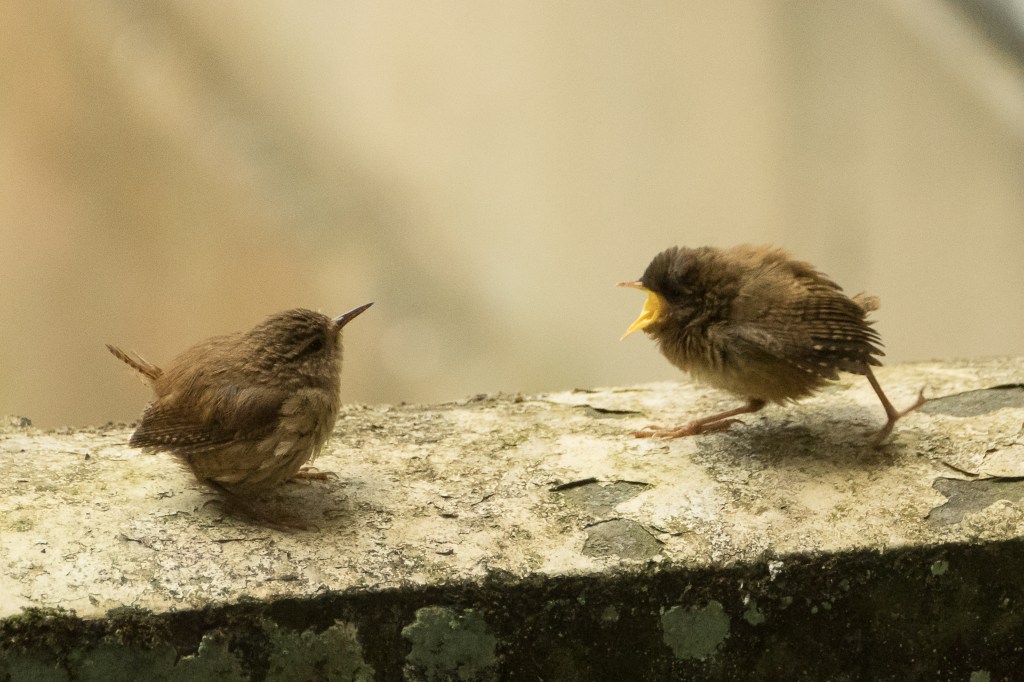
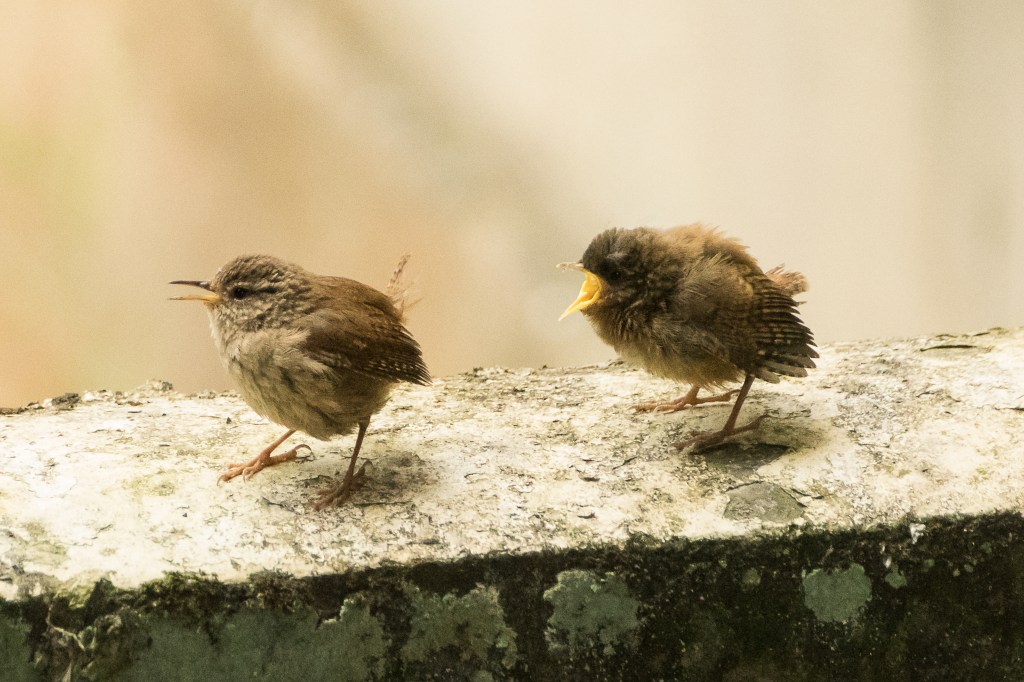
Faye came home the other day to tell me that she had encountered three tiny Wrens in Claremont Gardens; off we went with the camera. Sure enough, there were three fledgling Wrens in the basement area, making a huge amount of noise. Two were still grounded and scuttling and one had managed short flights and landings and adhesion to vertical surfaces (walls, glazing bars).
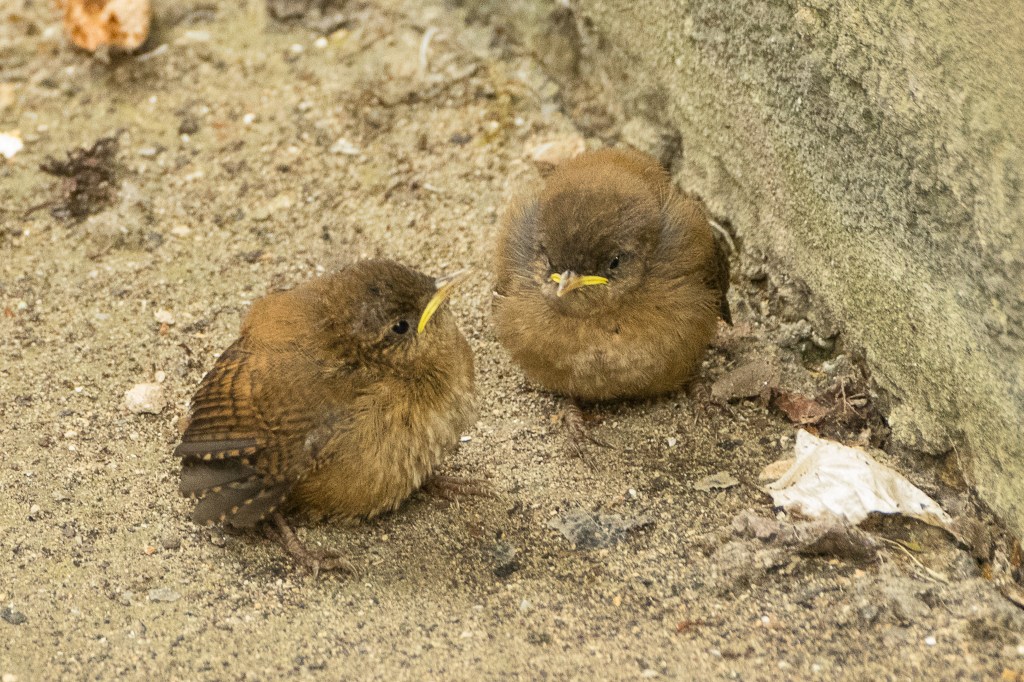

An adult was trying to look after the brood, what a job. There is something really monstrous about fledglings clamouring for food.

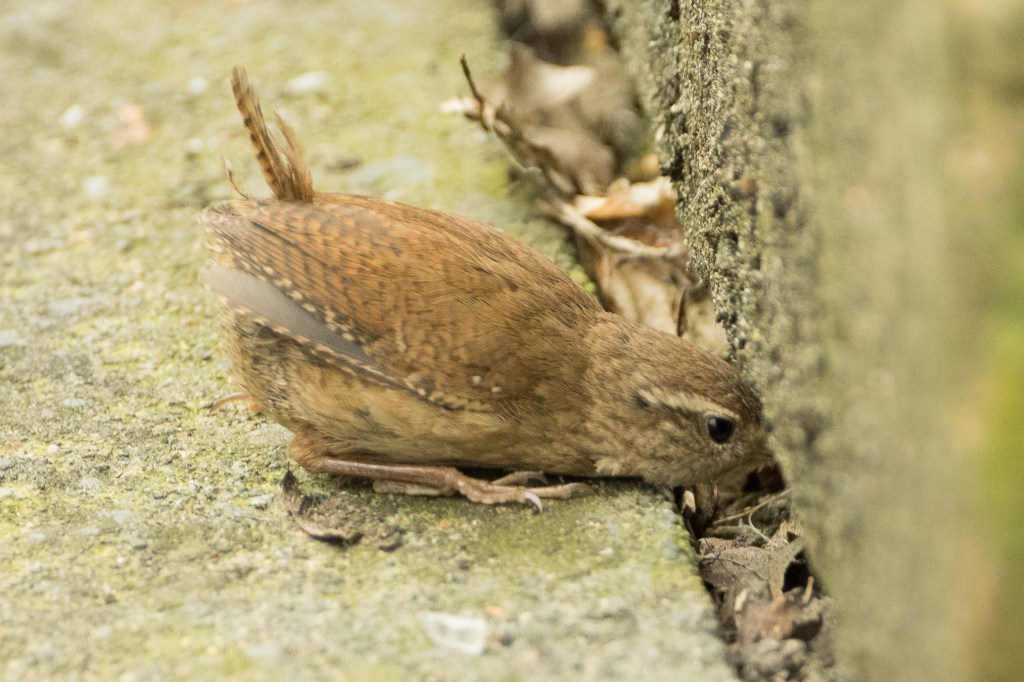
Those of you with children may feel it echoes aspects of your own experiences. I watch this kind of spectacle and think about all the cats in the area, and I worry. I hope the Wrens have a trick or two to get their youngsters away from harm.
The Shetland Wren is a different race and we found a few on Sumburgh Head, including one servicing a very noisy nest in a wall (the sun is setting so the colours are odd).
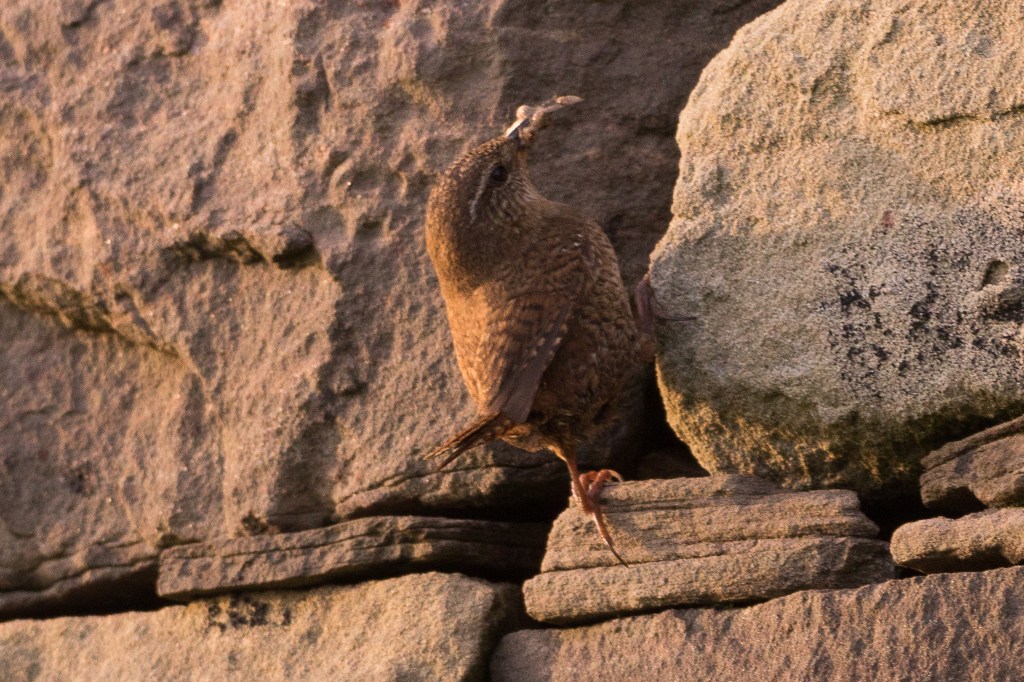
The Shetlanders are said to be darker but I’m really not sure I can tell the difference from this image (the best I could get with the kit then on field deployment). There is also a St Kilda variant; this article describing a small population discusses aspects of predation by cats (of adult birds) and mice (of eggs), and does not find decisively against the predators.
One day, I will sit down to “The Wren: A Biography” by Stephen Moss and learn much more about this spectacular species.
 backwoodsman.org