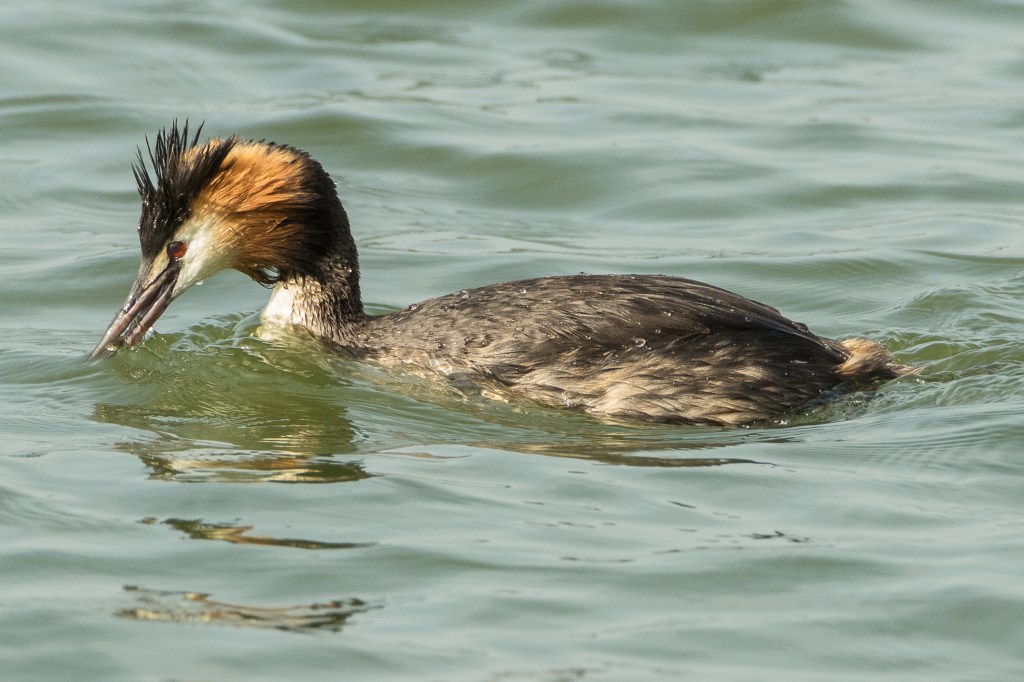
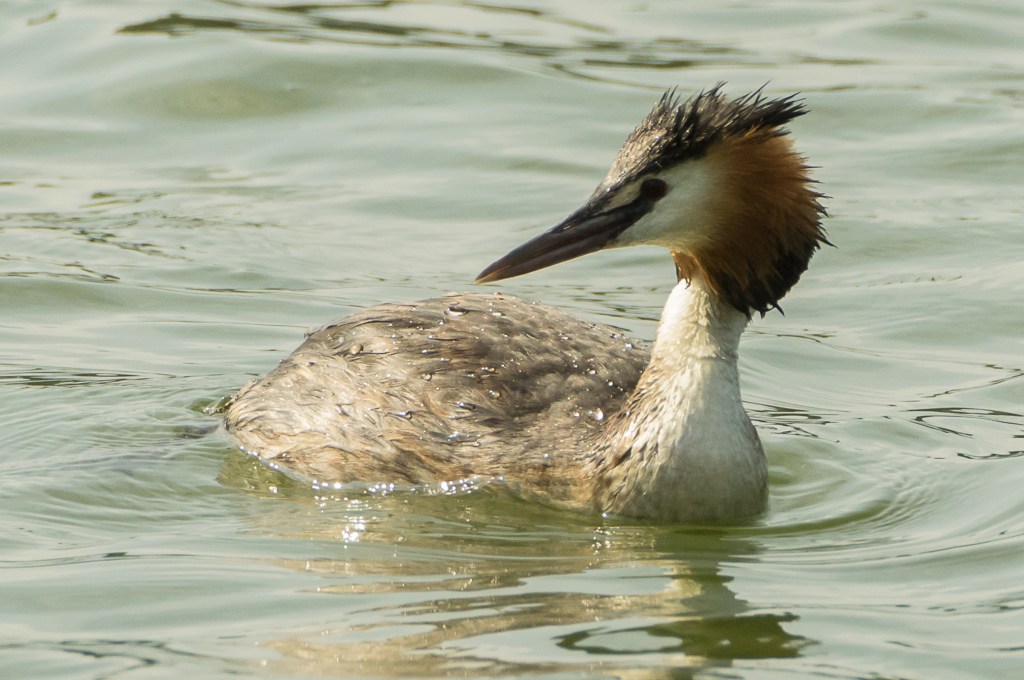
The Great Crested Grebe was almost a mythical beast in my childhood birdwatching days – not unlike the Avocet. I never thought I’d start to see them when I moved to Glasgow. We’ve found them at Lochwinnoch (the RSPB identify this reserve as a good place to see them) and at Dams-to-Darnley but the best sightings have taken place at Hogganfield Loch where floating “Bio-Havens” have been installed to help boost their breeding successes. Several pairs attempt to breed at the Loch each year; the UK breeding population is of the order of 5000 pairs according to the RSPB. This doesn’t seem like a large number and I feel very fortunate to be near several local sites where the birds can be seen. In winter, the UK population rises to around 20000 birds; I’ve seen several at Lochwinnoch during the colder months but have never known if I was looking at incoming wintering birds, or fresh birds from the summer breeding season. Unusually, there doesn’t seem to be any ringing data from the BTO. The Danish Bird Migration Atlas has Danish birds heading for the Ijsselmeer (in the Netherlands) and the Black Sea, with some being recovered close to the English Channel. Perhaps the birds which winter in Scotland come from still colder parts of Scandinavia?
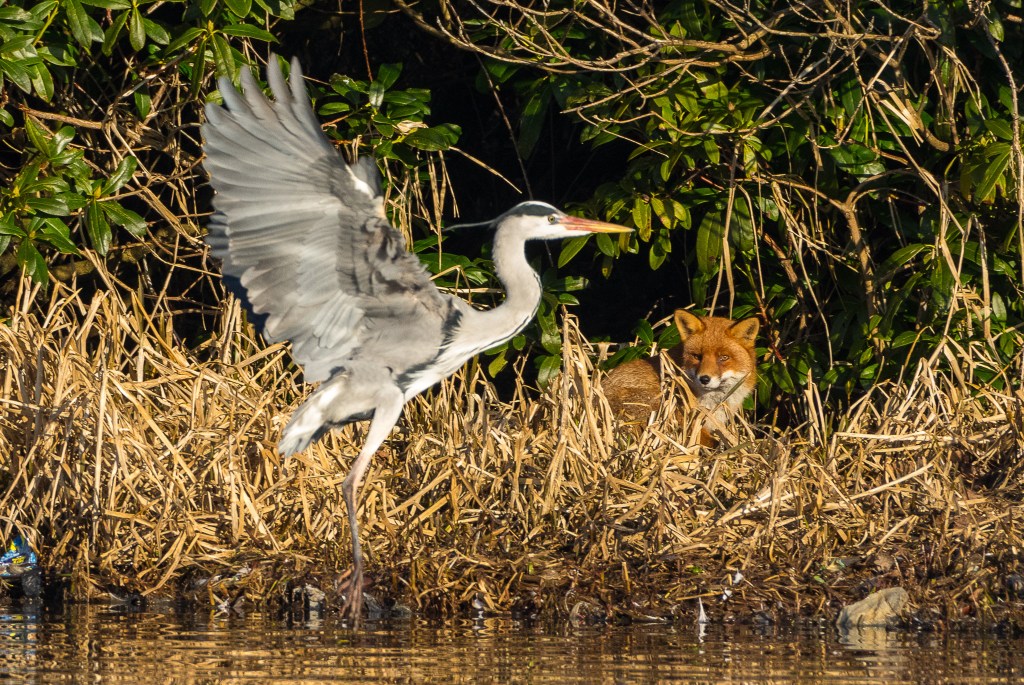
Hogganfield Loch is large enough for birds to get well away from the busy shore; it is shallow, weedy and full of fish and has reedy margins. It boasts an island which is marked on maps as a bird sanctuary, but foxes have clearly made it out there.
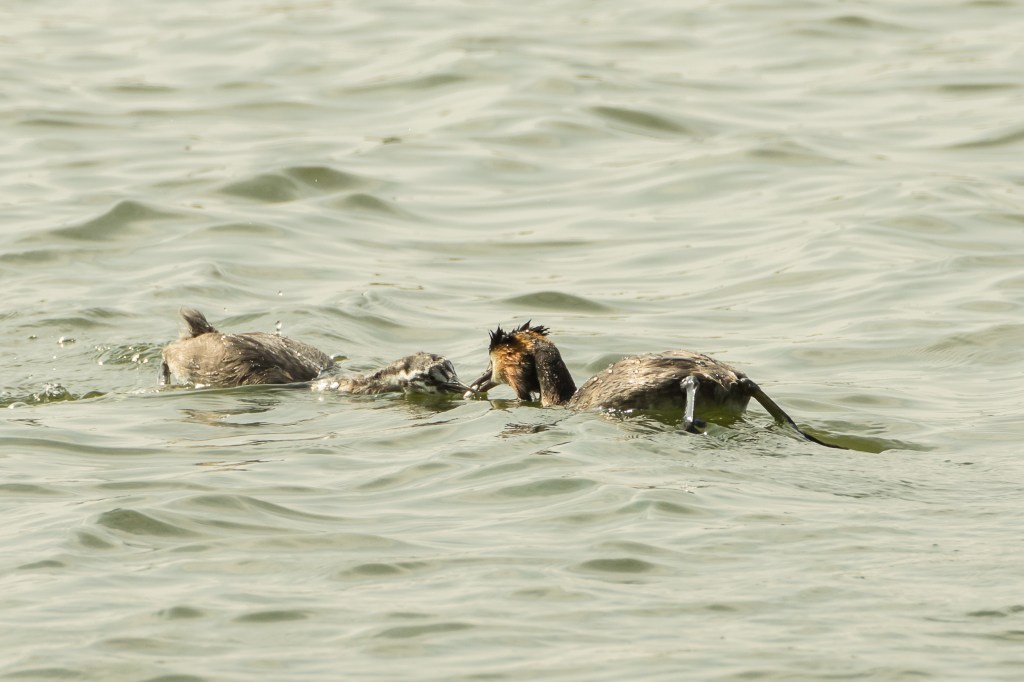
One slightly misty morning in March, we saw an individual bird fishing near the island, and shortly afterwards, we found a pair involved in what looked like the beginnings of courtship.
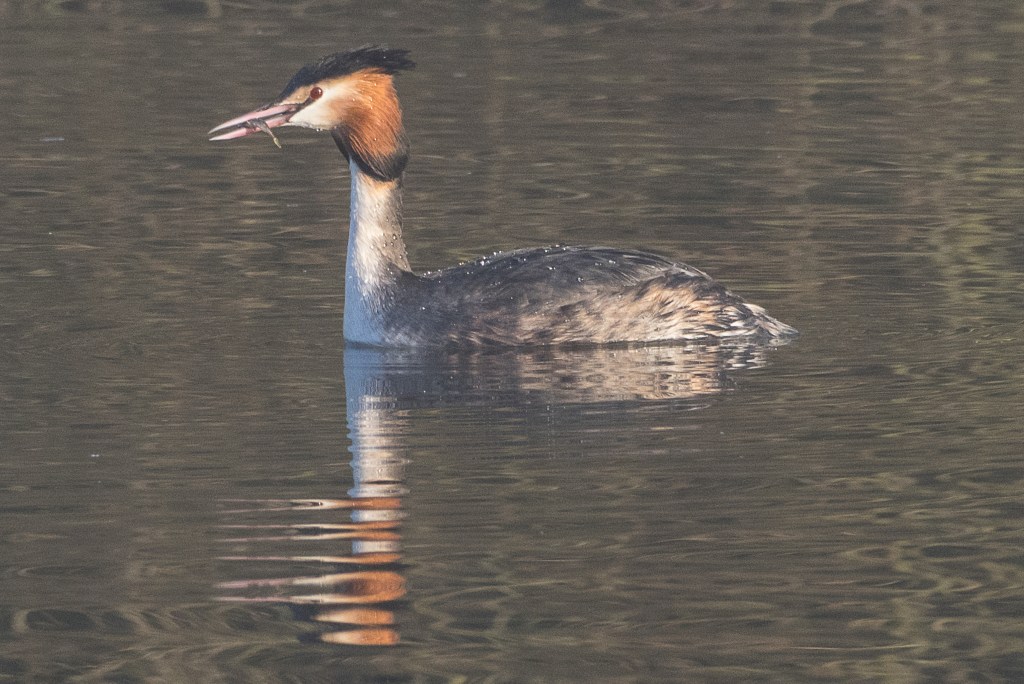
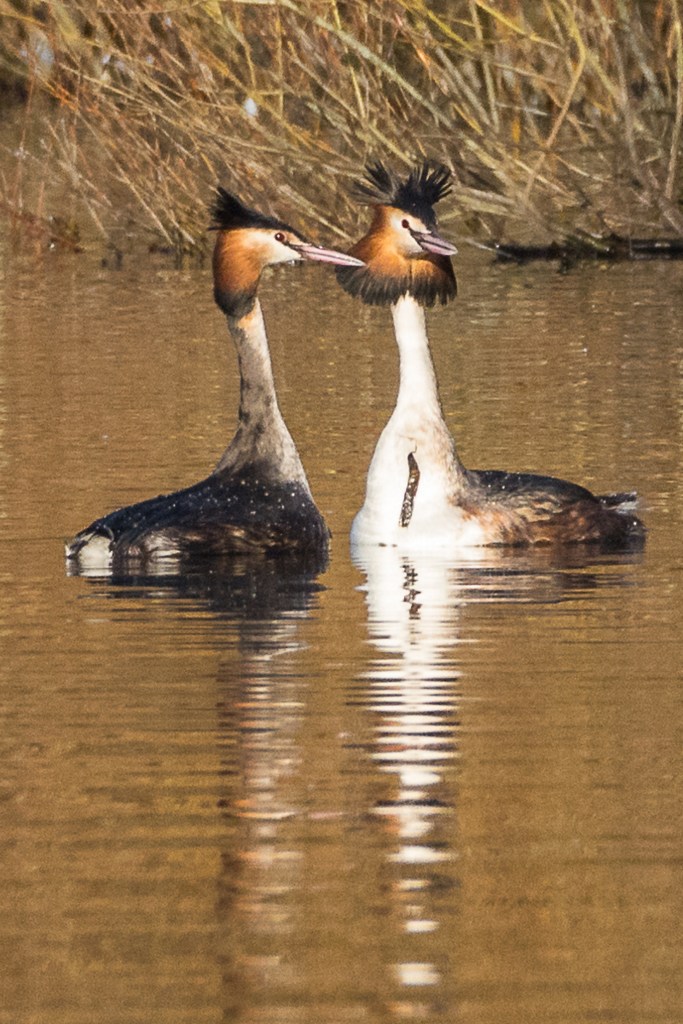
They were some distance away so the image is grainy but you can see that one of the birds has the head feathers and ruff raised in display. Julian Huxley spent two weeks watching Great Crested Grebes on a reservoir near Tring in Hertfordshire; he wrote an influential paper on their behaviour and presented it to the Zoological Society of London in 1914. He noted that the Grebes had an extensive repertoire of moves, and that these continued long after pairing – it follows that courtship is not the best description for this behaviour. Huxley used his observations to modify Darwin’s ideas about sexual selection. A retrospective in Nature discussed how Huxley’s ideas have stimulated subsequent work in the field.
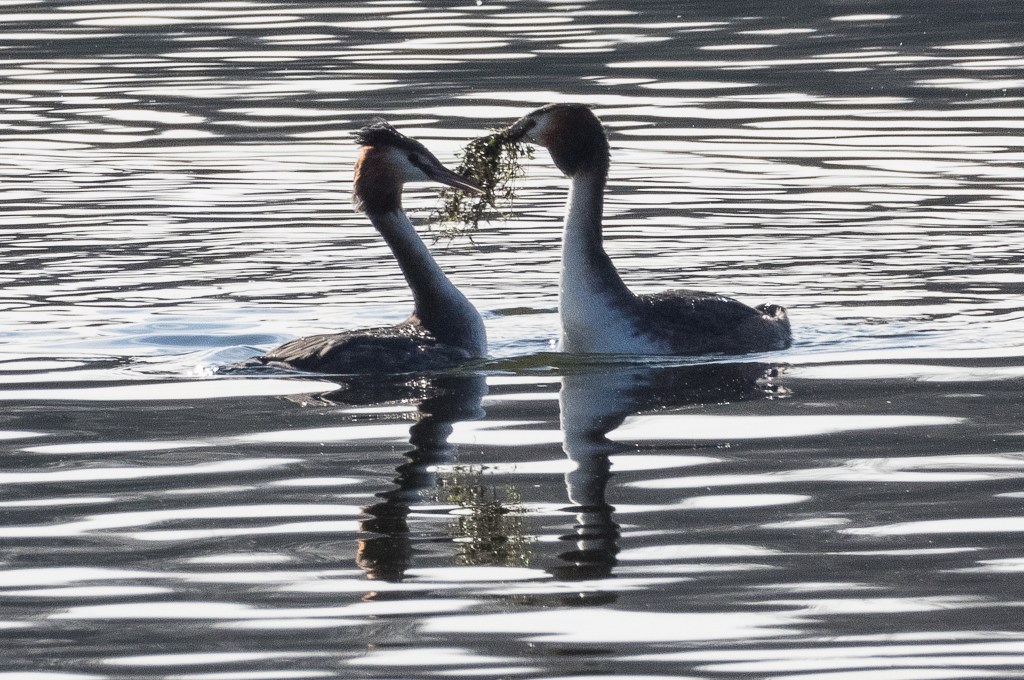
Later, we saw one bird making the other an offering of weed. There is a classic image of these exchanges – Huxley drew it and many photographers have captured it – not me, alas but I felt very fortunate to catch them doing anything remotely like this on my one-off visit. This is my best image of the event.
We visited Hogganfield Loch recently and we found two adult birds and two chicks; each adult was very busy feeding a chick.
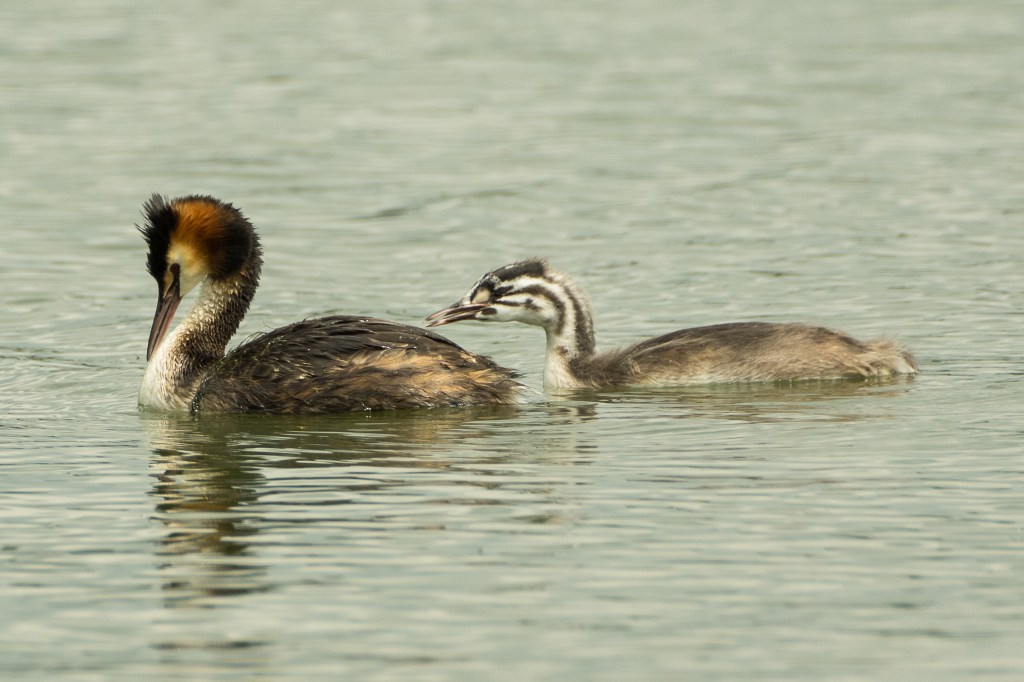
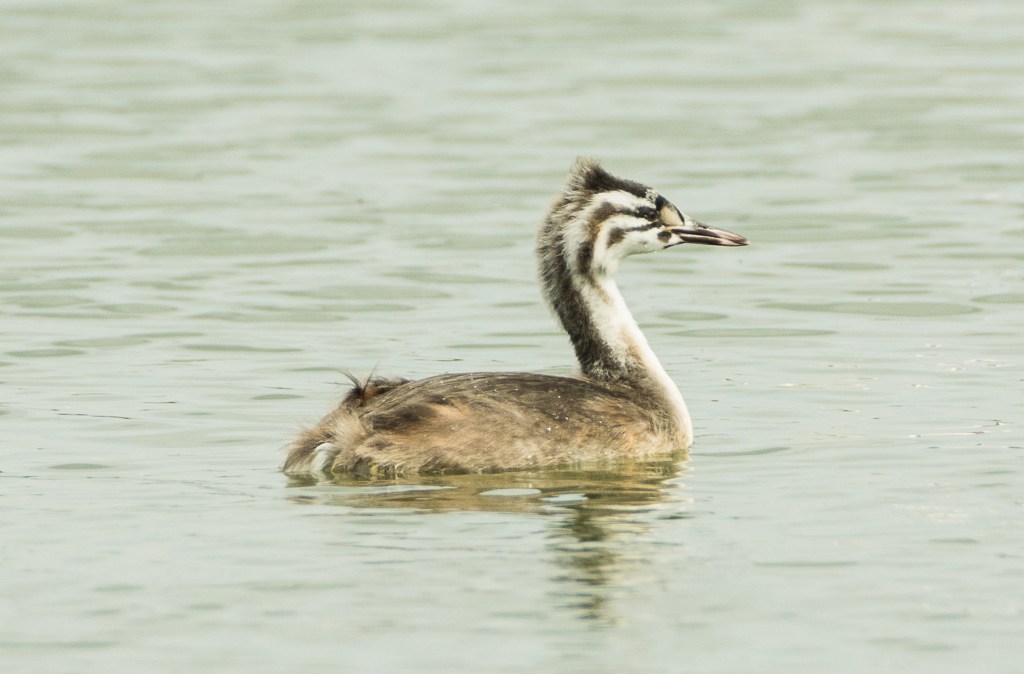
The chicks were demanding food noisily – I made a recording. There is some unwanted noise from the wind, other park visitors, traffic and sirens but I hope you can get a sense of the insistence of these small birds.
The clamour peaked as an adult surfaced with a small fish. At this point, the chick would surge across the Loch, parallel to the surface to claim its morsel. All this activity took place quite close to the shore in the shallower water, a good place to find small Roach in the summer months. I can’t usually get this close to these Grebes – they usually see me coming, show me their backs and glide away.
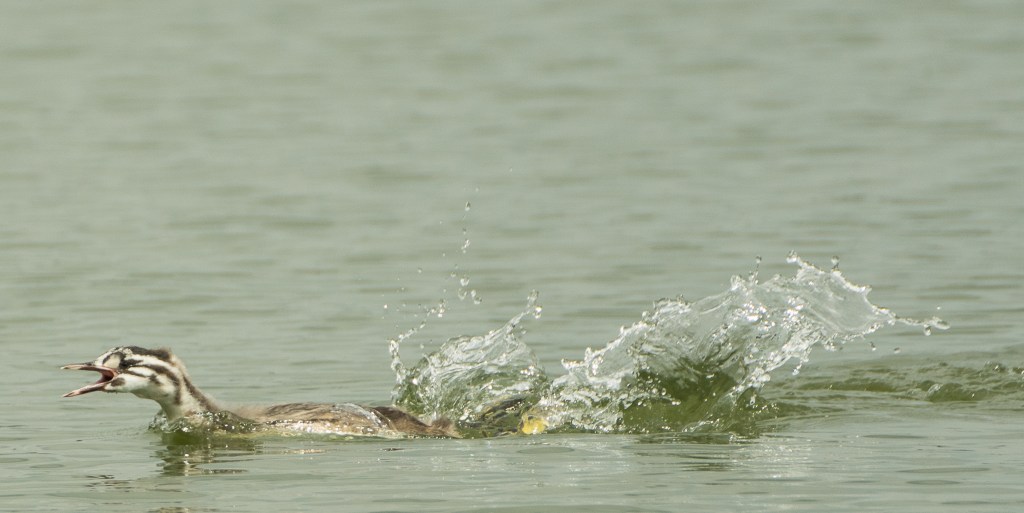
The motion of the chicks across the surface was interesting – adult birds usually dive to escape intrusion and I’ve never seen one moving in this way but I’m sure they could. Their legs are set a long way back on the body which makes their movements out of the water very awkward but it is probably excellent for propulsion through the water.
I was pleased to get the classic fish pass from adult to chick – so pleased that I processed quite a few images. I like these two best.
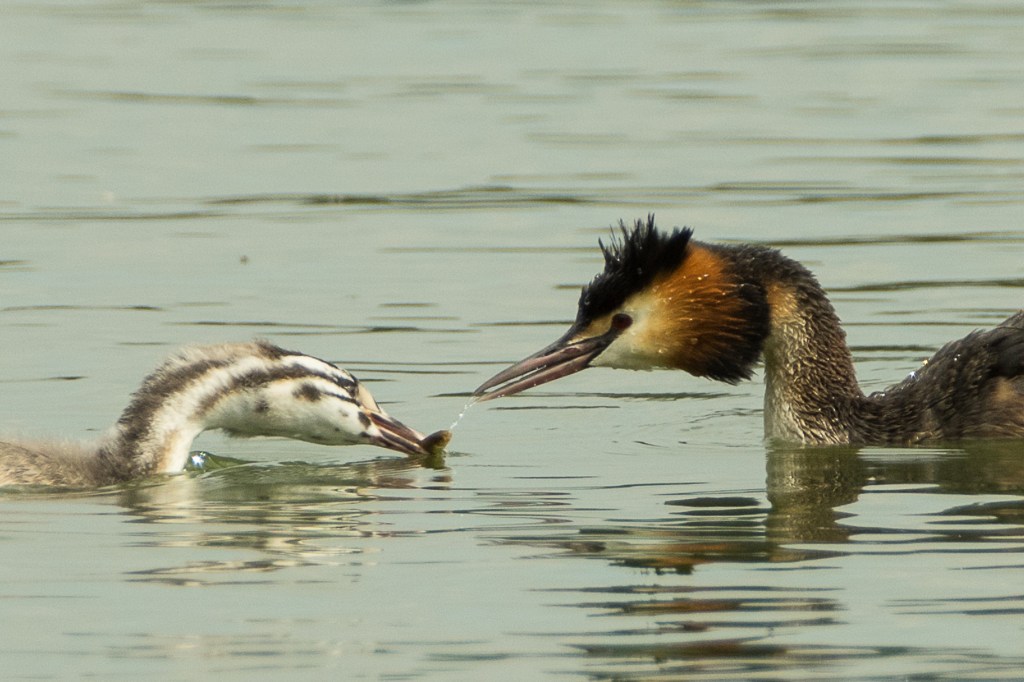
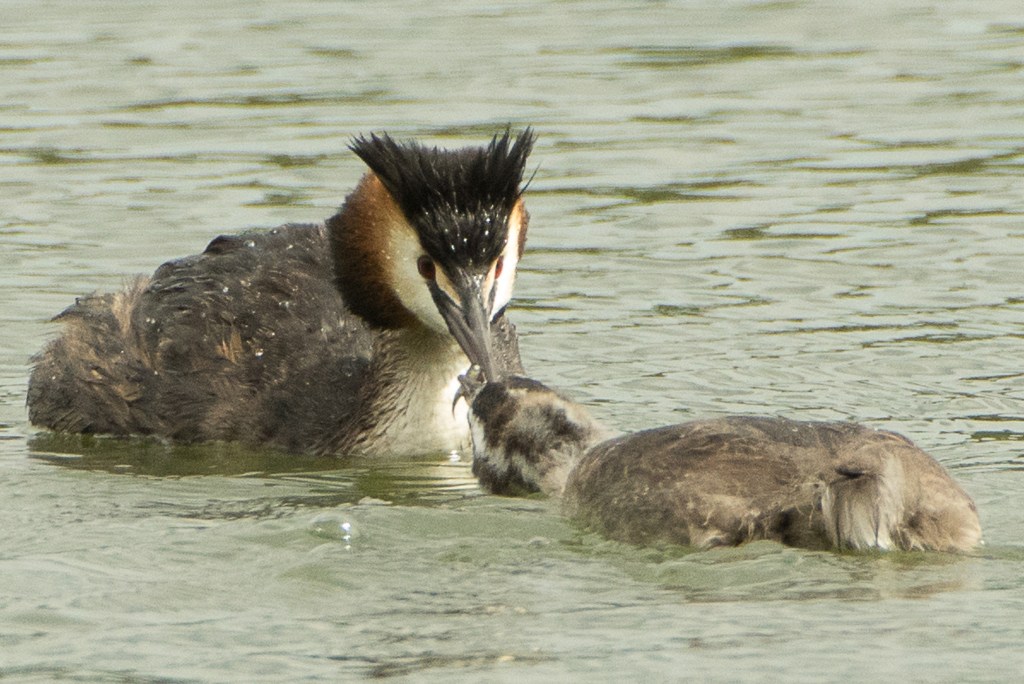
Clearly, the Hogganfield birds had had a successful breeding season. We had missed the tiny stripy chicks, but I was pleased that some had survived beyond that perilous stage and appeared to be thriving in their suburban home.
 backwoodsman.org