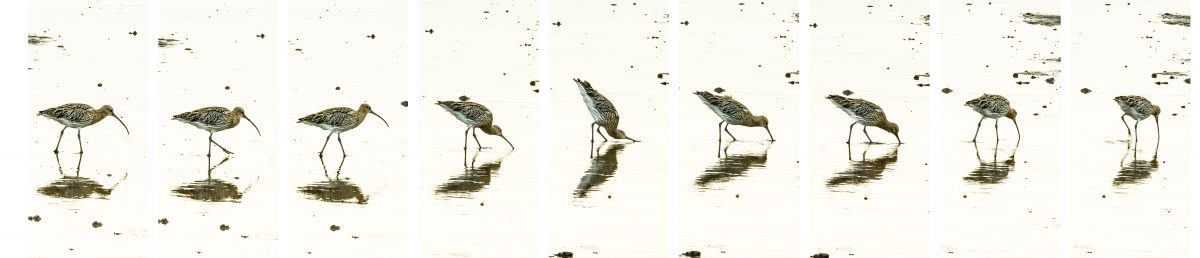
Hello again from Croatia! Our walks around Omiš provided some interesting sights close to and on the ground. The walk up the Lisicina Gorge to Naklice and on to Gospe od Sniga through the Karst had its terrestrial moments with some obliging lizards – I think these are Dalmatian Wall lizards Podarcis melisellensis.

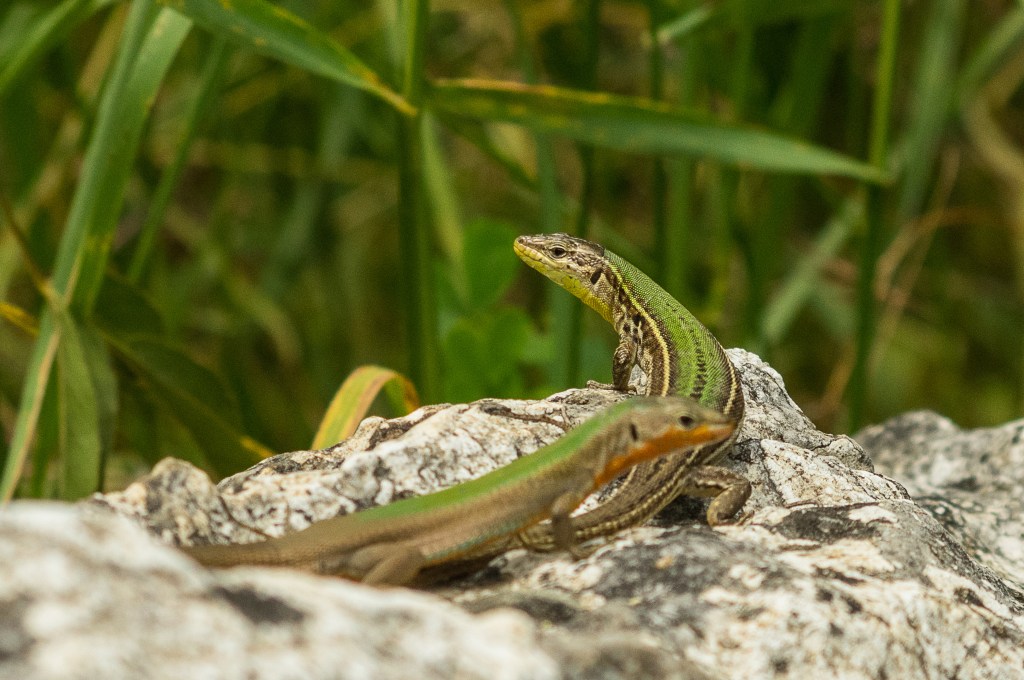
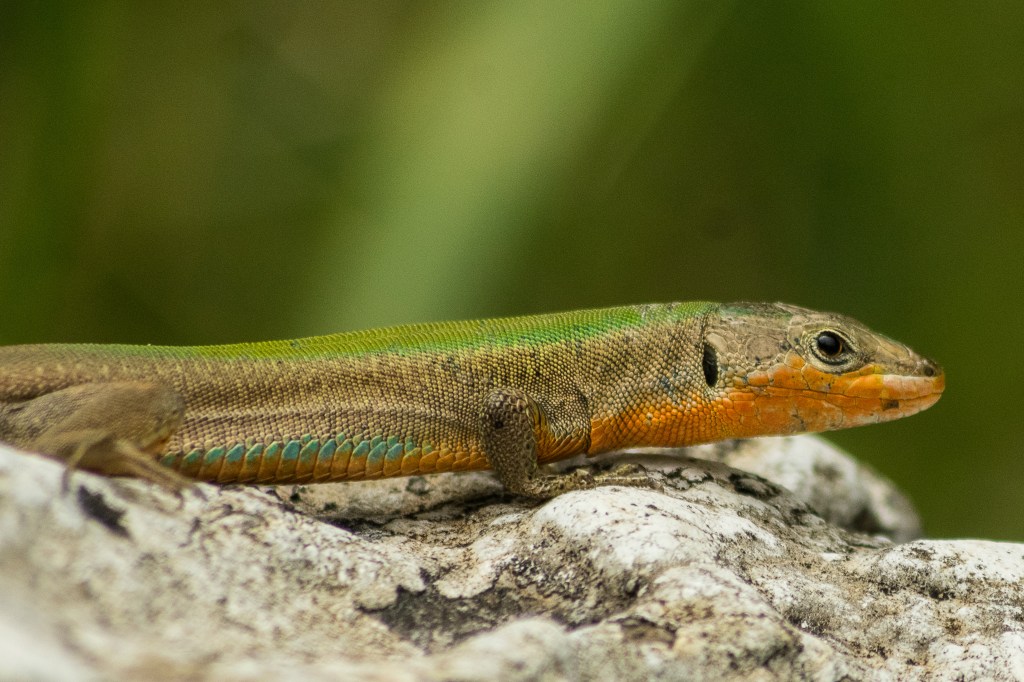
As they are not trying to kill each other, I think we must have a male (with the orange throat) and a female (equally striking); I post an in-focus picture of each as my depth-of-field was not able to deliver the pair. The orange morph male is usually bigger than his yellow and white competitors, and has a stronger bite, attractive attributes in a lizard but it is also important to smell good – females can apparently tell a good deal from male lizard secretions, which appear to be the subject of a considerable literature.
Other more niche aspects of the behaviour of this reptile species have also attracted attention – who could resist a paper entitled “Where to do number two: Lizards prefer to defecate on the largest rock in the territory “? Oh to have returned a work with such a title under REF – clearly four star for the title alone.
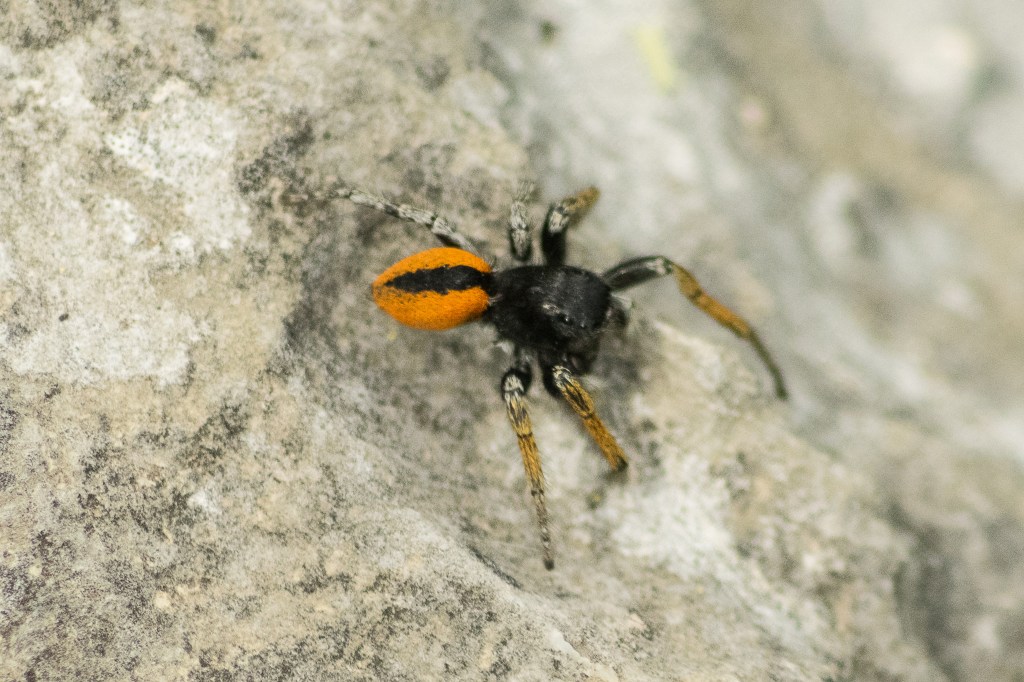
Not too far away, we found a male Jumping spider, Philaeus chrysops, making his way across the limestone. Spiders are not Backwoodsman’s best thing – the orange caught my eye and I followed it as a reflex action. That’s big enough I think (a whole cm at least). Has a bird relieved him of a couple of legs? His locomotion still looked pretty effective as he tore across the limestone.
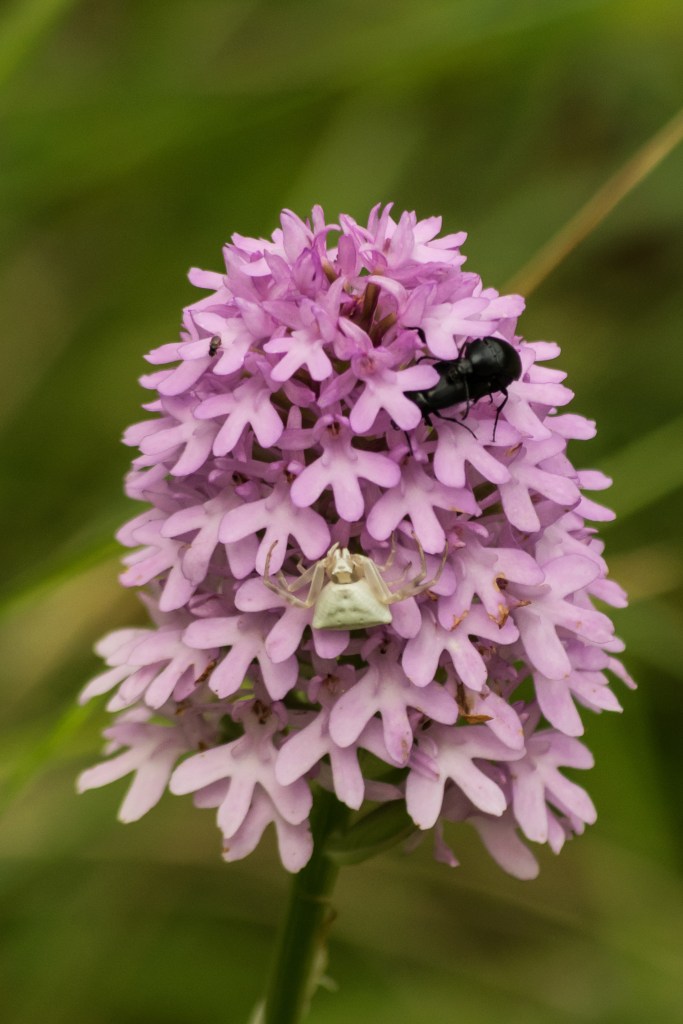
A few orchids stood out close to the path. This Pyramidal orchid appeared to be hosting a pair of mating beetles but closer inspection of the image revealed a lurking Pink crab spider Thomisus onustus, a most effective ambush predator. The rapture of the beetles may have been short-lived.
And then there were Bee orchids (Ophrys apifera), celebrated for their insect mimicry and the process known as pseudocopulation, in which an insect suitor inadvertently transfers the large pollen grains (pollinia) from one plant to another.
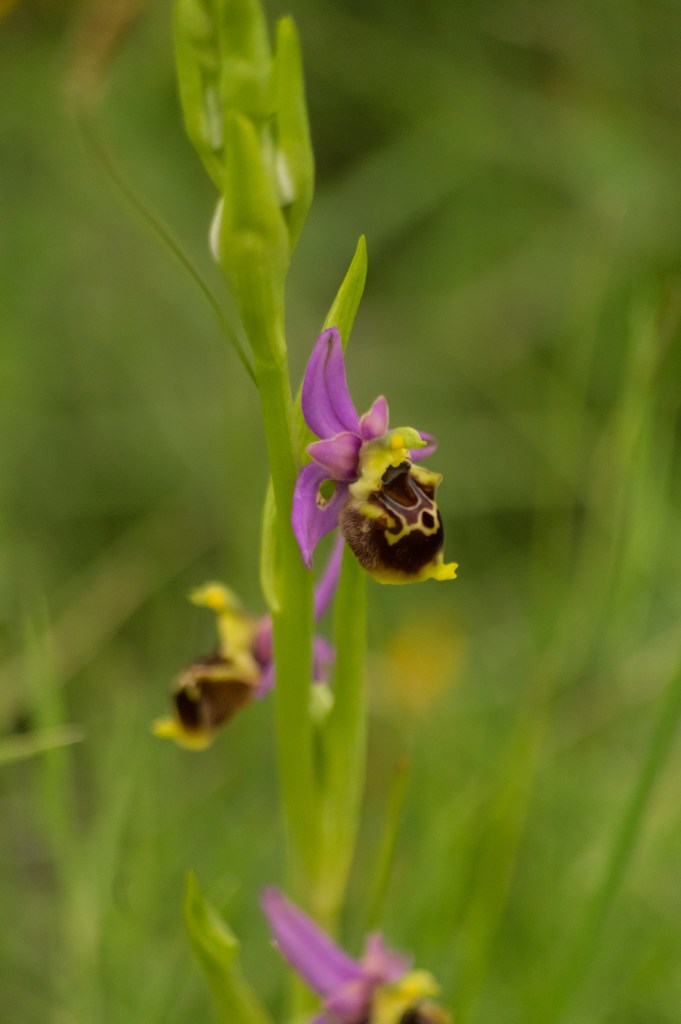
I haven’t seen this species many times before – the first time was at Thriplow Meadows near Cambridge forty years ago where a single specimen had emerged and been fenced off for its protection. I had been loaned a copy of The Military Orchid by Jocelyn Brooke and had read it enviously as the young Brooke ticked off most of the species native to the UK (and picked, painted and pressed them…). He recollected his excitement upon finding this species particularly well: “A miniature chalkpit dazzled our eyes a little way up the hill. Running ahead, I paused near the edge of it: a plant had caught my eye, a flower with pink petals on which a bee seemed to be resting. Suddenly, I realised this was the goal of our pilgrimage…Yes, there was no doubt of it; a single plant, standing stiff and aloof, bearing proudly aloft its extraordinary insect-flowers, like archaic jewels rifled from some tomb; I had found the bee orchid.”
We trod warily around several plants which had crowded up to the edge of the path seeking some light and space.

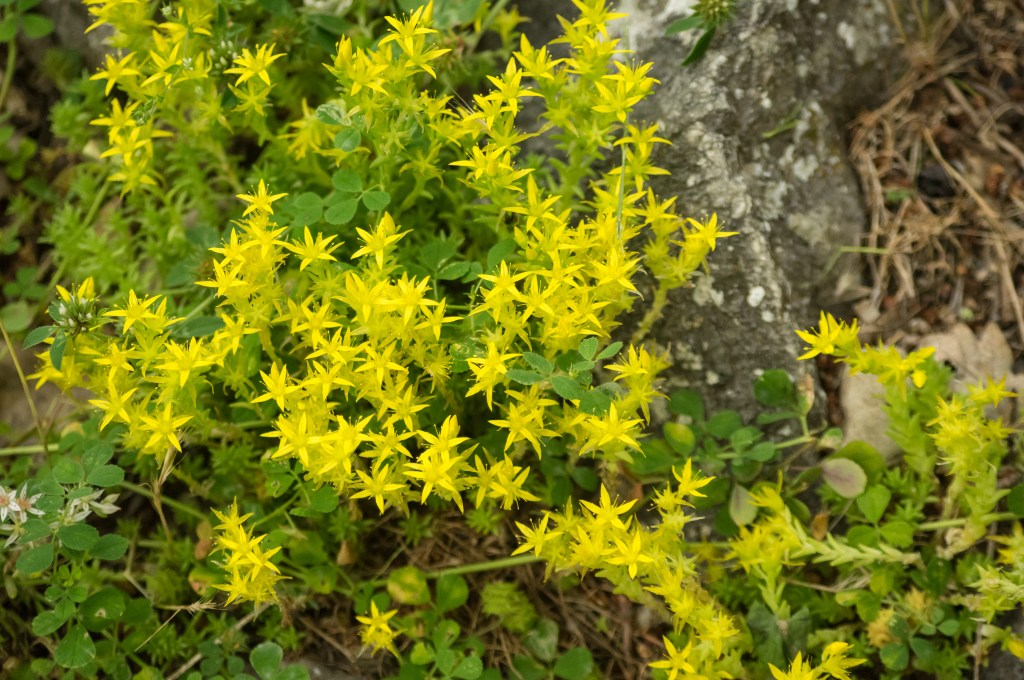
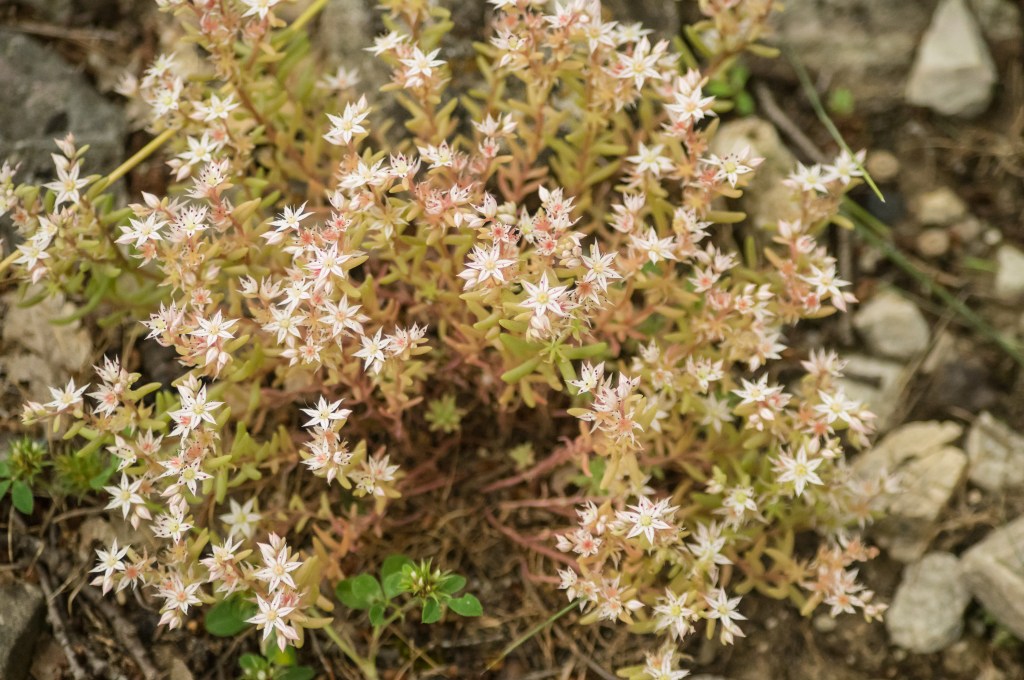
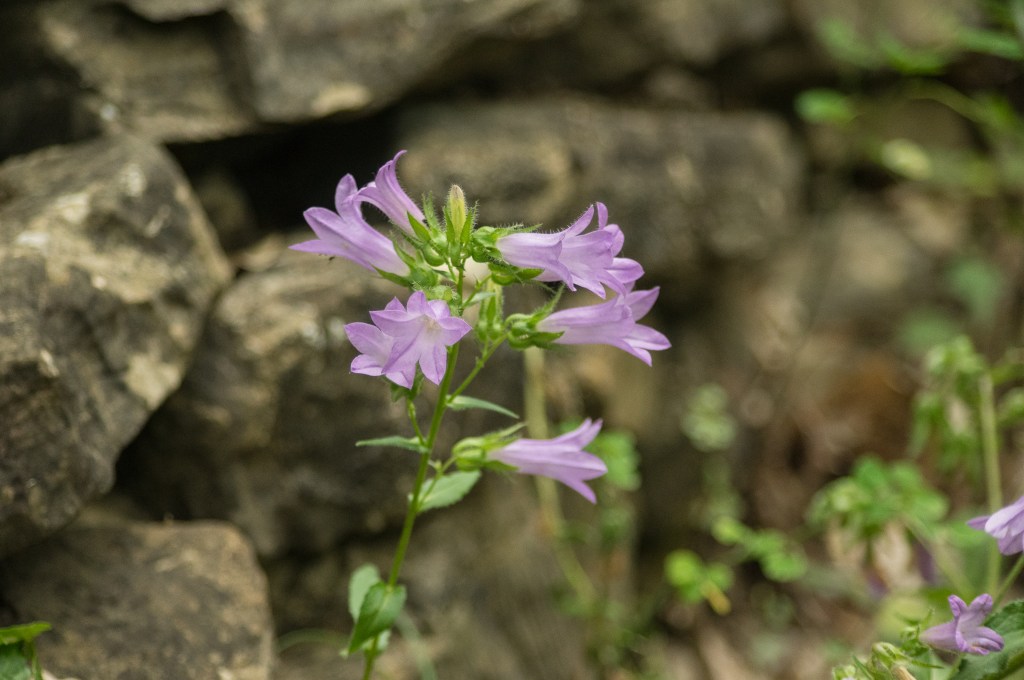
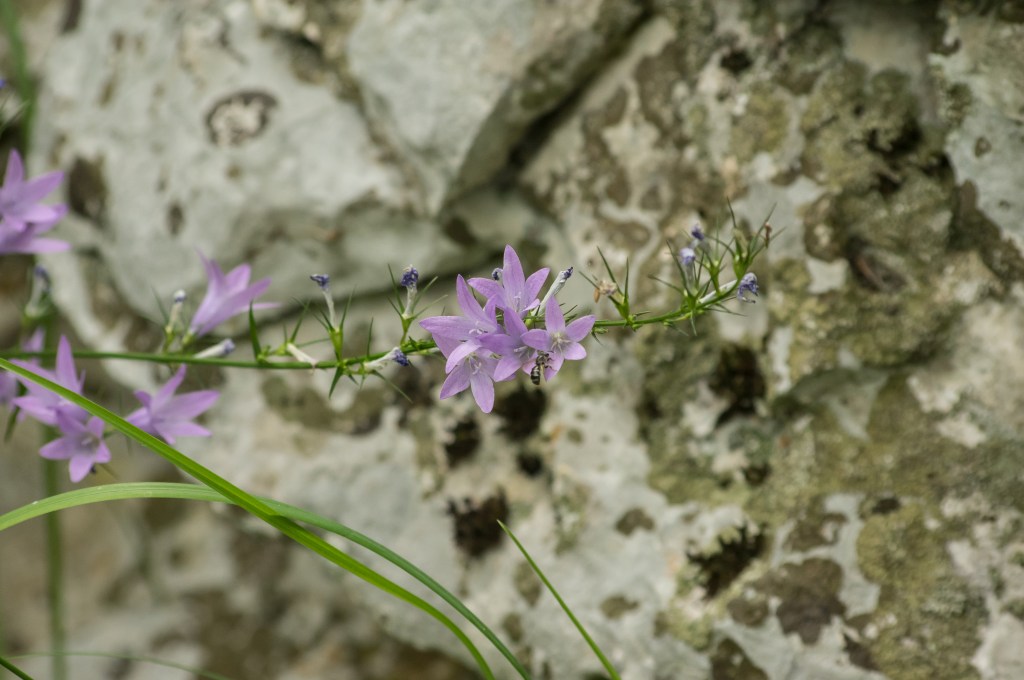
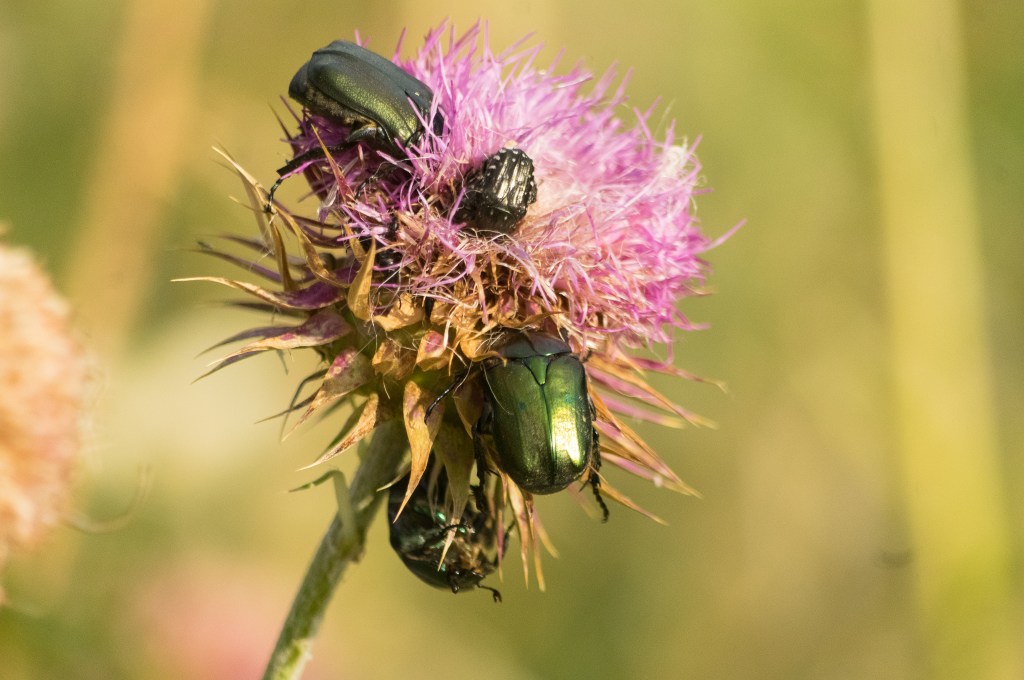
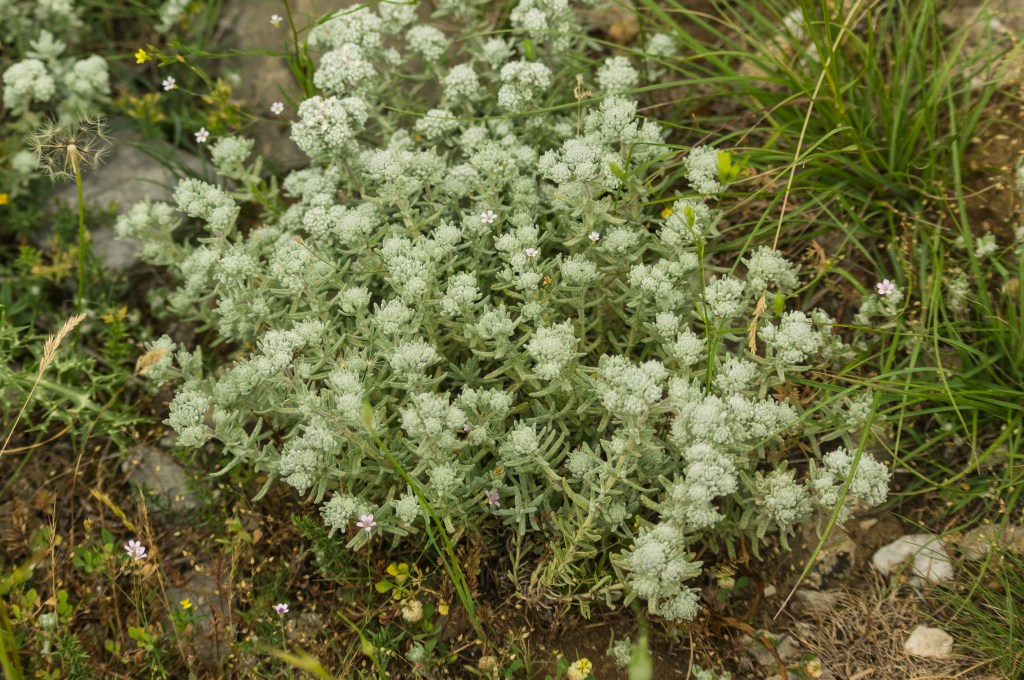
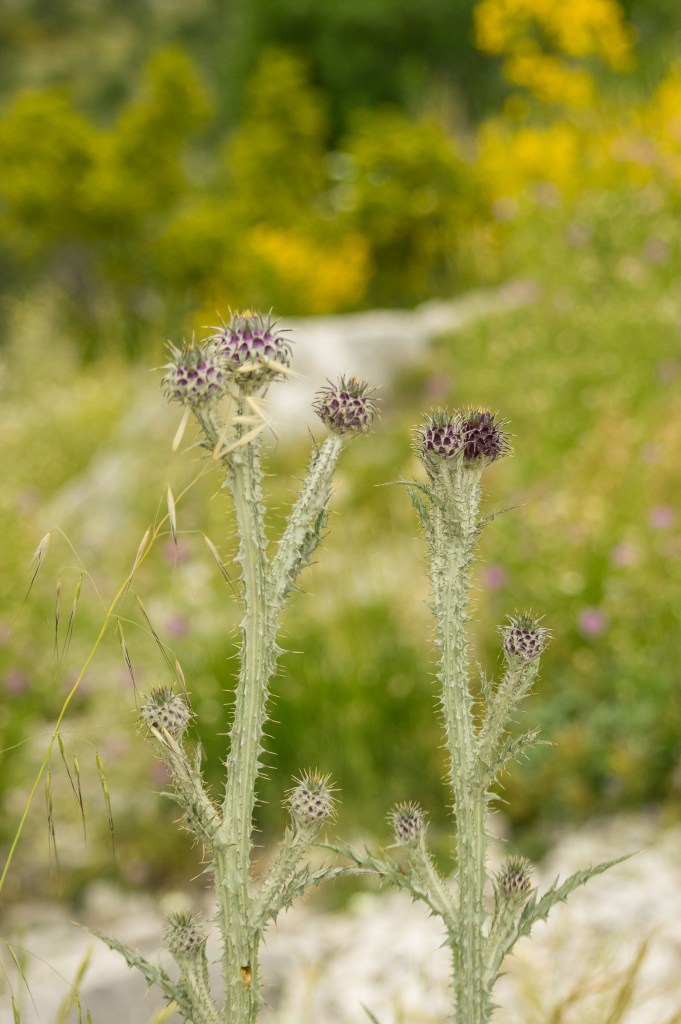
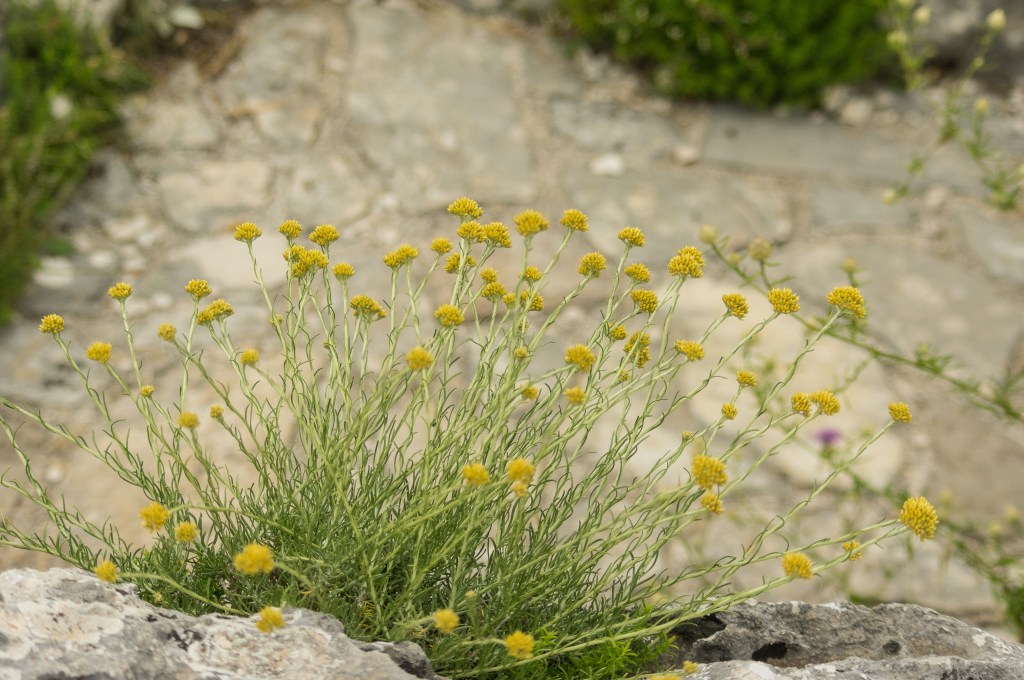
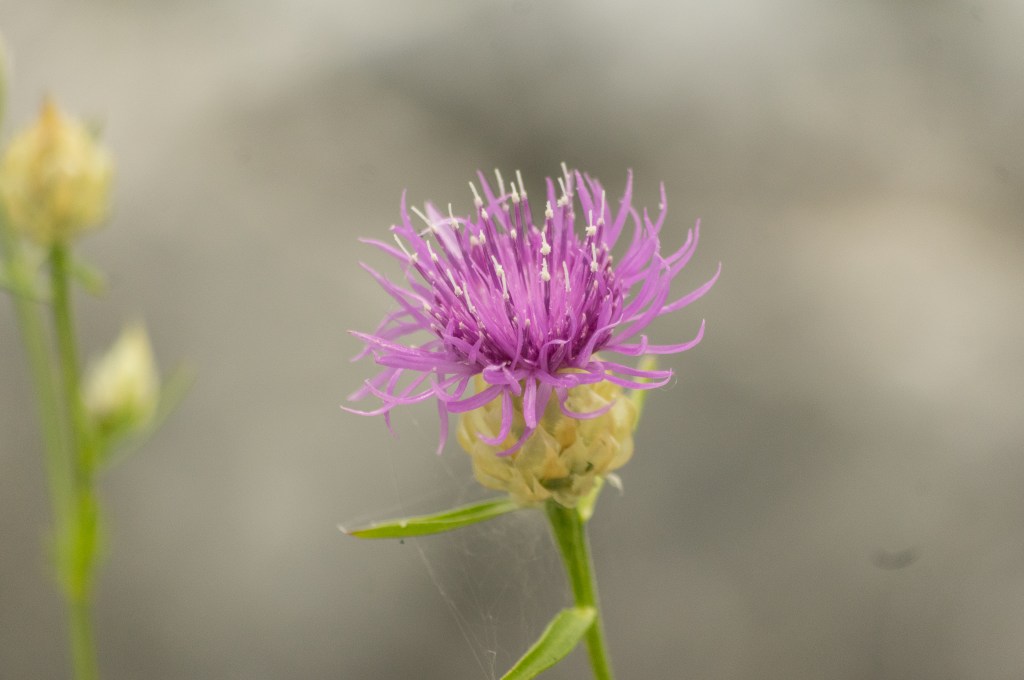
The hillside was ablaze with flowers. While I might recognise the types – Campanulas, Saxifrages, Thistles – I didn’t know the species so I have used the PictureThis App to make tentative identifications. I have not cross checked these with independent sources, and it is possible that many would be present on similar terrain in the UK. However, they are new and exciting to me – I don’t usually get to see this limestone-fed abundance; wet Spagnum moss, and Sedge and Cotton grasses are much more familiar.
In order of appearance, we have Sedum acre (Biting stonecrop), Sedum hispanicum (Spanish stonecrop),Campanula trachelium (Nettle-leaved bellflower), Campanula rapunculus (Rapunzel), Carduus nutans (Nodding thistle), Teucrium polium (Felty germander), Petrohagia saxifraga (Tunicflower), Arctium tomentosum (Wooly burdock), Helichrysum italicum (Curry plant or immortelle), and Centaurea jacea (Brown knapweed or French hardheads).

A wet day took us to Zakučac, just to the north of Omiš. There is a huge HEP plant here from which a wide canal flows down into the Cetina river. As Backwoodsman usually says when viewing any body of water larger than a puddle, “I bet there’s some fish in that.” Under and cut into the sheer cliffs that plunge down behind the village is the Shrine of St Leopold Bogdan Mandić and a waymarked trail starts just below the shrine and heads south-east steeply up the limestone. The day grew wetter and wetter – not a day for butterflies, spiders or lizards to be out, but there were lots of these – cricket or grasshopper?

He has some serious antennae which suggests a cricket (grasshoppers have shorter gear). And it was great for snails. We found three types of snail – the nuances of species identification are beyond me but from the shape of the shell, this one looks like a member of the genus Poiretia. There is a Dalmatian Predatory Snail (Poiretia cornea) which etches its way through the shells of prey to the goods inside.
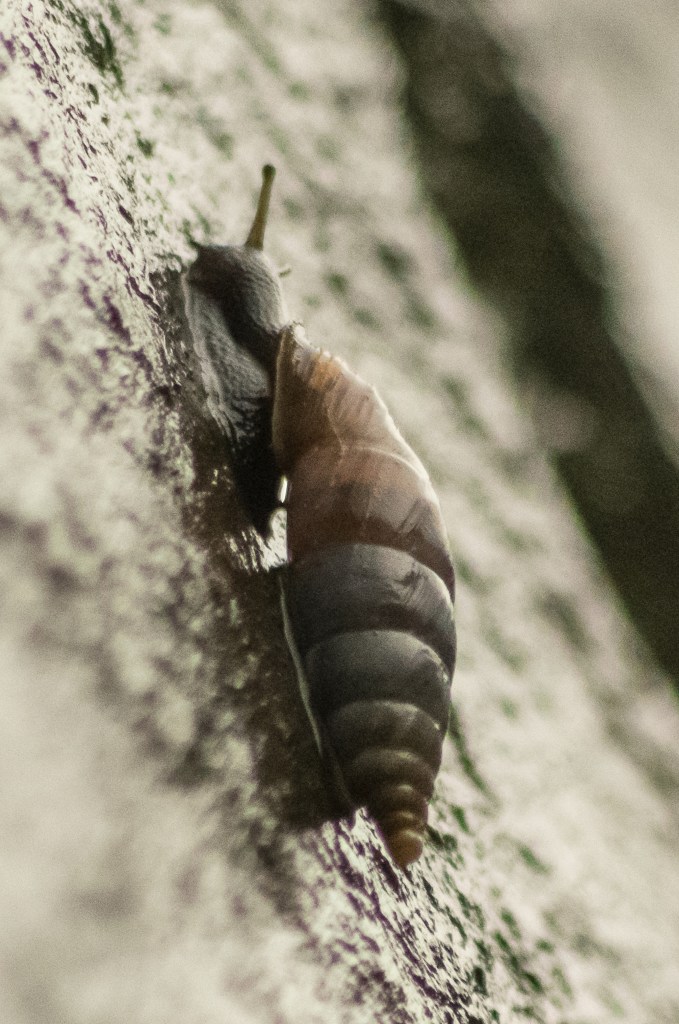
It was extremely hard not to tread on these Oxychilus snails as we climbed the path and they lingered upon it. There is an Oxychilus navarricus which looks about right, but the distribution data suggest it is a northern species. Oxychilus ionicus seems to present in Croatia but I failed to find any images which helped me.
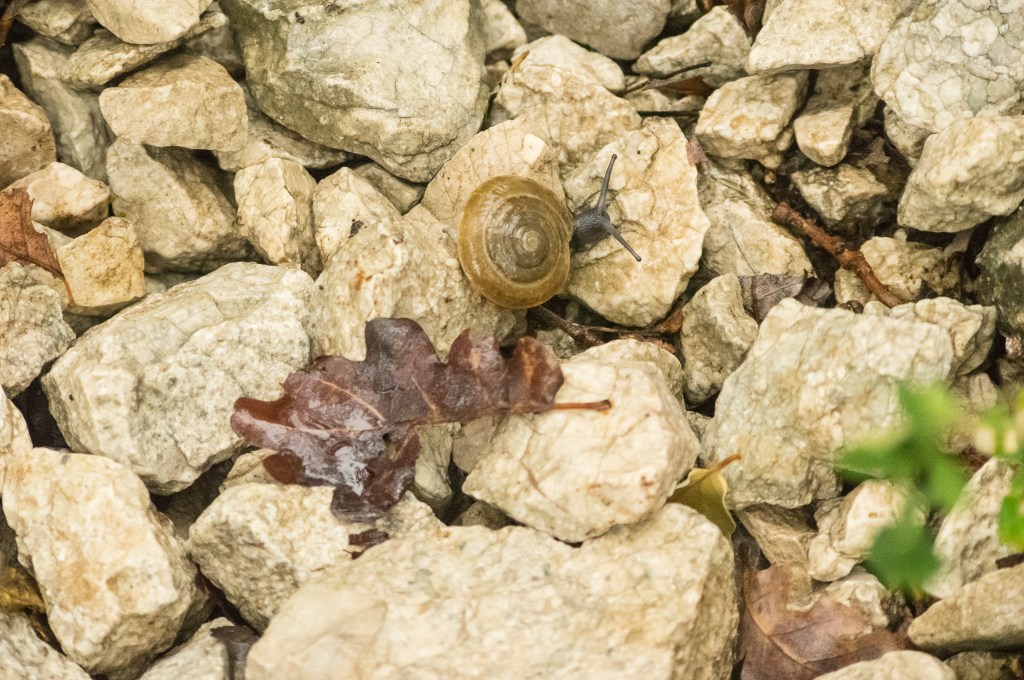
Higher up the limestone, we found this brute which may be a Roman or Burgundy snail (Helix pomatia). The gardeners amongst you are already in the car to Homebase for a massive tub of slug pellets. There are a lot of native snails in Croatia – a daunting list which would suggest that the odds against my identifications being correct are very long indeed.

The tiny amphibian below was one of many, and they presented multiple hazards to navigation – they were everywhere. I found a list of Croatian amphibians with some great pictures but nothing looks like a good match for this chap.
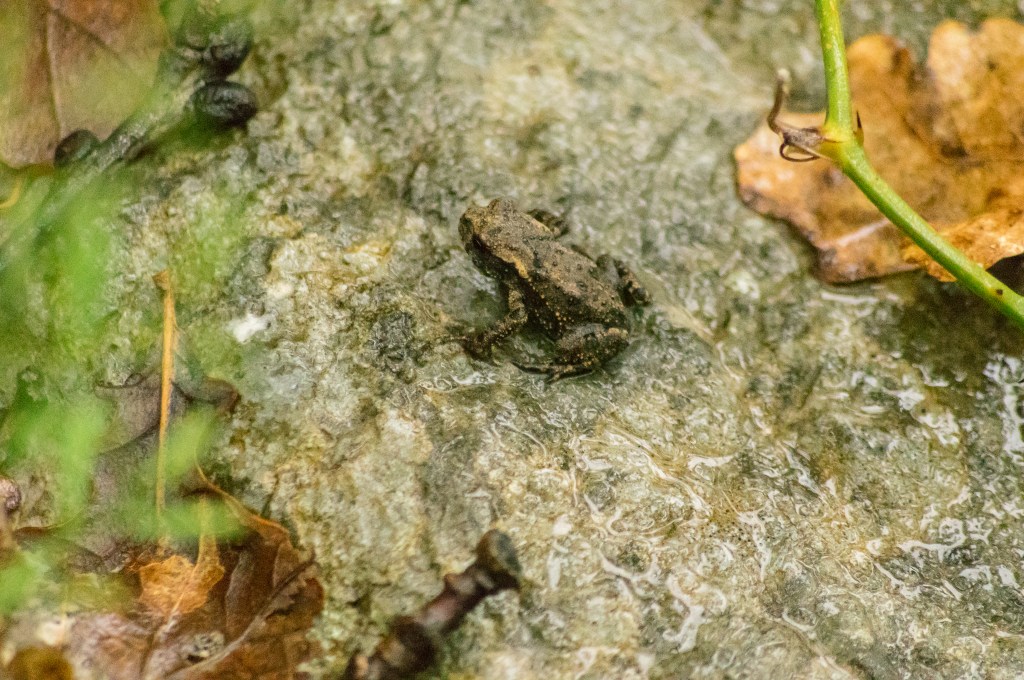
The blunt nose and possibility of wartiness suggests a toad, as does the absence of standing water from this landscape (any ponds are at least 150m lower down the limestone). I rescued a few which had taken wrong turns onto really dry or sandy areas under cliffs.
Perhaps the most unexpected sighting came in the grounds of the Ivan Meštrović Gallery just outside Split, as recommended by Faye’s colleague Martina; we’d spent a couple of really enjoyable hours looking at Meštrović sculptures in marble, wood and bronze and followed them with a visit to the church just down the road.
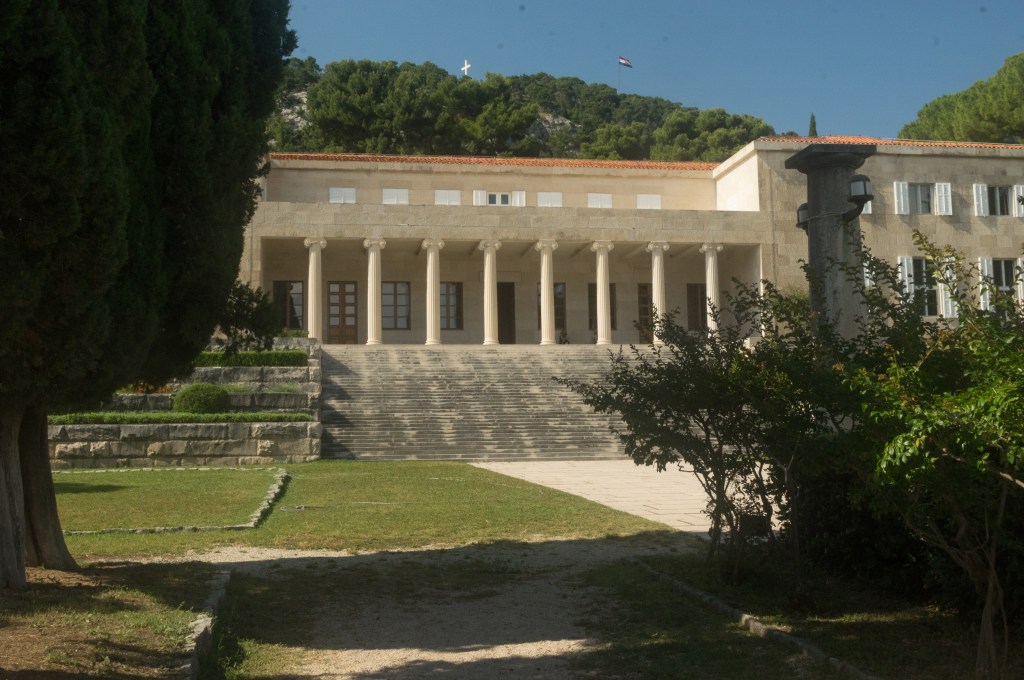
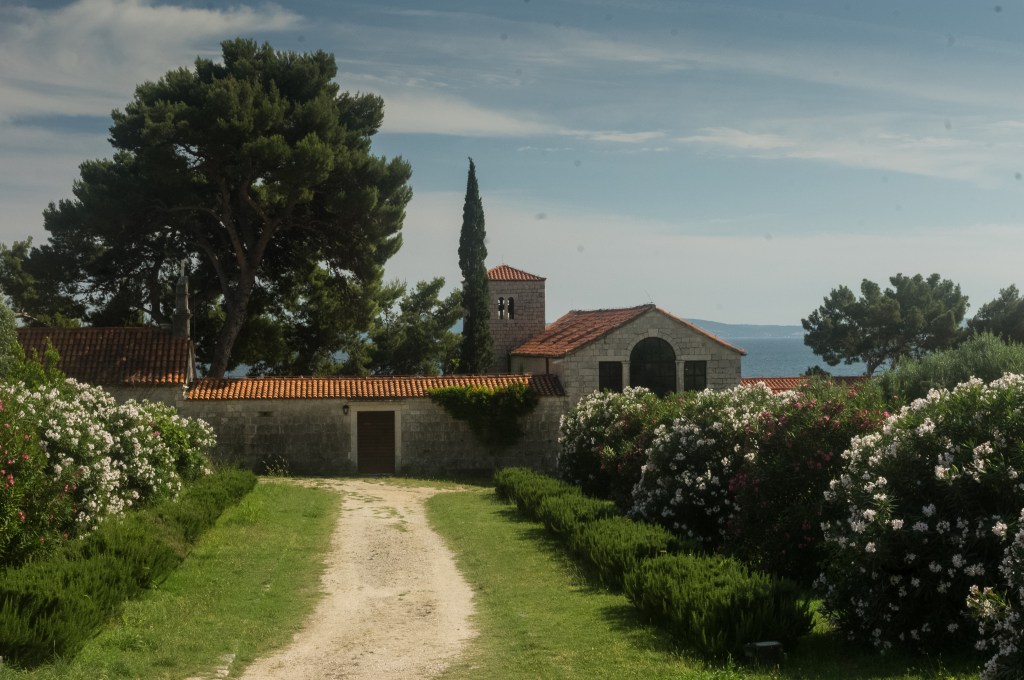
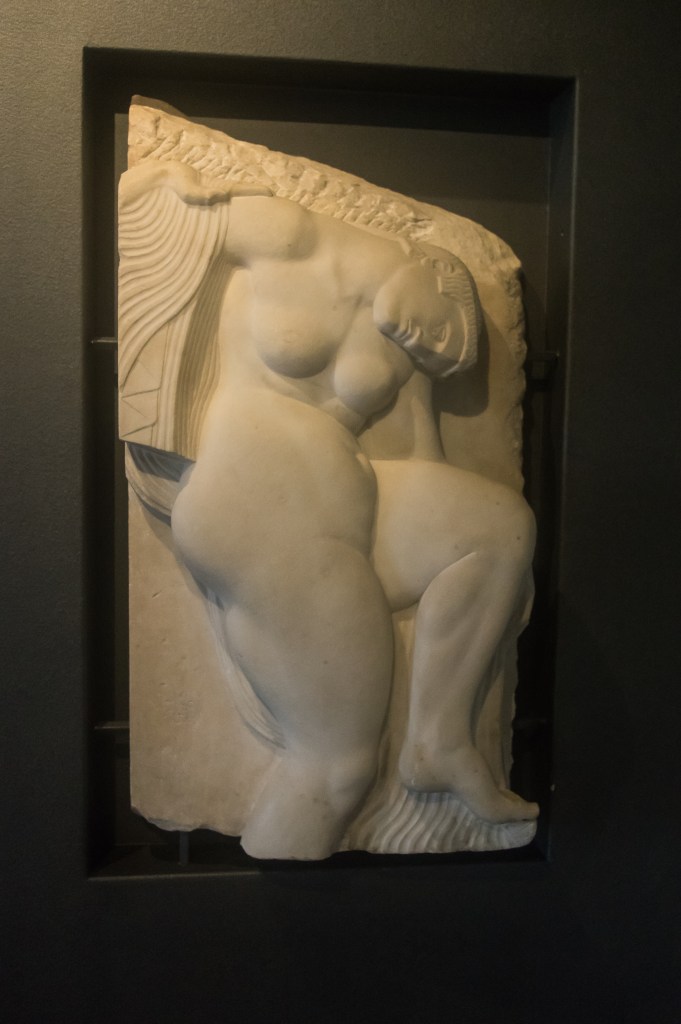
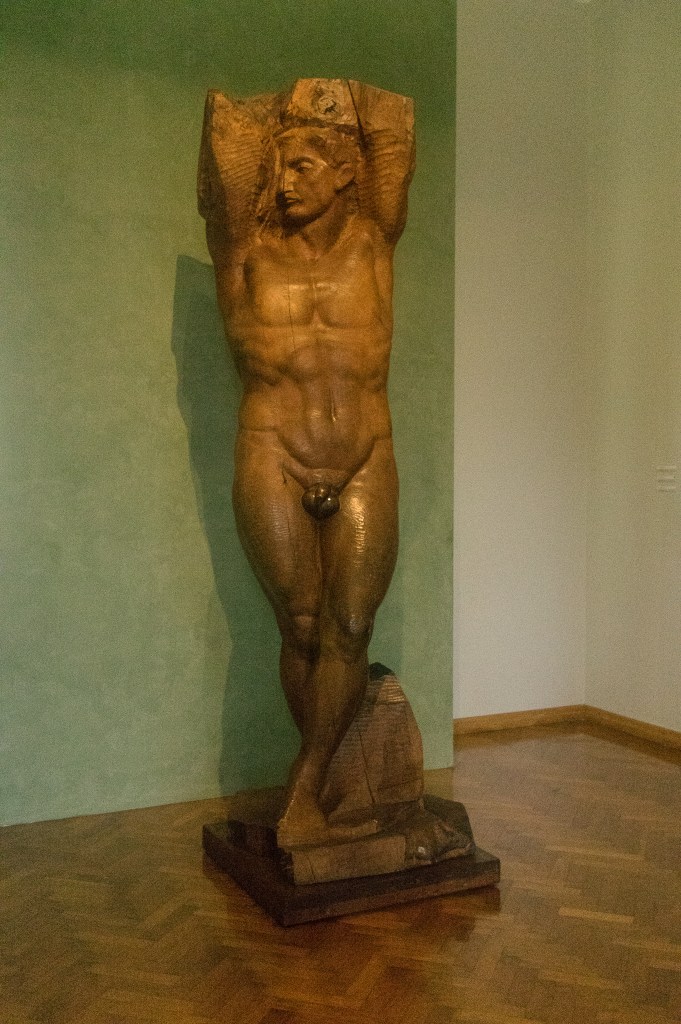

The museum offers the visitor a cool and uncluttered interior and displays Meštrović’s sculptures to their advantage. The church is panelled throughout and took Meštrović many years to complete. The panels vary in the degrees of relief and in aspects of technique used in the depiction of scenes from the gospels; the crucifix at the altar is monumental.


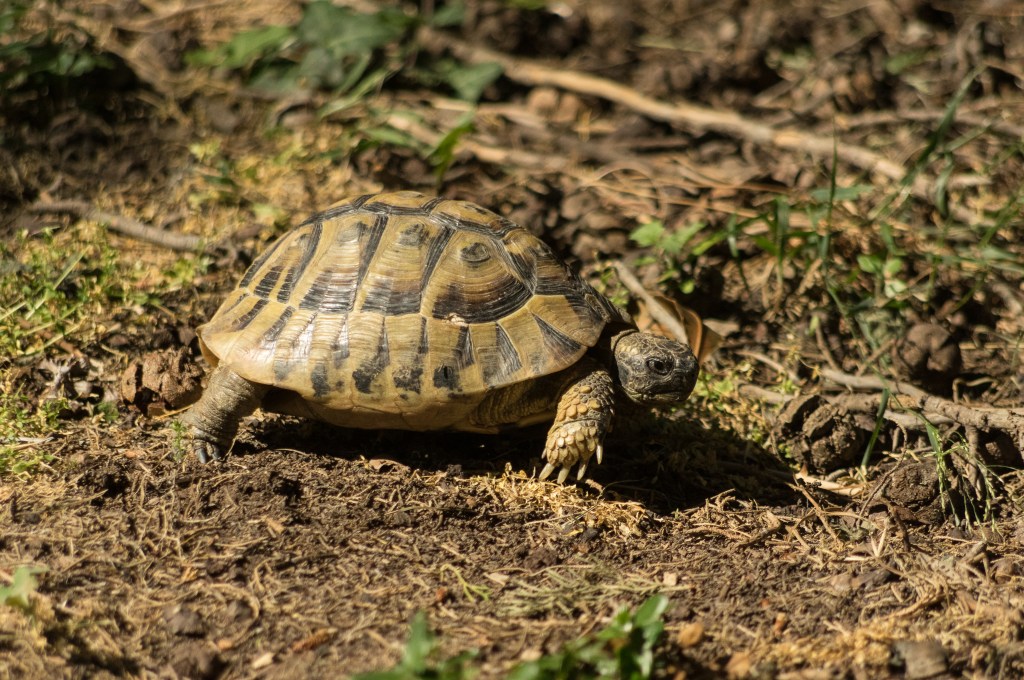
This is all very well but where’s the wildlife? Well, we were surprised by this tortoise in the grounds of the gallery – there is a subspecies of Hermann’s tortoise Testudo Hermanni hercegovinensis which populates the coasts of Bosnia and Herzegovina, Croatia, and Montenegro. Is this the chap, or are we looking at the groundsman’s pet on the prowl for some hot reptile action? If there are any expert herpetologists reading this, please would you put Backwoodsman from his misery?
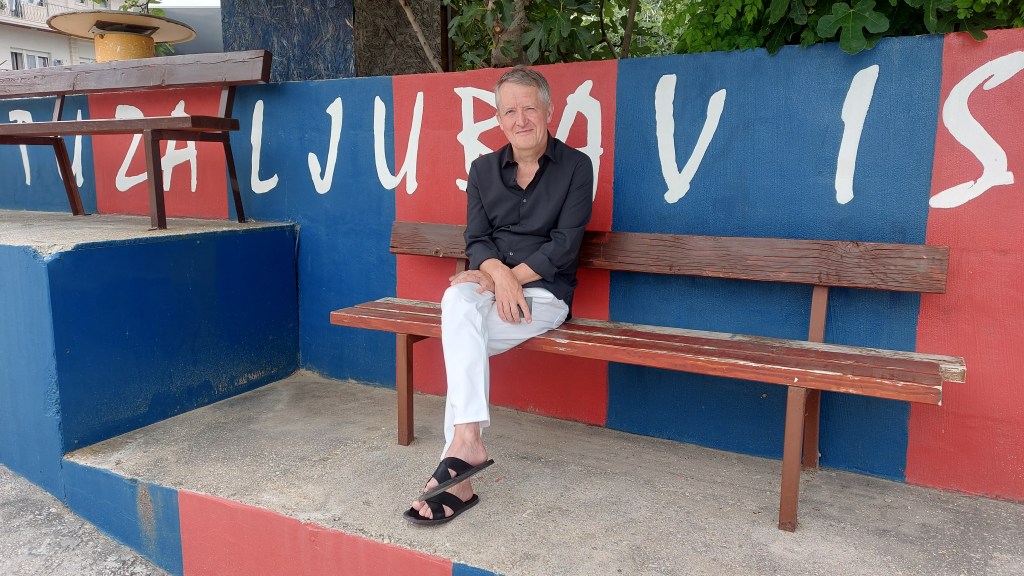
We were fortunate to visit Croatia in this abundant season – BBC Weather has Split in the low thirties today, less feverish than other parts of Europe but too hot for stoating around looking for wildlife. More suitable in fact for sitting beneath a fig tree – adieu to Croatia.
 backwoodsman.org